







In This Article (7 sections)
Shinji Mikami on Why Games Must Be Worth Playing, Not Just Watching
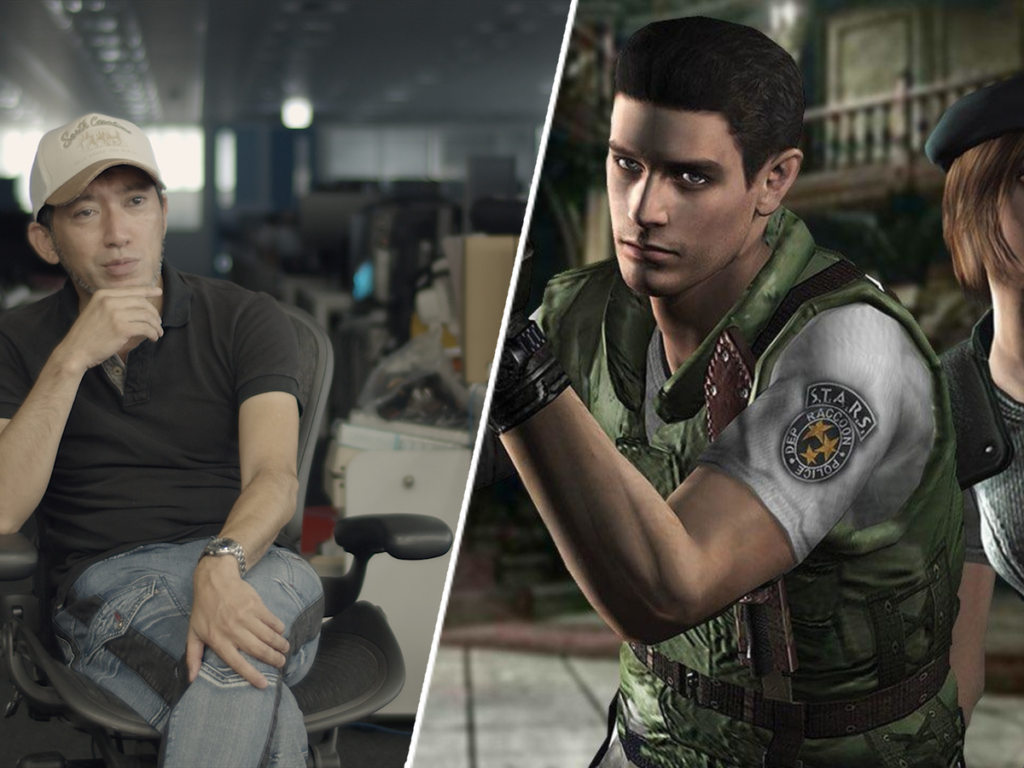
Resident Evil creator Shinji Mikami argues that developers should make games people still want to experience firsthand even after watching complete playthroughs online. His point is not simply about streaming culture. It is about what separates video games from films, television, and other passive entertainment. If someone can watch an entire game, see its ending, and feel no desire to play it themselves, Mikami believes the interactive experience was not strong enough.
His comments reportedly came after Japanese comedian and streamer Eiko Kano asked him about streaming and Resident Evil playthroughs. Mikami responded that if watching a complete playthrough is enough to satisfy someone, the game was only that good. Developers should instead create experiences viewers still want to clear with their own hands. Importantly, his position is not anti streaming. He reportedly encouraged Kano to continue streaming, shifting responsibility away from viewers and toward developers to make games that remain desirable after being seen.
The difference between watching and playing comes from agency. A video can show a puzzle, boss encounter, jump scare, or ending, but it cannot fully recreate the pressure of making decisions yourself. Watching someone enter a dark hallway is different from walking into it while controlling the character. Seeing another player waste ammunition is different from realizing you personally used your last rounds before a difficult encounter. Watching a puzzle solution does not reproduce the satisfaction of discovering it independently.
This is particularly clear in survival horror, where much of the experience comes from responsibility and uncertainty. Limited healing items, ammunition management, route planning, enemy placement, inventory restrictions, and difficult decisions create tension because the player must live with the consequences. The best games create moments that feel personally owned rather than merely observed.
Mikami’s career supports this philosophy. The original Resident Evil built fear through fixed camera angles, scarce resources, limited inventory space, dangerous enemies, puzzles, and interconnected environments. The mansion was not simply a backdrop for a story. Players had to learn its rooms, shortcuts, locked doors, item locations, and dangers. Resident Evil 4 later transformed action horror through aiming, positioning, enemy pressure, reload management, and pacing, making combat entertaining to watch but substantially different to control.
Great games therefore create a gap between seeing an experience and wanting to perform it yourself. A viewer might understand what happens in a Resident Evil 4 encounter, but actually playing requires aiming under pressure, managing distance, reloading at safe moments, controlling crowds, deciding when to spend resources, and responding when the original plan fails. That difference produces one of the strongest reactions a game can generate: wanting to pick up the controller and try it personally.
The lesson is that interactivity must remain central. Cinematic sequences, strong writing, visual spectacle, and memorable surprises can improve a game, but none should replace meaningful play. A game becomes more difficult to reduce to a video when players have real responsibility for progress, failure, experimentation, mastery, and success.

How Streaming Has Changed Game Design and Player Engagement
Modern games exist in an environment where Twitch, YouTube, TikTok, short clips, reactions, guides, speedruns, and full playthroughs can expose nearly every major release almost immediately. Developers therefore face a different challenge from previous generations. Their games need to attract viewers without becoming experiences that are completely consumed through viewing alone.
Streaming has effectively turned games into both playable products and visible performances. Developers increasingly think about first impressions, audience readability, memorable reactions, clip worthy moments, pacing, and situations that encourage sharing. Horror games, party games, roguelikes, survival games, competitive titles, extraction shooters, and cooperative games often perform especially well because unpredictable situations naturally create entertaining content.
The danger comes when developers design mainly for visibility. A game built around repeated reaction moments, memes, or surprises can receive enormous attention but lose much of its appeal once audiences understand the trick. If the underlying combat, exploration, progression, decision making, or replayability is weak, watching the viral moments may become enough.
Mikami’s argument reframes the common concern that streaming can damage sales. Instead of asking whether full playthroughs should be restricted, his view suggests developers should ask why someone who enjoyed watching would not also want to experience the game personally. Streaming can function as discovery rather than replacement when the gameplay creates an experience that cannot be transferred completely through video.
Games that depend heavily on surprise or cutscenes are more vulnerable because those elements can be understood passively. More durable games rely on systems, mastery, atmosphere, choices, challenge, replayability, exploration, and player expression. Horror works when fear becomes personal. Action games work when skill matters. RPGs become harder to replace when players shape choices or builds. Strategy games depend on decision making, while cooperative games generate social situations that differ from one group to another.
This does not mean linear games cannot succeed in the streaming era. A carefully directed game can still have enormous interactive value if movement, combat, puzzles, exploration, pacing, and emotional participation matter. The important question is whether controlling the experience adds enough value that a viewer can know the story and still want to play.
Viewers and players are also not completely separate audiences. Some people watch a game before purchasing it. Others watch because they cannot afford the game, do not own the necessary hardware, lack time to play, or simply enjoy a particular creator’s personality. Some viewers never intended to buy the game regardless of whether a stream existed. Treating all watching as lost sales therefore oversimplifies the relationship.
The greater risk is when the interactive component contributes so little that the video effectively delivers everything important. Mikami’s point is that games survive by offering qualities video cannot fully reproduce, including touch, timing, failure, adaptation, decision pressure, experimentation, mastery, and personal achievement.
Developers can strengthen those qualities by asking practical questions during production. Does controlling the game feel meaningfully different from watching it? Does the player make decisions that affect the experience? Does failure create learning rather than simple repetition? Is mastery satisfying? Does exploration reward curiosity? Can different players produce different memorable stories even when they encounter the same content?
Games that answer those questions well are difficult to replace with playthroughs. Streaming may reveal their environments, bosses, or endings, but it cannot reproduce the exact experience of making decisions under pressure. In that sense, the best stream friendly games are not those designed only to be watched. They are games whose broadcasts make viewers increasingly curious about how the experience would feel in their own hands.

What Modern Developers Can Learn From Shinji Mikami and Resident Evil
Mikami’s work demonstrates that lasting game design often comes from strong relationships between mechanics rather than one spectacular feature. Immersion is created through the interaction of controls, camera, enemy behavior, level design, sound, resource economy, difficulty, and pacing. Realistic graphics can support immersion, but they are not its foundation. A player becomes immersed when they begin thinking according to the game’s rules.
Resident Evil provides a clear example. The original game turned limitations into identity. Fixed camera angles restricted information and created uncertainty. Limited inventory forced planning. Scarce ammunition made combat decisions meaningful. Dangerous enemies made previously explored rooms threatening. Keys, puzzles, doors, shortcuts, and safe rooms transformed the mansion into a place players gradually learned rather than a series of backgrounds they simply passed through.
These systems gave players ownership over their experiences. One player might conserve ammunition carefully, while another reaches the same area nearly empty. One may solve a puzzle immediately, while another spends time searching the mansion for clues. One may discover an efficient route through repeated play. Those differences make repeated runs valuable because the game’s systems continue to reward knowledge and improvement.
Resident Evil 4 applied similar principles to action. Its encounters became memorable because enemies pressured positioning, aiming, movement, weapon choice, reload timing, and crowd control simultaneously. The player was constantly making small decisions. That density made the game highly watchable, but more importantly, it created a strong desire to master the combat personally.
Replayability often grows from this kind of design density. Resident Evil supports repeat runs through route knowledge, resource management, unlockables, speedrunning, and increased mastery. Resident Evil 4 encourages replay through weapon upgrades, combat experimentation, difficulty, pacing, and player skill. The story may remain familiar, but the act of playing continues to provide value.
Modern developers can therefore learn several broader lessons from Mikami’s philosophy. Strong games should give players meaningful responsibility rather than reducing them to observers between cutscenes. Constraints can create emotion when they are deliberately connected to the experience. Controls, enemy behavior, sound, camera distance, reload timing, movement speed, and resource systems can shape fear or excitement as powerfully as expensive cinematic sequences.
Studios should also avoid treating streaming as an enemy by default. Visibility can introduce a game to enormous audiences, create communities, produce memorable reactions, and encourage people to buy something they might otherwise never discover. The goal should be to create a game where exposure increases curiosity rather than satisfying it completely.
Mikami’s legacy gives additional weight to that argument. He directed the original Resident Evil in 1996, later directed its 2002 remake, and directed Resident Evil 4, which became enormously influential on third person action design. He later founded Tango Gameworks in 2010 and continued his connection to horror through The Evil Within before leaving the studio in 2023. His design influence extends far beyond survival horror, particularly through the over the shoulder combat language popularized by Resident Evil 4.
The future of game development will likely require studios to understand spectatorship and agency at the same time. Players increasingly discover games through videos, creators, reactions, guides, and streams, so being enjoyable to watch can be commercially valuable. But being enjoyable to watch cannot become the final objective.
Horror games still need fear that feels different when the player controls the character. Action games need skill expression. RPGs need choice, progression, or identity. Strategy games need meaningful decisions. Cooperative games need social situations that belong to the people participating in them. Narrative games need interaction that contributes something beyond revealing the next scene.
Mikami’s argument ultimately comes down to protecting what makes games unique. Watching can spread an experience, explain it, and even reveal everything that happens. Playing should still provide something the recording cannot deliver. A game’s strongest achievement is not merely convincing someone to watch until the ending, but making them watch and still think, “I want to do that myself.”
Frequently Asked Question (FAQs)
- What did Shinji Mikami say about watching game playthroughs?
Shinji Mikami reportedly said that if someone can watch an entire playthrough and feel completely satisfied without wanting to play the game afterward, then the game was only that good. His broader point was that developers should create experiences strong enough that viewers still want to control the character, overcome the challenges, and reach the ending themselves. - Why is Shinji Mikami’s opinion important?
His opinion carries weight because Mikami helped create and direct some of the most influential horror and action games in the industry, including Resident Evil and Resident Evil 4. His work has consistently focused on player tension, resource pressure, combat, pacing, and replayability, giving him decades of experience with the difference between something that is entertaining to watch and something that is satisfying to play. - Is Shinji Mikami against game streaming?
No. Based on the reported comments, Mikami does not appear to oppose streaming or full playthroughs. He instead places the responsibility on developers to make games compelling enough that watching someone else play creates interest rather than replacing the experience. His reported encouragement for streamers to continue supports that interpretation. - What does this mean for modern game developers?
It means developers should build games around interaction rather than relying too heavily on cutscenes, surprises, or visual spectacle. Strong controls, meaningful decisions, challenge, exploration, replay value, atmosphere, and player agency help create experiences that remain worthwhile even when viewers already know the story or ending. - Why are some games more vulnerable to playthrough videos?
Games can be more vulnerable when most of their appeal comes from discovering plot twists, watching cinematic scenes, or finding out what happens next in a mostly linear story. Once those moments are revealed, some viewers may feel they have already experienced the most important parts. Games with stronger mechanical depth give players additional reasons to participate personally even after the story is spoiled. - Why do people still buy games after watching streams?
People often buy games after watching streams because seeing gameplay can make them curious about how it actually feels to control. Combat, exploration, difficult encounters, character builds, choices, and replayable systems cannot be fully experienced through somebody else’s playthrough. A good stream can therefore function as a demonstration that makes viewers want their own version of the experience. - What can Resident Evil teach developers about engagement?
Resident Evil demonstrates how player involvement can create emotions that are difficult to reproduce through passive viewing. Limited ammunition, inventory management, dangerous enemies, exploration, puzzles, and vulnerability force players to make decisions under pressure. Watching another person survive a frightening encounter is very different from personally deciding whether to fight, escape, heal, or conserve resources. - Are stream-friendly games bad for the industry?
No. Games that work well on streams can gain enormous exposure, attract communities, and reach players who may never have discovered them otherwise. The problem begins when developers prioritize reaction clips, viral moments, or spectacle while neglecting satisfying mechanics. The strongest games can be entertaining for viewers while still offering much more depth to the person actually playing. - How can developers make games people want to play firsthand?
Developers can focus on responsive controls, meaningful risk, rewarding exploration, satisfying progression, difficult choices, replayable systems, and challenges that reward improvement. Players should feel that their decisions and mistakes shape the experience. If direct participation adds something substantial that a video cannot provide, viewers have a stronger reason to become players. - What is the biggest lesson from Shinji Mikami’s comment?
The biggest lesson is that games should preserve the quality that separates them from passive entertainment: interaction. A great game can still have strong stories, cinematic scenes, and moments worth streaming, but watching should not provide the complete experience. The player should still feel that something important is missing until they pick up the controller and experience it themselves.

Conclusion
Resident Evil Creator Shinji Mikami Says Developers Must Make Games People Want to Play, Not Just Watch because the value of a game should not disappear once its story is visible online. His comments speak directly to one of the biggest challenges in modern gaming: how to create games that survive in a culture of streams, clips, reactions, and full playthroughs.
Mikami’s answer is not to reject streaming. It is to make better games. Developers must create experiences where watching is only an introduction, not a replacement. The player must still feel the need to act, decide, struggle, survive, experiment, and complete the journey personally.
That is why Resident Evil remains such an important example. Its lasting power comes from play. Its horror lives in the player’s hands. Its tension depends on control, limitation, and consequence. In the age of streaming, that lesson is more valuable than ever.
Sources and Citation
- Automaton West: Resident Evil creator Shinji Mikami says “if watching a playthrough is enough, the game wasn’t good enough”. Reports his comments about streaming and developers’ responsibility to create games viewers want to complete themselves. (AUTOMATON WEST)
- My Nintendo News: Resident Evil creator: “If watching a playthrough is enough, the game wasn’t good enough”. Covers the same remarks within the discussion about watching games instead of playing them. (My Nintendo News)
- Automaton West: Resident Evil director Shinji Mikami explains why he left Tango Gameworks and founded Kamuy. Covers his departure, new studio and responsibilities toward ongoing projects. (AUTOMATON WEST)
- Career background: Shinji Mikami biography and career summary. Covers Resident Evil, Resident Evil 4, Vanquish, the founding of Tango Gameworks and The Evil Within. (en.wikipedia.org)
Recommended
- Echoes of Aincrad: Death Game Mode Explained, Unlock Guide, and Survival Tips
- The Hunger Games: Sunrise on the Reaping – Official Trailer Breakdown, Hidden Details & Fan Reactions Explained
- Age Twisters: Two-Player Co-Op Narrative Puzzle Adventure as Grandfather and Granddaughter
- Pokémon Bank Is Shutting Down on February 26, 2027
- Paradigm: Theory Accelerated Launches New GPU‑Powered Solver for Liquid Simulations in Houdini
- A Lego PlayStation Is Coming This Year, Report Claims: PS1 Set Leak, Price, Piece Count, and Release Date
- Gamescom Asia x Thailand Game Show 2026: John Romero Confirmed as Keynote Speaker
- Top Ways to Make 3D Characters: Blender, FaceGen, Metahuman, and CC3 Compared
- Toy Story 5 Everything We Know: Release Date, Cast, Plot, Trailer Updates & Pixar Sequel Details



































































































