








In This Article (8 sections)
Sonic Pico Park at Tokyo Game Show 2026: Demo, Stage Programs and Event Schedule
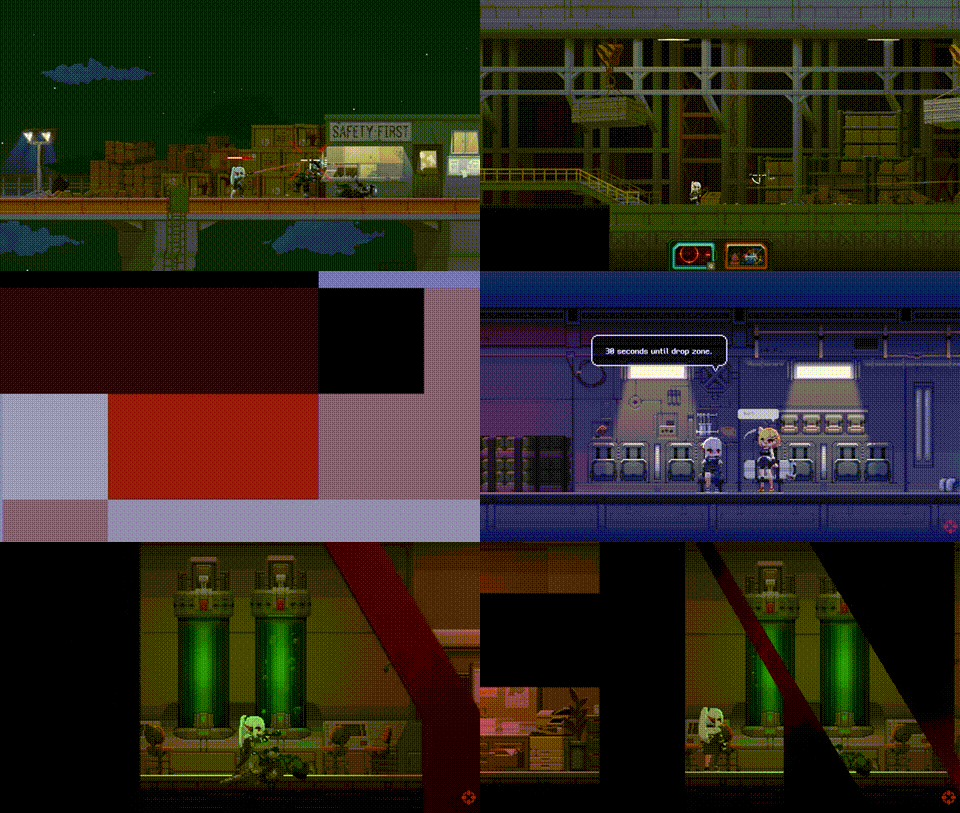
Sonic Pico Park had a substantial presence at Tokyo Game Show 2026 through SEGA’s wider Sonic lineup, combining a playable exhibition build, dedicated stage programs and promotional items rather than appearing only as a logo or partner mention. The game was shown at the SEGA/ATLUS booth in Makuhari Messe Hall 4-N01, where SEGA’s official lineup materials identified hands on access, special programs and giveaways. Steam is listed as the exhibition platform for the playable Sonic Pico Park build, although that should not be interpreted as a statement of platform exclusivity or as proof that the complete retail version was available at the show.
Tokyo Game Show’s dates require an important correction because the physical event did not run for its entire originally announced schedule. The exhibition was initially planned for September 17 through September 21, 2026, with September 17 and 18 designated as business days and September 19 through 21 as public days.
Organizers later cancelled the September 21 physical exhibition because of the approaching Typhoon No. 25, Dujuan, citing risks from heavy rain, strong winds and transportation disruption. September 20 continued as planned, which means the physical exhibition effectively ran from September 17 through September 20. Official online programming scheduled for September 21 still continued, so a video or broadcast dated that day should not be treated as evidence that the exhibition halls remained open.
SEGA’s Japanese lineup page confirmed a special Sonic Pico Park exhibition version for visitors to play, but did not publish a complete breakdown of stages, session duration or guaranteed playable characters. Earlier Summer Game Fest coverage described an eight stage demonstration for four players, but that was a separate earlier build and should not be automatically treated as identical to the TGS version. The exhibition listing confirms booth play for Sonic Pico Park, not a downloadable public demo on Steam or console storefronts.
A more recent account provides a narrower picture of what one visitor actually experienced at TGS. In a preview published on October 3, Source Gaming described a Sonic Pico Park demonstration of approximately four levels, with Sonic and Shadow using charged Spin Dashes to climb curved walls and a player transforming into Tails to carry others across gaps. The writer did not try Knuckles or Amy during that session. This is useful evidence about a particular TGS playthrough, but not an official inventory of every stage or character available across the exhibition. It also gives readers a concrete reason to distinguish the Tokyo demonstration from the eight stages documented at Summer Game Fest.
SEGA also scheduled two dedicated Sonic Pico Park programs. “Let’s Play SoniPico Together! #1” was set for September 18 from 13:10 to 13:40 JST, with producer Shintaro Shimazu, director Shunsuke Miyake, Yuki from Bullet Train and To-i Tachibana from DISH//. “Let’s Play SoniPico Together! #2” followed on September 20 from 11:40 to 12:10 JST with Shimazu, Airi Hiruta, MEW from Meme Tokyo and Riimoko-chan. These were distinct stage appearances for Sonic Pico Park rather than two names for one presentation. SEGA separately announced a broader Sonic developer livestream on the evening of September 18 featuring Takashi Iizuka and other developers, including Miyake.
The September 20 presentation also expanded the known Sonic Pico Park character lineup. Coverage reported Cream the Rabbit and Cheese the Chao as newly revealed playable characters, while Big the Cat was shown as a large character appearing in particular stages whose strength assists progression rather than as a normal selectable roster member. This distinction is important because the game’s known cast continued to expand after its initial reveal, and not every recognizable Sonic character appearing in footage should automatically be described as playable.
For viewers revisiting the Sonic Pico Park demonstrations, the most revealing moments are the transitions between obstacles rather than the successful jumps alone. A useful way to assess this kind of cooperative design is to watch how players identify a problem, decide who should move first and reorganize when their initial plan fails. That reveals whether teamwork involves meaningful decisions or merely everyone pressing the same button. A short demonstration can illustrate those interactions, but evaluating the complete game will also require seeing how frequently it introduces fresh combinations and whether later stages give every participant something worthwhile to contribute.

Sonic Pico Park Release Date, Platforms, Cross Play and Multiplayer Support
The official Sonic Pico Park product site lists November 12, 2026 as the release date, while the Steam storefront displays November 11. Both dates appear in current official listings, so the difference should be reported rather than silently reconciled. A time zone or regional storefront difference could explain the discrepancy, but the available material does not establish a complete worldwide unlock schedule for Sonic Pico Park. The release itself was already announced before Tokyo Game Show, with the November 12 date reported on September 9, so TGS served as a major promotional and hands on opportunity rather than the first reveal of the launch timing.
Release listing update, October 9, 2026: The Sonic Pico Park Steam page retrieved on this date displays November 12, matching the official product site. The November 11 reference above therefore should not be treated as confirmation of a separate early launch. Exact regional unlock hours remain unspecified in the listings checked.
The official Sonic Pico Park platform list includes Nintendo Switch, Nintendo Switch 2, PlayStation 5, Xbox Series X|S, Xbox One, Windows and Steam. Xbox One is particularly easy to overlook because some headlines focus only on the newer Xbox hardware, but it is included in the published platform information. The broad list confirms Sonic Pico Park as a multiplatform release, but it does not establish shared purchases between generations, transferable saves, identical performance targets or unified controller arrangements across every version.
The game supports two to eight players in both local and online multiplayer. The published Sonic Pico Park description says that all content can be played at any supported player count, which refers to the advertised range of two to eight players and should not be stretched into a claim of single player support. On PC, up to seven local players can join an online session from one machine, allowing a group sharing a PC to combine with remote players without increasing the overall eight player limit.
For a couple or two friends playing Sonic Pico Park, the important implication is that assembling a full party is not an advertised requirement for accessing the content. Larger groups have more participants to coordinate, but the description does not promise that every puzzle will use an identical arrangement at every player count. Likewise, the mixed local and online PC feature describes people, not additional slots for each computer. Seven people sharing one PC would leave space for one remote participant within the stated maximum. It does not mean seven local players can join an already full online party.
Cross platform multiplayer is explicitly confirmed for Sonic Pico Park. The Steam description says online play supports cross play, and the September release announcement also includes the feature. That means cross play is part of the announced design rather than an unresolved question. However, the confirmation does not by itself document every platform pairing, invitation method, account requirement or save transfer feature, so cross play should not be confused with cross save or universal cross buy.
Steam Remote Play Together is also listed for Sonic Pico Park, but it operates differently from native cross platform multiplayer. Remote Play Together lets one host run the game and stream the shared local session to invited players while receiving their inputs remotely. Native online cross play instead allows different game installations to communicate through the game’s own multiplayer systems. Groups planning how to play should therefore distinguish between streamed local play and native cross platform sessions rather than treating the two features as interchangeable.
Valve’s explanation of Remote Play Together adds a practical ownership distinction: the host owns and runs the game, while invited participants receive the stream and send their controls back. Guests do not each need to purchase that hosted game to participate through this feature. However, a streamed session depends on the host computer and network connection, so the eight player game limit should not be mistaken for a guarantee that every connection can deliver a comfortable stream for eight people. Before a longer Sonic Pico Park session, a group should test responsiveness, controller assignments and voice levels rather than discovering configuration problems during a coordinated puzzle.
The Sonic Pico Park Steam listing also offers preliminary PC information. It specifies a 64 bit processor and operating system, Windows 11 and an Intel Core i5, but does not identify the processor generation or provide a complete graphics, memory and storage specification. That is not enough detail to guarantee compatibility with an older computer simply because the game uses compact pixel graphics. Steam additionally lists achievements, Steam Cloud and interface support for 14 languages, including English, Japanese, French, German, Korean and both Simplified and Traditional Chinese. Interface support should not be interpreted as confirmation of fully voiced localization.
Sonic Pico Park Gameplay, Characters and Cooperative Puzzle Mechanics
Sonic Pico Park is a two dimensional cooperative action puzzle game that preserves PICO PARK’s focus on teamwork while integrating recognizable Sonic mechanics. Steam credits TECOPARK as developer and PICO PARK Inc. as publisher, while SEGA provides the Sonic collaboration and exhibition support. Appearing in SEGA’s booth therefore does not make SEGA the publisher listed for the game. Developer interviews reinforce that relationship: producer Shintaro Shimazu has discussed the pressure of handling a major licensed property, while Sonic series general producer Takashi Iizuka encouraged the team to preserve PICO PARK’s existing design identity in Sonic Pico Park rather than turn the project into a conventional Sonic game.
The basic goal in Sonic Pico Park is straightforward: everyone must reach the goal plate on the right side of the stage. The challenge comes from arranging a solution collectively instead of simply reaching the exit individually. Sonic elements such as the Spin Dash, rings, loops and springs change how teams move through those puzzles rather than replacing cooperation with pure speed. Every playable character can use the Spin Dash, while some characters also retain recognizable movement abilities. Preview coverage described Tails flying and carrying teammates and Knuckles gliding through the air, providing concrete examples of differentiated roles without establishing every final move or control.
The confirmed Sonic Pico Park character lineup has grown over time. Early official material introduced Sonic, Tails, Knuckles, Amy and PICO CAT. Sonic’s anniversary presentation later added Shadow the Hedgehog and Sonic PICO CAT as playable characters, while the September 20 TGS program introduced Cream and Cheese. Big the Cat was also revealed there, but as a helper appearing in particular stages rather than a normal selectable character. The available material also indicates that further announcements remained possible, so the confirmed cast should be treated as an expanding roster rather than a definitive final total inferred from the maximum player count.
Documented Sonic Pico Park puzzles show that teamwork extends beyond having multiple players move through the same course. SmashPad described players stacking on top of one another to create a staircase and reach a switch, turning teammates into part of the stage geometry. TechRadar described a laser challenge in which each player needed a ring to survive, making resource distribution a group problem rather than an individual collection goal. MonsterVine reported an earlier tether puzzle where four players were linked together, with two descending to retrieve a key while the remaining two served as anchors above.
Famitsu’s earlier Sonic Pico Park preview provides another example of how familiar PICO PARK obstacles have been redesigned. A numbered wall required the indicated minimum number of players to perform a Spin Dash together to break it. The challenge was therefore not just gathering enough characters beside an obstacle, but coordinating their action. The same report described a recovery option when one person collected too many rings: another player could hit that teammate with a Spin Dash to scatter the rings again. Both observations concern the Summer Game Fest build, rather than a separately verified inventory of TGS mechanics.
The practical lesson from these examples is to separate preparation from execution. First identify what the obstacle requires, then distribute positions or resources, and only then trigger the action. A failed attempt becomes more informative when the group changes one part of its approach instead of having everybody improvise simultaneously. For the demonstrated ring and wall challenges in Sonic Pico Park, a brief readiness check would be more useful than repeatedly rushing forward. This is a suggested approach based on the previewed mechanics, not a claim that the finished game forces teams to follow a particular solution.
These examples highlight the central design idea behind Sonic Pico Park. A player’s movement may be valuable because it enables somebody else rather than because it brings that player closer to the goal. Speed, timing, positioning and character abilities become resources that the team coordinates. Familiar Sonic movement therefore takes on a different purpose in this crossover, where the memorable moment may be a carefully timed assist or shared solution rather than an individual speed run.
A sensible starting approach for teams in Sonic Pico Park is to give each participant a clear temporary responsibility without treating those responsibilities as permanent character classes:
- Stabilize the formation. In a stacking puzzle, players supporting the bottom should hold their positions while the climber moves. Unnecessary adjustments make it harder to identify whether the formation or the jump needs changing.
- Agree on the trigger. Before a shared action, choose a simple spoken cue and confirm that everyone is ready. A clear signal reduces uncertainty about whether the group should prepare, move or wait.
- Protect the supporting players. Retrieving an object is only part of a tether puzzle in Sonic Pico Park. The players holding position should know when their teammates are safe before changing the arrangement.
- Explain the next attempt. After a mistake, describe the adjustment rather than blaming a player. Saying who will move first and who will remain still gives the next attempt a specific purpose.
These are practical suggestions drawn from the cooperative situations described above, rather than additional announced systems or selectable roles in Sonic Pico Park. The same distinction matters when discussing character abilities: an ability that helps someone cross a gap does not automatically solve the next obstacle for everyone. The useful question is not simply which character moves fastest, but whose action creates a route the entire group can use. Rotating responsibilities may also help a group discover whether a different player notices an easier sequence, rather than repeating the same unsuccessful plan.
PICO PARK 2 provides the clearest point of comparison because it already supports cooperative play for two to eight players and cross platform multiplayer. Sonic Pico Park is not distinguished simply by having online cross play. Its identity comes from incorporating distinctive Sonic character movement, the shared Spin Dash and familiar obstacles into PICO PARK’s cooperative structure. PICO PARK 2 separately advertises 60 WORLD levels, eight BATTLE rule variations and seven ENDLESS variations, but those figures belong to PICO PARK 2 and should not be transferred to Sonic Pico Park without confirmation.

Sonic Pico Park TGS Giveaways, 35th Anniversary Role and the Purpose of the Crossover
SEGA used Tokyo Game Show to support Sonic Pico Park with several different types of promotional items, and those categories should be kept separate. Visitors who played the demo could receive an original uchiwa hand fan, with eight designs available and no ability to select a preferred design. This was specifically a reward for participating in the demonstration rather than a retail bonus or product included with the final game.
Paid merchandise was separate from the giveaway. SEGA listed Sonic Pico Park embroidered T shirts and die cut stickers featuring Sonic and Shadow among its merchandise offerings. The company also ran a broader account registration campaign involving a Sonic and Tails keychain, which required attendees to show the appropriate campaign screen while logged in and was limited to one item per person while supplies lasted. A product described as “available at TGS” could therefore have been a paid item, a gameplay reward or a promotion tied to an account, and those categories should not be merged.
The game is explicitly positioned as part of Sonic the Hedgehog’s 35th anniversary celebrations. SEGA’s Sonic Pico Park product information also highlights a personal connection behind the collaboration, noting that director Shunsuke Miyake spent 15 years at SEGA before the project brought his PICO PARK work together with Sonic. The anniversary framing therefore has both promotional and creative significance.
The commercial context surrounding Sonic Pico Park also matters. The official product page describes PICO PARK as a series with more than eight million copies sold worldwide. That figure refers to the existing series, not sales of the unreleased Sonic collaboration. It shows that the project combines Sonic with an established cooperative format rather than an untested concept. From a design perspective, this makes preserving PICO PARK’s identity especially important: existing players need more than familiar characters, while newcomers need to understand what makes cooperating with those characters enjoyable.
The Sonic Pico Park development interviews suggest the crossover was deliberately designed to preserve PICO PARK rather than simply place Sonic characters inside a familiar franchise template. Iizuka discussed the opportunity to reach people who may know Sonic through films or other media but do not regularly play traditional Sonic games, while the development team emphasized approachable cooperation. That gives the collaboration a purpose beyond anniversary branding, with recognizable Sonic characters and mechanics serving as an entry point into a slower, more social style of play.
A June interview with Denfaminicogamer adds detail about how that balance developed. Shimazu and Miyake described initially discussing something closer to character skins, before Sonic’s distinctive actions suggested a more substantial new game. They also explained that a playable prototype helped communicate the idea to SEGA more effectively than the initial written proposal. That background gives the Sonic Pico Park TGS demonstration particular relevance: showing people cooperating is an effective way to explain a project whose appeal is difficult to convey through a crossover logo alone.
Miyake also described designing Sonic Pico Park around mishaps that produce conversation rather than leaving somebody feeling responsible for ruining the experience. His example involved a Spin Dash collision where a player tried to stop but could not brake in time. The intention was for that accident to become something teammates could discuss and laugh about before succeeding together. This helps explain why unpredictable movement is not necessarily at odds with the cooperative premise. The design challenge is making those incidents understandable and recoverable enough that they encourage another attempt instead of ending the session in frustration.
The creative appeal ultimately comes from changing what success with Sonic looks like. Instead of measuring progress mainly through individual speed and precision, Sonic Pico Park asks players to coordinate movement, share resources, wait for one another and use character abilities to create opportunities for the rest of the group. The finished game will determine how consistently that idea works across its full content, but the Tokyo Game Show demonstration, stage programs and documented previews already establish a clear design rationale for combining the two series.

Frequently Asked Questions (FAQs)
- What is Sonic Pico Park?
Sonic Pico Park is a cooperative two-dimensional action-puzzle crossover that combines PICO PARK’s teamwork-focused design with Sonic characters and mechanics. Familiar elements such as the Spin Dash, rings, loops and springs are incorporated into puzzles where success depends on players helping one another rather than simply racing individually to the goal. - Was Sonic Pico Park playable at Tokyo Game Show 2026?
Yes. SEGA’s official Tokyo Game Show lineup confirmed a special exhibition version that visitors could play at the booth. That establishes hands-on access during the event, but it does not mean the complete retail game was available or that the same demonstration could be downloaded publicly through Steam or console storefronts. - Why was Tokyo Game Show 2026 canceled on September 21?
Organizers canceled the final day of the physical exhibition because of the approaching typhoon and the risks associated with strong winds, heavy rain and possible public-transport disruption. The cancellation applied specifically to in-person attendance at Makuhari Messe, while the official online programs scheduled for September 21 continued. - What is the Sonic Pico Park release date?
The official Sonic Pico Park product website lists November 12, 2026, while the Steam storefront checked for this article displays November 11, 2026. Both are official listings, so the safest approach is to preserve that distinction rather than assume one universal worldwide unlock time without a complete regional release schedule. - Which platforms are listed for Sonic Pico Park?
The published platform list includes Nintendo Switch, Nintendo Switch 2, PlayStation 5, Xbox Series X|S, Xbox One, Windows and Steam. That confirms a broad multiplatform release, but listing both generations of Nintendo hardware does not by itself establish cross-buy, a free upgrade path, shared saves or identical performance between versions. - How many people can play Sonic Pico Park?
Sonic Pico Park supports two to eight players in both local and online multiplayer. The published description says all of the game’s content can be played throughout that supported range, meaning smaller and larger groups within the two-to-eight-player limit can take part. It does not establish a separate one-player mode below the advertised minimum. - Does Sonic Pico Park support cross-play?
Yes. Cross-platform multiplayer is explicitly included in the published feature descriptions. That means players on different supported platforms are intended to be able to cooperate online, but the cross-play confirmation does not automatically establish cross-save, shared purchases, identical account requirements or every individual platform-pairing detail. - Are Sonic, Tails, Knuckles, Amy and PICO CAT the entire cast?
No. Those characters were part of the earlier announced lineup, but later reveals expanded the cast. Shadow and Sonic PICO CAT were subsequently announced as playable characters, while the September Tokyo Game Show presentation added Cream and Cheese. Big the Cat was also revealed, although coverage describes him as a stage-specific helper rather than a standard selectable character. - Is Steam Remote Play Together the same as cross-platform multiplayer?
No. Steam Remote Play Together allows one person to run the game locally and stream that shared session to invited players, whose controller inputs are sent back to the host. Native cross-platform multiplayer instead connects separate game installations through the game’s own online systems, so the two features use different methods even though both allow remote cooperative play. - Are Sonic Pico Park’s final level count and modes confirmed by PICO PARK 2’s website?
No. PICO PARK 2’s advertised 60 WORLD levels, eight BATTLE rule variations and seven ENDLESS variations apply specifically to PICO PARK 2. Those figures should not be transferred to Sonic Pico Park unless its own developers publish matching information, because the crossover may use a different amount of content, mode structure or progression system.

Conclusion
Sonic Pico Park’s Tokyo Game Show 2026 appearance demonstrated the direction of the collaboration through playable access and dedicated presentations. The strongest gameplay evidence points toward puzzles in which character movement, positioning and assistance matter as much as reaching the exit. Earlier hands-on reports describe teammates becoming platforms, sharing responsibility for hazards and coordinating solutions that no individual can complete alone.
The essential distinctions remain important. September 17 to 21 was the original TGS schedule, not the final physical exhibition period. Earlier Summer Game Fest demonstrations do not establish the exact content of the TGS build. Character appearances do not all imply identical playable roles, and platform availability does not automatically establish purchase or save-transfer arrangements.
Taken together, the evidence presents Sonic Pico Park as a distinct cooperative interpretation of Sonic rather than simply a conventional Sonic game with extra players. Its full release will determine how successfully that idea sustains itself beyond the demonstrated puzzles.
Sources and Citations
- Tokyo Game Show, Physical Event Cancellation Notice, September 19, 2026 : Official organizer notice confirming that September 20 would proceed as scheduled but the September 21 physical event would be cancelled because of Typhoon No. 25 and associated safety and transport concerns. It also announces ticket refunds, with detailed procedures to follow. The publication date is September 19, not September 21 as stated in the supplied citation. Tokyo Game Show 2026
Citation: Important Notice Regarding September 20 and 21 Events and Typhoon No. 25. (Tokyo Game Show) - Tokyo Game Show, Online Programming Update, September 20, 2026 : Follow up announcement distinguishing the cancelled physical event from broadcasts continuing on September 21. It confirms that the official online program would proceed and provides information about selected stage broadcasts, exhibitor streams and archived content. This is the specific reference for online arrangements rather than assuming every originally scheduled booth activity continued remotely. Tokyo Game Show 2026
Citation: Notice Regarding the Online Event on September 21. (Tokyo Game Show) - Tokyo Game Show, Ticket Refund Guidance, September 25, 2026 : Detailed organizer guidance explaining eligibility and refund procedures for tickets affected by the September 21 cancellation. It separates instructions by ticket seller, ticket category and purchaser location, including arrangements for unused Premium Tickets and commemorative gifts. This later announcement supplies the practical information that was not yet finalised in the original cancellation notice. Tokyo Game Show 2026
Citation: Refunds for Tickets for September 21. (Tokyo Game Show) - Tokyo Game Show, Official 2026 Website and Event Information : Official event hub providing access to visitor guidance, ticket information, venue maps, exhibitor listings, stage programs and organizer announcements. Its promotional material records the original September 17 to 21 schedule at Makuhari Messe. The dated notices linked above establish the subsequent cancellation and should take precedence when describing which activities actually remained available. Tokyo Game Show 2026
Citation: Tokyo Game Show 2026 Official Website. (Tokyo Game Show) - SEGA and ATLUS, Official Tokyo Game Show Exhibition Website : Official exhibition hub collecting the game lineup, demonstration information, stage schedule, promotional items and merchandise updates. It lists two Sonic Pico Park special programs alongside Sonic Racing: CrossWorlds activities and other SEGA and ATLUS presentations, providing a publisher controlled record of the announced booth content and links to related exhibition materials. Sega TGS
Citation: SEGA and ATLUS at Tokyo Game Show 2026. (SEGA) - SEGA, Stage Program and Broadcast Announcement, September 11, 2026 : Official announcement providing the stage timetable, participating guests and YouTube broadcast links. It lists Sonic Pico Park presentations for September 18 and 20, including appearances by members of the development team. This working announcement replaces the unavailable program address and documents the original schedule before the later weather related changes. SEGA セガ | 製品情報
Citation: Tokyo Game Show 2026: SEGA and ATLUS Stage Events and Broadcast Information. (SEGA) - SEGA and ATLUS, Official Merchandise Information : Exhibition merchandise guide featuring Sonic Pico Park clothing alongside other Sonic, SEGA and ATLUS products. It explains purchase bonuses, ordering and payment arrangements at the venue, and subsequent online and retail sales. The page explicitly distinguishes venue exclusive items from products available online, helping avoid the assumption that every exhibition item can be ordered afterward. Sega TGS
Citation: Tokyo Game Show 2026: SEGA and ATLUS Merchandise. (SEGA and ATLUS TGS Website) - SEGA and PICO PARK, Official Sonic Pico Park Announcement and Website : SEGA’s June 8 announcement explains the collaboration, cooperative puzzles and incorporation of Sonic mechanics such as rings, loops and Spin Dash. The dedicated game website provides the announced November 12, 2026 release date and platform lineup. These working official references replace the supplied SEGA Asia address, which could not be retrieved. SEGA セガ | 製品情報
Citation: SEGA’s Sonic Pico Park Announcement and Sonic Pico Park Official Website. (SEGA) - Steam, Sonic Pico Park Official Store Page : Dedicated listing confirming the planned November 12, 2026 release, with TECOPARK as developer and PICO PARK Inc. as publisher. It describes local and online cooperation for two to eight players and lists Steam achievements, cloud saves and Remote Play Together. The direct product page below replaces the general Steam search link supplied. Steam Store
Citation: Sonic Pico Park on Steam. (Steam) - GamesRadar+, Hands On Preview and Developer Interview : Summer Game Fest feature combining firsthand observations of cooperative puzzles with interviews about the collaboration’s origins. It explains how rings, Spin Dash and character abilities affect teamwork, while covering Takashi Iizuka’s initial reservations and the influence of Sonic Mania’s development partnership. This article supports both GamesRadar references supplied and concerns a preview build rather than a final review. GamesRadar+
Citation: Even Takashi Iizuka Wasn’t Sure About Sonic Pico Park at First. (GamesRadar+) - SEGA, Official Corporate News and Press Releases : Corporate news hub organised by year, with company and product or service categories. It provides a starting point for locating SEGA’s original announcements and business information. For the specific Sonic Pico Park collaboration and Tokyo Game Show arrangements, the dedicated game and exhibition announcements above provide more precise references than this general archive. 株式会社セガ
Citation: SEGA Official News and Press Releases. (SEGA Corporation)
Recommendations
- Photoshop Beta Gets a New Tool That Transforms 2D Objects Into 3D Images: Rotate Object Explained
- A First Look at Houdini 22: 3D Gaussian Splats, Copernicus Updates, and USD World Building
- Tomb Raider TV Series: Everything We Know About Sophie Turner as Lara Croft (Prime Video)
- Lord of the Rings Legend Andy Serkis Joins Critical Role’s the Legend of Vox Machina Season 4 Cast in Major New Role
- Steam Machine (2026): Release Date, Price, Specs, and SteamOS Explained
- Avatar: Fire and Ash Is Headed to Streaming Earlier Than Expected (Release Date Tracking)
- John Romero Announced as Gamescom Asia x Thailand Game Show 2026 Keynote Speaker
- Avengers: Endgame Re-Release Footage Is Critical to Doomsday
- Ghost Recon Wildlands 4K 60 FPS Update and New Last Rites Mission: Everything We Know
- Crimson Desert Guides: Beginner Tips, Combat Basics, Best Weapons, Bosses, and Exploration Walkthroughs



































































































