







In This Article (9 sections)
Sony’s January 2028 PlayStation Disc Policy and What it Actually Changes
Sony has clarified that its January 2028 disc policy does not mean every existing PlayStation physical game will suddenly disappear from retail shelves. The important distinction is between new PlayStation games released after the cutoff and PlayStation disc games that already exist, or are scheduled to release, before January 2028. Sony’s original announcement stated that physical disc production for all new games releasing on PlayStation consoles will be discontinued starting in January 2028. However, games released before that date in disc format are not affected in the same way by the transition.
That clarification matters because many PlayStation users initially understood the announcement as a complete shutdown of physical media support. Follow-up reporting made the policy more specific: publishing partners will still be able to place reorders for existing PlayStation disc games after January 2028. In other words, eligible older titles can continue receiving disc reprints even after new releases move to digital distribution.
Based on the clarification reported after Sony’s announcement, publishers can still reorder existing PlayStation disc games after January 2028 as long as the game already exists in physical disc format before the cutoff. This means a publisher with an older PlayStation title already available on disc may still request additional stock if there is continued demand from retailers or players.
This does not appear to create a path for brand-new PlayStation games released after January 2028 to launch on disc. Instead, it preserves limited reprint options for games that are already part of the physical disc ecosystem. In practical terms, publishers may still restock popular older titles, anniversary reprints, complete editions already approved before the cutoff, or catalog games that retailers continue to sell.

How PlayStation Disc Reprints and Reorders Will Work After 2028
Physical disc reprints after January 2028 are expected to continue only for eligible existing games. This is the main difference between “disc production ending” and “disc reprints ending.” Sony is ending physical disc production for new PlayStation releases from January 2028, but follow-up reports say reorders for already existing disc games can continue.
That gives publishers and retailers some breathing room during the transition. A successful 2027 PlayStation game, for example, may still receive more physical copies later if it was already released on disc before the cutoff. By contrast, a new game launching after the cutoff would not be expected to receive a standard PlayStation disc release. The policy protects older titles from an immediate cutoff, but it does not preserve discs as the default format for future PlayStation releases.
Sony’s new rules effectively separate PlayStation games into two broad categories. The first category includes existing or pre-cutoff disc games. These are titles already released on disc, or planned for disc release before January 2028. Those games are not directly affected by the new rule for future releases. The second category includes new PlayStation games releasing from January 2028 onward. These games will be available through the PlayStation Store and digital retail channels rather than newly manufactured physical discs.
Older PlayStation games may still get disc reorders if they were already released physically before the January 2028 cutoff. That is the part of the clarification that matters most to collectors, retailers, and publishers with long-selling catalog titles. However, the fact that a game can still be reordered does not mean every older title will definitely stay in print. Reprints still depend on publisher decisions, retailer demand, manufacturing arrangements, licensing, and commercial value. Games with expired music licenses, sports licenses, delisted content, or weak retail demand may still become scarce.
For publishers, the main post-2028 disc option appears to be reordering existing PlayStation disc games that were already in the physical catalog before the cutoff. This can help keep older titles available at retail when demand justifies another run. It may be especially useful for evergreen franchises, major first-party hits, popular third-party titles, and games that continue selling years after release. It also allows retailers to maintain a limited physical PlayStation section instead of seeing disc games vanish immediately after January 2028.
Why Sony is Moving New PlayStation Releases Toward Digital Distribution
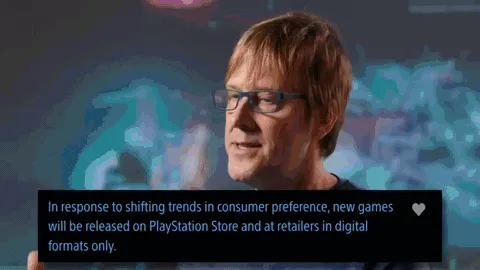
Sony’s policy begins in January 2028 and applies to new games releasing on PlayStation consoles. From that point forward, new releases will be sold in digital formats through the PlayStation Store and participating retailers. Existing disc games remain in a different category, but the direction for new PlayStation releases is clear.
The move reflects a wider industry trend away from physical media. Reuters reported that digital sales made up about 80% of Sony’s full-game sales in fiscal year 2025, which helps explain why Sony sees digital distribution as the dominant format for future releases. Digital sales also keep more of the buying process inside the PlayStation ecosystem and reduce the need for manufacturing, shipping, and retail logistics.
Still, the announcement caused concern because physical discs are not just another delivery method for many players. They also represent collection value, resale rights, lending, gifting, offline installation, and a stronger sense of ownership than digital licenses. That is why Sony’s clarification has become part of a broader debate about access and ownership, rather than a simple change in format.
For current physical game owners, Sony’s digital shift does not immediately erase the value of their discs. Players can still use existing discs on compatible hardware, and eligible older disc games may still be reordered after 2028. The bigger issue is future access. A digital-first PlayStation ecosystem gives Sony and publishers more control over pricing, storefront availability, licensing, and distribution. Physical owners may become more dependent on older consoles or disc-compatible hardware, while collectors may see some games rise in value if publishers stop reprinting them.

What Current Disc Owners, Retailers, and Collectors Should Expect
Current PlayStation disc games remain part of the PlayStation ecosystem. Players who already own them are not being told to replace them with digital versions. Retailers may continue selling available stock, and publishers may still reorder eligible games when demand supports it. The key change is that current disc games are becoming part of a legacy physical catalog rather than the standard model for new PlayStation releases.
Over time, physical PlayStation shelves may become smaller and more focused on older titles, collector editions, and remaining stock. Sony’s clarification reduces the immediate fear that all PlayStation discs would become impossible to restock overnight, but it does not fully satisfy supporters of physical media. Existing games can still have a retail life after 2028, even as Sony pushes new releases into digital formats.
For collectors, the final years before the cutoff may become especially important. If only existing games can be reordered after January 2028, then games released in 2026 and 2027 could represent the last wave of standard PlayStation physical releases. Collectors are likely to watch reprint decisions closely, especially for smaller games, niche releases, and collector-focused editions that may become harder to find if publishers decide not to keep them in circulation.
Reprint uncertainty may also affect prices. If a game remains popular but receives limited reorders, physical copies could become more expensive. Scarcity will not apply equally to every title, since value depends on demand, condition, rarity, licensing, and whether publishers continue making more copies available. Still, the policy gives physical buyers a reason to pay closer attention to which games receive disc releases before January 2028.
PlayStation Store Convenience Versus Physical Disc Ownership
The PlayStation Store offers convenience, instant access, preloading, digital libraries, and no need for disc swapping. Digital games also help publishers avoid manufacturing, shipping, and retail costs. For Sony, digital sales can strengthen margins and keep purchases within the PlayStation ecosystem. These advantages help explain why the company is moving new PlayStation releases toward digital formats after January 2028.
Physical disc ownership offers a different set of benefits. Players can resell discs, lend them to others, buy used copies, collect boxed editions, and preserve games outside a single storefront account. These qualities are central to why Sony’s disc policy has become an ownership debate. For many players, the concern is not only how games are purchased, but how long they remain accessible and how much control the buyer has after purchase.
Sony’s digital future does not immediately cancel existing game discs, but it does mark a major shift in PlayStation history. Physical games have been central to PlayStation since the original console, and the move toward digital releases for new games changes how players buy, preserve, and trade games. Existing discs now occupy a transitional role. They remain usable and may still be reordered, but they are no longer the direction Sony is building toward for new releases after January 2028.
After January 2028, PlayStation physical games will likely exist in two main forms: remaining stock already printed before the cutoff and reorders of eligible existing disc games. New PlayStation games released after that date are expected to be digital only. For players who value physical ownership, the practical takeaway is to pay attention to disc releases before January 2028, especially for games they want to preserve, lend, resell, or collect. Sony’s clarification protects existing disc games from an immediate cutoff, but it does not reverse the broader move toward digital distribution.

Frequently Asked Questions (FAQs)
- What did Sony clarify about PlayStation disc reorders?
Sony clarified, through follow-up reporting, that existing PlayStation disc games may still be reordered after January 2028. The cutoff mainly applies to new games released after that date, not to every PlayStation game that was previously released on disc. This means eligible older titles can continue to receive additional physical stock if publishers and retailers choose to support them. - Will Sony stop making all PlayStation discs in January 2028?
Sony will stop physical disc production for new PlayStation games starting in January 2028. However, that does not mean every PlayStation disc disappears from production or retail at once. Existing games already released in disc format, or planned for disc release before the cutoff, are treated differently and may still be reordered where eligible. - Can publishers reorder older PlayStation disc games after 2028?
Yes. Reports say publishers can still place reorders for existing PlayStation disc games after January 2028, provided those games were already part of the physical disc catalog before the cutoff. This gives publishers a way to restock older titles if there is enough demand, although reorders are still subject to business, licensing, and retail considerations. - Will new PlayStation games after January 2028 come on disc?
No. Sony’s announcement says new games released on PlayStation consoles after January 2028 will be available in digital formats only. The reorder clarification applies to existing physical games, not to brand-new post-cutoff releases. As a result, new PlayStation games after that date are not expected to receive standard disc launches. - What happens to PlayStation games I already own on disc?
Your existing PlayStation discs are not being removed by this policy. They should remain usable on compatible PlayStation hardware, and the announcement does not require owners to replace them with digital versions. Long-term access will still depend on compatible hardware, and some games may also rely on patches or online services depending on how they were made. - Does this mean PlayStation is becoming digital-only?
For new game releases after January 2028, yes, PlayStation is moving to a digital-only release model. However, existing disc games may continue to be sold from remaining stock or reordered if they qualify under the reported clarification. So the shift is focused on future releases, while older physical games may continue to circulate for some time. - Will physical PlayStation games become more valuable?
Some physical PlayStation games may become more valuable if demand stays strong and reprints become limited. However, value is not guaranteed for every game. Prices can depend on rarity, popularity, condition, licensing issues, whether the game remains available digitally, and whether publishers continue placing reorders for physical copies. - Does the PlayStation Store provide the same ownership as discs?
Not exactly. Digital purchases are tied to accounts, licenses, storefront availability, and platform policies. Physical discs offer benefits such as resale, lending, used purchases, and collecting, although they also depend on compatible hardware and may sometimes require patches or online features. The two formats offer different kinds of access and control. - Should collectors buy PlayStation discs before 2028?
Collectors who care about physical ownership should pay closer attention before January 2028. That date marks the end of new PlayStation disc releases, even if older eligible games may still receive reorders afterward. Games released in the years leading up to the cutoff may become especially important for collectors who want physical copies while they are still widely available. - Are PlayStation physical games completely dead after January 2028?
No. Physical PlayStation games are not completely dead after January 2028. The format can continue through existing retail stock and eligible reorders of games already released on disc before the cutoff. However, new PlayStation releases are expected to move fully digital, which means physical discs will no longer be the standard format for future games.

Conclusion
Sony’s clarification makes the PlayStation disc policy less absolute than many players first feared. Physical disc production for new PlayStation games will end in January 2028, but existing disc games are not being erased from the market. Publishers can still reorder eligible PlayStation disc titles that were already released physically before the cutoff, giving retailers, collectors, and current disc users some continued access to older physical games.
The long-term direction is still clear. Sony is moving PlayStation toward a digital-first future, and new releases after January 2028 will no longer follow the traditional disc model. Current PlayStation disc users are protected in the short term, but the future of physical ownership will depend on reprints, hardware compatibility, publisher support, and consumer demand.
Sources and Citations
- Sony Interactive Entertainment, PlayStation Blog, July 1, 2026: Official confirmation that production of physical game discs for all new PlayStation releases will end in January 2028. Games released, or already scheduled for disc release, before that date are not affected.
- Source: Physical disc production ending in January 2028 for new games releasing on PlayStation consoles
- Citation: Shuman, S. (2026, July 1). Physical disc production ending in January 2028 for new games releasing on PlayStation consoles. PlayStation.Blog. PlayStation.Blog
- Reuters, July 1, 2026: Reports Sony’s decision to end physical disc production for new PlayStation games from January 2028, explaining the shift toward digital distribution and noting that digital downloads accounted for approximately 80% of Sony’s full-game software sales in fiscal 2025.
- Source: Sony to end discs for new PlayStation releases as gaming shifts online
- Citation: Reuters. (2026, July 1). Sony to end discs for new PlayStation releases as gaming shifts online. Reuters. Reuters
- Video Games Chronicle, July 4, 2026: Reports that Sony told developers and publishers they can continue ordering physical discs for games released before January 2028. It also discusses Sony’s plans to let publishers sell new games through retail digital codes.
- Source: Sony tells developers they’ll still be able to make discs – but only for older games
- Citation: Robinson, A. (2026, July 4). Sony tells developers they’ll still be able to make discs – but only for older games. Video Games Chronicle. VGC
- TweakTown, July 3, 2026: Examines Sony’s internal guidance to third-party publishers, confirming that previously released PlayStation games can receive disc reprints after January 2028, while new releases will move to digital-only distribution.
- Source: PlayStation games out before 2028 can still get disc reprints
- Citation: Strickland, D. (2026, July 3). PlayStation games out before 2028 can still get disc reprints. TweakTown. TweakTown
- Notebookcheck, July 4, 2026: Explains how Sony’s policy still permits physical disc reprints for older PS5 games after 2028. It also covers the possibility of retail download-code products and the reaction from physical-game supporters.
- Source: PlayStation to make some physical PS5 discs after 2028, as protests over digital games grow
- Citation: Corsetti, A. (2026, July 4). PlayStation to make some physical PS5 discs after 2028, as protests over digital games grow. Notebookcheck. Notebookcheck News
Recommendations
- FBC: Firebreak just got its last ever major update (Open House), plus a permanent price drop and free Friend’s Pass
- The Adventures Of Elliot: The Millennium Tales Best Hammer Magicite Build Guide for Maximum Damage
- 18 Games At Nintendo’s March Indie World Showcase (March 2026): Full Switch 2 & Switch List, Release Dates, and Demos
- Call of Duty: Modern Warfare 4 Server Culling Could End Wallhacks
- PlayStation Boss Teases Future Console Experiences Hinting at PS6 Handheld: “Leveraging Technologies that Work in Various Forms and Locations” Explained
- Tripo Integrates GPT-Image-2.5 Sunburst: Image to 3D Workflow Explained
- Geralt Voice Actor Doug Cockle Is Recording The Witcher 3: Songs of the Past Dialogue
- Goat Review: GOAT (2026) Movie — Plot, Voice Cast, Age Rating, Scores & Where to Watch
- Nintendo Switch 2 Price Hike: $499.99 Increase and September 1 Deadline Explained
- The Critic Reboot: Creators Tease Revival as ‘It’s Never Been Closer to Actually Happening’; Latest Updates on the Cult Animated Series Return



































































































