









In This Article (19 sections)
Where to Find Salt in Subnautica 2 Early Game
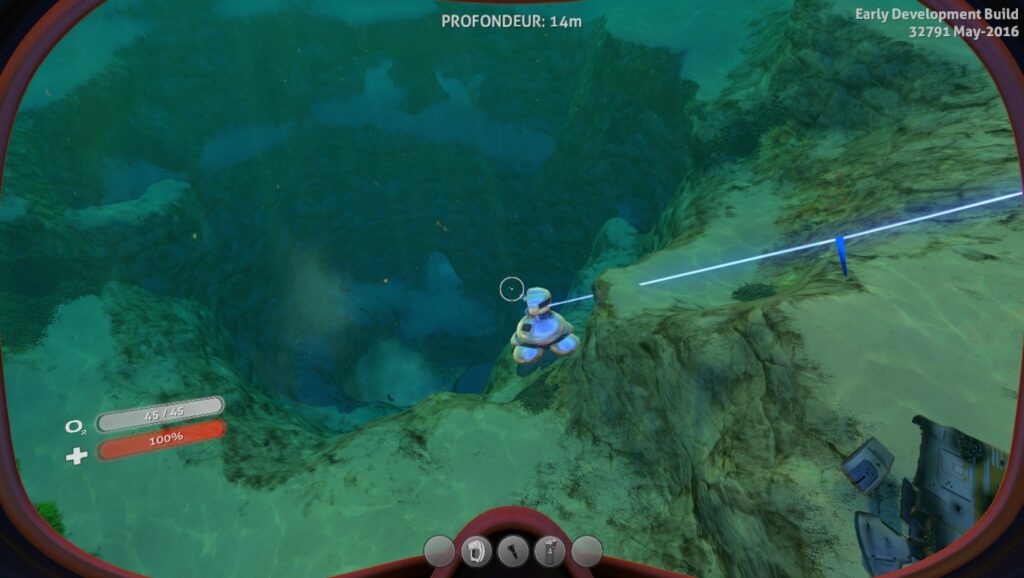
Salt is one of the most important early-game survival resources in Subnautica 2: Where to Find Salt gameplay progression, primarily because it supports food preservation, crafting progression, and emergency survival mechanics. In the early stages of the game, players typically spawn near shallow biomes that contain scattered salt deposits embedded in seabed sand, rocky outcrops, and coral-adjacent terrain.
The most reliable early-game approach is to explore shallow reefs surrounding your starting lifepod area. These zones usually have limited predator presence, making them ideal for resource scouting. Salt nodes are often found slightly buried, meaning players should look for subtle white crystalline formations that contrast against darker seabed textures.
Early-game salt is rarely abundant in clusters, so efficient movement is key. Swimming in a grid-like search pattern increases visibility coverage and reduces missed deposits. Players should also prioritize oxygen management upgrades early so they can safely extend dive time while searching for deeper salt pockets.
Best Salt Locations Near Lifepod in Subnautica 2
Near the Lifepod starting area, salt deposits tend to spawn in predictable ecological transition zones. These include shallow coral shelves, sandy plains, and reef edges where biomes begin to shift into slightly deeper waters.
The most efficient strategy is to circle outward from the Lifepod in expanding rings. The first ring (0–200 meters) often contains scattered salt deposits, while the second ring (200–500 meters) increases both quantity and depth variation.
Look for:
- Sandy seabeds with light-blue lighting
- Coral rubble zones
- Small cave entrances near reef walls
These areas tend to generate mineral-rich nodes, including salt clusters that are easy to miss without careful scanning. Players should also watch for small predator fish that indicate richer ecosystems, as salt often spawns in moderately active biomes rather than completely empty areas.
How to Farm Salt Fast in Subnautica 2
Fast salt farming in Subnautica 2: Where to Find Salt requires a combination of route optimization, scanning efficiency, and inventory management. The key principle is repetition: establish a circular farming loop and return to it after respawn cycles.
Start by marking three or four salt-rich zones using in-game beacons. Then rotate between them in a loop while allowing time for resource regeneration. Speed is less important than consistency; short, repeated dives are more efficient than long exploratory trips.
Upgrade tools that improve mobility, such as swim speed boosters or oxygen efficiency modules, as early as possible. These upgrades dramatically increase farming efficiency by reducing downtime.
Additionally, always prioritize carrying only essential items. A full inventory reduces farming efficiency and forces premature return trips. Keep storage modules or base lockers near salt zones for optimized harvesting cycles.

Subnautica 2 Salt Location Near Chap’s Blackbox Explained
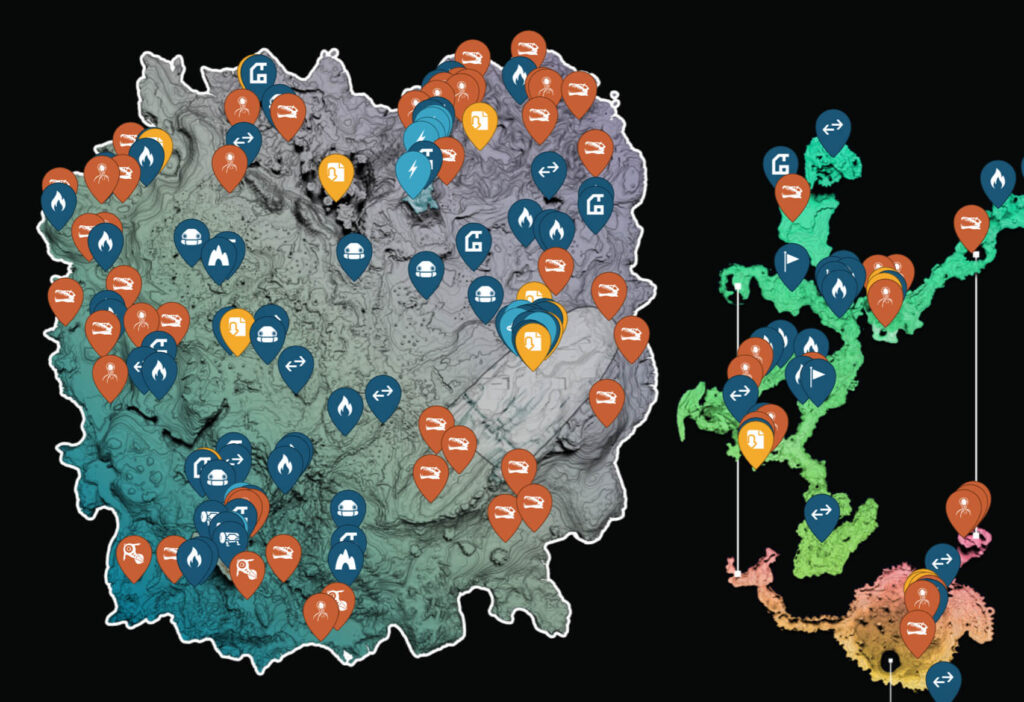
The “Chap’s Blackbox” region is often referenced by players as a mid-game transition zone where deeper exploration begins. In this area, salt deposits become more concentrated but also more dangerous to access.
Salt near Chap’s Blackbox is typically found in:
- Deep trench edges
- Underwater cave walls
- Thermal vent peripheries
This area introduces stronger environmental hazards, so preparation is critical. Players should bring upgraded oxygen tanks and defensive tools before attempting extended farming runs.
The advantage of this location is density. Salt nodes appear in larger clusters, making it one of the most efficient mid-game farming regions once properly unlocked. However, navigation without beacons can be risky due to reduced visibility and complex cave structures.
Easy Salt Farming Route in Subnautica 2 (step-by-Step)
An optimized farming route is essential for consistent resource gathering in Subnautica 2: Where to Find Salt progression.
Step 1: Start at Lifepod and head southeast toward shallow reef edges.
Step 2: Scan seabed for bright white crystalline clusters.
Step 3: Collect all visible salt within a 150-meter radius.
Step 4: Mark the area with a beacon labeled “Salt Loop 1.”
Step 5: Continue outward to a second biome transition zone.
Step 6: Repeat scanning and collection.
Step 7: Return to base to deposit resources and reset inventory.
This loop-based method ensures that players always have access to regenerating salt nodes without wasting time on random exploration.
What Salt Looks Like in Subnautica 2 and How to Identify It
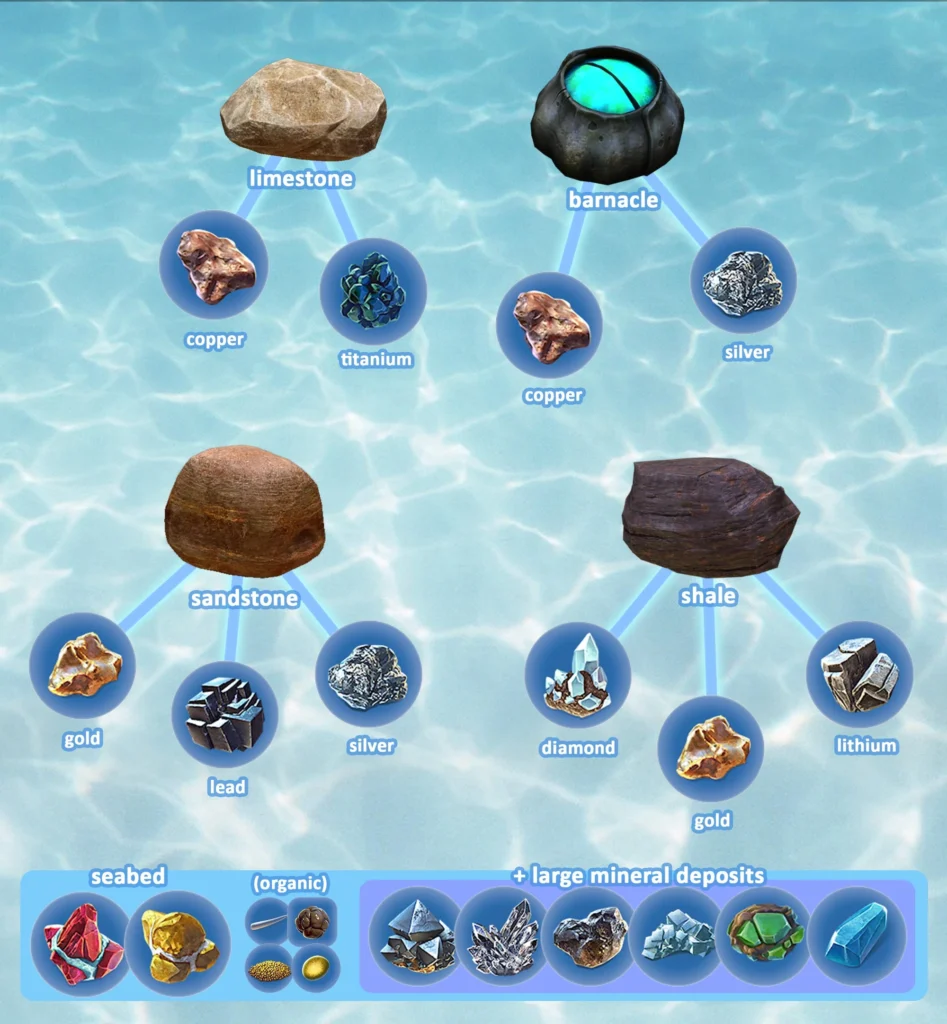
Salt in Subnautica 2 is visually distinct once players know what to look for. It typically appears as small, bright white crystalline clusters embedded in seabed terrain. Unlike other minerals, salt reflects light more sharply and often has a slightly glowing appearance in deeper waters.
Key identification traits include:
- White or pale blue crystalline texture
- Compact clustered formation
- Slight shimmer under light sources
- Often partially buried in sand
Players often confuse salt with quartz or other mineral deposits, but salt tends to appear less jagged and more compact. Using the scanner significantly reduces misidentification.

Subnautica 2 Salt Cave Locations You Should Not Miss
Cave systems are some of the richest salt sources in the game. In Subnautica 2: Where to Find Salt, underwater caves often contain dense mineral deposits due to geological compression zones.
Look for:
- Narrow cave entrances in reef walls
- Bioluminescent cave interiors
- Low-light mineral clusters
Salt caves are especially valuable because they often contain multiple resource types, allowing efficient multi-resource farming. However, caves also increase survival risk due to tight navigation spaces and limited oxygen escape routes.
Players should always carry a navigation beacon and maintain a mental map of entry and exit points before harvesting extensively in caves.
How to Get Unlimited Salt in Subnautica 2 Early Access
Unlimited salt farming is based on respawn mechanics and biome cycling. While no resource is truly infinite at a single location, players can simulate unlimited farming by rotating between multiple zones.
The best approach is:
- Identify 4–6 salt-rich zones
- Rotate between them on a timer
- Allow full respawn cycles between visits
- Use storage bases to reduce travel time
By the time players return to the first zone, salt nodes will typically have regenerated, creating a sustainable loop.
Best Biomes to Find Salt Deposits in Subnautica 2
Certain biomes consistently produce higher salt yields. In Subnautica 2: Where to Find Salt, the most reliable biomes include:
- Shallow reef flats
- Coral transition zones
- Mid-depth sand plains
- Cave entrance networks
- Thermal vent edges
These biomes balance accessibility and resource density, making them ideal for both early and mid-game farming.
Avoid overly barren zones, as they tend to prioritize oxygen flora over mineral deposits.

Subnautica 2 Salt Uses: Crafting, Power Cells, and Survival
Salt is a multi-purpose survival resource in Subnautica 2 gameplay systems. It plays a critical role in:
- Food preservation (cured fish and long-term storage)
- Crafting chemical compounds
- Supporting early base survival systems
- Contributing to advanced material synthesis
In many survival scenarios, salt becomes essential for extending food shelf life, which directly impacts exploration range. Without salt, players are forced to return to base more frequently, limiting progression speed.
Safe Locations to Collect Salt in Subnautica 2 Without Dying
Safety is a major factor when farming salt. The safest zones are shallow biomes near the starting Lifepod. These areas typically lack large predators and offer stable oxygen access.
Safe zones include:
- Shallow reef shelves
- Coral plains
- Light sand flats near surface water
Avoid deep trenches early in the game unless properly equipped. Even though deeper zones offer higher yield, they significantly increase risk.
How to Use the Scanner to Find Salt in Subnautica 2
The scanner is one of the most important tools for efficient salt farming. In Subnautica 2: Where to Find Salt, scanning highlights mineral nodes within a certain radius, making it much easier to identify salt deposits hidden under sand or behind terrain.
Best practices include:
- Scanning in slow circular sweeps
- Increasing scan frequency in cave systems
- Marking high-density scan results with beacons
- Upgrading scanner range when possible
Proper scanning reduces search time by more than half and significantly improves farming efficiency.
Subnautica 2 Salt Farming Tips for Beginners
Beginners often struggle with inefficient salt collection due to random exploration. The most effective improvements include:
- Always follow a loop-based farming route
- Avoid over-collecting non-essential items
- Upgrade oxygen tanks early
- Use beacons to mark salt zones
- Focus on shallow biomes first
Consistency is more important than speed in early gameplay stages.
Common Mistakes When Searching for Salt in Subnautica 2
Many players make avoidable mistakes when searching for salt:
- Exploring deep zones too early
- Ignoring scanner tools
- Failing to mark resource locations
- Overloading inventory too quickly
- Not revisiting respawn zones
Avoiding these mistakes dramatically improves farming efficiency and survival rate.
Is Salt Respawning in Subnautica 2? Farming Mechanics Explained
Salt respawn mechanics are based on biome regeneration cycles. After a certain in-game time period, harvested nodes will regenerate in their original locations.
This system allows for sustainable farming loops, especially when multiple zones are used in rotation. Respawn timing may vary depending on biome density and player activity.
Understanding this mechanic is essential for long-term resource planning in Subnautica 2.
Frequently Asked Questions (FAQs)
- Where is the easiest place to find salt in Subnautica 2?
Shallow reef biomes near the Lifepod. - Is salt rare in Subnautica 2?
No, but it is scattered and requires scanning. - Can salt run out?
No, it respawns over time. - Do caves have salt?
Yes, often in higher concentrations. - What tool helps find salt fastest?
The scanner. - Is salt safe to farm early game?
Yes, in shallow zones. - Can salt be used for food?
Yes, for preservation. - Do predators guard salt areas?
Sometimes in deeper zones. - What is the best farming method?
Loop-based biome rotation. - Is salt needed for progression?
Yes, for survival crafting.
Conclusion
Salt is one of the most essential early-to-mid game resources in Subnautica 2, directly influencing survival efficiency, crafting capability, and exploration range. Understanding where to find it, how to farm it efficiently, and which biomes offer the highest yields ensures smoother progression and reduced risk during underwater exploration. Mastering salt farming loops, scanner usage, and biome knowledge transforms resource gathering into a predictable and sustainable system.
Sources and Citations
1. Subnautica franchise survival crafting mechanics overview
https://dev.subnautica.wiki/wiki/Subnautica_Wiki
Subnautica
https://www.britannica.com/topic/Subnautica-video-game
2. General underwater survival crafting game design references
https://www.earlyguides.com/subnautica
Open-world survival design structure
https://arxiv.org/abs/1705.00341
3. Early access survival crafting game community knowledge bases
https://subnautica.fandom.com/wiki/Subnautica
Subnautica Wiki
https://dev.subnautica.wiki/wiki/Subnautica_Wiki
4. Subnautica Wiki – Biomes & resource distribution system reference
https://dev.subnautica.wiki/wiki/Subnautica_Wiki
Subnautica cut biome / procedural biome design references
https://dev.subnautica.wiki/wiki/Cut_Content_%28Subnautica%29
Recommended
- The Ultimate Guide to Hair for Games: Techniques, Tools, and Trends
- InKONBINI: One Store. Many Stories Has Launched on PC and Console, Feel the Vibes of 1990s Japan in this Cozy Slice-of-Life Sim
- 3D Satisfying Physics Simulation in Blender: How to Create Rigid Body, Cloth, and Soft Body Animations
- Avengers: Endgame Re-Release Footage Is Critical to Doomsday
- Final Fantasy 14 Is Taking Its Next Giant Step With the Evercold Expansion: Release Date, New Jobs, Weekly Progression, and the Big Gameplay Overhaul
- Outward 2 Release Date Revealed: Potato PC Trailer, Huge Compatibility Range, Gameplay Details, and Everything We Know About the 2026 RPG Sequel
- All katsu curry recipes in Romeo Is a Dead Man: complete list, ingredients, buffs, and how to unlock them
- REANIMAL Has Launched on PC and Console — Little Nightmares Creators Release a New Co‑Op Horror Game
- Aliens: Fireteam Elite 2 Release Date Confirmed for Summer Launch Window



































































































