




In This Article (6 sections)
Takashi Tezuka is Not Fully Retiring from Nintendo
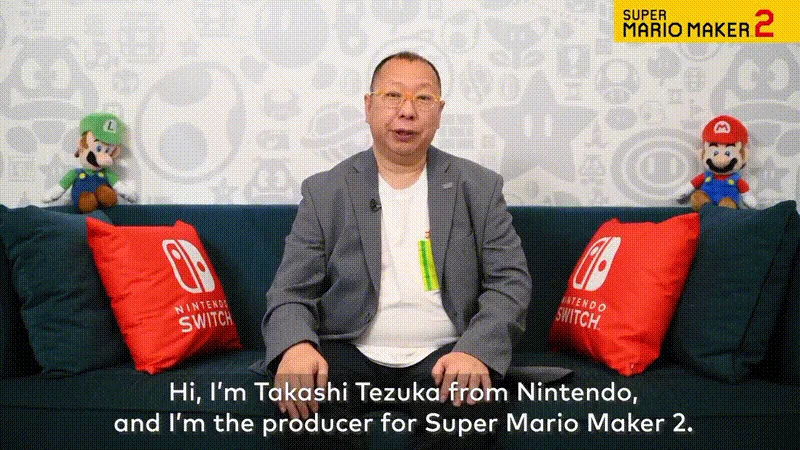
Reports that Takashi Tezuka was retiring caused understandable concern because they appeared to mark the complete departure of one of Nintendo’s most influential developers. Tezuka has spent more than four decades helping shape Super Mario, The Legend of Zelda, Yoshi, Animal Crossing, Pikmin, and many other important series. The initial headlines therefore made his management change sound like the end of an extraordinary Nintendo career.
That interpretation was incomplete. Tezuka stepped down from his position as an Executive Officer in June 2026, but he did not announce that he was leaving game development altogether. Comments connected to Nintendo’s shareholder discussions clarified that he intends to continue contributing as a producer.
The distinction changes the meaning of the announcement. Tezuka is leaving Nintendo’s executive structure, where his responsibilities included management, organizational oversight, and corporate leadership. He is not necessarily ending his creative relationship with the company or withdrawing from every future production.
His new arrangement should allow him to remain involved without carrying the same administrative workload. Instead of dividing his attention between development oversight and executive duties, he can contribute through production guidance, project supervision, and support for younger teams. Nintendo has not identified every game he will work on, so his level of participation may differ between projects.
This also explains why the word “retirement” created so much confusion. In the original personnel announcement, it referred to retirement from a specific corporate office. Many reports shortened that into retirement from Nintendo, even though stepping down from one role and leaving the company completely are not the same thing.
The corrected understanding is therefore reassuring for fans. Tezuka’s executive career has ended, but his production work is expected to continue. One of the principal architects of Nintendo’s early success remains connected to the company and may still influence the games it creates.

Why the Retirement Reports Were Misleading
Several circumstances made a complete retirement seem believable. Tezuka joined Nintendo in 1984 and had spent approximately 42 years with the company by 2026. Given the length of that career and the recent transitions involving other veteran Japanese developers, many readers naturally assumed that he was preparing to leave professional game development.
Nintendo’s announcement also concentrated on changes to its Executive Officers. Without additional context, the formal language sounded similar to an ordinary corporate retirement notice. News reports then simplified the story into headlines saying Tezuka was leaving Nintendo after more than four decades, and those summaries spread rapidly through gaming communities.
An Executive Officer occupies a management position rather than one purely devoted to designing an individual game. The role can involve company strategy, organizational planning, personnel oversight, coordination between development groups, and decisions affecting Nintendo’s wider production structure. Retiring from that position means Tezuka no longer carries those formal executive responsibilities.
A producer operates differently. Producers may supervise development, review project direction, help solve production problems, advise directors, and ensure that a game remains consistent with the identity of its series. The role can be highly influential even when the producer is not writing code, constructing levels, or directing the project every day.
Tezuka had already moved gradually toward this kind of work during the later part of his career. His early credits placed him directly inside game design and direction, while later projects more often used his experience through production, supervision, and mentorship. Continuing as a producer therefore follows the direction his career had already taken.
The source does not provide a detailed personal explanation for why he stepped down. Age, workload, and Nintendo’s generational leadership transition are reasonable considerations, but they should not be presented as a formal statement from Tezuka. What is clear is that leaving management gives him more freedom to contribute without the same corporate obligations.
Nintendo also benefits from this arrangement. New directors and producers can assume greater authority while still consulting someone who helped establish the company’s most important design traditions. That allows leadership to change without immediately removing decades of institutional knowledge from the development process.

His Work on Mario, Zelda, Yoshi, and Other Nintendo Series
Takashi Tezuka joined Nintendo after graduating from Osaka University of Arts. His early work included Devil World, followed by contributions to the teams developing Super Mario Bros. and The Legend of Zelda. Those projects placed him near the beginning of two franchises that would eventually define Nintendo’s global identity.
His work on Mario became particularly important during the late 1980s and early 1990s. Tezuka directed Super Mario Bros. 3 and Super Mario World, helping design games that expanded Mario’s movement, environments, transformations, secrets, and level structures without making their basic controls difficult to understand.
Super Mario World also introduced Yoshi, whose design and gameplay development involved significant contributions from Tezuka. Yoshi quickly grew from Mario’s companion into an independent Nintendo mascot. Tezuka later directed Super Mario World 2: Yoshi’s Island, which distinguished itself through its hand-drawn appearance, egg-throwing mechanics, inventive stages, and more emotional storybook presentation.
His Zelda work was equally foundational. Tezuka contributed to the original The Legend of Zelda and held major creative responsibilities on A Link to the Past and Link’s Awakening. These games helped establish the series’ combination of exploration, puzzles, character encounters, unusual items, environmental storytelling, and discoveries hidden beyond the obvious route.
Tezuka’s collaboration with Shigeru Miyamoto became one of Nintendo’s most important creative partnerships. Miyamoto frequently established broad concepts and central gameplay ideas, while Tezuka contributed level structures, characters, narrative elements, and practical design solutions. Their combined work helped Nintendo make games that were imaginative without becoming inaccessible.
As Nintendo moved into the Nintendo 64 era and later generations, Tezuka’s work shifted increasingly toward production and supervision. His broader credits extend across more than 150 games and include later Mario projects, Super Mario Maker, Animal Crossing, Pikmin, and additional Zelda productions.
That range is what makes his career unusual. He did not contribute to only one successful series or one hardware generation. His work stretches from the company’s formative 8-bit period to modern Nintendo development, allowing his design ideas to influence players who encountered Nintendo decades apart.
His most enduring contribution may be the balance between familiarity and invention. The games associated with Tezuka regularly introduce surprising mechanics while remaining understandable to new players. That principle continues to influence Nintendo’s approach even when Tezuka is not visibly presented as the director of a project.

What Tezuka’s New Role Means for Nintendo’s Future
Tezuka’s continued involvement gives Nintendo a degree of creative stability during an important generational transition. Developers who joined during the NES and Super Nintendo periods are gradually reducing their responsibilities, while younger directors and producers are taking control of major franchises. Nintendo must transfer authority without losing the knowledge accumulated by its veteran teams.
A producer or adviser can support that process without dominating it. Tezuka can review ideas, identify design problems, discuss the history of a character or mechanic, and help new leaders understand why earlier games made particular decisions. The younger team can still pursue its own direction while benefiting from his experience.
His future influence may be less visible than it was when he directly led games such as Super Mario Bros. 3, Super Mario World, or Yoshi’s Island. Modern Nintendo productions involve large teams, several management layers, external partners, and specialized development groups. A senior producer’s effect may appear through numerous small decisions rather than one easily identifiable mechanic.
That does not mean Tezuka will automatically work on every future Mario, Zelda, or Yoshi game. Nintendo has not announced a complete list of projects or described the exact authority attached to his continuing position. His participation is likely to depend on the needs, leadership, and production arrangements of each game.
The transition also gives newer developers more room to establish themselves. Nintendo’s franchises cannot remain dependent indefinitely on the same group of creators who shaped them during the 1980s and 1990s. Allowing younger staff to lead while veteran producers provide guidance offers a practical balance between continuity and change.
Fan reactions reflected the importance of that balance. The initial reports produced tributes, concern, and comments describing Tezuka’s apparent departure as the end of an era. Once the producer clarification circulated, relief replaced much of that concern because his experience had not been removed from Nintendo completely.
Tezuka’s legacy would remain secure even if he never worked on another game. His influence can already be found in foundational Mario movement, Zelda exploration, Yoshi’s identity, and Nintendo’s broader emphasis on accessible mechanical ideas. Continuing as a producer means that legacy can remain an active part of development rather than only a chapter in the company’s history.

Frequently Asked Questions (FAQs)
- Is Takashi Tezuka retiring from Nintendo completely?
No. Tezuka stepped down from his position as an Executive Officer in June 2026, but he is expected to remain involved with Nintendo as a producer. His executive duties have ended, while his relationship with game development and production continues. - Why did reports say Takashi Tezuka was leaving Nintendo?
Nintendo’s initial announcement discussed his retirement from the Executive Officer role, and many reports interpreted that corporate change as a complete departure. His age, 42-year career, and the retirement of other veteran developers made that interpretation appear plausible until later clarification emerged. - What position did Takashi Tezuka leave?
He left his position as an Executive Officer. That role involved senior management, organizational oversight, strategic responsibilities, and leadership within Nintendo’s development structure. Leaving it removes those formal executive duties without necessarily ending his work on games. - What will Takashi Tezuka do as a producer?
His exact responsibilities have not been published, but production work can include supervising projects, reviewing creative direction, advising development teams, solving production problems, and mentoring younger leaders. His involvement may vary depending on the game and the needs of its team. - How long has Takashi Tezuka worked at Nintendo?
Tezuka joined Nintendo in 1984 after graduating from Osaka University of Arts. By the time he stepped down from executive management in 2026, he had spent approximately 42 years contributing to the company’s games and development organization. - Which Super Mario games did Takashi Tezuka help create?
His major Mario work includes contributions to Super Mario Bros. and directorial responsibilities on Super Mario Bros. 3 and Super Mario World. He later worked as a producer or supervisor on projects including the New Super Mario Bros. games, Super Mario Maker, and other modern Mario releases. - What Zelda games did Takashi Tezuka work on?
Tezuka contributed to the original The Legend of Zelda and held major creative roles on A Link to the Past and Link’s Awakening. His work helped establish the exploration, world design, puzzles, character interactions, and discovery-focused structure associated with the series. - Did Takashi Tezuka help create Yoshi?
Yes. Tezuka played an important role in developing Yoshi and establishing the character’s place in Super Mario World. He later directed Super Mario World 2: Yoshi’s Island, which helped transform Yoshi from Mario’s companion into the central figure of an independent Nintendo series. - Will Tezuka still influence future Mario and Zelda games?
He may continue influencing selected projects through production guidance and mentorship, although Nintendo has not announced his involvement in every future release. His experience remains available to development teams even when he is not serving as the principal director or executive responsible for a game. - What does Tezuka’s transition mean for Nintendo?
It allows Nintendo to move younger developers into leadership positions while retaining access to one of its most experienced creators. Tezuka can reduce his management responsibilities and continue contributing creatively, helping the company preserve important design knowledge while allowing its franchises to develop under a new generation of leaders.

Conclusion
The reports surrounding Takashi Tezuka’s retirement created understandable confusion throughout the gaming industry. While Nintendo announced his departure as Executive Officer, subsequent clarification revealed that the legendary developer is not fully retiring from the company.
Instead, Tezuka is transitioning away from corporate management while continuing to contribute as a producer. This distinction is important because it means one of Nintendo’s most influential creators remains involved with the company he helped shape for more than four decades.
His contributions to Mario, Zelda, Yoshi, and numerous other franchises have left a permanent mark on the gaming industry. Although his executive career has ended, his creative legacy continues, and his experience remains valuable to Nintendo’s future.
For fans concerned about the loss of one of Nintendo’s greatest developers, the latest information offers reassuring news: Takashi Tezuka is not retiring after all.
Sources and Citations
- Nintendo – 86th Annual General Meeting of Shareholders (June 26, 2026) (official shareholder meeting notice and investor relations documents)
- Nintendo – Investor Relations: Q&A From the Annual General Meeting of Shareholders (official transcript when published)
- Nintendo Wire – Takashi Tezuka States He’ll Still Be Involved With Nintendo Despite Retiring From Executive Officer Role (reports his clarification that he will remain a production producer)
- Vooks – Takashi Tezuka Reflects on Career, Will Remain Producer at Nintendo (shareholder meeting report and producer clarification)
- Nintendo Financial Results / Executive Officer Changes (original announcement regarding Tezuka stepping down as Executive Officer)
- Nintendo – Takashi Tezuka Developer Profile (official career history and major game credits)
- MobyGames – Takashi Tezuka Game Credits (comprehensive career history and development credits)
- Nintendo Fandom / Super Mario Wiki – Takashi Tezuka Biography and Career (historical contributions to Mario, Zelda, Yoshi, and other Nintendo franchises)
- Nintendo Life – Coverage of Takashi Tezuka’s Executive Officer Retirement (fan reactions and retirement reports)
- My Nintendo News – Takashi Tezuka Talks About His Illustrious Career and Will Remain Producer at Nintendo (coverage of the shareholder clarification and community reaction)
Recommendations
- Prince of Persia: The Lost Crown Team Reportedly Freed From Ubisoft “Support Studio Prison” and Pitching New Games Again
- EA Net Bookings Jump 38% to over $3bn Following Battlefield 6 Launch: Q3 FY26 Breakdown
- Mixtape and the Awkward First Kiss Scene Explained: the Story Behind One of the Grossest Video Game Moments of 2026
- How to Get Emerald Flowsion in Romeo Is a Dead Man: Fast Farming Methods, Best Routes, and Smart Spending
- The Duskbloods: Everything We Know About FromSoftware’s Switch 2 Exclusive
- How Do I Set Up Multiple Cameras in Blender?
- Directive 8020 devs Supermassive Games drops a multiplayer tease ahead of Future Games Show Spring Showcase
- Tomodachi Life: Living the Dream, Complete Souvenir List Guide (All Travel Rewards, Locations & Unlock Methods)
- How to Convert a 2D Image to 3D Models in Blender: A Complete Step-by-Step Guide
- Top 20 Hottest Video Game Characters: Icons of Beauty and Aura in Gaming



































































































