







In This Article (7 sections)
Lego Batman Legacy of the Dark Knight Denuvo DRM Controversy
The upcoming release of Lego Batman: Legacy of the Dark Knight has attracted attention not only for its return to Gotham City and reinterpretation of Batman mythology, but also because Denuvo Anti Tamper was added to its PC storefront information shortly before launch. Players discovered the change through updated store listings and backend information rather than a major announcement, creating debate about transparency, performance, and why the protection was introduced so close to release for Lego Batman.
The presence of Denuvo on PC quickly became controversial because the technology has long divided the PC gaming community. Publishers generally use anti tamper technology to protect games against piracy during their most commercially important launch period, while some players associate Denuvo with possible performance overhead, longer loading times, restrictions, and concerns surrounding long term game preservation. For Lego Batman: Legacy of the Dark Knight, the timing intensified the reaction because some players had already followed or preordered the game before discovering the updated DRM information for Lego Batman.
Several possible reasons could explain why Denuvo was introduced before launch. Publishers frequently prioritize piracy protection during the opening sales window, when demand and full price purchases are typically strongest. A late addition could also reflect changing internal security decisions, contractual considerations, or concerns created by prerelease distribution. However, without a detailed explanation from TT Games or Warner Bros., the specific reason behind the timing remains unclear for Lego Batman: Legacy of the Dark Knight.
Reports of prerelease builds appearing through unauthorized channels have added another dimension to the discussion. Such leaks can strengthen the business case for anti tamper protection because publishers want to prevent an unreleased or newly launched game from spreading through piracy networks. However, the supplied information does not establish exactly how much influence the reported leak had on the final Denuvo decision for Lego Batman.
The main concerns raised by PC players include:
- Potential performance overhead
- Increased processor activity during authentication
- Longer startup or loading times
- Possible frame pacing problems on processor limited hardware
- Restrictions affecting modding
- Long term preservation concerns
- Lack of advance communication about the DRM change
These concerns do not establish that Lego Batman: Legacy of the Dark Knight will actually suffer serious performance problems. Modern Denuvo implementations can vary substantially between games, and overall performance depends heavily on how the game itself is developed and optimized. Without comparative benchmarks, it is not possible to separate potential DRM overhead from performance demands created by Gotham’s open world, asset streaming, lighting, physics, and AI systems in Lego Batman.
Higher end systems may experience little noticeable impact, while older or processor limited PCs could theoretically be more sensitive to additional overhead. This is particularly relevant for a Lego game because the franchise traditionally reaches a broad audience using a wide range of hardware, including players interested in Lego Batman: Legacy of the Dark Knight.
Community reaction has therefore focused as much on communication as technical performance. Some players accept anti tamper systems as a method of protecting launch revenue, while others argue that paying customers should not receive additional restrictions because publishers are attempting to prevent piracy. The late discovery also prompted discussions about preorders and whether DRM information should be clearly communicated earlier in a game’s marketing cycle.
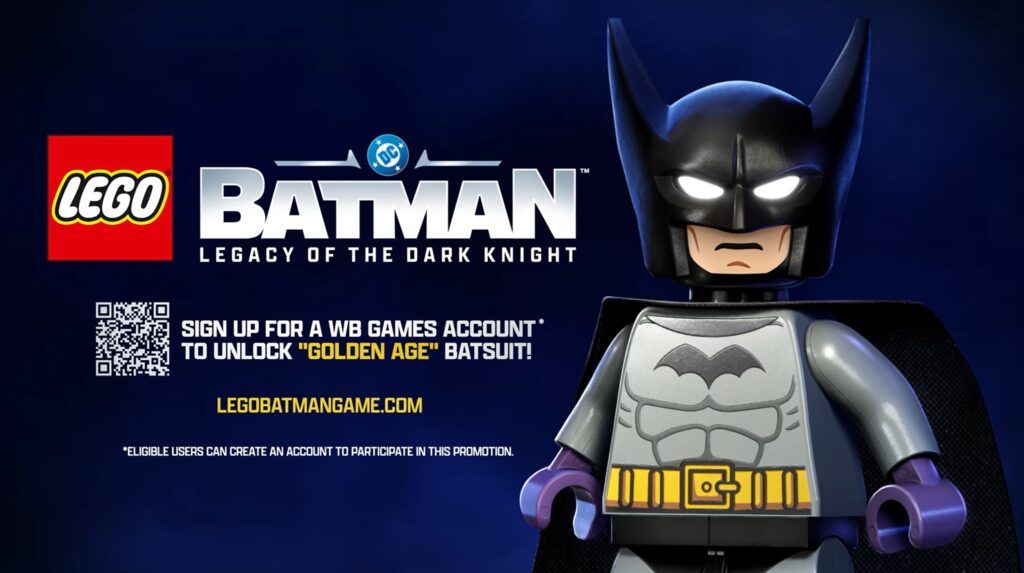
Lego Batman Legacy of the Dark Knight Gotham, Combat and Gameplay
Beyond the DRM discussion, Lego Batman: Legacy of the Dark Knight is presented as an ambitious Batman experience built around an explorable Gotham City. The open world combines Lego’s familiar humor and interactive design with a darker Batman atmosphere, while borrowing ideas associated with modern action adventure games.
Gotham is designed around distinct districts and multiple layers of exploration rather than functioning simply as a backdrop between missions. Rooftops, streets, towers, underground spaces, and sewers create vertical routes through the city, while dynamic events and environmental systems provide activities outside the central storyline.
Major open world features described in the supplied information include:
- Districts inspired by Batman mythology
- Dynamic weather
- A day and night cycle
- Interactive crime events
- Hidden collectibles
- Environmental puzzles
- Rooftop exploration
- Underground and sewer areas
- Vertical traversal through towers and other structures
The gameplay also draws inspiration from the Batman: Arkham approach to combat, stealth, investigation, and gadgets while adapting those ideas to Lego mechanics and accessibility. The combat system uses flowing encounters combined with Lego physics, while stealth takedowns provide alternatives to direct confrontation.
Detective mechanics expand Batman’s investigative abilities, while gadgets serve both combat and puzzle solving purposes. Character switching introduces Batman’s allies into gameplay and creates opportunities for different abilities to solve environmental challenges.
The combination allows the game to maintain the accessibility associated with Lego titles while introducing additional mechanical depth for longtime Batman players. Its core gameplay includes free flowing combat, detective systems, stealth, gadgets, puzzles, exploration, character switching, and open world activities rather than relying entirely on conventional Lego platforming.
The larger Gotham environment is also expected to be one of the main sources of PC hardware demand. Dynamic lighting, destructible Lego objects, NPC behavior, environmental streaming, and a more complex open world can place considerably greater pressure on hardware than smaller linear stages.
The supplied system requirement information suggests a scalable PC release targeting mid range processors, modern dedicated graphics hardware, and approximately 8 to 16 GB of memory depending on configuration. Actual performance will ultimately depend on final optimization, making launch benchmarks more useful than assumptions based solely on the presence of Denuvo.
The game is expected to have a standard global release structure, while additional edition benefits may include cosmetics, character content, future DLC, Batmobile variants, and potential early access depending on the specific platform or edition. Exact benefits should therefore be distinguished from broader expectations until individual edition details are confirmed.

What Denuvo and the PC Debate Mean for the Lego Batman Launch
The controversy surrounding Lego Batman: Legacy of the Dark Knight reflects a much broader argument about DRM within PC gaming. Denuvo remains controversial because it sits directly between two competing priorities: publishers attempting to protect valuable software during launch and customers wanting unrestricted access to products they have purchased.
From a publisher perspective, the opening weeks of a major release are particularly important. Full price sales, marketing attention, reviews, streaming visibility, and general interest are concentrated around launch, creating a strong incentive to make unauthorized distribution more difficult during that period.
From the player perspective, anti tamper software can feel like an additional system imposed primarily on legitimate customers. Concerns frequently involve performance, authentication requirements, modding, preservation, and what happens to a game years later if its DRM infrastructure is no longer maintained.
The debate becomes especially sensitive when DRM appears shortly before release. Players who have already made purchasing decisions may feel that important technical information was disclosed too late, even when the DRM itself does not ultimately cause measurable performance problems.
TT Games and Warner Bros. have consequently faced criticism centered on the timing and communication surrounding the reported addition. Without a detailed technical explanation, however, it would be speculative to conclude that Denuvo will meaningfully reduce performance or that its inclusion resulted from one specific event.
The reported prerelease leak further complicates the issue. Unauthorized distribution can demonstrate why publishers want stronger protection, but DRM does not automatically resolve every security problem. A leaked development build and piracy of the final commercial release can involve different vulnerabilities and distribution paths.
For players primarily concerned about performance, the most meaningful evidence will come from the final PC version. Relevant testing would need to examine frame rates, frame pacing, processor utilization, loading times, shader behavior, open world streaming, and stability across different hardware configurations. Those results would provide considerably stronger evidence than assuming every technical problem is caused by Denuvo.
The controversy may ultimately coexist with substantial enthusiasm for the game itself. Lego Batman: Legacy of the Dark Knight is attempting to combine an expansive Gotham City, Lego’s accessible style, Batman’s detective abilities, deeper combat, stealth, gadgets, and environmental exploration within one larger adventure.
Its launch reception will therefore depend on more than DRM. PC optimization, open world performance, gameplay quality, content depth, edition value, and how successfully TT Games combines Lego accessibility with Batman’s darker atmosphere will all influence the final response.
Denuvo has nevertheless become an important part of the prerelease conversation because its late appearance raised questions about communication and technical impact. Until the finished game can be tested, the presence of Denuvo is confirmed within the supplied information, while claims about exactly how much it will affect performance remain unproven.

Frequently Asked Questions (FAQs)
- What is Lego Batman: Legacy of the Dark Knight?
Lego Batman: Legacy of the Dark Knight is a modern Lego action adventure game set in an open world version of Gotham City. It combines Lego’s familiar humor and puzzle solving with Batman inspired combat, stealth, detective mechanics, gadgets, exploration, and characters drawn from Batman lore. - Does the game include Denuvo DRM?
Yes. The PC version includes Denuvo Anti Tamper at launch. Its presence became a major discussion point after players noticed the DRM information on updated PC storefront listings shortly before the game’s release. - Why did the developers add Denuvo?
The most likely purpose is to make piracy and unauthorized distribution more difficult during the important early sales period. However, TT Games and Warner Bros. have not provided a detailed explanation in the supplied information confirming exactly why Denuvo was added or why it appeared so close to launch. - Will Denuvo affect performance?
Any actual impact will depend on how Denuvo is implemented and how well the overall PC version is optimized. Modern implementations can have little noticeable effect on many systems, although players remain concerned about possible processor overhead, loading times, or frame pacing issues, particularly on older or processor limited hardware. - Is the game open world?
Yes. The game features an explorable Gotham City divided into different areas with rooftops, streets, towers, sewers, collectibles, puzzles, crime events, and other activities. Dynamic weather and a day and night cycle are also intended to make exploration feel more varied. - Is gameplay similar to Arkham games?
The game borrows several ideas associated with the Batman: Arkham series while adapting them to Lego gameplay. These include flowing combat, stealth takedowns, detective abilities, gadgets, and environmental puzzle solving, while retaining the accessibility and humor traditionally associated with Lego games. - Can I play early with the deluxe edition?
Early access is expected to be available through certain deluxe edition offerings depending on the platform. The supplied information mentions the possibility of up to 72 hours of early access alongside additional cosmetics and character content, so the exact benefits depend on the edition and platform involved. - Why are PC players upset?
Much of the criticism concerns the late appearance of Denuvo information rather than simply the existence of DRM. Players have raised concerns about transparency, possible performance effects, modding restrictions, preservation, and discovering an important technical requirement relatively close to release. - Is this common in Lego games?
Not consistently. Earlier Lego releases have not universally relied on Denuvo, which is one reason its inclusion in Legacy of the Dark Knight attracted additional attention. Its presence represents a notable launch decision rather than something players necessarily expect from every Lego game. - Can Denuvo be removed later?
Yes, Denuvo can technically be removed after release, and some publishers have removed it from games once the initial sales period has passed. However, there is no guarantee that Warner Bros. will follow that approach with Lego Batman: Legacy of the Dark Knight, and no removal schedule is provided in the supplied information.

Conclusion
The addition of Denuvo DRM to Lego Batman: Legacy of the Dark Knight highlights ongoing tensions between piracy prevention strategies and PC gamer expectations. While the game itself promises an ambitious open world Gotham experience with Arkham inspired gameplay mechanics and expansive Lego creativity, the controversy surrounding its late stage DRM integration has shifted much of the pre launch conversation away from gameplay and toward trust, transparency, and performance concerns.
Whether the implementation ultimately affects player experience will only become clear after launch, but the debate already underscores how sensitive the PC gaming ecosystem remains to digital rights management decisions.
Sources and Citation
- Industry analysis of PC DRM implementation trends
- Tom’s Hardware — A brief history of Denuvo DRM
Background on Denuvo’s use in PC games and the evolving DRM landscape. - PC Gamer — Denuvo performance testing in Final Fantasy XV
Benchmark-based examination of whether Denuvo affected performance in a particular game. - PC Gamer — Resident Evil Village DRM performance testing
Reporting on testing that found differences in stuttering between game versions.
- Tom’s Hardware — A brief history of Denuvo DRM
- Steam store metadata updates and community tracking discussions
- SteamDB
Third-party tracking of Steam app information, updates, depots, and historical changes. - SteamRegistry
Explains its tracking of Steam metadata, changelists, builds, reviews, and player counts. - Steam Community Discussions
Community conversations about Steam games, updates, and platform features.
- SteamDB
- Historical performance reports from games using Denuvo
- Digital Foundry / Eurogamer — Devil May Cry 5 Denuvo protection tested
Technical performance comparison. - PC Gamer — Resident Evil Village stuttering investigation
Reporting on the comparison of retail and DRM-bypassed versions. - PC Gamer — Final Fantasy XV performance testing
A detailed benchmark with methodology and results.
- Digital Foundry / Eurogamer — Devil May Cry 5 Denuvo protection tested
- Publisher communication patterns in AAA game launches
- Steamworks documentation — Steam DRM
Official documentation explaining Steam’s own DRM wrapper and its limitations. - Steam Support — Third-party game support
Explains how support responsibilities can differ for third-party DRM and activation issues. - PC Gamer — Ghostwire: Tokyo joins GOG’s Preservation Program
Reporting on a game’s later transition away from DRM and launcher requirements.
- Steamworks documentation — Steam DRM
- PC gaming community feedback across forums and social platforms
- Reddit — Community reaction to Denuvo in Crimson Desert
An example of reactions to DRM being announced close to a launch. - Reddit — Denuvo and long-term game preservation
Community discussion of DRM, performance, and preservation concerns. - Reddit — “Denuvo wants to convince you its DRM isn’t evil”
Discussion of consumer concerns and DRM trade-offs. - Steam Community — About Denuvo
Players debate performance, online activation, and how intrusive DRM feels in practice.
- Reddit — Community reaction to Denuvo in Crimson Desert
Recommendations
- Elden Ring Tarnished Edition Launches August 28, 2026 on Switch 2: Release Date, New Classes, Content and Performance
- Xbox CEO Says Platforms Must Have Exclusive Content: What it Means for the Future of Xbox
- Marathon is Getting a Full PvE Mode in Season 3 this September
- Warner Bros. Wants Bradley Cooper to Write, Direct, and Star in the Ocean’s Eleven Prequel
- After Resident Evil Movie Trailer Sparks Complaints, Lore Master Calls for Calm
- Project Hail Mary’s Ryan Gosling Confirms Marvel Discussions About Playing Ghost Rider
- Echoes of Aincrad: Complete Guide to Weapons, Stats, Skills, and Best Builds
- Supergirl Trailer Reveals Kara’s 3-Day Race to Save Krypto
- Epic Games Accuses Apple of Delaying Six Year Court Battle
- Vaulting & Climbing (Parkour) Unreal Engine 5: Build a Mantle, Ledge Grab, and Vaulting System



































































































