







In This Article (9 sections)
Citizen Sleeper 2: Starward Vector Overview, Story, Popularity, and Dice-Based RPG Design
Citizen Sleeper 2: Starward Vector is a science-fiction RPG with a compelling narrative and dice-based gameplay that stands as one of the most thoughtful narrative RPG sequels in recent years. Developed by Jump Over the Age and published by Fellow Traveller, the game expands the original title’s tabletop-inspired design into a broader and more challenging journey across the Starward Belt, where survival depends on dice rolls, crew trust, limited resources, and difficult moral decisions.
Citizen Sleeper 2: Starward Vector is a story-rich, dice-driven role-playing game set in a human, industrial, and emotionally charged science-fiction universe. It was released on January 31, 2025, for PC, Nintendo Switch, PlayStation 5, Xbox Series X|S, and Game Pass, bringing the series to a wider audience following the critical success of the original Citizen Sleeper.
The game’s popularity comes from its combination of interactive fiction, tabletop RPG mechanics, survival management, and character-focused storytelling. Instead of relying on combat spectacle, Citizen Sleeper 2 focuses on survival through decisions, relationships, contracts, and limited dice. Each cycle becomes a small survival puzzle where every action can influence both immediate progress and the wider narrative.
One of the game’s strongest features is how it transforms uncertainty into storytelling. A poor dice roll is not simply a failed action, as it can create setbacks, complications, damaged dice, or new story paths. Successful rolls can provide moments of relief, progress, or temporary control. This system allows the game to feel personal and unpredictable, even as the adventure expands into a larger science-fiction setting.
Critics and players have praised the sequel for its writing, atmosphere, soundtrack, and updated dice mechanics. Steam user reviews describe the game as “Very Positive,” while Metacritic shows a range of critic responses that still reflect strong recognition for its narrative ambition and improvements over the original.

Citizen Sleeper 2: Starward Vector Story, Sci-Fi Worldbuilding, and Dice-Based Gameplay Explained
Citizen Sleeper 2: Starward Vector follows a Sleeper, an artificial body carrying an emulated human mind. The protagonist begins without a clear memory of their past after attempting to reboot their system to escape control. This opening establishes the sequel’s central themes of identity, exploitation, bodily instability, and the struggle to build a life outside systems of ownership.
The Sleeper is hunted, damaged, and dependent on others. Unlike the first game, where survival was closely tied to one station and the stabilizer mechanic, the sequel expands the story through movement. Players travel across the Starward Belt in a ship, take on contracts, recruit allies, and attempt to stay ahead of those who want to reclaim or destroy them.
The story is effective because it uses science fiction as a reflection of human struggles rather than only as a setting. The Sleeper is not simply a futuristic machine, but a person trapped within corporate, criminal, and material systems that reduce life to labor, debt, function, and risk. The central question is not only whether the Sleeper can survive, but whether they can create a meaningful existence among others who are also trying to survive broken systems.
This makes the narrative compelling because each character the Sleeper encounters has their own connection to scarcity, work, loss, loyalty, and hope. Many of the game’s strongest moments come from quiet conversations rather than dramatic twists. Citizen Sleeper 2 focuses on why survival matters by showing the personal struggles behind each character’s journey.
The science-fiction universe of Citizen Sleeper 2: Starward Vector is built around the Starward Belt, an asteroid belt in the Helion System. This setting gives the sequel a larger structure compared to the original Citizen Sleeper, which focused heavily on Erlin’s Eye. The Belt is fragmented, unstable, and shaped by corporate conflict, resource extraction, migration, and fragile communities.
The worldbuilding feels grounded because it avoids presenting the future as a clean or perfect vision. Stations, ships, settlements, and workplaces are not symbols of futuristic progress, but lived-in and damaged environments where people negotiate survival every day. The Starward Belt feels like a frontier shaped by abandoned infrastructure, difficult contracts, corporate pressure, and the need for cooperation.
The game’s science-fiction identity comes from the contrast between its massive setting and personal struggles. Although players move through a wide collection of locations across the Belt, every journey depends on fuel, supplies, stress, and crew readiness. The universe offers freedom, but that freedom always comes with limitations.
The artwork by Guillaume Singelin and the music by Amos Roddy further strengthen the atmosphere. Character portraits communicate personal histories and emotions, while the soundtrack creates a sense of tension, uncertainty, and fragile beauty throughout the journey.
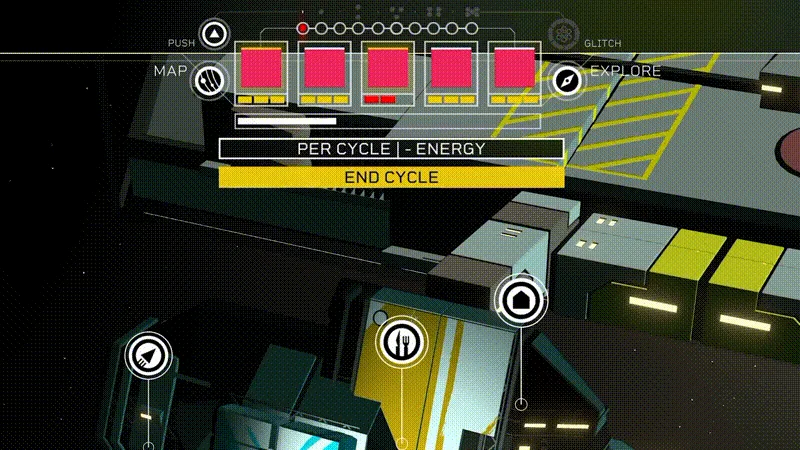
The dice-based gameplay mechanics are at the center of Citizen Sleeper 2: Starward Vector. At the beginning of each cycle, players receive dice representing the Sleeper’s ability to act. These dice are assigned to different actions across locations, events, work opportunities, relationship scenes, and contracts. Higher numbers generally provide better chances of success, while lower numbers create greater risks of neutral or negative outcomes.
The system is simple to understand but creates complex decisions. Dice are not only random numbers, as they represent time, energy, physical condition, and opportunities available to the Sleeper. Every time a die is used, players must decide what matters most during that cycle. They may choose to earn money, repair the ship, support a crew member, collect supplies, advance contracts, or focus on personal story moments.
The sequel expands on the original system by introducing stress, dice damage, glitches, crew dice, and more demanding contract structures. Fellow Traveller describes the game as a dice-driven RPG where players must manage stress, deal with damage to their dice, and handle glitches that build within the Sleeper’s system.
These additions make Citizen Sleeper 2 more strategic than its predecessor. Players are not only assigning dice to immediate actions but also managing the long-term condition of their available resources. Poor rolls can create problems, but repeatedly pushing the Sleeper too hard can lead to even greater consequences.
The dice system shapes every decision by turning uncertainty into narrative pressure. Each cycle begins with possibilities, but those options are limited. Players may have several important tasks they want to complete but only enough useful dice for some of them, creating the central tension that defines the experience.
High-value dice provide confidence but also create difficult choices. A six can guarantee progress on an important contract, but it could also be saved for securing resources needed for survival. A weaker die may be used for a safer action, saved for an emergency, or risked in a difficult situation because no better option is available.
The system also makes failure meaningful. A failed action can increase stress, damage dice, consume resources, or create new complications, but failure rarely ends the story. Instead, setbacks become part of the Sleeper’s journey. The character survives through imperfect decisions, and many of the most memorable moments come from overcoming difficult situations.
This connection between mechanics and themes is what makes the dice-based gameplay so effective. Citizen Sleeper 2 is a game about living with instability, and the dice turn that instability into something players actively experience. They transform uncertainty, exhaustion, damage, and hope into systems that must be managed throughout every cycle.

Citizen Sleeper 2: Starward Vector Classes, Crew Management, Contracts, and Starward Belt Exploration
Citizen Sleeper 2: Starward Vector introduces three starting classes: Operator, Extractor, and Machinist. These classes shape the Sleeper’s strengths, weaknesses, and approach to early challenges. The class system gives the sequel a more traditional RPG structure while preserving the series’ narrative-focused design.
The Operator is suited for players who want to focus on systems, strategy, hacking, and technical decision-making. This class can become powerful when players understand how to manage risk, but it is also more vulnerable to stress. The Operator rewards careful planning and effective dice management.
The Extractor focuses on endurance and physical resilience. This class can handle stress more effectively, making it useful for players who expect to take on difficult contracts and survive challenging outcomes. However, Extractors may struggle more with intuition-based decisions, which can make certain narrative and strategic paths less comfortable.
The Machinist specializes in repairs, modifications, and mechanical problem-solving. This class is ideal for players who prefer a practical and self-sufficient approach that helps keep the Sleeper and ship functioning. The tradeoff is weaker communication abilities, which can influence crew-related interactions.
Character builds are important because Citizen Sleeper 2 does not provide a single correct way to play. The best class depends on how players want to approach survival. The game rewards understanding a build’s weaknesses as much as taking advantage of its strengths.
Crew management is one of the biggest additions in the sequel. Survival in Citizen Sleeper 2 is no longer only about the Sleeper’s condition, as it also depends on the people who travel, work, and take risks alongside them. Players must recruit crew members, understand their strengths, and decide who should join them on contracts.
Crew members provide additional dice during contracts, which can significantly affect the chances of success. Some crew members are better suited for technical tasks, while others may assist with physical work, social encounters, or specialized mission objectives. Selecting the wrong crew can make a contract more difficult, while choosing the right team can turn a dangerous mission into a more manageable challenge.
Crew management also carries an emotional weight. These characters are not simply tools for completing objectives, as they have their own stories, needs, fears, and loyalties. Taking someone on a dangerous contract can strengthen trust, but it can also expose them to stress and harm. If a crew member becomes overwhelmed during a mission, players may lose access to their support at a critical moment.
This system reinforces one of the game’s central themes: survival is a shared effort. Although the Sleeper is the main character, the journey depends on relationships with others. The crew system makes trust, friendship, and responsibility part of the gameplay rather than only elements of the story.
Contracts are another major gameplay expansion in Citizen Sleeper 2: Starward Vector. These missions are larger and riskier undertakings that often require preparation before departure. Players may need fuel, supplies, rations, carefully chosen crew members, and enough stability to survive multiple stages.
Contracts create a different rhythm from the game’s regular cycle-based actions. Instead of simply selecting tasks within a location, players commit to missions that can develop into more complex situations. Contracts can include branching objectives, complications, increasing stress, and difficult decisions about whether to continue pushing forward or protect the crew.
Reviewers have highlighted contracts as one of the sequel’s major strengths because they increase the stakes of the dice system. They make crew selection more meaningful and transform resource management into a dramatic part of the overall story.
The contract system works because it captures the feeling of accepting dangerous work in an unstable economy. The Sleeper needs money and resources, but every contract can damage their body, strain relationships with the crew, or create additional problems. This makes each mission feel like both an opportunity and a potential threat.
Exploring the Starward Belt gives Citizen Sleeper 2 a greater sense of scale compared to the original game. Instead of being primarily centered around one station, the sequel allows players to travel between different locations, communities, and dangerous environments. This makes the adventure feel more like a journey through a fragmented region.
The Starward Belt is not an open world in the traditional sense. Instead, it functions as a network of narrative locations connected through travel, contracts, resources, and relationships. The player’s ship acts as a mobile base, while each new location provides different opportunities, risks, and stories.
Exploration feels meaningful because it comes with costs. Traveling through the Belt is not simply selecting locations from a map. Players must consider fuel, supplies, timing, stress, and crew readiness before making decisions. This turns travel into an important part of survival rather than just a way to move between areas.
The result is a strong science-fiction adventure structure. Citizen Sleeper 2 captures the feeling of traveling between stations and outposts while maintaining a focus on scarcity and vulnerability. The Starward Belt feels expansive because players are constantly aware of how fragile their position within it can be.

Citizen Sleeper 2: Starward Vector Stress System, Choices, Relationships, and Evolution from the Original
The stress system is one of the defining mechanics in Citizen Sleeper 2: Starward Vector. Stress builds through failed actions, dangerous outcomes, contract pressure, and difficult decisions. When stress becomes too high, it can damage dice and create serious long-term problems. This expands the survival pressure from the original game, replacing and developing some of the challenges previously built around stabilizer dependence.
Stress is important because it directly affects the player’s ability to act. Dice are the main resource during each cycle, meaning damaged dice reduce the number of reliable options available. If a die becomes broken or glitched, players may be forced into riskier choices, creating a cycle where negative outcomes make future situations more difficult.
Glitch dice are especially important within this system. As stress and damage accumulate, dice can become unreliable, creating the possibility of severe negative outcomes while also allowing for rare powerful results. This creates tension because damaged tools can sometimes become valuable, but depending on them always carries risk.
Stress is not simply a gameplay punishment. It represents the Sleeper’s condition on a narrative level. The protagonist’s body is unstable, their past is incomplete, and their future remains uncertain. The stress system makes that instability visible throughout every cycle.
Choices in Citizen Sleeper 2: Starward Vector operate across multiple layers and influence both gameplay and story. Immediate choices involve decisions such as where to spend dice during a cycle. Medium-term choices include selecting contracts and deciding which resources to prioritize. Long-term choices involve deciding who to trust, what type of future to pursue, and how to respond to the forces pursuing the Sleeper.
Multiple outcomes can emerge from both dialogue decisions and dice results. Players may choose a particular path, but uncertainty remains because dice determine how successfully or smoothly that path develops. This creates a balance between structured storytelling and unpredictable player-driven experiences.
The game does not always present consequences as simple good or bad outcomes. Instead, consequences are often emotional, practical, or related to relationships. A decision may save resources but damage trust, while another may protect a companion but leave the ship less prepared. A successful contract may still leave the crew exhausted afterward.
This approach gives Citizen Sleeper 2 strong replay value. Different classes, crew selections, contract choices, and relationship priorities can create different experiences. More importantly, these systems allow players to experience different versions of the Sleeper’s life and survival journey.
Characters and relationships are central to the experience. Although the sequel expands into a larger setting, its cast provides emotional focus for the Starward Belt. Each major character offers a different perspective on themes such as labor, debt, escape, loyalty, and survival.
Relationships develop through repeated choices. Helping someone can unlock new story opportunities, but it also requires time and dice that could be used elsewhere. Ignoring someone may preserve resources in the short term but can close off emotional and practical possibilities. This makes relationships feel like meaningful commitments rather than optional side activities.
The crew system strengthens these relationships because companions are not only characters players interact with. They are also people the Sleeper relies on during dangerous work. When a crew member’s dice help complete a contract, the relationship becomes part of the gameplay system. When that same crew member experiences stress, the relationship becomes a responsibility.
This is one reason Citizen Sleeper 2’s writing is effective. The game presents solidarity as something practical rather than abstract. In the Starward Belt, caring for others means sharing danger, repairing damage, making space on a ship, and choosing not to abandon people.
Citizen Sleeper 2: Starward Vector serves as both a continuation and an evolution of the original Citizen Sleeper. The first game was praised for its focused setting, intimate survival loop, and strong character writing. It placed players on Erlin’s Eye and created a location that felt dense, personal, and full of life.
The sequel expands that foundation by increasing the scale of the journey. Instead of focusing on one primary location, players travel across the Starward Belt. Instead of only managing the Sleeper’s personal survival, the sequel introduces ship management, crew support, contracts, stress systems, and broader exploration. These additions make the experience more ambitious and mechanically demanding.
Some players may prefer the original game’s tighter structure and concentrated intimacy. The first title’s single-location design allowed relationships and environments to build familiarity in a focused way. Citizen Sleeper 2 sacrifices some of that closeness in exchange for greater movement, variety, and higher-stakes mission design.
However, the sequel succeeds because it does not simply repeat the original formula. It expands the mechanics in a way that matches the story’s themes. The Sleeper is no longer only trying to survive in one place, but instead attempting to move forward, rebuild, and create a refuge within a hostile system. This change makes the sequel feel like a natural progression rather than a simple continuation.

Citizen Sleeper 2: Starward Vector Beginner Tips and Why RPG and Sci-Fi Fans Should Play It
New players should approach every cycle in Citizen Sleeper 2: Starward Vector as a balance between survival, progress, and recovery. While it can be tempting to use every high-value die on story objectives, players must also consider resources, stress, and repairs. Pushing the narrative forward too aggressively can create problems if the Sleeper’s body or crew begin to struggle.
Understanding the chosen class early is one of the most important steps for new players. An Operator should focus on careful planning and making the most of system-based strengths. An Extractor should rely on endurance and readiness for demanding contracts. A Machinist should use repair-focused abilities to maintain the Sleeper and ship. The class system is not about finding the strongest option, but about understanding the best way for each Sleeper build to survive.
Crew selection is another key part of managing challenges. Before starting a contract, players should consider the types of checks they may face and which crew members can cover potential weaknesses. A balanced crew can reduce risks, while a poorly suited team can make even manageable contracts much more difficult.
Players should also pay close attention to stress. Although small amounts of stress may appear harmless, it can quickly lead to damaged dice, glitches, and fewer available options. Recovery actions may slow progress temporarily, but taking time to recover can prevent situations from becoming much harder later.
Accepting imperfect outcomes is also an important part of the experience. Citizen Sleeper 2 is not built around achieving perfect results every time. Instead, it focuses on surviving uncertainty and adapting to difficult situations. Some of the most memorable moments can come from recovering after failed rolls, unexpected problems, or difficult sacrifices.
Citizen Sleeper 2: Starward Vector is worth playing for RPG and science-fiction fans who enjoy narrative depth, meaningful decisions, and gameplay systems that strengthen the story. It is not a traditional combat-focused RPG, and players who prefer constant action may find its text-driven structure slower. However, those who enjoy interactive fiction, tabletop-inspired mechanics, cyberpunk themes, and emotional worldbuilding will find it among the strongest science-fiction RPG experiences of its generation.
The game is especially appealing for players interested in stories about identity, capitalism, artificial bodies, found family, and survival on the edges of society. Its dice system gives decisions lasting importance, while its crew and contract mechanics make the sequel feel more dynamic and expanded compared to the original.
Citizen Sleeper 2 also stands out because it relies on player imagination rather than only large-scale presentation. It does not need massive cinematic sequences or combat spectacle to create tension. A single die result, a damaged crew member, limited supplies, or a difficult conversation can carry significant emotional weight.
For RPG fans, the game provides meaningful choices, character builds, consequences, and role-playing through resource management and decisions. For science-fiction fans, it delivers a believable and emotionally driven future. For players who enjoy narrative-focused games, it offers carefully written storytelling and a thoughtful approach to modern indie RPG design.
Frequently Asked Questions (FAQs)
- What is Citizen Sleeper 2: Starward Vector about?
Citizen Sleeper 2: Starward Vector follows an escaped Sleeper with a malfunctioning artificial body, missing memories, and a dangerous history. The player travels across the Starward Belt while recruiting a crew, taking on contracts, managing stress, and making decisions about survival. At its core, the game focuses on the Sleeper’s attempt to create a future outside systems of control while navigating difficult circumstances. - Is Citizen Sleeper 2: Starward Vector a direct sequel?
Yes, Citizen Sleeper 2: Starward Vector is a sequel to Citizen Sleeper, but it introduces a new Sleeper, a broader setting, and a different journey. Players who experienced the first game can gain a deeper understanding of the universe and its themes, but newcomers can still follow the sequel’s main story without needing the original experience. - What platforms is Citizen Sleeper 2: Starward Vector available on?
Citizen Sleeper 2: Starward Vector launched on January 31, 2025, for PC, Nintendo Switch, PlayStation 5, Xbox Series X|S, and Game Pass. These platforms allow players to experience the sequel across different gaming systems while following its story-driven RPG structure. - How does the dice system work in Citizen Sleeper 2?
The dice system is built around assigning dice to different actions during each cycle. Higher dice generally provide better chances of success, while lower dice introduce more risk. The sequel expands this system with additional mechanics such as stress, dice damage, glitches, crew dice, and contracts, making decisions more strategic and requiring players to carefully manage their available options. - What are the classes in Citizen Sleeper 2: Starward Vector?
The main classes are Operator, Extractor, and Machinist, and each one changes how the Sleeper approaches challenges. The Operator focuses on systems and strategy, the Extractor emphasizes endurance and the ability to handle stress, while the Machinist specializes in repairs and mechanical problem-solving. Each class offers a different survival approach rather than a single strongest choice. - Is Citizen Sleeper 2 harder than the first game?
In many ways, the sequel introduces more pressure through additional systems and challenges. Stress, contracts, ship travel, crew management, and dice damage create more factors for players to consider. These additions make planning and resource management more important compared to the first game. - Does Citizen Sleeper 2 have multiple endings?
Citizen Sleeper 2 features multiple outcomes influenced by choices, relationships, contracts, and story decisions. Instead of following one fixed path, the game allows different consequences to develop based on how players manage the Sleeper’s journey and the decisions they make throughout the story. - Do I need to play Citizen Sleeper before Citizen Sleeper 2?
Playing the original Citizen Sleeper can provide more context about Sleepers, corporations, and the themes of the series, but it is not strictly required. Citizen Sleeper 2 introduces a new protagonist, a new setting, and its own central conflicts, allowing new players to understand the sequel’s story. - Is Citizen Sleeper 2 mostly text-based?
Yes, Citizen Sleeper 2 is heavily focused on text-driven gameplay. The experience centers around reading, making decisions, assigning dice, managing resources, and interacting with characters. Players who enjoy narrative RPGs and interactive fiction are the audience most likely to appreciate its design. - Is Citizen Sleeper 2: Starward Vector good for beginners?
Yes, but beginners should expect a slower and more thoughtful RPG experience. The systems are understandable, but the game rewards patience, planning, and accepting imperfect outcomes. Players who take time to learn its mechanics and adapt to uncertainty will have a better experience.

Conclusion
Citizen Sleeper 2: Starward Vector Review, Exploring the Narrative, Dice-Based Gameplay, and Sci-Fi Universe shows why the sequel has become such an important entry in modern narrative RPG design. Citizen Sleeper 2: Starward Vector, a science-fiction universe with a compelling narrative and dice-based gameplay, succeeds because every system supports the story it wants to tell.
The dice are not just mechanics. They are uncertainty, exhaustion, opportunity, and fear. The stress system is not just punishment. It is the cost of survival. Crew management is not just strategy. It is the game’s belief that people survive through connection. Contracts are not just missions. They are dangerous bargains in a world where work, debt, and freedom are always intertwined.
Compared to the original Citizen Sleeper, the sequel is broader, more complex, and more demanding. It may lose some of the first game’s intimate focus, but it gains a stronger sense of travel, danger, and collective survival. For players who want a sci-fi RPG that values writing, atmosphere, choice, and meaningful uncertainty, Citizen Sleeper 2: Starward Vector is worth playing and worth discussing.
Sources and Citations
- Fellow Traveller Official Citizen Sleeper 2: Starward Vector Page
Source: Fellow Traveller
Citation: (Fellow Traveller)
Link: Official publisher page for Citizen Sleeper 2: Starward Vector, including game details, developer information and release information.
Fellow Traveller – Citizen Sleeper 2: Starward Vector - Fellow Traveller Release Announcement for Citizen Sleeper 2: Starward Vector (January 31, 2025 Release Date)
Source: Fellow Traveller
Citation: (Fellow Traveller)
Link: Publisher announcement confirming the January 31, 2025 launch date and platforms for Citizen Sleeper 2: Starward Vector.
Fellow Traveller Official Website - Jump Over the Age Official Site
Source: Jump Over the Age
Citation: (Jump Over the Age)
Link: Official website of Gareth Damian Martin’s development studio behind Citizen Sleeper 2: Starward Vector.
Jump Over the Age Official Site - Steam Page for Citizen Sleeper 2: Starward Vector
Source: Steam
Citation: (Steam)
Link: Official Steam listing confirming the developer, publisher, genre, release date of January 31, 2025, and core gameplay description. (Steam Store) - Metacritic Review Page for Citizen Sleeper 2: Starward Vector
Source: Metacritic
Citation: (Metacritic)
Link: Review aggregator page showing critic reception, platform availability, release date, and review scores for Citizen Sleeper 2: Starward Vector. (Metacritic) - Game Informer Review of Citizen Sleeper 2: Starward Vector
Source: Game Informer
Citation: (Game Informer)
Link: Review covering the sequel’s narrative, dice mechanics, stress system, contracts, and character-driven storytelling. (Game Informer) - The Guardian Review of Citizen Sleeper 2: Starward Vector
Source: The Guardian
Citation: (The Guardian)
Link: Review coverage discussing the game’s narrative focus, science-fiction setting and role-playing design.
(Exact Guardian review page was not located in available search results.) - Polygon Review of Citizen Sleeper 2: Starward Vector
Source: Polygon
Citation: (Polygon)
Link: Polygon’s review discusses the game’s themes of community, survival, contracts, stress mechanics and dice-based gameplay systems. (Polygon) - Sifter Review Discussing Stress, Contracts and Dice Damage
Source: Sifter
Citation: (Sifter)
Link: Review coverage focusing on the game’s stress mechanics, contracts, dice systems and gameplay consequences.
(Exact Sifter review page was not located in available search results.) - Citizen Sleeper 2: Starward Vector Official Launch Trailer / Release Information
Source: Fellow Traveller
Citation: (Fellow Traveller)
Link: Launch materials confirm the game’s dice-driven RPG structure, escaped android storyline, crew system, contracts and January 31, 2025 release. (YouTube) - Citizen Sleeper 2: Starward Vector Developer Information
Source: Jump Over the Age / Steam
Citation: (Jump Over the Age, Steam)
Link: Confirms that the game was developed by Jump Over the Age and published by Fellow Traveller. (Steam Store) - Citizen Sleeper 2: Starward Vector Critical Reception Analysis
Source: Metacritic
Citation: (Metacritic)
Link: Metacritic records the game’s generally favorable critical reception, including an 85 Metascore based on critic reviews. (Metacritic) - Fellow Traveller – Citizen Sleeper 2: Starward Vector official page
- Jump Over the Age official website
- Steam – Citizen Sleeper 2: Starward Vector page (Steam Store)
- Metacritic – Citizen Sleeper 2: Starward Vector reviews and details pages (Metacritic)
- Game Informer – Citizen Sleeper 2 review (Game Informer)
- Polygon – Citizen Sleeper 2 review (Polygon)
- Fellow Traveller launch trailer materials (YouTube)
Recommendations
- Absolute Batman, Joker and Krypto Animated Series Revealed
- KeenTools Releases GeoTracker for Houdini in Open Beta: Geometry-Based Object and Camera Tracking Inside Houdini
- Crimson Desert: Best Builds Guide (2026), Top Weapon Setups, Abyss Gear Combos, and Boss-Killer Loadouts
- Creating Smooth Camera Transitions in Blender Using The View Keeper
- 2019’s Call of Duty: Modern Warfare Has More Steam Players Than Black Ops 7 and Warzone Combined Right Now
- Tales of Arise: Beyond the Dawn Edition Nintendo Switch 2 Release Date Trailer, Gameplay, Story Expansion, and Everything We Know (2026 Update)
- Halo: Campaign Evolved, Official Cinematic Story Trailer Breakdown, Release Date, New Missions, and Everything We Know (2026 Halo Remake)
- Mayday Official Trailer: Cast, Plot, Release Date and Movie Details
- Blender Hair Tutorial: How to Use Hair Cards, the New Hair System, and Hair Tool Add-on for Realistic Results
- How to Import Metahuman into Unreal Engine 5: Step-by-Step Guide for Beginners and Artists



































































































