









In This Article (7 sections)
The Guild 1 Remake: Europa 1410 Early Access Release, Name Change and Europa 1400 Connection
The Guild 1 Remake: Europa 1410 launches in Early Access on September 17, 2026, on Windows PC through Steam, marking the beginning of a substantial development period for Ashborne Games’ return to the economic-simulation roots of The Guild series. Published by THQ Nordic and developed by Ashborne Games, the medieval strategy and business simulation is explicitly modelled after the design philosophy of the original Europa 1400: The Guild rather than the more character-focused life-simulation approach associated with The Guild 2 and The Guild 3.
That distinction became important enough for THQ Nordic and Ashborne Games to change the project’s name shortly before launch. Previously called The Guild: Europa 1410, the game was officially renamed The Guild 1 Remake: Europa 1410 on August 20, 2026. The developer said the revised title should make its intentions clearer: this is a modern reinterpretation of the first Guild game’s economic, dynastic and political systems rather than a direct continuation of the later entries.
September 17 represents a delayed launch. The project was previously scheduled to enter Early Access on July 16, 2026. Following the Steam Next Fest demo and substantial player feedback, Ashborne Games moved the release into September so it could improve onboarding, presentation and other parts of the experience. THQ Nordic said the demo had become the 25th most-played demo among more than 4,000 participating titles, giving the studio a significant volume of feedback to evaluate. The August 20 announcement confirmed the revised September 17 release date alongside the new title and plans to update the Steam demo so it would better reflect the Early Access build.
The newest official roadmap, published on September 11, confirms that Early Access begins with eight professions and six playable cities. This is particularly important because older information still visible in parts of the Steam Early Access description refers to four cities and 11 professions. The September roadmap is the newer development update and identifies the revised launch scope, with several additional professions deliberately reserved for later combat and economy updates. The initial release emphasises crafting, production chains, business management, dynasty building, marriage, inheritance, politics, city development and social advancement.
Ashborne Games said player feedback revealed a recurring expectation problem that helped motivate the rename. Many modern players discovered the franchise through The Guild 2 or The Guild 3 and approached Europa 1410 expecting a similar character-focused medieval life simulator. The new game was never intended to follow that direction. Instead, the team has consistently identified Europa 1400: The Guild as its central inspiration, emphasising economic simulation, strategic management, dynastic succession and politics from a largely bird’s-eye management perspective.
Putting “The Guild 1 Remake” directly in the title is intended to communicate that relationship before players reach the store description. The change also affected the game’s branding, with revised key art, logos and a new title on the Steam store page. The demo, which previously occupied a separate Steam listing, was moved under the primary game page to provide one central development and community location. Ashborne Games has not attempted to dismiss The Guild 2 or The Guild 3, acknowledging that those games have distinct identities and dedicated audiences. The rename simply establishes that the later entries are not Europa 1410’s main design reference.
The remake should not be interpreted as a pixel-for-pixel recreation of the 2002 original. Europa 1400 combined business management, dynasty development, politics, social advancement and crime inside a three-dimensional medieval city. Contemporary coverage described 12 career paths and multiplayer for up to eight players, with campaigns following a family dynasty across generations. Europa 1410 preserves that strategic perspective, with players primarily making decisions through the management layer instead of directly controlling a character through the streets.
At the same time, the remake modernises and expands the underlying systems. Cities feature districts and quarters with changing conditions, production involves detailed resource chains, and events can alter supply and demand. Family members can automate businesses, urban development can visibly change districts, and planned multiplayer expands the original game’s eight-player support to as many as 12 participants. Rather than reproducing every old profession immediately, Ashborne Games is introducing roles as the systems supporting them mature. For longtime fans, another deliberate connection is the return of German narrator Aart Veder to reprise his role.
September 17 is the start of Early Access, not the finished 1.0 release. Ashborne Games plans regular updates, balancing, stability improvements and feature additions, with the Steam description currently targeting summer 2027 for the full release. The studio has cautioned that the duration of Early Access will ultimately depend on development progress and player feedback. The result is best understood as a modern remake of the original game’s design philosophy: one dynasty, one city, businesses, politics, family succession and economic ambition, reconstructed with new systems and contemporary technology.

The Guild 1 Remake: Europa 1410 Professions, Cities, Business Management and Dynasty Politics
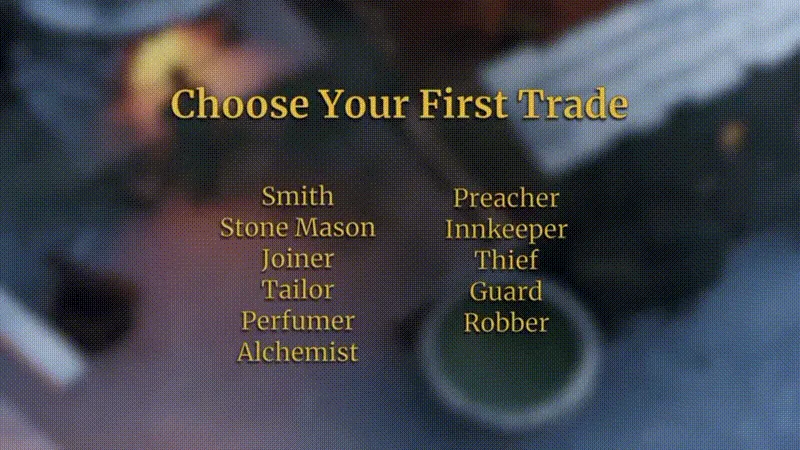
The September 17 Early Access version of The Guild 1 Remake: Europa 1410 begins with eight fully playable professions: Smith, Tailor, Joiner, Stonemason, Priest, Innkeeper, Alchemist and Perfumer. This lineup, confirmed in the September 11 roadmap, reflects Ashborne Games’ deliberate emphasis on crafting and economics during the opening stage of development. Most starting professions create products or provide services through workshops and employees, with players hiring workers, obtaining raw materials, manufacturing goods and selling their output through marketplaces or directly to citizens. Although these businesses share a resource-management framework, their products, services and individual advantages differ.
- Smith: Works with metals and manufactures practical and valuable goods. Production chains involve resources such as iron and silver, intermediate materials including ingots and fittings, and finished products such as short swords, chains, jewellery and other weapons. These goods can have economic, combat or political uses.
- Tailor: Focuses on clothing and textile production while offering profession-specific social opportunities involving gossip and information.
- Joiner: Produces wooden goods and can improve carts, connecting the profession to transportation and the movement of resources around the economy.
- Stonemason: Works with stone products and can interact with city infrastructure and related systems.
- Priest: Originally described as Preacher in earlier promotional material, this profession combines religious services with production. Creating parchment and providing absolution offer a business model different from ordinary manufacturing.
- Innkeeper: Operates an establishment built around meals, drink and the social information circulating through a busy tavern.
- Alchemist: Creates potions, chemical products and other specialised goods, including items that influence health or produce less benevolent effects.
- Perfumer: Manufactures fragrances that can improve customer attraction and appeal, creating economic advantages through specialised products.
Choosing a profession therefore affects more than the appearance of a workshop. Resource requirements, production chains, employee needs, interactions and business location can all change. Ashborne Games has also said the eight starting professions will receive further features and improvements throughout Early Access rather than being treated as mechanically complete on September 17. Combat-focused professions are reserved for the Stabby Update, while advanced financial and trading roles are planned for version 1.0 after the economy receives additional development.
Six cities are included in the Early Access launch lineup: Kuttenberg, Graz, Nuremberg, Wrocław, Freiburg and Landsfort Herle, with Landsfort Herle serving as the tutorial city. This expands the four-city selection THQ Nordic described in May and June 2026, when only Kuttenberg, Nuremberg, Graz and Wrocław were listed. Subsequent development added Freiburg and the tutorial settlement, producing the six-location configuration confirmed in the September roadmap. The cities are intended to function as mechanically meaningful environments rather than interchangeable backdrops, with their layouts and local conditions influencing how players establish and expand their businesses.
Ashborne Games divides urban areas into districts and quarters whose conditions affect business performance, safety, crime, religion, sanitation and customer behaviour. A workshop near a marketplace may reduce logistical friction, while a business in a dangerous or poorly maintained area can face different risks and opportunities. The July developer diary further describes conditions such as crime, filth and religious zeal influencing citizens’ needs and the products that sell successfully. A wealthy district may therefore respond differently to goods than a dangerous or impoverished neighbourhood, making location part of the economic strategy rather than simply a visual preference.
Kuttenberg, corresponding to Kutná Hora, was presented by the developers as a Bohemian centre associated with silver production and monetary importance. Nuremberg is larger and features two marketplaces in the developers’ design, reflecting its historic significance as a manufacturing and trading centre. Wrocław incorporates multiple districts and islands along the Oder, while Graz has its own layout and economic characteristics. Landsfort Herle provides a smaller guided environment with tutorial goals, addressing demo feedback before newcomers confront the deeper systems of the larger cities. THQ Nordic connected this fictionalised setting to historical Herle in the Duchy of Brabant, corresponding to the modern Dutch city of Heerlen.
The central gameplay loop revolves around turning a modest profession into a profitable family enterprise, then using wealth to expand social and political influence. Business, dynasty and politics form the game’s three major pillars. Commercial management begins with raw materials purchased through marketplaces or obtained from resource sites such as mines, woodland, quarries and farms. Transporting goods consumes time and exposes valuable shipments to risk, making logistics an important consideration alongside production. Expensive carts can become attractive targets for criminals, creating a reason to invest in escorts and other protection.
Production chains can require intermediate products before raw materials become valuable finished goods. The Smith demonstrates this structure: ore becomes ingots, while fittings can become components in higher-value products such as weapons or jewellery. Manufacturing therefore involves more than selecting a finished item, with profitability depending on sourcing, storage, worker efficiency, transportation and market conditions. Employees also participate in the wider simulation. Hiring prices depend on qualities such as age and skill, while inexperienced workers can improve through training and become more productive. Organising production and developing a workforce consequently matter as much as choosing a profession.
Prices are designed to react to supply and demand. Selling excessive quantities of a product can reduce its market price, while shortages can make particular resources more valuable. Taxes, workforce availability, seasons, laws and special events can also influence economic conditions. Historical and random events create further disruption: a severe winter may reduce productivity while increasing demand for warm clothing, a passing army might consume weapon and iron supplies and push related prices upward, and disease outbreaks can affect workers and citizens. Some event chains may even provide exclusive production recipes that temporarily give one dynasty an advantage over competitors.
The September Early Access build introduces an early automation system that connects family development with commercial management. A family member belonging to the appropriate professional Guild can be assigned as master of a business and handle production tasks, although Ashborne Games describes this as an early iteration expected to evolve substantially. Family members therefore contribute directly to the current enterprise, but dynasty management also requires planning beyond immediate productivity. Campaigns are designed to continue across generations, making courtship, marriage, children and succession central strategic systems rather than optional background flavour.
Players can pursue potential spouses through deliberate social actions, including gifts, conversation and other methods of increasing affection. Character traits and wealth can make particular candidates especially valuable, connecting relationships with the dynasty’s longer-term ambitions. Marriage follows engagement and can affect relationships with members of the relevant Office Chamber. Married couples have a chance of producing children, and spending time with a spouse can improve the chance of pregnancy. Assigning that spouse to business duties reduces the time available for family life and can consequently affect fertility, creating a practical tension between strengthening the current business and ensuring a future generation.
Children are themselves part of dynasty development, with interactions and toys influencing their growth, including attributes related to rhetoric or handicraft. Once a child reaches age 15, that child can be designated as an heir, while a spouse can also become a successor under appropriate circumstances. When the current dynasty leader dies, the chosen successor inherits titles, buildings and remaining wealth after applicable deductions. Success therefore involves more than maximising one character’s fortune. Players must consider the quality of potential heirs, family survival and the commercial or political position transferred to the next generation. Ashborne Games explicitly notes that the character who ends a long campaign may be several generations removed from the person who began it.
Political advancement allows players to turn commercial wealth into institutional influence. Earlier official material describes earning citizenship, climbing through offices and attempting to win favour or undermine rivals. The September roadmap explains that players apply for positions and improve their standing through relationships with influential citizens, using friendship, bribery or blackmail. Reaching sufficiently powerful offices gives a dynasty influence over city construction and legislation, including where walls, marketplaces, fountains and other infrastructure are built. Laws can alter the conditions under which businesses and rivals operate, making political office directly relevant to economic strategy rather than a separate progression system.
Political power also connects with crime and the legal system. Criminal actions can leave evidence, while influential citizens may have opportunities to shape laws, prosecute enemies or manipulate judicial proceedings. THQ Nordic has specifically described bribing officials, framing rivals and attempting to influence judges as part of the broader simulation. Successful businesses generate wealth, that wealth enables social and political action, and political office can reshape the city in ways that strengthen a dynasty’s commercial position. This relationship between business, family and institutional influence closely reflects the original Europa 1400 design philosophy.

The Guild 1 Remake: Europa 1410 Roadmap, Multiplayer, Steam Demo and PC Requirements
Ashborne Games published its detailed road to version 1.0 on September 11, six days before the planned Early Access launch. The roadmap separates development into regular smaller updates and three major milestones: the combat-focused Stabby Update, the multiplayer and economy-focused Backstabby Update, and version 1.0. Smaller patches are planned between these milestones, incorporating fixes, balancing and additional improvements based on development progress and community feedback. The studio has not attached public release dates to Stabby or Backstabby in the roadmap text, so specific dates for either should not be treated as confirmed.
The Stabby Update is the first major post-launch milestone and will introduce Thief, Robber and Guard. Their delayed arrival reflects Ashborne Games’ decision to concentrate the launch build on crafting and economic management before expanding the combat systems. Thieves will be associated with breaking into citizens’ homes and workplaces, while Robbers will target transportation routes and waylay carts outside the city. Guards provide the opposing side of that system by protecting streets, businesses and other interests. Combat is scheduled for extensive improvement during the same update, with duels singled out for a substantial overhaul intended to make fighting more engaging as the associated professions arrive.
Stabby also includes additional dynasty customisation and the ability to rename children and buildings. Several dynasty backstories are already part of the launch build, but deeper customisation is planned for later. Additional localisation is expected around the same period, although Ashborne Games has avoided guaranteeing that every planned language will arrive simultaneously. The studio says it wants to localise carefully rather than rely on direct word-for-word translations, making language support another area where the roadmap establishes a development direction without promising that every element will arrive on exactly the same day.
Multiplayer is not included in the September 17 Early Access launch and is scheduled for the Backstabby Update, the second major milestone. Ashborne Games says players will eventually be able to compete against as many as 11 other participants, producing a maximum session size of 12 players, with cooperative play also supported. The implementation is intended to extend beyond placing several human dynasties in the same city. Planned features include rivalries and alliances between dynasties, cooperative and competitive challenges, and different victory conditions, allowing the business and political systems to support several forms of interaction.
Those interconnected systems create opportunities for players to compete over raw materials, customers, offices and influence while manipulating the same city economy. Backstabby aims to make the population’s needs increasingly important, so properly supplying essential goods can help a city prosper, while deliberately withholding products can potentially damage the city or create favourable conditions for a particular dynasty. Supplying or depriving the population is therefore intended to become a more consequential strategic choice, with effects shared by the dynasties operating within that economy. This explains why multiplayer is paired with substantial economic changes rather than being introduced solely as a networking feature.
A new playable city will accompany Backstabby, with Ashborne Games planning a community poll to help select its location. Together, multiplayer, more consequential population needs, the workforce systems and an additional city are intended to make the reactive economy a stronger shared strategic system. That expanded foundation will support the Trader and Moneylender professions planned for version 1.0. Ashborne Games is aiming for the full release in summer 2027, but the studio has deliberately avoided presenting that target as a fixed date because the length of Early Access depends on feedback and development progress.
The Trader is built around commerce extending beyond the immediate city, including acquiring rare goods, importing products to satisfy local demand and exporting goods to distant destinations for profit. This expands the commercial game beyond local production and marketplace sales, making outside demand and access to unusual products part of a dynasty’s economic strategy. The Moneylender complements that system through financial services. Money earned in foreign markets can require conversion into local currency, creating opportunities to charge exchange fees, while loans give dynasties another source of startup capital alongside repayment obligations and associated risks. Both professions are reserved for the full release because their distinctive roles depend on the broader economy being sufficiently developed.
Version 1.0 is also planned to introduce further map content and more Guild-related gameplay, giving players additional opportunities to compete within their profession and influence the future of their craft in the city. Crime and punishment will receive further work, including more ways to gather evidence, commit crimes and face consequences, while family interactions are expected to become deeper. Another city is planned for this stage, with community participation helping select its location through a process similar to Backstabby’s city poll.
If the roadmap is delivered as outlined, the roster will expand from eight launch professions to at least 13 named roles, adding Thief, Robber and Guard through Stabby before Moneylender and Trader arrive with version 1.0. The objective is not simply to accumulate professions. Ashborne Games is sequencing them alongside the systems that make them meaningful, beginning with crafting, adding crime alongside improved combat, introducing multiplayer with a more dynamic city economy, and completing the progression with advanced finance and long-distance trade.
A free Steam demo gives players an opportunity to evaluate The Guild 1 Remake: Europa 1410 before purchasing the Early Access release. The original Steam Next Fest demo launched in June 2026 and offered Kuttenberg, three professions and a campaign lasting 17 turns. Players could choose Smith, Innkeeper or Alchemist, with THQ Nordic estimating roughly two to four hours of play depending on their decisions. A July update added the smaller Herle tutorial map and guided objectives to address onboarding feedback, while Ashborne Games confirmed another update for September 17 to bring the demo closer to the Early Access build. The studio has also said it intends to keep the demo updated throughout Early Access and beyond.
For PC hardware, the Steam page lists Windows 10 64-bit or Windows 11 64-bit as the operating-system requirement. Both minimum and recommended configurations specify 16 GB of RAM, DirectX 12 and 20 GB of available storage. Windows is the supported PC operating environment identified in the listing, with no equivalent Mac or Linux requirements provided. These specifications apply to a game entering an ongoing development period rather than a finished release, with the processor and graphics requirements divided into the following tiers:
Recommended specifications: Intel Core i7-12700K or AMD Ryzen 7 5800X processor, paired with an NVIDIA GeForce RTX 4070 or AMD Radeon RX 7800 XT graphics card.
Minimum specifications: Intel Core i5-10400 or AMD Ryzen 5 3600 processor, paired with an NVIDIA GeForce RTX 2060 or AMD Radeon RX 5700 XT graphics card.

Frequently Asked Questions (FAQs)
- When does The Guild 1 Remake: Europa 1410 Early Access launch?
The Guild 1 Remake: Europa 1410 is scheduled to enter Early Access on September 17, 2026, on Windows PC through Steam. It was previously scheduled for July 16, but Ashborne Games postponed the launch to address Steam demo feedback, including onboarding and presentation. September 17 marks the beginning of ongoing development, not the finished release, with additional features, balancing and improvements planned throughout Early Access. - How many professions are available when Early Access begins?
The latest official roadmap confirms eight starting professions: Smith, Tailor, Joiner, Stonemason, Priest, Innkeeper, Alchemist and Perfumer. These establish the initial focus on crafting, production and business management, with further improvements planned during Early Access. Thief, Robber and Guard will follow in the combat-focused Stabby Update, while Moneylender and Trader are reserved for version 1.0. Older references to 11 launch professions do not reflect the September 11 roadmap. - How many cities are available at the September 17 launch?
Six cities are listed for the start of Early Access: Kuttenberg, Graz, Nuremberg, Wrocław, Freiburg and Landsfort Herle. Landsfort Herle serves as a smaller tutorial environment with guided objectives, helping newcomers learn the systems before tackling larger cities. The locations are intended to differ in layout and economic conditions, making business placement meaningful rather than purely cosmetic. This six-city lineup expands the four locations described in earlier announcements. - Is The Guild 1 Remake: Europa 1410 multiplayer at Early Access launch?
No. The September 17 build focuses on single-player, so players should not purchase the initial release expecting immediate multiplayer access. Multiplayer is planned for the later Backstabby Update and will support up to 12 participants, including competitive and cooperative play. The roadmap also includes alliances, rivalries and different objectives. Ashborne Games has not provided a confirmed release date for that update. - What is the Stabby Update?
The Stabby Update is the first major post-launch roadmap milestone and focuses on combat. It will introduce Thief, Robber and Guard, covering burglary, attacks on transportation routes and protection respectively. General combat improvements and a substantial overhaul of duels are planned alongside those professions. The update also extends beyond fighting, adding deeper dynasty customisation and the ability to rename children and buildings. - What is the Backstabby Update?
The Backstabby Update combines multiplayer with a deeper economic simulation. Alongside alliances, rivalries, cooperative and competitive objectives, it aims to make the population’s needs more consequential. Supplying essential goods could help a city prosper, while withholding them could create problems or strategic advantages. Another playable city is also planned, with community voting helping determine the location. It is therefore a broader gameplay expansion rather than simply the addition of online connectivity. - Does The Guild 1 Remake: Europa 1410 have marriage and children?
Yes. Players can court prospective spouses, marry, have children and establish a succession line. Children develop attributes as they grow, and a child who reaches age 15 can be designated as an heir. A spouse can also succeed the dynasty leader under appropriate circumstances. When the leader dies, the successor inherits titles, buildings and remaining wealth after applicable deductions, allowing the campaign to continue across generations. - Is The Guild 1 Remake: Europa 1410 a remake of Europa 1400: The Guild?
Yes, it is explicitly presented as a remake and a return to the first game’s design philosophy, rather than an exact recreation of every original feature. Ashborne Games is prioritising economic management, dynasty development and politics over the character-control approach associated with The Guild 2 and The Guild 3. The remake introduces modernised production chains, changing district conditions and other expanded systems while preserving that strategic management perspective. - Is there a free demo for The Guild 1 Remake: Europa 1410?
Yes. A free Steam demo launched in June 2026 and was subsequently expanded with the smaller Herle tutorial environment and guided objectives. Ashborne Games says another update will arrive on September 17 to bring the demo closer to the Early Access version. It provides an opportunity to assess the game’s management-focused approach before purchasing, and the studio intends to keep it updated during Early Access and beyond. - When will The Guild 1 Remake: Europa 1410 leave Early Access?
Ashborne Games currently targets summer 2027 for version 1.0, but this is not a fixed release date. Development progress and community feedback may affect the schedule. The full release is planned to introduce Moneylender and Trader, additional map content, more Guild-related gameplay, deeper family interactions and further crime-and-punishment improvements. The aim is to develop the supporting systems before introducing professions that depend on them.

Conclusion
The Guild 1 Remake: Europa 1410 Early Access launch on September 17, 2026 is designed as the beginning of a longer rebuilding and expansion process rather than the delivery of a finished product. Ashborne Games is starting with the systems closest to the DNA of Europa 1400: economic management, professions, production chains, family succession, political advancement and a city whose changing conditions can influence business strategy.
The newest roadmap establishes a clear starting point. Eight professions and six cities are available when Early Access begins. Smiths, Tailors, Joiners, Stonemasons, Priests, Innkeepers, Alchemists and Perfumers form the initial professional roster, while Kuttenberg, Graz, Nuremberg, Wrocław, Freiburg and Landsfort Herle provide the opening selection of locations.
From there, the scope expands systematically. The Stabby Update introduces Thieves, Robbers and Guards alongside more developed combat. The Backstabby Update brings multiplayer for up to 12 players while deepening the city economy and adding another city. The planned 1.0 release introduces the Moneylender and Trader, expanded Guild mechanics, further crime and family systems, and additional map content.
The rename from The Guild: Europa 1410 to The Guild 1 Remake: Europa 1410 is ultimately central to understanding the project. Ashborne Games is not trying to make The Guild 2 again, nor is it treating The Guild 3 as its primary mechanical template. Its stated objective is a modern economic and dynasty simulation shaped by the first game: strategic rather than directly character-controlled, driven by businesses rather than adventuring, and structured around the interaction between money, family and political influence.
For players who value those systems, September 17 offers the first opportunity to experience that vision in an evolving commercial release. The more ambitious features are still ahead, and Early Access necessarily means that balance, presentation and individual mechanics will change. Nevertheless, the September 2026 roadmap provides a considerably clearer picture of what is available at launch and what Ashborne Games intends to build before The Guild 1 Remake: Europa 1410 reaches version 1.0.
Sources and Citations
- THQ Nordic, release-date announcement and name change: Published August 20, 2026. Confirms the September 17, 2026 Early Access release and the change from The Guild: Europa 1410 to The Guild 1 Remake: Europa 1410. The announcement explicitly distinguishes its economic-simulation and dynasty-management focus from the more character-driven life-simulation approach of The Guild 2 and The Guild 3. This directly supports the launch timing, rebranding and design-direction claims. (THQ Nordic)
Citation: A New Dawn, a New Name: The Guild 1 Remake: Europa 1410 Opens for Business on 17 September - Ashborne Games, corresponding Steam development update: Published August 20, 2026. Explains how feedback from players expecting something closer to the sequels prompted clearer communication about the project. The studio reiterates that its inspiration is Europa 1400: The Guild, confirms the September 17 date and explains why the new name better communicates that intention. The announcement’s text was readable through the game’s Steam Community news feed. (steamcommunity.com)
Citation: Europa 1410’s EA Release Date and Clarifying Our Vision - Ashborne Games, Early Access roadmap: Published September 11, 2026. This is the matching “The Road to 1.0” announcement. It identifies the eight launch professions as Smith, Tailor, Joiner, Stonemason, Priest, Innkeeper, Alchemist and Perfumer, and the six locations as Kuttenberg, Graz, Nuremberg, Wrocław, Freiburg and the tutorial town of Landsfort Herle. It assigns combat professions to the Stabby Update, multiplayer for up to 12 players to the Backstabby Update, and Moneylender and Trader to version 1.0. THQ Nordic’s same-day announcement independently reproduces these roadmap details. (THQ Nordic)
Citation: The Guild 1 Remake: Europa 1410: The Road to 1.0
Publisher confirmation: The Guild 1 Remake: Europa 1410 Reveals Its Early Access Roadmap - Steam, official PC listing and system requirements: Identifies Ashborne Games as developer, THQ Nordic as publisher and September 17, 2026 as the Early Access date. Its developer-written FAQ targets summer 2027 for the final release, while explicitly making the duration dependent on player feedback. Both hardware tiers specify 64-bit Windows 10 or 11, 16 GB RAM, DirectX 12 and 20 GB storage. Minimum hardware is an i5-10400 or Ryzen 5 3600, with an RTX 2060 or RX 5700 XT; recommended hardware is an i7-12700K or Ryzen 7 5800X, with an RTX 4070 or RX 7800 XT. (Steam Store)
Citation: The Guild 1 Remake: Europa 1410 on Steam - THQ Nordic, professions and business-management overview: Published December 3, 2025. Introduces several professions and their distinct benefits, then explains hiring workers, improving workshops and transporting goods to market. It connects workshop investment with production and business appeal, while warning about overspending. This supports the general profession and business-management discussion, but its early selection of professions is not the definitive eight-profession launch list supplied by the September roadmap. (THQ Nordic)
Citation: Professions, Profits, Politics: How to Become a Medieval Magnate in The Guild: Europa 1410 - THQ Nordic, production chains, raw materials and transportation: Published July 3, 2026, accompanying Ashborne’s goods-and-items diary. Explains how resources become intermediate components and finished products, using iron fittings and silver ingots being combined into a Silver Chain as an example. It also discusses practical uses for manufactured items, guarded carts, unsafe trade routes and the risk of lowering prices by flooding the market. This supports both production mechanics and the connection between crafting, logistics and influence. (THQ Nordic)
Citation: Craft Your Way to Power: The Guild: Europa 1410 Dev Diary Shines a Light on Medieval Trade
Developer diary: Goods and Items in The Guild: Europa 1410 - Ashborne Games, economy and events developer diary: Published July 30, 2026. Covers resource availability, seasonal supply, market competition, storage and the choice between specialized production and diversification. It explains how oversupply can depress prices and how events can affect productivity and commercial opportunities. Importantly, the diary explicitly describes a long-term development vision, warning that not everything discussed will be available at the beginning of Early Access. (Steam Community)
Citation: Economy and Events in The Guild: Europa 1410 - Ashborne Games, family and succession developer diary: Published March 11, 2026. Covers courtship through gifts and conversation, marriage, pregnancy chances, children’s development and inheritance. It explains that spending time with a spouse can increase the likelihood of pregnancy, while assigning them business duties reduces that opportunity. The diary also states that players can continue through a spouse or child, with children eligible to be designated heirs at age 15. Its full text was accessible through an official Steam news-feed republication. (Steam Store)
Citation: Found a Family and Secure Your Succession
Publisher summary, March 12: Love, Legacy, and Lineage: The Latest Dev Diary Explores Dynasty Life - THQ Nordic, city identities and district-based development: The May 6, 2026 announcement describes Wrocław, Nuremberg, Graz and Kuttenberg, explaining the different commercial and geographical identities informing their presentation. The May 11 developer-diary summary discusses distinctive districts, workshop location, infrastructure, security and how decisions can affect a district’s prosperity or decline. These sources support the city-design discussion, while the September roadmap supplies the later six-location lineup. (THQ Nordic)
Citation: Big City Life: Where Your Legacy Starts in The Guild: Europa 1410
District and development coverage: The Road to Success Begins on the Streets of The Guild: Europa 1410 - WorthPlaying, contemporary documentation of the 2002 original: Written by Rainier, published October 17, 2002. This period feature overview describes Europa 1400: The Guild’s 12 careers, player-managed businesses or hired managers, public-office progression, courtship, marriage, children and succession across a family dynasty. It also lists LAN multiplayer for up to eight players. This provides historical support for the original game’s structure without conflating its multiplayer limit with the remake’s planned 12-player mode. (Worthplaying)
Citation: Europa 1400: The Guild, Facts & Features
Recommendations
- Forza Horizon 6’s Recommended PC Specs (2026): Minimum vs Recommended Requirements, 1440p/60FPS Targets, and Best Upgrade Tips
- Attack on Titan 3 Release Date Confirmed for December 10, 2026: Everything You Need to Know
- Star Fox Developer Revealed as American Studio Velan Studios Behind Switch 2 Remake
- Intel’s New Gaming CPUs Are Its Fastest and Cheapest Yet: Everything to Know About the Core Ultra 200S Plus Series
- Hokubu Evolving World Car Meet Location in Forza Horizon 6: Where to Find it Fast
- Kusan: City of Wolves: Official Release Date Trailer, Gameplay, Platforms, Demo, and Everything We Know (2026 Update)
- Disney Speedstorm is Available Now on Switch 2: Everything You Need to Know
- Ahsoka Season 2 Finally Gets January 2027 Disney+ Release Date
- KPop Demon Hunters Returns to Theaters Next Week: Cheap Tickets, Sing-Along Event Details, and How to Watch the Limited Re-Release
- Modern Warfare 4 Promises No Silly Skins Again, But Questions Remain About AI Content



































































































