









In This Article (9 sections)
Magic: The Gathering The Hobbit Prerelease Guide, Release Date, and Schedule
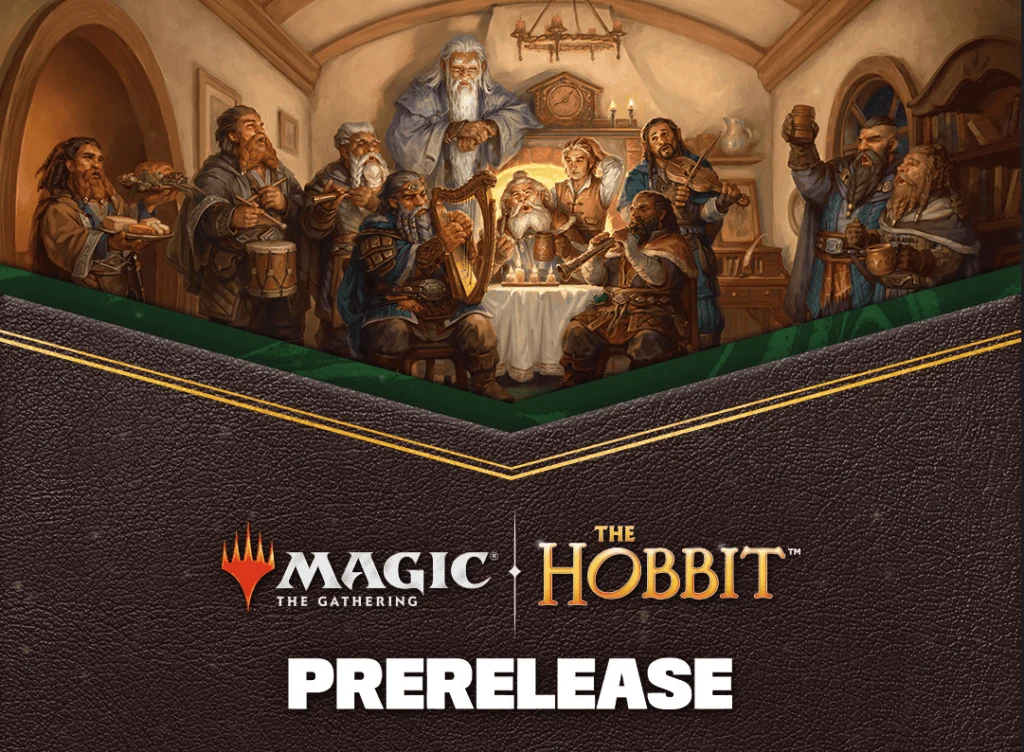
Magic: The Gathering: A Complete Guide To The Hobbit Prerelease begins with one of 2026’s biggest returns to Middle earth. Magic: The Gathering | The Hobbit is a Universes Beyond release based on J.R.R. Tolkien’s The Hobbit, bringing Bilbo Baggins, Thorin Oakenshield, Gandalf, Smaug, the armies of Middle earth, and a collection of new and returning mechanics into Magic. The tabletop set officially releases worldwide on August 14, 2026, but Prerelease events began one week earlier on August 7, giving players their first widespread opportunity to open Play Boosters and build Sealed decks.
Unlike Constructed Magic, a Prerelease does not require players to arrive with a finished deck. Participants receive a Prerelease Pack, open the cards inside it, and construct a minimum 40 card deck from their pool and any number of basic lands. The challenge is therefore less about owning specific cards and more about correctly evaluating the cards you open, understanding the Limited archetypes, building a reliable mana curve, and identifying the most powerful interactions available in your particular pool. Wizards of the Coast designed The Hobbit around five principal two color Limited strategies tied to the five armies, making archetype recognition especially important.
Magic: The Gathering | The Hobbit Prerelease events officially run from August 7 through August 13, 2026. The global tabletop release follows on August 14, while the MTG Arena release takes place on August 11. Wizards also offered early Pre Prerelease play at Gen Con from July 30 through August 2, meaning attendees there were able to experience the set even before normal local game store Prerelease events began.
For most players, August 7 marked the meaningful start of The Hobbit Limited environment. Participating local game stores hold Sealed events using official Prerelease Packs, although individual tournament start times, entry costs, number of rounds, prize structures, and whether multiple sessions are offered are controlled by each store. Players therefore need to check their local store’s event schedule rather than assuming every location follows exactly the same timetable.
The timing matters because a Prerelease offers a different environment from a normal Limited tournament. Everyone is still learning which commons are better than they initially appear, which removal spells need to be played around, and how quickly each archetype can close a game. That uncertainty rewards basic Limited fundamentals such as playing enough creatures, keeping the mana base consistent, avoiding unnecessary splashes, and carefully reading unfamiliar cards.
The Hobbit’s worldwide release on August 14 means the Prerelease period is deliberately positioned as an early experience. Wizards describes Prereleases as friendly events suitable for both new and experienced players, so newcomers should not treat the tournament like a high level competitive event.

MTG The Hobbit Prerelease Pack and Sealed Deck Building Guide
An official Magic: The Gathering | The Hobbit Prerelease Pack contains six The Hobbit Play Boosters, one traditional foil promo card, one deck box, and one Spindown die. Players use the contents of those boosters and their eligible promo card to build a 40 card Sealed deck, with basic lands available as needed. The six Play Boosters supply the vast majority of a player’s card pool. Rather than choosing cards one at a time as in Booster Draft, every card opened belongs to that player’s Sealed pool, giving players a much larger collection to evaluate before deciding on colors.
The traditional foil promo can also become an important part of the deck if it fits the player’s strategy and colors. A powerful rare or mythic rare may pull a deck toward a particular combination, but players should never select colors solely because the promo looks impressive.
A powerful six mana rare is not enough to rescue a color with weak creatures, poor removal, and too few playable cards. The deck box is primarily practical, giving players somewhere to keep their finished deck and sideboard during the event. The Spindown die can track life totals or other numerical information, although players should still pay attention to the requirements of their particular event when determining what accessories to use. The key point is that every participant begins with a randomized card pool, so there is no single universally correct Hobbit Prerelease deck list. Success comes from constructing the strongest cohesive deck your particular six boosters allow.
The first step in building a 40 card Hobbit Prerelease deck is sorting the entire pool. Wizards specifically recommends organizing cards by color while separating multicolor cards, artifacts, and colorless cards. Once organized, the strongest threats and removal spells become much easier to identify. A useful starting structure is approximately 23 nonland cards and 17 lands. Wizards’ official Prerelease guidance specifically recommends 17 lands for an average Sealed deck, leaving roughly 23 slots for creatures, removal, combat tricks, card advantage, Equipment, and other spells.
Creature count matters heavily. A deck filled with clever tricks but lacking creatures will struggle to establish a battlefield, so most Prerelease decks should dedicate a significant portion of their nonland slots to creatures or cards that reliably create creatures, such as recruit effects or amass cards. The next priority is interaction. Efficient removal stops opposing bombs and allows attackers to continue dealing damage. Wizards highlights examples across the colors, including Magnificent End, Stone by Sunlight, Thorin’s Last Stand, Confusticate and Bebother, Enchanted River’s Grasp, Bilbo’s Deadly Slice, Gnashing of Teeth, Burn, Burn, Tree and Fern, Pinecone Strike, Quarrel, Troll Negotiations, and Warg Tactics.
After threats and removal, examine synergy. A red white deck should have enough artifacts, legendary permanents, Sagas, and storied payoffs to make its theme meaningful. White blue should have sufficient recruit and card draw support. Black red wants amass, sacrifice outlets, and cards that reward creatures dying. Black green prefers large creatures and ferocious payoffs. Green blue benefits from landfall and controlling effects. Finally, examine mana requirements. A deck containing many double colored mana costs in both colors may require a carefully balanced land split. Splashing a third color should only happen when the payoff is powerful enough and the fixing is reliable enough to justify the increased risk.
The Hobbit Sealed should be approached differently from Draft. In Draft, players can deliberately select cards supporting an archetype. In Sealed, players must discover which archetype their randomized pool can support. Begin by finding cards capable of winning games. Wizards recommends searching for major threats first, citing Stone Giant of High Pass and Settle the Wreckage as examples of cards that can have a substantial effect on the game. Bombs are important, but they should be viewed as one component of the deck rather than the entire plan.
After identifying bombs, evaluate removal. A color containing several good removal spells can be more valuable than one containing a single exciting rare and little else. Wizards even provides a hypothetical example in which Smaug, the Magnificent combined with multiple copies of Bilbo’s Deadly Slice could strongly indicate black red, while opening a strong black green card without supporting removal might not justify playing that combination. Playable depth is the third consideration. Count how many cards in each color you would genuinely be happy to put into a 40 card deck. If a color has only seven good cards, it probably cannot serve as a main color unless your second color is exceptionally deep.
The fourth consideration is curve. A collection of excellent four, five, and six mana cards can still produce a bad deck if nothing meaningful happens during the first three turns. Limited games often hinge on which player uses mana more efficiently, and Wizards explicitly recommends building a curve with substantial activity at two and three mana. Only after considering power, interaction, depth, curve, and synergy should you settle on final colors.
There is no objectively best color pair for every Hobbit Prerelease pool because Sealed pools are randomized. Wizards deliberately built five principal Limited archetypes: white blue Humans, black red Goblins, black green Wolves, red white Dwarves, and green blue Elves. White blue is attractive when the pool contains several recruit effects and rewards for drawing additional cards. It can generate Human Soldier tokens while filtering draws, giving the archetype both card selection and battlefield presence.
Black red can be strong when a pool contains repeated amass effects, good removal, sacrifice outlets, and cards that reward creatures dying. Because amass concentrates multiple +1/+1 counters on an Army, black red can create a large threat while also gaining value from sacrificing creatures at the right moment. Black green offers a straightforward path for players who open efficient large creatures. Its ferocious theme rewards controlling a creature with power 4 or greater, making raw creature size especially valuable.
Red white supports Dwarves and storied. Its strength depends heavily on whether the deck can naturally assemble the artifacts, legendary permanents, and Sagas needed to create an enduring story while still maintaining a functional creature curve. Green blue is the landfall and control oriented pair. It can profit from normal land development while using cards such as Elven Raft Steerer and Mirkwood Pathmaker to influence the battlefield.
The practical answer is therefore simple: the best colors are the colors in your pool that combine playable depth, removal, a healthy curve, and enough synergy to make the set’s mechanics matter. Rather than forcing one of The Hobbit’s five archetypes because it appears powerful, build around the cards your particular Prerelease Pack gives you and choose the combination that produces the most consistent 40 card deck.

MTG The Hobbit Limited Archetypes and Key Mechanics Explained
The five core Hobbit archetypes are directly connected to the five armies that shape the climax of the story. Wizards explained that the set was intentionally structured around five two color archetypes rather than all ten possible color pairs. White blue represents Humans and revolves around recruit and drawing extra cards. Bard the Bowman is one of the signpost cards for this strategy. Recruit itself draws and then discards a card, and if the discarded card is a nonland card, the player creates a 1/1 white Human Soldier token. This means white blue can trigger cards that care about additional draws while simultaneously expanding the battlefield.
Black red represents Goblins. It uses amass Goblins to grow an Army and combines that with sacrifice effects. Wizards highlights cards such as Stir Up Trouble and Snowslope Hunter as ways of sacrificing an Army, while creatures with death triggers can provide additional sacrifice value. Black green represents Wolves and uses ferocious. The ability checks whether the player controls a creature with power 4 or greater, meaning large creatures function as both threats and enablers.
Red white represents Dwarves and uses storied. Its goal is to control a storied permanent while also reaching the required collection of artifacts, legendary permanents, and Sagas. Once the player achieves an enduring story, that status remains for the rest of the game. Green blue represents Elves and uses landfall. Wizards characterizes this as a more controlling strategy that can restrain opposing creatures while building toward larger threats. These archetypes should be treated as guides rather than absolute restrictions. Sealed rewards using the best pool available, even if the deck is less mechanically focused than an ideal Draft deck.
Storied is one of The Hobbit’s new mechanics and is particularly important to red white Dwarves. A player with a permanent that has storied receives an enduring story once that player also controls three or more permanents among artifacts, legendary permanents, and Sagas. The wording is important because you do not need three artifacts, three legendary permanents, and three Sagas. You need three total permanents drawn from those categories while also satisfying the requirement of controlling a permanent with storied.
Once an enduring story has been earned, it remains true for the rest of the game. Losing the storied permanent or falling below three qualifying permanents does not remove the designation. This makes the mechanic substantially easier to maintain than a traditional threshold ability that continually checks battlefield conditions.
During deck construction, players should not overload their deck with weak cards simply because they count toward storied. The best red white builds will reach the threshold naturally with cards that already serve useful functions. Legendary creatures, Equipment and other artifacts, and playable Sagas become more appealing because they advance the strategy without sacrificing card quality. Thorin Oakenshield and Bombur, Gentle Dreamer are among the payoff examples identified in Wizards’ archetype guide. Dori, Bearer of Friends is particularly useful because Wizards notes that Dori is legendary and can also make you an artifact, helping toward the mechanic’s goals.
Recruit is a new keyword action. When an effect tells you to recruit, you draw a card and then discard a card. If the discarded card is a nonland card, you create a 1/1 white Human Soldier creature token. This creates several layers of value. First, recruit improves card selection because a player can discard a card that is less useful in the current game. Second, discarding a nonland generates a creature. Third, recruit places cards into the graveyard, which may matter for other effects. Finally, drawing a card can trigger cards that care about drawing multiple cards during a turn.
White blue Humans is the primary recruit archetype. Wizards identifies Esgaroth Garrison, Celebrate the Mountain King, and Long Lake Nuisance as examples of cards supporting the recruit plan, while Bard the Bowman rewards the strategy’s card drawing and token production. Players should think carefully before automatically discarding a spell just to receive a token. If the spell is crucial, discarding a land may be better even though doing so produces no Soldier.
Recruit is strongest because it provides options, not because creating the token is mandatory for the ability to be useful. In longer games, excess lands become excellent cards to exchange through recruit when a player needs action, though discarding a land sacrifices the token bonus. In other situations, an expensive or situational nonland can be converted into a Soldier while the recruit draw helps dig toward something better.
Hone counters improve Equipment. Every hone counter on an Equipment gives the creature equipped by that Equipment an additional +1/+0. Wizards explains that this bonus exists because of the rules associated with hone counters rather than because the Equipment itself gains a new printed ability. Sting, Bilbo’s Sword is one of the prominent examples and can place hone counters on itself. The Limited implication is that Equipment with hone counters can become progressively more dangerous as the game continues.
However, Equipment still carries the traditional Limited cost of requiring both the Equipment and a creature to use it. A deck with too much Equipment and too few creatures may draw hands that cannot establish a board. For that reason, hone should generally enhance an already functional creature deck rather than replace one.
Equipment becomes especially appealing when a deck contains inexpensive creatures that can carry it efficiently. Wizards’ Prerelease guide even discusses Most Decrepit Old Bird as a potential early creature for decks planning to load low cost creatures with Equipment. Because hone bonuses increase power rather than toughness, they are primarily offensive. A creature equipped with a heavily honed weapon can trade up in combat or force difficult blocks, but the creature may remain vulnerable to damage based removal or larger blockers.
MTG The Hobbit Amass, Best Cards, Creatures, Removal, and Mana Curve Guide
Amass returns in The Hobbit as amass Goblins. When a card instructs you to “amass Goblins N,” create a 0/0 black Goblin Army creature token if you do not already control an Army, then place the specified number of +1/+1 counters on an Army you control. If you already have one or more Armies, you choose which Army receives the counters instead of creating another token.
Repeated amass effects can build one enormous creature, creating both a powerful threat and a major vulnerability. A single removal spell can eliminate several cards’ worth of investment. Black-red decks can reduce this risk through sacrifice effects such as Stir Up Trouble and Snowslope Hunter, which allow the Army or another expendable creature to provide value before it is destroyed.
Because Prerelease uses Sealed rather than Draft, players build a 40-card deck from the cards they open instead of selecting cards from shared boosters. Begin by identifying the strongest threats and efficient removal, then choose creatures that provide good value for their mana cost. Wizards highlights cards such as Settle the Wreckage and Stone Giant of High Pass as major threats, while Smaug, the Magnificent can provide a strong reason to play black-red.
Signpost uncommons help identify the intended strategy of each main color pair:
- White-blue: Bard the Bowman supports card draw and token production.
- Black-red: Bolg of the North supports Goblins and amass strategies.
- Black-green: The Chief Warg supports Wolves and larger creatures.
- Red-white: Thorin Oakenshield rewards Dwarves and storied play.
- Green-blue: Silvan Reveler supports Elves and the color pair’s wider strategy.
These signposts should guide deck construction rather than determine it. A strong storied payoff is unreliable without enough ways to create an enduring story, while ferocious cards lose value without enough creatures with power 4 or greater. The best cards are those that remain useful individually while supporting the rest of the deck.
Creature evaluation should begin with efficiency. Prioritize creatures with suitable power and toughness for their cost, useful abilities, or effects that generate another card, token, or advantage. Black-green particularly needs enough four-power creatures to activate ferocious. Ordinary Bear and Gollum, Silent Slinker provide reasonable early bodies, while Beorn, Reluctant Host and Long-Bodied Grey Dog help support the archetype’s larger threats.
Other color pairs value different creature qualities. White-blue benefits from recruit effects because Soldiers widen the battlefield while card draw activates its payoffs. Black-red wants creatures that can be sacrificed without losing too much value, especially those with death triggers. Red-white prefers cards that help establish an enduring story without forcing the deck to include weak permanents.
Removal is especially important in Sealed because opponents are likely to open powerful rares. Notable interaction in the set includes:
- Magnificent End; Stone by Sunlight; Thorin’s Last Stand; Confusticate and Bebother; and Enchanted River’s Grasp
- Sound the Trumpets; Thranduil’s Decree; Uneasy Partings; Bilbo’s Deadly Slice; and Crude Bent Blade
- Gnashing of Teeth; Stir Up Trouble; Burn, Burn, Tree and Fern; Gandalf, Spark Starter; and Glóin the Mighty
- Pinecone Strike; Smaug, the Great Calamity; Quarrel; Troll Negotiations; and Warg Tactics
Removal that can answer several permanent types is particularly valuable because players cannot predict which bombs they will face.
Wizards provides the following baseline mana curve for a Hobbit Prerelease deck:
- One or two one-mana cards
- Seven or eight two-mana cards
- Five or six three-mana cards
- Three or four four-mana cards
- Two or three five-mana cards
- Zero or one six-mana card
- 17 lands
This is a guideline rather than a fixed rule, but it shows the importance of cheap spells. Two-mana creatures establish pressure, block early attackers, carry Equipment, and create opportunities for combat tricks. Three-mana cards should continue developing the board or disrupt the opponent. A low-curve deck may sometimes use 16 lands, while a particularly mana-hungry build may need 18, but 17 is the normal starting point.
Land selection must also reflect color requirements. Count the colored mana symbols in the deck, especially on early plays. A two-mana spell requiring two white mana symbols places more pressure on the mana base than an expensive card requiring only one.
Adventure cards should be counted according to the side most likely to be cast first. Velvetwing Butterflies, for example, is a three-mana permanent, but its Adventure, Gaze in Wonder, costs two. Treating it as an early play when evaluating the curve gives a more accurate picture of how the deck will function.
MTG The Hobbit Prerelease Deck Building Tips and Winning Strategies
Beginners should prioritize consistency over complexity. Two colors are normally more reliable than three, particularly when they form one of the set’s five supported pairs. Do not choose colors solely because of one powerful rare. A deck of solid cards that consistently produces the correct mana will often defeat a stronger-looking deck that cannot cast its spells.
Read every card carefully before finalizing the deck. The Hobbit includes new mechanics such as storied and recruit alongside amass, Adventure, landfall, and ferocious. Understanding the exact wording can prevent mistakes and reveal interactions that are easy to overlook during the first games.
Build the mana curve before focusing on smaller synergies. A deck with very few two-mana plays may fall behind before its expensive cards become relevant. Play enough creatures to establish and maintain a battlefield, since removal alone cannot win without reliable threats.
Each main color pair has a clear plan:
- White-blue: Recruit Soldiers, draw extra cards, and use token payoffs.
- Black-red: Amass Goblins and turn creatures into sacrifice value.
- Black-green: Develop four-power creatures and activate ferocious.
- Red-white: Establish an enduring story and benefit from storied cards.
- Green-blue: Generate landfall value while controlling the battlefield.
During games, use mana efficiently but avoid spending removal on the first legal target. Consider which cards are most important to the opponent’s strategy. Against black-green, removing a four-power creature may also disable ferocious. Against red-white, destroying a key permanent before the opponent establishes an enduring story can prevent later payoffs, although the designation cannot be undone once earned.
Black-red opponents may sacrifice an Army before it dies, so plan blocks and removal around that possibility. Against white-blue, account for recruit tokens and card-draw payoffs that can quickly change a stalled battlefield. Equipment and hone counters also require careful targeting because removing the equipped creature may leave the opponent without another useful carrier.
Opening-hand decisions are equally important. A keepable hand should normally contain at least two lands and something meaningful to cast early. Powerful cards do not justify keeping a hand that cannot produce functional mana.
Combat patience can prevent unnecessary losses. Before attacking, consider the opponent’s possible blocks, instant-speed removal, and combat tricks. The first game also reveals information about their deck, so remember the interaction and threats they showed when playing later games.
Every unused card in a Sealed pool remains available as a sideboard option between games. Bring in specialized answers when an opponent relies on artifacts, enchantments, large creatures, or aggressive attackers. Consistent deck construction, efficient mana use, careful removal, and active sideboarding will usually matter more than attempting to include every powerful card in the pool.

Frequently Asked Questions (FAQs)
- When did Magic: The Gathering The Hobbit Prerelease start?
The normal local game store Prerelease period began on August 7, 2026, and runs through August 13. This gives players an early opportunity to open The Hobbit Play Boosters and build Sealed decks before the worldwide tabletop release on August 14, 2026. Gen Con also hosted earlier Pre Prerelease events from July 30 through August 2, allowing attendees to experience the set before the regular Prerelease period. - How many boosters are in The Hobbit Prerelease Pack?
The official Prerelease Pack contains six Magic: The Gathering | The Hobbit Play Boosters. These boosters provide the main card pool used to build your Sealed deck. The Pack also contains a traditional foil promo card, deck box, and Spindown die, with the promo potentially being included in the deck if it fits your chosen colors and strategy.
- How many cards should be in a Hobbit Prerelease deck?
Players build a minimum 40 card Sealed deck from the cards they open, along with any number of basic lands they need. A common structure is around 23 nonland cards and 17 lands, with Wizards specifically using 17 lands in its recommended sample curve. This is a useful starting point rather than an absolute rule, as a particularly low or high mana curve may justify adjusting the land count.
- What are the main color pairs in The Hobbit Limited?
The five core archetypes are white blue Humans, black red Goblins, black green Wolves, red white Dwarves, and green blue Elves. Each pair is built around a different strategy and mechanic, such as recruit for white blue, amass Goblins for black red, ferocious for black green, storied for red white, and landfall for green blue. However, players should choose based on the cards actually opened in their Sealed pool rather than forcing an archetype.
- What does recruit do in The Hobbit?
Recruit instructs the player to draw a card and then discard a card. If a nonland card is discarded, that player creates a 1/1 white Human Soldier creature token. This gives recruit several uses because it can help replace an unwanted card, provide a creature for the battlefield, and support effects that care about drawing cards. If you discard a land instead, you still get the card selection but do not receive the Soldier token.
- How does storied work?
If you control a permanent with storied and three or more qualifying permanents among artifacts, legendary permanents, and Sagas, you gain an enduring story. You do not need three permanents from each category; you need three total permanents from those categories while also controlling a permanent with storied. Once obtained, an enduring story remains true for the rest of the game even if those permanents later leave the battlefield, making it a lasting achievement rather than a condition that must continually be maintained.
- What do hone counters do?
Each hone counter on an Equipment gives the creature equipped by that Equipment +1/+0. This means hone counters increase the creature’s power and make it more threatening in combat without increasing its toughness. Equipment that accumulates multiple hone counters can therefore become increasingly effective as the game continues, although you still need a creature available to carry the Equipment.
- How does amass Goblins work?
If you do not control an Army, amass Goblins creates a 0/0 black Goblin Army token. You then place the instructed number of +1/+1 counters on an Army you control. If you already have an Army, you normally do not create another one, and the new counters can instead be added to an Army you already control. This allows repeated amass effects to build one increasingly large threat, although concentrating so much power in one Army also makes it vulnerable to removal.
- What is the best archetype for The Hobbit Prerelease?
There is no universally best archetype because Sealed pools are random. The strongest choice is normally the two color combination that provides the best mix of threats, removal, playable depth, mana curve, and synergy from the cards you actually opened. A theoretically powerful archetype can still be a poor choice if your pool lacks enough playable cards to support it, so evaluating your individual pool is more important than simply choosing the color pair you expect to be strongest.
- Should beginners play more than two colors at The Hobbit Prerelease?
Usually not. Wizards recommends focusing on two colors, ideally one of the five supported archetype pairs, because a focused two color deck is generally more consistent and easier to build and play. Splashing a third color can work when the payoff is powerful enough and the deck has reliable mana fixing, but adding another color also increases the chance of drawing lands that cannot cast the spells in your hand. For beginners, staying with two colors is usually the safer approach.

Conclusion
Magic: The Gathering – A Complete Guide to The Hobbit Prerelease ultimately comes down to understanding how Sealed deck fundamentals interact with the set’s five army design. The Prerelease began on August 7, 2026, ahead of the worldwide August 14 tabletop release, and gives players six Play Boosters, a traditional foil promo, a deck box, and a Spindown die from which to begin their journey.
The biggest deck-building mistake is trying to force a predetermined archetype. Your actual card pool should dictate the final build. Find the strongest threats, identify the best removal, determine which colors have enough playable cards, establish a reliable mana curve, and then use archetype synergy as the final layer that turns a collection of good cards into a coherent deck.
White blue Humans uses recruit and extra draws to build a wide battlefield. Black-red Goblins combines amass with sacrifice. Black-green Wolves uses large creatures to activate ferocious. Red-white Dwarves builds toward an enduring story through storied. Green-blue Elves uses landfall in a more controlling strategy. Wizards built these five combinations directly into the structure of the Limited environment, giving players clear strategic signposts without making every Sealed pool identical.
Players who pair those themes with approximately 17 lands, meaningful early plays, sufficient creatures, efficient removal, and disciplined mana usage will give themselves the best chance of succeeding. The Hobbit Prerelease is designed as an accessible first encounter with the set, so learning the mechanics, adapting to your pool, and making steady Limited decisions matter far more than chasing a theoretically perfect deck.
Sources and Citations
- Wizards of the Coast — Magic: The Gathering | The Hobbit Prerelease Guide
Magic: The Gathering | The Hobbit Prerelease Guide
Citation: Jubilee Finnegan, Wizards of the Coast, July 31, 2026. Official Prerelease guide confirming that events begin August 7, 2026, and that each Prerelease Pack includes six The Hobbit Play Boosters, a traditional foil promo card, deck box, and Spindown die. Players build a 40-card Sealed deck from their pack plus basic lands. The guide also provides the recommended 17-land mana curve, removal examples, and the five primary two-color Limited archetypes: white-blue Humans, black-red Goblins, black-green Wolves, red-white Dwarves, and green-blue Elves. (MAGIC: THE GATHERING) - Wizards of the Coast — Magic: The Gathering | The Hobbit Mechanics
Magic: The Gathering | The Hobbit Mechanics
Citation: Matt Tabak, Wizards of the Coast, July 18, 2026. Official mechanics guide explaining storied, recruit, hone counters, Adventures, and amass. Storied can establish an enduring story once its requirements are fulfilled; recruit draws then discards and can create a Human Soldier token; hone counters improve the power granted by Equipment; Adventures allow the Adventure half to be cast before the permanent; and amass Goblins creates or strengthens a Goblin Army using +1/+1 counters. (MAGIC: THE GATHERING) - Wizards of the Coast — Returning to Middle-earth with Universes Beyond
Returning to Middle-earth with Universes Beyond
Citation: Mark Rosewater, Wizards of the Coast, July 20, 2026. Official design article explaining that The Hobbit was structured around the story’s five armies and consequently uses five two-color Limited archetypes: white-blue Humans with recruit, black-red Goblins with amass, black-green Wolves with ferocious, red-white Dwarves with storied, and green-blue Elves with landfall. (MAGIC: THE GATHERING) - Wizards of the Coast — Collecting Magic: The Gathering | The Hobbit
Collecting Magic: The Gathering | The Hobbit: The Four Most Important Things to Know
Citation: Mike Turian and Jubilee Finnegan, Wizards of the Coast, July 18, 2026. Official product and collecting guide confirming the main set code HOB, Prerelease events from August 7–13, 2026, the August 11 MTG Arena release, and August 14 worldwide tabletop release. It also provides Prerelease Pack contents and detailed product information. (MAGIC: THE GATHERING) - Wizards of the Coast — Where to Play Magic: The Gathering | The Hobbit
Where to Play Magic: The Gathering | The Hobbit
Citation: Wizards of the Coast, July 20, 2026. Official event guide confirming early The Hobbit play at Gen Con from July 30–August 2, followed by local game-store Prerelease events from August 7–13. It states that Prerelease participants receive a Prerelease Pack and construct a 40-card Sealed deck from its contents plus any number of basic lands. (MAGIC: THE GATHERING) - Wizards of the Coast — Magic: The Gathering | The Hobbit Card Image Gallery
Magic: The Gathering | The Hobbit Card Image Gallery
Citation: Wizards of the Coast. Official card image gallery for Magic: The Gathering | The Hobbit, serving as Wizards’ visual reference for revealed cards in the expansion and confirming the set’s August 14, 2026 release. Wizards notes that the displayed card images are digital renderings rather than photographs of physical cards. (MAGIC: THE GATHERING)
Recommended
- Data Reconstruction Quest Guide In Marathon: All Part 1, Part 2, and Part 3 Objectives Explained
- How to Put Pattern on Texture in Blender: A Step-by-Step Guide to Creating Custom Materials
- Splatoon Raiders Review: a Single-Player Spin-Off that Shines
- Event Habitat Dex and Pokédex List in Pokémon Pokopia
- Pokémon Champions Global Release Timings Revealed: Exact Start Times in Every Time Zone
- Ubisoft Shows Off Micropolygon Rendering In Anvil Engine: How Virtual Geometry Is Changing Game Graphics
- Mortal Kombat Actor on Street Fighter Rivalry: Lewis Tan Reacts to Andrew Schulz’s Game Awards Jab
- The State Duma Has Proposed to Restrict Loot Box Sales in Games to Minors in Russia
- YouTube expands direct messaging to the United States in latest mobile app update
- Family Guy Stewie Spinoff Series Greenlit for 2 Seasons: Release Date, Plot, Cast, and Everything We Know



































































































