





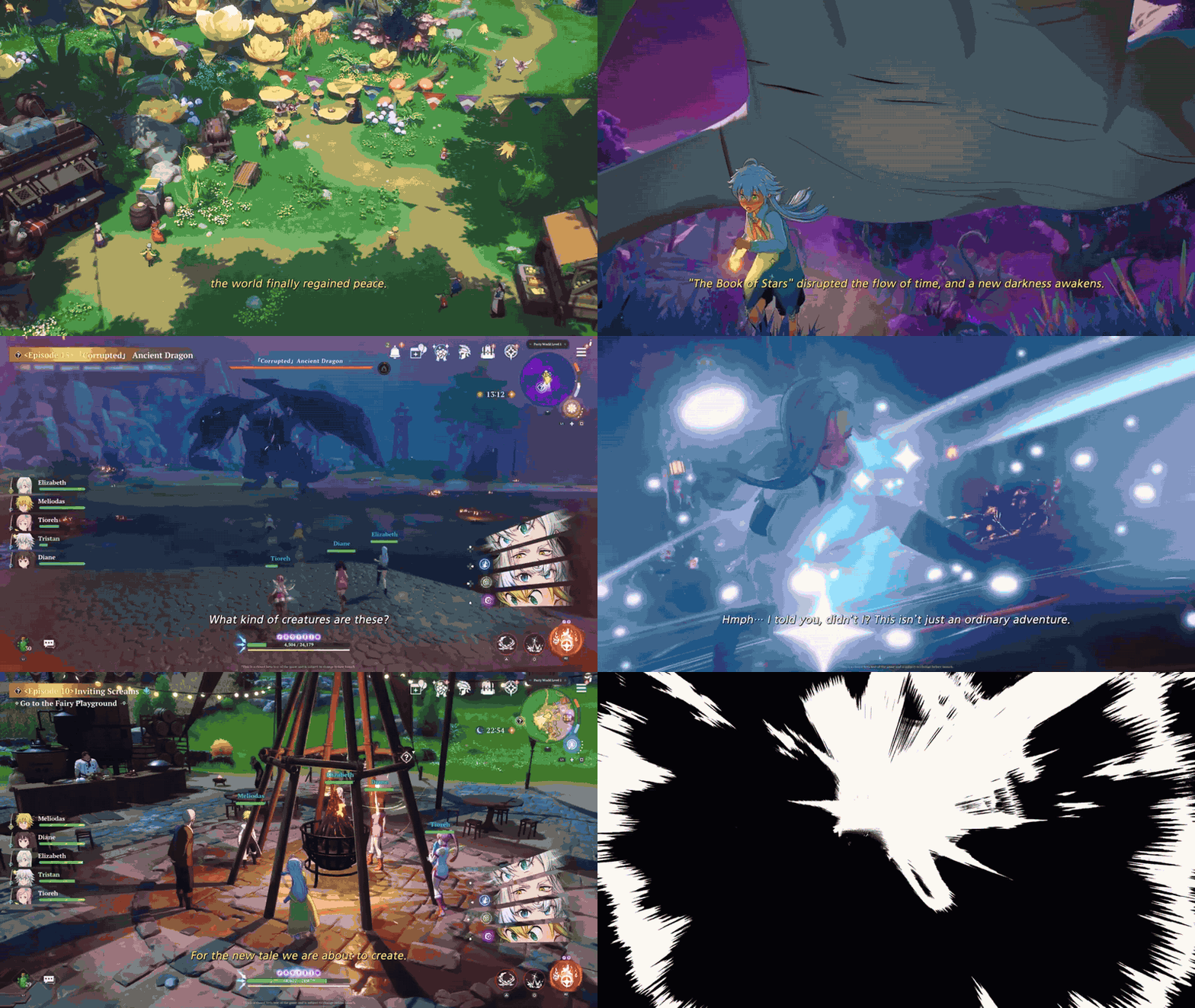
The Seven Deadly Sins: Origin arrives in 2026 as a free-to-play, cross-platform open-world anime RPG that clearly aims higher than a routine licensed adaptation. Its biggest strengths are easy to see: a large and recognizable Britannia, a brand-new Tristan-led story, strong character fan service, real-time team combat, and full co-op support. Its biggest weaknesses are just as visible: uneven optimization, live-service grind, and a gacha economy that can feel expensive once the launch honeymoon wears off. Steam user sentiment has been mixed, and early review coverage has landed in the “promising but rough” range rather than immediate must-play territory.
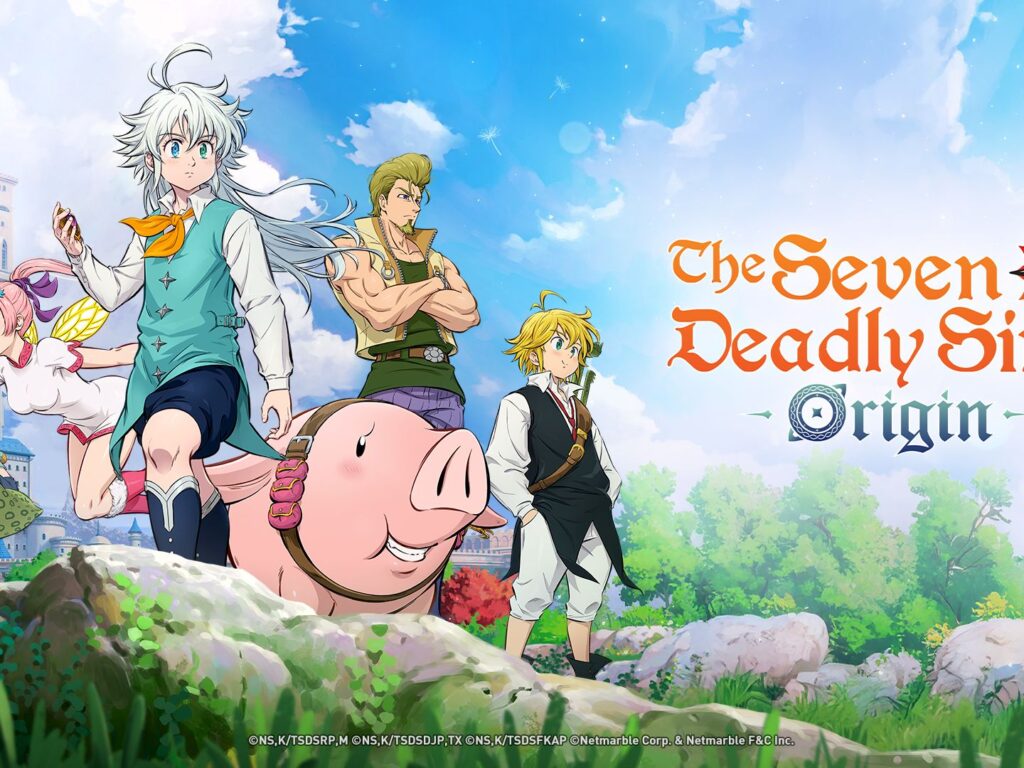
The Seven Deadly Sins: Origin release date and platforms (Steam, PS5, mobile)
The most accurate 2026 launch timeline is this: The Seven Deadly Sins: Origin released first on Steam and PlayStation 5 on March 16, 2026, then expanded to mobile as part of its all-platform rollout on March 23, 2026. As of April 2026, it is available on Steam, PS5, iOS, and Android. Steam lists the PC launch date as March 16, 2026, the PlayStation store lists the PS5 release as 3/16/2026, and official launch tracking plus live App Store and Google Play listings confirm the game is now out on mobile as well.
That release path matters because Origin had earlier January 2026 launch messaging before being pushed into March. The final result is a game that effectively launched in phases: PC and PS5 first, then mobile a week later as the grand launch. For players reading older announcements, March 2026 is the correct release window to use, not January.
Is The Seven Deadly Sins: Origin free to play or pay to win?
The Seven Deadly Sins: Origin is unquestionably free to play. Steam labels it Free To Play and also discloses in-app purchases plus chance-based in-game purchases, while the mobile storefronts likewise present it as a free download with in-app purchases.
Whether it is pay to win is more nuanced. In its current form, Origin is better described as pay-to-progress or pay-for-advantage than pure pay-to-win. The game’s roster growth, banner chasing, and long-term optimization are all accelerated by spending, and at least one early review explicitly criticizes the monetization as expensive. At the same time, the core structure leans heavily on PvE exploration, solo progression, party play, and co-op dungeon content rather than a clearly dominant competitive PvP endgame that would make spending feel instantly mandatory. The result is a game you can start and enjoy for free, but one where paying noticeably smooths the grind and improves your odds of assembling top-end teams faster.
That distinction matters for a review. Free players are not locked out of the experience, but they are playing a slower version of it. If your tolerance for gacha friction is low, the monetization will likely become one of Origin’s main downsides rather than a harmless background system.
The Seven Deadly Sins: Origin story explained (Tristan of Liones and the Book of Stars)
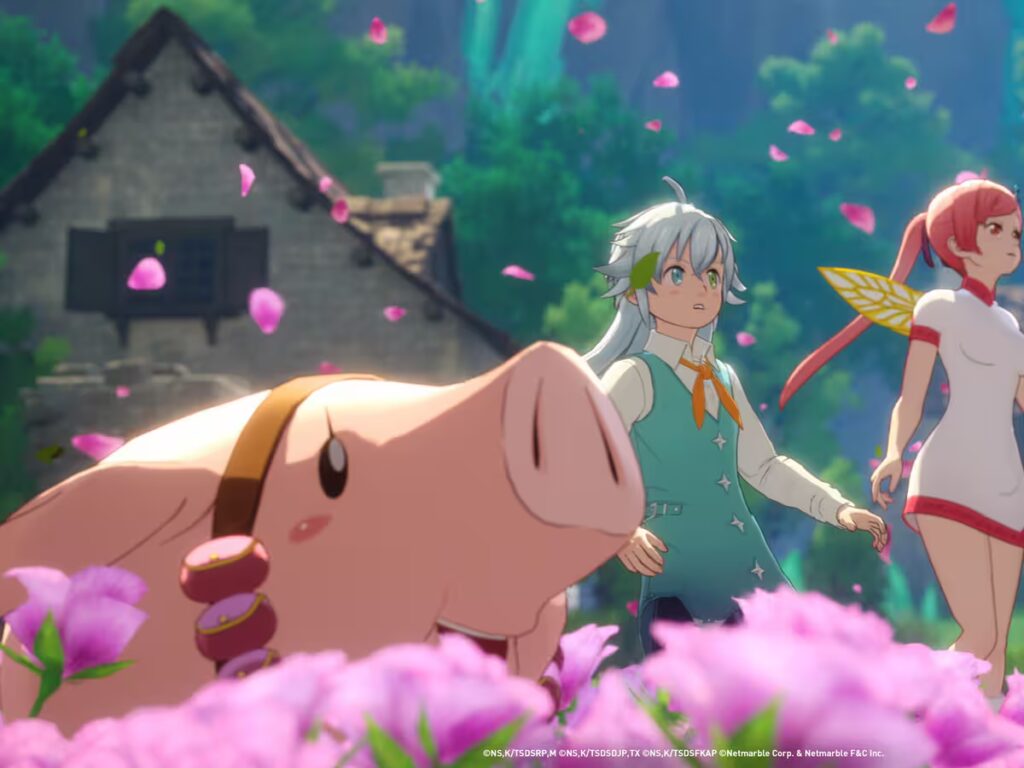
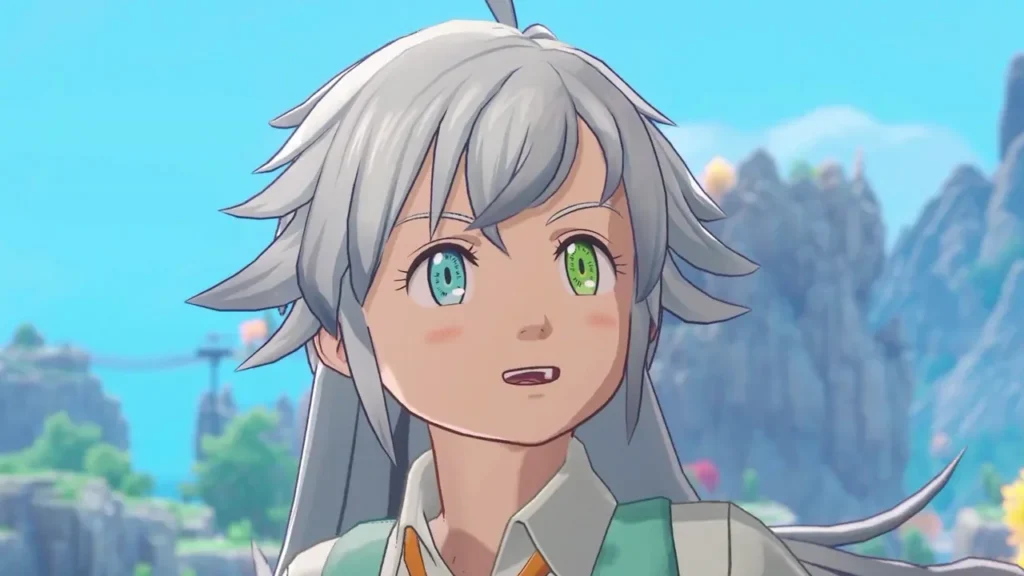
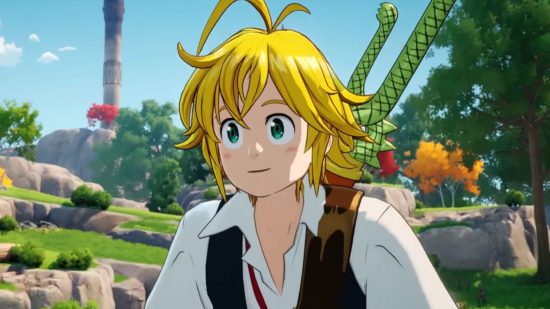
Origin centers on Tristan of Liones, the son of Meliodas and Elizabeth, and uses him as the bridge between older Seven Deadly Sins continuity and newer Four Knights of the Apocalypse-era storytelling. Steam and PlayStation both describe the game as a brand-new story in which Tristan explores Britannia after a collision of time and space throws the world into chaos.
The Book of Stars is the story’s core device. Netmarble’s official site summary says Tristan is suddenly transported to another timeline by the Book of Stars while searching for Diane, and official platform descriptions repeatedly frame the adventure as a multiverse crisis. In practice, that gives the writers an excuse to bring back familiar faces, remix timelines, and build a story that feels adjacent to canon instead of merely retelling it.
From a review standpoint, this is one of Origin’s smartest creative choices. Instead of forcing players through a straight adaptation, it uses recognizable lore as the foundation for a game-original plot. That helps the story function as both fan service and onboarding, even if early impressions suggest the writing is more serviceable than exceptional.
Open-world Britannia exploration in The Seven Deadly Sins: Origin
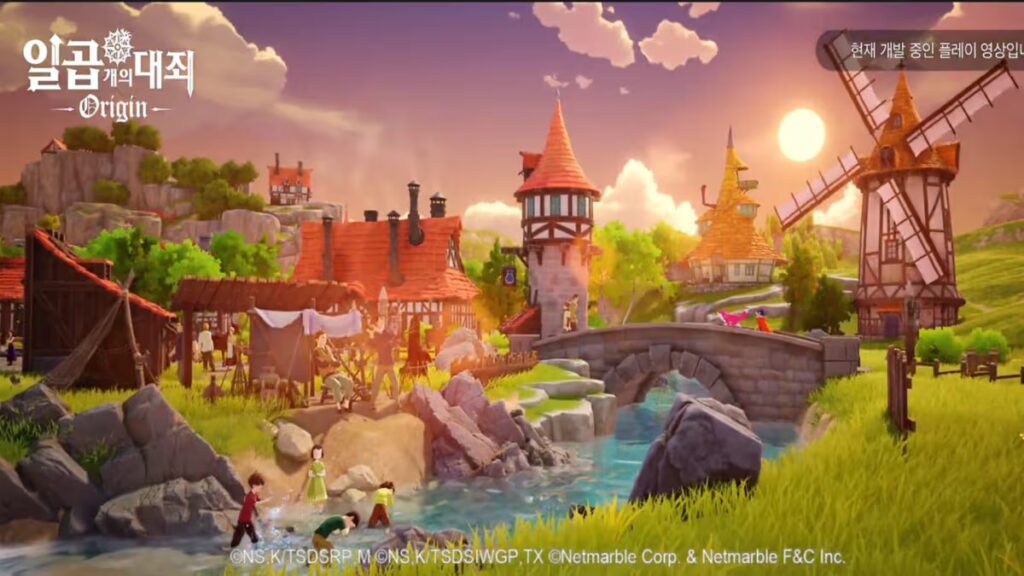
Britannia is the game’s strongest immediate selling point. Official descriptions emphasize a seamless open world stretching from Liones to open fields and ruins, and the game supports exploration on foot, by mount, and through flight. Steam also highlights fishing, cooking, hidden dungeons, and treasure hunting as part of the exploration loop.
That scope is not just cosmetic. Preview and early review material consistently frame Origin as a true open-world RPG rather than a lobby-based action game wearing open-world branding. GamesRadar’s early coverage pointed to weather shifts, day-night changes, puzzle-solving, and broad environmental traversal, while official PlayStation material showcased flying pets and seamless movement between regions.
The exploration verdict is positive overall. Britannia looks large enough and varied enough to support the genre ambitions, and the game does a better job than many anime adaptations at making its world feel inhabitable. The downside is that exploration quality alone does not fully offset the repetitive structure of some activities and the live-service treadmill tied to materials, quests, and resets.
The Seven Deadly Sins: Origin gameplay review (combat, traversal, and quests)
Combat is real-time, party-based, and built around switching between four heroes during battle. Official PlayStation coverage says players can assemble a four-hero team, swap in real time, and build around hero-and-weapon pairings, while Steam describes a diverse roster of heroes with unique abilities.
Traversal and moment-to-moment interaction are broader than combat alone. Origin mixes running, mounted travel, flight, fishing, cooking, exploration challenges, and questing into its loop. Main and side quests can be completed in a party, according to PlayStation’s March 2026 feature breakdown, which reinforces that this is not a strictly solo action RPG with co-op stapled on later.
As a gameplay package, Origin is competent and frequently enjoyable, but not consistently sharp. Game8’s review praised the new story, familiar cast, and open world, yet criticized the combat for not being especially engaging and described the overall result as painfully average against stronger genre competitors. That criticism tracks with the broader reception: the systems are solid enough to keep fans invested, but not polished enough to dominate the field.
The Seven Deadly Sins: Origin character roster and playable heroes
At launch, Origin’s playable roster sits at 18 heroes, with Game8’s current character index listing 18 playable characters and identifying 8 SSR units and 10 SR units during the launch period. Tristan, Tioreh, Meliodas, King, Diane, Elaine, Guila, Howzer, Gilthunder, Hendrickson, Slater, and several others are already represented, while Ban, Merlin, Gowther, Escanor, Elizabeth, and additional names are listed as upcoming or trailer-seen characters rather than launch-playable.
That roster size is respectable for a launch, but it also reflects the live-service logic of the game. Origin is clearly designed to expand over time through banners, updates, and new heroes, so the launch lineup feels more like a starting framework than a complete final cast. For fans, the upside is obvious: recognizable favorites are already present and more are coming. The downside is equally obvious: some major names are part of the future-content plan rather than the day-one package.
In review terms, the roster works best when treated as a flexible team-builder rather than a complete fan encyclopedia. There is enough variety to experiment with elements, weapons, and roles, but not yet enough breadth to make the live-service roadmap feel optional.

The Seven Deadly Sins: Origin gacha system explained (SSR rates, banners, pity)
Origin’s gacha is built around several banner types: a featured Pick Up hero banner, a permanent New Encounters banner, a beginner banner called The Call of the Stars, and separate cosmetic skin banners. Games.gg and Game8 both describe this structure in detail, and both agree that the permanent banner guarantees an SSR within 80 pulls.
The most useful current rate numbers come from launch-era guide coverage: Games.gg reports Meliodas’s featured banner rate at 0.4%, while permanent-banner SSR odds are spread across the pool at 0.1143% per SSR hero. That is a meaningful targeting advantage for the featured banner, but it does not make the system generous by default.
Pity is where the system gets more complicated. The permanent New Encounters banner guarantees an SSR every 80 pulls and at least one SR every 10 pulls. The limited Pick Up banner also gives a random SSR at 80, but Game8 states the featured hero is not guaranteed at a fixed pull count; instead, the featured hero’s rate doubles after 120 pulls via the Pick Up bonus. Skin banners use a separate draw-to-clear structure, with top-tier skin rewards starting to drop from pull 5 and all listed rewards cleared by pull 10.
For a review, this is a middling gacha system. It is understandable, structured, and not completely predatory in presentation, but it is still a classic banner economy with expensive chasing pressure and imperfect featured-unit protection. If you dislike gacha math, Origin will not convert you.
The Seven Deadly Sins: Origin co-op raid battles and multiplayer features
Multiplayer is one of Origin’s biggest differentiators within the Seven Deadly Sins game lineup. Steam lists Online Co-op and Cross-Platform Multiplayer as official features, and PlayStation’s late-2025 and March-2026 coverage stresses large-scale co-op raid battles plus party-based questing.
Game8’s multiplayer guide adds that co-op parties are limited to four players, though players still use their own parties during combat. Game8 also reports that cross-save and cross-play are available across PC, mobile, and PS5, which is a major convenience win for a game built around daily engagement and event-driven progression.
The co-op verdict is favorable. Real multiplayer content gives Origin more social value than a purely solo gacha, and cross-platform support helps the game feel modern instead of platform-siloed. The tradeoff is that multiplayer can sometimes collide with story progression pacing, and cooperative content does not automatically solve the underlying grind.
The Seven Deadly Sins: Origin graphics and Unreal Engine 5 performance review
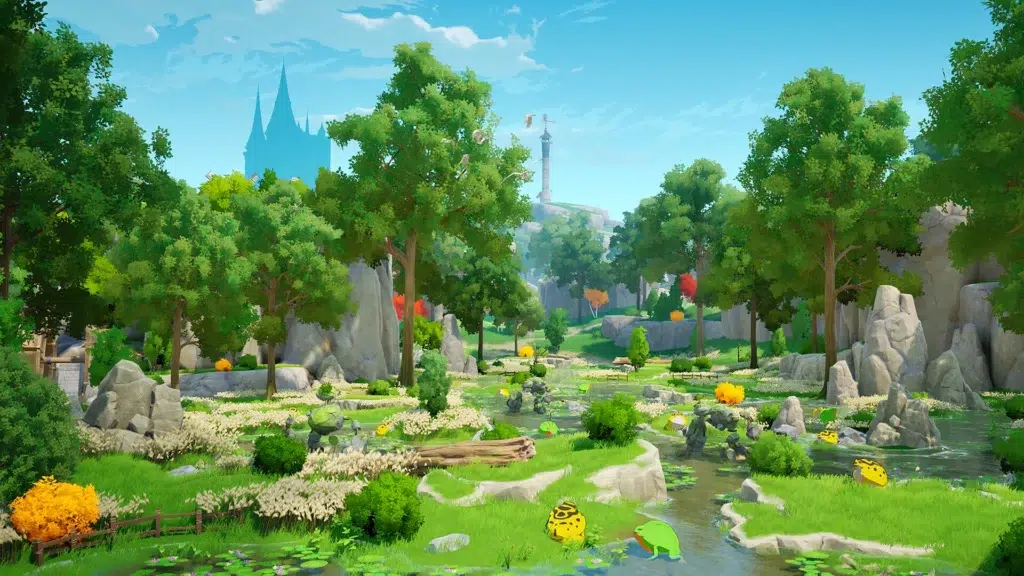
Visually, Origin is one of the strongest-looking anime RPGs Netmarble has shipped. Official messaging repeatedly confirms Unreal Engine 5, and PlayStation’s March 2026 feature piece describes a seamless world enhanced by dynamic weather, environmental depth, dense combat effects, and high-fidelity visuals.
The problem is optimization. Steam’s user review summary is Mixed, with 57% positive among English reviews and 12,130 total mixed reviews at the time captured. Performance-focused guides and reviews also repeatedly mention stutter, frame drops, and inconsistency in open areas or heavier battles. Metacritic’s visible review summaries point in the same direction, describing the game as promising but rough and held back by technical issues.
The fairest graphics verdict is that Origin looks better than it runs. When it behaves, the art direction and UE5 presentation sell the fantasy extremely well. When it misbehaves, the technical layer reminds you this is still a live-service launch build chasing stability after a delay.
Best PC settings for The Seven Deadly Sins: Origin (FPS boost and stutter fixes)
The safest launch-era PC recommendation is to start with a custom preset instead of maxing everything. Game8 recommends native resolution, a 60 FPS target, V-Sync enabled unless you have G-Sync or FreeSync, and then adjusting view distance, reflections, and environmental detail based on hardware. It also notes that PS5 has far fewer graphics options than PC.
More aggressive launch optimization advice from Destructoid suggests that mid-range and lower-end PCs benefit from Medium-to-Low settings for view distance, shadows, textures, post-processing, effects, global illumination, reflections, environmental detail, and anti-aliasing, with frame rate capped at 60 FPS on mid-range rigs or 45 FPS on lower-end hardware. Destructoid specifically reports smoother results with V-Sync disabled on its test setup due to stutter, which usefully complements Game8’s default-enable recommendation.
The practical takeaway is simple: keep 60 FPS as the ideal target, but prioritize frame-time stability over prettier settings. Start with custom settings, lower shadows, reflections, global illumination, and effects first, and only disable V-Sync if it is clearly contributing to your stutter. On weaker GPUs, a stable 45 FPS is better than a shaky 60.
The Seven Deadly Sins: Origin system requirements and recommended specs
On PC, Steam lists the minimum requirements as Windows 10 64-bit, an Intel i5-2500K or AMD FX-8350, 16 GB of RAM, an NVIDIA GeForce GTX 1060 6 GB, and 30 GB of storage.
Steam’s recommended specification is notably heavier: Windows 10 64-bit, an Intel Core i7-9700 or AMD Ryzen 5 5500, 32 GB of RAM, a GeForce RTX 2070 8 GB or Radeon RX 5700 XT, and the same 30 GB storage footprint. Those recommendations line up with the real-world launch conversation around stutter and inconsistent performance, especially for UE5-heavy open-world content.
In plain terms, Origin is not lightweight. The minimum spec may launch the game, but the recommended spec is closer to what players should expect if they want the high-fidelity anime presentation without constantly trimming settings.
The Seven Deadly Sins: Origin beginner guide (what to do first)
For beginners, the smartest first-hour priorities are straightforward. Game8’s progression guide recommends completing quests, rerolling for stronger characters if you care about an efficient start, leveling the Book of Stars, learning the elemental system, completing missions, and activating warp points.
The Book of Stars deserves special emphasis because it controls World Level and feeds the entire progression loop. Games.gg describes it as the top priority because higher World Level improves the quality of materials you earn, which then fuels mastery and equipment growth. In other words, early progression is less about random wandering and more about unlocking the systems that make wandering profitable.
New players should also pull the beginner banner, avoid wasting early resources on low-value upgrades, and get comfortable with team switching, elements, and traversal. The game offers a big world quickly, but the most efficient start comes from system literacy rather than blind exploration.
The Seven Deadly Sins: Origin progression and endgame (gear, farming, daily grind)
Progression in Origin revolves around Combat Power, and Games.gg identifies the main CP drivers as base stats, weapons, armor, accessories, Mastery nodes, and Potential Points. It recommends prioritizing the Book of Stars first, then team-wide Mastery nodes, then fully filling weapon slots and enhancing those weapons before chasing deeper optimization.
Gear systems become more important the deeper you go. Armor and accessories raise survivability, set bonuses matter, and later systems like refining, enchanting, and engraving become the main endgame squeeze points. Game8’s engraving guide shows that engraving is unlocked through Act 1’s “Yulia’s Gift,” and engraved equipment effectively combines multiple armor pieces into stronger character-specific gear.
The grind is daily by design. Game8’s dailies guide highlights daily missions, spending Cube Keys, grabbing daily freebies, and checking events, while weeklies and rotating banners reinforce the live-service routine. That means Origin has a clear long-term loop, but it also means the endgame leans more toward maintenance farming than radically transformative content at this early stage.
The Seven Deadly Sins: Origin pros and cons (what it does well and what needs work)
What Origin does well is easy to summarize: it nails the sense of place better than many anime adaptations, gives fans a fresh Tristan-focused story instead of a lazy retread, supports real co-op and cross-platform play, and delivers a genuinely attractive version of Britannia. Those are not small wins, and they are the main reasons the game is worth attention in 2026.
What still needs work is just as clear: optimization remains inconsistent, combat does not always feel as deep or satisfying as its best competitors, the UI and controls can feel clunky depending on platform, and the monetization is stronger than the game would ideally need at launch. Early reviews repeatedly circle back to those same weaknesses, which is why the overall reception has landed in the “good foundation, rough execution” zone.

The Seven Deadly Sins: Origin review verdict (should you play in 2026?)
Yes, The Seven Deadly Sins: Origin is worth playing in 2026 if you fit the right audience: fans of The Seven Deadly Sins, players who enjoy open-world anime RPGs, or people comfortable with live-service gacha progression. It is far more ambitious than a throwaway tie-in, and there is enough world design, co-op functionality, and roster-building depth here to justify trying it.
No, it is not an easy universal recommendation yet. The mixed Steam response, technical complaints, and expensive-feeling monetization keep it below the top tier of anime action RPGs right now. In its current state, Origin is a promising game with real appeal, but not a polished genre leader.
The bottom line is that Origin is worth playing, but not blindly investing in. Start free, test the performance on your platform, and decide whether the combat loop and gacha structure actually suit you before spending heavily.
Frequently Asked Questions (FAQs)
- When did The Seven Deadly Sins: Origin come out?
The PC and PS5 versions launched on March 16, 2026, and the game was available across all platforms by March 23, 2026. - What platforms is The Seven Deadly Sins: Origin on?
It is available on Steam, PlayStation 5, iPhone/iPad, and Android. - Is The Seven Deadly Sins: Origin free to play?
Yes. Steam and the mobile storefronts all list it as a free-to-play title with in-app purchases. - Is The Seven Deadly Sins: Origin a gacha game?
Yes. It is an open-world RPG with gacha elements, including hero banners, permanent banners, beginner banners, and cosmetic skin banners. - Who is the main character in The Seven Deadly Sins: Origin?
The main playable protagonist is Tristan of Liones, the son of Meliodas and Elizabeth. - How many playable characters are in the launch version?
Launch-era guides list 18 playable heroes, including 8 SSR and 10 SR units. - Does The Seven Deadly Sins: Origin have co-op?
Yes. It supports co-op party play, raid content, and official online co-op features, with Game8 reporting multiplayer parties of up to four players. - Does The Seven Deadly Sins: Origin support cross-play and cross-save?
Yes. Current guide coverage says cross-play and cross-save are available across PC, PS5, and mobile. - Does The Seven Deadly Sins: Origin have English voice acting?
Not at launch. Current settings and language guides indicate Japanese and Korean voice-over support, with no announced English dub as of launch. - What is the biggest problem with The Seven Deadly Sins: Origin right now?
The most common criticism is the combination of technical instability and monetization pressure. Steam reviews are mixed, and early reviews repeatedly mention glitches, clunky elements, or performance issues.
conclusion
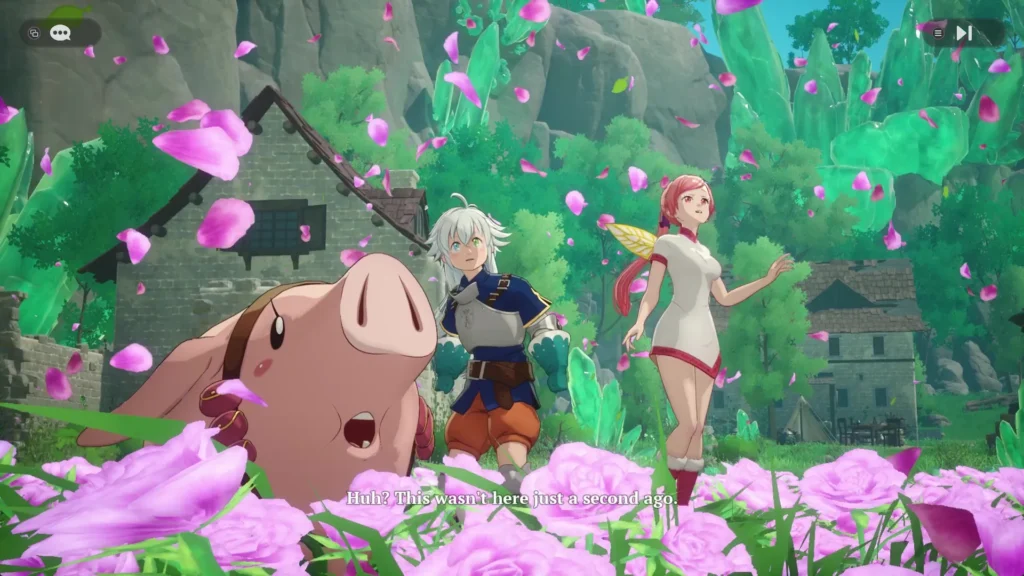
The Seven Deadly Sins: Origin succeeds where many anime games fail: it actually feels ambitious. The world is large, the story has its own identity, the multiplayer is meaningful, and the presentation often looks excellent. But ambition alone does not erase live-service friction. Technical roughness, banner pressure, and a grind-heavy progression model keep it from being an instant classic.
For Seven Deadly Sins fans, Origin is easy to recommend as a free download and a worthwhile current-gen adaptation. For everyone else, it is a cautiously recommended game: promising, attractive, and feature-rich, but still waiting on the optimization and long-term tuning that would turn it from “good enough to try” into “essential to keep playing.”
sources and citation
- The Seven Deadly Sins: Origin PS5 store page (PlayStation) https://store.steampowered.com/app/3679080/The_Seven_Deadly_Sins_Origin/
- PlayStation Blog: cooperative raid battles (PlayStation.Blog)
https://blog.playstation.com/2025/12/11/the-seven-deadly-sins-origin-unveils-cooperative-raid-battles/
https://store.playstation.com/en-us/concept/10014720 - PlayStation Blog: PS5 features and March 16 launch (PlayStation.Blog)
https://blog.playstation.com/2026/03/13/the-seven-deadly-sins-origin-ps5-features-detailed-launches-march-16/ - Google Play listing (Google Play)
https://play.google.com/store/apps/details?id=com.netmarble.nanaori - Apple App Store listing (App Store)
https://apps.apple.com/us/app/the-seven-deadly-sins-origin/id6744205088 - Game8 review and guides hub (Game8)
https://game8.co/games/The-Seven-Deadly-Sins-Origin - Games.gg launch guides (GAMES.GG)
https://games.gg/the-seven-deadly-sins-origin/guides/ - Destructoid PC settings guide (Destructoid)
https://www.destructoid.com/best-the-seven-deadly-sins-origin-graphics-for-less-lag-and-max-fps/ - Metacritic review summary and visible reception snapshot (Metacritic)
https://www.metacritic.com/game/the-seven-deadly-sins-origin/
Recommended
- Nacon Postpones Game Showcase After Filing for Insolvency: Nacon Connect 2026 Delayed to May
- Exporting Custom MetaHuman Grooms from Maya XGen to Unreal Engine: A Comprehensive Guide
- How to Create Cinematic Motion Capture with Move One and Metahuman Animator on a Budget (No Mocap Suit Needed)
- How to Get the Perfect Hair Roughness for a Realistic Look
- Blender Restore Curve Segment Length Geometry Nodes Preset: Complete Guide
- Suikoden Anime Trailer Breakdown: Suikoden: The Anime PV1 Reveals Cast, Story Clues, and October 2026 Release
- The Best Beards in Video Games: Iconic Characters and Their Legendary Facial Hair
- Cyberpunk Orion: Everything We Know About CD Projekt Red’s Next Cyberpunk Adventure
- Hit Manga Chainsaw Man Will End Soon, Viz Media Confirms