









In This Article (7 sections)
John Carpenter’s Criticism of The Thing (2011) and Why Fans Are Reconsidering the Prequel
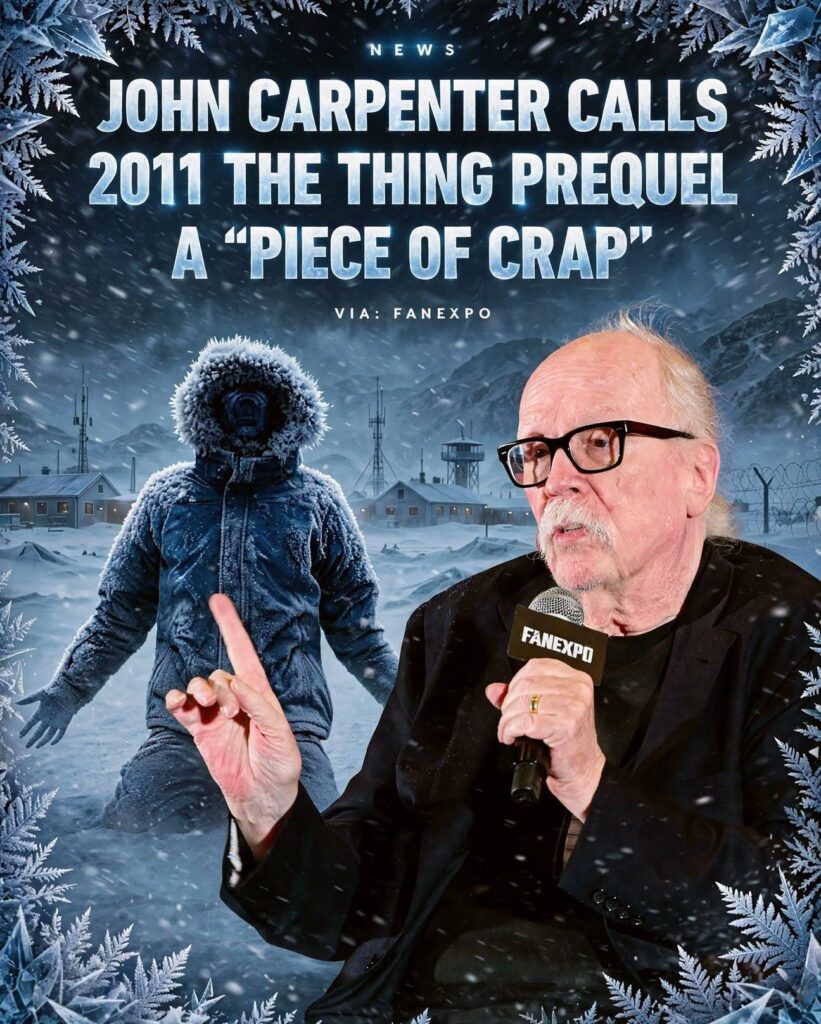
John Carpenter has once again made his opinion of The Thing (2011) unmistakably clear, calling the movie a “piece of crap” during a FanExpo Chicago panel. Carpenter reportedly dismissed the prequel while discussing its Norwegian research camp, digital creature effects and decision to replace the famous blood test from his 1982 film with a dental examination. Kurt Russell, who appeared alongside Carpenter and played R.J. MacReady in the 1982 movie, jokingly observed that Carpenter does not “suffer fools greatly.”
Carpenter’s criticism carries particular weight because his 1982 The Thing has become one of the defining science fiction horror films of its era. Its claustrophobic atmosphere, paranoia, ambiguous ending and Rob Bottin’s practical creature effects helped establish a reputation that grew enormously after an initially poor reception. The 2011 prequel therefore faced the difficult task of following a movie that had spent decades developing into a classic.
The dental examination is one example of how the prequel attempted to recreate ideas from Carpenter’s film without directly repeating them. In the 1982 movie, MacReady tests blood samples because he believes every piece of the alien organism has an instinct for self preservation. The resulting sequence turns the characters’ paranoia into a simple and memorable experiment. In the prequel, Kate Lloyd realizes that the creature cannot reproduce inorganic dental work, allowing fillings to become evidence for determining who may have been assimilated. Carpenter apparently regarded this as an inferior substitute for the blood test.
However, the finished 2011 movie does not entirely represent what its filmmakers originally intended. Screenwriter Eric Heisserer described an approach that placed greater emphasis on character development and a slower buildup, while practical creature effects were originally expected to play a substantial role. The finished film became considerably more effects driven, particularly during its later sections, complicating Carpenter’s criticism because some of the elements he dislikes were influenced by decisions made during production and post production.
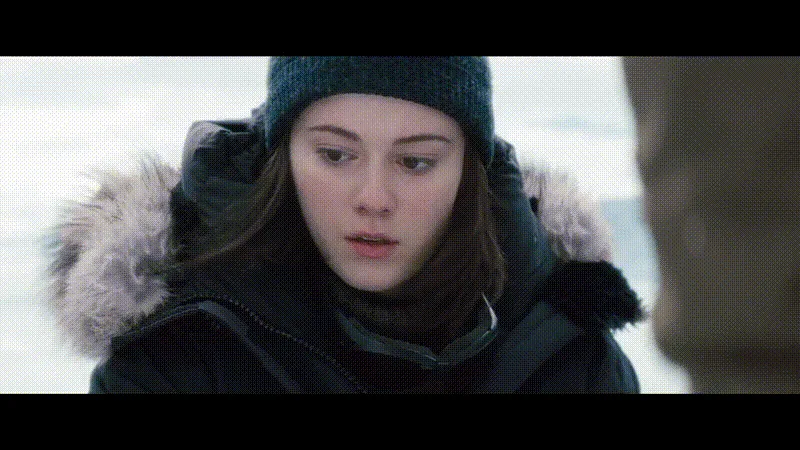
The Thing (2011) is a direct prequel rather than a remake. It follows paleontologist Kate Lloyd, played by Mary Elizabeth Winstead, after she joins a Norwegian Antarctic research team that has discovered an extraterrestrial spacecraft and a frozen organism beneath the ice. Once the creature escapes, the researchers discover that it can assimilate living organisms and imitate them, creating the same fundamental paranoia that defines Carpenter’s movie.
The prequel deliberately works backward from clues established in 1982. It explains what happened at the Norwegian research station, why the station was destroyed, how the alien escaped and why a Norwegian survivor was chasing and shooting at a dog during the opening of Carpenter’s film. The filmmakers reconstructed recognizable details from the ruined station and attempted to explain how they reached the condition seen in 1982.
This structure gives the movie an interesting connection to Carpenter’s film but also creates a fundamental suspense problem. Viewers already know that the Norwegian station will be destroyed and that the Thing will eventually reach the American researchers. The filmmakers therefore had to create uncertainty within a story whose broad outcome was already established.
Some fans now argue that the movie deserves reconsideration without claiming that it equals Carpenter’s classic. Supporters point to its Antarctic atmosphere, Mary Elizabeth Winstead’s performance, the Norwegian setting, its creature concepts and its careful attempts to connect with the 1982 movie. Watching the films consecutively also creates an unusual double feature in which the conclusion of the prequel flows directly into the beginning of Carpenter’s story.
Audience reception has remained stronger than the film’s critical reputation might suggest. IMDb lists the movie at around 6.3 out of 10 from more than 150,000 ratings, while Metacritic lists a user score around 6.2 compared with a critic Metascore of 49. These figures do not suggest universal admiration, but they show that a substantial audience considers the movie more successful than its reputation as a failed prequel implies.
The Thing (2011) Practical Effects, CGI Controversy, and Comparison With the 1982 Classic
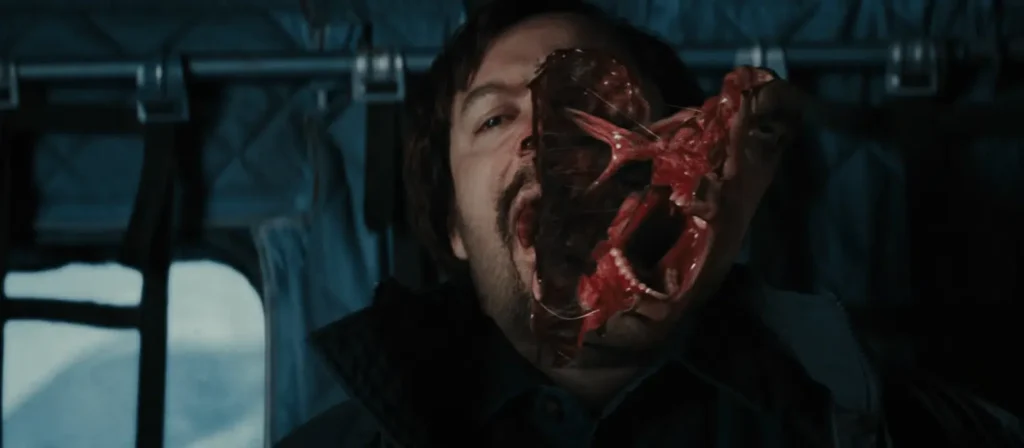
The practical effects controversy is central to understanding why The Thing (2011) continues to generate discussion. Amalgamated Dynamics, led by Alec Gillis and Tom Woodruff Jr., created extensive physical creature effects for the production, including animatronics, puppets, creature rigs and transformation effects. The original intention was to photograph physical creatures and supplement them where necessary with digital effects.
During post production, however, much of the practical work was replaced or covered with CGI. Production information indicates that the original creature concepts were largely retained, but the way they appeared on screen changed significantly. Digital sculpting also gave the production greater flexibility to alter creatures, create variations and animate transformations that would have been more difficult with physical rigs.
Director Matthijs van Heijningen Jr. explained that there were concerns that the practical effects made the film resemble an 1980s production. CGI was increasingly used to give the movie a more contemporary appearance, eventually producing a balance the director described as approximately 70 percent digital and 30 percent practical.
That decision created an unusual contradiction because practical creature effects are an important part of The Thing franchise’s identity. Rob Bottin’s work in Carpenter’s film was effective partly because the creatures physically occupied the sets alongside the actors. They interacted naturally with lighting and their surroundings, giving even extremely bizarre transformations a tangible quality.
Van Heijningen has since acknowledged that moving so heavily toward CGI was a mistake. In a 2023 interview, he described the production as being caught between an era when animatronics were considered old fashioned and a period when available CGI was not yet convincing enough to replace them completely. Looking back, he explicitly expressed regret about the decision to create so much of the monster imagery digitally during post production.
Behind the scenes footage showing Amalgamated Dynamics’ original practical work has strengthened the argument that the movie could have looked substantially different. The positive response to that material also helped inspire Harbinger Down, an independent creature feature built around practical effects. Fans have consequently shown continued interest in seeing more of the original physical material from The Thing, although claims that a completely finished practical effects cut is ready for release should be treated cautiously.
Practical effects alone would not necessarily have solved every problem with the prequel. The film would still have faced difficulties including:
- Less distinctive character development than Carpenter’s ensemble.
- A story whose eventual outcome is already known.
- Structural similarities to the 1982 movie.
- Greater emphasis on creature spectacle instead of sustained uncertainty.
- A final act that relies more heavily on action.
The biggest difference between the two movies remains their approach to suspense. Carpenter frequently hides the creature and makes uncertainty itself frightening. Characters cannot know who has been assimilated, meaning ordinary conversations become threatening. The prequel uses the same concept but shows the creature more frequently, reducing some of the mystery that made the original so effective.
Critical reception reflected these problems. Rotten Tomatoes lists the film at 34 percent from critics, while Metacritic gives it 49 out of 100 based on 31 critic reviews. Reviewers frequently criticized its similarities to Carpenter’s movie, reliance on conventional scares and extensive digital effects. Its worldwide box office performance was also disappointing, reaching approximately $31.5 million against a reported $38 million production budget.
However, describing the film as completely worthless ignores several of its strengths. Mary Elizabeth Winstead provides a clear central protagonist, the Norwegian research station gives the prequel its own setting, and reconstructing the mysterious events preceding Carpenter’s movie provides an effective narrative hook. The creature designs also demonstrate considerable imagination even when their digital presentation falls short of the practical work that inspired them.
Why The Thing (2011) Has Developed a Cult Following and What Its Legacy Looks Like Today
The reputation of The Thing (2011) has become more complicated with time. It remains critically and commercially inferior to Carpenter’s 1982 film, but a growing group of viewers regards it as a flawed companion piece rather than an irredeemable failure. Its production history has played an enormous role in this reassessment because audiences now know that extensive practical effects were created before much of that material was replaced digitally.
That creates an enduring question about what the movie could have been. A version retaining more of Amalgamated Dynamics’ physical creature work might have felt more visually consistent with Carpenter’s film and provided actors with tangible creatures to interact with. It would not automatically have corrected weaknesses in character development, story structure or pacing, but it could have given the prequel a stronger visual identity.
The film’s reconstruction of the Norwegian station also remains one of its more successful ideas. Eric Heisserer described the process as effectively reverse engineering the evidence shown in Carpenter’s movie. The filmmakers had to account for the damaged station, fire, bodies, axe and other details already established in 1982. This makes the prequel closely connected to the original rather than simply another movie featuring the same alien.
Its relationship with Carpenter’s film also makes it particularly suitable for consecutive viewing. The audience can watch the Norwegian team discover and confront the organism before immediately continuing into the American research team’s discovery of the aftermath. That direct narrative connection has helped the prequel retain interest even among viewers who consider the 1982 movie vastly superior.
The strongest case for giving The Thing (2011) another chance is therefore not that it was secretly another masterpiece. It is that the movie contains worthwhile ideas, performances and creature concepts while also being shaped by post production decisions that its own director later regretted. Its flaws remain visible, but so does the potential of the film its creators originally intended to make.
John Carpenter may continue to consider the prequel a “piece of crap,” but its continuing discussion among horror fans shows that its legacy cannot be reduced to one verdict. The movie has become an unusual example of a production whose abandoned practical effects, behind the scenes history and relationship with a celebrated predecessor are almost as interesting as the finished film itself.

Frequently Asked Questions (FAQs)
- Is The Thing (2011) a prequel or a remake?
The Thing (2011) is a direct prequel to John Carpenter’s 1982 The Thing, not a remake. It follows the Norwegian research team whose destroyed Antarctic station is discovered in Carpenter’s film and explains how the alien was found, escaped and eventually made its way toward the American research station. - Why did John Carpenter call The Thing (2011) a “piece of crap”?
Carpenter used the description during a FanExpo Chicago panel while discussing the 2011 prequel. His comments focused particularly on its digital creature effects and its decision to use dental fillings as a method of detecting assimilation instead of recreating the famous blood test concept from his movie. His remarks reflected his personal assessment of the finished film rather than a detailed review of every aspect of its production. - Did The Thing (2011) originally use practical effects?
Yes. Amalgamated Dynamics created substantial practical creature work for the movie, including animatronics, puppets, physical rigs and transformation effects that were used during production. The original intention was to combine these physical creations with digital enhancements, but much of the practical imagery was ultimately replaced or covered by CGI during post production. - Why were the practical effects replaced with CGI?
The filmmakers became concerned that the practical creatures gave the movie an appearance associated too strongly with 1980s filmmaking. CGI was increasingly used to make the effects appear more contemporary and to provide greater flexibility when modifying and animating creature designs. The final movie consequently relied much more heavily on digital effects than originally intended. - Does the director regret using CGI in The Thing (2011)?
Yes. Director Matthijs van Heijningen Jr. later acknowledged that replacing so much of the practical creature work was the wrong decision. He described the production as being caught between a period when animatronics were considered outdated and a stage when CGI was not yet convincing enough to completely replace them, and he has explicitly expressed regret about the resulting approach. - Is The Thing (2011) connected directly to Carpenter’s movie?
Yes. The prequel was specifically designed to lead into the events of the 1982 film. It explains the destruction of the Norwegian research station, the origin of several clues discovered there and the circumstances behind the Norwegian survivor pursuing the infected dog seen at the beginning of Carpenter’s movie. - Was The Thing (2011) successful at the box office?
No. The movie earned approximately $31.5 million worldwide against a reported production budget of around $38 million. Because its worldwide theatrical revenue did not exceed its production budget, before even considering marketing and distribution expenses, it was regarded as a commercial disappointment. - What did critics think of The Thing (2011)?
Critical reception was mixed but leaned negative. Rotten Tomatoes lists a 34 percent critic score, while Metacritic gives the film 49 out of 100 based on 31 critic reviews. Common criticisms included its similarities to Carpenter’s film, weaker character development, extensive CGI and tendency to show the creature more frequently rather than relying on paranoia and uncertainty. - Why do some fans defend The Thing (2011)?
Supporters often point to its Antarctic atmosphere, Mary Elizabeth Winstead’s performance, creature concepts and careful connections to the 1982 movie. Its production history has also encouraged reassessment because extensive practical creature effects were originally created before being replaced digitally. Some fans therefore view it as a flawed but entertaining companion to Carpenter’s classic rather than a completely failed prequel. - Could a practical effects version of The Thing (2011) be better?
Keeping more of the original practical effects could have given the movie a more physical visual style and made it feel more consistent with Carpenter’s film. However, practical creatures alone would not resolve every weakness. Character development, pacing, structural similarities to the original and the action heavy final sections would still influence the overall quality, so a practical effects version might be stronger without necessarily becoming equal to the 1982 classic.

Conclusion
John Carpenter’s latest criticism of The Thing (2011) has reopened the debate over whether the prequel should be remembered as a failed attempt to follow a classic or as a flawed movie undermined by production decisions. Carpenter’s opinion is understandable because his 1982 The Thing remains one of the most influential science fiction horror films ever made, particularly for its combination of paranoia, atmosphere and practical creature effects. The 2011 movie does not reach that standard, but describing it simply as a “piece of crap” leaves out an important part of its history.
The filmmakers deliberately reconstructed the Norwegian research station, studied details established in Carpenter’s movie and developed a prequel intended to explain how the events leading into the 1982 story unfolded. Eric Heisserer’s screenplay was conceived around connecting the two films, while director Matthijs van Heijningen Jr. approached the project as a fan of Carpenter’s work. Most importantly, the production initially embraced practical creature effects before shifting heavily toward CGI during post production. Van Heijningen later acknowledged that replacing so much of the practical work was a mistake, while behind the scenes material revealed the extensive physical creatures originally created for the film.
This history makes The Thing (2011) an unusual case. Its weaknesses remain visible, its critical reception was mediocre and its box office performance was disappointing, yet the continued audience interest and debate surrounding its practical effects suggest a more complicated legacy. Some horror fans still regard it as an unnecessary prequel, while others see an entertaining companion to Carpenter’s classic that was weakened by misguided visual effects decisions. Carpenter does not have to like the movie for audiences to find value in it. The Thing (2011) is not Carpenter’s The Thing, but its production history and continuing fan discussion suggest it may be more than the “piece of crap” label implies.
Sources and Citations
- Source: IGN, September 30, 2026: Reporting on John Carpenter’s comments at FanExpo Chicago, where he criticized The Thing (2011), and the fan response defending the prequel. The IGN post also points readers to the discussion around the film’s reputation.
Citation: IGN, “John Carpenter Calls 2011 The Thing Prequel a ‘Piece of Crap,’ but Some Fans Are Rushing to Its Defence,” September 30, 2026. IGN article link. - Source: Den of Geek, Matthijs van Heijningen Jr. interview: Director interview discussing the practical creature effects, how CGI was used to enhance them, and the production’s approach to the visual effects.
Citation: Den of Geek, “Matthijs van Heijningen Jr interview: directing The Thing, and practical versus CG effects.” Den of Geek. - Source: SYFY, “Director of The Thing Prequel Talks Scrapped Sequel”: Includes van Heijningen Jr.’s later reflection that replacing the practical creature designs with CGI was the wrong decision and that he regrets it.
Citation: SYFY WIRE, “Director of The Thing Prequel Talks Scrapped Sequel.” SYFY. - Source: Maxon, “The Thing”: Production-focused interview with Image Engine about its visual-effects work, including the use of ZBrush, digital scans of Amalgamated Dynamics’ clay maquettes, creature transformations, and the shift from planned practical enhancements to fully CG creatures.
Citation: Maxon, “The Thing.” Maxon. - Source: Rotten Tomatoes, The Thing (2011): Critical and audience reception, including the Tomatometer and Popcornmeter scores and the film’s synopsis.
Citation: Rotten Tomatoes, “The Thing.” Rotten Tomatoes. - Source: Metacritic, The Thing (2011): Aggregated critic reviews and user ratings. The page provides the film’s Metascore and audience score.
Citation: Metacritic, “The Thing.” Metacritic. - Source: Box Office Mojo, The Thing (2011): Box-office figures listing a worldwide gross of $31,505,287 and a reported production budget of $38 million.
Citation: Box Office Mojo, “The Thing.” Box Office Mojo. - Source: ComingSoon, “The Thing Director Reveals Sequel Ideas”: Provides production and story context for the 2011 film as a prequel to Carpenter’s 1982 movie, including van Heijningen Jr.’s reflections on the relationship between the two films.
Citation: Brandon Schreur, “The Thing Director Reveals Sequel Ideas for 2011 Mary Elizabeth Winstead Movie,” ComingSoon. ComingSoon. - Source: Amalgamated Dynamics interview and behind-the-scenes coverage: Interview with ADI founders Alec Gillis and Tom Woodruff Jr. about their practical creature effects, the work that was changed or omitted from the final film, and why they shared behind-the-scenes footage with fans.
Citation: Robert V. Galluzzo, “We Chat With Amalgamated Dynamics About The Thing.” Robert V. Galluzzo. - Source: Bloody Disgusting, “More Practical Effects Tests Uploaded from The Thing 2011”: Coverage of newly surfaced practical creature tests and animatronic footage from studioADI, documenting effects work that was largely replaced or altered with CGI.
Citation: John Squires, “More Practical Effects Tests Uploaded from The Thing 2011,” Bloody Disgusting, March 31, 2017. Bloody Disgusting.
Recommendations
- Bohemia Interactive Releases Arma: Cold War Assault Source Code: What it Means for Modders and the Future of Arma
- Gaussian Splatting Videos Can Now Be Streamed Like Regular Videos: What It Means for 3D Content Creation
- Blossom: the Seed of Life Blossom Game Guide (Terraforming, Crafting, Energy, and Progression)
- Jurassic World Evolution 3 Official Free Species Update: Torosaurus and Minmi Trailer
- Avengers: Doomsday Runtime Revealed: 165-Minute Epic is One of Marvel’s Longest Movies Ever
- Nintendo World Championships Winner’s 3DS Auction: Why It’s at $20,000 and How Collectors Value It
- Assassin’s Creed Black Flag Remaster/Remake Confirmed Ubisoft Teases “Black Flag Resynced”
- How to Help Lisbeth in Animal Hospital: Roblox Liz Quest Guide
- Remedy new CEO former EA VP Jean-Charles Gaudechon: start date, background, and Remedy’s self-publishing plans
- Nivalis Nights is Coming to PC in September, Cozy Cyberpunk Life Sim Where You Build Business & Explore Neon-Lit City



































































































