









In This Article (9 sections)
This Game Costs 200 Dollars Made Nearly $1.4 Million Before Almost Every Sale Was Refunded
This Game Costs 200 Dollars became remarkable not because thousands of people permanently spent $200 on it, but because thousands temporarily purchased it. According to sales figures shared by developer Michael Major, 6,717 copies were recorded as sold. GameSpot reported lifetime gross Steam revenue of approximately $1.38 million, while App2Top reported roughly $1.34 million. The difference appears to reflect how different reports summarized the sales data, regional pricing or the distinction between headline gross figures and calculations based on the nominal US price. Either way, describing the total as nearly $1.4 million accurately reflects the scale of the recorded gross purchases.
Simply multiplying 6,717 copies by the US list price of $199.99 produces roughly $1.34 million, although Steam’s international pricing means actual worldwide gross revenue does not necessarily equal the US price multiplied by total units. For an 18 year old solo developer who described the project as essentially an experiment and a joke, seeing seven figures appear in the Steam sales dashboard was understandably startling. Major said he had never expected significant numbers of people to buy the game, yet the deliberately ridiculous price became the feature that attracted attention.
The apparent success was almost entirely temporary. Of the 6,717 recorded purchases, 6,707 were refunded, leaving only ten when comparing the purchase and refund totals. That represents an extraordinary refund rate of approximately 99.9%. Reports place the remaining revenue at around $2,045, meaning the game was simultaneously associated with nearly $1.4 million in gross purchasing activity and only about $2,000 in retained revenue.
The distinction between gross sales and actual earnings is essential. Refunded purchases are reversed customer transactions, so Major did not permanently earn $1.4 million and then have Steam remove it. The more accurate description is that the game temporarily generated approximately $1.3 million to $1.4 million in gross sales before refunds reduced the retained amount to roughly $2,000.
This extreme difference also demonstrates why unit sales can be misleading when refund information is omitted. Saying the game sold 6,717 copies accurately reflects the recorded purchase activity, but it does not mean 6,717 customers permanently kept paid copies. In this case, almost the entire sales figure disappeared through successful refunds.

Why This Game Costs 200 Dollars Was Priced at $199.99 and What the Game Is About
The $199.99 price was never intended to suggest that This Game Costs 200 Dollars offered production values comparable with the world’s largest premium games. The excessive price was itself the joke and an essential part of the project’s identity.
The Steam store description openly embraces the absurdity, asking customers whether they have ever been seriously swindled and repeatedly joking about convincing them that the experience deserves $200. Steam categorizes the title as a casual indie simulation, while user generated tags include satire, dark humor, comedy, exploration and multiple endings.
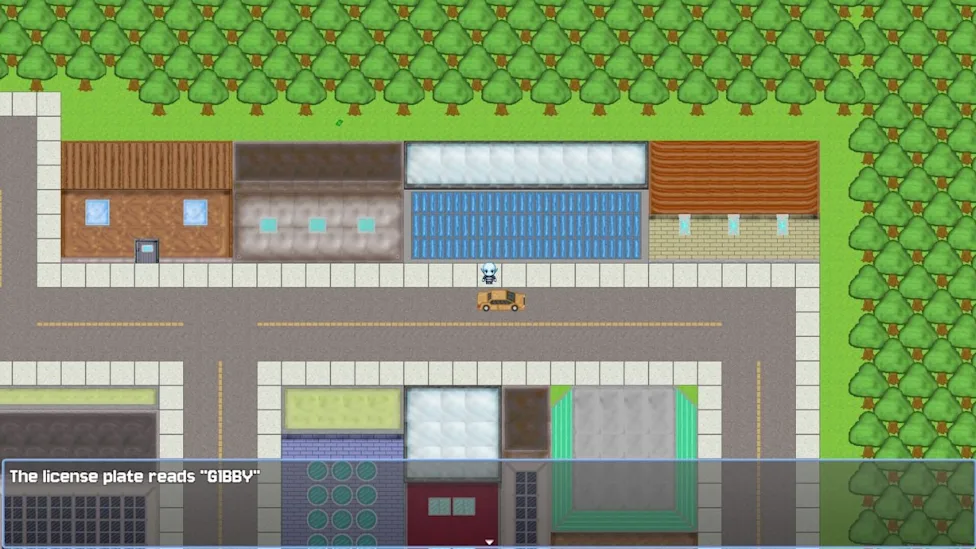
Behind the viral pricing story is an actual single player game set largely in a fictional location called Schizopia. Players explore environments, interact with intentionally strange characters and encounter constant self aware commentary about the game’s price and supposed value. The title advertises ten endings and fills its world with deliberately ridiculous details, including beer and cigarettes that largely exist as part of the joke rather than deep gameplay systems.
PC Gamer described the experience as a simple retro style top down adventure RPG built around rooms, NPC conversations and interruptions from the developer reminding the player how much supposed effort had gone into creating the game. The intention was never to provide a conventional $200 production. The mismatch between the extraordinary asking price and the deliberately modest experience is the premise.
The idea was also an escalation of Major’s previous project. Stolen Valor Studios released This Game Costs 10 Dollars on January 28, 2026, only two days before the $200 follow up. That game similarly turns its price, the developer’s desire for the player’s money and the possibility of refunds into part of its narrative. Its Steam description jokes about keeping customers entertained long enough that they cannot simply return the game.
This Game Costs 200 Dollars increased the financial stakes twentyfold. Ten dollars falls within the normal range for a small independent title, while $200 makes the act of purchasing itself provocative. Merely seeing the game in Steam search results begins the joke, visiting its store page extends it and actually purchasing it becomes participation in the experiment.
Some reports claimed that $200 represented Steam’s maximum possible game price, but that assertion should be treated carefully. PC Gamer questioned the claim and noted that other titles have appeared on Steam with list prices above $200. The important fact is not that $199.99 was necessarily a technical maximum, but that Major deliberately selected an extraordinarily high price because excess was fundamental to the concept.
Michael Major, Stolen Valor Studios and the Viral Steam Experiment
Michael Major is an 18 year old developer from New Hampshire who publishes games under the Stolen Valor Studios name. He is listed as both developer and publisher of This Game Costs 200 Dollars on Steam. His unusual experiment gained broader attention after New Hampshire television station WMUR TV reported on the enormous gross sales and refund figures, with gaming publications including GamesRadar, PC Gamer, GameSpot and App2Top subsequently amplifying the story internationally.
Major’s age became an important part of the coverage because his Steam dashboard briefly appeared to show that a teenage solo developer had generated the kind of gross revenue normally associated with a major commercial hit. The reality was considerably less lucrative after refunds, but the contrast between the project’s modest origins and its seven figure gross sales number made the story unusually compelling.
Major did not approach the outcome as though a serious commercial launch had catastrophically failed. The project had been built from the beginning around an absurd premise, and he had assumed that almost nobody would actually pay the asking price. Instead, thousands of transactions appeared, turning the experiment into something more extreme than he had apparently anticipated.
The title’s virality benefited from how easily the premise could be explained. “This Game Costs 200 Dollars” communicates the joke before anyone sees a trailer or reads a description. Once the financial results emerged, the story became even more shareable: a teenager’s $200 joke game appeared to make nearly $1.4 million, only for almost every customer to request a refund.
The game’s player activity made the story even stranger. App2Top reported that customers who actually launched the title averaged roughly ten minutes of playtime, while SteamDB recorded an all time concurrent player peak of only one. A game associated with more than a million dollars in temporary gross purchases therefore reached that figure without ever becoming conventionally popular in terms of simultaneous players.
In that sense, the real world outcome almost became an extension of the game’s satire. A project about convincing people to pay far too much for a deliberately small experience became a genuine experiment in price, curiosity, purchasing behavior and Steam’s refund system.

Why 6,707 Purchases Were Refunded and Why Almost All Came From China
There is no confirmed single explanation for why 6,707 of the game’s 6,717 recorded purchases were refunded. Valve’s normal Steam refund policy makes games and software generally eligible for reimbursement when requests are submitted within 14 days of purchase and the title has been played for less than two hours. Valve says the system exists to reduce the risk associated with buying games and is not intended as a method of obtaining free access.
This Game Costs 200 Dollars fit comfortably within that structure because many purchasers apparently did not play it at all. App2Top reported that most buyers never launched the game, while those who did averaged only around ten minutes. GamesRadar similarly reported that many purchases originating from China were refunded without the game even being opened.
That makes the activity harder to explain as a simple attempt to complete a short game and return it within the two hour window. Many customers appear to have purchased a $200 game and then refunded it without meaningfully interacting with the product.
The geographic concentration was equally unusual. According to figures attributed to Major, 6,705 of the 6,717 purchases came from China. App2Top reported only four purchases from the United States, three from Hong Kong, two from Spain and one each from Saudi Arabia, Taiwan and Singapore. Roughly 99.8% of recorded purchases were therefore attributed to China.
There is still no verified reason for that concentration. One possibility is that the game circulated through a Chinese online community, advertisement, meme or other source that generated a sudden wave of curiosity driven purchases and refunds. Major reportedly wondered whether some kind of advertisement or unusual scheme had brought the game to the attention of buyers there.
He also raised Steam Points and money laundering as possible explanations, but neither theory has been proven. The Steam Points idea would require stronger evidence showing why repeatedly purchasing and refunding a $200 game would provide meaningful economic value. The money laundering theory is even more serious and should be treated strictly as speculation.
Major said he had heard of expensive Steam games being associated with money laundering and wondered whether something similar could explain his strange sales pattern. However, public reporting has not demonstrated any actual laundering mechanism, identified participants in a criminal scheme or produced evidence from Valve or law enforcement showing that the transactions were illicit.
The responsible conclusion is therefore limited. The purchase activity was extremely unusual, almost all of it originated in China and nearly every transaction was refunded, frequently without the game being launched. The underlying motivation remains unknown, and the geographic data should not be treated as evidence of wrongdoing by Chinese players generally.
How Steam Refunds Turned Nearly $1.4 Million in Sales Into Around $2,000
The This Game Costs 200 Dollars story highlights how dramatically Steam refund activity can alter what appears to be a successful launch. Major’s information showed 6,717 recorded purchases and 6,707 refunds. GameSpot placed lifetime gross revenue at approximately $1.38 million and remaining revenue at around $2,045, while other reports placed the original gross figure closer to $1.34 million.
At the nominal US price of $199.99, ten retained full price purchases would equal almost $2,000 before accounting for regional pricing and other adjustments, which closely aligns with the reported retained revenue. The basic numbers therefore explain how an apparent seven figure hit could ultimately leave the developer with only a modest amount of money.
The incident also reopened discussion about Steam’s refund system, particularly for short independent games. Valve normally permits refund requests when a game has been owned for less than 14 days and played for less than two hours. For large games lasting dozens of hours, this generally gives customers enough time to check performance, controls and basic gameplay without consuming most of the product.
Short games create a more complicated situation because some complete experiences can last under two hours, allowing a player theoretically to finish them while remaining within the usual refund eligibility window. Independent developers have periodically argued that this can make the standard policy less suitable for very short projects.
However, This Game Costs 200 Dollars is not a straightforward example of customers completing a short game and returning it. Reports indicate that many of the buyers did not launch it at all. From a consumer protection perspective, the refund system worked as intended if someone purchased an extremely expensive joke product and immediately decided they did not want it.
The more unusual issue is what mass temporary purchasing can do to sales reporting. Thousands of transactions briefly produced seven figure gross revenue and a unit sales number that looked extraordinary, even though almost none of those transactions ultimately remained. The episode demonstrates why gross revenue, purchase counts and retained earnings need to be distinguished carefully when evaluating game performance.
For Major and Stolen Valor Studios, the financial outcome was modest, but the publicity was enormous. A roughly $2,000 retained revenue result would normally attract little international attention, yet the path to that figure generated coverage across major gaming publications. The experiment therefore succeeded in a different way: an absurdly priced joke game became one of Steam’s strangest viral sales stories precisely because its spectacular apparent success almost completely disappeared through refunds.
Frequently Asked Questions (FAQs)
- What is This Game Costs 200 Dollars?
This Game Costs 200 Dollars is a satirical indie game developed and published by Stolen Valor Studios. It launched on Steam on January 30, 2026 and uses its deliberately extreme $199.99 US price as the central joke rather than presenting itself as a conventional premium game. The experience features top down exploration, unusual characters, self aware developer narration and ten advertised endings, with much of the comedy built around questioning whether the player received anything close to $200 in value. - Who created This Game Costs 200 Dollars?
The game was created by Michael Major, an 18 year old developer from New Hampshire who publishes his projects under the Stolen Valor Studios name. Major developed the game as an intentionally unusual experiment rather than expecting it to become a major commercial success, making the enormous amount of temporary purchasing activity particularly surprising. - How many copies of This Game Costs 200 Dollars were purchased?
Sales information shared by Major indicated that 6,717 purchases were recorded on Steam. However, this number should not be interpreted as 6,717 permanently retained sales because almost every purchase was subsequently refunded. The initial purchase count is mainly significant because it explains how a $199.99 game could temporarily accumulate more than $1 million in gross revenue. - How much gross revenue did This Game Costs 200 Dollars generate?
Published reports place the game’s gross Steam revenue between approximately $1.34 million and $1.38 million, which is why the total is commonly described as nearly $1.4 million. This was gross purchasing activity before refunds, not money that Major ultimately kept. Regional Steam pricing and differences in how outlets summarized the sales information may help explain the variation between the reported totals. - How many buyers refunded This Game Costs 200 Dollars?
Reports state that 6,707 of the 6,717 recorded purchases were refunded, leaving only ten when comparing the purchase and refund totals. That represents an extraordinary refund rate of approximately 99.9%. Reports also indicate that many customers never launched the game before returning it, making the purchasing pattern even more unusual. - How much money did Michael Major keep?
Major was left with approximately $2,045 in revenue after the mass refunds, according to reports based on the sales information he shared. The figure demonstrates why saying that he simply “made $1.4 million” would be misleading. Nearly $1.4 million appeared in gross purchasing activity, but almost all of those transactions were reversed before becoming retained revenue. - Why did most purchases come from China?
There is no confirmed explanation. Major’s figures reportedly showed that 6,705 of the 6,717 purchases originated from China, representing almost all recorded transactions. Various possibilities have been discussed, including viral attention, Steam related activity or some type of financial scheme, but none has been established with reliable evidence. The unusual regional concentration therefore remains unexplained. - Was This Game Costs 200 Dollars used for money laundering?
There is no verified evidence proving that the game was involved in money laundering. Major raised the possibility while discussing how difficult the unusual purchasing and refund activity was to explain, but it remained speculation. No evidence from Valve, law enforcement or another authoritative source has established that the transactions formed part of a money laundering operation. - What is Steam’s standard refund policy for games?
Valve generally allows customers to request refunds for games purchased within the previous 14 days when they have played for less than two hours. The policy is designed to reduce the risk of purchasing a game that does not work properly or does not meet expectations. Valve also states that refunds are not intended as a method of obtaining free access to games and can restrict access where it determines that the system is being abused. - Is This Game Costs 200 Dollars connected to This Game Costs 10 Dollars?
Yes. This Game Costs 200 Dollars followed This Game Costs 10 Dollars, which Stolen Valor Studios released on January 28, 2026, just two days before the $200 game. Both projects use their asking prices, questions of value and the developer’s attempts to persuade players to spend money as part of their comedy. The $200 follow up essentially escalated the original concept by turning an ordinary indie game price into an intentionally absurd purchase.

Conclusion
This Game Costs 200 Dollars turned a deliberately absurd Steam listing into one of 2026’s most unusual indie game stories. Michael Major never expected a simple joke game priced around $200 to become a major commercial product, yet his Steam figures reportedly recorded 6,717 purchases and roughly $1.34 million to $1.38 million in gross sales. For a brief moment, the project appeared to have generated millionaire-level revenue.
Then came the refunds.
With 6,707 purchases reversed, approximately 99.9 percent of the apparent sales disappeared. The amount Major ultimately retained was around $2,045.
The geographic pattern made the incident even stranger. Major’s data reportedly showed 6,705 purchases originating from China, while most buyers never launched the game. Those facts inspired theories involving Steam Points, coordinated online activity and even money laundering, but none has been conclusively proven. The responsible interpretation is that the purchase pattern was extraordinary and its underlying cause remains unresolved.
The game also highlights the importance of distinguishing sales from retained revenue. A Steam dashboard can show enormous gross purchasing activity while refunds subsequently eliminate nearly all of it. In this case, a headline-worthy figure approaching $1.4 million ultimately represented only a few thousand dollars of lasting revenue.
Yet it would be difficult to call the experiment irrelevant. This Game Costs 200 Dollars became internationally recognizable precisely because everything about its story was absurd: an 18-year-old developer, a $200 joke game, thousands of mysterious purchases, an almost nonexistent concurrent-player count and one of the most extreme refund rates imaginable.
Major may not have become a millionaire from This Game Costs 200 Dollars, but his experiment succeeded in another sense. A deliberately ridiculous question “who would actually spend $200 on this?” produced 6,717 recorded answers, followed by 6,707 people apparently deciding they wanted their money back.
Sources and Citation
- Steam — Official This Game Costs 200 Dollars Store Page
- Source: This Game Costs 200 Dollars — Steam Store
- Explanation: Steam’s official listing verifies the January 30, 2026 release date, Stolen Valor Studios as developer and publisher, Casual, Indie and Simulation genres, gameplay description, user-defined tags, and the US purchase price of $199.99. The listing also includes the multiple-endings tag. Use the store page as the primary reference for the game’s advertised features, rather than treating the ten-ending figure as independently verified.
- Citation: Steam Store+1
- Steam — Official This Game Costs 10 Dollars Store Page
- Source: This Game Costs 10 Dollars — Steam Store
- Explanation: The original listing confirms the January 28, 2026 release date, Stolen Valor Studios as developer and publisher, and the $9.99 price. Its deliberately exaggerated description establishes the earlier price-focused joke that preceded the more expensive follow-up.
- Citation: Steam Store
- Valve — Official Steam Refund Policy
- Source: Steam Refunds — Official Valve Documentation
- Additional reference: Common Refund Questions — Steam Support
- Explanation: Valve’s documentation establishes the standard refund conditions for games: requests generally must be submitted within 14 days of purchase, with less than two hours of playtime. It also explicitly states that refunds are designed to remove purchasing risk, not to provide free games. This is essential context for understanding how thousands of purchases could subsequently be refunded.
- Citation: Steam Store+1
- WMUR-TV — Original Reporting on Michael Major
- Source: NH Teen’s Video Game Makes Over $1 Million Overseas, but He Can’t Keep It
- Video report: WMUR-TV Report on Michael Major
- Explanation: The original New Hampshire local news coverage introduces 18-year-old developer Michael Major and his unexpectedly successful Steam release. It includes Major’s own explanation of the game’s origins, his reaction to seeing more than $1 million in sales, the concentration of purchases in China, and the subsequent refunds. It is particularly valuable because Major directly discusses the unexplained activity.
- Citation: Yahoo+1
- GameSpot — Sales, Refunds, and Remaining Revenue
- Source: Viral Steam Game Made $1.3 Million But Creator Only Got $2,000 After Mass Refunds
- Explanation: GameSpot reports the detailed figures from Major’s Steam sales data: 6,717 purchases, 6,707 refunds, approximately $1.38 million in lifetime gross revenue, and $2,045 remaining after refunds. It also identifies the earlier $10 game as the predecessor and explains why the developer did not retain the apparent seven-figure earnings.
- Citation: GameSpot
- GamesRadar — Developer Background and Unexplained Purchasing Activity
- Source: I Almost Died: Solo Dev Says His Steam Game Made $1.3 Million, but 99% of People Refunded It
- Explanation: GamesRadar provides additional reporting on Major’s age, the joke behind the game’s creation, its 6,717 purchases and 6,707 refunds, and the large concentration of purchases from China. It also discusses possible explanations for the activity while distinguishing Major’s speculation from established evidence. The article is useful for explaining why the incident attracted attention beyond the game’s unusual price.
- Citation: GamesRadar++1
- App2Top — Geographic Sales Breakdown and Purchase Activity
- Source: App2Top — This Game Costs 200 Dollars Sales and Refund Coverage
- Additional reporting: 18-Year-Old Developer Earns $1 Million on a $200 Game Before Refunds
- Explanation: The reported geographic breakdown attributes 6,705 of the 6,717 purchases to China, with the remaining purchases distributed among the United States, Hong Kong, Spain, Saudi Arabia, Taiwan, and Singapore. The reporting also discusses approximately $1.34 million in gross sales, low average playtime, and the possible explanations raised by the developer. These figures help illustrate the unusual geographic concentration and refund pattern.
- Citation: igm.gg+1
- PC Gamer — Gameplay Review and Steam Pricing Context
- Source: Teenage Dev’s $200 Joke Game Made Nearly $1.4 Million on Steam Before the Refunds Came Flooding In
- Explanation: PC Gamer independently examines the playable game, describing its simple top-down adventure structure, exploration, brief character interactions, and humorous treatment of its unusually high price. Crucially, the article notes that other Steam games have been listed for more than $200, correcting the claim that $200 represents an absolute platform-wide pricing ceiling.
- Citation: PC Gamer+1
- SteamDB — Player Activity and Historical Statistics
- Source: This Game Costs 200 Dollars — SteamDB Charts
- Additional reference: SteamDB — Game Information and Price History
- Explanation: SteamDB provides supplementary statistics for the game, including its release date, historical pricing, developer and publisher information, and concurrent player counts. Its recorded all-time peak was just one simultaneous player on February 14, 2026. This supports the contrast between the reported thousands of purchases and the game’s extremely limited concurrent player activity.
- Citation: SteamDB+1
Recommendations
- Destiny 3 at The Game Awards 2026: Josh Deane Claim Explained
- Solarpunk: Complete Airship Guide, How to Build, Upgrade, and Master Sky Exploration in Floating Island Worlds
- Marvel Rivals Season 8 “Sins of Alchemax” Reveals Cyclops Gameplay and Teases Moon Girl & Devil Dinosaur
- Xbox Has Revealed the Initial Technical Specifics of Project Helix: Specs, Features, and Release Timeline
- Suda and Swery’s Hotel Barcelona Gets a Free Major Overhaul With the Under New Management Update
- Exporting Custom MetaHuman Grooms from Maya XGen to Unreal Engine: A Comprehensive Guide
- Star Wars: Fate of the Old Republic Dev Teases Game Length Explained
- Duskfade: Release Date, Gameplay, Demo, Platforms, Story, and Everything We Know
- Cross-Platform Rendering for AAA Titles: Optimizing Graphics Across PC, Console, and Cloud Gaming
- Dreamlight Valley Mythic Muses Vase Guide: How to Get the Secret Vase, All Muse Locations, and Crafting Steps Explained



































































































