









In This Article (9 sections)
Valve Monopoly Accusation in the Netherlands Explained: Steam Pricing, Market Control, and the Antitrust Lawsuit
The latest antitrust controversy surrounding Steam’s parent company, Valve Corporation, centers on renewed allegations that the company maintains an unlawful monopoly in the PC digital distribution market through its Steam platform. In the Netherlands, consumer advocacy groups and legal representatives have raised concerns that the company’s control over game distribution, pricing structures, and developer agreements may violate European competition law. At the heart of the case is the claim that Steam functions as a gatekeeper for PC gaming distribution, effectively controlling how most major publishers reach consumers. Critics argue that this dominance limits competition, restricts pricing freedom, and forces both developers and players into a closed ecosystem.
Dutch consumer organizations involved in the case argue that Steam’s pricing ecosystem creates artificial inflation in PC game prices. Their main concern is that Steam’s standard revenue share model and pricing rules indirectly discourage discounts outside the platform. The groups claim that consumers in the Netherlands, and across Europe, may be paying more than necessary because developers are constrained by Steam’s pricing policies. The lawsuit also highlights how Steam’s ecosystem can discourage competition from alternative storefronts, even when those platforms offer lower fees or promotional pricing.
The accusation does not only focus on market share but also on structural control over pricing, distribution rules, and platform dependency. The complaint suggests that the company’s control over the distribution pipeline allows it to shape pricing behavior across the entire PC gaming industry, not just within Steam itself. This has led to broader debates about whether Steam is simply dominant due to quality and network effects or whether it actively suppresses competition, and whether the company’s practices constitute abuse of market power under EU antitrust regulations.

Steam Market Dominance, the 30% Commission, and Pricing Parity Concerns
One of the central arguments in the antitrust debate is Steam’s alleged dominance in the PC gaming marketplace. Some industry estimates suggest Steam controls up to 75, 85% of the digital PC game distribution market, depending on region and measurement method. This dominance is attributed to early market entry, massive user base growth, and strong network effects that make it difficult for competitors to displace Steam. Critics argue that such a high market share gives Steam disproportionate influence over pricing standards, developer access, and consumer expectations, while supporters of the lawsuit argue that when a single platform controls the majority of distribution, it becomes essential infrastructure—triggering stricter antitrust scrutiny under EU law.
A major point of contention is Steam’s revenue share model, commonly known as the 30% commission fee on game sales. Developers typically receive 70% of revenue, while the platform retains 30% for distribution, hosting, and platform services. Critics argue that this fee is outdated and excessive compared to newer platforms that offer significantly lower commission rates. The allegation is not only about cost but also about market influence: because Steam is so dominant, developers feel pressured to accept the 30% rate due to lack of viable alternatives. The lawsuit claims this dynamic contributes to reduced competition and higher consumer prices, as developers offset platform fees through game pricing strategies.
Pricing parity clauses sometimes referred to as “most favored nation” conditions are another focal point in the case. These clauses allegedly prevent developers from offering lower prices on competing platforms compared to Steam. If enforced strictly, such clauses can limit competition by ensuring Steam always matches or undercuts rival storefronts indirectly. Critics argue this reduces the incentive for competitors to enter the market and prevents price differentiation that could benefit consumers. The company has historically adjusted or clarified its pricing policies, but the lawsuit suggests that residual effects of these clauses still shape developer behavior across the industry.

CCCF Compensation Claims, Competition from Epic, and Developer Pricing Restrictions
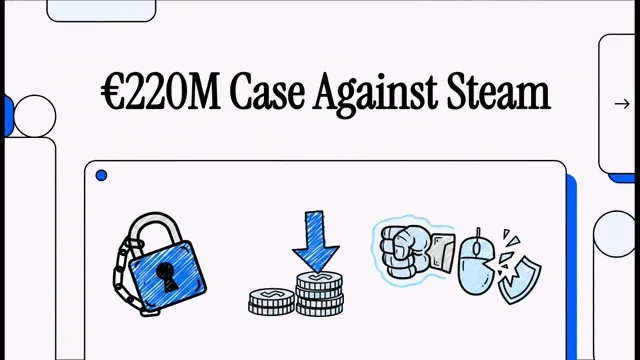
The Dutch Consumer Competition Claims Foundation (CCCF) is reportedly pursuing collective compensation on behalf of affected consumers, with estimates reaching €220 million in damages. The claim is based on the assertion that Dutch PC gamers have overpaid for digital games due to Steam’s alleged anti-competitive practices. The compensation figure is calculated using estimated price inflation, market distortion effects, and the duration of Steam’s dominance. If successful, the case could set a precedent for large-scale digital marketplace compensation claims within the European Union.
The rivalry between Steam and the Epic Games Store plays a central role in evaluating Steam’s market position. Epic has positioned itself as a major competitor by offering developers a significantly lower revenue cut, often around 12%, compared to Steam’s 30%. Epic also frequently secures timed exclusives and offers free games to attract users. Despite these efforts, Steam remains the dominant platform, leading critics to argue that competition has not meaningfully reduced Steam’s market power. Supporters of Steam counter that the presence of strong competitors like Epic, GOG, and others demonstrates that the market is competitive and that Steam’s dominance is merit-based rather than monopolistic.
Developers have long complained about indirect restrictions that discourage them from offering lower prices on other platforms. Even when explicit parity clauses are removed, platform expectations and market pressures may create “soft restrictions.” The concern is that Steam’s visibility and user base make it the default storefront, forcing developers to prioritize Steam pricing strategies over competing platforms. This can lead to uniform pricing across ecosystems, limiting consumer choice. The lawsuit argues that such conditions distort normal market competition and reduce pricing flexibility for developers.

Regional Pricing, Steam Key Distribution, and the Legal Dispute over Monopoly Status
Another element of the debate involves regional pricing and Steam key distribution practices. Critics claim that discrepancies between Eastern and Western European pricing have created arbitrage opportunities and market distortions. Steam keys sold through third-party distributors or regional pricing strategies have sometimes been significantly cheaper in certain markets. While this has benefited some consumers, it has also led to concerns about uneven pricing structures and potential exploitation of regional economic differences. The lawsuit suggests that the platform’s oversight of key distribution contributes to inconsistent pricing enforcement across Europe.
The legal question at the center of the lawsuit is whether Steam qualifies as a monopoly under EU competition law. Plaintiffs argue that Steam’s dominance in digital PC distribution constitutes a de facto monopoly due to network effects and market lock-in. Steam’s defenders argue that Steam operates in a highly competitive environment that includes Epic Games Store, Xbox PC, GOG, and direct publisher storefronts. They claim that users can freely choose where to purchase games, meaning no single platform has absolute control.
The company has consistently maintained that Steam is not a monopoly and that it competes in a broad digital ecosystem. The company argues that developers are not forced to use Steam and that alternative distribution channels are widely available. The company also emphasizes that Steam’s success is driven by user experience, community features, recommendation systems, and reliability rather than exclusionary practices. Additionally, the company points to the existence of competing platforms and lower-fee alternatives as evidence that the market remains open and competitive. The outcome depends heavily on how the court defines the relevant market, whether it is “all PC game distribution” or segmented digital storefront competition.

Steam Wallet Restrictions, Possible Effects on European Gamers, and Global Antitrust Pressure
Another issue raised in the Netherlands case involves Steam Wallet payment systems and regional payment restrictions. Critics argue that Steam Wallet requirements and localized payment methods may limit consumer flexibility and reinforce platform dependency. The lawsuit examines whether these payment structures create unnecessary friction for switching platforms or comparing prices across storefronts. Consumer groups suggest that such systems may indirectly strengthen Steam’s ecosystem dominance. Valve maintains that these payment systems are designed for security, fraud prevention, and regulatory compliance across multiple jurisdictions.
If the lawsuit succeeds, the impact on European PC gamers could be significant. Potential outcomes include reduced platform fees, more aggressive competition among storefronts, and lower game prices. Developers might gain more flexibility in pricing across multiple platforms, potentially leading to more frequent discounts and regional pricing adjustments. However, some industry analysts warn that disrupting Steam’s revenue model could also affect platform investments, community features, and long-term ecosystem stability.
The Netherlands case is part of a broader global trend of antitrust scrutiny in digital gaming markets. Valve has faced similar complaints in other jurisdictions regarding pricing, platform control, and distribution practices. Regulators in multiple regions are increasingly examining whether dominant digital storefronts should be treated as infrastructure-like services subject to stricter oversight. This growing pressure reflects wider concerns about Big Tech influence in digital marketplaces, especially where a single company controls a large portion of distribution.

Frequently Asked Questions (FAQs)
- Is Valve really a monopoly?
It depends on how the relevant market is legally defined. Critics argue that Steam’s large share of digital PC game distribution and its strong network effects give Valve monopoly-like power. Valve’s defenders dispute this, pointing to competing platforms such as Epic Games Store, GOG, Xbox PC, and direct publisher storefronts. - Why is Valve being sued in the Netherlands?
Valve is being sued over alleged anti-competitive pricing and distribution practices connected to Steam. Dutch consumer groups argue that Steam’s market position, commission structure, and pricing rules may have contributed to higher prices for PC gamers in the Netherlands and across Europe. - What is Steam’s market share?
Some industry estimates place Steam’s share of digital PC game distribution between 75% and 85%, depending on the region and the method used to measure the market. This alleged level of dominance is one of the central issues in the antitrust debate. - What is Steam’s commission fee?
Steam’s standard commission fee is typically around 30% of each game sale. Developers usually receive the remaining 70%, while Valve keeps its share for distribution, hosting, platform services, and related Steam infrastructure. - What is the CCCF lawsuit about?
The CCCF lawsuit is a collective compensation claim brought on behalf of affected consumers. It argues that Dutch PC gamers may have overpaid for digital games because of Valve’s alleged anti-competitive conduct, with reported compensation estimates reaching €220 million. - Does Epic Games Store compete with Steam?
Yes, Epic Games Store competes with Steam and offers developers a lower revenue cut, often around 12% compared to Steam’s 30%. However, critics argue that Steam remains dominant despite Epic’s efforts, while Valve supporters say Epic’s presence shows the market is competitive. - Are developers forced to use Steam?
Developers are not formally forced to use Steam, since alternative platforms and direct distribution options exist. However, many developers rely on Steam because of its large user base, visibility, and role as the default storefront for many PC gamers. - What are pricing parity clauses?
Pricing parity clauses are rules or conditions that can restrict developers from offering lower prices on competing platforms than they offer on Steam. Critics argue that such clauses reduce price competition and limit the ability of rival storefronts to attract consumers through cheaper deals. - Could game prices go down if Valve loses?
Possibly. If the case leads to lower platform fees, greater pricing flexibility, or stronger competition among storefronts, consumers could see lower prices or more frequent discounts. However, the exact effect would depend on the outcome of the lawsuit and how the market responds. - Is this case affecting global gaming laws?
It could influence future antitrust regulation worldwide, especially if courts or regulators treat dominant digital storefronts as infrastructure-like services. The case reflects a broader trend of scrutiny toward large digital marketplaces and their control over pricing, distribution, and consumer access.

Conclusion
The Netherlands lawsuit against Valve represents one of the most significant antitrust challenges in the PC gaming industry to date. At its core, the case examines whether Steam’s dominance is a result of innovation and consumer preference or whether it reflects structural market control that limits competition. As digital distribution continues to define the gaming industry, the outcome of this case may shape pricing, platform competition, and developer freedom for years to come.
Sources and Citations
- European Commission: Digital Markets Act overview
https://commission.europa.eu/strategy-and-policy/priorities-2019-2024/europe-fit-digital-age/digital-markets-act_en - Valve Steamworks Documentation (official platform policies)
https://partner.steamgames.com/doc/home - Epic Games Store revenue share information
https://store.epicgames.com/en-US/news/epic-games-store-launches-revenue-share-model - OECD: Competition in digital markets reports
https://www.oecd.org/competition/ - Dutch Authority for Consumers and Markets (ACM)
https://www.acm.nl/en - European Consumer Organisation (BEUC) digital market studies
https://www.beuc.eu/ - EU antitrust law and digital platform regulation resources
https://competition-policy.ec.europa.eu/ - Industry analysis of PC gaming market share (various estimates aggregated)
https://www.statista.com/topics/868/pc-gaming/
Recommended
- My Adventures with Superman Season 3 Review: Reign of the Supermen, Supergirl’s Rise, and DC’s Most Ambitious Animated Chapter Yet
- Lego Batman: Legacy of the Dark Knight’s release date moves up a week, new May 22, 2026 launch
- Battlefield Movie: Everything We Know so Far, Including Who Could Star and Direct
- Upcoming Windows 11 Improvements: Less AI/Copilot Integration, More User Options, and a Cleaner Experience (2026 Roadmap)
- “Thanks for Being Here! What’s Your Favorite Role I’ve Done So Far?”, Why Actors Ask Fans This Question and What It Reveals
- Infinity Ward Promises More Realistic Cosmetics for Call of Duty: Modern Warfare 4
- Metahuman Animator: How to Animate Realistic Characters in Unreal Engine 5
- This First Look at Diablo 4: Lord of Hatred Prequel “The Lost Horadrim” Has Us Eager for More (Release Date, Story, Characters)
- In This Skyrim Mod, You Have to Debate Dragons to Kill Them: How Blurbs’ Twitch Chat Dragon Debates Work
- Assassin’s Creed Black Flag Resynced No-HUD Mode



































































































