







In This Article (8 sections)
Wildwood Rotten Tomatoes Score, Early Reviews, and October 2026 Theatrical Release
LAIKA’s stop-motion fantasy Wildwood debuted with a 100% Rotten Tomatoes score, giving the studio’s sixth feature a strong critical start ahead of its wider theatrical release. FilmNation’s October 12 coverage recorded a perfect score from 15 reviews, while the Rotten Tomatoes page displayed 21 reviews with the same percentage by October 15. That growth in the review count shows that the unanimous early reception continued as additional critics entered the aggregate, although the score remains a snapshot rather than a permanent verdict.
A 100% Tomatometer rating means every eligible review included in the calculation was classified as positive, not that every critic awarded the film a perfect numerical score or considered every element flawless. Individual reviews can praise the film overall while still criticizing pacing, familiar story elements, characterization, or other aspects, so the percentage is best understood as evidence of broad professional approval rather than universal declarations of perfection.
The early reviews repeatedly emphasize the scale of Wildwood’s imagery and the intricacy of LAIKA’s handcrafted filmmaking. William Bibbiani’s review for TheWrap presents the film as an exceptional animated achievement and focuses on the ambition and craftsmanship required to construct it, while Wendy Ide’s Screen International review praises the technical execution and scope but notes familiar fantasy elements.
Her assessment also suggests that the 132-minute running time and disturbing material may make the film more appropriate for older family audiences. FilmNation’s roundup includes enthusiastic reactions from The Hollywood Reporter and Variety, although the Variety assessment leaves room for longtime LAIKA fans who may prefer the studio’s smaller and stranger earlier films. Taken together, the reviews describe a film whose strongest early selling point is the combination of detailed physical craft and unusually large-scale fantasy storytelling, while the reservations concern narrative familiarity and individual preference rather than a lack of ambition.
The distinction between critical and audience response also matters because most general viewers had not yet seen the film when its early score was recorded. Rotten Tomatoes separates professional reviews through the Tomatometer from audience responses through the Popcornmeter, and the two groups can react differently once a film reaches wide release.
The early score therefore cannot establish future box office performance, guarantee awards attention, or predict whether every viewer will respond to Wildwood in the same way. Festival screenings and professional reviews represent the first stage of reception, while the nationwide theatrical rollout will expose the film to a much broader audience. Wildwood’s perfect debut is significant because critics consistently found enough to recommend it, but its longer-term reputation will depend on how the conversation develops after release.
Wildwood opens nationwide in United States cinemas on Friday, October 23, 2026, with Fathom Entertainment handling American theatrical distribution and FilmNation Entertainment managing international sales. Screen International also identifies October 23 as the UK release date, although international availability should still be treated territory by territory rather than assuming every country receives the film simultaneously.
The theatrical release is especially relevant because reviews repeatedly emphasize visual scale, intricate miniature environments, and the relationship between physical texture and sweeping fantasy landscapes. Premium presentations including 4DX, DBOX, and Dolby Cinema are also named where available, but those formats depend on participating theatres and should not be treated as universal features of every screening. The October 23 date remains the regular nationwide American opening even though selected audiences have earlier opportunities to see the film.
LAIKA and Fathom Entertainment scheduled Fan First screenings for October 19 at more than 100 theatrical locations, giving selected viewers access four days before the nationwide United States release. These screenings are planned as premium-format presentations where available and include a prerecorded welcome from director Travis Knight, connecting the event directly with the long production process behind the film.
They are specific early-access screenings rather than evidence that every cinema begins regular showings on October 19, and the announcement does not establish identical events in every international territory. Wildwood had already made its world premiere at the BFI London Film Festival, which runs from October 7 through October 18, while AFI FEST scheduled its United States premiere as its opening-night selection on October 21. These festival appearances, Fan First screenings, and the October 23 commercial opening represent different stages of the rollout and should remain distinct when describing the film’s release history.
Wildwood Story, Characters, Voice Cast, and Adaptation of Colin Meloy’s Novel
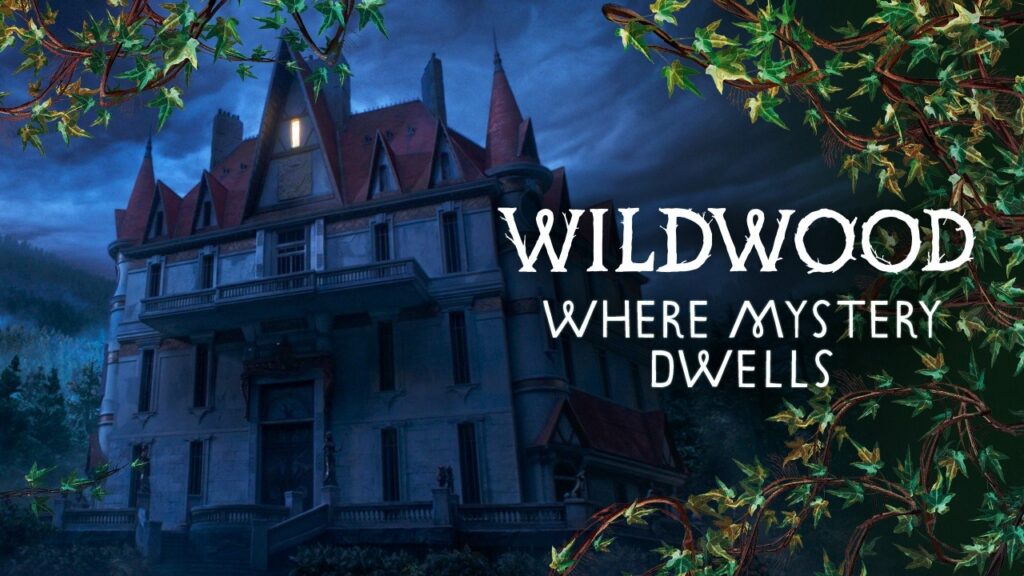
Wildwood begins when Prue McKeel’s baby brother is abducted by a flock of crows, leading her into the Impassable Wilderness, a mysterious forest located beyond Portland, Oregon. Her classmate Curtis Mehlberg joins the rescue attempt, and their journey brings them into contact with talking animals, bandits, and powerful figures whose motives extend beyond the immediate disappearance.
The central rescue gives the fantasy a simple emotional foundation before the audience has to understand the wider politics and history of the forest. Prue wants to bring her brother home, making that personal objective an accessible route into a setting populated by competing communities and dangers. The proximity of the magical wilderness to ordinary Portland also creates a strong boundary between familiar life and the hidden world beside it, allowing discovery and danger to develop together as the characters move deeper into the forest.
The setting becomes more than a sequence of magical attractions because its inhabitants have their own interests, conflicts, and histories. Each encounter can therefore reveal something about the wilderness while simultaneously changing the rescue mission, creating a story that expands from personal stakes into a larger struggle.
Early comparisons with epic fantasy are partly rooted in this progression, where an intimate objective gradually becomes connected with consequences affecting entire communities. The film’s 132-minute running time gives the adaptation room to develop that broader world, although the length also contributes to critical comments about pacing and suitability for younger viewers. The most important narrative challenge is maintaining Prue’s original motivation as the scale increases, so the rescue remains emotionally legible even when battles, factions, and fantasy mythology become more prominent.
Peyton Elizabeth Lee voices Prue, while Jacob Tremblay plays Curtis, with Carey Mulligan as Alexandra, Mahershala Ali as Brendan, and Angela Bassett as the General. The supporting cast includes Awkwafina as Septima, Charlie Day as Dmitri, Amandla Stenberg as Niamh, Jemaine Clement as Roger, Tantoo Cardinal as Iphigenia, Tom Waits as Maxsim, Richard E. Grant as Owl Rex, and Jake Johnson and Maya Erskine as Mr. and Mrs. McKeel.
The credits also include Len Cariou, Marc Evan Jackson, Blythe Danner, Rob Delaney, and Ólafur Darri Ólafsson, giving the film a large ensemble suited to an expansive fantasy world. Recognizable names alone do not determine whether the performances work, because animated characterization depends on the interaction between recorded dialogue, puppet design, movement, editing, and visual timing. In stop motion, a vocal hesitation can become a physical pause, while a forceful line can influence posture, eye direction, and the rhythm of movement, meaning the final performance is assembled collaboratively across several disciplines.
Wildwood adapts the 2011 novel written by Colin Meloy and illustrated by Carson Ellis, whose work established the imaginative identity of the original story. The American edition was published by Balzer + Bray, and bibliographic records credit Ellis specifically as illustrator, making both creators important to any discussion of the source material. Publishers Weekly described the book as a middle-grade fantasy drawing on familiar adventure conventions while retaining Meloy’s distinctive voice, and also identified him as the lead singer of the Decemberists.
Adapting an illustrated novel requires the screenplay to decide which events deserve emphasis while the visual team transforms static images and descriptions into environments that characters can physically inhabit and move through. Illustrations can suggest mood, design, and atmosphere, but film requires further decisions about spatial relationships, lighting, motion, timing, and the duration of every scene.
Readers and newcomers may consequently judge the adaptation in different ways. Someone familiar with the novel may focus on whether particular characters, scenes, or designs preserve the source material’s identity, while an audience member encountering Wildwood for the first time needs the film to function without prior knowledge. A successful adaptation therefore cannot rely solely on recognition, even when the book’s imagery provides a strong foundation. The film has to create its own dramatic rhythm while remaining recognizably connected to Meloy and Ellis’s world. Early critical responses suggest that LAIKA has emphasized the scale and visual possibilities of that world while retaining the rescue story as the emotional route through it.
How Travis Knight and LAIKA Created Wildwood’s Large-Scale Stop-Motion Fantasy
Travis Knight directs and produces Wildwood from a screenplay by Chris Butler, with Arianne Sutner also producing and Caleb Deschanel serving as cinematographer. Knight’s involvement extends beyond directing an individual film because, as LAIKA’s studio leader, he has helped shape the production environment required to sustain a technically demanding stop-motion project over many years.
His central challenge is balancing the size of an epic fantasy with the clarity of individual character goals, ensuring that elaborate settings and large battles do not overwhelm the emotional story. That becomes particularly difficult when different sequences are produced by numerous teams over long periods and must still feel as though they belong to one coherent film. Knight’s comments to Animation World Network describe the production as deeply collaborative, with actors, animators, designers, technicians, and musicians contributing ideas that expanded the original conception while animators studied the voice performances when developing physical movement.
The film combines handcrafted fabrication and frame-by-frame animation with digital techniques that extend what can be achieved physically. Creative Review’s coverage of the Design Museum exhibition describes puppet armatures, miniature environments, costumes, props, digital scanning, and visual-effects extensions, while reporting 136 designed locations across 104 stages, 49 animators, and 2,775 shots.
Those numbers help explain how Wildwood can retain LAIKA’s tactile stop-motion identity while creating environments that feel substantially larger than the physical stages on which they were photographed. The physical elements provide texture, imperfections, and presence, while digital extensions allow forests, architecture, crowds, and landscapes to extend beyond what would be practical to construct entirely by hand. The resulting visual style is therefore not a competition between physical and digital techniques but a coordinated use of both to support the same cinematic illusion.
Individual puppets could also create major engineering demands. Animation World Network describes the General’s eagle puppet as having thousands of individually placed feathers and a wingspan exceeding five feet, requiring mechanical complexity in addition to the usual demands of stop-motion performance. A puppet must do more than look convincing in a still photograph because it needs to hold poses, move predictably in tiny increments, and remain expressive throughout a sequence. Lighting and camera positions also have to remain controlled while animators repeatedly access sets to alter the puppets, since unintended shifts can disrupt the illusion of continuous movement. The finished film therefore depends on coordinated design, engineering, cinematography, animation, performance, and compositing rather than one isolated craft.
Wildwood’s extended development history reflects that complexity, although it should not be described as sixteen uninterrupted years of active shooting. Animation World Network reports that Knight’s relationship with the project reaches back sixteen years and that he initially believed LAIKA lacked the technology and production experience necessary to realize its intended scale. Entertainment Weekly describes a seven-year production involving more than 1,000 people, while also noting that preliminary work continued from home during the pandemic in 2020 and 2021.
Stop-motion production creates dependencies across departments because a scene may require completed puppets, costumes, props, sets, lighting plans, camera systems, and specialized rigs before photography can begin. Changes in one area can affect several others, since a redesigned costume may alter movement, a larger action sequence may require different sets or effects, and a new performance idea may demand revised facial components or mechanical solutions.
That production history helps explain why Wildwood represents such a significant undertaking for LAIKA. Time alone does not guarantee quality, but the years involved demonstrate the scale of the challenge the studio chose to solve. The production had to develop techniques capable of supporting large environments and thousands of characters while still preserving the minute control expected from stop motion. Its handcrafted quality therefore exists alongside advanced technology rather than in opposition to it. Early reviews praising both physical detail and expansive imagery suggest that this combination has become one of the most visible achievements of the finished film.

Wildwood’s Epic Scale, LAIKA Comparisons, Trailers, and Behind-the-Scenes Material
Early reactions have compared Wildwood’s ambition with The Lord of the Rings, particularly when discussing its battle sequences and the way a personal quest expands into a much larger fantasy conflict. GamesRadar’s roundup records viewers making these comparisons in relation to scale and spectacle, not because Wildwood has any formal connection with Tolkien’s stories. Entertainment Weekly gives the comparison a more concrete production basis by describing the final battle as a roughly twelve-minute sequence containing more than 400 shots and approximately 3,000 characters.
Those figures demonstrate the size of the filmmaking challenge without suggesting that Wildwood and The Lord of the Rings share the same story, world, or creative identity. The useful point of comparison is the movement from intimate stakes toward a conflict involving many groups and characters, while the challenge remains keeping Prue’s rescue mission emotionally visible inside the spectacle.
Wildwood is LAIKA’s sixth stop-motion feature after Coraline, ParaNorman, The Boxtrolls, Kubo and the Two Strings, and Missing Link. LAIKA’s official release materials note that all five previous films received Academy Award nominations for Best Animated Feature, giving Wildwood a substantial studio legacy against which audiences will inevitably compare it. Coraline offers an obvious thematic connection because both stories place young protagonists at the threshold of strange and dangerous worlds, while Kubo and the Two Strings provides another reference through its combination of intimate emotion and ambitious fantasy imagery.
Those comparisons are useful for identifying recurring interests within LAIKA’s work, but they should not become automatic rankings or assumptions that Wildwood must reproduce the tone of an earlier film. Each title emphasizes different balances of intimacy, humor, darkness, spectacle, and adventure, and Wildwood’s broader canvas naturally creates different pacing and structural demands.
The early reviews suggest that critics largely view this expansion of scale as an accomplishment, even when some personally prefer the studio’s smaller or stranger films. A larger fantasy world creates more space for communities, factions, battles, and mythology, but it also requires more time to establish those elements. That can affect how viewers compare Wildwood with the tighter construction of earlier LAIKA stories. A 100% early Rotten Tomatoes score cannot settle which film an individual audience member will prefer, because critical consensus about quality is different from personal attachment to a particular style. Wildwood’s place within LAIKA’s catalogue will become clearer as broader audiences respond to its characters and atmosphere alongside its technical spectacle.
LAIKA released Wildwood’s final trailer on September 16 alongside the announcement that tickets were on sale. The footage gives viewers a more complete look at Prue’s journey and the increasing stakes surrounding the attempt to rescue her brother, while also demonstrating the visual scale developed during the film’s lengthy production.
Trailers therefore perform two functions at once: they introduce the story to audiences unfamiliar with Colin Meloy’s novel and provide evidence of what years of stop-motion production have created. They can establish tone, character relationships, environments, and spectacle, but they still present a curated selection of footage rather than a complete measure of pacing or storytelling. The finished feature remains the place where those elements have to work continuously for the full running time.
Behind-the-scenes material provides a different kind of understanding by showing how the illusion of a continuous fantasy world is assembled from physical objects and repeated manual adjustments. Coverage of the Design Museum exhibition highlights puppets, miniature environments, costumes, props, and internal armatures, making the relationship between artistic design and engineering more visible.
Production footage similarly reveals controlled lighting, incremental puppet movement, mechanical rigs, and the planning required to create sequences that appear effortless when projected at normal speed. Seeing those materials can deepen appreciation for the labor involved, but technical complexity matters most when it supports convincing characters and a coherent story. A highly engineered puppet or elaborate miniature earns its place when the audience stops thinking about construction and begins believing in the character or world it represents.
Wildwood now moves from years of production and festival exposure into its widest test with general audiences. Its early reviews provide strong momentum, the October 19 Fan First screenings expand public access, the October 21 AFI FEST appearance adds another major event, and the October 23 theatrical opening brings the film to a much larger audience. The combination of a perfect early Tomatometer score, unusually large stop-motion production, established literary source, and recognizable LAIKA identity gives the release substantial attention before opening weekend.
The larger question is whether the craftsmanship and spectacle highlighted by critics remain connected strongly enough to Prue, Curtis, and the rescue story to sustain the film across its 132-minute running time. That balance between technical ambition and emotional clarity will ultimately determine how Wildwood is remembered within LAIKA’s catalogue after the excitement surrounding its early critical reception settles.
Frequently Asked Questions (FAQs)
- What is Wildwood’s Rotten Tomatoes score?
As checked on October 15, 2026, Wildwood holds a 100% Tomatometer score from 21 professional reviews. That means every review included in the aggregate at that point was classified as positive. The result gives the film a strong early critical reception before its wide theatrical release. However, the score represents a dated snapshot rather than a permanent rating. As additional critics publish reviews, both the percentage and the total review count can change. - Does a 100% score mean every critic gave Wildwood a perfect rating?
No. A 100% Tomatometer score means that every eligible review included in the calculation was judged positive overall. Individual critics can still identify weaknesses, criticize elements such as pacing or familiarity, and award ratings below their own maximum score. Rotten Tomatoes combines different reviewing systems into a percentage measuring the proportion of positive reviews rather than their average numerical rating. A moderately positive review therefore contributes to the same positive percentage as an extremely enthusiastic one. Wildwood’s score indicates unanimous recommendation among the reviews counted so far, not unanimous declarations that the film is flawless. - When does Wildwood release in cinemas?
Wildwood opens nationwide in United States cinemas on October 23, 2026. Screen International also identifies October 23 as the film’s UK theatrical release date. Those dates establish the confirmed opening schedule for those two markets. They should not automatically be extended to every other country because international distribution can use different release dates. Viewers outside the United States and United Kingdom should therefore check the theatrical schedule for their specific territory. - Can audiences watch Wildwood before October 23?
Yes. Special Fan First screenings are scheduled for October 19, 2026, at more than 100 participating theatrical locations in the United States. These events give selected audiences the opportunity to see the film four days before the nationwide opening. The screenings also include a prerecorded welcome from director Travis Knight, adding a connection to the production and its lengthy development. They should be understood as a specific early-access program rather than an earlier nationwide release date. Availability depends on participating cinemas and their individual schedules. - Where did Wildwood have its world premiere?
Wildwood had its world premiere at the BFI London Film Festival. That festival appearance provided the setting for the film’s first major wave of professional reviews and public discussion. The BFI programme describes the film as an epic stop-motion fantasy and lists its 132-minute running time. Its United States festival premiere is a separate event scheduled for October 21 as the opening-night presentation of AFI FEST. The BFI premiere, AFI FEST screening, Fan First events, and nationwide theatrical opening are therefore distinct stages of the release campaign. - Who directed and wrote Wildwood?
Travis Knight directed and produced Wildwood, continuing his work with LAIKA on large-scale stop-motion filmmaking. Chris Butler wrote the screenplay, adapting the 2011 novel by Colin Meloy with illustrations by Carson Ellis. Arianne Sutner is also credited as a producer, while Caleb Deschanel serves as cinematographer. The adaptation therefore combines the identity of the original illustrated novel with a separate cinematic production team responsible for translating it into a feature film. Knight’s role also extends beyond directing because his leadership at LAIKA helped shape the studio environment needed for such an extensive production. - Is Wildwood entirely computer animated?
No. Wildwood is fundamentally a stop-motion film built around physically crafted puppets, miniature sets, costumes, props, and frame-by-frame animation. LAIKA also uses digital scanning, visual effects, and other computer-assisted techniques to extend environments and support sequences that would be difficult to create entirely on a physical stage. These digital methods complement the practical animation rather than replace it. The combination allows the film to preserve a tactile handcrafted appearance while presenting much larger fantasy spaces and crowds. Its production is therefore best described as stop motion enhanced by digital tools and visual effects. - Who voices Prue and Curtis?
Peyton Elizabeth Lee voices Prue McKeel, the young protagonist whose search for her missing baby brother drives the story. Jacob Tremblay voices Curtis, her classmate and companion during the journey into the Impassable Wilderness. The wider cast includes Carey Mulligan, Mahershala Ali, Angela Bassett, Awkwafina, Tom Waits, and Richard E. Grant, among several other performers. Their vocal work is combined with puppet animation, facial movement, editing, and physical staging to create the finished characters. In stop motion, the recorded performance and the animator’s interpretation of that performance work together rather than functioning as separate elements. - Is Wildwood suitable for very young children?
Parents should consider the film’s intensity and content rather than assuming that animation automatically makes it suitable for very young viewers. The BFI listing identifies a UK 12A classification and specifically warns that the film contains upsetting scenes. Screen International also refers to disturbing material when discussing the film’s suitability for family audiences. Its 132-minute running time and darker fantasy elements may also affect how younger children respond to the experience. The appropriate choice therefore depends on the individual child’s age, sensitivity, and comfort with intense fantasy situations. - Is Wildwood connected to The Lord of the Rings?
No. Wildwood and The Lord of the Rings are separate fictional properties with no confirmed narrative or adaptation connection. Comparisons made in early reactions concern the scale of Wildwood’s fantasy world, large battle sequences, and the way a personal quest expands into a broader conflict. Production reporting about thousands of characters and hundreds of shots in the final battle helps explain why viewers have used epic fantasy comparisons. Those similarities describe ambition and spectacle rather than shared characters, mythology, or continuity. Wildwood remains an adaptation of Colin Meloy and Carson Ellis’s independent fantasy work.

Conclusion
Wildwood’s 100% Rotten Tomatoes debut gives LAIKA a strong critical introduction to one of the studio’s most ambitious productions. The early response consistently highlights the scale of the stop-motion filmmaking, the detail of its handcrafted environments, and the technical achievement involved in expanding LAIKA’s visual language into a much larger fantasy adventure.
Some reviewers also identify familiar storytelling elements or preferences for the studio’s smaller films, showing that unanimous positive classification does not mean every aspect has received identical praise. The score is therefore most meaningful when considered alongside what critics are actually responding to rather than as a claim that the film is universally flawless. Its significance comes from the consistency of the early approval and the repeated recognition of the craft behind the finished film.
That 100% figure remains a dated snapshot rather than a permanent verdict, particularly while the review count is still growing ahead of wide release. Rotten Tomatoes records whether eligible reviews are positive, not whether every critic awards the highest possible rating, and the percentage can change as more assessments are added. Wildwood’s longer-term reputation will depend on how broader audiences respond to its characters, pacing, fantasy world, and 132-minute adventure once the film moves beyond festivals and professional screenings.
With Fan First presentations scheduled for October 19 and the nationwide United States opening set for October 23, the next stage of reception will come from substantially more viewers. Wildwood arrives at that moment with considerable expectations, carrying an illustrated fantasy into an expansive cinematic world and bringing years of collective craftsmanship to the screen in what represents one of LAIKA’s largest creative undertakings.
Sources and Citations
- Rotten Tomatoes – Wildwood
- The current Rotten Tomatoes page lists Wildwood at 100% on the Tomatometer from 25 critic reviews, with its wide theatrical release scheduled for October 23, 2026 and a runtime of 2 hours 12 minutes. Because the review count is still increasing, the 100% figure should be treated as a current snapshot rather than a permanent score. Rotten Tomatoes
- Citation: Rotten Tomatoes – Wildwood
- Rotten Tomatoes – About the Tomatometer
- Rotten Tomatoes explains that the Tomatometer is the percentage of professional critic reviews classified as positive. A 100% score therefore means all counted reviews are positive, not that every critic awarded the movie a perfect numerical rating. The site separately uses the Popcornmeter for audience reactions. Rotten Tomatoes
- Citation: Rotten Tomatoes – About the Tomatometer
- Fathom Entertainment – Wildwood Fan First Screenings Announcement
- Fathom and LAIKA announced Fan First premium screenings on October 19, 2026, at more than 100 participating locations, four days ahead of the October 23 nationwide opening. The screenings include a prerecorded welcome from Travis Knight, while select premium formats include 4DX, DBOX and Dolby Cinema where available. The announcement also notes the film’s 100% Rotten Tomatoes critics score following its London premiere. Fathom Entertainment
- Citation: Fathom Entertainment – Wildwood Fan First Screenings
- Fathom Entertainment – Tickets and Final Trailer Announcement
- Fathom’s official ticket announcement confirms the October 23 theatrical release, ticket availability and LAIKA’s wider release campaign for Wildwood. It is also the appropriate primary source for the final-trailer and theatrical-ticket rollout. Fathom Entertainment
- Citation: Fathom Entertainment – Wildwood Tickets and Final Trailer
- BFI London Film Festival – Wildwood
- The BFI’s official Wildwood listing identifies it as a 132-minute Travis Knight-directed stop-motion fantasy, credits Chris Butler as screenwriter and lists Peyton Elizabeth Lee, Jacob Tremblay, Carey Mulligan, Mahershala Ali and Angela Bassett among the cast. The page gives the film a BBFC 12A certificate and warns of upsetting scenes. BFI Southbank
- Citation: BFI London Film Festival – Wildwood
- BFI – 70th London Film Festival Programme
- The BFI confirms that the 70th BFI London Film Festival runs October 7–18, 2026. This provides official festival context for Wildwood’s London premiere and early critical reception. BFI
- Citation: BFI – 70th London Film Festival Programme
- American Film Institute – Wildwood to Open AFI FEST 2026
- AFI confirms that Wildwood will have its U.S. premiere on October 21, 2026, as the opening-night film of AFI FEST. The announcement identifies Travis Knight as director and producer, Chris Butler as writer, Caleb Deschanel as cinematographer and confirms the principal voice cast. AFI
- Citation: AFI – Wildwood to Open AFI FEST 2026
- TheWrap – Wildwood Review
- William Bibbiani’s October 11 review calls Wildwood one of the most astonishing animated films he has seen and emphasizes the extraordinary ambition and intricacy of LAIKA’s handcrafted stop-motion production. This is a strong source for the enthusiastic critical response surrounding the film’s visual achievement. TheWrap
- Citation: TheWrap – Wildwood Review
- Screen International – Wildwood Review
- Wendy Ide’s October 11 review praises the film’s stop-motion animation for breaking new ground in scale, intricacy and ambition, while noting that the story uses familiar fantasy conventions. The review also discusses the long runtime and disturbing content as factors that may make it more suitable for older family audiences. Screen Daily
- Citation: Screen International – Wildwood Review
- Animation World Network – Why Travis Knight Waited 16 Years to Make Wildwood
- Animation World Network examines the film’s unusually long development history and Knight’s belief that LAIKA initially lacked the technology and production experience required to realize the story at the intended scale. It also details the collaborative nature of the production and the interaction between performers, animators, designers and other departments. Animation World Network
- Citation: Animation World Network – Why Travis Knight Waited 16 Years to Make Wildwood
- Creative Review – How LAIKA Builds Stop-Motion Worlds
- Creative Review’s coverage of the Design Museum exhibition examines the puppets, armatures, miniature sets, costumes, fabrication techniques, digital scanning and visual-effects processes behind Wildwood. It provides useful production context for explaining how LAIKA combines physical stop-motion craft with digital extensions to create much larger environments. Creative Review
- Citation: Creative Review – Wildwood Exhibition and LAIKA Stop-Motion Craft
- Entertainment Weekly – Wildwood Production Feature
- Entertainment Weekly reports that Wildwood required roughly seven years of production and more than 1,000 crew members, making it LAIKA’s most ambitious feature to date. Its coverage explores the large number of locations, puppets, costumes, facial expressions and environments required to build the film’s world. EW.com
- Citation: Entertainment Weekly – How LAIKA Made Its Most Ambitious Stop-Motion Film
- Entertainment Weekly – Wildwood’s Final Battle
- EW’s breakdown of the climax reports that the final battle lasts about 12 minutes, contains more than 400 shots and features approximately 3,000 characters, making it the largest-scale sequence in LAIKA’s history. EW.com
- Citation: Entertainment Weekly – Wildwood Final Battle Breakdown
- GamesRadar – Wildwood Early Reactions
- GamesRadar collected early reactions comparing Wildwood’s scale and spectacle to The Lord of the Rings and describing it as one of LAIKA’s most ambitious films. These are comparisons of cinematic scope and fantasy scale, not claims of a narrative connection between the properties. GamesRadar+
- Citation: GamesRadar – Wildwood Early Reactions
- WorldCat – Wildwood by Colin Meloy and Carson Ellis
- WorldCat’s bibliographic record identifies Wildwood as the novel by Colin Meloy, with Carson Ellis credited for the illustrations. This is useful for verifying the source material behind LAIKA’s adaptation. WorldCat
- Citation: WorldCat – Wildwood
- Publishers Weekly – Wildwood
- Publishers Weekly’s 2011 review provides contemporary coverage of Colin Meloy’s original children’s fantasy novel and its adventure structure. The listing also supplies publication-format and bibliographic details for the book. PublishersWeekly.com
- Citation: Publishers Weekly – Wildwood by Colin Meloy
Recommendations
- Vivian Kubrick Debunks Eyes Wide Shut Deleted Scenes Theory
- Battlefield 6 2026 Roadmap: More Maps, “Legendary” Battlefield 4 & Battlefield 3 Remakes, and Wake Island’s Return
- Apple TV’s Widow’s Bay is the First Breakout TV Hit of 2026: Why Everyone is Talking About the Horror Comedy
- Pitchify Launches New Service to Connect Developers and Publishers: How Pitch Direct Works
- Pokémon Pokopia Bubbly Basin DLC Release: Date, New Pokémon, and Everything You Need to Know
- Nordic Game 2026 (NG26 Spring): Dates, Venue, Passes, Speakers, Expo & Awards in Malmö
- Subnautica 2 Early Access Roadmap: Co-Op Updates, Sprinting, and More
- Virtua Fighter 6 Leak Explained
- The Future of 3D Modeling: Insights on AI Advancements
- GTA 6 is Already Outselling Everything Else: Why Pre-Orders Are Dominating Gaming



































































































