








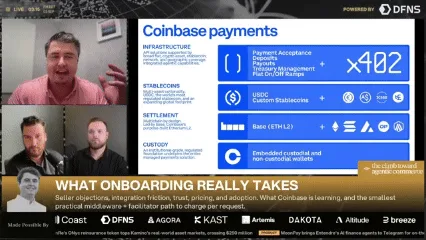
Payments between software systems are becoming a measurable part of the digital economy. AI agents can retrieve information, compare services, request computing resources, and complete assigned tasks. Giving those systems controlled access to money adds another capability: purchasing the resources needed to finish a job.
Chainalysis reported that cumulative x402 transactions on Base exceeded 138 million by the end of its expanded observation period. Its agentic-payments analysis covered 16 months ending in September 2026. The findings appeared in a report published on October 14, rather than October 15. The total therefore should not be described as 138 million payments made during Q3 alone. chainalysis.com
That distinction matters because transaction totals, paymChainalysis x402 Payments Report: Key Findings, Base Network Activity and AI Payment Adoption
The Chainalysis x402 payments report examines the growing use of x402 payments on Base, highlighting substantial cumulative transaction activity alongside important questions about economic value, wallet behavior, and the development of autonomous purchasing systems. Although the technology has demonstrated the ability to process large numbers of payments, transaction volume alone does not establish that it has achieved widespread commercial adoption or created a sustainable market for AI-driven transactions.
The distinction between payment activity, the value transferred, and genuinely autonomous purchasing is essential because each measures a different aspect of the technology’s development. A payment protocol can facilitate substantial activity while many of its commercial applications remain experimental, making it important to examine what the reported statistics actually demonstrate rather than treating every transaction as evidence of meaningful economic demand.
One of the report’s central findings is the scale of cumulative payment activity, accompanied by information about transaction sizes, wallet behavior, and the categories of services receiving payments. Together, these indicators provide a more complete picture of x402’s development than transaction count alone. A large number of transactions demonstrates that the infrastructure is being used, but it does not independently explain how much money is changing hands, whether individual payments correspond to valuable services, or whether the same users and applications are repeatedly generating activity. Evaluating adoption therefore requires considering several measures together, particularly the relationship between transaction frequency and the economic value of the services being purchased.
The difference between payment frequency and economic value is especially important for a system designed to support small digital transactions. Millions of inexpensive transfers can produce an impressive cumulative transaction count without generating equivalent merchant revenue. Conversely, a smaller number of more expensive purchases can represent substantial spending despite appearing less significant when measured only by transaction frequency. This means a payment system with high activity should not automatically be interpreted as supporting a commercially mature marketplace. Analysts must consider the average size of payments, the services associated with them, and whether the activity reflects genuine demand rather than repeated experimentation or other forms of usage that do not necessarily translate into sustainable business revenue.
Wallet activity introduces another important consideration because the number of active addresses does not necessarily correspond to the number of people, businesses, or independently operating AI agents using the system. A wallet is an address used to hold or authorize digital assets, but one operator may control multiple wallets, while a single wallet can support several automated tasks.
Consequently, an increase in wallet activity may demonstrate broader technical participation without establishing an equivalent increase in unique customers. Similarly, a wallet involved in automated transactions does not necessarily represent an AI agent independently deciding what to purchase. The distinction between an address, its controlling operator, and the software responsible for initiating payments is necessary when interpreting claims about autonomous economic activity.
The relationship between x402 payments and AI-driven purchasing also requires careful interpretation. A transaction initiated through an automated process may be part of a predetermined workflow rather than a purchase independently selected by an artificial intelligence system. Automated payment execution and genuinely autonomous purchasing are related but different capabilities. The former concerns software carrying out a payment according to established instructions, while the latter involves a system making purchasing decisions within its permitted objectives and authorization. Transaction records alone may not reveal which type of activity occurred, making it difficult to determine how much of the reported payment volume represents independently operating AI agents rather than conventional automation.
Service categories provide additional context because they help explain what users and applications may be paying for. A transaction count becomes more meaningful when it can be connected to a useful digital service, particularly one that customers or applications repeatedly access because it provides value. However, identifying the categories associated with payments does not automatically establish that every service has a sustainable business model or that every transaction reflects independent demand. The practical significance depends on whether the services are useful, whether customers continue purchasing them, and whether the revenue generated justifies the cost of providing them.
Operating costs are another important part of evaluating x402’s commercial prospects. A protocol capable of processing large numbers of small payments must also support reliable execution and economically practical transactions. Even when individual transfers are technically successful, the wider business model depends on whether the value exchanged is sufficient to justify the costs associated with the service and its payment infrastructure. This is particularly relevant to very small transactions, where limited revenue per payment can make efficiency an important consideration. High transaction frequency may demonstrate technical capability, but long-term commercial success also requires a sustainable relationship between payment value, service costs, and user demand.
The principal distinctions highlighted by the Chainalysis x402 payments analysis include:
- Cumulative transaction activity: Demonstrates the extent of payment activity processed through the protocol without independently establishing commercial maturity.
- Transaction frequency: Measures how often payments occur but does not necessarily reflect the total economic value exchanged.
- Payment sizes: Help distinguish large numbers of small transfers from fewer transactions involving more substantial amounts.
- Wallet activity: Provides information about participating addresses but should not automatically be interpreted as a count of unique people, companies, or autonomous AI agents.
- Automated transactions: May involve software executing predetermined instructions rather than independently making purchasing decisions.
- Autonomous purchasing: Requires distinguishing genuine decision-making by an AI system from ordinary payment automation.
- Service categories: Help identify the types of digital services associated with payment activity and provide context for evaluating demand.
- Commercial sustainability: Depends on useful services, recurring demand, manageable operating costs, and reliable payment execution.
These distinctions are especially relevant when interpreting x402 activity on Base because technical adoption and commercial adoption do not necessarily advance at the same pace. A payment protocol may demonstrate substantial transaction processing capability before a large number of independent businesses establish profitable services around it. Similarly, frequent payments involving automated systems can indicate that developers are experimenting with new ways of connecting software and digital commerce without establishing that autonomous purchasing has become a routine economic activity. The value of the transaction data therefore lies in showing what the network is already supporting while leaving room for further evidence about the commercial significance of that activity.
A broader assessment of x402 adoption would benefit from examining whether transaction activity is distributed across many independent participants or concentrated among a smaller number of operators. It would also be useful to understand whether payment activity continues because customers find the services valuable or because applications are generating repeated transactions during experimentation. These questions cannot be resolved through aggregate transaction counts alone, and the distinction between activity and demand is central to understanding whether a payment ecosystem can support long-term growth.
Ultimately, the Chainalysis x402 payments report demonstrates that the protocol has facilitated substantial payment activity on Base while highlighting the need for caution when interpreting transaction counts, wallet statistics, and claims about AI-driven commerce. The available evidence supports the conclusion that x402 is being used to execute payments, but its broader significance depends on how much of that activity represents genuine demand for useful services, sustainable transaction values, and reliable automated purchasing.
High transaction counts provide an important measure of technical participation, yet they do not independently establish widespread adoption by unique customers or confirm that most payments are initiated by genuinely autonomous AI agents. A meaningful assessment must therefore consider economic value, service usefulness, operating costs, and the distinction between conventional automation and independent purchasing decisions alongside the headline transaction figures.

In This Article (8 sections)
What Is x402? How AI Agents Make Payments on Base and Why Transactions Surpassed 138 Million
x402 is an open payment standard designed to connect payment requirements directly to ordinary web requests, making it possible for applications and automated systems to purchase digital services without navigating traditional checkout pages. Its name comes from HTTP status code 402, meaning “Payment Required,” which provides the foundation for communicating payment instructions between a requesting application and a service provider.
Rather than requiring every transaction to pass through a separate purchasing interface designed for human customers, an x402-enabled service can present machine-readable payment requirements as part of the process of accessing a resource. This approach is particularly relevant to artificial intelligence agents and automated applications that may need to purchase information, computing services, or specialized capabilities while completing assigned tasks.
In a typical x402 interaction, software requests access to a paid resource, and the service responds with information describing the payment requirements. The requesting application can then select an acceptable payment option, create the necessary authorization, and resubmit its request with the appropriate payment information. The server verifies the authorization, either directly or through a facilitator, and coordinates settlement before returning a successful response.
The precise execution depends on the payment scheme and implementation, but the central purpose remains the same: allowing payment to become part of a normal machine-to-machine request rather than a separate checkout process. This makes it possible for applications to evaluate pricing and access services through automated workflows, provided the necessary authorization and spending controls are in place.
The practical attraction of x402 is that software can interpret commercial terms while attempting to access a resource. An application does not necessarily need to open a payment page, enter information into a browser form, or complete a purchasing process designed around human interaction. Consider a hypothetical research assistant that requires access to one specialized dataset. If the provider offers machine-readable payment terms, the assistant could evaluate the price against its remaining budget and purchase the information when permitted by its operating rules. This creates opportunities for more flexible digital transactions, particularly when an application only needs a limited amount of information or computing capability rather than an ongoing subscription.
However, the ability to execute a payment does not automatically establish permission to spend money. An AI application still needs clearly defined rules governing what it may purchase, how much it can spend, and which providers it is authorized to use. These limits are important because a system capable of initiating payments could otherwise make purchases that exceed its intended responsibilities. A reliable implementation must therefore distinguish the technical ability to pay from the authority to approve a transaction. The existence of a supported payment protocol makes purchasing possible, but it does not determine whether a particular purchase is appropriate.
An AI agent also requires more than a language model to conduct payments on Base. It needs an application that connects its decisions to external tools, a wallet or signing service capable of authorizing transactions, and enforceable controls over spending. A useful architecture separates reasoning from authorization. The model may identify a resource it considers useful and propose purchasing access, while a separate policy component evaluates whether the transaction satisfies the operator’s requirements. Only requests that pass those checks should reach the component capable of signing or authorizing a payment. This separation helps ensure that the model’s assessment of usefulness does not automatically become unrestricted financial authority.
For example, an AI agent assigned to summarize financial markets might be permitted to purchase specialized data within a fixed task budget. If a provider charges more than the allowed amount, the payment component should reject the request even when the model considers the information valuable. The same principle applies when the provider is not approved or when the proposed transaction falls outside the scope of the assigned task. Spending limits, provider restrictions, and authorization procedures allow operators to define the boundaries within which automated purchasing can occur. The importance of these controls increases when applications are capable of making repeated requests without requiring human approval for each transaction.
Payment systems must also distinguish successful authorization from successful delivery. A signed payment request does not independently prove that the purchased information arrived, that the service produced the expected output, or that the result answered the original question. An application may need to verify that the provider delivered the requested resource before treating the transaction as successfully completed from the perspective of the wider task. This distinction matters because reliable autonomous workflows depend on both payment execution and the usefulness of what was purchased.
Cloudflare’s x402 demonstration shows that payment interactions can be implemented with or without human confirmation. This establishes that autonomy is a design choice rather than an unavoidable consequence of adopting x402. Some applications may request approval before every purchase, while others may operate within previously authorized limits. The appropriate arrangement depends on the responsibilities assigned to the application and the level of financial authority its operator intends to delegate. Reliable automated commerce therefore depends on making those boundaries explicit rather than assuming that every AI agent should independently approve and execute transactions.
The reported scale of x402 activity on Base has attracted attention because cumulative payments surpassed 138 million. However, several different mechanisms can contribute to large transaction counts, and they do not all represent the same level of commercial adoption. Repeated requests, inexpensive services, automated workflows, and speculative incentives can generate substantial activity even when relatively few independent customers or businesses are involved. A system designed to handle small payments may naturally process many transactions because individual purchases represent narrow units of digital work rather than large commercial orders.
Chainalysis’s earlier June 2026 analysis identified memecoin activity, particularly the PING experiment, as an important contributor to the protocol’s initial surge. This distinction matters because it prevents the entire increase from being attributed to AI agents purchasing productive business services. Token-related activity can produce transaction volume for reasons different from demand for data, computing, or software tools. Similarly, promotional incentives may encourage repeated transactions that do not necessarily continue once the incentives disappear. The existence of substantial payment activity therefore demonstrates usage of the mechanism without independently proving the size of a sustainable AI purchasing economy.
A hypothetical example illustrates how transaction counts can grow quickly without representing a comparable number of independent customers. An automated system purchasing a fresh observation every minute could generate a large number of payments while representing only one recurring workflow. Another application might produce heavy transaction activity while promotional rewards or other incentives remain available. These examples demonstrate why the number of transactions should be examined alongside their economic purpose, value, and relationship to the participants involved. Millions of payments may reflect significant technical activity, but the commercial interpretation depends on what those payments purchased and whether the activity represents sustained demand.
Independent research also introduces reasons for caution when interpreting aggregate settlement statistics. A July 2026 preprint by Shengchen Ling and colleagues argued that x402 settlement counts can include manufactured activity and transfers occurring within linked clusters. However, the research used its own measurement window and classification methods, which differ from Chainalysis’s analysis. Its reported percentages should therefore not be applied directly to the 138 million transaction headline. The study is relevant because it highlights the possibility that some settlement activity may not represent independent commercial purchases, but it does not establish that every transaction included in the broader total belongs to those categories.
A more meaningful assessment of x402’s growth would examine the composition of the transactions. Important questions include whether payments reach independent service providers, whether customers continue purchasing services after incentives disappear, and whether the resources acquired through the protocol produce useful results. Transaction frequency alone cannot answer these questions because the same number of payments could arise from very different forms of activity. A large group of independent customers purchasing useful services would have different commercial implications from a smaller number of linked wallets generating repeated transactions within one experiment.
The main distinctions involved in understanding x402 activity on Base include:
- x402 payment standard: An open protocol that communicates payment requirements through ordinary web requests using the HTTP 402 concept.
- Machine-readable payment terms: Information allowing software to evaluate and authorize access to paid resources without a conventional human checkout process.
- Payment authorization: The process through which a client approves or signs a payment request according to the supported scheme.
- Facilitator services: Components that can assist with payment verification and settlement.
- AI agent spending controls: Rules defining which providers an application may use and how much money it is permitted to spend.
- Automated versus autonomous payments: A predetermined workflow can execute payments without necessarily involving independent AI purchasing decisions.
- More than 138 million payments: A cumulative activity milestone that demonstrates transaction processing but does not independently establish commercial maturity.
- Memecoin-related activity: An important contributor to early growth identified in Chainalysis’s June analysis, including the PING experiment.
- Potential manufactured activity: A concern raised by independent research examining transaction patterns and linked clusters.
- Independent commercial demand: A more meaningful measure of long-term adoption that requires examining who pays, what they purchase, and whether demand continues.
Ultimately, x402 provides a technical framework through which applications and AI agents can purchase digital resources on Base using payment requirements integrated into ordinary web interactions. The protocol creates opportunities for machine-readable pricing, automated authorization, and transactions involving narrow units of digital services. However, the ability to execute payments does not remove the need for spending controls, trusted providers, and verification that purchased resources were delivered successfully. Likewise, surpassing 138 million transactions demonstrates substantial activity without proving that every payment represents independent demand from autonomous AI agents. The strongest interpretation combines the protocol’s technical capabilities with careful analysis of transaction composition, commercial usefulness, and the incentives influencing activity.

Why 87% of x402 Payments Cost 10 Cents or Less, What AI Agents Buy and How Stablecoins Support Micropayments
Chainalysis’s analysis of x402 payments highlights the importance of micropayments within the developing ecosystem. According to its findings, more than 87% of analyzed payments ranged from $0.0001 to $0.10, with the most common transaction band falling between one and ten cents. These amounts describe the value of the payments themselves rather than the blockchain fees associated with processing them. The distinction matters because a small payment does not necessarily mean that every related operational cost is equally small. The reported distribution nevertheless demonstrates how x402 can support transactions involving narrow units of digital work that would be difficult to manage efficiently through conventional purchasing processes.
Micropayments can be useful when a customer or automated application needs only a limited amount of information or computing capability. Rather than purchasing a monthly subscription or a large package of services, an application may pay for a single answer, one observation, a short computation, or another narrowly defined output. This model allows the amount spent to correspond more closely to the immediate resource being requested. For AI agents operating within fixed budgets, such pricing can provide flexibility by allowing them to purchase only the services needed for a particular task. However, the benefits depend on whether the payment process and service delivery are efficient enough to make very small transactions commercially practical.
The economics of micropayments depend on the complete cost of fulfilling each request. A provider must account for computing resources, infrastructure, payment processing, and support, along with any other expenses associated with delivering the service. A low selling price is sustainable only when those costs leave an acceptable margin. For example, a hypothetical service charging two cents for a result would face an economic problem if producing that result cost three cents. Even if the payment could be settled efficiently, the underlying service would still lose money on each transaction. This illustrates why inexpensive payment infrastructure does not automatically make every low-cost digital product commercially viable.
Large numbers of micropayments can also create administrative challenges. An operator processing millions of small transactions needs dependable systems for reconciliation, error detection, spending reports, and financial records. Without sufficient automation, the overhead associated with tracking and managing those payments could outweigh the convenience of granular pricing. The ability to execute a transaction for a fraction of a cent is therefore only one part of the broader commercial system. Providers must also ensure that payments can be recorded accurately, matched with the services delivered, and incorporated into the business’s financial operations.
The significance of x402 micropayments lies in the flexibility they provide to buyers and sellers. A provider can experiment with charging for narrowly defined digital outputs, while an automated customer can evaluate each purchase according to its immediate usefulness. However, the presence of small transactions does not guarantee low total operating costs or profitable services. Commercial sustainability requires balancing payment value against delivery expenses, infrastructure requirements, and the administrative work needed to manage repeated activity.
Chainalysis also identified several categories of services associated with x402 payments, demonstrating that the protocol is being used for more than one type of digital transaction. These categories include code review, financial intelligence, data and search APIs, model inference, and agent tooling, alongside gaming, token issuance, and gambling-related services. The categories represent different kinds of activity and should not automatically be treated as equivalent examples of productive business demand. Purchasing financial data or computing services can support an automated workflow, while token-related or gaming activity may involve different motivations and economic arrangements.
The different categories also help explain how an AI agent might use paid services while completing a task. An application purchasing data acquires information that can be incorporated into its work. An application paying for model inference obtains additional computational processing, while one purchasing access to a specialized tool gains a capability that may not be available within its original environment. These transactions can become components of a larger workflow in which an automated system obtains resources from several providers before producing a final result.
A hypothetical business research assignment illustrates how these purchases might connect. An AI agent preparing a company report could purchase access to company information, request a specialized financial analysis, and compare the results with another source before producing its final summary. Each transaction would serve a different purpose within the task, but the ability to make those purchases would not automatically guarantee that the final report was accurate or useful. The agent would still need to evaluate the information received, determine whether it addressed the original question, and decide whether additional purchases were justified.
This introduces an important question about spending efficiency. An agent with access to multiple paid services could repeatedly purchase overlapping information or call similar tools without meaningfully improving its output. Without clear limits, the ability to conduct micropayments might encourage unnecessary activity rather than efficient task completion. A well-designed application therefore needs rules for determining whether another purchase is likely to improve the result enough to justify its price. It should also have a stopping condition that prevents repeated spending once the required information has been obtained or the available budget has been exhausted.
Service providers face a corresponding challenge because automated buyers need enough information to evaluate their offerings. A useful service description should explain what the provider delivers, its limitations, the price, and the conditions under which a request is considered complete. Clear descriptions help applications determine whether a purchase fits the task and whether the expected output justifies the cost. Poorly defined services can create uncertainty even when payment execution works correctly, particularly if the buyer cannot determine what successful delivery should look like.
Stablecoins provide another important component of the x402 payment model. These digital assets seek to maintain a reference value, commonly against a national currency such as the United States dollar. For machine commerce, a dollar-denominated payment unit can make pricing and budgeting easier because an application can compare service costs within a relatively consistent accounting framework. Instead of continuously recalculating prices expressed in more volatile digital assets, an agent can evaluate whether a quoted amount fits within an assigned dollar budget.
Stripe’s x402 integration guide provides a concrete example of this approach through a paid endpoint charging $0.01 in USDC on Base. The documented workflow settles the payment through a facilitator and records the resulting transaction within Stripe’s payment system. This demonstrates how stablecoin payments can be incorporated into a service that charges for individual requests rather than requiring an ongoing subscription. The use of USDC provides a dollar-denominated reference for pricing, while the underlying payment infrastructure handles the authorization and settlement process according to the implemented scheme.
For automated buyers, the budgeting advantage is straightforward. An AI agent assigned a limited dollar budget can compare several dollar-denominated service prices without repeatedly translating between changing cryptocurrency values. If an application needs to purchase multiple small resources, the price of each can be evaluated against the remaining amount available for the task. This makes it easier to define spending rules and determine when additional purchases should be rejected. However, stablecoin pricing does not remove the need for authorization controls or guarantee that an application will use its budget efficiently.
A stable reference value also does not eliminate operational risks. Operators still need to consider wallet security, asset availability, supported blockchain networks, and the processes for obtaining or redeeming funds. A payment application may be technically capable of using USDC but still encounter problems if the necessary funds are unavailable on the supported network or if access to the signing service is interrupted. Similarly, the fact that a stablecoin seeks to maintain a dollar reference does not mean every aspect of its operation is free from financial or technical risk.
Liquidity management is especially important for autonomous workflows because an agent can exhaust its available balance before completing an assigned task. For example, a research process may require several small purchases, and running out of funds midway through the operation could prevent access to information needed for the final result. This creates a need for clear rules governing what happens when the remaining balance becomes insufficient. An application might stop spending, request additional funding, or continue using only free resources, depending on the task and its authorization policies.
A sensible design keeps working balances proportionate to expected activity rather than providing unrestricted access to funds. Smaller operating balances can help limit the amount available for unexpected transactions, while clear spending policies establish how the application should respond when resources become scarce. The appropriate arrangement depends on the importance of the task, expected purchase frequency, and the operator’s tolerance for financial risk. The central principle is that payment automation should remain within clearly defined limits even when the underlying protocol makes transactions relatively easy to execute.
The main economic considerations associated with x402 micropayments include:
- Small payment sizes: More than 87% of analyzed payments were between $0.0001 and $0.10, with the most common band between one and ten cents.
- Payment value versus transaction fees: The reported payment amounts are separate from blockchain processing costs.
- Granular pricing: Providers can charge for individual digital outputs rather than requiring customers to purchase subscriptions or larger service packages.
- Service profitability: Low prices are sustainable only when computing, delivery, infrastructure, and support costs remain manageable.
- Financial administration: Large numbers of small payments require automated reconciliation, error detection, and reporting.
- AI service purchases: Reported categories include code review, financial intelligence, data APIs, search services, model inference, and agent tooling.
- Other activity categories: Gaming, token issuance, and gambling-related services also appear in the analyzed payment activity.
- USDC on Base: Stripe’s documented example demonstrates a one-cent paid endpoint using a dollar-denominated stablecoin.
- Budget management: AI applications need limits on spending, provider selection, and repeated purchases.
- Liquidity controls: Automated systems should define how they respond when available funds become insufficient.
Ultimately, Chainalysis’s findings suggest that x402’s strongest technical distinction lies in its ability to support frequent, very small payments for digital resources. The reported payment distribution demonstrates that micropayments form a substantial part of the analyzed activity, while the identified service categories show how the protocol can support data access, computing, specialized tools, and other transactions. Stablecoins such as USDC provide a relatively consistent pricing reference that can simplify automated budgeting, but they do not remove the need for secure wallets, reliable settlement, and clear spending policies. The broader commercial significance of x402 will depend on whether these small purchases deliver useful results at sustainable costs and whether automated buyers can manage their spending without generating unnecessary transactions.

Coinbase’s Role in x402, AI Agent Micropayments and Traditional Payment Systems
Coinbase played a central role in developing x402, an open payment standard designed to support machine-readable payments for digital services. Chainalysis dates the publication of x402 to May 2025, establishing Coinbase as the original developer of the approach. Cloudflare subsequently announced a joint initiative with Coinbase to establish the x402 Foundation, reflecting an effort to support the standard’s broader development and adoption. Coinbase’s involvement extends beyond introducing the payment concept because the company also provides developer infrastructure and supports an ecosystem in which applications can integrate automated payments into their existing workflows. This makes its role important when examining how x402 has developed from a technical standard into a payment system used by applications and AI agents.
However, Coinbase’s involvement should not be confused with exclusive ownership of every implementation built around x402. The standard’s repository describes an extensible approach intended to accommodate different blockchain networks and payment schemes, meaning x402 is broader than a single deployment on Base or one particular payment facilitator. The distinction matters because adopting a common payment format does not necessarily require every application to depend on the same infrastructure provider. Different implementations may use different networks, settlement arrangements, or verification services while following compatible payment requirements. This flexibility is relevant to developers and businesses considering whether x402 can support their applications without creating unnecessary dependence on one service.
An open standard can reduce integration difficulties by establishing a common way for applications and service providers to communicate payment requirements. Nevertheless, technical compatibility at the protocol level does not automatically guarantee that every implementation is interchangeable. An application may still rely heavily on a particular facilitator for payment verification, settlement, reconciliation, or operational support. Consequently, businesses evaluating x402 need to distinguish between adopting the standard itself and choosing the services that will support it in production. A payment format can provide a shared technical language, but the infrastructure surrounding that format determines how reliably transactions are executed and managed.
For developers, compatibility and portability are particularly important considerations. An application designed around x402 should be evaluated according to whether another supported facilitator could process the same authorized payment, whether changing providers would require substantial modifications, and which capabilities depend on implementation-specific features. These questions become more important as applications grow because a payment system that works during initial testing may eventually need to support different providers, networks, or operating requirements. Understanding those dependencies helps businesses assess whether the benefits of an open standard extend to their actual deployment arrangements.
Merchants face related challenges because successful adoption depends on more than the ability to accept a technically valid payment. Clear documentation, dependable reconciliation, manageable failures, and understandable pricing are all necessary for operating a commercial service. A provider receiving many small transactions must be able to identify which requests were paid for, determine whether settlement succeeded, and connect each financial record to the resource delivered. Without reliable supporting tools, the convenience of machine-readable payments could be reduced by administrative complexity. The standard therefore establishes how commercial terms can be communicated, while the surrounding infrastructure determines how easily those terms can be used during everyday business operations.
The comparison between x402 micropayments and traditional credit card payments is primarily concerned with transaction economics and workflow design. Conventional payment methods may involve processing costs that become proportionately more significant as the amount being charged decreases. When a payment includes a fixed processing charge, that charge represents a larger share of a small purchase than it does of a larger transaction. For example, consider a purely hypothetical one-cent purchase with a ten-cent processing charge. In that situation, the payment overhead would be ten times the purchase price, making the transaction economically unattractive if handled individually. This example illustrates the relationship between small purchase amounts and fixed processing costs without representing the actual pricing of any particular payment processor.
Traditional payment systems can address this problem through different arrangements. One approach is aggregation, where a provider records many small units of consumption internally and collects a larger payment after sufficient usage has accumulated. Another option is prepaid credit, allowing customers to fund an account in advance and use the balance for individual services. Both methods can support granular consumption without requiring every interaction to become a separately settled transaction. These approaches demonstrate that small digital purchases are not exclusive to blockchain payment systems, although the methods used to authorize, record, and settle them may differ.
x402 explores a different interaction by communicating payment requirements directly within the request for a resource. Instead of requiring a customer to maintain a separate subscription or prepaid balance with every provider, an application can receive machine-readable payment terms when attempting to access a service. This creates a way for software to evaluate the cost of a particular resource as part of the same workflow used to request it. However, the practical benefits depend on the payment scheme, settlement arrangements, and operating costs involved. Integrating payment into a web request changes the interaction, but it does not automatically establish that the resulting transaction is cheaper or more appropriate than every conventional billing method.
The tradeoffs between x402 and traditional payments extend beyond processing fees. Buyers may value established dispute procedures, spending controls, familiar financial statements, and existing merchant relationships. Service providers may prioritize settlement certainty, fraud management, accounting integration, and the simplicity of operating their payment systems. A payment approach that works well for a large purchase may not be suitable for a one-cent API request, while a micropayment system designed for automated transactions may not provide the same advantages for ordinary consumer purchases. The appropriate arrangement therefore depends on the commercial relationship, transaction size, and requirements of the parties involved.
Cloudflare’s announcement concerning the x402 Foundation also discussed deferred payment designs that could separate the initial payment interaction from later settlement. This possibility demonstrates why machine-payment standards should not be understood solely as a competition between immediate blockchain transfers and conventional payment processing. A system may communicate payment requirements during a resource request while using a different arrangement to settle the resulting obligation. Such flexibility could allow payment methods to accommodate different commercial requirements without changing the central concept of machine-readable payment instructions.
The differences between x402 and traditional payment arrangements can be summarized as follows:
- Coinbase’s involvement: Coinbase developed x402 and has supported the developer infrastructure associated with its adoption.
- x402 Foundation: Cloudflare and Coinbase announced a joint initiative intended to support the standard’s development.
- Open payment standard: x402 is designed to accommodate different networks and payment schemes rather than being limited to one blockchain implementation.
- Facilitator dependence: Applications may still rely on specific service providers for verification, settlement, and operational support.
- Traditional processing costs: Fixed payment charges can become proportionately expensive when applied to very small purchases.
- Aggregated billing: Multiple small units of consumption can be recorded and settled through a larger payment.
- Prepaid credit: Customers can fund balances in advance and use them for smaller transactions.
- Machine-readable payment requests: x402 allows services to communicate payment requirements directly during resource access.
- Deferred settlement: Proposed designs can separate the payment interaction from the later settlement process.
- Commercial considerations: Pricing, reconciliation, dispute handling, fraud management, and reliability remain important regardless of the payment method.
For businesses evaluating x402, the meaningful question is not simply whether the protocol can process a micropayment. It is whether the payment arrangement fits the service being offered, integrates with existing systems, and provides a reliable way to manage transactions. An open standard can make machine commerce easier to develop, but successful deployment still depends on documentation, compatible infrastructure, and dependable financial records. Likewise, a payment method that offers advantages for frequent small purchases may not be the most appropriate choice for transactions requiring different protections or billing relationships.
Ultimately, Coinbase’s development of x402 and its subsequent involvement with Cloudflare’s foundation initiative have helped establish a framework for machine-readable payments across different potential implementations. The comparison with traditional credit cards highlights why very small digital purchases create different economic and technical requirements from larger transactions. However, x402 does not eliminate the relevance of aggregation, prepaid billing, or deferred settlement. Its significance lies in providing another way for applications and service providers to communicate and execute payments, with the practical value determined by compatibility, cost, reliability, and the requirements of each commercial use case.

How AI Agents Use x402 for Data, Search APIs, Smart Contract Audits and Model Inference Payments
AI agents using x402 to purchase data and search services must connect their commercial decisions to specific information needs. A payment should provide access to an identifiable resource that contributes to the assigned task rather than simply triggering another request. Before making a purchase, an application should determine what information is missing, whether the provider’s offer matches the task requirements, and whether an equivalent result is already available. This evaluation is important because the ability to make repeated small payments does not automatically make those purchases useful. An agent may have access to numerous paid services, but efficient operation depends on selecting the resources most likely to improve its final result.
A hypothetical logistics assistant demonstrates how such decisions might work. If the application needs a current weather observation for a particular location, it must identify the information required before purchasing access to an appropriate service. Relevant criteria could include geographic coverage, the observation time, permitted use, and the format of the returned data. A provider offering information for the wrong location or an outdated observation would not satisfy the task merely because the payment was processed successfully. The application therefore needs to evaluate the provider’s description before purchasing and verify the delivered result afterward.
This distinction between payment success and service usefulness is central to reliable API commerce. A technically successful transaction establishes that the relevant financial interaction occurred, but it does not independently prove that the resource delivered was accurate, current, or appropriate. After receiving data, an application should examine whether it meets the original requirements. If the purchased information is incomplete or irrelevant, the task may remain unresolved despite successful settlement. Reliable automated purchasing therefore requires both payment records and application-level evidence of delivery.
Caching provides another way to improve the efficiency of paid data access. If several stages of a workflow require the same information, reusing a valid response can reduce unnecessary spending and maintain consistency between different parts of the task. However, cached information must remain appropriate for the intended use. A weather observation, for example, may lose its usefulness as conditions change, while licensing terms may restrict how purchased data can be stored or reused. The application must therefore consider both the information’s expiration period and the provider’s permitted use conditions before relying on an earlier response.
Stripe’s x402 documentation illustrates the separation between receiving payment, recording it, and returning the requested resource. This distinction is important because financial records and delivery records answer different questions. A payment system may confirm that the transaction was processed, while the application must still determine whether the service fulfilled its obligation. For automated commerce, both records contribute to understanding whether a purchase was successful from the perspective of the wider task. This becomes particularly significant when applications conduct numerous small transactions and need to identify which resources were delivered in response to each payment.
Chainalysis’s analysis also highlights the geographic distribution of x402 payments for AI model inference. According to its findings, wallets attributed to the United States represented 88.1% of geolocated model inference transactions within the analyzed payment activity. The word “geolocated” is essential because the percentage applies to the subset of transactions for which Chainalysis could assign geographic information. It does not establish the United States’ share of every x402 transaction or the country’s proportion of all global AI inference activity.
The reported concentration could reflect several possible factors. Developers in the United States may have adopted particular x402 integrations earlier, preferred certain service providers, or encountered different billing options from users in other markets. Service availability and customer acquisition could also influence where transaction activity appears concentrated. However, these are possible explanations rather than conclusions established by the 88.1% figure itself. Understanding the actual causes would require additional information about the customers, providers, pricing arrangements, and availability of alternative payment methods.
The wider AI inference market also includes activity that may not appear within x402 transaction records. Applications can obtain model inference through subscriptions, enterprise agreements, prepaid accounts, or locally operated models. These arrangements may involve substantial usage without producing the same type of blockchain payment activity. Consequently, geographic concentration within x402 should not be projected onto the entire AI industry. The reported statistic describes one particular payment environment and service category rather than the complete global distribution of AI model usage.
For providers serving the x402 model inference market, the concentration remains commercially relevant because it identifies where geographically attributed activity was most prominent during the period analyzed. Businesses can use such information to understand the customers currently participating in the payment channel, while recognizing that the data does not establish the full potential market. Geographic concentration can help describe where an ecosystem is developing, but it cannot independently explain every factor responsible for that development.
Another example of x402’s use in specialized digital services is AgentLISA, which Chainalysis describes as a language model-based service for auditing Solidity smart contracts. According to the analysis, AgentLISA received almost all observed payment activity within the security and code analysis category. This provides a concrete example of how machine-readable payments can support development tasks involving specialized analysis rather than general information retrieval. Smart contract auditing is particularly relevant because the code being examined may control valuable digital assets, making the reliability and scope of the analysis important.
A hypothetical workflow could involve an application submitting Solidity contract code to a paid analysis endpoint, receiving findings, and using those findings to prioritize further examination. The payment mechanism can make it easier to purchase the analysis when needed, but it does not establish that the audit is accurate or complete. AI-generated findings may identify potential weaknesses, yet those results still require interpretation and validation. A suspected vulnerability should be distinguished from a confirmed exploit, and issues identified within the submitted code should be separated from risks involving deployment settings, external dependencies, or interactions with other contracts.
Reproducibility is especially valuable when automated systems purchase security analysis. Developers should retain the version of the code examined, the request submitted, the findings returned, and the associated payment record. These details help establish what was actually reviewed and whether subsequent modifications require another analysis. Without clear records, a developer may struggle to determine whether an earlier audit applies to the current version of a contract. The financial transaction is therefore only one part of the service relationship, while documentation and validation determine how useful the analysis becomes.
AgentLISA illustrates the difference between acquiring a security service and establishing that the resulting software is safe. A successful x402 payment demonstrates that the financial interaction was completed according to the relevant process. It does not prove that the contract contains no vulnerabilities or that all possible risks were identified. AI-generated contract analysis can contribute to a broader security workflow, but its value depends on the evidence supporting its findings, the scope of the review, and the validation performed afterward.
Chainalysis’s research also identified a substantial change in how quickly x402 wallets began spending after receiving their initial funding. The firm reported that the median interval between first funding and first x402 spending declined from 73 days in late 2025 to 18 minutes during the third quarter of 2026. This is a median measurement rather than an average, meaning it describes the midpoint of the observed distribution rather than the total elapsed time divided by the number of wallets. The distinction matters because individual wallets may have very different patterns of funding and activity.
A shorter interval between funding and first spending is consistent with wallets being created or funded for an immediate purpose. Rather than receiving assets long before a practical use case appears, a wallet may obtain funds when an application already has work to perform. This could indicate that payment capabilities are becoming more closely integrated into operational workflows, allowing applications to move from funding to purchasing without a lengthy delay. However, the timing alone does not establish what motivated the first transaction or whether it represented a useful commercial purchase.
An immediate payment could reflect a legitimate service request, a technical test, an incentive-driven transaction, or another automated interaction. Consequently, faster activation should not automatically be interpreted as evidence of stronger customer satisfaction or sustainable demand. A wallet can begin spending quickly without continuing to use the service, just as an application may conduct a test payment without adopting the protocol for regular operations.
For product teams, the funding-to-spending interval is most useful as an onboarding measure. It can help identify whether users or applications are able to fund a wallet and begin interacting with paid services efficiently. A shorter interval may suggest that the steps required before the first transaction have become less burdensome or that users are approaching the system with more immediate objectives. However, onboarding speed should be evaluated alongside the outcomes of the purchases being made.
Important follow-up questions include whether the payment completed successfully, whether the service delivered the expected resource, and whether the buyer returned after the initial transaction. Repeated independent spending can provide additional evidence of continuing demand, particularly when it is connected to useful services rather than temporary incentives. Similarly, successful task completion can help demonstrate that payments are supporting meaningful workflows rather than simply generating transaction counts.
The principal findings and considerations associated with these x402 use cases include:
- Data and search API purchases: Applications can pay for specific information needed to complete a task, provided the resource matches the requirements.
- Service validation: Successful payment does not independently establish that the delivered data is accurate, current, or useful.
- Caching: Reusing valid purchased information can reduce unnecessary spending while respecting licensing terms and expiration periods.
- Geographic concentration: American-attributed wallets represented 88.1% of geolocated x402 model inference transactions in Chainalysis’s analysis.
- Geolocation limitations: The percentage describes the geographically attributed subset rather than the entire global AI inference market.
- AgentLISA: A service using a language model to analyze Solidity smart contracts, accounting for almost all observed activity in the security and code analysis category.
- Security validation: AI-generated contract findings require interpretation, evidence, and appropriate follow-up review.
- Audit records: Retaining code versions, requests, findings, and payment records helps establish what was analyzed.
- Wallet activation: The median time between initial funding and first spending fell from 73 days in late 2025 to 18 minutes in Q3 2026.
- Commercial adoption: Faster first use becomes more meaningful when accompanied by successful task completion and continued independent spending.
Together, these examples demonstrate how x402 can support several types of automated digital purchasing, including data retrieval, AI model inference, and specialized code analysis. Each use case has different requirements, but all depend on connecting payments to identifiable services and verifying that those services deliver useful results. The protocol can simplify the financial interaction, yet it does not remove the need for appropriate purchasing decisions, reliable delivery, and validation of the output.
Ultimately, the geographic concentration of model inference payments, AgentLISA’s position within the security analysis category, and the decline in wallet activation time provide different perspectives on x402’s developing ecosystem. The 88.1% figure describes where a geographically attributed subset of transactions originated, AgentLISA demonstrates a specialized service receiving machine payments, and the reduction from 73 days to 18 minutes indicates faster movement from wallet funding to first spending. However, none of these measurements independently proves widespread autonomous purchasing or long-term commercial success. Their significance becomes clearer when combined with evidence of useful services, successful delivery, repeated independent demand, and spending that produces meaningful results.

Frequently Asked Questions (FAQs)
- What is x402 used for?
x402 is an open payment standard that allows software applications and online services to communicate payment requirements directly through web requests. It enables applications, including AI agents, to purchase access to digital resources such as data, search APIs, model inference, and specialized tools without completing a traditional checkout process. The protocol uses the HTTP 402 “Payment Required” concept to communicate payment instructions. However, successful transactions depend on both parties supporting compatible payment methods and the purchasing application having appropriate authorization. The ability to process payments does not automatically give an AI agent unrestricted permission to spend money. - Did AI agents make 138 million x402 payments during Q3 2026 alone?
No. The reported 138 million x402 payments represent a cumulative milestone reached by the end of the reporting period, not transactions completed exclusively during the third quarter of 2026. This distinction matters because cumulative totals include activity from earlier periods and should not be interpreted as quarterly transaction volume. The figure demonstrates substantial use of the payment protocol, but it does not establish that every transaction involved an autonomous AI agent purchasing a useful service. Some activity may involve automated workflows, experimental transactions, or other applications. Understanding quarterly growth requires examining transactions recorded specifically within each reporting period rather than relying on cumulative totals. - Does every x402 transaction represent an autonomous AI purchase?
No. An x402 transaction does not automatically establish that an AI agent independently decided to purchase a product or service. Payments can also originate from automated scripts, predefined software workflows, experimental applications, or systems operating under direct human instructions. Blockchain transaction records generally show financial activity but do not fully explain how purchasing decisions were made. Additionally, one operator may control multiple wallets, while some transactions may involve related addresses or incentive-driven activity. Researchers therefore need to examine application behavior, wallet relationships, and transaction context before classifying payments as genuinely autonomous AI purchases. - Does a payment under ten cents mean the network fee was under ten cents?
No. The amount paid for a digital service and the fees associated with processing that payment are separate financial measures. Chainalysis found that more than 87% of analyzed x402 payments ranged from $0.0001 to $0.10, but those figures describe the value of purchased resources rather than blockchain transaction fees. A service might charge a few cents for an API request while the payment process involves additional network or infrastructure costs. These expenses depend on the payment method and implementation. Evaluating the economics of x402 micropayments therefore requires considering both the purchase price and the total cost of processing and delivering the service. - Can an agent spend without asking a person every time?
Yes. An AI agent can be configured to make purchases automatically within spending limits and authorization rules established by its operator. For example, a research assistant could receive permission to purchase data from approved providers as long as individual transactions remain below a specified amount and the total task budget is not exceeded. A separate authorization component can verify these conditions before approving payment. Requests involving unfamiliar providers, excessive prices, or activities outside the assigned task may require human approval. This approach allows applications to complete routine purchases efficiently while preventing the AI model from exercising unrestricted financial authority. Autonomous payment execution is therefore a configurable capability rather than an unavoidable feature of x402. - Does x402 guarantee that purchased information is accurate?
No. x402 provides a mechanism for communicating and processing payments, but it does not guarantee the accuracy, relevance, freshness, or completeness of the information being purchased. A payment may be successfully authorized and settled even when the returned data is outdated, incomplete, or unsuitable for the original task. For example, an AI agent purchasing financial information must still verify that the data concerns the correct company, covers the required period, and comes from an appropriate source. Applications need separate procedures for validating purchased resources before using them in reports or decisions. Successful payment confirms a financial interaction, not the quality of the resulting information. - Why might a provider prefer per-request pricing?
Per-request pricing allows service providers to charge customers according to actual usage rather than requiring a subscription or large upfront purchase. This can be attractive for services offering individual data queries, short computations, search results, or specialized analysis. Customers who only need occasional access can purchase specific resources, while automated applications can pay for the information required to complete individual tasks. However, providers must ensure that each payment covers the cost of delivering the service. Computing expenses, infrastructure, payment processing, customer support, abuse prevention, and reconciliation can affect profitability. Per-request pricing is most useful when granular payments remain economically sustainable for both providers and customers. - Does faster first spending prove stronger adoption?
Not necessarily. Chainalysis reported that the median time between initial wallet funding and first x402 spending declined from 73 days in late 2025 to 18 minutes during the third quarter of 2026. This suggests that wallets may increasingly be funded when applications already have an immediate payment requirement. However, faster spending does not establish that purchases involved valuable services or that users continued using the protocol afterward. The first transaction could represent a genuine purchase, technical test, or incentive-driven activity. Stronger evidence of commercial adoption would combine rapid activation with successful service delivery, repeat purchases by independent customers, and sustained demand after temporary incentives disappear. - Can AI-generated smart contract reviews replace every other security check?
No. AI-generated smart contract reviews can assist security analysis, but they should not be considered complete substitutes for other testing and verification procedures. Chainalysis identified AgentLISA as a service using a language model to analyze Solidity smart contracts, demonstrating how automated systems can purchase specialized security assessments through x402. However, an AI review may overlook vulnerabilities or fail to account for deployment configurations, external dependencies, and interactions with other contracts. Potential findings also require validation before being treated as confirmed security issues. Developers should consider the contract’s functionality, the assets it controls, and the consequences of failure when determining the appropriate level of additional testing and review. A completed payment for an audit does not guarantee that the contract is secure. - What is the best way to evaluate x402’s commercial progress?
The most reliable approach is to examine several indicators together rather than relying exclusively on transaction counts. Cumulative payments demonstrate activity, while transaction values show the amount of money transferred. Wallet analysis can provide information about participation, although multiple wallets may belong to one operator. Independent customer retention, repeat purchases, and continued activity after incentives disappear offer stronger evidence of recurring demand. Successful delivery of useful services is equally important because large payment volumes do not automatically establish economic value. Researchers should also consider operating costs, provider profitability, and the distinction between ordinary automation and genuinely autonomous AI purchasing. Together, these measures provide a clearer picture of whether x402 is developing into a sustainable commercial payment ecosystem.ess. A convincing commercial assessment should connect these measures rather than treating any one statistic as sufficient.

Conclusion
x402 payments on Base demonstrate a practical way for software to encounter a price, authorize spending, and obtain a digital resource within an automated workflow. That capability creates opportunities for granular services, flexible purchasing, and applications that acquire inputs as they work.
The commercial opportunity is substantial enough to examine seriously, but the evidence requires disciplined interpretation. Cumulative transactions should remain distinct from quarterly activity. Wallets should remain distinct from independent users. Purchase prices should remain distinct from processing fees.
For developers, the next challenge is making purchasing reliable: defining budgets, selecting useful services, managing retries, validating results, and maintaining clear records. For merchants, it is proving that small purchases can support sustainable revenue.
The strongest evidence of a durable agent economy will come from independently funded customers repeatedly buying useful services because those services improve completed work.
Sources and Citations
- Chainalysis, “North America: Inside the Growth of Agentic Commerce,” October 14, 2026: Principal source for the later x402 adoption analysis, including agentic commerce growth and the broader North American crypto context. Chainalysis
Chainalysis: North America, Inside the Growth of Agentic Commerce - Chainalysis, “Agentic Payments Cross the Threshold: Inside x402’s Path to Meaningful Adoption,” June 3, 2026: Earlier Chainalysis analysis documenting x402’s rapid rise on Base, more than 100 million transactions, wallet characteristics, and the role of meme coin farming in early activity. Chainalysis
Chainalysis: Agentic Payments Cross the Threshold - x402 Foundation, official protocol repository: Primary technical source describing x402 as an open internet payment standard, its HTTP 402 payment flow, clients, resource servers, facilitators, verification, settlement, supported schemes, and network agnostic design. GitHub
x402 Foundation protocol repository on GitHub - Solana, x402 documentation: Official implementation guidance explaining x402’s HTTP payment workflow, payment requirements, signatures, settlement, facilitators, and its use for pay per request resources and AI agent payments. Solana
Solana x402 documentation - Solana, “What is x402?”: Additional primary source describing x402 as an internet native payments protocol developed by the Coinbase Development Platform team and designed to let APIs and web services require machine readable payment before serving resources. Solana
Solana: What is x402? - Cloudflare, “Launching the x402 Foundation with Coinbase, and support for x402 transactions,” September 23, 2025: Confirms Cloudflare’s partnership with Coinbase to establish the x402 Foundation and explains the protocol’s machine to machine payment flow, facilitator model, Agents SDK integration, MCP support, and proposed deferred settlement design. Cloudflare Blog
Cloudflare: Launching the x402 Foundation with Coinbase - Cloudflare, “Announcing the Monetization Gateway,” July 1, 2026: Provides a later implementation example showing how webpages, datasets, APIs, and MCP tools can be monetized through x402 with stablecoin settlement. Cloudflare Blog
Cloudflare Monetization Gateway announcement - Shengchen Ling, Yajin Zhou, Lei Wu, and Cong Wang, “How Agentic Is Agentic Commerce? A Population Scale Measurement of x402 Adoption and Authenticity,” July 14, 2026: Independent measurement study of x402 activity on Base and Solana. It argues that raw settlement counts should not automatically be treated as equivalent to independent commercial adoption and examines linked activity, concentration, and manufactured settlements. arXiv
arXiv: How Agentic Is Agentic Commerce? - Qinying Wang, Yong Yang, Yuan Chen, Shouling Ji, and Mathias Payer, “When HTTP 402 Meets the Blockchain: Risks on Emerging x402 Payments,” July 21, 2026: Independent security study examining x402 facilitator deployments, authorization and settlement risks, attack vectors, facilitator concentration, and more than 119 million Base and Solana transactions. arXiv
arXiv: When HTTP 402 Meets the Blockchain
Recommendations
- Subnautica 2 Early Access Roadmap: Co-Op Updates, Sprinting, and More
- Virtua Fighter 6 Leak Explained
- Best Gaming Headsets for 2026: Top Wireless, Wired, PC, PS5, and Xbox Picks
- Take-Two CEO Comments on Roblox and GTA Explained
- All characters and color variations in Mario Tennis Fever: Full roster, unlocks, and alternate colors
- Assassin’s Creed Black Flag Remake
- How to Make a 3D VTuber Avatar: The Complete Guide for Beginners and Content Creators
- Farm to Table Grow Your Own Food & Make Fine Dishes in Cozy Restaurant Simulator: Complete Gameplay Guide
- Don’t Fret Hits All the Right Notes for a Frightening Survival-Horror Experience
- Assassin’s Creed Black Flag Resynced Post-Game Support Teased Ahead of GTA 6



































































































