







In This Article (19 sections)
007 First Light Review: is IO Interactive’s James Bond Game Worth Playing?
IO Interactive’s entry into the James Bond universe represents one of the most anticipated stealth-action projects in modern gaming. Known globally for the critically acclaimed Hitman franchise, the studio brings its signature systemic gameplay design into the world of espionage, espionage politics, and cinematic action inspired by the legacy of James Bond.
007 First Light is widely positioned as an origin-style reimagining of Bond’s early years, focusing less on the polished super-spy archetype and more on the formative experiences that shape him into a 00 agent. This shift alone makes the game stand out from previous Bond titles, which often leaned heavily on linear shooting-gallery design.
The key question surrounding 007 First Light is whether it successfully merges IO Interactive’s sandbox stealth philosophy with high-budget cinematic storytelling. Based on current previews and design direction, the answer leans strongly toward yes, with a few caveats regarding pacing and combat polish.
The game appears to prioritize player agency, allowing missions to unfold in multiple ways rather than funneling players through strict objectives. This alone places it closer to modern immersive sims than traditional action-adventure titles.
007 First Light Gameplay Review: Stealth, Combat, and Spy Mechanics Explained
The gameplay foundation of 007 First Light is built around systemic stealth and environmental manipulation. Drawing heavily from the design language of Hitman, the game encourages players to observe patterns, disguise themselves, and infiltrate secure locations using creative problem-solving.
Stealth is not simply an optional approach, it is the core gameplay loop. Players are expected to gather intelligence, blend into social environments, and exploit opportunities rather than rush into direct confrontation.
Combat, when it occurs, is intentionally more lethal and grounded. Gunfights are designed to feel consequential rather than routine, reinforcing the idea that Bond is not a walking tank but a skilled operative who prefers precision over chaos.
Spy mechanics also play a central role. These include surveillance tools, dialogue manipulation systems, and environmental scanning abilities that allow players to extract information organically from conversations and settings.
The gameplay loop emphasizes planning, execution, and improvisation. Each mission acts as a sandbox puzzle where multiple solutions coexist, rewarding experimentation.
007 First Light Story Analysis: How the Game Reimagines James Bond’s Origin
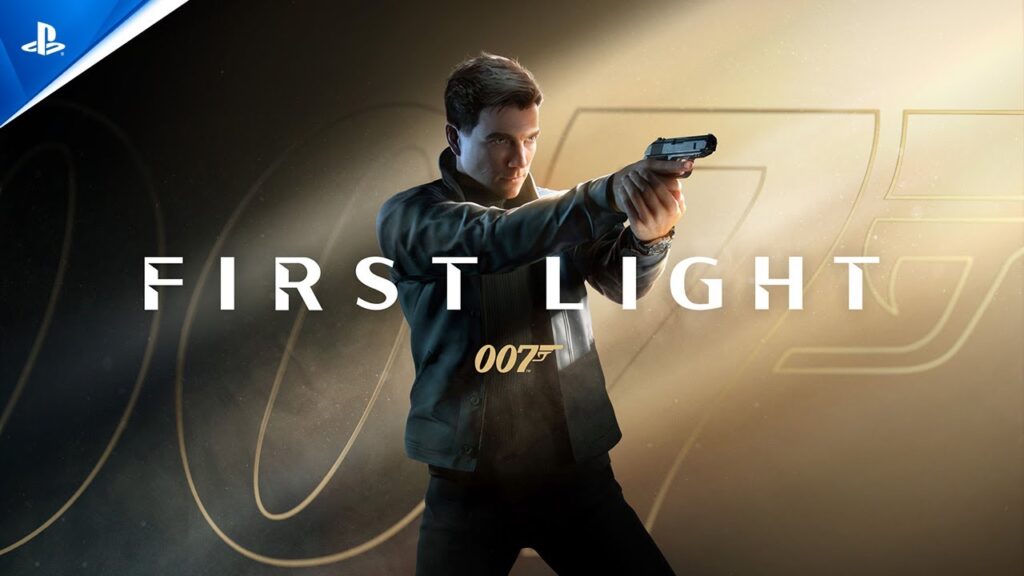
The narrative of 007 First Light is structured as a reimagined origin story, exploring how James Bond transitions from a talented but unrefined recruit into a disciplined intelligence operative.
Unlike traditional Bond narratives that focus on global threats and extravagant villains, this version leans into psychological development, institutional training, and early-field assignments. The story emphasizes Bond’s failures, learning curves, and moral ambiguity.
Themes of trust, loyalty, and identity are central. The game explores how espionage shapes personality, particularly the emotional cost of operating in deception-heavy environments.
Supporting characters from MI6 training infrastructure and field command play a major role in shaping narrative direction. The presence of Q Branch is also more foundational than gadget-heavy, positioning it as a developing technological support system rather than a fully established armory.
The story structure appears episodic, with missions functioning as chapters in Bond’s transformation rather than isolated action set pieces.
007 First Light Graphics and Visual Design Review on PS5, Xbox, and PC
Visually, 007 First Light targets a cinematic realism style powered by IO Interactive’s modern Glacier engine evolution. Lighting design is one of its strongest elements, with emphasis on reflective surfaces, neon-lit urban environments, and highly detailed interior spaces.
On current-generation hardware such as PS5 and Xbox Series X, the game is designed to support multiple rendering modes, typically balancing fidelity and performance. PC builds are expected to offer scalable ray tracing options, higher frame ceilings, and advanced shadow rendering.
Character models are highly detailed, particularly facial animation systems which aim to capture subtle emotional cues during interrogation and dialogue scenes.
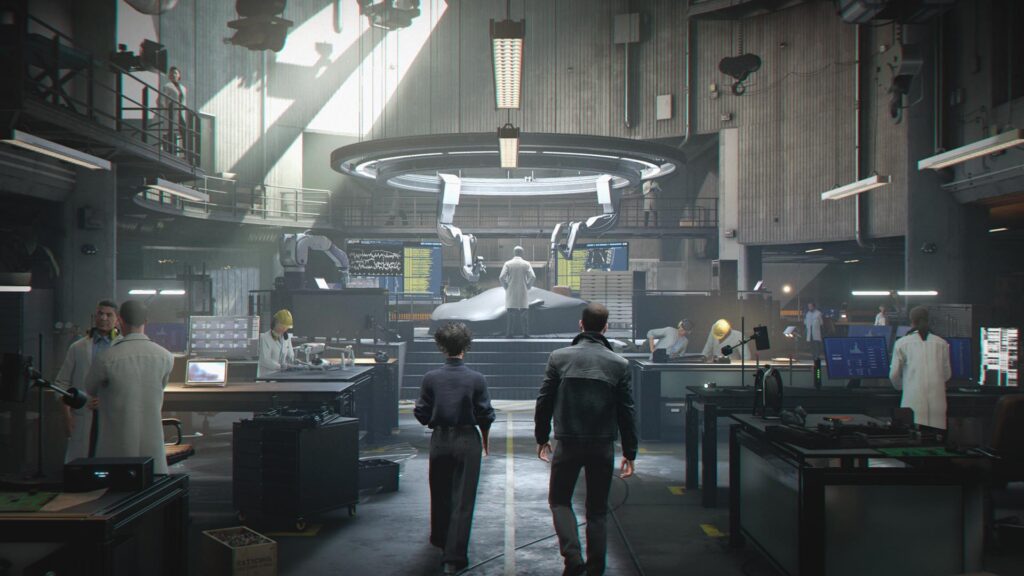
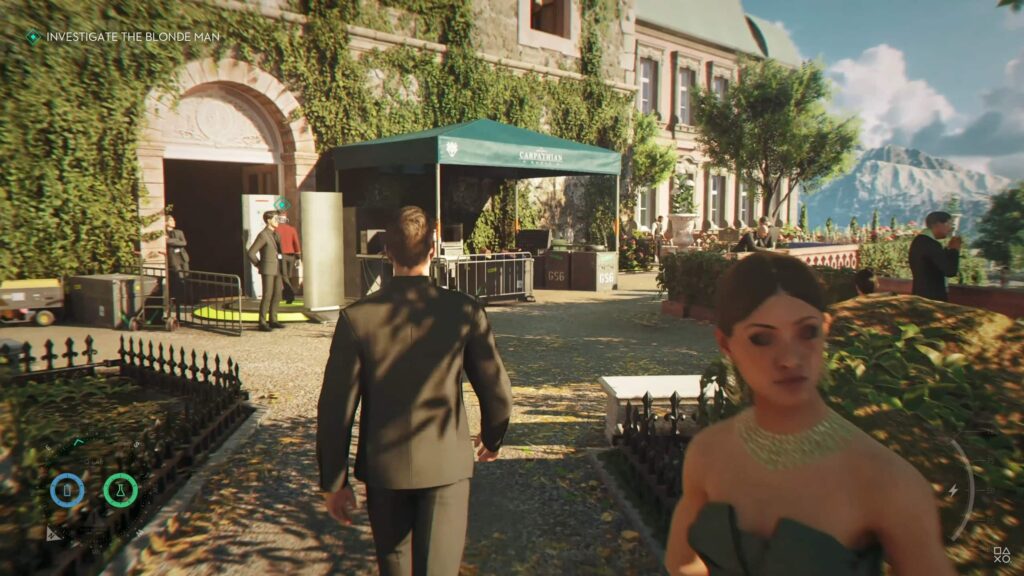
Environmental design is equally important, with mission locations ranging from diplomatic buildings and luxury hotels to industrial espionage facilities. Each environment is designed to support multiple infiltration routes and emergent gameplay scenarios.
Overall, the visual identity of 007 First Light leans more toward grounded realism than exaggerated cinematic spectacle, distinguishing it from more stylized spy games.
007 First Light Performance Review: Frame Rate, Bugs, and Optimization
Performance expectations for 007 First Light are closely tied to IO Interactive’s optimization history with the Hitman trilogy. The engine is known for maintaining stable performance even in complex simulation-heavy environments.
On consoles, performance modes are expected to prioritize 60 frames per second gameplay with dynamic resolution scaling, while fidelity modes focus on enhanced lighting and environmental detail.
Early technical previews suggest that optimization is a key development priority, particularly given the complexity of AI-driven crowd systems and large-scale stealth environments.
Potential issues may include occasional frame dips in densely populated areas or during scripted cinematic transitions. However, IO Interactive’s track record indicates that post-launch patches would likely address most stability concerns quickly.
Bug density is expected to be moderate at launch, with most issues related to AI pathfinding and environmental interaction edge cases rather than game-breaking glitches.
007 First Light Combat System Review: Gunplay, Melee, and Tactical Options
Combat in 007 First Light is intentionally designed to feel weighty, tactical, and situational. Gunplay is precise but not overly arcade-like, emphasizing controlled bursts, positioning, and cover usage.
Melee combat is contextual and animation-driven, allowing Bond to neutralize enemies in close quarters using environmental awareness and timing-based interactions.
Rather than encouraging constant firefights, the system discourages unnecessary engagement. Players are rewarded for avoiding detection or eliminating threats silently.
Tactical options include distraction tools, environmental hazards, and improvised combat strategies. For example, players can manipulate lighting, sabotage equipment, or use disguises to avoid direct confrontation entirely.
The combat system ultimately reinforces the identity of Bond as a strategic operative rather than a frontline soldier.
007 First Light Stealth Gameplay Review: Hitman-Style Mechanics Explained
Stealth design is arguably the most refined aspect of 007 First Light. Building on IO Interactive’s expertise from Hitman, the game uses layered AI behavior systems and reactive environments.
NPCs respond dynamically to player actions, including suspicious behavior, restricted zone entry, and disguise inconsistencies.
Disguises play a major role, but are no longer purely binary. Instead, suspicion levels fluctuate based on context, behavior, and environmental awareness.
Sound propagation, line-of-sight mechanics, and social blending systems all contribute to a deeply interconnected stealth ecosystem.
Players are encouraged to observe, plan, and execute with precision rather than rely on scripted stealth sequences.
007 First Light Missions Breakdown: Best and Worst Levels in the Campaign
Missions in 007 First Light vary significantly in structure and pacing. The strongest levels tend to be open-ended infiltration scenarios where players are given multiple entry points and objectives.
These standout missions often involve diplomatic events, high-security corporate espionage, or covert surveillance operations.
Less successful missions tend to lean into linear action sequences that restrict player freedom. These sections, while cinematic, temporarily reduce the sandbox appeal of the game.
The campaign structure alternates between slow-burn infiltration and high-tension escape scenarios, creating rhythm variation throughout the story.
Overall, mission design is strongest when it embraces systemic gameplay rather than scripted set pieces.
007 First Light Open-World or Linear Design? Level Structure Explained
007 First Light is not a traditional open-world game. Instead, it uses large-scale, self-contained mission environments that function as expansive sandbox levels.
Each mission area is densely populated with interactive systems, branching pathways, and layered objectives.
This structure allows for deep replayability without requiring a fully continuous open-world map.
The design philosophy aligns closely with immersive simulation principles rather than open-world checklist design. Players are free to explore within missions but are guided toward structured narrative progression between assignments.
007 First Light Gadget System Review: Q Branch Tools and Spy Equipment
The gadget system in 007 First Light reflects a more grounded interpretation of Q technology.
Rather than overwhelming players with an arsenal of exotic tools, gadgets are introduced gradually and integrated into mission design.
Tools may include hacking devices, surveillance trackers, audio disruption tools, and environmental scanners.
Each gadget has multiple uses, reinforcing creative problem-solving. For example, a single device might be used for distraction, infiltration, or evidence gathering depending on context.
The system encourages experimentation while maintaining balance, ensuring gadgets enhance rather than trivialize gameplay.
007 First Light Voice Acting and Character Performance Review
Voice acting plays a crucial role in grounding the narrative. Performances are designed to reflect realism, emotional restraint, and psychological tension rather than theatrical exaggeration.
James Bond is portrayed with a more youthful and less refined vocal tone, emphasizing growth and inexperience.
Supporting characters from intelligence agencies and field operations deliver grounded performances that enhance immersion.
Motion capture integration further strengthens character believability, particularly in interrogation scenes and high-stakes dialogue exchanges.
Overall, performance direction supports the game’s emphasis on realism and narrative maturity.

007 First Light vs Classic James Bond Games: How it Compares
Compared to earlier Bond titles such as GoldenEye-era shooters or linear action adaptations, 007 First Light represents a fundamental shift in design philosophy.
Older games focused heavily on direct combat and mission scripting, while this iteration prioritizes player-driven storytelling and stealth systems.
The comparison also highlights a generational shift in game design. Where classic Bond games emphasized spectacle, 007 First Light emphasizes simulation and consequence.
This makes it more comparable to modern stealth franchises than traditional licensed shooters.
007 First Light Difficulty Settings and Accessibility Features Explained
Difficulty in 007 First Light is expected to be highly customizable. Players can adjust enemy awareness, combat lethality, and stealth sensitivity.
Accessibility features likely include visual aids for stealth detection, simplified control schemes, and adjustable UI complexity.
The design philosophy supports both casual players seeking narrative immersion and experienced players looking for simulation-level challenge.
This flexibility ensures broad audience appeal without compromising core gameplay integrity.
007 First Light Length and Replay Value: is it Worth the Price?
The campaign length of 007 First Light is expected to fall within a moderate-to-long range depending on playstyle.
Players who engage deeply with stealth systems and mission replayability will experience significantly longer completion times.
Replay value is one of the game’s strongest features due to multiple mission approaches, disguise systems, and branching outcomes.
Each level can be revisited with different strategies, effectively multiplying content value without additional DLC.

007 First Light Final Verdict: Best Spy Game of the Generation?
007 First Light positions itself as one of the most ambitious spy games in modern development. Its combination of systemic stealth, narrative depth, and sandbox mission design makes it a strong contender in the genre.
While not without potential pacing issues, its strengths in gameplay freedom and immersive design suggest it could redefine modern espionage games.
If execution aligns with design intent, it may stand alongside the most influential stealth-action titles of the generation.
Frequently Asked Questions (FAQs)
- Is 007 First Light an open-world game?
No, it uses large sandbox mission levels rather than a fully open world. - Who is developing 007 First Light?
IO Interactive is the developer. - Is the game connected to Hitman?
It shares design philosophy with Hitman but is set in the James Bond universe. - Does the game focus more on stealth or action?
Stealth is the primary focus, with action as a secondary option. - Is James Bond an experienced agent in this game?
No, this version focuses on his early development as an MI6 recruit. - Are gadgets important in gameplay?
Yes, gadgets are essential tools for infiltration and problem-solving. - Does the game support multiple playstyles?
Yes, players can approach missions through stealth, disguise, or combat. - Is replayability high?
Yes, missions support multiple strategies and outcomes. - What platforms will it release on?
It is expected for modern consoles and PC. - Is it similar to classic Bond shooters?
No, it is more of a stealth sandbox than a traditional shooter.
Conclusion
007 First Light represents a modern reinterpretation of the James Bond mythos, shifting away from linear action toward systemic espionage gameplay. With its emphasis on stealth mechanics, narrative development, and immersive mission design, it aims to redefine what a spy game can be in the current generation of hardware.
Sources and Citations
- IO Interactive Official Website
https://www.ioi.dk/ - James Bond Franchise Overview (Wikipedia)
https://en.wikipedia.org/wiki/James_Bond - IO Interactive: Project 007 Announcement Coverage
https://www.ign.com/articles/project-007-james-bond-game-announced - Hitman Series Background (Wikipedia)
https://en.wikipedia.org/wiki/Hitman_(franchise) - General Industry Coverage of Spy Games
https://www.gamespot.com/
Recommended
- Facial Rigging in Blender: Comprehensive Guide for Beginners to Pros
- Ballistic Moon, the Developer Behind the “Until Dawn” Remake, Has Shut Down: What Happened to the Studio and the Future of the Game
- Dead as Disco is the Stylish Rhythm Beat-‘em-up that Mixes Batman Arkham Combat with Rock Star Energy
- Unlocking Cinematic Power: The Best 5 Blender Camera Add-ons to Elevate Your Workflow
- Blender vs Maya: A Comprehensive Comparison Across Industries
- Two Iconic Sci-Fi Universes Collide in Predator vs. Planet of the Apes – Release Date, Story, and What to Expect
- Tales of Eternia Remastered Appears on Age Rating Website: PEGI Listing Leak, Platforms, Release Date Rumors, and What It Could Mean
- Lies of P Sequel Enters Full Production: NEOWIZ Confirms “Vertical Slice” Milestone and Next Steps
- The Force Unleashed Star Sam Witwer Says He’d “Be Very Happy” to Shave His Head for Starkiller Return — Could Star Wars Finally Bring Him Back?
- Mastering Water Simulation in Unreal Engine: Techniques, Tools, and Best Practices



































































































