










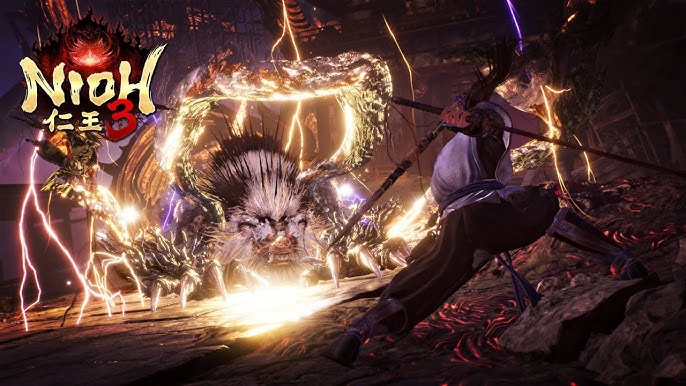
11 Nioh 3 tips can make all the difference as you face relentless Yokai in Team Ninja’s latest action RPG. Nioh 3 is a challenging soulslike set in war-torn Sengoku Japan, so mastering its deep combat systems is essential to survive and become the next shogun.
This beginner-friendly guide breaks down the crucial mechanics – from Samurai vs Ninja styles to Ki management, Guardian Spirits, and more – so you can confidently defeat the Yokai on your path to glory. We’ll also address common newbie mistakes (like neglecting Ki Pulse or over-committing attacks) and how to fix them, ensuring you hit the ground running in Nioh 3. Let’s dive into these tips and tricks to hone your skills and uphold the way of the warrior!
Nioh 3 beginner guide: Samurai vs Ninja styles explained
Nioh 3 features two distinct combat styles—Samurai and Ninja—that fundamentally alter gameplay. There is no class lock, allowing players to freely switch between them.
- Samurai Style: Focuses on power, defense, and deliberate movement. It utilizes heavy weapons, blocking, and parries. Players manage three stances (High, Mid, Low) and use strong attacks and Ki Pulse for stamina recovery. It excels in one-on-one duels and blocking to retaliate with heavy hits.
- Ninja Style: Prioritizes speed, agility, and evasion. It uses light weapons, rapid combos, aerial moves, and stealth. This style includes Ninjutsu tools (shuriken, bombs) and mobility options like Footstool Jump. attacking from behind deals double damage. It excels at crowd control, Ki damage, and hit-and-run tactics against yokai.
Mastering the use of both styles is essential for overcoming challenges.

How to switch between Samurai and Ninja styles mid-combo in Nioh 3
Switching styles has no cooldown or resource cost and is vital for high-level play. The controls allow for a seamless transition mid-combo by pressing the designated button during an attack, which triggers the other style’s combo ender. This functions like an animation cancel, extending attack chains and catching enemies off-guard.
A common strategy involves starting in Ninja style to deplete an enemy’s Ki with speed, then switching to Samurai style to inflict heavy damage with high-stance attacks while the enemy is staggered. After dealing damage, players can switch back to Ninja to dodge or maintain pressure.
Nioh 3 Deflect parry guide: timing, Ki recovery, and Arts Gauge
Deflect is the Samurai style’s advanced parry technique, performed by blocking at the precise moment of impact.
- Benefits: A successful Deflect negates damage, staggers the enemy, recovers Ki (stamina) rather than consuming it, and builds both the Arts and Ninjutsu Gauges.
- Execution: Hold guard and tap the stick toward the attack (for humans) or time the block (for yokai). Success is indicated by a blue Ki spark and a clang sound.
- Limitations: While effective against normal swings and boss attacks, it generally cannot parry grapples or red-glowing area-of-effect “burst” attacks, which should be dodged.
Arts Proficiency in Nioh 3: how to boost Strong Attacks and Martial Arts
Arts Proficiency is a Samurai mechanic tracked by a white circular meter. The gauge fills as the player lands light attacks, heavy attacks, and Martial Arts.
- Effect: When full, the gauge lights up, significantly powering up the next Strong Attack or Martial Art. This buffed attack deals massive Ki and health damage.
- Strategy: Players should vary their combos to maximize effect. Once the gauge is full, use the charged attack immediately or, if the current enemy is weak, switch targets to use the powerful hit on a fresh foe.
- Optimization: Equipment can increase proficiency gain rates. This system provides a burst damage option to shorten fights.
Ki Pulse in Nioh 3: how to recover stamina after attacks
Ki Pulse is a mechanic used to recover Ki (stamina) expended during attacks.
- Execution: Tap the pulse button (R1/RB) after an attack when light wisps gather around the character or the gauge peaks.
- Function: It restores a portion of spent stamina, allowing for longer combos and sustained defense. It is crucial for Samurai style; while Ninja style technically uses “Mist,” Ki Pulse still functions with heavy Ninja weapons.
- Purification: Ki Pulsing within dark fog patches (Yokai realms) dissipates the energy that slows Ki regeneration.
- Advanced Use: Mastering the timing prevents exhaustion. Combining a Ki Pulse with a stance switch or dodge (Flux) yields even greater Ki recovery.

Best stances in Nioh 3: high stance vs mid stance vs low stance
Samurai style combat revolves around three stances that alter weapon movesets and balance power against speed.
- High Stance: The most aggressive posture, offering the strongest attacks and highest Ki damage. It is slower, consumes more Ki, and has longer recovery times, making it best for punishing staggered enemies or starting fights with powerful openers.
- Mid Stance: An all-rounder stance providing balanced speed, damage, and defense. It is ideal for dueling, offers easier blocking and parrying, and serves as a safe default for learning combos.
- Low Stance: A quick, evasive posture with fast attacks and the lowest Ki consumption. It features the best dodge recovery and is suited for fighting groups, building status effects, or safely poking dangerous foes.
Mastering stance switching through skills like Flux allows players to restore extra Ki and adapt to shifting battle conditions. Some weapons, such as the Switchglaive, change their physical form based on the active stance.
Mist in Nioh 3 Ninja style: clone tricks for safe disengages
Ninja style replaces the Samurai’s Ki Pulse with an ability called Mist. Triggered by tapping the pulse button after a combo, Mist creates a temporary ghostly afterimage. This decoy draws enemy attention, allowing players to safely reposition or disengage. While it does not restore stamina, Ninja attacks naturally consume less Ki, and the ability can be used offensively to make enemies whiff attacks. Additionally, Mist purifies Yokai corruption pools. It is a vital survival tool for hit-and-run tactics, though the clone is short-lived and may not deceive all advanced enemies.
Evade timing in Nioh 3: perfect dodges for Ki and gauge recharge
Ninja style features an upgraded Evade that rewards precise timing. Executing a dodge exactly as an attack connects triggers a “perfect dodge,” providing a large invincibility window, recovering Ki, and refilling Ninjutsu and Arts gauges. Unlike standard dodges that have a brief pause after two rolls, a perfect Evade “resets” the character, allowing for infinite consecutive dodges. Success is signaled by a flash or sound cue. Mastering this allows Ninjas to maintain relentless pressure and turn defensive maneuvers into offensive resource gains.

Footstool Jump in Nioh 3: how to stagger enemies and land back attacks
The Footstool Jump is a Ninja-exclusive skill that allows players to vault over an enemy’s head. Unlocked via the Ninja skill tree, it acts as both a gap-closer and a setup for back attacks, which deal double damage in Ninja style. By leaping onto and over a foe, the player briefly staggers them and lands directly behind them. It also functions as a defensive tool to escape encirclement or vault over certain frontal attacks. While it is ineffective against massive bosses and requires close range, it is highly effective for punishing human-sized targets.
Guardian Spirits in Nioh 3: best combat powers and exploration shortcuts
Guardian Spirits are spectral companions that provide passive buffs, specialized combat skills, and the ability to activate Living Artifact mode. Each spirit has a unique active power, such as elemental attacks or defensive bubbles, which can be triggered on a cooldown. New to Nioh 3 are exploration abilities; specific spirits allow players to leap over wide gaps, destroy barriers, or unlock “Spirit Veins” to reach secret areas and shortcuts.
Players can swap spirits at shrines to match their needs, with some spirits even changing their combat skills based on whether the player is currently using Samurai or Ninja style. Beginners should prioritize spirits with health or Ki buffs, while all players should look for environmental cues—like glowing markers—that indicate where a spirit’s traversal power can be used to find hidden loot and Kodamas.

Living Artifact in Nioh 3: when to use your Guardian Spirit weapon
Living Artifact is an ultimate ability in Nioh 3 that fuses your Guardian Spirit with your weapon, providing a temporary boost to power and defense. While active, your weapon gains elemental effects, your damage increases significantly, you do not flinch from hits, and you receive reduced damage. Most notably, you have infinite Ki for the duration of the mode.
- Activation: To use this mode, you must fill the Spirit Gauge (Amrita Gauge) by collecting yellow Amrita from enemies or items. Once full, activating it causes a unique Living Artifact bar to begin depleting. This bar replaces your Ki and decreases as you perform actions or take damage.
- Strategic Usage: It is best utilized during boss fights, when finishing off low-health enemies safely, or when overwhelmed by hordes. Because taking hits drains the gauge instead of your health, it serves as a “panic button” or a “power play” to turn the tide of battle.
- Efficiency Tips: * Avoid letting a full gauge go to waste by using it before collecting large Amrita rewards.
- Be mindful that ending the mode leaves your gauge empty and temporarily removes your Guardian Spirit’s passive benefits.
- For maximum impact, combine Living Artifact with a full Arts Proficiency gauge to unleash a highly powered heavy attack.
- Spirit Variation: Every Guardian Spirit offers different specific bonuses during Living Artifact, such as life steal or unique elemental damage, so checking individual spirit stats is recommended.
Onmyo Box in Nioh 3: talismans, soul cores, and Crucible Wraith rewards
The Onmyo Box is a repository and loadout system in Nioh 3 that integrates Onmyo magic, Soul Cores, and yokai summoning. It allows players to generate talismans and call upon yokai to assist in battle.
- Soul Cores: Crystallized souls dropped by defeated yokai that contain their unique abilities. Unlike previous games, these are stored within the Onmyo Box rather than attuned to a Guardian.
- Crucible Wraiths: Powerful optional mini-bosses found in levels. Defeating a specific Crucible Wraith activates its corresponding Soul Core, granting a Summoning Talisman that allows the player to command that yokai.
- Yin and Yang Positions: A shrine-accessible menu for slotting cores into two categories:
- Yin (Onmyo magic): Provides consumable spells or buffs based on the yokai’s element (e.g., a fire core yielding fireball talismans).
- Yang (Summon): Equips a talisman to summon the yokai or perform its signature move.
- Talismans and Usage: Magic is simplified by linking it directly to cores. Equipping talismans requires Onmyo capacity based on the Magic stat. These items are consumed upon use but refresh at shrines.
- Soul Core Enhancement: Unwanted or duplicate cores can be disposed of for Soul Fragments, a resource used to strengthen active cores by increasing talisman power or usage counts.
In practice, this system expands the player’s toolkit by turning enemy powers into usable abilities. Hunting the 50+ Crucible Wraiths is essential for unlocking the full potential of soul cores, obtaining Amrita, and finding unique gear. Beginners are encouraged to start with basic elemental talismans to exploit enemy weaknesses and eventually progress to summoning yokai for assistance during difficult boss encounters.

How to survive the Crucible in Nioh 3 and cleanse yokai zones
The Crucible is an area of deep yokai corruption where environment colors desaturate and Ki recovery slows to a crawl while enemies become more aggressive. To survive, you must play defensively by blocking more frequently, using Mist or quick Evades to avoid combos, and attempting to lure enemies out of the zone.
Cleansing the Crucible requires defeating the source of corruption, typically a powerful Crucible Wraith or a boss yokai. Once this anchor is destroyed, the dark energy dissipates, lesser yokai lose their buffs, and normal Ki regeneration returns. You can also use Ki Pulse to purify smaller puddles, utilize Onmyo magic like Barrier Talismans or Sacred Water to boost Ki recovery, and activate Shrines within the zone to cleanse the immediate vicinity. Living Artifact mode is particularly useful here as it negates Ki concerns while active. Cleansing these areas is rewarding, often dropping loot like Soul Cores and unlocking previously blocked paths or shortcuts.
How to use gestures on Nurikabe and Mujina in Nioh 3 for free loot
Nurikabe and Mujina are trick yokai that can be bypassed or pacified using Gestures for free rewards. A Mujina mimics your appearance after emerging from a treasure chest; you must quickly perform the same Gesture it does to receive the loot without a fight. Failing to mirror it, taking too long, or attacking will force a combat encounter.
Nurikabe are sentient walls with eyes that guard secret areas. To pass peacefully, you must perform a Gesture of the correct “mood” category: blue (friendly), yellow (neutral), or red (aggressive). You have two chances to guess the correct color before the Nurikabe becomes hostile on the third interaction. Nearby bloody graves may provide hints regarding which gesture categories caused other players to fail. Access your Gesture menu using the default R1+Start shortcut to resolve these encounters peacefully and save resources.
Revenants and graves in Nioh 3: farming gear with Bloody and Benevolent Graves
Graves are asynchronous multiplayer features that allow you to interact with the remnants of other players. Red Bloody Graves allow you to summon a Revenant, a computer-controlled phantom of a fallen warrior. Defeating them yields Glory and a chance to obtain the specific gear they were wearing, making them excellent for farming high-quality equipment. If many players die in a single mission, a giant Revenant boss called the Bloodedge Demon may spawn, offering a massive jackpot of rare items upon defeat.
Blue Benevolent Graves allow you to summon an AI ally to help you in combat by spending Ochoko Cups, which are earned from missions or by defeating red Revenants. These friendly spirits follow you and distract enemies until their health or time limit expires. Utilizing both grave types allows you to efficiently farm gear from fallen foes or receive assistance from the spirits of fellow warriors when facing difficult challenges.

Best early weapons for beginners in Nioh 3 (katana, odachi, kusarigama, claws)
Nioh 3 provides various weapon types with distinct scaling and movesets. Beginners should consider starting with weapons that offer a balance of effectiveness and forgiveness.
- Katana (Sword): This is the most versatile and balanced weapon, featuring straightforward combos and decent speed. Its Mid stance is ideal for practicing core mechanics like Ki Pulse and deflects. It scales with Heart, allowing players to increase both damage and Ki (stamina) simultaneously, which aids survivability.
- Odachi: A massive greatsword that excels in range and crowd control. Its long reach allows for safer positioning, and its heavy weight reliably staggers smaller yokai. It scales with Strength and Stamina, encouraging the use of heavier armor. Players must be mindful of its high Ki consumption.
- Kusarigama: A chain-sickle that provides the longest reach among Ninja weapons. It allows for mid-range attacks and can pull enemies closer or pull the player toward larger foes. It scales with Dexterity, making it perfect for Ninja style play and applying status effects.
- Claws (Talons): These fast fist weapons belong to the Ninja style and are designed for relentless offense and long combos. While they have short range, they build Arts Proficiency quickly and allow for safe dodge-cancels. They typically scale with Skill and Dexterity.
While players can carry two weapons and experiment with all types, these four provide a solid foundation for mastering fundamental skills.
Nioh 3 co-op tips: how multiplayer works and what to do at shrines
Multiplayer in Nioh 3 allows players to tackle missions with assistance through two primary systems.
- Summon Visitor: Accessed at shrines by using an item like an Ochoko Cup, this system brings a random player or a friend into the host’s game as an ally. The visitor remains until a mission is completed or someone dies.
- Expedition Mode: Accessible via the main menu or Torii Gate, this mode allows up to three players to form a party and play through missions from the start. It features a shared life bar with limited revives, facilitating simultaneous exploration.
Shrines in Multiplayer
Shrines serve as safe havens where players can level up, manage Guardian Spirits, and equip spells. In co-op, activating a shrine refills health and elixirs for everyone and sets a checkpoint. In Summon Visitor mode, players can use shrines to re-summon fallen partners.
Multiplayer Mechanics
- Difficulty Scaling: Enemy health and damage increase based on the number of players to maintain challenge.
- Rewards and Drops: Loot is individualized; each player sees their own drops. Visitors earn extra Amrita and Glory for assisting.
- Coordination: Players should communicate to balance roles, such as one player drawing attention while the other attacks from behind. Host etiquette involves clearing paths before summoning, while visitors are encouraged to use friendly gestures upon arrival.
Would you like me to find more details on how the shared life bar in Expedition mode scales with the number of players?

Frequently Asked Questions (FAQs)
Q: Should I stick to one combat style (Samurai or Ninja), or swap between them?
A: Beginners often mistakenly stick to one style. Nioh 3 is designed for fluid switching. Samurai style offers heavy damage and defense, while Ninja style provides speed and Ki depletion. Combining them—such as using Ninja style to drain Ki and Samurai style to deal damage—greatly enhances effectiveness.
Q: Why do I keep running out of Ki (stamina) so fast, and how can I fix it?
A: This is usually caused by over-extending combos or failing to use the Ki Pulse (R1/RB). Mastering the timing of Ki Pulse is essential for stamina recovery. Additionally, avoid panic-spamming dodges and consider investing in the “Heart” stat or using items like Sacred Water and Barrier Talismans.
Q: I can’t consistently block or dodge enemy attacks – what am I doing wrong?
A: It is often a timing or weight issue.
- Blocking: Aim for a “Deflect” by blocking at the last moment to avoid stamina loss and stagger enemies.
- Dodging: Many enemies have delayed swings; wait for the attack rather than dodging early.
- Equipment: Ensure your equipment weight isn’t too high, as heavy armor slows your movement. Note that grabs and “burst” attacks (red aura) must be dodged or countered, not blocked.
Q: These dark yokai zones (Crucible) destroy me by draining my Ki. How do I deal with them?
A: Don’t try to fight everything inside. Focus on killing the Crucible Wraith or core yokai causing the zone to cleanse it immediately. Play defensively with short combos and use Barrier Talismans to counter the Ki recovery debuff.
Q: Every time I try a long combo on a yokai, I get interrupted and smacked. What should I do?
A: You must deplete an enemy’s Ki before committing to long combos. If their Ki bar isn’t empty, they can “hyper-armour” through your hits. Use high-break moves to stun them first, then unleash your full combo once they are winded.
Q: I’m not doing enough damage – fights take forever. How can I increase my DPS (damage per second)?
A: Ensure your weapon level is up to date at the blacksmith. To maximize damage:
- Use Arts Proficiency for heavy attack boosts in Samurai style.
- Attack from behind for double damage in Ninja style.
- Target elemental weaknesses and keep your main scaling stats (Heart, Dex, etc.) leveled.
Q: Which stats should I focus on leveling up early in the game?
A: Balance is key for beginners.
- Level your weapon’s primary scaling stat for damage.
- Invest at least 10 points into Heart (Ki) and Body (Health) for survivability.
- Allocate skill points early into fundamentals like Flux and Ki Pulse: Man/Heaven/Earth.
Q: What happens when I die, and how do I get my Amrita back?
A: Your Amrita and Guardian Spirit stay at your grave. You must retrieve them without dying again, or the Amrita is lost. Use a Summoner’s Candle to recover them remotely if the area is too dangerous.
Q: I picked up some Soul Cores – why can’t I use yokai abilities yet?
A: Soul Cores must first be purified at a shrine. While passive “Yin” abilities are usually available immediately, “Yang” (summoning) abilities often require you to defeat a specific Crucible Wraith to unlock the corresponding Summoning Talisman.
Q: Can I customize my character’s hair or appearance further, or use mods like PixelHair for new hairstyles?
A: You can change appearance at the Hidden Teahouse or main menu, but you are limited to in-game options. Official mod support for custom hairstyles does not exist. However, 3D artists use external tools like PixelHair and The View Keeper by Yelzkizi for character design in Blender and Unreal Engine, though these are for creative projects rather than in-game mods.
Conclusion
Nioh 3 presents a significant challenge for beginners due to its depth and merciless enemies. This guide provides 11 essential tips to help players succeed, covering the mastery of dual Samurai and Ninja styles, mid-combo switching, and the timing of Deflect parries and Ki Pulses for stamina management. Players have learned to use the Arts Proficiency system for damage, select the appropriate combat stance, and utilize Ninja-specific moves like Mist clones, perfect Evades, and Footstool Jumps. For Samurai, the Guardian Spirit and Living Artifact serve as critical tools for difficult encounters.
The guide also simplifies exploration and progression by explaining the Onmyo Box, Soul Cores, and Wraiths, along with strategies for surviving Crucible dark zones and using gestures to gain loot from Nurikabe and Mujina. Additionally, it provides methods for farming gear from Revenant graves, weapon recommendations, and instructions for seeking co-op assistance at shrines.
Becoming a master in Nioh 3 is a gradual process that requires practicing fundamentals before advancing to complex techniques. While defeats are expected, perseverance allows players to transform from novices into formidable warriors capable of conquering the demon hordes and claiming the title of shogun.
sources and citation
- Wccftech — “Enter the Dojo: Mastering Nioh 3 Combat and Arts Proficiency Flow”
- Game8 — “Should You Use Ninja or Samurai? | Nioh 3”
- Team NINJA (Official) — “Nioh 3 System Introduction (SYSTEM)”
- Radio Times — “How to emote in Nioh 3: Gestures explained”
- EgamersWorld — “Nioh 3 Weapon Guide: The Best Samurai & Ninja Weapons Tier List”
- GameTyrant — “Every Status Effect in Nioh 3” (includes Crucible-related effects/notes)
- Fextralife Wiki — “Nioh 3 Wiki” (hub)
- Fextralife Wiki — “Onmyo Box”
- Fextralife Wiki — “Soul Cores”
- Reddit (r/Nioh) — co-op discussion thread
- Reddit (r/Nioh) — gestures/Mujina tips thread
- Yelzkizi Blog — Hair curves + PixelHair (includes UE + future Geo Nodes notes)
- Yelzkizi Blog — “Blender Hair Curves & PixelHair” (PixelHair overview guide)
- Yelzkizi Blog — “What is The View Keeper?”
- Yelzkizi Blog — “A Beginner’s Guide to The View Keeper Add-on for Blender”
- Yelzkizi — “The View Keeper” product page
Recommended
- Downloading 3D Models from Sketchfab: A Step-by-Step Guide
- Top Ways to Make 3D Characters: Blender, FaceGen, Metahuman, and CC3 Compared
- How to Avoid Hair Intersecting with Character Faces
- Can I Improve My Metahuman in Blender? A Comprehensive Guide
- Create Your Own Metahuman in Unreal Engine 5: Step-by-Step Tutorial for Beginners
- Blender Camera Angles: Capturing the Perfect Shot with The View Keeper
- Mastering Customization of PixelHair Assets for Any 3D Character in Blender
- What Is Nvidia Omniverse? A Complete Guide to the Future of Collaborative 3D Creation
- How to Create Realistic Hair Clumping in Blender: A Step-by-Step Guide
- How do I create a camera shake effect in Blender?