









Mewgenics beginner guide to the combat-and-breeding roguelite loop
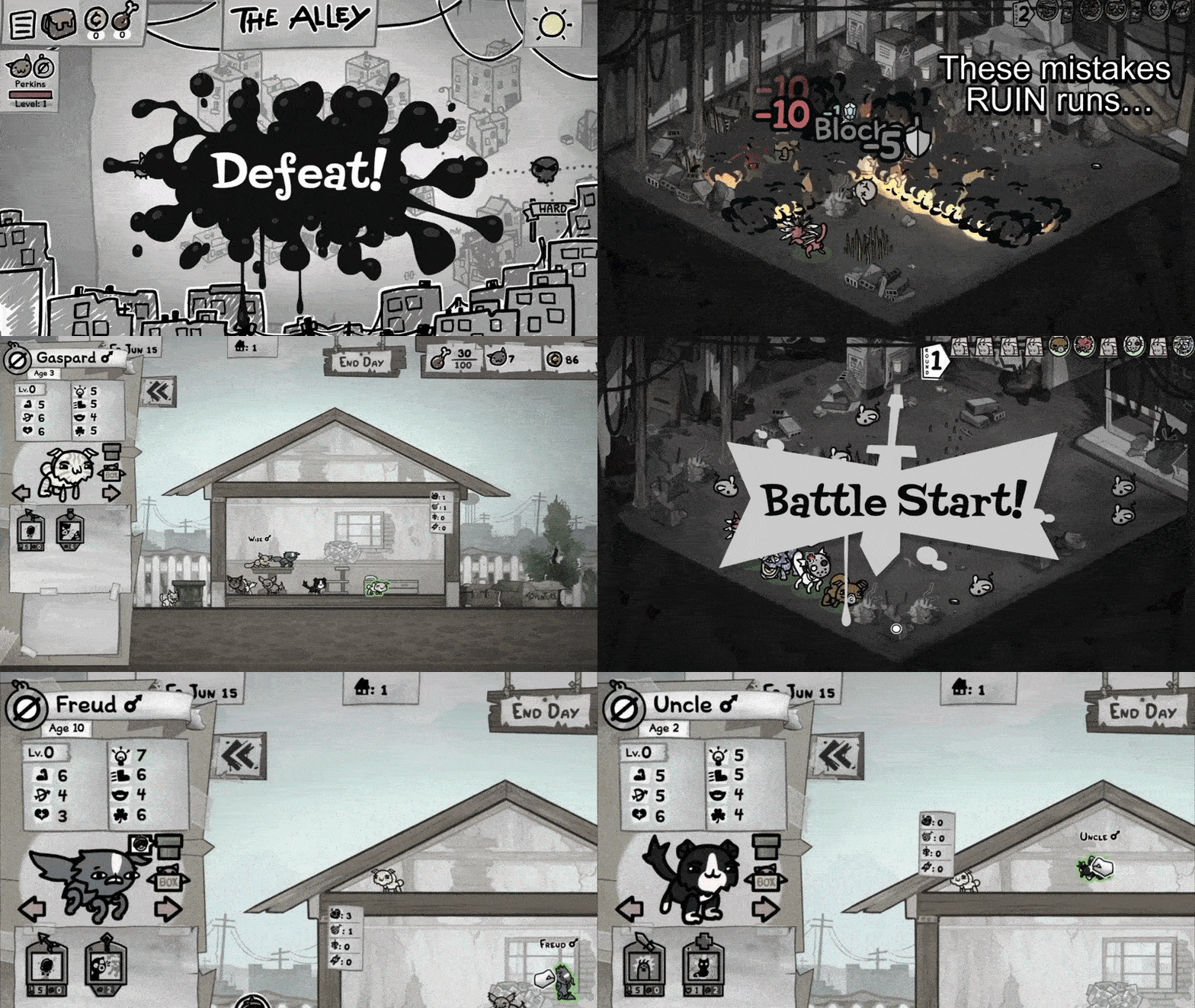
Mewgenics features a loop where players manage a home base, form a party of up to four adult cats, and engage in tactical turn-based battles and events. Survival is key, as cats “retire” after a run and cannot adventure again. Instead, they return home to breed the next generation. Breeding occurs at the end of each in-game day between male and female cats in the same room, resulting in kittens that inherit parent traits, stats, and skills. Kittens mature in one day to become the next adventurers.
The home base starts as a single room that can be expanded and furnished. Furniture quality affects breeding and health, while poor sanitation negatively impacts cats. Players must manage stray cats by adopting, breeding, or discarding them to control population. Two vital resources, food and coin, must be managed; food prevents starvation (one unit per cat daily) and coins purchase gear. These are earned through adventuring, meaning players must frequent the world to avoid running out of supplies. Progress is incremental, with failed runs unlocking new classes, areas, and stronger bloodlines.
Best starter team composition in Mewgenics for your first runs
A balanced team is recommended for beginners to cover different RPG roles. While there are over 10 classes (collars), players start with basics. A safe, effective party for Act 1 includes:
- Fighter: A high-strength melee dealer with good mobility for frontline combat.
- Hunter: A high-dexterity ranged DPS that uses traps and “marks” to stay safe while dealing damage.
- Cleric: A vital support role focused on healing and removing debuffs.
- Tank: A high-constitution defender that absorbs damage to protect fragile allies.
This composition provides a mix of melee, range, defense, and healing. As players unlock more complex classes like the Necromancer or Monk, they can experiment, but focusing on fundamental roles and stats is advised for early success.
Always bring a Cleric in Mewgenics for healing and run stability
The Cleric is the only dedicated healer and is considered the backbone of a successful run. While cats can eat food found on the ground for minimal HP, Clerics provide reliable healing, debuff cleansing, and resurrection abilities. This prevents the accumulation of damage and status ailments like poison or burns that can end a run through attrition.
Clerics offer a safety net by allowing players to recover from mistakes or unlucky hits. Some builds can even turn healing into offensive power. Without a Cleric, players must rely on luck for item drops or post-battle auto-heals. It is recommended to unlock the Cleric collar by beating Act 1’s Alley and visiting the NPC “Butch,” then including one in every party to significantly increase survival chances.

Mewgenics positioning tips for back attacks, safety, and turn planning
Strategic movement on the grid-based maps is vital for success in Mewgenics. Players should prioritize back attacks, which provide a +25% damage bonus when attacking an enemy from directly behind. Maneuvering faster cats or those with dash abilities into the rear arc of a foe can end fights faster. Conversely, players must protect their own cats’ backs by facing enemies or using walls. Terrain also offers defensive benefits: tall grass provides a 50% dodge chance, though it is flammable and can be removed by wind. Scrap piles may provide armor pickups.
To avoid being overwhelmed, cats should avoid being surrounded or cornered, as enemies can use knockback combos to pile on damage. Utilizing chokepoints like doorways allows a Tank or Fighter to engage fewer enemies at once while ranged cats provide support. Players can use the Ctrl key or middle mouse button to access an overhead tactical view to clarify unit positions and facing. Planning turns around the initiative bar (Speed stats) is essential; cats can gang up on high-value targets before they act or pull back wounded allies from fast-acting threats. Positioning also dictates the safety of collecting mid-fight pickups like food or mana.
How to use weather effects and terrain hazards in Mewgenics fights
The environment is dynamic and features elemental tile interactions that can be leveraged or avoided:
- Fire: Deals damage over time and destroys grass/wood but can be extinguished by water.
- Water: Slows movement and makes units “wet,” providing fire immunity but increasing vulnerability to cold/freezing. Water also conducts electricity to adjacent units.
- Ice: Created when cold effects hit water, causing units to slip and slide when hit.
Interactive objects offer further tactical options. Rocks can be pushed into enemies for damage, while cacti provide water puddles in the desert to counter debuffs. Trash bags can be broken for loot like meat or scrap armor. Players should also adapt to global weather modifiers (Acts), such as the Heat Wave in Act 2, which prevents auto-healing and reduces healing effectiveness. These can be countered with specific items like the Water Feeder or environmental interactions like “wet” status. Environmental damage often ignores enemy defenses, making it a potent tool against armored foes.

Best ability synergies in Mewgenics and how to draft combos on level-up
When cats level up, players draft one of four random abilities. Building a powerful team requires drafting for synergy:
- Strategy Reinforcement: Pair abilities that trigger off each other, such as a Cleric’s heal triggering a Necromancer’s passive damage.
- Class Pairings: Use complementary roles, like a Tank with thorns paired with a healing Cleric, or a Fighter using knockbacks to push enemies into a Hunter’s traps.
- Universal Skills: Prioritize high-value abilities like “Charm” (mind control), multi-attacks, or crowd control (stuns/slows).
- Inheritance: Kittens can inherit skills from different-classed parents, allowing for powerful hybrid combinations like a Tank with innate healing spells.
Defensive thorn build in Mewgenics and why thorns punish melee enemies
A “thorns” build focuses on reflecting damage back at attackers. This reflected damage ignores enemy armor and resistances, making it highly effective against melee-heavy enemies and high-HP bosses. To optimize this build:
- Build: Choose a cat with high Constitution and defensive traits (e.g., “Retaliator”). Equip a Tank collar and gear like Spiked Armor.
- Positioning: Place the thorn tank at the front to draw aggro and funnel enemies into a chokepoint.
- Support: Pair the tank with a Cleric to sustain their health through the reflected hits.
- Limitations: Thorns do not trigger on status effect damage (bleed/fire) or non-attack spells. Players should still maintain some direct DPS to handle ranged enemies or foes that ignore the tank.
How to manage items, loadouts, and gear swaps during a Mewgenics run
Loot management is a central pillar of Mewgenics. Each cat possesses five equipment slots: three for armor (Head, Neck, and Face/Eyes), one for a weapon, and one for a trinket or consumable. Armor provides stat boosts and environmental effects, while weapons dictate basic attack parameters. Items can belong to hidden sets; equipping three items from the same set activates a special set bonus. While beginners should prioritize matching gear to a cat’s primary stats (e.g., Dexterity for Hunters), completing sets provides significant power spikes.
Consumables should be used frequently rather than hoarded. Inventory space is limited, and players must donate cats to unlock storage upgrades. Items left on the ground at the end of a day are lost, and any items exceeding storage limits at home are discarded. Equipment is subject to a “Worn” mechanic: gear brought back from a run becomes worn, and using it on subsequent runs carries a 50% chance of breaking. This encourages gear rotation and prevents over-reliance on a single legendary item.
Strategically, players should swap gear mid-run outside of combat to immediately utilize new loot. It is critical to equip items before moving on the map, as gear management during battle consumes a turn. Excess gear should be trashed, sold, or donated to maintain a tidy inventory and clear space for superior items.
Hard route rewards in Mewgenics and when the risk is worth it
Once a branch of a zone is cleared on normal difficulty, players can access “Hard” versions of that route on subsequent runs. These paths are visually distinguished by a grey skull icon and contain tougher enemy combinations, higher levels, and additional minibosses.
Despite the risk of party wipes, hard routes provide superior rewards:
- High-end items and valuable item sets.
- More frequent positive outcomes from special events.
- Large money bags (coin) and furniture boxes for home base upgrades.
- Faster class unlocks and quest items.
Deciding to take a hard route requires evaluating the team’s condition. Players should consider the following signs of readiness:
- Consistently clearing normal routes without incapacitation or heavy injury.
- Possessing surplus healing items or strong sustain, such as a Cleric with high mana.
- Cats reaching the level cap for the current Act (e.g., level 4–5 in Act 1).
- Having a contingency plan, such as a Revive spell.
- Having a backup generation of kittens at home in case the current party is lost.
If a team barely survives a normal boss, players should opt to “Go Home” rather than “Continue” to the hard branch.
Skill checks in Mewgenics and how to avoid run-ending bad rolls
Random events, marked by “?” scroll icons, involve skill checks tied to a cat’s stats. Choosing the option corresponding to a cat’s highest stat increases the probability of success. The Luck stat also plays a silent but significant role in these outcomes, affecting everything from event success rates to critical hits.
Events carry high stakes and can result in the following outcomes:
| Possible Positive Outcomes (Success) | Possible Negative Outcomes (Failure) |
|---|---|
| Gain extra food or coins | Injury to a cat (stat loss until healed) |
| Receive random loot or items | Cursed/Parasite item stuck on cat |
| Party receives healing or a full heal | Start next battle with HP or Mana penalty |
| Cat receives a positive mutation | Cat suffers a status ailment (blind, poison) |
| Recruit a friendly minion ally | A cat is lost (permanent removal from roster) |
Because failure can lead to the permanent loss of a cat outside of combat, players should be conservative. If the risk is too high or the team is fragile, skipping an optional event is often the safest strategy. Players can mitigate bad RNG by carrying items like Super Bandages or Revive spells and by learning which specific events require high Intelligence or Strength through repeated play. When in doubt, choosing to walk away prevents unnecessary gambles that could end a successful run.

When to go home early in Mewgenics to save cats, loot, and momentum
Knowing when to end an adventure is a vital strategic decision in Mewgenics due to the absence of manual saves and anti-save-scumming measures. Returning home at the right time ensures you bank progress rather than losing it.
Choosing to “Go Home” safely after defeating a zone boss allows surviving cats to retire and preserves all collected loot, coins, and kittens. This does not hinder progression, as boss kills still unlock new areas for future runs. Conversely, dying or quitting mid-run results in the permanent loss of those cats and all acquired loot.
Saving cats for breeding is often more valuable than continuing a run. Retired survivors become breeders that pass on their improved stats and skills to offspring. Pushing a high-level cat into a dangerous situation risks losing both a powerful fighter and its potential genetic benefits for the next generation.
Banking earnings like ultra-rare items or large amounts of coin is essential for upgrading the house and gearing up new cats. If a team is low on food or heavily injured, ending the run at a boss checkpoint secures these resources. Even short runs contribute to campaign momentum by unlocking upgrades and attracting new stray cats.
In the early game, intentional short runs are recommended to grind resources. If you are low on food or relying on weak strays, clearing a single section and returning home guarantees a supply of coins and food. This “cut your losses” approach allows you to rebuild even if your best cats have previously died.
The psychological drive to push forward can lead to “greed” that jeopardizes a run. If the team’s condition is poor, such as barely defeating a boss with 1 HP remaining, continuing is likely suicide. Retreating smartly carries momentum forward, whereas a party wipe resets it. Mewgenics encourages accepting a retreat as a tactical necessity to ensure long-term victory.

Frequently Asked Questions (FAQs)
- What is the core gameplay loop of Mewgenics?
The loop involves battling through turn-based encounters with up to four cats, then returning home to breed survivors. Retired cats cannot be reused in combat but produce kittens that inherit traits, stats, and skills. Players adventure for loot and food, improve their lineage and base, and repeat the cycle to push further. - What is a good team composition for beginners in Mewgenics?
A balanced team is recommended, such as a Fighter (melee DPS), Hunter (ranged DPS), Cleric (healer), and Tank (defender). This provides damage, safety, healing, and durability. Avoiding a team of four fragile cats without a healer or tank is essential for survival. - Should I always include a Cleric on my run?
Yes, Clerics are considered the backbone of a team because they offer reliable healing and resurrection. While environmental food can provide some HP, a Cleric’s on-demand spells and debuff cures are vital for long fights and hard routes. - How do back attacks work and why are they important?
Attacking an enemy from directly behind deals +25% bonus damage. Successful back attacks require straight-line positioning behind the target’s rear arc. This allows players to kill enemies faster, which is a major tactical advantage. - How can I use terrain and weather to my advantage in fights?
Use tall grass for a 50% dodge chance and fire tiles to deal damage over time to enemies. Water tiles extinguish fires, slow movement, and conduct electricity, allowing for powerful lightning combos. Global weather like the Desert’s Heat Wave reduces healing, requiring players to carry counter-items or adjust their tactical speed. - What are some powerful ability synergies I should look out for?
- Healing + Damage Passive: Turning multi-target heals into AOE attacks via passives.
- Mark + Burst: Using a Hunter’s mark to double the damage of a heavy follow-up attack.
- Thorns + Tanking: Letting enemies kill themselves by hitting a thorns-equipped tank supported by a Cleric.
- Crowd Control + AOE: Immobilizing packs of enemies with stuns or roots before nuking them with area-of-effect spells.
- What is a thorn build and is it good for beginners?
A thorn build focuses on a Tank reflecting damage back at attackers, bypassing their armor. It is a very safe, low-risk strategy for beginners, especially against the melee-heavy mobs found in early acts. - How should I manage items and equipment during a run?
Use consumables generously to free inventory space and stay alive. Equip upgrades immediately outside of combat. Note that gear used during a run becomes “worn” and has a 50% chance to break if reused, so players should cycle through fresh gear regularly. - Are hard routes worth taking for better rewards?
They offer superior rewards, such as rare set items and big currency payouts, but only if the team is strong enough to handle tougher battles. If a party wipe occurs on a hard path, all loot and cats from that run are lost. - When should I end a run and return home early?
End a run when the party is injured, resources are low, or you have valuable items and genes you cannot afford to lose. “Go Home” options at boss checkpoints preserve cats and loot, maintaining campaign momentum.
Conclusion
Success in Mewgenics requires preparation and knowing your limits. Focus on balanced team building, utilizing environmental combos, and drafting synergistic skills. Manage gear carefully, avoid hoarding, and respect the risks of hard routes and random events. Retreating at a prudent time preserves your cats and loot, ensuring the long-term growth of your clowder.
Citations
- Polygon — Giovanni Colantonio, “10 Mewgenics beginner’s tips and tricks before you start” (Feb 10, 2026)
- https://www.polygon.com/mewgenics-beginners-tips-tricks-guide/
- IGN — Parker Johnson et al., “Early Game Breeding Tips and Guide” (IGN Mewgenics Wiki, Feb 11, 2026)
- https://www.ign.com/wikis/mewgenics/Early_Game_Breeding_Tips_and_Guide
- GamesRadar+ — Scott McCrae, “Mewgenics breeding guide and how to breed your cats” (Feb 11, 2026)
- https://www.gamesradar.com/games/roguelike/mewgenics-breeding-guide/
- Steam Community — Sebadam, “Breeding Basics” (Community Guide, Feb 10, 2026)
- https://steamcommunity.com/sharedfiles/filedetails/?id=3664011595
- GameRant — Somiya Adrees, “Mewgenics Cat Breeding Guide” (Feb 12, 2026)
- https://gamerant.com/mewgenics-breeding-guide-how-breed-cats/
- Ofzen and Computing — Sunny Kaushik, “How to Play Mewgenics (February 2026) Essential Beginner Guide” (Feb 14, 2026)
- https://www.ofzenandcomputing.com/mewgenics-home-management/
- https://www.ofzenandcomputing.com/mewgenics-stats-synergies-guide/
- https://www.ofzenandcomputing.com/mewgenics-class-guide/
- PC Gamer — Rory Norris & Robin Valentine, “Best Mewgenics classes and how to unlock all collars” (Feb 10, 2026)
- https://www.pcgamer.com/games/roguelike/mewgenics-classes-best-collars/
- GamerBlurb — “Mewgenics Best Team Comps: Strongest Party Setups And OP Synergies” (Feb 14, 2026)
- https://gamerblurb.com/articles/mewgenics-best-team-comps-strongest-party-setups-and-op-synergies
- Reddit r/mewgenics — “Classes and team comp” (Feb 16, 2026)
- https://www.reddit.com/r/mewgenics/comments/1r66tvw/classes_and_team_comp/
- Polygon (Cleric recommendation quote source) — same Polygon beginner tips article
- https://www.polygon.com/mewgenics-beginners-tips-tricks-guide/
- IGN — Ricky Frech et al., “Essential Mewgenics Tips” (IGN Mewgenics Wiki, Feb 12, 2026)
- https://www.ign.com/wikis/mewgenics/Essential_Mewgenics_Tips
Recommended
- MetaHuman Creatures: Crafting Non-Human Characters with Unreal Engine’s MetaHuman Framework
- Top Video Games with Really Good Foley Work: The Best Sound Design in Gaming
- Unreal Engine vs Unity: Which Game Engine Is Best for Your Project?
- ALS Metahuman Motion Matching: How to Combine Realistic Movement and Character Animation in Unreal Engine 5
- How to Simulate Water-Drenched 3D Hair in Blender
- Mastering Hair Creation in Blender: A Step-by-Step Guide
- The Fastest Way to Groom Short Hair for Game Characters
- Love, Death and Robots New Season: Release Date, Episode List, Studios, and Everything We Know So Far
- What Are Open USD 3D Workflows? How Universal Scene Description Is Changing the Industry
- Top Ways to Make 3D Characters: Blender, FaceGen, Metahuman, and CC3 Compared