








In This Article (9 sections)
1X Neo Robot Hands Bring Human-Like Dexterity to Home Humanoids
1X’s latest Neo hand announcement matters because it moves the humanoid robotics conversation beyond walking and into manipulation. In its July 2026 engineering write-up, 1X says Neo’s new hands have 25 total degrees of freedom, including 22 fully actuated degrees of freedom in the fingers and palm plus 3 at the wrist. The company also says every one of those joints is natively force-controlled and fully backdrivable. That is a more detailed and more ambitious disclosure than older public Neo product materials, which described Neo as having 22-DoF hands. The newer announcement presents a fuller hand-and-wrist architecture for the shipping platform.
The central idea behind the new Neo hands is that a home humanoid cannot become broadly useful if its hands are limited to rigid pick-and-place actions. 1X frames the hand as the robot’s “API” to the physical world, arguing that dexterity, touch, compliance, and durability determine whether AI models can turn perception into useful household work. That framing matches a broader industry pattern. Recent coverage in Wired and The Guardian has treated dexterous hands as one of the hardest remaining bottlenecks in humanoid robotics, especially for home environments filled with fragile, deformable, and unpredictable objects.
The Neo five-finger robot hand combines several capabilities that often appear separately in robotics announcements. 1X says the hands are tendon-driven, IP68 sealed, food-safe, equipped with rich tactile sensing across fingertips and finger surfaces, and accurate to ±0.2 mm. The company also publishes peak torque figures of 3.5 Nm at the thumb CMC joint, 2.6 Nm at the finger MCP joints, distal flexion forces up to 45 N, and wrist torque of 17.75 Nm. Those figures are meant to support both precision work, such as picking up a coin or screwing in a light bulb, and stronger grasps for carrying tools, opening doors, or pushing a loaded cart.
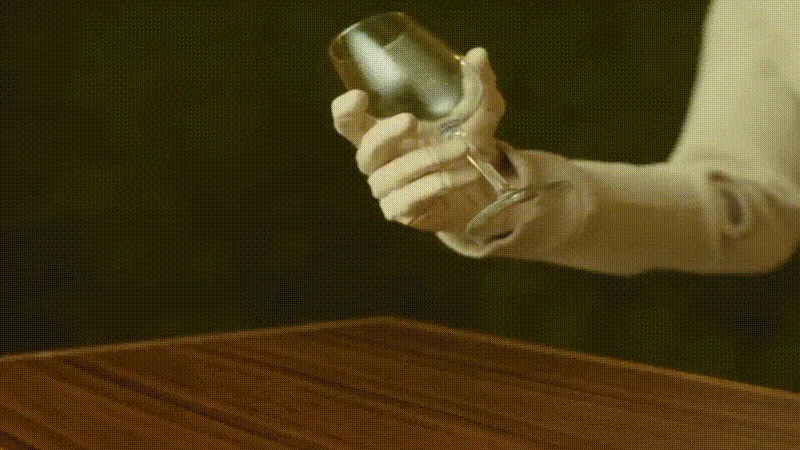
1X’s demonstrations and product materials show why the five-finger format matters for domestic tasks. The company says Neo can assemble LEGO structures, pick up screws and coins, zip a jacket, sort grapes by colour, pour tea, plug in a USB-C charger, wipe surfaces, communicate with sign language, and recharge itself by plugging in. At the broader robot level, 1X’s Neo page lists a carry capacity of 55 pounds, an arm payload of 18 pounds, and tendon-driven actuation designed for gentle movement around people in domestic spaces.
How Neo’s 25 Degrees of Freedom, Tendons, and Force Control Work Together
In robotics, a degree of freedom is an independent motion variable that can be controlled. For a hand, more degrees of freedom usually mean more ways to position fingers, oppose the thumb, shape the palm, and adjust wrist orientation for grasping and in-hand manipulation. 1X’s claim is not simply that Neo has many joints. The more important point is that all 25 are force-transparent and backdrivable. A robot hand can move in many ways and still be limited in real-world use if it cannot feel contact through those movements.
That is why 25 DoF is meaningful in context. Human-hand models are often described as having around 27 degrees of freedom, including finger and wrist motion, so 1X is positioning Neo close to human kinematic richness while still aiming for manufacturability and serviceability. At the same time, robotics literature cautions that more DoF alone does not guarantee better manipulation. Control, sensing, thumb design, and robustness matter just as much. A 2025 systematic review of tendon-driven anthropomorphic robot hands found an enormous variety of solutions across 87 robot hands and 147 references, which underscores that hand design remains an open engineering problem rather than a solved checklist.
Neo’s tendon-driven architecture reflects one major direction in that design space. Tendon-driven robot hands imitate part of human biomechanics by placing more of the drive system away from the fingers and transmitting force through cables or tendon-like elements. 1X says Neo’s motors sit in the forearm and pull proprietary tendons through the wrist. This helps keep the hands lightweight while still producing useful grip forces and allowing the fingers to remain low inertia. In practical terms, a lighter distal hand can react faster, feel impacts more clearly, and pose less risk in contact with people or household objects.
This approach also matches broader robotics research. Reviews of tendon-driven anthropomorphic hands describe the field as mechanically complex, highly iterative, and shaped by trade-offs between dexterity, actuation, underactuation, compliance, size, and robustness. Many teams keep returning to tendon architectures because they can better support biomimetic motion and remotely located actuators, even though routing, wear, and maintenance become difficult problems in return. Neo’s announcement is notable because 1X is not presenting tendon drive as a lab prototype. It is presenting it as a mass-manufactured product subsystem for a consumer humanoid.
Force control is the detail that ties the mechanical design to practical manipulation. 1X says common robot hands often use high gear ratios that swallow contact forces before those forces can be observed at the motor. Neo instead uses low gear ratios of roughly 5:1 to 15:1, allowing external forces to backdrive the fingers and report how hard the world is pushing back.
In the company’s terms, this gives the hand “force transparency.” 1X combines that joint-level force transparency with tactile sensing for normal force, contact location, and shear across the fingertips and surfaces. That matters because household manipulation often fails when an object begins to slip, deform, or catch on an edge, and Neo is designed to detect those events and adjust in real time.
The same principle is becoming more visible across the humanoid industry. Figure says its latest fingertips can sense as little as three grams of pressure, while Figure’s Helix 02 model feeds touch and palm-camera data into whole-body control for delicate tasks. The convergence suggests that force-aware manipulation is becoming a baseline requirement for serious humanoid hand design. For Neo, the combination of many controlled joints, tendon-driven actuation, backdrivability, and tactile feedback is what turns the hand from a simple moving part into a sensing and control system.

Why Neo’s Sealing, Delicate Manipulation, and Strength Matter at Home
IP68 protection matters because a home robot does not operate in a clean, dry lab. The IEC’s ingress-protection framework uses the first digit to rate protection against solids and the second digit to rate protection against liquids. An IP68 enclosure is at the top dust-protection level and is rated for immersion under manufacturer-specified conditions. In plain language, the enclosure is designed to keep out dust and tolerate substantial water exposure, which is far beyond what many exposed robotic hands can handle.
For Neo, that protection supports two important use cases. First, 1X says the hands are sealed and food-safe, allowing Neo to wash its own hands and work around kitchen or sink tasks. Second, water and debris resistance are essential for reliability in repetitive home chores involving soap, splashes, oils, crumbs, and cleaning chemicals. That makes IP68 less of a marketing flourish and more of a prerequisite if 1X wants Neo to handle food preparation, bathroom cleaning, and other messy domestic routines without frequent failures.
The grape demonstration shows why sealing and durability are only one part of the home robotics challenge. A grape bunch is irregular, partly occluded, delicate, and slippery. Detaching a grape without crushing it requires precise pinch placement, low-force initiation, slip monitoring, and quick adjustment if the grape rotates or the stem resists. 1X presents “fruit picking” and grape sorting as evidence that Neo can work in the small-object regime where much human labour happens. This is more demanding than a simple pick-and-place video because a rigid gripper can lift a box, but plucking grapes tests whether a hand can combine perception, dexterity, and force modulation in one fluid action.
Secondary reporting on the launch highlighted the same point, noting that Neo’s hand demonstrations ranged from grapes and screws to light bulbs and USB-C insertion. The safest reading is that these are company-presented capability demos rather than independently benchmarked task scores. Still, the tasks are relevant because they show the kinds of movements a useful home robot must attempt: gentle pinching, precise alignment, stable holding, and adjustment when objects do not behave predictably.
Neo’s strength claims matter for the opposite reason. According to launch coverage summarising 1X’s announcement, Neo’s hand can lift a 20-pound kettlebell, which is intended to show that the new hands are not only dexterous but genuinely strong. The broader technical case for that claim appears in 1X’s official numbers: distal flexion forces up to 45 N, wrist torque of 17.75 Nm, strong thumb and MCP torques, and robot-level ratings showing Neo can carry 55 pounds overall while remaining a relatively light 66-pound humanoid.
The “safely” part comes from the control architecture more than from raw strength. 1X says Neo’s fingers are fully backdrivable, low inertia, and compliant under impact, and the company shows the hands yielding when slapped, hit, or pinched. In a home setting, a robot should be able to support load without becoming dangerously rigid. Safe lifting is therefore a combination of structure, torque, sensing, low gear ratios, and the ability to give way when contact is unexpected.
Neo, Figure, and the Shift Toward Smarter Humanoid Hand Systems
A fair comparison between Neo and Figure starts with what each company has publicly emphasised. 1X is now unusually specific about Neo’s hand hardware, publishing total DoF, actuation layout, torque values, IP68 protection, tactile sensing, and in-house manufacturing claims. Figure, by contrast, has focused its official messaging on AI integration and sensing. Figure 03 introduces redesigned hands with compliant fingertips, embedded tactile sensors, and palm cameras, while Helix 02 uses those inputs for full-body autonomy in tasks like unloading a dishwasher and handling small objects.
The strategic difference is just as important as the hardware difference. 1X is building Neo as an explicitly home-first product with early access buyers, scheduled expert supervision for unknown chores, Redwood AI, a world-model programme, and domestic data collection as part of the learning loop. Figure is also moving toward the home, but its official story ties hardware closely to Helix, its vision-language-action system, and to scalable deployment across both household and commercial settings. In the official Figure materials reviewed here, the company does not publish a directly comparable total hand DoF count, so Neo currently benefits from more transparent hand-level specifications while Figure emphasises sensor intelligence and whole-body autonomy.
1X’s AI strategy is built around the idea that home robotics needs more than a conventional vision-language-action policy. The company says Redwood AI is a vision-language transformer tailored to humanoids that can perform end-to-end mobile manipulation, runs on Neo’s onboard GPU, and is trained on teleoperated and autonomous episodes collected from EVE, Neo, offices, and employee homes. That gives 1X a route to generalisation on never-before-seen objects in household layouts that are never exactly the same.
At the same time, 1X is investing heavily in world models rather than relying only on post-training and fine-tuning. Its World Model Lab, launched in June 2026, is dedicated to large-scale embodied pretraining using web-scale media, egocentric human video, simulation, remotely operated robot data, and on-policy Neo data. 1X says this loop is meant to produce increasingly autonomous humanoids, while NVIDIA-based simulation, cloud training, and onboard compute provide the infrastructure for moving from simulation to real deployment. The hand announcement is not separate from that roadmap. It is the hardware foundation for the data and control strategy 1X wants to scale.
The larger significance of Neo’s new hands is that they reflect where humanoid hand technology is moving. The frontier is no longer simply “more fingers.” It is converging on a stack that includes anatomical thumb opposition, compliant actuation, tactile sensing, proprioception, slip detection, durability, scalable manufacturing, and learning-based control. The 2025 RWTH Aachen review makes clear that the design space is still fragmented and that no single canonical solution exists, which is why vertically integrated commercial systems like Neo and Figure 03 are drawing so much attention.
Neo also illustrates a broader advance in transparency. Rather than speaking in vague terms about “human-like hands,” 1X has published hand-level engineering details including actuator placement, gear ratios, force control, tactile sensing, positioning accuracy, cycle testing, sealing, and production-line capacity. That level of disclosure matters because dexterous manipulation is often discussed through flashy demos alone. The more companies publish concrete architecture and reliability information, the easier it becomes to separate real progress from marketing theatre.

Real-World Uses, Industry Response, and 1X’s Path to Scale
If Neo’s hands perform as advertised, their strongest use cases are everyday household tasks that require a mixture of strength and delicacy. 1X’s own examples include laundry, dish handling, opening doors, cable insertion, wiping surfaces, tool use, carrying objects, and working around food. These are not glamorous factory-only tasks, but they are exactly the routines that make home robots valuable if they can be automated reliably and safely.
There is also a commercial implication. Figure explicitly argues that hand compliance, tactile sensing, and perception upgrades improve grasp stability on sheet metal and deformable poly bags, while 1X argues that removing the hand “hardware ceiling” makes data the main barrier to new skills. The likely outcome is that the same class of dexterous hands will matter in both homes and workplaces. The difference will be in software maturity, reliability under continuous use, and how much human supervision is still needed to complete edge cases.
Early reactions to Neo’s new hands have been notably strong. Wired described the fingers as “freaky fast” and treated the hardware as unusually close to human dexterity, while also reminding readers that Neo still relies in part on expert mode and therefore raises privacy and trust questions in the home. John Koetsier, writing about the earlier preview and the July hand update, called Neo’s hands possibly the best he had seen on a humanoid and emphasised their closed-loop bidirectional actuation and quiet tendon-drive architecture.
The broader industry mood is that hands now matter more than locomotion. The Guardian’s recent reporting on the humanoid sector described dexterous hands as one of robotics’ hardest unsolved problems, especially because hardware progress must be matched by software that can teach the hands what to do. That framing helps explain why 1X’s announcement landed as more than a component update. It speaks directly to whether humanoids are becoming genuinely useful machines rather than better walking platforms.
1X’s future plan is not just to sell a robot. It is to close the loop between deployment, data, training, and manufacturing. The company says Neo is built for full autonomy over time, but early owners get foundational autonomy plus scheduled expert assistance for chores Neo does not yet know. That means 1X is openly using deployment as a learning mechanism, with teleoperation, software updates, and home data collection feeding future capability gains.
On the industrial side, 1X says its Hayward, California facility has already commenced full-scale production of Neo, with in-house manufacturing of motors, batteries, structures, transmission systems, sensors, soft goods, and more. The factory page says capacity can reach up to 10,000 Neos per year, while the hand announcement says hundreds of the new hands have already come off a dedicated line with capacity for 10,000 hands this year. Combined with the World Model Lab and NVIDIA-enabled simulation pipeline, that points to a future plan centred on vertical integration, faster iteration, and scaling both robots and training data at the same time.

Frequently Asked Questions (FAQs)
- Is Neo’s hand really close to a human hand?
Yes, in kinematic richness it is close. 1X says Neo has 25 total degrees of freedom, while common human-hand models are often described at around 27 including wrist motion. That does not mean Neo equals human skill, because dexterity also depends on sensing, control, software maturity, durability, and learned manipulation. It does mean the hardware is positioned in a near-human range on paper. - Does Neo use motors in the fingers or in the forearm?
1X says the motors live in the forearm and pull proprietary tendons through the wrist. This tendon-driven layout helps reduce hand weight and distal inertia while preserving useful grip force. A lighter hand can react more quickly and may be safer around people and household objects because less mass is concentrated in the fingers. - Why is backdrivability such a big deal?
Backdrivability matters because a hand can yield under contact and sense force through the same joints it uses to move. That supports safer interaction, better force control, and more contact awareness in unpredictable environments. In a home, where a robot may touch fragile objects, people, furniture, tools, and deformable items, the ability to give way and detect resistance is central to practical manipulation. - Can Neo actually work around water and food?
According to 1X, yes. The company says the hands are IP68 sealed and made with food-safe materials, which allows hand washing and kitchen-adjacent tasks. The IP68 claim indicates protection against dust and substantial water exposure under manufacturer-specified conditions, which is important for chores involving sinks, splashes, crumbs, oils, and cleaning routines. - Are the grape and kettlebell demos independently verified benchmarks?
Not from the sources reviewed here. They are public company-led demonstrations and company claims reported in launch coverage, so they are best treated as capability showcases rather than standardised benchmark results. The demos are still relevant because grapes test delicate manipulation and the kettlebell claim points to strength, but independent benchmarking would be needed to compare performance more rigorously. - How does Neo compare with Figure on hand technology?
Neo currently has more publicly disclosed hand-level hardware detail, including a total DoF count, torque figures, tendon-driven architecture, IP68 sealing, and force-control information. Figure’s official materials emphasise palm cameras, compliant fingertips, tactile sensing, and tight integration with Helix for whole-body autonomy. Based on the materials reviewed, Neo is more transparent about hand hardware specifications, while Figure places more emphasis on sensor intelligence and AI-driven control. - Is Neo fully autonomous today?
No. 1X says Neo is built for full autonomy over time, but early access includes foundational autonomy and scheduled expert supervision for tasks it does not yet know. That means the robot is being positioned as a system that improves through deployment, data collection, teleoperation, software updates, and training rather than as a fully independent home worker from day one. - What makes Neo different from a simple gripper robot?
The difference is in dexterity, sensing, and compliance. Neo has five fingers, a strongly opposing thumb architecture, tactile sensing, force-controlled joints, and wrist motion that support in-hand adjustment and delicate grasping. A simple gripper may be able to clamp and lift objects, but Neo’s design is aimed at more varied tasks such as cable insertion, picking up small items, handling food, and adjusting grip when an object slips or resists. - Why are robot hands now getting more attention than robot legs?
Many humanoids can already walk well enough for public demonstrations, but useful work in homes and workplaces depends on grasping, manipulating, sensing slip, and handling fragile or awkward objects. Industry reporting increasingly treats hands as the main bottleneck because the ability to move through a room is only part of the problem. To be genuinely useful, a humanoid must also interact with the physical world in controlled, safe, and adaptable ways. - What is the biggest unanswered question after this announcement?
Software maturity is the biggest unanswered question. 1X has made a strong hardware case with detailed claims about degrees of freedom, force control, tactile sensing, sealing, and manufacturing. The real test is whether its AI stack can use that dexterity autonomously, reliably, and at scale in real homes over long periods.

Conclusion
1X’s Neo hand announcement is one of the clearest signs that humanoid robotics is moving into a new phase where hand capability, not just locomotion, defines product credibility. By publishing a 25-DoF tendon-driven design with force transparency, tactile sensing, IP68 sealing, and concrete production claims, 1X has raised the level of technical specificity in the home-humanoid race. The remaining challenge is no longer whether such hands can make compelling demos. It is whether 1X’s AI, data, and manufacturing strategy can turn those hands into reliable everyday utility at home.
Sources and Citations
- 1X Neo Gamma Hands
https://www.1x.tech/discover/neo-gamma-hands - 1X Neo
https://www.1x.tech/neo - 1X Order Neo
https://www.1x.tech/order - 1X Redwood AI
https://www.1x.tech/redwood - 1X World Model Lab
https://www.1x.tech/world-model-lab - 1X World Model
https://www.1x.tech/world-model - NVIDIA Building a Robotics AI Stack for Every Robot
https://developer.nvidia.com/blog/building-a-robotics-ai-stack-for-every-robot/ - 1X NEO Factory
https://www.1x.tech/discover/neo-factory - Figure Figure 03
https://www.figure.ai/news/figure-03 - Figure Helix 02
https://www.figure.ai/news/helix-02 - IEC Degrees of Protection (IP Code)
https://www.iec.ch/ip-ratings - RWTH Aachen University Anthropomorphic Tendon-Driven Robot Hands: A Review (2025)
https://publications.rwth-aachen.de/ - WIRED
https://www.wired.com/ - The Guardian
https://www.theguardian.com/technology - John Koetsier
https://johnkoetsier.com/
Recommended
- Invincible VS Official Rex Splode Towel Skin Trailer: Fan Reaction, Price, and How to Get It
- Bungie Says The Deeper Players Get Into Marathon, The More Fun They’re Having — Server Slam Feedback, Progression, and What’s Changing for Launch
- Resident Evil Requiem Mod Adds RE4’s Merchant to the Game: Download, Install, and Features
- How to Export MetaHuman to Blender: Comprehensive Step-by-Step Guide
- OpenAI’s Advertising Business Could Miss Its Revenue Forecast by 90%
- Darth Maul’s Story So Far: What to Know Before Watching Star Wars: Maul – Shadow Lord
- 10 Best Fantasy Anime Series of All Time (Ultimate Ranked List for 2026)
- Euphoria Season 3 Review: First Reactions to HBO’s Time-Jump Return
- How Do I Create a Cinematic Camera Shot in Blender?
- Alienware Reveals Four New Gaming Monitors for Competitive and Creative Users



































































































