










In This Article (9 sections)
28 Days Later 4K Blu-ray Release Date, Restoration Challenge, and SteelBook Preorders
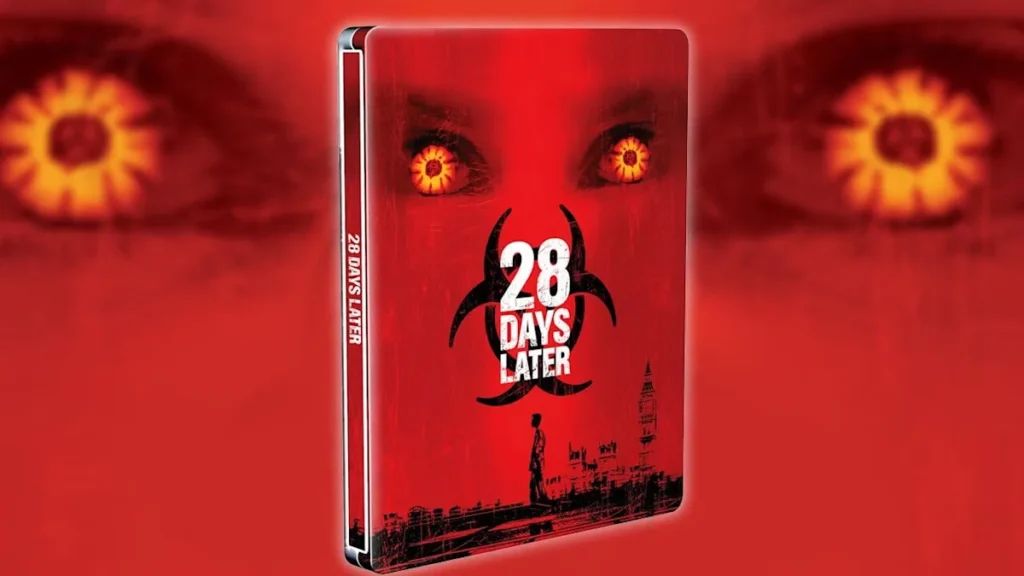
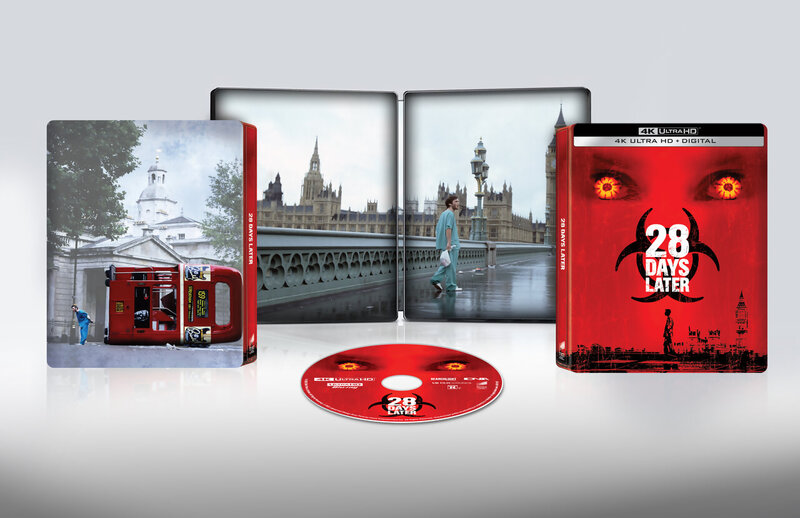
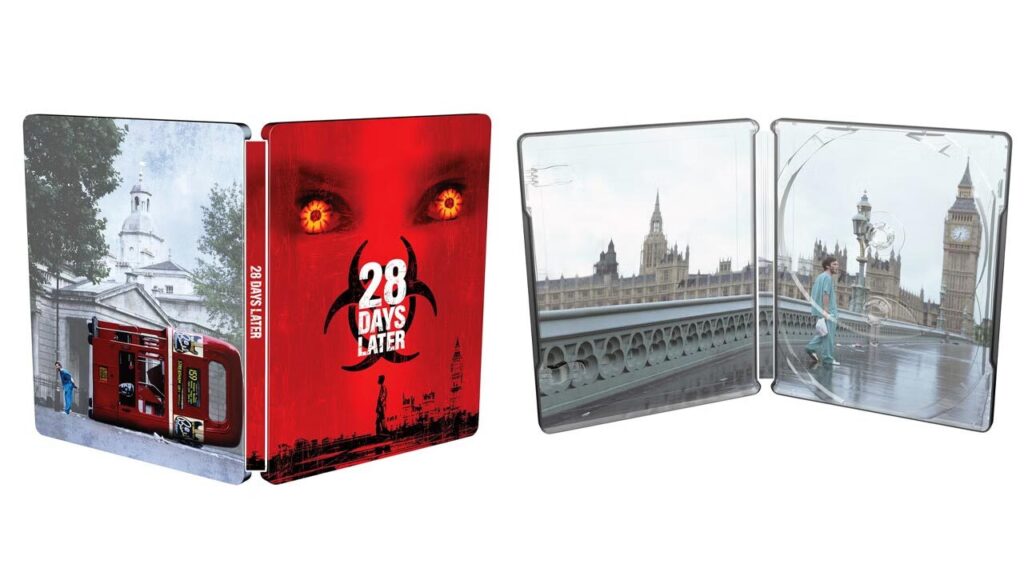
Few catalog releases in recent memory have raised as many technical questions as the new 28 Days Later 4K Blu-ray. Danny Boyle’s 2002 horror film was not captured on conventional film stock that can simply be scanned from a pristine camera negative at high resolution. Most of the movie was created using early digital video and MiniDV tapes, giving it a deliberately rough visual style that became central to its identity. Sony Pictures Home Entertainment has now officially announced a Limited Edition SteelBook with Dolby Vision and Dolby Atmos, marking the first time the film will be available on 4K UHD.
The unusual source material explains why the idea that 28 Days Later is receiving a 4K Blu-ray even though it was not built for the format reflects a genuine archival challenge. Boyle and cinematographer Anthony Dod Mantle primarily used Canon XL1 MiniDV cameras because they offered the mobility and speed required for the production while producing the harsh, unstable texture that suited the story’s depiction of societal collapse. The result was one of the most influential horror films of the 2000s, but its native image characteristics were never designed to meet modern expectations for sharp, highly detailed 4K video.
The appeal of this release therefore does not depend on transforming the film into something it was never meant to be. Its value lies in seeing how effectively restoration, color correction, HDR grading, compression, and format-sensitive mastering can improve the presentation without removing the qualities that define it. Collectors should not expect the MiniDV footage to resemble a modern large-format digital production. The more meaningful question is whether Sony can preserve the film’s distressed appearance while presenting it with greater stability, stronger color handling, better black levels, and more faithful overall reproduction.
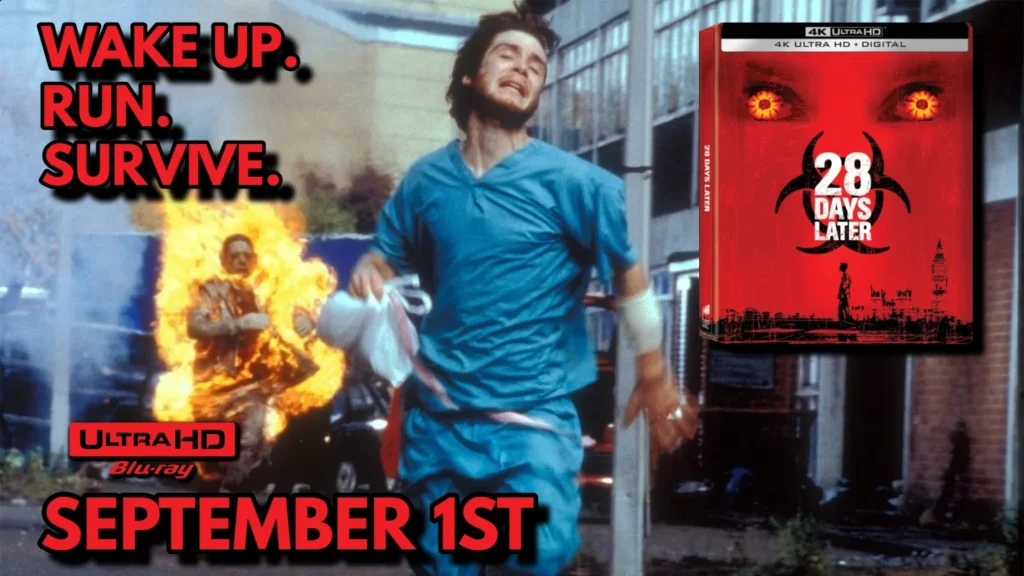
Sony Pictures Home Entertainment has set September 1, 2026, as the release date for the 28 Days Later 4K UHD Limited Edition SteelBook. Multiple reports published in April 2026 identified the same date, with Sony’s announcement positioning the disc as the film’s long-awaited 4K debut. The date is significant because the existing Blu-ray has long been limited by the movie’s standard-definition source and has also become difficult to obtain. This is not merely another reissue, but the first premium UHD collector release with a studio-approved HDR presentation and Dolby Atmos mix.
Preorders were not broadly available when the release information first appeared. GameSpot reported that preorder links had not yet gone live, while High-Def Disc News specifically noted that Amazon and Walmart had not opened listings at the time of its report. Those retailers are therefore among the main outlets collectors should monitor as Sony expands availability. Buyers interested in the limited SteelBook packaging may need to act promptly once listings appear, particularly because the film’s out-of-print Blu-ray history could attract both UHD collectors and viewers who simply want an accessible physical copy.
Is 28 Days Later Real 4K? MiniDV Origins and Low-Resolution Footage Explained
28 Days Later is not native 4K in the same sense as a restoration scanned from a 35mm camera negative or a film captured using high-resolution digital cinema cameras. Most of the movie was shot on MiniDV with Canon XL1 cameras, meaning that its imagery originated as standard-definition digital video. Sony’s release description states that the new presentation uses the assembled original source video together with a section from the original camera negative that appeared in the theatrical release. The UHD is therefore built from mixed elements rather than a single high-resolution source covering the entire feature.
The release is still a genuine 4K UHD disc in format terms, but most of the photography does not suddenly contain native 4K detail. A more accurate description is that Sony created a new 4K presentation from the best available original materials, followed by HDR grading and approval from Danny Boyle. That distinction does not make the release meaningless. A UHD edition can improve grading, compression, encoding, black levels, and color reproduction even when the original capture resolution is limited.
The decision to use MiniDV and Canon XL1 cameras had both practical and artistic purposes. Anthony Dod Mantle explained that shooting conventionally on 35mm would probably have forced the production to remove scenes because of financial and logistical limits. The compact DV cameras allowed the crew to work quickly, occupy less space, and film deserted London locations during extremely narrow windows before normal activity resumed. Some scenes reportedly involved as many as eight Canon XL1 cameras, an approach that would have been much harder to manage with larger 35mm equipment in central London.
The filmmakers also believed that MiniDV matched the material. Its harsh imaging characteristics complemented the film’s violent, gritty, and anarchic script, turning what could have been viewed as a technical compromise into a storytelling tool. Smeared movement, blown highlights, unstable edges, and rough textures helped create an immediate and fractured atmosphere that more polished photography might not have achieved.
The movie looks low resolution because that quality is permanently embedded in the source. Production reporting from American Cinematographer described concerns involving backgrounds, skies, contrast boundaries, textures, and the vulnerability of digital-origin footage during post-production and the film-out process. These were signs of an image format already operating near its limits, not a high-resolution master containing large amounts of hidden detail that could later be recovered. The new remaster may stabilize and rebalance the image, but it cannot restore detail that the cameras never captured. Expectations should therefore focus on a more controlled and faithful presentation of the original look rather than modern levels of sharpness.
How Sony Remastered 28 Days Later for 4K HDR, Dolby Vision, and Dolby Atmos
Sony’s release information states that the UHD presentation was created from the assembled original source video and the section of original camera negative used in the theatrical release. Those elements were color corrected to take advantage of the wider color gamut available through HDR, while both the picture presentation and Dolby Atmos mix received approval from Danny Boyle. This wording indicates that Sony did more than place an older HD master onto a UHD disc without further work.
The studio appears to have returned to the source assembly and reconstructed the presentation around the original video-origin material and the higher-quality film-origin section. It remains different from scanning a complete camera negative because no such uniform film source exists for the whole movie. Even so, rebuilding the presentation from the relevant original elements represents a more substantial approach than a simple repackaging of the previous Blu-ray.
The movie already had a complicated hybrid finishing history before this remaster. According to the original production coverage, the PAL MiniDV footage was upconverted to D-1, graded at MPC, enhanced and interpolated into 2K files, slightly enlarged for a 1.85:1 presentation, and recorded onto intermediate film stock through an Arrilaser. The UHD is therefore based on a production that moved through several digital and analog stages rather than a simple pipeline from camera tape to finished disc.
The new release supports Dolby Vision, with HDR10 compatibility also identified in early coverage. Dolby Vision allows compatible displays to use dynamic metadata for scene-specific or shot-specific tone mapping, while HDR10-capable systems can still access the standard HDR layer. The most realistic improvements are likely to involve contrast management, highlight control, color separation, and shadow presentation rather than additional image detail. Bleak daylight, fire, blood, replacement skies, and dark interiors are among the visual elements that could benefit from more refined HDR grading.
Dolby Vision should not remove the rough digital texture, nor should it transform the film into a polished modern production. A successful remaster would instead make the intended appearance richer, more stable, and more controlled while respecting the limitations of the MiniDV material. Sony’s emphasis on wider-gamut color correction supports the expectation that color and tonal management will be more important than sharpness.
The English Dolby Atmos mix is another major part of the upgrade, alongside the included English 5.1 track. 28 Days Later relies heavily on ambient emptiness, sudden violence, dread, and the emotional force of John Murphy’s music. An immersive mix could expand environmental cues, spatial tension, and the scale of the score even though the imagery remains deliberately distressed. Boyle’s approval of the Atmos mix should also reassure viewers concerned that the soundtrack might be altered in a way that conflicts with the character of the original film.
28 Days Later 4K Source Materials, Blu-ray Upgrade, and AI Upscaling Question
The most specific public description of the transfer states that Sony used the assembled original source video together with the section from the original camera negative that appeared in the theatrical release. This confirms that the new disc is neither a complete film restoration nor a native 4K presentation derived from high-resolution camera files. It is a hybrid remaster shaped by the way the movie was originally captured, assembled, and finished, with most of the feature retaining its video-origin foundation.
Reconstructing the film is complicated because its source materials passed through several stages. The PAL MiniDV footage was transferred through D-1 mastering, grading, digital enhancement, interpolation to 2K, and film recording for theatrical prints. There is no single, uniform collection of original high-resolution camera files available for a modern scan. Sony instead had to work with a source structure that reflects the film’s mixed digital and film history.
The previous Blu-ray was always constrained by these limitations, and its image was widely regarded as weak compared with typical Blu-ray presentations. The UHD should be evaluated less by absolute sharpness and more by improvements in encoding, compression, HDR grading, black levels, color handling, and audio. These areas can produce a worthwhile upgrade even when the original footage contains little additional detail. The final scenes, which were photographed with a higher-resolution Arri camera, may show more obvious gains than the MiniDV material, making the quality difference between parts of the film more visible.
That unevenness would not necessarily indicate a flaw in the new transfer. It would reflect the differing source materials already present in the movie. The MiniDV sections should retain their smeared and distressed appearance, while the higher-resolution footage may respond more noticeably to the UHD presentation. The result may vary from scene to scene because the original production itself varied in image quality.
Sony’s public release information does not explicitly state that AI upscaling was used. The available description focuses on the original source video, the original camera negative section, HDR color correction, and director approval. Concerns about AI are understandable because the bulk of the film began as standard-definition footage, but there is currently no confirmed basis for presenting AI enhancement as part of the workflow. A precise assessment should wait for hands-on reviews, frame analysis, and more detailed technical documentation rather than treating speculation as established fact.
28 Days Later 4K Blu-ray Extras, Technical Specs, and Where to Buy
Sony’s announced package includes a substantial collection of archival bonus features rather than limiting the SteelBook to the new video and audio presentations. The listed supplements are:
- Commentary by director Danny Boyle and screenwriter Alex Garland
- Deleted scenes and alternate endings with optional commentary
- Pure Rage: The Making of 28 Days Later
- A Jacknife Lee music video
- Animated storyboards
- Still photo galleries
- The theatrical teaser and trailer
The inclusion of these features addresses concerns that a premium catalog UHD could abandon the supplements offered on earlier editions. Based on the available reporting, the SteelBook retains the film’s established archival material while adding Dolby Vision and Dolby Atmos. For longtime fans, the Boyle and Garland commentary may be particularly valuable because it provides creative and historical context from two figures central to the film and the wider franchise.
Early technical information identifies the feature as a 2160p presentation in its established 1.85:1 aspect ratio, with Dolby Vision HDR, English Dolby Atmos, and English 5.1 audio. The SteelBook is also reported to include a digital copy compatible with Movies Anywhere. The feature runs approximately 113 minutes, or 1 hour and 53 minutes, and nothing in the announced specifications indicates that Sony is presenting a substantially altered cut.
The 1.85:1 framing is consistent with the movie’s original theatrical presentation. Production reporting documented the process of testing the PAL XL1 image, working through the MiniDV framing choices, and slightly enlarging the finished image for a 1.85:1 film-out. The UHD specification therefore reflects the established intended composition rather than a new reframing experiment.
Preorders were not widely available when the release was first reported in April 2026. GameSpot stated that preorders had not yet opened, while High-Def Disc News specifically identified Amazon and Walmart as retailers without active listings at that stage. Those stores remain the clearest major outlets to monitor as the release moves beyond its initial announcement phase.
Collectors hoping to avoid aftermarket prices should follow the title once official listings appear instead of waiting until close to the September 1 release date. The film’s previous Blu-ray has been difficult to obtain, which may increase interest in legitimate retail stock. The limited SteelBook format could also attract both dedicated horror collectors and buyers who have been waiting for an affordable physical edition.
Frequently Asked Questions (FAQs)
- Is the 28 Days Later 4K Blu-ray officially confirmed?
Yes. Sony Pictures Home Entertainment has officially announced a Limited Edition SteelBook release of 28 Days Later on 4K UHD. The edition represents the film’s first appearance on the UHD format and includes upgraded HDR and immersive audio presentations. - When does the 28 Days Later 4K UHD release come out?
The announced release date is September 1, 2026. The SteelBook is being positioned as a premium late-summer catalog release rather than a digital-only refresh or a routine rerelease of the existing Blu-ray. - Will the disc include Dolby Vision?
Yes. The 4K UHD release is listed with Dolby Vision HDR, while HDR10 compatibility has also been identified in early coverage. Dolby Vision can improve the management of contrast, highlights, color, and shadows, although it cannot create image detail that was absent from the original MiniDV footage. - Will the disc include Dolby Atmos?
Yes. Sony’s release information lists an English Dolby Atmos soundtrack together with an English 5.1 option. The Atmos mix could expand the film’s ambient sound, music, environmental effects, and sudden bursts of violence while maintaining the character of the original audio presentation. - Was 28 Days Later originally shot in native 4K?
No. Most of the film was shot on MiniDV using Canon XL1 cameras, so the majority of its imagery originated as standard-definition digital video. The filmmakers selected the format for its mobility, speed, affordability, and intentionally harsh visual qualities. - Is the 28 Days Later 4K disc a native-4K image upgrade?
Not in the conventional sense. Sony created the UHD presentation from the assembled original source video and a section from the original camera negative used for the theatrical release, followed by color correction for HDR. It is a 4K-format presentation, but most of the underlying photography does not contain native 4K detail. - Why does 28 Days Later look rough and low resolution?
The roughness is built into the original source. Danny Boyle and cinematographer Anthony Dod Mantle used MiniDV because its smeared movement, blown highlights, unstable edges, and limited detail suited the film’s violent and broken world. A remaster can present those characteristics more effectively, but it cannot completely remove them without changing the intended appearance. - Are preorders live yet for the 28 Days Later SteelBook?
At the time of the April 2026 reports referenced in the announcement coverage, preorders were not yet broadly available. Amazon and Walmart were specifically identified as retailers that had not opened listings, so collectors should monitor those stores as availability expands. - What extras are included on the 28 Days Later 4K Blu-ray?
The announced extras include commentary from Danny Boyle and Alex Garland, deleted scenes, alternate endings with optional commentary, the Pure Rage making-of featurette, a Jacknife Lee music video, animated storyboards, still photo galleries, and the theatrical teaser and trailer. This allows the UHD package to preserve the film’s major archival supplements alongside the new picture and audio upgrades. - Is there confirmed evidence that Sony used AI upscaling on the 4K release?
No. None of the public release information cited here explicitly states that AI upscaling was used. Sony has described a remaster based on the assembled original source video, the relevant original camera negative section, and HDR color correction, so any stronger claim should wait for confirmed technical documentation or detailed disc analysis.
Conclusion
The reason the 28 Days Later 4K Blu-ray is so fascinating is that it forces home-video collectors to rethink what a UHD upgrade can mean. This is not a title that was ever going to become a pin-sharp demo disc through sheer resolution alone. Its identity comes from MiniDV, early-2000s digital roughness, and a restless production strategy that used limitation as creative fuel. American Cinematographer’s original reporting shows just how fragile and unconventional the image pipeline already was in 2002, and Sony’s 2026 UHD announcement shows that the new release is trying to work with that reality rather than pretend it never existed.
For that reason, the most sensible expectation is not “true 4K” in the marketing shorthand sense. It is the best officially approved home presentation the movie has received so far: restored from the available original elements, graded for Dolby Vision, upgraded with Dolby Atmos, and packaged with substantial legacy extras. If Sony has handled the mastering carefully, the 28 Days Later 4K UHD should succeed not by erasing the film’s battered digital texture, but by preserving it more faithfully and more thoughtfully than older releases ever did.
Sources and Citations
- American Cinematographer “A Flexible Finish” (July 2003), pages 1-3
https://theasc.com/magazine/july03/sub/index.html - GQ: “How 28 Years Later Director Danny Boyle and Cinematographer Anthony Dod Mantle Used iPhones to Shoot a $100 Million Hit”
https://www.gq.com/story/28-years-later-iphones - GameSpot: “28 Days Later Is Getting A 4K Blu-ray–Even Though It Wasn’t Built For It”
https://www.gamespot.com/articles/28-days-4k-blu-ray-buying-guide/1100-6539484/ - Geek Vibes Nation: “Sony To Release The Danny Boyle Horror Classic ‘28 Days Later’ On 4K UHD Blu-Ray This September”
https://geekvibesnation.com/sony-to-release-28-days-later-on-4k-uhd-blu-ray-this-september/ - High-Def Disc News: “28 Days Later is coming to 4K SteelBook in September”
https://highdefdiscnews.com/2026/04/17/28-days-later-is-coming-to-4k-steelbook-in-september/ - Digital Camera World: “Is video fidelity a myth? 28 Days Later was shot in 480p!”
https://www.digitalcameraworld.com/cameras/video-cameras/is-video-fidelity-a-myth-28-days-later-was-shot-in-480p - Filmmaker Magazine: “DP Anthony Dod Mantle on ‘28 Years Later’”
https://filmmakermagazine.com/132924-interview-cinematographer-anthony-dod-mantle-28-years-later/
Recommended
- Redefining Representation: Authentic Black Hairstyles in Video Games
- Super Mario Galaxy Movie Set for Massive First Weekend With $350 Million Worldwide as Global Box Office Soars Past Projections
- Star Trek: Starfleet Academy Season 1 Review (2026), Cast, Story, Ending, and Where It Fits in the Star Trek Timeline
- How do I create a depth map using the Blender camera?
- The Witcher 3 Secret DLC Rumors: CD Projekt Says No New Cyberpunk 2077 DLC Planned
- After Johnny Cage, Karl Urban Wants To Play Red Dead’s John Marston What It Means for a Red Dead Redemption Movie
- Best Blender Addons for Hobbyists: 15 Must-Have Tools for Faster Modeling, Animation, and Renders
- Intergalactic: The Heretic Prophet Controversy, Exploring the Backlash and Public Discourse
- Kena: Scars of Kosmora Revealed as Bridge of Spirits Sequel With First Gameplay Trailer, Release Window, Story, and Gameplay Details
- How The View Keeper Improves Blender Rendering Workflows



































































































