









Nobody Wants to Die official trailer breakdown
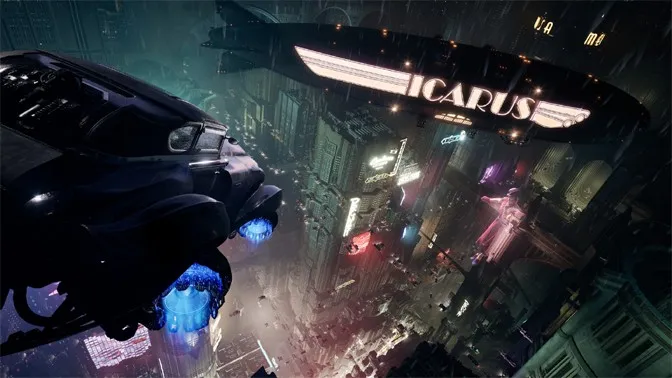
The initial announcement trailer for Nobody Wants to Die, released in early 2024, introduces a dystopian New York City in 2329. The aesthetic is a blend of 1930s Art Deco and cyberpunk, featuring rain-soaked skyscrapers and neon lights. The narrative, delivered by Detective James Karra, explores themes of immortality and corruption, specifically how eternal life is available only at a high cost to the elite.
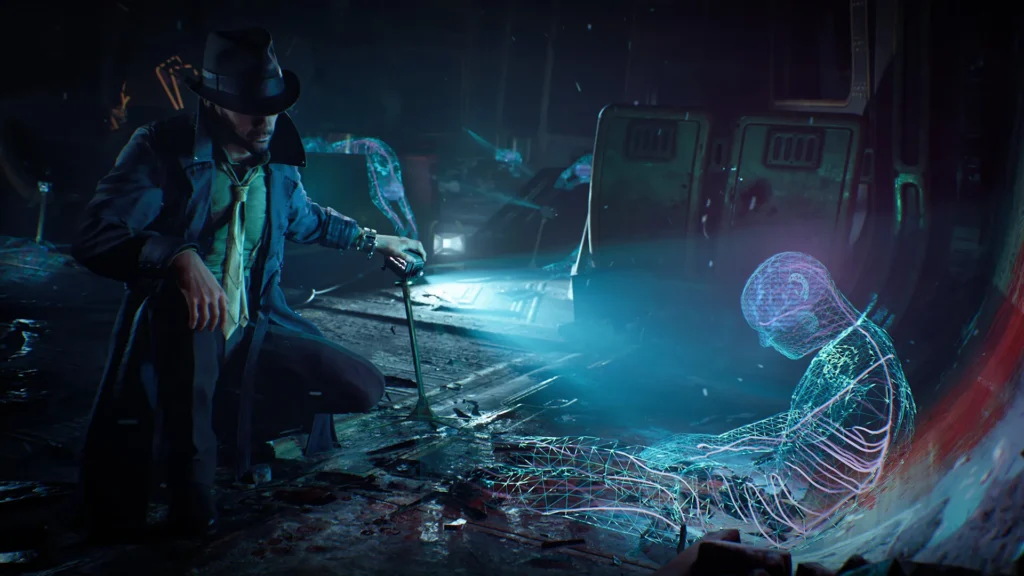
The trailer showcases Karra investigating crime scenes using a high-tech reconstructor glove that allows him to rewind time and view ghostly reenactments of events. He is assisted remotely by a police liaison named Sara Kai. Key plot hooks include a charred corpse with a mysterious head device and news of a “Declaration of Immortality,” suggesting a mystery where someone is targeting the city’s immortal elite.
Nobody Wants to Die launch trailer highlights
Released just before the July 17, 2024 launch, this trailer emphasizes the story’s personal stakes and high-profile murders. It begins with Karra waking up in a new body following a near-death experience. He is assigned by the Police Chief to investigate the death of Edward Green, a wealthy figure in the immortality industry whose consciousness-storage implant (ichorite) was destroyed.
The trailer highlights gameplay elements like X-ray scanners and tense dialogue, alongside a gunfight at the Icarus Bar. It also touches on social themes, showing “We Are 99.9%” graffiti and protestors, hinting at class tensions regarding the body subscription system. Using Unreal Engine 5, the trailer demonstrates the game’s visual fidelity through investigation sequences and cinematic action, reinforcing the narrative of an crumbling immortal utopia.
How the Nobody Wants to Die cinematic trailer was made in Unreal Engine 5.3 (Lumen)
Critical Hit Games produced the reveal trailer in-house using Unreal Engine 5.3 rather than outsourcing it. A small team of approximately three people spent three months on the project, using the game’s actual assets and the Lumen global illumination system for real-time ray-traced lighting. They chose a “beauty pass” approach, rendering the cinematic in one go to allow for faster iterations.
To handle complex effects, the team imported VDB files for smoke and fire and used Sparse Volume Textures for optimization. They also utilized technical workarounds for glass materials to improve reflections within the deferred renderer. This process benefited the game’s development, as high-detail assets created for the trailer—such as Karra’s model and his Reconstructor glove—were integrated back into the final game. Despite challenges transitioning from UE4 to UE5, the team successfully utilized the engine’s capabilities to produce a high-fidelity cinematic.
PixelHair and character creation
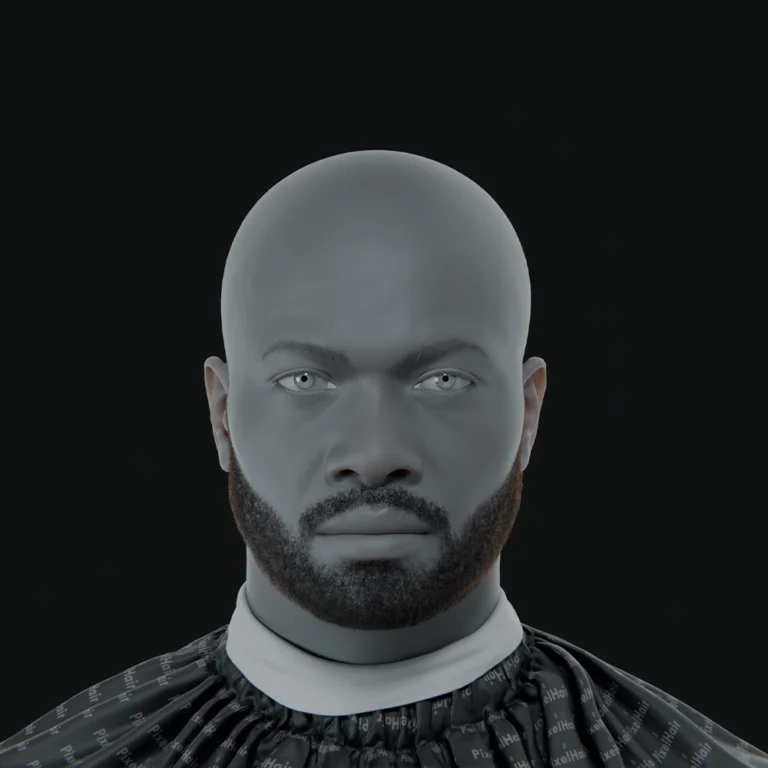
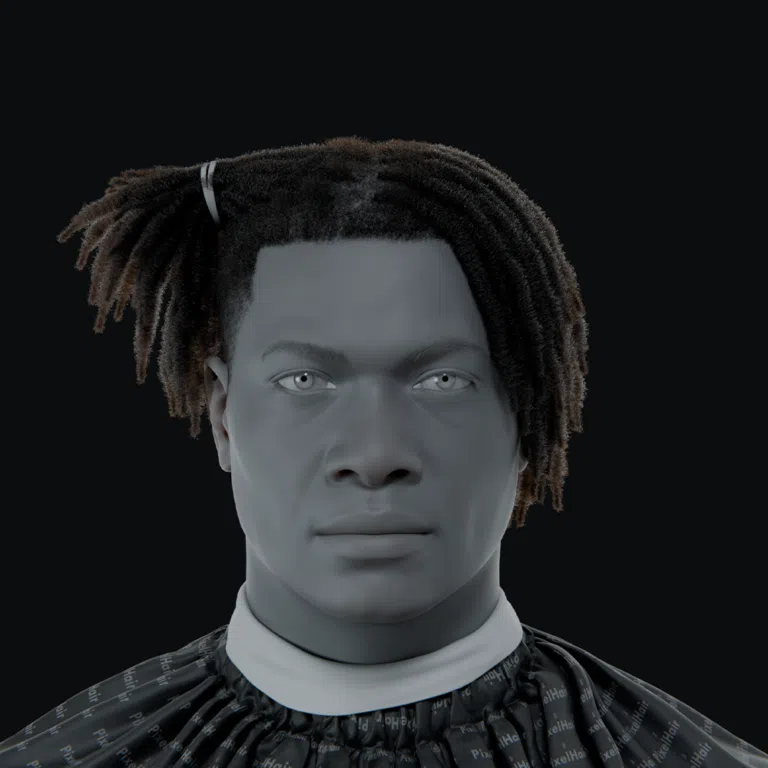
Character grooming and hair are often time-consuming in game development. While the developers of Nobody Wants to Die primarily modeled hair in-house to suit their noir style, many small studios use solutions like PixelHair. Created by Daniel “Yelzkizi” Isaac, PixelHair provides ready-made 3D hairstyles compatible with Unreal Engine’s groom system and MetaHuman. These tools offer a shortcut for developers to achieve high-quality results efficiently. As Unreal Engine 5 evolves with features like strand-based hair rendering, optimized asset libraries like PixelHair continue to assist studios in streamlining the creation of cinematic projects and games.
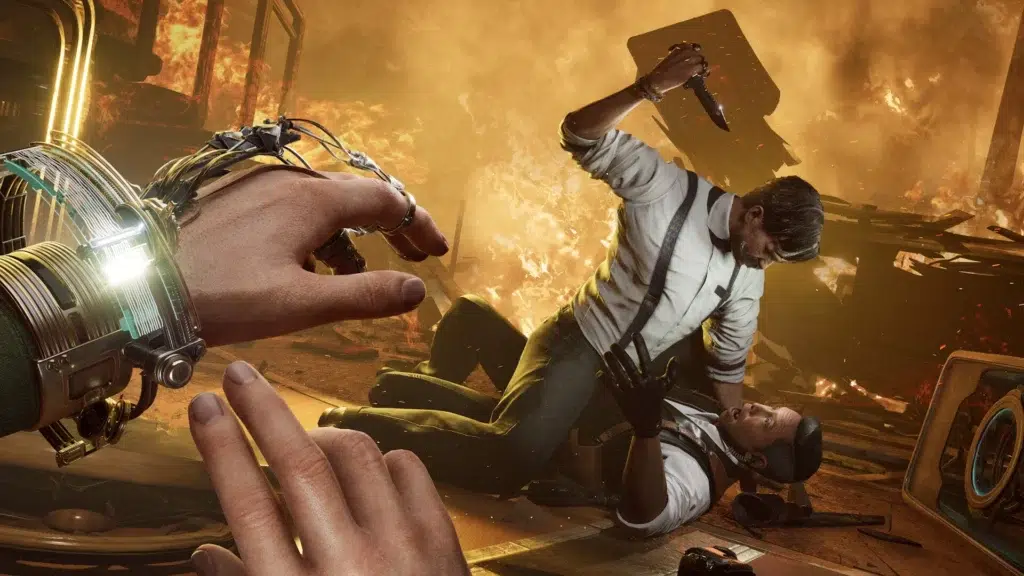
Nobody Wants to Die gameplay explained (first-person detective investigation)
Nobody Wants to Die is a first-person adventure detective game centered on interactive investigation rather than combat. Players control Detective James Karra, exploring linear 3D environments to find evidence and solve a story-rich mystery. Gameplay involves identifying points of interest marked by icons and using futuristic tools: a UV lamp for biological traces, an X-ray scanner for hidden items or bullet trajectories, and the Reconstructor for time manipulation. The process is accessible, as the game or Karra’s partner, Sara Kai, often prompt the player on which tool to use.
Collected evidence is organized on a deduction board, typically in Karra’s apartment. Players must logically link clues to form hypotheses; the game provides feedback on whether a theory is correct. While this allows players to feel like detectives, the logic is specific and linear, requiring the exact combination intended by the developers to progress. Dialogue trees also play a role, allowing players to shape Karra’s attitude and relationship with Sara Kai, though these choices primarily provide narrative flavor rather than significantly altering the main plot. The game is highly narrative-driven, featuring contained chapters and occasional cinematic set-pieces, leading many to describe it as an immersive “walking simulator” with investigation mechanics.
Reconstructor time rewind mechanic in Nobody Wants to Die explained
The Reconstructor is a central gameplay mechanic and a piece of advanced 2329 police technology. It scans residual data to create a holographic simulation of past events, allowing Karra to visualize and scrub through a crime as it happened. Visually, the environment becomes desaturated and ghostly figures appear, performing actions in reverse, such as bullets returning to guns or victims rising from the floor.
Players use the device to uncover details invisible in the present, such as a killer’s position or a victim’s specific movements. It is often used to solve environmental puzzles by revealing how objects were moved or interacted with in the past. Narratively, the device mirrors the game’s themes of defeating death through technology. While the mechanic is praised for its cinematic quality and novel feel, some critics noted it can make investigations feel too straightforward by explicitly showing the “how” of a crime, leaving the player to focus primarily on the “why” and “who.”

Nobody Wants to Die story explained (New York 2329 and immortality)
Set in New York City in 2329, the story depicts a society that has conquered death through “ichorite” (or Ichoryt), a substance implanted in the brain that stores consciousness. This allows individuals to be “resleeved” into new bodies indefinitely. However, immortality is a subscription-based service; those who cannot afford the fees have their bodies repossessed at age 21, creating a dystopian class divide where the elite live like gods and the poor are exploited for their physical forms.
Detective James Karra, a weary investigator for the Mortality Department, is the protagonist. Haunted by the death of his wife, Rachel, and a recent near-death experience that left him in a new body with memory gaps, he is assigned a secret, off-the-books case by the Police Chief. The inciting incident is the impossible death of Edward Green, a wealthy architect of the immortality system. Green’s body was burned and his ichorite destroyed, representing a permanent death in a world where such events are rare.
Accompanied by liaison Sara Kai, Karra discovers a string of murders targeting the immortal elite. The narrative explores political intrigue, social unrest, and a burgeoning revolution against the body subscription system. Karra’s personal trauma and his visions of Rachel are intertwined with the case, leading to revelations about his past and the true nature of the killer. The story concludes with Karra making difficult choices that lead to multiple endings, ultimately critiquing the corruption, greed, and inequality inherent in a society obsessed with eternal life.
Ichorite vs Ichoryt explained in Nobody Wants to Die (consciousness transfer and body subscription)
In the game’s lore, the terms “Ichoryt” and “ichorite” are often used interchangeably to describe the technology behind immortality. Ichoryt (with a “y”) generally refers to the revolutionary scientific material—a neural gel or crystal—that backs up a person’s memories and personality. “Ichorite” (with an “e”) often describes the physical implant that wraps around the brain to store this data. This technology allows a person’s consciousness to be transferred into a new body (resleeving) if their current one dies.
Immortality in 2329 is a monetized subscription service. Citizens receive an implant in young adulthood and must pay “body rental” fees; failure to pay results in the government repossessing the body and evicting the occupant’s consciousness. The term “ichor” is a nod to the blood of gods in Greek mythology. While the system promises eternal life, it is fragile: if an ichorite is destroyed or melted—as the game’s serial killer does to ensure permanent death—the person cannot be revived. Additionally, consciousness switching has side effects, such as memory issues and inheriting the physical traits or allergies of the new host body.
Detective James Karra and Sara Kai character guide
The story centers on two protagonists with a generational and personality clash. James Karra is a veteran, world-weary detective in the Mortality Department. He is a classic noir antihero, struggling with grief over his late wife, Rachel, and the trauma of a recent near-death experience that forced him into a new body. Karra is intuitive but cynical, often using alcohol and tobacco to cope with his psychological demons.
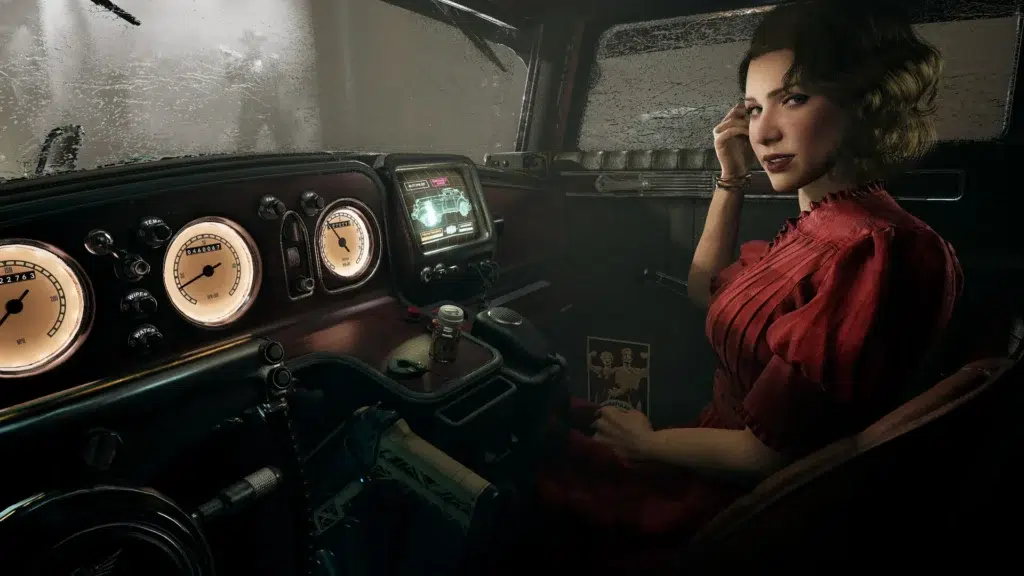
Sara Kai is a young, idealistic police liaison who assists Karra remotely via earpiece. Because Karra is officially on leave, Sara acts as his covert partner, providing technical support and intel. Unlike Karra’s jaded perspective, Sara remains principled and empathetic, often acting as the game’s moral compass. Their relationship evolves from initial friction and mistrust into a mutual respect, with the player’s dialogue choices influencing the depth of their bond. While Karra provides the experience and grit, Sara provides the humanity and technical expertise necessary to solve the conspiracy.
Nobody Wants to Die choices matter? multiple endings explained
Nobody Wants to Die features a linear main narrative with branching outcomes based on player agency. Throughout the game, players encounter Telltale-style dialogue choices that shape Karra’s personality and his relationship with Sara. While these minute-to-minute choices provide narrative flavor and change how characters react to Karra, they do not significantly alter the primary plot path.
The game features four distinct endings determined by critical decisions at four specific junctures late in the story: the Icarus Bar, the Red Room, the Old Museum, and the final confrontation. These choices decide the fates of Karra, the killer, and other key characters, as well as the sociopolitical outcome for the city. The endings function as two pairs; endings one and two are similar with a minor nuance, as are endings three and four. Players can access these different conclusions via a chapter select feature after their first playthrough (which takes about 5-6 hours), allowing them to see the various resolutions to Karra’s journey and the central mystery.
How long is Nobody Wants to Die? average hours to beat and replayability
Nobody Wants to Die is a narrative-focused adventure with a length typical for its genre. An average first playthrough takes between 5 and 7 hours, a timeframe supported by both developer statements and critic reviews. Playtime varies based on playstyle: players who rush only the main objectives may finish in about 4 hours, while thorough players who examine every item and listen to all optional dialogue may reach 8 to 10 hours. Completionists aiming for all 26 achievements should also expect approximately 8 to 10 hours of total playtime.
The game encourages replayability through its four distinct endings and branching dialogue. While the core plot remains linear, different choices can alter character dynamics, particularly between Karra and Sara Kai, and reveal alternate scenes or foreshadowing. The shorter length is reflected in the game’s budget launch price, and a chapter select feature allows players to revisit pivotal moments to see different outcomes without replaying the entire game from the beginning.
Nobody Wants to Die reviews roundup (Metacritic and critic consensus)
Upon its release, Nobody Wants to Die received generally favorable reviews, maintaining a Metacritic score in the mid-70s across PC and consoles. The consensus among critics is that the game excels in its narrative, atmospheric world-building, and high-quality visuals, but it is held back by its linear nature and simplistic gameplay mechanics.
Critics highly praised the “retro-futuristic” noir setting of New York 2329, the writing, and the voice acting, particularly the performance of Keaton Talmadge. The graphical fidelity, powered by Unreal Engine 5, was noted as impressive for an indie/AA title. However, common criticisms focused on the lack of challenge in investigations, with some reviewers noting that the game “holds the player’s hand” through its puzzles. While some found the experience too short or the gameplay too similar to a “walking simulator,” the overall reception was positive, with many publications scoring it between 7/10 and 9/10. Ultimately, it is regarded as a compelling story-driven experience that successfully delivers on its noir-cyberpunk premise.

Nobody Wants to Die Steam reviews and player feedback (common pros and cons)
Player feedback for Nobody Wants to Die has been largely positive, maintaining a “Very Positive” rating on Steam with approximately 83% of over 5,000 reviews being favorable. The player consensus aligns closely with critics, focusing on the game’s immersive qualities and narrative depth.
Common Pros (What players liked):
- Story and Setting: Players found the mature, thought-provoking narrative regarding immortality and its consequences highly gripping. The atmosphere of New York 2329—characterized by perpetual rain and neon cityscapes—is frequently cited as one of the best cyberpunk worlds in recent gaming.
- Visuals and Art Direction: The high-quality graphics and art deco interiors, powered by Unreal Engine 5’s Lumen, exceeded expectations for an indie title. The cinematic presentation and detailed city skyline are major highlights.
- Music and Sound: The moody, jazz-influenced soundtrack and sound design effectively pulled players into the noir setting. The voice performances of James Karra and Sara Kai were also highly commended.
- Unique Mechanics (Reconstructor): The time-rewind feature of the Reconstructor was praised as a memorable and fitting mechanic for a sci-fi detective story, even by those who found the gameplay easy.
- Character Dynamics: The evolving trust and chemistry between Karra and Sara Kai served as an emotional anchor for the story, with many players citing their banter as a primary highlight.
- Noir Immersion: Fans of the genre appreciated how the game successfully captured the “slow-burn” feel of classic detective thrillers like Blade Runner or L.A. Noire.
Common Cons (What players criticized):
- Simplistic/Guided Gameplay: This is the most common criticism. Players noted the game is very easy, with highlighted clues and a scripted progression that prevents failure, leading some to label it a “walking simulator.”
- Short Length and Limited Replay (for some): While many accepted the 5-6 hour length, some players felt it ended too soon and lacked enough branching content to justify multiple full playthroughs.
- Technical/UX issues: Because Unreal Engine 5 is hardware-intensive, some players on lower-spec PCs or Steam Decks experienced frame drops or long shader compilation times. Minor bugs, such as UI prompts getting stuck, were also reported.
- Some Logical Inconsistencies: Some players found the connection between Karra’s past and the present mystery slightly confusing or felt that certain plot points left unanswered questions.
- Limited Exploration/Agency: The “on rails” nature of the investigation disappointed those expecting the open-ended exploration found in RPGs or immersive sims.
To synthesize the pros and cons from players:
- Cons: Very linear and low difficulty (could feel like an interactive movie more than a game to some), not very long, minor technical hiccups here and there, and the gameplay can be rigid or repetitive if you expect more complexity.
- Pros: Exceptional story and writing, immersive atmosphere, great visuals and audio, unique detective gadget (reconstructor), strong voice acting and characters, and overall a memorable narrative experience.
Is Nobody Wants to Die a walking simulator? linearity and player agency explained
Nobody Wants to Die is frequently categorized as a “walking simulator,” a label the game carries on Steam. This classification stems from its focus on exploration and narrative with minimal traditional gameplay challenges or fail-states. It is a linear, story-driven adventure where players primarily walk through environments, trigger events, and solve highly guided puzzles without combat or complex inventory management.
Linearity:
The game follows a strict, sequential structure. Players move from one self-contained chapter to the next (e.g., from an apartment to a crime scene) and cannot deviate to explore the broader world. There are no side-quests or open-world elements. This design was a deliberate choice by the developers to maintain a tight, cinematic pace. While some players find this lack of freedom restrictive, others appreciate that it allows the game to deliver a focused noir narrative without extraneous distractions.
Player Agency:
Agency in Nobody Wants to Die is primarily found in how players interact with the environment and choose dialogue, rather than how they influence the plot’s sequence. Key points regarding player agency include:
- Dialogue Choices: Players can choose Karra’s tone and responses, which influence his demeanor and relationships—particularly with Sara Kai—but these choices rarely branch the story until the end.
- Gameplay Failures: There is no “Game Over” state. If a player misses a clue or assembles an evidence board incorrectly, the game simply prompts them to try again, ensuring they stay on the intended path.
- Environmental Storytelling: Much like Gone Home or Firewatch, the game rewards those who take the time to inspect optional objects for extra world-building and character musings.
Walking Simulator Elements:
The gameplay involves significant time spent observing and absorbing the atmosphere. While it features “bells and whistles” like detective gadgets, the experience remains closer to interactive storytelling than a complex simulation. Comparisons are often made to What Remains of Edith Finch or Observer, where the mechanics serve the narrative rather than providing a standalone challenge.
Player Agency in Endings:
Significant agency is reserved for the climax, where players make specific decisions that lead to one of four distinct endings. While these are pre-written branches rather than emergent outcomes, they allow the player to determine the ultimate fate of the characters and the resolution of the mystery.
In summary, Nobody Wants to Die is a linear first-person narrative adventure that fits the broad definition of a walking simulator. Its guided nature ensures a cinematic experience, making it a strong choice for fans of interactive fiction, though it may feel restrictive to those seeking deep gameplay systems or non-linear exploration.
Nobody Wants to Die PC system requirements (minimum and recommended specs)
Nobody Wants to Die is built on Unreal Engine 5 and requires a DirectX 12-compatible system. The game utilizes high-end features like Lumen lighting, making GPU selection critical for performance.
Minimum Requirements:
- OS: Windows 10 64-bit
- Processor: Intel Core i3-8100 or AMD Ryzen 5 2600X
- Memory: 8 GB RAM
- Graphics: NVIDIA GeForce GTX 1660 Super, AMD Radeon RX Vega 56, or Intel Arc A750
- DirectX: Version 12
- Storage: 30 GB available space
Recommended Requirements:
- OS: Windows 10 64-bit
- Processor: Intel Core i5-10400 or AMD Ryzen 5 3600
- Memory: 16 GB RAM
- Graphics: NVIDIA GeForce RTX 3070 Ti, AMD Radeon RX 6750 XT, or Intel Arc A770
- DirectX: Version 12
- Storage: 30 GB available space
The recommended specs suggest hardware capable of ray tracing to best experience the game’s lighting. While 8 GB of RAM is the minimum, 16 GB is advised to avoid performance issues. The game supports upscaling technologies such as DLSS and XeSS to assist performance on a variety of hardware. Installation on an SSD is highly recommended for smooth asset streaming.
Nobody Wants to Die patch notes and updates (latest fixes and improvements)
Since its July 2024 release, the developers have provided several updates to polish the game and address player feedback.
- Stability and Performance: Early updates focused on fixing crashes, memory leaks, and optimizing Lumen lighting. Performance mode on consoles was refined to provide a more consistent 60 FPS.
- Quality of Life: Post-launch patches added a FOV slider for PC players, toggles for motion blur and head-bob, and improved the visibility of interactive object highlights.
- Bug Fixes: Developers resolved issues involving achievement tracking, character model clipping, and rare states where the evidence board could become stuck.
- Console Enhancements: A PS5 update added support for DualSense haptic feedback and adaptive triggers. Xbox updates addressed issues related to the Quick Resume feature.
- New Features: A bonus gallery featuring concept art and character models was added for players who complete the game. Additionally, a patch introduced the ability to skip directly to critical final choices after the first playthrough to facilitate seeing all endings.
Where to buy Nobody Wants to Die (Steam, PlayStation, Xbox, Epic Games Store)
Nobody Wants to Die is available on several current-generation platforms, generally retailing for $24.99.
- PC: Available digitally on Steam, the Epic Games Store, and GOG (which offers a DRM-free version).
- PlayStation 5: Available digitally via the PlayStation Store. There is no PlayStation 4 version.
- Xbox Series X|S: Available digitally through the Microsoft Store. There is no Xbox One version.
- Physical Editions: Limited Run Games produced a limited physical run for PS5 and Xbox Series X in late 2025; these are now primarily available through secondary markets.
- Subscription Services: While not on Game Pass or PS Plus as of early 2026, the game was a free weekly title on the Epic Games Store in February 2026.
The game is not available on Nintendo Switch, mobile, or last-generation consoles. It features full localization in several languages and is available globally.

Nobody Wants to Die Epic Games Store release date and availability
Nobody Wants to Die launched on the Epic Games Store (EGS) on July 17, 2024, concurrently with its release on Steam, PlayStation 5, and Xbox Series X|S. The game was available on EGS from day one without any timed exclusivity. While the standard price is $24.99, the game was featured as a free giveaway on the Epic Games Store from February 12 to February 19, 2026. This promotion allowed users to claim the game and keep it permanently in their libraries.
The Epic Games Store version of the game includes several platform-specific features:
- Epic Achievements with XP values.
- Cloud Save support.
- No third-party DRM beyond the standard Epic launcher requirements.
The content and performance of the Epic version are identical to other PC versions, including full localization and support for technologies like DLSS. The game continues to be supported on the platform with all patches and updates released simultaneously with the Steam version.
Nobody Wants to Die physical edition and Collector’s Edition details (Limited Run Games)
In late 2025, publisher Plaion partnered with Limited Run Games (LRG) to produce physical versions of Nobody Wants to Die for PlayStation 5 and Xbox Series X. Pre-orders for these editions closed on November 9, 2025, with an estimated shipping date of August 2026. These physical releases are not available for PC or last-generation consoles.
Limited Run Standard Edition:
- Includes a physical disc for PlayStation 5 or Xbox Series X.
- Priced at $39.99.
- Comes in a standard retail case, potentially featuring reversible cover art.
Limited Run Collector’s Edition:
- Priced at $99.99.
- Includes a physical disc of the base game.
- A special Collector’s Edition box with unique art.
- An official SteelBook metal case.
- The official soundtrack on a physical CD.
- A double-sided 12×16 inch poster.
- A hardcover artbook containing concept art and commentary.
- A themed tumbler (rocks) glass.
- A collectible keychain, such as a motif of the reconstructor glove or a department badge.
Since the pre-order window has closed, these editions are no longer available for direct purchase from the manufacturer. Future availability is restricted to the second-hand market or potential limited stock at select retailers like Best Buy. The physical discs are expected to include the game in a patched state, reflecting its development progress up to the time of production.
Nobody Wants to Die soundtrack (Mikolai Stroinski)
The soundtrack for Nobody Wants to Die was composed by Mikolai Stroinski, known for his work on The Witcher 3 expansions and Age of Empires IV. The score is an elegant blend of live orchestra, jazz instrumentation, and analog synthesizers, designed to mirror the game’s “Art Deco meets 2329” aesthetic. It features melancholic jazz elements like saxophone and trumpet alongside futuristic electronic textures.
Soundtrack Availability:
- Digital: Available on streaming platforms like Spotify, iTunes, and Amazon Music.
- Vinyl: Released by Materia Collective as a 1xLP premium 180g black vinyl with artwork by Damian Żukowski, with an expected ship date of Q1 2026.
- CD: Included as part of the Limited Run Collector’s Edition.
The music is praised for its synergy with the game’s sound design, using sparse ambient tracks for exploration and swelling orchestral pieces for emotional climaxes. Standout themes include “Time Reveals All” and various character-specific motifs.
Games like Nobody Wants to Die (noir cyberpunk detective games)
Several games offer similar experiences to Nobody Wants to Die, focusing on investigative gameplay, noir atmospheres, or dystopian settings:
- Observer (2017): A first-person cyberpunk noir thriller where a detective hacks into suspects’ minds. It shares a similar grimy, rain-soaked atmosphere and focus on transhumanism.
- L.A. Noire (2011): Set in the 1940s, it provides a classic detective experience involving crime scene investigation and suspect interrogation, sharing the noir aesthetic and jazz-influenced tone.
- Disco Elysium (2019): A narrative RPG focused on a detective’s personal journey and social decay. It emphasizes dialogue, deduction, and moral choices over combat.
- The Wolf Among Us (2013): A choice-driven noir mystery from Telltale Games featuring a hard-boiled detective in a dark urban fantasy setting.
- Chinatown Detective Agency (2022): A cybernoir adventure set in a futuristic Singapore that requires real-world research to solve cases.
- Shadows of Doubt (2023): An immersive sim that offers a procedurally generated sandbox for detective work in a voxel-based noir city.
- Blade Runner (1997/2022): A classic adventure game that captures the quintessential rainy, neon noir aesthetic and focuses on hunting rogue replicants.
- Detroit: Become Human (2018): Features a “techno-detective” android protagonist investigating cases in a highly cinematic, branching narrative.
- Gamedec (2020): An isometric cyberpunk RPG where players solve crimes within various virtual worlds using deduction and investigation.
- Tex Murphy series: A long-running series of first-person adventure games featuring a P.I. in a post-apocalyptic future, blending film-noir tropes with sci-fi.
- Batman: The Telltale Series: Focuses on the investigative and narrative aspects of Batman’s role as a detective., a mystery to solve, moral/ethical dilemmas, and a protagonist on the hunt for truth in a society gone wrong. Happy sleuthing through these digital mean streets!

FAQ questions and answers
- What type of game is Nobody Wants to Die?
Nobody Wants to Die is a narrative-driven first-person adventure game with a detective noir theme. It functions as an interactive story or “walking simulator,” focusing on exploration, crime scene investigation, and dialogue choices. There is no combat; gameplay involves using specialized tools to find clues and solve mysteries. - On which platforms can I play Nobody Wants to Die?
The game is available on PC (Steam, Epic Games Store, GOG), PlayStation 5, and Xbox Series X/S. It is not available on PS4, Xbox One, or Nintendo Switch. - How long does it take to beat Nobody Wants to Die?
An average playthrough lasts 5 to 7 hours. Rushing the main objectives may take ~4 hours, while thorough exploration can extend it to ~8 hours. Achieving 100% completion with all four endings typically takes 8-10 hours. - Does Nobody Wants to Die have multiple endings or branching choices?
Yes, there are four different endings based on key choices. While dialogue choices mostly affect character interactions and Karra’s personality, critical decisions near the end of the story determine the final resolution for the characters and the case. - What is the Reconstructor mechanic and how does it work in gameplay?
The Reconstructor is a high-tech glove used to rewind time at crime scenes. It creates a holographic reenactment of past events, allowing players to scrub through a timeline to find evidence not visible in the present. - What is Ichoryt/ichorite in the story?
Ichoryt is the technology that enables immortality in 2329 by storing a person’s consciousness in an implant (ichorite). This allows the mind to be “resleeved” into new bodies. Use of this technology requires a body subscription fee; failure to pay results in the removal of the consciousness. - Do my dialogue choices significantly change the story?
ost choices affect the tone, flavor, and relationships—such as with partner Sara Kai—rather than the main plot. The investigation follows a linear path until specific late-game decision points that trigger the different endings. - Is there any combat or action in this game?
No. The game focuses on forensics, puzzles, and dialogue. While there are a few tense narrative sequences or quick-time events, there is no skill-based combat or traditional action gameplay. - Who composed the music for Nobody Wants to Die and is the soundtrack available?
The score was composed by Mikolai Stroinski. It is available digitally on streaming platforms and physically via a Materia Collective vinyl or the Limited Run Games Collector’s Edition CD. - Was Nobody Wants to Die released physically or only digital?
It was initially digital-only. Limited Run Games produced a restricted physical release for PS5 and Xbox Series X in late 2025, which included a Standard and a Collector’s Edition. These were exclusive to the LRG website and are not available in mass-market retail.
Conclusion
Nobody Wants to Die is a fusion of classic noir storytelling and cyberpunk intrigue set in New York City in 2329. Playing as Detective James Karra, players navigate a world where immortality is a commodity that exacerbates class inequality. The game’s primary strength is its atmosphere, achieved through a blend of Art Deco visuals, a melancholic jazz and synth soundtrack, and a thought-provoking narrative.
The story serves as both a “whodunit” and a “whydunit,” exploring the psychological and societal consequences of defeating death. While the gameplay is streamlined and linear—relying on the novel Reconstructor tool to guide players through investigations—it maintains strong narrative momentum. The game has been positively received as a “hidden gem” of 2024, praised for its production value and philosophical depth despite its simplistic mechanics. It is highly recommended for fans of interactive fiction and atmospheric detective thrillers.
Sources and Citations
- Marszałek, Andrzej. “Nobody Wants to Die: Creating the Trailer for a Noir Retrofuturistic Detective Game” (80 Level, Feb 10, 2026)
- Austin Manchester (AIPT). “‘Nobody Wants to Die’ review: Even gods face mortality” (July 24, 2024)
- Jerry Williams (RPGFan). “Nobody Wants to Die Review” (Aug 30, 2024)
- Hadley Vincent (Dot Esports). “All Nobody Wants to Die endings and how to get them” (Jul 22, 2024)
- Limited Run Games. Nobody Wants to Die Collector’s Edition (PS5, Xbox) — product listing
- Materia Collective. Nobody Wants To Die (Original Game Soundtrack) — 1xLP Vinyl listing
Recommended
- What Is Stop Motion Animation? Why It Was Important to Animation: A Comprehensive History and Impact Guide
- Top Wonder Dynamics Alternatives: Exploring AI-Powered VFX Platforms for Creators
- Minecraft Movie Cast, Review, Fan Insights, and Box Office Performance: Full Breakdown After Release
- Top 20 Hottest Video Game Characters: Icons of Beauty and Aura in Gaming
- Can I use real-world camera settings in Blender?
- High-Level Metahuman Mocap Workflow: Professional Techniques for Unreal Engine 5 Animation
- Can you animate multiple cameras in one Blender project?
- How to Create Hair Cards in Blender for Game-Ready Characters: Complete Workflow Guide
- How to Convert a Real Human to Metahuman Using Photogrammetry: Complete Workflow Guide for Unreal Engine 5
- Water Simulation in Blender: A Complete Beginner’s Guide to Realistic Fluid Effects