









The iGaming Market in Alberta Will Begin to Be Regulated in 2026
After years of grey-market activity, Alberta’s government passed Bill 48 in 2025 to create a legal private online gambling market. The legislation (the iGaming Alberta Act) sets up a framework for licensed sportsbooks and online casinos, with a target launch of July 13, 2026. This will make Alberta the second province (after Ontario) with a fully open iGaming market. Under the new rules, private operators can prepare now (registering and advertising is allowed pre-launch), but may only accept bets and deposits once all regulatory requirements are met.
Alberta iGaming Regulation Explained
The new regime is a dual structure. Alberta Gaming, Liquor and Cannabis (AGLC) is the official regulator responsible for licensing and oversight, while the newly created Alberta iGaming Corporation (AiGC) manages the commercial market and agreements. In practice, an operator must first register with the AGLC and satisfy due-diligence and technical compliance, then negotiate a commercial contract with AiGC. Only after AiGC formally announces the market launch can operators begin taking bets. Alberta’s model mirrors Ontario’s system but is tailored with province-specific rules (for example, the required deposit limit and advertising restrictions differ).
What Is the iGaming Alberta Act in Alberta
The iGaming Alberta Act (iAA) is the core of Bill 48. Enacted in spring 2025, the iAA legally authorizes private, for-profit online gambling in Alberta. It establishes two registration categories: Operators (companies running online casino or sports betting sites) and Goods or Services Suppliers (platform providers, e-wallet services, game suppliers, etc.). The Act also creates the Alberta iGaming Corporation (AiGC) with powers to conduct and manage the new market, and it amends the Gaming, Liquor and Cannabis Act to accommodate the private iGaming framework. Together, these changes set the stage for a regulated iGaming environment where licensed Alberta operators must protect players while offering online casino and betting products.

Bill 48 Alberta iGaming Act Breakdown
Bill 48 (2025) and the iGaming Alberta Act introduced the key elements of Alberta’s online gambling reform. It explicitly amends the Gaming, Liquor and Cannabis Act (GLCA) to allow commercial online wagering and to create the AiGC. Among other provisions, the Act: sets the minimum gambling age at 18; requires operators to implement player protection measures (self-exclusion, responsible gambling tools); and defines a revenue-sharing model (licensed operators pay a 20% levy on gross gaming revenue). Regulations under the GLCA (updated Jan 2026) provide detailed rules on advertising controls, technical standards and transitional measures for operators.
Alberta iGaming Launch Date July 13 2026
Officials have confirmed July 13, 2026 as the go-live date for Alberta’s private iGaming market. A March 30, 2026 letter from Service Alberta Minister Dale Nally (countersigned by AGLC Chair and the interim AiGC CEO) gave all registered operators advance notice of this date. Starting on July 13, licensed Alberta sportsbooks and online casinos will be allowed to accept bets and deposits from local customers.
AGLC iGaming Registration Guide for Operators
AGLC has published guidance for entities wanting to enter Alberta’s iGaming market. Operators must follow a two-part process: first register with AGLC, then contract with AiGC. In practice, this involves a three-pronged pre-launch checklist:
- Due Diligence: Background checks on company, owners, key staff (AGLC due-diligence unit).
- Compliance: Satisfy the Go-Live Compliance Guide (IT security, game integrity, reporting) and notification requirements.
- Self-Exclusion Integration: Integrate AGLC’s centralized self-exclusion system (so that players who opt out cannot gamble with any licensed site).
Once AGLC grants registration, the operator must enter a commercial agreement with AiGC covering revenue-share, anti-money-laundering, and reporting obligations. All applications and fees to AGLC must be submitted by July 13, 2026, as contracts with AiGC must also be signed before the market opens. Only after these steps will an operator be authorized to operate in Alberta.

Alberta Gaming Liquor and Cannabis iGaming Rules
As the market regulator, AGLC enforces Alberta’s gaming laws for iGaming. The Gaming, Liquor and Cannabis Regulation (GLCR) has been amended to include private online gaming. Key new rules include registration requirements, advertising restrictions (no targeting minors or vulnerable groups), and mandatory self-exclusion integration. In January 2026 AGLC published its official Standards and Requirements for Internet Gaming, a detailed handbook (updated March 2026) covering all regulatory obligations. These standards explain the compliance process for operators and suppliers, outline required social responsibility controls, and set information-technology and security requirements for online platforms.
Standards and Requirements for Internet Gaming in Alberta
The AGLC’s Standards and Requirements for Internet Gaming (March 2026) document is the rulebook for iGaming suppliers. It details everything from general policies to technical specs and social responsibility obligations. Topics include Regulatory Oversight, Social Responsibility, General Standards for Registered Operators, and IT and Security Requirements. For example, it mandates record-keeping, audit documentation, and cybersecurity measures that all licensed online gaming platforms must meet. Operators and suppliers must review this handbook thoroughly to prepare for launch.
Alberta iGaming Corporation Role Explained
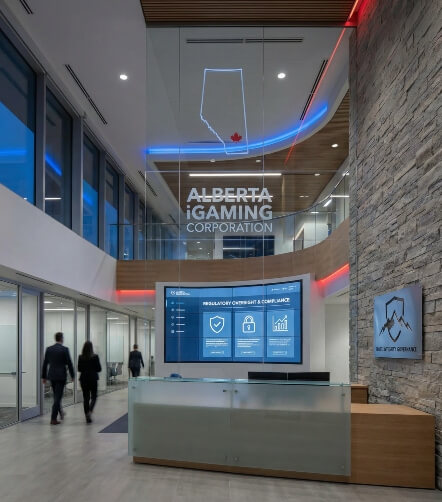
The Alberta iGaming Corporation (AiGC) is a new crown corporation created by the iGaming Act. AiGC’s job is to conduct and manage Alberta’s private online gambling market. In practice, AiGC negotiates and enforces commercial agreements with operators, collects the government’s share of revenue, and oversees the day-to-day market operations (similar to Ontario’s iGaming Ontario). It also works on responsible-gambling initiatives for example, AiGC has mandated that all Alberta iGaming operators obtain RG Check accreditation. In contrast, the AGLC remains the independent regulator ensuring compliance with the law and standards.
How Alberta’s Regulated iGaming Market Will Work
The regulated market in Alberta follows a strict timeline. Operators first register with AGLC and complete due diligence/compliance steps, then finalize a contract with AiGC, and finally wait for a formal “go-live” notice from AiGC before taking any bets. Alberta even allows pre-launch marketing: during registration operators can advertise and sign up customers, but no funds may be deposited and no bets placed until the launch date. After July 13, 2026, all regulated sites can go live. In effect, Alberta is channelizing play from illegal grey-market sites into legal, licensed platforms under the new framework.
Alberta Online Gambling Laws and New Market Rules
Under Bill 48, Alberta modernized its gambling laws. The GLCA was amended to legalize private online wagering, and GLCR was updated in Jan 2026 to spell out the new licensing rules. For instance, the updated regulations exempt iGaming from some registration requirements to allow a smooth launch, and they set out new advertising and social-responsibility obligations on operators. All licensed iGaming sites must follow these laws: obtaining AGLC registration, integrating with the self-exclusion program, and adhering to Alberta’s specific advertising codes (which ban targeting minors or using inappropriate promotional tactics).

Private iGaming Operators in Alberta
Prospective operators include major North American gaming companies. Companies licensed in Ontario (like FanDuel, BetMGM, BetRivers, theScore Bet) have announced plans to apply for Alberta licenses. By mid-March 2026, over 55 websites had expressed interest or begun the registration process. Several have already opened pre-registration promotions to build customer lists. To enter Alberta’s market, these operators must register with the AGLC, meet all standards (including RG Check), and sign agreements with AiGC; any operator running illegal gambling sites in Alberta will have to shut them down by launch day or forfeit eligibility.
Alberta Sports Betting and Online Casino Regulation
Alberta’s regulated market will finally legalize sports betting in addition to casino games. Before this change, only PlayAlberta’s lottery-style games were legal online. From launch, licensed sportsbooks and online casinos will be allowed to operate under AGLC oversight. The new law requires these operators to offer both slot/table games and sports wagering (including live betting) with full regulatory controls. In other provinces still without private markets, only government-run lottery sites exist, so Alberta’s regime is a major expansion of legal choice.

Play Alberta vs Private Operators in Alberta
Alberta currently has one government-run online site (PlayAlberta, run by WCLC under AGLC). With the new market, PlayAlberta will continue alongside multiple private platforms. The AGLC will still oversee PlayAlberta, but private operators will be regulated separately via the AiGC/AGLC framework. In practical terms, Albertans will have more choices: PlayAlberta’s existing casino and lottery games remain, while new licensed sites (both casino and sportsbook) from private companies will launch. All will follow the same player-protection rules (age-18+, self-exclusion, limits, etc.), but the private sites will compete on product variety and promotions.
Alberta Grey Market Gambling vs Regulated Market
Alberta’s grey-market gambling (unlicensed offshore sites) has been huge estimates suggest 70% of Alberta’s online gambling was with unregulated operators. The new regime is designed to shift that play into the legal market. After launch, anyone accessing unlicensed sites could be excluded from licensed platforms; operators in Alberta must cease any illegal gambling operations by July 13, 2026. The regulated market will have strict oversight, whereas the grey market had no provincial consumer protections. In short, the shift to regulation means online gambling is no longer a black market activity in Alberta.
Responsible Gambling Rules in Alberta iGaming
Alberta’s regulations emphasize player safety. All operators must be independently accredited for responsible gaming (the RGC’s RG Check certification is mandatory for entry). In addition, platforms must implement a wide range of harm prevention measures:
- They must track and intervene on high-risk gambling behavior (e.g. send alerts or require assessments for players showing problem-play signs).
- Operators must offer tools for self-limitation and self-exclusion for example, letting players set deposit/time limits or self-block themselves from play. Albertans can use one central system to exclude themselves from all licensed gaming (land or online) at once.
- Providers must also give players regular statements of account activity and remind them of their play time and spending.
These obligations, together with mandatory RG Check and continuous monitoring, are meant to create a very safe gambling environment.
Alberta iGaming Advertising and Player Protection Rules
Advertising in Alberta’s iGaming market is tightly controlled to protect minors and vulnerable people. The rules forbid marketing campaigns that target children or “high-risk” individuals, and they ban the use of cartoon characters or social media influencers likely to appeal to minors. Promotions and bonuses must include clear disclosures of any wagering requirements or limitations (no use of the word “free” unless it truly is). Sports celebrities may not promote gambling products unless it’s to raise awareness of responsible play. These provisions are backed by fines and penalties under the GLCR. In practice, all ads must display messages about problem gambling, and operators must enforce that no self-excluded or underage person is targeted by any campaign.
Why Alberta Is Regulating Online Gambling
The government’s goal is to make online gambling safer and to recapture lost revenue. Surveys indicated about 70% of Albertans who gamble online were using unregulated sites. By moving to a regulated system, Alberta can enforce strong consumer protections (age checks, RG programs, ad limits) and still allow private companies to serve the market. It also means gaming tax revenue stays in the province: licensed operators will pay a 20% levy on gross online bets, a share that will fund First Nations programs (2% of GGR) and responsible-gambling initiatives (1%). Officials have stressed that regulating the market is safer for Albertans and more sustainable for the government than leaving it in the black market.
Alberta iGaming Market Revenue and Economic Impact
Opening the iGaming market is expected to generate substantial new revenue. Under Bill 48, 80% of net iGaming income goes to operators and 20% to the government. On top of that, 2% of all bets (GGR) goes to Indigenous communities and 1% to gambling research/prevention. These levies could quickly add up: by comparison, Ontario’s regulated market reported about C$2.9 billion in online gaming revenue in fiscal year 2024–25. Industry analysts project that Canada’s total iGaming handle could reach roughly C$5–5.5 billion by 2026, with Alberta contributing a healthy slice given its population. The new legal market will also create jobs in tech, customer support, compliance and more in Alberta’s economy.

Alberta vs Ontario iGaming Market Comparison
Alberta’s approach closely follows Ontario’s 2022 model, but with some local twists. Ontario opened its market on April 4, 2022 and is Canada’s largest iGaming province. In its 2024–25 report Ontario had 50 operators and 2.6 million player accounts, with C$82.7B in wagers generating C$2.9B revenue. Alberta (with ~4.4M people) will have a similar structure (AGLC regulator + iGaming Corp). Both provinces require RG Check accreditation for operators and have 18+ age minimums. The map shows Alberta and Ontario as Canada’s only two private iGaming markets; other provinces still rely on government-run lottery sites only.
What Alberta’s New iGaming Market Means for Operators
For operators, Alberta offers a brand-new legal market and a clear regulatory path. Companies already in Ontario will find familiar elements (the dual oversight, revenue split, RG Check, etc.) in Alberta’s system. In fact, many Ontario-licensed brands have indicated they will apply for Alberta licenses. To participate, an operator must register with AGLC, upgrade its platform to Alberta’s technical standards, integrate with the province’s self-exclusion system, and execute a commercial agreement with AiGC. Operators already in the registration pipeline (over 55 by March 2026) were even allowed to advertise and gather sign-ups before launch.
However, they cannot accept any bets or deposits until launch day. Non-licensed companies running currently in Alberta have been warned: they must stop all unregulated gambling by July 13 or they will be barred from obtaining a license. In short, operators get access to thousands of new players, but must comply fully with Alberta’s rules (know-your-customer, anti-money-laundering, RG programs, etc.).

What Alberta’s Regulated iGaming Market Means for Players
For Alberta’s gambling consumers, the regulated market brings more options and stronger protections. Players will soon be able to choose from multiple licensed casinos and sportsbooks (in addition to PlayAlberta), benefiting from competition on game offerings and bonuses. At the same time, licensed sites will offer built-in safety: 18+ age checks, mandatory self-exclusion lists, deposit/time limit tools, and RG-Check-verified responsible gambling programs. Operators must also provide clear activity statements and include warnings on ads. All of these measures mean that after July 13, Albertans can gamble online with confidence in licensed platforms, knowing their play is monitored for fairness and safety.
FAQ questions and answers
- When will Alberta’s iGaming market launch? July 13, 2026 is the official launch date for Alberta’s regulated online casinos and sportsbooks.
- What was Bill 48? Bill 48 (2025) is the law that introduced the iGaming Alberta Act, legalizing private online gambling in Alberta. It set up the new regulatory structure (AiGC and AGLC roles) and rules (age 18+, revenue split, etc.).
- Who regulates Alberta iGaming? The AGLC is the government regulator that issues licences and enforces rules; the Alberta iGaming Corporation (AiGC) is a new agency that conducts and manages the market (signing operators, handling revenue).
- How do operators register? Operators must register with AGLC (under one of two categories: iGaming operator or supplier) and complete due-diligence, technical and self-exclusion requirements. Once AGLC approves, they sign a contract with AiGC. All fees and documents must be filed by July 13, 2026.
- What games are allowed? Licensed Alberta operators may offer online casino games (slots, table games, live dealer) and sports betting (fixed-odds and live bets). The new laws explicitly permit these private online games. (Note: traditional lottery games continue via PlayAlberta under AGLC).
- What player protections will exist? Operators must integrate Alberta’s centralized self-exclusion list, enforce age limits (18+), and offer tools for players to set deposit/time limits. They also must monitor play and intervene if risky behavior appears. All sites will require independent RG Check accreditation. Players receive account activity statements and reminders to play responsibly.
- What advertising rules apply? Ads cannot target minors or high-risk groups, cannot use cartoon or celebrity imagery that appeals to youth, and must disclose terms of any bonus offers. Offers can’t be labeled “free” if they have wagering conditions. Advertising must include problem-gambling messages and respect the province’s marketing codes.
- What happens to illegal (grey-market) sites? Any operator offering unregulated gambling to Albertans must stop by July 13, 2026 or else it will be ineligible for an Alberta licence. In other words, grey-market sites have to shut down operations in Alberta once the regulated market opens.
- How is the revenue shared? The government takes a 20% levy on operators’ net online gaming revenue. Out of the gross bets: 2% goes to First Nations community programs, 1% to responsible-gambling initiatives, and the remainder (about 97% of bets minus payouts) is the “net” which is split 80% to operators and 20% to Alberta.
- What age do I have to be? The minimum age to gamble online in Alberta is 18, the same as for casinos and racetracks in the province.

conclusion
Alberta is poised to become Canada’s next major online gambling market. By July 2026, private casinos and sportsbooks will operate legally under strict regulation. The transition from a nearly 100% grey market (70% unregulated share) to a licensed, 80/20 revenue model will increase player protections and return significant tax revenue to Alberta. For operators, it opens a new competitive field; for players, it means more choice with safety safeguards. This shift is framed by authorities as a responsible approach regulating an activity that Albertans already engage in, and turning it into a transparent, accountable industry.
sources and citation
- Government of Alberta – Alberta’s iGaming Strategy
- Government of Alberta – Alberta iGaming Phase 3 Fact Sheet
- SportsbookReview – “Alberta Regulated Gambling Market Given July 13 Launch Date”
- SBC Americas – “Alberta Commercial Online Gambling Bill Reaches Finish Line”
- Alberta Gaming, Liquor and Cannabis (AGLC) – Standards and Requirements for Internet Gaming
- Alberta Gaming, Liquor and Cannabis (AGLC) – Application Guide for iGaming Registration
- Gowling WLG – “Entering Alberta’s iGaming market: Registration roadmap for operators and suppliers”
- Gowling WLG – “Alberta iGaming requires RG Check and Ad Controls”
- Canadian Gaming Business – “Alberta follows Ontario by making RG Check mandatory for iGaming”
- Government of Alberta – “Clear rules, stronger protections for iGaming”
Recommended
- How do I create a depth map using the Blender camera?
- Arnold Schwarzenegger Teases Conan 3, Commando 2, and a New Predator Movie: What We Know So Far
- Forza Horizon 6 Is Every Japanese Driving Fantasy Rolled into One: Why Japan Feels Like the Perfect Setting
- How to Make Metahumans Look Realistic in Unreal Engine 5: Complete Guide for Artists and Developers
- Devil May Cry Characters Guide: Meet the Heroes, Villains, and Icons of the Series
- Actor Says “Let Them Cook”: Why Fans Should Give ’s TV Show a Chance
- Virtual Influencers: AI-Generated vs 3D-Modeled – Which Is Better?
- 12 Things To Know Before Jumping Into Pokémon Champions (Release Date, Platforms, Modes, and Battle Meta Basics)
- What Is the Purpose of the Camera View in Blender?
- Autodesk Releases 3ds Max 2027: New Features, Release Notes, and What’s New