




Meta description: HBO is developing a Baldur’s Gate TV series set after Baldur’s Gate 3. Here’s what’s confirmed, what’s unknown, and why “let them cook” matters.
As of 7 April 2026, reputable entertainment and games outlets report that HBO is developing a live-action Baldur’s Gate television series that follows the events of Baldur’s Gate 3, with a creative plan that includes new protagonists alongside familiar faces.
Is HBO really making a Baldur’s Gate 3 TV show?
HBO is reported to be developing a Baldur’s Gate TV series connected to Baldur’s Gate 3, with the project described as “in development” rather than a finished, cast-and-dated production.
Multiple sources align on core details: the show is being developed with Hasbro Entertainment as a partner, and it is positioned as a continuation after Baldur’s Gate 3 rather than a scene-for-scene remake of the game’s main quest.

What the HBO Baldur’s Gate series is adapting from Baldur’s Gate 3
Reporting indicates the series is set after the events of Baldur’s Gate 3 and focuses on the consequences of the game’s ending, with “old and new” characters dealing with what came before.
That framing matters because Baldur’s Gate 3 is built around player choice and multiple possible outcomes; a TV continuation, by definition, must commit to specific story states (for example, which outcomes are treated as “what happened” in this version of the story).
Baldur’s Gate 3 TV show release date and production updates
No release date has been announced. Coverage consistently describes the series as early-stage (“in development”), with reporting noting that details remain scarce and that casting has not been publicly announced (and, in at least one summary, is described as not yet begun).
Because the show is still at the development stage, the most reliable “production update” is simply what is not yet known: no publicly confirmed cast list, no publicly confirmed filming start, and no official premiere window as of 7 April 2026.

Will the HBO show continue Baldur’s Gate 3’s story or reboot it?
The most consistent reporting frames the project as a continuation—set after Baldur’s Gate 3—rather than a reboot or a direct retelling of the same plot beats.
At the same time, “continuation” does not guarantee that every player’s personalised version of events can remain intact. Even if the show begins “after” the game, it can still selectively establish a canon that compresses, omits, or reinterprets parts of the game’s branching outcomes to make a coherent television narrative.
Craig Mazin Baldur’s Gate 3 HBO showrunner details
Reporting describes Craig Mazin as the project’s key creative lead—attached to create, write, executive produce, and showrun.
Mazin’s current reputation in prestige TV is tied to two HBO titles often referenced in this context: Chernobyl and The Last of Us.
What makes this particular adaptation notable is that Mazin has publicly expressed deep familiarity with Baldur’s Gate 3, including statements in coverage that he spent “nearly 1000 hours” with the game, and reporting that he completed its high-difficulty Honour Mode.
Several reports also say Mazin plans to reach out to the game’s voice cast with ideas for participation “if possible,” echoing an approach used on The Last of Us (where game performers appeared on-screen, and at least one performer reprised the same role).
Beyond the Baldur’s Gate project itself, HBO/industry reporting has also described Mazin as operating under an exclusive deal with HBO and its streaming platforms, extended for an additional four years in 2024—context that helps explain why HBO would lean on him for a second large-scale game adaptation.

HBO’s track record with video game adaptations after The Last of Us
For HBO, The Last of Us is the clearest recent signal of how the network approaches prestige, big-budget game adaptations: strong emphasis on premium production values, story-first positioning, and public messaging designed to reassure existing fans without making the series inaccessible to newcomers.
In hard metrics, HBO reported the Season 1 premiere drew 4.7 million viewers across linear and HBO Max platforms in the United States on its first night. A separate HBO-cited report states the Season 1 finale reached 8.2 million first-night viewers across HBO Max and linear telecasts, also noting broader cross-platform growth through the season.
In awards terms, the Television Academy’s programme page lists 9 Emmy wins for The Last of Us (as displayed on the show’s “Awards & Nominations” page).
In casting strategy, HBO’s The Last of Us also normalised a specific kind of fan-pleasing continuity: integrating game performers into the show (including Merle Dandridge reprising Marlene, the same character she originated in the games). This precedent is a practical reason it is plausible—though not guaranteed—that Baldur’s Gate 3 performers could appear in some capacity, even if roles are re-imagined for live action.
Why video game adaptations change characters and story for television
Neil Newbon’s explanation of medium differences is one of the clearest “why” answers: television is largely a passive viewing experience, while games are active—players participate directly, shaping pacing and outcomes. That gap in agency alone forces structural change when a game becomes a linear show.
Adaptation scholarship often reinforces the same point in broader terms: even when an adaptation is respectful, it cannot literally reproduce the original. In an interview setting, Linda Hutcheon summarises this as adaptations being “repetition without replication,” emphasising that an adaptation must also stand as its own work for audiences who may not know the source in depth.
For Baldur’s Gate 3 specifically, the pressure point is amplified: it is not only a game with a known storyline—it is a game designed around branching player choices and divergent endings. In practice, a TV series must pick, blend, or strategically sidestep some outcomes to avoid collapsing under contradictory possibilities.

Neil Newbon “let them cook” quote about the Baldur’s Gate 3 HBO series
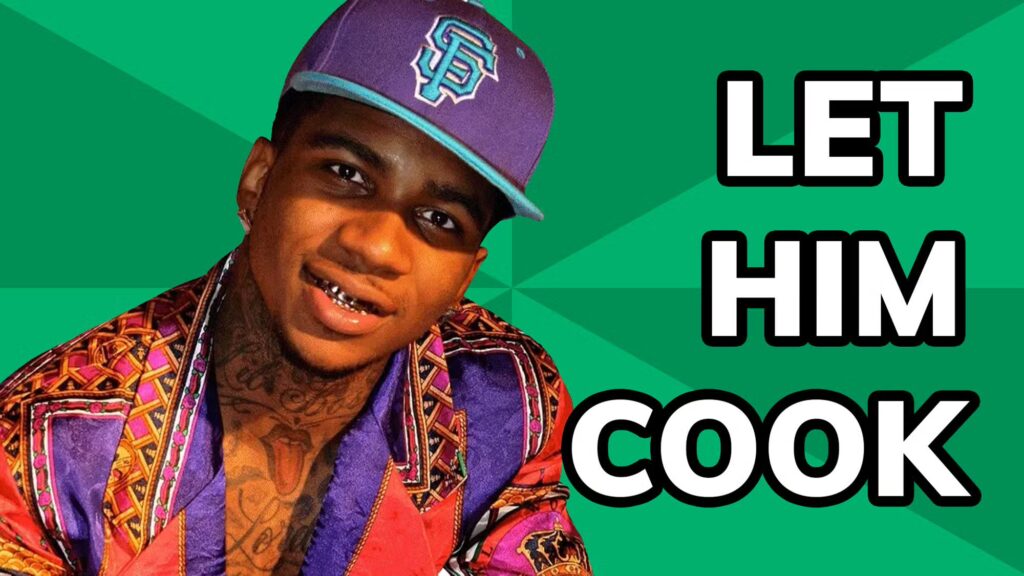
In a March 27, 2026 interview with FRVR, Neil Newbon urged fans to give the creative team “space” and specifically said it’s “really important that artistic endeavours are left to cook.” He also delivered the phrase that has become the headline-ready takeaway: “Let them cook, man.”
Within the same interview, the argument is not that fans must like the show—rather that reacting after seeing the work is healthier than pre-judging based on announcements, rumours, or fear of change.
Fan backlash to Baldur’s Gate 3 TV adaptation and Neil Newbon’s response
Early backlash centres on two connected anxieties: first, the difficulty of translating a choice-heavy RPG into a single “canon” television storyline; and second, the perception that the original developer is not directly involved in the series’ creation.
Newbon’s response directly addresses that emotional pattern: he recognises that worry often comes from love of the source material, but argues that “nothing’s happened yet”—and that audiences should watch the finished series before determining whether the adaptation succeeds or fails.
The takeaway for Baldur’s Gate 3 fans is that Newbon is advocating for process and patience: allow the showrunner and writers to build a coherent TV story first; judge the work on-screen second.
How to judge the Baldur’s Gate HBO show fairly as a Baldur’s Gate 3 fan
A fair standard is not “Does the show replicate my playthrough?”—because that is structurally impossible for a non-interactive medium built from a branching game. A more realistic—and more rigorous—set of criteria focuses on whether the adaptation accomplishes three things at once:
First, whether it functions as television: coherent episodic structure, emotionally intelligible character journeys, and clear stakes that do not require hundreds of hours of gameplay knowledge.
Second, whether it respects the tone that official descriptions associate with Baldur’s Gate—moral complexity, political intrigue, and character-driven storytelling—without sanding down the elements that make the world feel dangerous, strange, and funny.
Third, whether it chooses a “canon path” with enough care that it feels like a legitimate continuation rather than a flattening convenience—especially if beloved characters return and are used to “help or hinder” new protagonists.
Will Astarion be recast in the HBO Baldur’s Gate show?
As of 7 April 2026, no casting has been announced, and at least one summary of the project describes the casting process as not yet begun.
Recasting is therefore not only possible—it is the default assumption until confirmed otherwise. The more specific question (“Will Astarion appear at all, and if so, who plays him?”) depends on how the series uses returning characters from the game alongside new protagonists.
Newbon has publicly framed this as a story-first issue. In an April 2, 2026 FRVR interview, he said he hopes recasting does not happen, but also emphasised that he would not react as if he is “owed” the part.
Is Neil Newbon returning as Astarion for the Baldur’s Gate TV series?
No public announcement confirms Newbon’s involvement as of 7 April 2026.
What is reported, however, is that Mazin plans to reach out to Baldur’s Gate 3 voice cast members with ideas for participating “if possible,” which keeps the door open to many forms of involvement (cameos, new roles, or character continuity where feasible).
Separately, Newbon has expressed enthusiasm for continuing with Astarion in some form—saying he would love to keep playing him—while also recognising that adaptation is a different medium with different constraints.
Which Baldur’s Gate 3 companions could appear in the HBO series
While no returning-character list has been confirmed, press coverage of the franchise often highlights the core “Origin Companions” as the obvious pool of recognisable figures the show could draw on. One report explicitly names companions including Astarion, Gale, Karlach, Lae’zel, Shadowheart, and Wyll, describing them with their archetypes/classes in the game.
However, “could appear” should be treated as conditional. The same reporting that promises a mix of old and new also implies that returning characters may serve story functions that support new protagonists—meaning their screen time, arcs, and even their “canon status” could differ from any particular player’s ending.

Hasbro and Wizards of the Coast involvement in the Baldur’s Gate HBO series
The project is described as an HBO development in collaboration with Hasbro Entertainment, with reporting naming executive producers Gabriel Marano, Jacqueline Lesko, and Cecil O’Connor.
Hasbro’s own corporate communications describe Hasbro Entertainment as a dedicated entertainment division, and name Gabriel Marano as Head of Television within that division—useful context for why his name appears on the Baldur’s Gate project.
On the rights-holder side, Hasbro’s corporate “About” materials describe Wizards of the Coast as a Hasbro subsidiary responsible for major game brands (including Dungeons & Dragons), which is the broader IP framework Baldur’s Gate sits within.
Some reporting also describes a creative-consultant role for Chris Perkins, noting his background as a longtime story leader within the D&D ecosystem and identifying him as a consultant for the series.
Larian Studios role in the Baldur’s Gate 3 TV adaptation
Multiple reports say Larian—the developer of Baldur’s Gate 3—is not directly involved in producing the HBO series.
A key on-the-record detail comes via reporting that quotes game director and studio head Swen Vincke: when asked whether Larian writers were consulting, he replied “Not to my knowledge,” while also indicating Mazin reached out to speak and that the conversation left him hopeful.
This matters for two reasons. First, it intensifies the “canon problem”: the show may need to declare certain outcomes as “what happened” without the original narrative team in the room for day-to-day decisions. Second, it shapes fan expectations—some audiences read “no direct studio involvement” as a risk factor for character integrity, even when the showrunner is demonstrably a fan.
Frequently Asked Questions (FAQs)
- What exactly has been announced about the Baldur’s Gate 3 HBO show?
HBO is reported to be developing a Baldur’s Gate series connected to Baldur’s Gate 3, with Craig Mazin attached as creator/writer/showrunner and Hasbro Entertainment attached as a partner. - Is this a direct adaptation of Baldur’s Gate 3’s main story?
Reporting describes it as set after the events of Baldur’s Gate 3—more sequel/continuation than direct replay of the same plot. - Is the show live-action?
Coverage repeatedly frames it as a live-action series (and discusses live-action casting and potential recasts), though detailed production specifics remain limited at this stage. - Has HBO confirmed a release date?
No release date has been reported as confirmed as of 7 April 2026. - Has any casting been confirmed yet?
No cast list has been publicly confirmed in the cited coverage. - Will the show include characters from the game?
Coverage suggests a mix of new protagonists and returning characters, but without a confirmed character roster. - Will the original voice cast appear?
Reports state Mazin plans to reach out to voice cast members about participating “if possible,” but that is not the same as a confirmed on-screen reprise. - Is Larian Studios involved in making the TV series?
Reporting indicates Larian is not directly involved; Swen Vincke is quoted saying, regarding Larian writers consulting, “Not to my knowledge.” - Who is producing the series besides Craig Mazin?
Coverage names executive producers including Gabriel Marano, Jacqueline Lesko, and Cecil O’Connor, with Hasbro Entertainment as a collaborating partner. - Why are fans worried about a “canon ending”?
Baldur’s Gate 3 is choice-driven, with multiple possible endings; a TV continuation must commit to a single, coherent set of outcomes, which can conflict with individual player experiences.
Conclusion
The Baldur’s Gate HBO project is best understood, as of 7 April 2026, as a high-profile development announcement: a continuation after Baldur’s Gate 3, led by Craig Mazin, partnered with Hasbro Entertainment, and not directly produced by Larian Studios.
Neil Newbon’s “let them cook” message is less about lowering standards and more about judging the work in its intended medium—television—once it exists, while acknowledging that adaptation requires change because games and TV do not function the same way.
Sources and citation
- TheWrap:HBO in Talks for ‘Baldur’s Gate’ TV Series With ‘The Last of Us’ Creator Craig Mazin(Note: Accessing specific subscription-based reports may require a login)
- Entertainment Weekly:Baldur’s Gate TV series in the works at HBO
- The Verge:The Baldur’s Gate 3 TV show won’t involve Larian Studios
- ESPN (Dot Esports/ESPN overlap):Baldur’s Gate series reportedly set after the events of BG3
- Interviews & Cast Reactions
- Game Informer:Larian CEO Swen Vincke on TV Adaptations: “Not to my knowledge”
- FRVR (via Video Games on Sports Illustrated/Late Night Gaming):Neil Newbon on Astarion’s Future: “Let them cook”
- Corporate & Official Announcements
- Hasbro Newsroom:Hasbro Launches Hasbro Entertainment to Leverage Premiere IP
- Hasbro Corporate:About Wizards of the Coast – Company Overview
- Warner Bros. Discovery Pressroom:‘The Last of Us’ Series Premiere Drags In 4.7 Million Viewers
- Awards & Industry Metrics
- Television Academy:The Last of Us – Emmy Awards & Nominations
- Motion Picture Association:The Last of Us Finale Hits Series High of 8.2 Million Viewers
- Academic & Cultural Context
- Science and Media Museum:The challenge of adapting video games for the screen
Recommended
- PAYDAY: Aces High Release Date, Gameplay, Platforms, and Everything We Know About the New VR Co-Op Heist Game
- How to Create a Hyper Realistic Metahuman in Unreal Engine 5: Complete Workflow Guide
- Super Mario Galaxy Tickets Are Going On Sale: Release Date, When Tickets Open, and How to Book Early
- How do I align the camera to a specific axis in Blender?
- How do I create a camera shake effect in Blender?
- Closure of Midsummer Studios: What Happened to Jake Solomon’s Burbank Life Sim
- Best Render Farm: Guide to Top Cloud Rendering Solutions for 3D Artists & Game Developers
- Minecraft Movie Cast, Review, Fan Insights, and Box Office Performance: Full Breakdown After Release
- $270 Stranger Things: The Complete Series Blu-ray Collection Announced — 25 Discs, 148-Page Artbook, and Exclusive Hellfire Club D20 Dice
- The Director Of The Next Resident Evil Movie Has Already Beaten Requiem Twice – What It Means for the Film