










Best Nioh 3 skills for Samurai and Ninja (best skills list)
Nioh 3 features two combat styles, Samurai and Ninja, each with specific skills to improve damage and survivability.
- Running Water (Samurai): Executes a Ki Pulse through dodging to simplify stamina management.
- Flux & Flux II (Samurai): Restores extra Ki and extends combos when switching stances during a Ki Pulse.
- Deflect (Samurai): A parry skill used to negate damage, recover Ki, and charge the Arts gauge by timing a block.
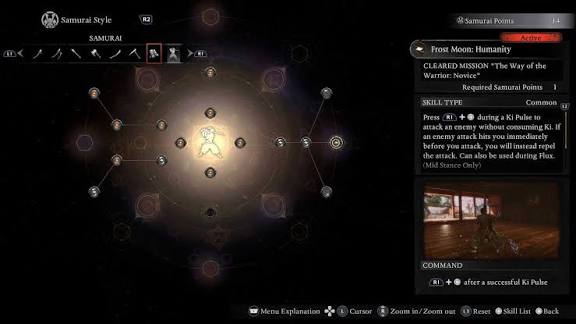
- Frost Moon Trinity (Samurai): Stance-switch Martial Arts including Heaven (damage), Humanity (parry), and Earth (retreating strike).
- Evade (Ninja): Restores Ki and Ninjutsu energy upon perfectly timed dodges.
- Footstool Jump (Ninja): Allows vaulting off enemies to reposition or land backstabs.
- Cicada Shell (Ninja): Automatically dodges one attack, leaving a decoy while teleporting the player behind the enemy.
- Armor Piercer (Ninja passive): Provides a 10% damage increase to Grapples and Final Blows.
- Backstab Life Siphon (Ninja passive): Heals the player when attacking enemies from the rear.
- Unshakable & Resolute Arts (Samurai passives): Reduces damage taken while attacking by 10% and cuts damage by 15% during Arts Proficiency.
Nioh 3 Samurai vs Ninja style differences
The two styles offer distinct mechanics that change combat strategy:
- Stances vs Ninjutsu: Samurai use Low, Mid, and High stances to adjust speed and damage. Ninjas use Ninjutsu techniques and specialized gadgets rather than stances.
- Ki Pulse vs Mist: Samurai use Ki Pulse to regain stamina. Ninjas use Mist to reposition and dodge without losing Ki.
- Defense vs Mobility: Samurai rely on blocking and Deflect parries. Ninjas prioritize agility, frequent dodging, and hit-and-run tactics.
- Damage Output: Samurai deal high burst damage with heavy weapons and Arts Proficiency. Ninjas deal rapid hits, status effects (poison/paralysis), and increased damage from behind.
- Ki Management: Samurai consume Ki quickly and require Ki Pulse mastery. Ninjas have lower Ki costs but must use Mist and Evade to maintain offensive momentum.
- Arts Gauge / Proficiency: Samurai fill the gauge to buff damage and chain Martial Arts. Ninjas refill the gauge and Ninjutsu energy through Mist dodges and quick strikes.
How to switch between Samurai and Ninja styles in Nioh 3
Style Shifting is a seamless mechanic used to combine the strengths of both styles.
- Performing a Style Shift: Press R2 (PS5) or RB (Xbox) to instantly swap stances, weapons, and movesets mid-combat.
- Visual and Loadout Change: Shifting swaps the character’s weapon and can change their cosmetic appearance based on presets.
- In-Combat Uses: Players can use Samurai for defense/blocking and shift to Ninja for mobility and fast counter-attacks.
- Burst Break Counters: Pressing R2/RB at the moment of an enemy’s red Burst Attack triggers a Burst Break, which counters the move and deals heavy Ki damage.
- Cooldown or Limits: There is no cooldown, allowing players to weave shifts into combos frequently.
- Adjusting Controls: Options exist to separate the inputs for Style Shifting and Burst Breaking (e.g., tap vs. hold).
Best skills to unlock first in Nioh 3 (early game priority order)
Prioritizing these skills early provides a foundation for combat and survival.
- Deflect (Samurai): Purchased for 1 skill point after the tutorial mission; provides a core parry mechanic.
- Evade (Ninja): First Ninja unlock; provides Ki recovery through timed dodges.
- High Stance and Low Stance (Samurai): Unlocking these ensures the player can adapt to different combat speeds and damage needs.
- Flux and Flux II (Samurai): Enhances stamina management by rewarding stance switching during Ki Pulses.
- Running Water (Samurai): A skill text found in the early game that automates Ki Pulses during dodges.
- Footstool Jump & Mid-Air Dodge (Ninja): Opens up aerial combat and better positioning for backstabs.
- Backstab Life Siphon (Ninja Passive): Provides healing sustain when attacking from behind.

Best Samurai skills in Nioh 3 for beginners (survivability + damage)
For new players, focusing on safety and consistent Ki management is vital.
- Deflect (Parry): Essential for avoiding damage and fueling the Arts Proficiency gauge.
- Ki Pulse Mastery (Running Water, Flux): Ensures the player rarely runs out of stamina during combos.
- Frost Moon: Heaven, Earth, Humanity: Offers tactical variety, including the Earth retreating strike for safety.
- Oppressive Strength (Passive): Prevents staggering during Martial Arts and strong attacks while Arts Proficiency is active.
- Unshakable & Resolute Arts (Passives): Stacking damage reduction to make the player tankier during attacks and power-up phases.
- Life Seals / Defense Mastery (Passives): Increases base Defense and provides Indomitable Spirit for faster Ki recovery when health is low.
Best Ninja skills in Nioh 3 for beginners (mobility + burst)
New Ninja players should focus on mobility and burst damage to avoid direct confrontations.
- Mist (Default Ninja Ability): Available by default, this functions like a Ki Pulse but relocates the character instantly. It allows for continuous attacking without consuming stamina and leaves a decoy shadow to confuse enemies while refilling Ninjutsu and Arts gauges.
- Evade: A perfect dodge mechanic that restores Ki and Ninjutsu energy when timed correctly. It is more forgiving than the Samurai parry and sustains offensive momentum.
- Footstool Jump & Mid-Air Dodge: Footstool Jump allows the player to leap off enemies to stagger them and reposition for back attacks. Mid-Air Dodge provides safety while airborne.
- Cicada Shell (Ninjutsu): A substitution technique that automatically teleports the player behind an enemy when hit, negating damage. It typically has three charges.
- Shuriken and Bombs (Basic Ninjutsu): Projectile tools for safe poking, interrupting enemies, or dealing burst AoE damage. They can apply status effects like poison or paralysis.
- Lightning Step (Ninjutsu): A mobility skill used to instantly close the gap between the player and ranged enemies or mobile bosses.
Deflect parry in Nioh 3 (how it works and best upgrades to get early)
Deflect is a core Samurai mechanic that functions as a perfect guard to nullify damage.
- How Deflect Works: It must be unlocked in the Samurai skill tree. It is performed by pressing the Guard button (L1 or F) just before an attack lands.
- Benefits: It restores Ki, provides a large boost to the Arts Proficiency gauge, and slightly staggers enemies. It does not significantly damage enemy Ki on its own.
- Limitations: Deflect cannot be used on red-glowing Burst Attacks; those require a Burst Break (R2 style shift) instead.
- Best Upgrades and Complements:
- High/Low Stance Parry Extension.
- Frost Moon: Humanity (provides a built-in deflection during an attack).
- Oppressive Strength Passive (prevents stagger during strong attacks when Arts is active).
- Ki Pulse: Heaven (Perfect Ki Pulse timing benefits).
- Heart Stat investment (increases Ki pool and recovery).
Arts Proficiency in Nioh 3 (best ways to charge and spend the gauge)
The Arts Proficiency gauge allows players to enter an empowered state for enhanced damage and skills.
- Charging the Arts Gauge: Building the meter is achieved through attacking, landing heavy attacks, performing perfect Ki Pulses, successful Deflects, or using Ninja Mist. The Skill stat and specific gear effects can also increase the charge rate.
- What Happens When Full:
- Samurai Style: Consumes the gauge to power up the next heavy attack and reduces Ki consumption while active.
- Ninja Style: Powers up the next heavy ninja attack or flurry of kunai.
- Best Ways to Use (Spend) Arts Proficiency:
- Chaining into Martial Arts like Iai Quickdraw or Sign of the Cross.
- Taking advantage of reduced Ki costs to perform heavy high-stance combos.
- Synergizing with Oppressive Strength and Resolute Arts passives for damage reduction and stagger resistance.
- Style switching (charging the gauge in one style and spending it in the other).
Best Ki Pulse upgrades in Nioh 3 (Running Water, Flux, and stamina management)
Ki Pulse is essential for Samurai stamina management, with several upgrades making the mechanic more efficient.
- Running Water: Automatically triggers a Ki Pulse when dodging. It is obtained via a skill text found in a chest in Hamamatsu Castle’s Crucible.
- Flux I and Flux II: Grants bonus Ki recovery when switching stances during a Ki Pulse. These are considered mandatory for maximizing Ki returns and maintaining long combos.
- Running Water: Heaven/Man/Earth: Stance-specific talents that apply Ki Pulse on dodge.
- Momentary Bliss (Ki Pulse Damage): Allows a perfect Ki Pulse to deal damage or a shockwave to enemies.
- Stamina Management Tips: Leveling the Heart stat increases the Ki pool, making it easier to handle missed timings.

Best stance switching skills in Nioh 3 (high damage combo tech)
Stance switching allows for extended combos and higher damage output in the Samurai style.
- Frost Moon Trinity (Heaven, Humanity, Earth): These martial arts act as linkers that change stances and perform special attacks during a Ki Pulse, maintaining the Arts Proficiency state.
- Flux: The foundational skill for resetting combo strings and gaining momentum.
- Weapon-Specific Finishers: Skills like Iai Quickdraw and Sign of the Cross can be unleashed faster when integrated into stance-switch sequences.
- Benefits of Switching: Mixing rhythms makes it harder for enemies to retaliate, breaks enemy Ki faster, and allows access to high-stance finishers mid-combo.
- Style Shifting: Style shifts can also be used as combo transitions, with Ninja passives like Supreme Shift rewarding shifts with teleports.
Mist in Nioh 3 explained (best Mist skills for safe repositioning)
Mist is a Ninja-only mechanic used to reposition and maintain offensive flow.
- What Mist Does: Triggered with Ki Pulse timing, it causes the character to perform a short-range teleport or dodge without consuming Ki, leaving an after-image decoy.
- Why Mist is Useful: It refills Ninjutsu and Arts gauges rapidly and allows the character to vanish from a current spot to avoid counters while continuing a combo.
- Best Mist Skills / Upgrades:
- Cicada Shell (serves as a backup auto-Mist).
- Supreme Shift (teleports the player behind enemies during a style-shift Burst Break).
- Lightning Step (gap-closer to complement Mist repositioning).
- Mist Mastery (ability to banish Yokai Realm puddles with Mist).
- Increased Agility (improves dodge/Mist distance and speed).
Evade in Nioh 3 explained (best timing upgrades for Ki recovery)
Evade is a fundamental Ninja skill that rewards perfect timing with resource recovery.
- Evade Mechanics: Unlocking this allows a perfectly timed dodge to restore both Ki and Ninjutsu energy.
- Timing Window: The window is more forgiving than a parry; dodging through an attack at the last moment triggers the refill.
- Ki Recovery Impact: Negates the stamina cost of dodging and actively refills the bar, allowing for relentless movement.
- Upgrades and Synergies:
- Combining with Footstool Jump and Mid-Air Dodge for aerial safety.
- Equipping armor with evasion Ki usage reductions or Agility Rank A.
- Using Running Water in Samurai style to maintain a similar rhythm across both forms.
- Heart stat investment to increase the base Ki pool.immediately after slipping past an enemy’s blow.
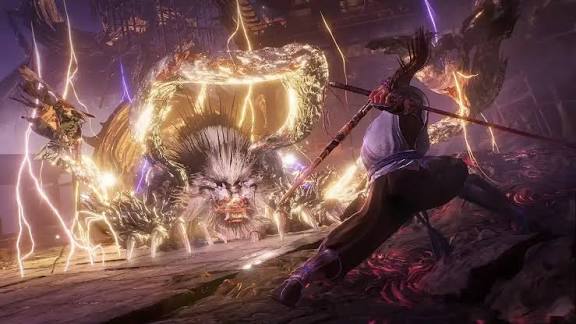
Best Ninjutsu skills in Nioh 3 (shuriken, bombs, gap closers, and ranged pressure)
Ninjutsu skills provide a range of offensive, defensive, and mobility tools to dismantle encounters.
- Shuriken & Throwing Weapons:
- Basic Shuriken: Fast, cost-effective blades used to interrupt enemies or pick off low-health targets.
- Paralysis Shuriken: Applies the paralysis status, immobilizing enemies for free Final Blows.
- Fire/Elemental Shuriken: Applies elemental effects like Burn or Shock; includes Uncanny Bolt (Lightning) for early-game advantages.
- Pinwheel Shuriken: A boomerang-style weapon that hits multiple times per throw, excellent for damage and status buildup.
- Bombs and Explosives:
- Gunpowder Bombs: Deals high Ki and Fire damage in an area, providing crowd control and staggering yokai.
- Caltrops (Makibishi): Scatters spikes to slow enemy movement, enabling kiting and ranged pressure.
- Smoke Bombs: Blinds enemies to allow for repositioning or free backstabs.
- Medusa Powder: Creates a poison cloud to drain a percentage of enemy health over time.
- Gap Closers & Movement:
- Lightning Step: A zero-Ki cost dash that instantly closes the gap to ranged or retreating enemies.
- Trembling Earth: Causes an area stagger through a ground quake to create breathing room when swarmed.
- Ranged Pressure & Tools:
- Burrow: Allows the player to dive underground to become invulnerable and reappear behind enemies.
- Cicada Shell: Automatically triggers a teleport behind an attacker when the player is hit.
- Projectile Talismans: Includes tools like Blinding Shell, Groundfire traps, and Flaming Heron feathers for elemental area denial.
- Scampuss Transform: A potential stealth form that makes the player invisible to enemies.
Footstool Jump in Nioh 3 (how to get behind enemies for big damage)
Footstool Jump is an early Ninja martial art that provides vertical mobility and positional advantages.
- Mechanism: Triggered by pressing the Jump button near an enemy. The character leaps off the enemy’s shoulders, staggering them.
- Back Attack Synergy: Repositions the player behind the enemy for Backstab Criticals and triggers passives like Backstab Life Siphon.
- Aerial Combat: Enables high-stance drop attacks and weapon-specific aerial Martial Arts, such as those for Claws or Kusarigama.
- Combo Integration: Used to avoid sweeping frontal attacks and continue offense from a blind spot.
- Unlock Requirements: Costs 1 Ninja skill point; typically requires Evade as a prerequisite.
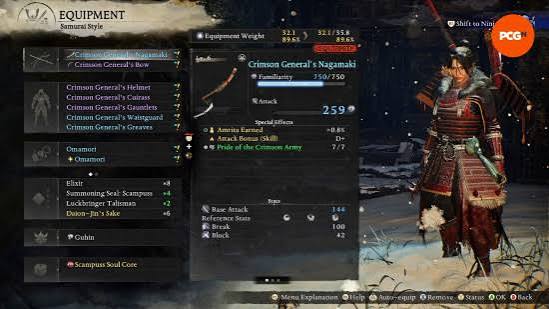
Best Samurai weapons for Samurai skills in Nioh 3 (what pairs with Ki Pulse + stances)
Samurai weapons focus on managing the rhythm of Ki Pulse and stance transitions.
- Sword (Katana): A balanced weapon ideal for Flux and Iai Quickdraw; teaches core mechanics of linking attacks and deflecting.
- Dual Swords: Rapid-fire combos that build Arts Proficiency quickly; features Sign of the Cross for high damage after a Ki Pulse.
- Spear: Provides reach and safety; features Spear Flourish for automated pulses and methodical Ki management through pokes.
- Axe & Odachi: High-power weapons that rely heavily on Pulse and Flux II to mitigate massive stamina consumption.
- Switchglaive: A versatile weapon that changes forms (scythe, etc.) specifically through expert stance switching.
- Cestus (Fists): Extremely fast weapons that require constant Ki Pulsing to maintain hyper-aggressive pummelling.
Best Ninja weapons for Ninja skills in Nioh 3 (what pairs with Mist + Evade)
Ninja weapons complement high-mobility playstyles and hit-and-run tactics.
- Dual Ninja Swords (Ninjato): Features rapid combos and movement skills like Abscission and Spinning Drill that pair well with Mist repositioning.
- Kusarigama (Chain Sickle): Offers long-range control and pull techniques, allowing the player to manipulate distance before using Evade.
- Tonfa: High Ki-damage weapons that encourage hyper-aggression; features Impenetrability (a parry-like ninjutsu) and dodge-strike combos.
- Hatchets: A hybrid ranged/melee weapon featuring Tile Shaker; ideal for hit-and-run strategies where Mist is used to reset distance.
- Splitstaff: A versatile staff/whip hybrid with Fluid Form; multi-hits help fill the Arts gauge while Mist helps herd groups of enemies.
- Claws (Hand Talons): The fastest weapons in the game; specialized for relentless offense and aerial finishers like the Izuna Drop.
Best hybrid Samurai-Ninja build skills in Nioh 3 (switching combos that actually work)
Hybrid builds use Style Shifting to cover mechanical weaknesses and create seamless combo chains.
- Supreme Shift (Passive): Teleports the player behind an enemy during a Style Shift Burst Break, facilitating immediate back attacks.
- Strategic Transitions: Using Samurai moves like Frost Moon: Earth to retreat, followed by a Ninja Style Shift and Lightning Step to re-engage.
- The Ki Break Cycle: Breaking enemy Ki with heavy Samurai strikes (Odachi/Spear) before shifting to Ninja for rapid status application or finishers.
- Resource Looping: Alternating between Samurai Ki Pulse and Ninja Evade to keep stamina topped up throughout a prolonged engagement.
- Passive Stacking: Combining Samurai damage mitigation (Unshakable/Resolute Arts) with Ninja sustain (Backstab Life Siphon).
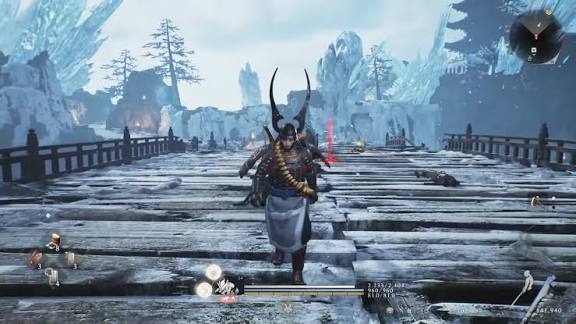
How to get Samurai and Ninja Locks in Nioh 3 (fast skill point farming routes)
Locks are consumable items that grant skill points without requiring combat proficiency.
- Exploration: Locks are found on specific corpses and in treasure chests; the region map collectible tracker shows missed Locks.
- Mission Rewards: Awarded for completing Training Dojo missions (Way of the Warrior/Ninja) and specific side quests.
- Twilight Missions & NG+: Harder versions of missions and higher difficulty cycles (New Game+) refresh Lock locations and rewards.
- Boss & NPC Drops: Defeating human bosses, dojo instructors, and unique named NPCs often yields Locks.
- Farming and Trades:
- Co-op Twilight mission replays.
- Kappa hunting for high-value drops.
- Trading Yokai Teardrops for Memorandums with friendly yokai merchants.
- Potential secret interactions, such as shooting and then petting a Scampuss.
- Efficient Routing: Speedrunning missions using Catwalking and Sneak Thief scrolls to reach Lock chest locations without fighting.
How to increase skill capacity in Nioh 3 (texts, memorandums, and efficient routing)
Skill Capacity determines the maximum number of passive skills you can equip in the Samurai, Ninja, and Common categories. Each skill has a specific capacity cost.
- Increasing Capacity with Texts:
- Secret Skill Texts unlock a new skill for purchase and increase the capacity of the corresponding category by +1.
- They are primarily found in treasure chests, as mission rewards, or by defeating bosses and dojo masters.
- Increasing Capacity with Memorandums:
- You must collect four Memorandums of the same type (Samurai, Ninja, or Warrior/Common) to increase capacity by +1.
- To apply the increase, you must pray at a shrine while holding four of the same type.
- Memorandums can be found as drops from specific enemies (human, ninja, or yokai), through exploration, or by trading Yokai Teardrops with a merchant.
- Efficient Routing for Capacity:
- Complete Dojo Missions (Adept level) as soon as they become available for texts and mastery skills.
- Progress through story milestones to receive memorandums as rewards.
- Interact with Scampuss and use hot springs to collect Yokai Teardrops for trading.
- In NG+, hunt for new secret texts that drop to further expand capacity.
- Farm specific enemy types that correspond to the memorandum category you need.
Best skills for Crucible runs in Nioh 3 (safe picks for high-risk zones)
The Crucible features high difficulty, buffed enemies, and penalties like Life Corrosion, which drains health over time. Specific skills are recommended for survivability.
- Running Water (Samurai): Ensures stamina management by allowing Ki Pulses via dodging, which is vital in high-punishment zones.
- Deflect (Parry): Negates damage and charges the Arts gauge for burst damage, though it requires precise timing.
- Backstab Life Siphon (Ninja passive): Provides essential healing when hitting enemies from behind, helping to counter the health drain from Life Corrosion.
- Cicada Shell (Ninjutsu): Acts as an emergency auto-dodge that teleports the player behind the attacker, negating potentially lethal damage.
- Unshakable & Resolute Arts (Samurai passives): Offers damage reduction while attacking and during Arts Proficiency.
- Evade (Ninja skill): Restores Ki on perfect dodges, creating openings and maintaining stamina against buffed enemies.
- Smoke Bomb (Ninjutsu tool): Breaks enemy tracking to allow for safe healing or repositioning when overwhelmed.
- Guardian Spirit Talents (Barrier & Extraction): Counteracts Dark Realm penalties and helps fuel Living Weapon or Yokai Shift.
- High Damage Martial Arts: Using moves like Frost Moon: Heaven to quickly eliminate smaller threats before focusing on larger enemies.
- Common Stat Boosts: Utilizing Defense Mastery or Attack Mastery for incremental improvements to survivability and damage output.
FAQ
- What are the two combat styles in Nioh 3?
Samurai and Ninja. Samurai focuses on stances, Ki Pulse, blocking, and heavy damage, while Ninja emphasizes mobility, Ninjutsu tools, Mist repositioning, and hit-and-run tactics. Players can freely switch between them using Style Shift. - What skills should I unlock first in Nioh 3?
Deflect (Samurai) and Evade (Ninja) should be your first priorities. After those, unlock Flux, Running Water, and Footstool Jump. These provide the core mechanics for stamina management, damage avoidance, and positioning. - How does Style Shifting work and is there a cooldown?
Press R2 (PS5) or RB (Xbox) to instantly swap between Samurai and Ninja mid-combat. There is no cooldown, so you can weave shifts into combos freely. Pressing it during an enemy’s red Burst Attack triggers a Burst Break counter. - What is the difference between Ki Pulse and Mist?
Ki Pulse is the Samurai stamina recovery mechanic, triggered by pressing the pulse button after an attack. Mist is the Ninja equivalent but also teleports the character a short distance, leaves a decoy, and refills Ninjutsu and Arts gauges. Both serve the same core function of sustaining offensive momentum. - How do I parry in Nioh 3?
Unlock the Deflect skill in the Samurai tree for 1 skill point. Press the Guard button (L1 or F) just before an enemy attack lands. A successful Deflect negates damage, restores Ki, and charges the Arts Proficiency gauge. Note that red-glowing Burst Attacks cannot be Deflected and require a Burst Break instead. - What is Arts Proficiency and how do I charge it?
Arts Proficiency is a gauge that empowers your next heavy attack or Martial Art when full. It charges through attacking, perfect Ki Pulses, successful Deflects, and Ninja Mist. Spending it enables powerful finishers like Iai Quickdraw or Sign of the Cross, along with reduced Ki consumption and damage mitigation from passives. - What are the best weapons for a beginner Samurai build?
The Sword (Katana) is the most balanced choice, teaching core mechanics like Flux and Iai Quickdraw. Dual Swords are also beginner-friendly due to fast Arts Proficiency buildup. The Spear offers safety through reach. Avoid heavy weapons like the Axe until you are comfortable with Ki Pulse timing. - How do I get more skill points in Nioh 3?
Skill points come from combat proficiency with weapons and from consumable items called Locks. Locks are found in treasure chests, awarded from Dojo missions and side quests, dropped by human bosses, and farmable through co-op Twilight missions and Kappa hunting. - How do I increase my skill capacity to equip more passives?
Collect Secret Skill Texts to gain +1 capacity per text in the corresponding category. Additionally, gather four Memorandums of the same type (Samurai, Ninja, or Common) and pray at a shrine to gain +1 capacity. Memorandums drop from enemies, exploration, and Yokai Teardrop trades. - What skills are essential for surviving the Crucible in Nioh 3?
Running Water and Evade for stamina management, Deflect for damage negation, Backstab Life Siphon to counter Life Corrosion health drain, Cicada Shell as an emergency auto-dodge, and Unshakable plus Resolute Arts for damage reduction. Smoke Bombs are also recommended for breaking enemy aggro when overwhelmed.
Conclusion
Nioh 3 provides a deep combat experience by allowing players to utilize both Samurai and Ninja styles, or a hybrid of both. Success relies on mastering several core mechanics:
- Samurai Mechanics: Focused on stability and power using Ki Pulse, Deflect, and Frost Moon stance attacks.
- Ninja Mechanics: Focused on mobility and burst damage using Mist, Evade, and Footstool Jump.
- Shared Systems: Utilizing stance switching, Arts Proficiency, and Style Shifting to adapt to difficult challenges like Crucible zones.
To effectively progress and dominate the end-game, players should follow these strategies:
- Prioritize early unlocks: Focus on foundational skills like Running Water, Deflect, Evade, and essential passives.
- Expand techniques: Use Samurai and Ninja Locks to access advanced skills.
- Increase capacity: Collect Skill Texts and Memorandums to allow more abilities to be equipped simultaneously.
- Explore and train: Complete dojo missions and explore map corners to find valuable skill points and capacity boosts.
By mastering these systems, players can manage stamina efficiently, execute long combos, and utilize cinematic finishers to defeat the fiercest yokai.
Sources and Citations
- Fextralife
- Fextralife — Nioh 3 Wiki
- Skills hub: Weapon Skills
- Style mechanic: Style Shift
- Fextralife — Nioh 3 Wiki
- Wccftech
- TheSixthAxis
- TheSixthAxis — Nioh 3 Preview – Samurai or Ninja? Why not fight as both?
- AltChar
- PC Gamer
- PC Gamer — How to unlock parry in Nioh 3
- PC Gamer — Running Water location + Ki Pulse tips
- Phrasemaker
- Phrasemaker — Nioh 3: Best Skills Guide (Samurai/Ninja/Common)
- The Nerd Stash
- The Nerd Stash — The Best Ninja Skills in Nioh 3
- Insider Gaming
- Insider Gaming — Best Ninjutsu Setup in Nioh 3
- Times of India
- Times of India — Everything you need to know about the Skill System in Nioh 3
- GameRant
- Reddit community tips (threads)
- r/Nioh — NG+ skills points
- r/Nioh — A Short Intro Guide to NG+
- r/Nioh — Tips/builds for Ninja in NG+
- r/Nioh — Nioh 3 builds (general thread)
- r/Nioh — Ki Pulse: “when am I supposed to use it?”
Recommended
- How to Create a Metahuman from a Photo: The Ultimate Guide to Digital Character Creation
- How do I change the camera’s near and far clipping distances in Blender?
- Devil May Cry Netflix Series: Release Date, Plot, Cast, and Everything We Know So Far
- Hades 2 Aphrodite Guide: Boons, Character Design, and Gameplay Mechanics
- How to Create Metahuman Child Characters and Convert MakeHuman Models to Metahuman in Unreal Engine 5
- How Do I Create a First-Person Camera in Blender?
- How do I align the camera to a specific axis in Blender?
- Can you zoom the camera in Blender?
- Flow Made With Blender Wins Oscar: Latvia’s Indie Animated Feature Film Making History
- Blender Roll Hair Curves Geometry Nodes Preset: Comprehensive Guide