









Spoiler-free Project Hail Mary review: Is it worth seeing in theaters?
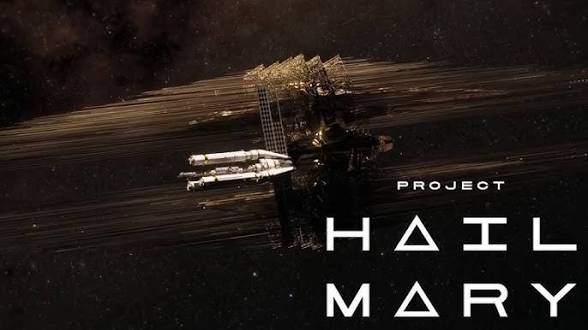
Project Hail Mary delivers the kind of spectacular sci-fi adventure that audiences have been missing. It’s a clever, sincere space epic brimming with life, energy, and a genuine love of science. Directed by the dynamic duo of Phil Lord and Christopher Miller, the film deftly balances awe-inspiring spectacle with heartfelt storytelling. From the gripping opening scene, where astronaut Ryland Grace (Ryan Gosling) awakens alone on a spacecraft with no memory, to the stunning interstellar vistas, Project Hail Mary commands the big screen.
It was literally filmed for IMAX, and it shows – the visuals are dazzling and immersive, making this a must-see in theaters for full impact. Early critics are raving: the film holds a 95% Rotten Tomatoes score with a consensus that it’s “visually dazzling… a near-miraculous fusion of smarts and heart,” carried effortlessly by Gosling’s star power. In short, yes – it’s absolutely worth seeing in theaters, especially if you enjoy thought-provoking yet crowd-pleasing sci-fi. With its high-stakes plot, inventive humor, and emotional payoff, Project Hail Mary will remind you why movies are meant to be seen on the big screen.
Project Hail Mary review — film vs the novel: what changed and why
Screenwriter Drew Goddard and directors Phil Lord and Christopher Miller maintain the novel’s nonlinear structure and problem-solving tone. Significant changes include the addition of an AI companion named “Mary” (voiced by Priya Kansara) to externalize Ryland Grace’s thoughts and a comedic security guard (Lionel Boyce) to add levity. The film streamlines the novel’s scientific and geopolitical subplots for pacing, focusing more on Grace’s personal mission than global collaboration. A notable emotional addition is a scene featuring Eva Stratt (Sandra Hüller) performing karaoke. Importantly, the film preserves the book’s original climax and poignant ending.
How faithful is the adaptation to Andy Weir’s original book?
The movie is an incredibly faithful adaptation that retains major plot beats, dialogue, and the mystery-driven structure. It preserves Grace’s humor and the methodical nature of the science-based problem-solving. Andy Weir was closely involved as a producer, ensuring the film didn’t simplify the core scientific logic or invent unnecessary plot twists. Key elements like the communication process with Rocky and the biological nature of the threat are handled with the same consistency found in the source material.

Spoiler-filled Project Hail Mary review: key plot beats explained
The story follows Dr. Ryland Grace, a disgraced biologist turned teacher, who wakes up with amnesia on a starship with two dead crewmates. Flashbacks reveal that Earth is dying due to “Astrophage,” a microbe consuming solar energy. Grace was conscripted by project lead Eva Stratt for a one-way mission to Tau Ceti, a star immune to the microbe.
In space, Grace encounters “Rocky,” an alien engineer from the 40 Eridani system whose world is also threatened. They discover “Taumoeba,” a predator of Astrophage, and breed a strain to save their respective stars. In the climax, Grace realizes Rocky’s ship is doomed by a Taumoeba leak; he sacrifices his return to Earth to save his friend. The film ends with Grace living on Rocky’s planet, Erid, teaching science to alien children while humanity survives back on Earth.
Cast and performances: a deep dive into the acting in Project Hail Mary
Ryan Gosling leads the film, portraying Grace with a mix of vulnerability, dorky humor, and intelligence. Rocky is realized through a combination of VFX and puppetry by James Ortiz, creating a believable and endearing bond with Gosling. Sandra Hüller plays Eva Stratt with icy authority and subtle empathy. The supporting cast includes Ken Leung and Milana Vayntrub as Grace’s deceased crewmates, and Lionel Boyce as the humorous guard, Carl. The performances ground the high-concept sci-fi in emotional truth, particularly the chemistry between Gosling and the alien puppet.
How Ryan Gosling carries Ryland Grace — performance review
Gosling carries the majority of the film, portraying Grace not as a traditional hero but as a relatable everyman science teacher. He successfully conveys the intensity of scientific discovery and the fear of isolation. His performance covers a wide emotional range, from comedic “Nice Guys”-style reactions to the heartbreaking resolve required for his final sacrifice. Critics note that his commitment to the role makes the interaction with scientific data and alien puppets feel authentic and engaging.

How Phil Lord and Christopher Miller handled tone, humor, and emotion
Directors Lord and Miller bring their signature balance of humor and heart to the story. They maintain a playful spirit through Grace’s witty monologue and visual gags while allowing the high-stakes drama to remain impactful. The film is paced effectively over its 156-minute runtime, using music and sincere emotional beats—like Stratt’s karaoke scene—to emphasize themes of hope and camaraderie. They avoid contrived melodrama, trusting the central friendship and the scientific stakes to drive the narrative’s emotional payoff.
The Rocky friendship: why the alien bond is the heart of Project Hail Mary
The core of the film is the friendship between Grace and Rocky. Their relationship evolves from cautious first contact to a deep, loyal partnership built on mutual respect and shared curiosity. Rocky’s personality is established through his musical language, distinctive “body language,” and protective nature toward Grace. This bond culminates in Grace’s decision to stay in space to save Rocky, underscoring the film’s theme that cooperation and friendship are universal values that transcend species and biology.
Project Hail Mary review — scientific accuracy: what the film gets right (and what it doesn’t)
The film adheres to hard sci-fi principles by portraying realistic problem-solving, linguistics, and the constraints of interstellar travel. It respects physics by omitting sound in space and using rotation for gravity. While the “Astrophage” itself is a fictional microbe that violates some laws of thermodynamics, it is treated with internal consistency. The movie uses real-world concepts like extremophiles to explain the science. Minor liberties are taken regarding the speed of scientific breakthroughs and the omission of some relativistic time dilation effects for the sake of narrative pacing.
Visual effects and production design in Project Hail Mary: IMAX and spectacle explained
The film features a budget exceeding $200 million and was shot with IMAX cameras, utilizing a dynamic aspect ratio that switches from 1.43:1 for space sequences to 2.39:1 for Earth flashbacks. Production design by the team emphasizes a utilitarian look for the Hail Mary ship, incorporating practical sets, a hexagonal lab, and a rotating centrifuge.
Rocky was created through a blend of practical puppetry by James Ortiz and Neal Scanlan and CGI by Framestore, resulting in a seamless character with iridescent skin and bioluminescent pulses. Cinematographer Greig Fraser used high-contrast lighting and transferred digital footage to 35mm film for an analog texture. Key visual spectacles include the Petrova line, the atmosphere of planet Adrian, and the dizzying spin-out sequence of the ship.

Soundtrack and pacing: how the score shapes the film’s emotional arc
Composer Daniel Pemberton’s score combines electronic and orchestral elements, utilizing specific motifs for Grace and unique experimental sounds for Rocky. The soundtrack features a diegetic performance of Harry Styles’ “Sign of the Times” by Sandra Hüller and Louis Armstrong’s “What a Wonderful World.” The 156-minute film is paced by alternating between timelines, accelerating in the final act while allowing emotional moments to linger. Sound design incorporates the silence of space, the mechanical noises of the ship, and a custom “voice” for Rocky composed of clicks and humming tones.
Project Hail Mary review — best scenes, standout lines, and memorable moments
Key highlights include Stratt’s “Sign of the Times” karaoke montage, the wordless first contact scene, and the “Friend!” communication breakthrough. Standout lines include Grace’s retort about riding a bike to work and his final goodbye where he calls Rocky his best friend. Action-heavy moments like Rocky rescuing Grace from a high-G spin on Adrian are balanced with humorous bits, such as Grace’s “Yes! Science!” outburst and Rocky’s confusion over the idiom “holy moly.” The film also features a poignant flashback of Grace as a teacher and a final image of him living on Rocky’s home planet.
Where to watch Project Hail Mary: theatrical release windows and streaming expectations
Project Hail Mary premiered in London on March 9, 2026, followed by a wide theatrical release on March 20, 2026. It is distributed by Amazon MGM Studios in the U.S. and Sony Pictures internationally, with a focus on IMAX 70mm and digital formats. The film will maintain an exclusive theatrical window for 45 to 75 days before debuting on Amazon Prime Video, likely in May or June 2026. Physical media, including 4K UHD and Blu-ray, is expected by mid-summer 2026.
Box office outlook and early critic consensus for Project Hail Mary
The film holds a 95% Rotten Tomatoes score and favorable Metacritic reviews. Domestic opening weekend projections range from $70 million to $78 million, with a total global potential exceeding $500 million. Analysts point to Ryan Gosling’s star power, the reputation of directors Lord & Miller, and the popularity of Andy Weir’s novel as key drivers. To achieve profitability, the film needs to clear roughly $500 million globally to cover its $248 million production budget and $100 million marketing costs. Early audience reactions suggest a high CinemaScore and strong long-term box office prospects.
Final verdict: who should see Project Hail Mary and who might skip it?
Who should absolutely see it:
Project Hail Mary is a must-see for fans of smart, character-driven science fiction like The Martian, Interstellar, and Contact. Readers of Andy Weir’s novel will appreciate the faithful adaptation that brings the science and characters to life. Ryan Gosling delivers a charismatic performance that carries the film, appealing to fans of his previous dramatic and comedic work. It is suitable for families with older children (10+), offering an uplifting message of friendship and cooperation. Science enthusiasts will enjoy the respectful treatment of physics and biology. Finally, cinephiles should see it in theaters for the top-tier IMAX visuals, sound design, and practical puppetry used to create the alien, Rocky.
Who might consider skipping:
Those who dislike the sci-fi genre or space settings may not be won over. The film features long stretches of a solitary character solving scientific puzzles, which might feel slow for those who prefer nonstop ensemble dialogue or fast-paced space operas like Star Wars. Casual viewers may find the 2-hour and 36-minute runtime daunting. While mostly clean, it is not recommended for children under 8 who might find the suspense or the alien’s appearance frightening. Lastly, if you prefer action-heavy laser battles over strategic problem-solving and emotional depth, the film’s quieter, more cerebral moments might not appeal to you.
Frequently Asked Questions (FAQs)
- What is Project Hail Mary about (without spoilers)?
It follows Ryland Grace, an amnesiac astronaut who wakes up on a ship light-years from Earth. He discovers he is on a mission to save humanity from “Astrophage,” a microbe draining the Sun’s energy. Along the way, he meets an intelligent alien ally and together they attempt to save both their home planets. - Is Project Hail Mary based on a book and who wrote it?
Yes, it is based on the 2021 novel by Andy Weir, author of The Martian. The screenplay was adapted by Drew Goddard, and Weir served as a producer to ensure the film stayed true to the source material. - Who directed the film and who are the filmmakers behind it?
It was directed by Phil Lord and Christopher Miller. The production team included cinematographer Greig Fraser, composer Daniel Pemberton, and producers Amy Pascal and Ryan Gosling. - Who stars in Project Hail Mary?
Ryan Gosling stars as Ryland Grace. The cast also features Sandra Hüller as Eva Stratt, Ken Leung as Yáo Li-Jie, Milana Vayntrub as Olesya Ilyukhina, and Lionel Boyce as a security officer. James Ortiz provides the voice and puppetry for the alien, Rocky. - Who or what is “Rocky” in the movie?
Rocky is an intelligent, rock-like alien from the 40 Eridani system. He breathes ammonia and lives in extreme heat. He and Grace form a deep bond while working together. Rocky was created using a mix of practical puppetry and CGI. - How different is the movie from the novel Project Hail Mary?
The film is very faithful, keeping the major plot beats and the ending intact. It trims some technical and political subplots for pacing. New additions include a voice AI named “Mary” to help externalize Grace’s thoughts and a karaoke scene featuring Eva Stratt. - How scientifically accurate is Project Hail Mary?
It is highly accurate for speculative fiction, focusing on real physics, chemistry, and math to solve problems. It avoids faster-than-light travel and uses centrifugal force for gravity. While the “Astrophage” microbe is fictional, its behavior is treated with logical consistency. - Is Project Hail Mary appropriate for kids and what is the rating?
It is rated PG-13 due to mild language and thematic intensity regarding the threat of extinction. It is generally appropriate for middle schoolers and up, though it may be too dialogue-heavy for younger children. - When will Project Hail Mary be available for streaming or at-home viewing?
Released in theaters on March 20, 2026, it is expected to arrive on Amazon Prime Video roughly 45 to 75 days later (likely May or June 2026). A physical media release is expected in the summer of 2026. - Should I watch Project Hail Mary in IMAX (or Dolby Cinema), or is standard fine?
IMAX is highly recommended because the film was shot with IMAX cameras. The space sequences utilize an expanded aspect ratio, showing 26% more image than standard screens. Dolby Cinema is also a great choice for its superior sound and HDR.

Conclusion
Project Hail Mary is a standout science fiction film that successfully combines hard science with deep emotional resonance. Directed with a balance of humor and heart by Phil Lord and Chris Miller, the movie features a powerful performance by Ryan Gosling and introduces an iconic new alien character in Rocky. It serves as an optimistic celebration of friendship and global (and interstellar) cooperation. Whether viewed as a big-budget spectacle or an intimate story of two unlikely friends, it is a rare, original blockbuster that delivers on every level. It is a definitive sci-fi event that honors its source material while creating a unique and unforgettable cinematic experience.
Sources and Citations
- Project Hail Mary (film) – Wikipedia
Comprehensive details on production, cast, plot, and reception. - DiscussingFilm: ‘Project Hail Mary’ Review – Ryan Gosling’s Star Power Shines Bright in Unique Space Adventure
By Tyler Taing (March 17, 2026): In-depth review praising the film’s narrative structure, visuals, and performances. - Nerdist: PROJECT HAIL MARY Made Me Romantic About Movies (Review)
By Michael Walsh (Mar 10, 2026): Review highlighting Gosling’s performance and the film’s emotional impact, as well as noting its faithfulness to the book. - Chicago Sun-Times: Movie review: Gosling, Lord and Miller make science fun in ‘Project Hail Mary’
By Richard Roeper (Mar 17, 2026): Review applauding the film’s fun tone and comparing it to The Martian, with insight on performances. - Men’s Journal: ‘Project Hail Mary’: Release Date, Cast and Twisty Plot
By Ryan Britt (Feb 9, 2026): Preview article with plot summary, cast list, and notes on tone vs The Martian. - Boxoffice Pro: Weekend Preview: PROJECT HAIL MARY Might Be the Biggest Launch of 2026
By Shawn Robbins (Mar 18, 2026): Forecast analysis predicting a strong opening weekend and discussing audience tracking and critical reception. - Skeptical Inquirer: Project Hail Mary, Astrophage, and the Real Extremophiles
By Dan Wilson (Mar 16, 2026): An article examining the science of the book/film, confirming where it mirrors real science and where it speculates. - Project Hail Mary (film) – Critical Response and Box Office (Wikipedia Section)
Aggregated statistics for Rotten Tomatoes and Metacritic, and notes on box office projections. - The Hollywood Reporter: Phil Lord and Chris Miller on Practical Effects and Creating Rocky
Interview regarding the collaboration with Neal Scanlan’s creature shop for the character of Rocky. - Collider: Daniel Pemberton to Score ‘Project Hail Mary’
Coverage of the Comic-Con 2025 panel announcement regarding the film’s composer and context on previous collaborations.
Recommended
- Sony May Be Drastically Shifting Its PC Strategy – Report: What It Means for PlayStation PC Ports
- Virtual Influencers: Exploring the Rise of Digital Personas in Modern Marketing
- Best Blender Render Settings: Ultimate Guide to High-Quality Renders Without Wasting Time
- What is the clipping range in Blender cameras?
- Blender Add-ons for Animators: Why The View Keeper Stands Out
- The Outer Worlds Mods – Best Mods, Installation Guide, and Community Insights
- Devil May Cry: Complete Guide to the Iconic Action Franchise, Characters, and Latest Updates
- Nobody Wants to Die Noir Retrofuturistic Detective Game: Trailer, Reviews & Player Feedback
- Oscars 2026: Everything You Should Know (98th Academy Awards Date, Host, Nominees, and How to Watch)
- How do I set a camera to render in orthographic mode in Blender?