





Executive Summary: AionGuard was an ambitious open-world fantasy RPG in development at Avalanche Studios around 2008–2010. It was eventually canceled abruptly when its publisher withdrew support via a terse text message. Recently, Avalanche co-founder Christofer Sundberg revealed that AionGuard “had everything” of Pearl Abyss’s modern game Crimson Desert, suggesting it was far ahead of its time.
This article traces AionGuard’s history: its concept, hype, gameplay features (dragon riding, magic combat, golem transformations), and why it was cancelled. We compare AionGuard to Crimson Desert, show a development timeline, and explain the project’s aftermath, including the team’s shift to Arcadia Rising. We also explore how canceled fantasy games like AionGuard fascinate players today. All information is supported by interviews (Sundberg via PC Gamer), contemporary press (Kotaku, Time Extension, Edge), and archived reports.
What Was AionGuard and Why Was It Compared to Crimson Desert
AionGuard was Avalanche Studios’ cancelled fantasy action-RPG from the late 2000s. You played as a sorcerer-knight reclaiming a darkened world region by region. Its design borrowed the Just Cause formula (conquest-style open world, destroying bases, disrupting supply lines, enlisting local tribes), but in a sword-and-sorcery setting. An early Kotaku article described it:
“AionGuard was an open-world fantasy game… You play a member of the AionGuard, [retaking] the world… region by region, with each region controlled by an enemy stronghold.”.
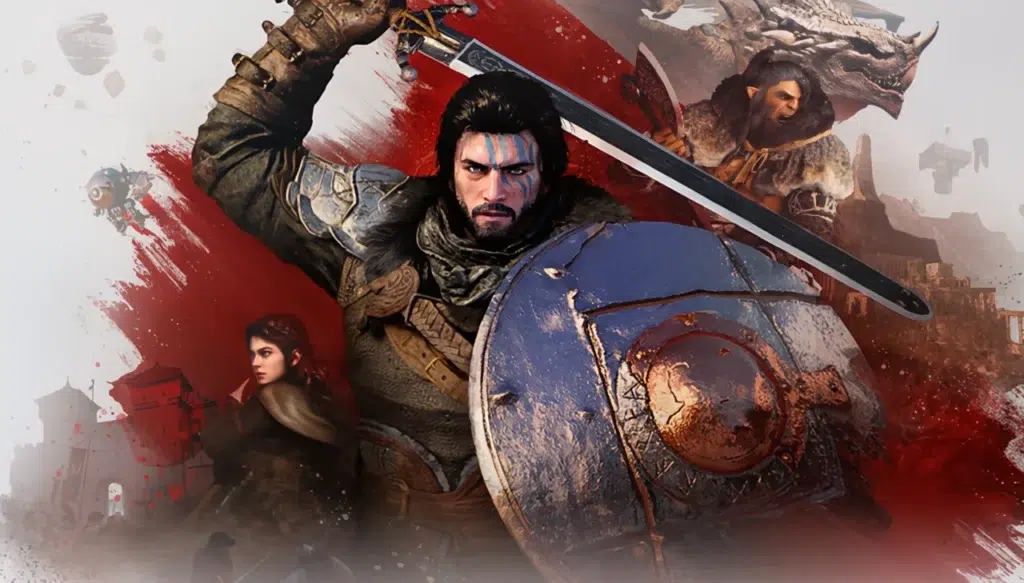
Notably, Avalanche co-founder Christofer Sundberg recently said AionGuard “would have been Crimson Desert”. Both games are open-world RPGs set in a high-fantasy world with medieval aesthetics. According to Sundberg, “we had everything that I’ve seen from Crimson Desert in the plans for that game.”. In other words, many gameplay systems (large-scale battles, open-world exploration, etc.) that Crimson Desert is praised for were already envisioned in AionGuard years earlier.
Comparison: Both AionGuard and Crimson Desert feature vast open worlds and fantasy combat. AionGuard had dragons, magic spells and sieges, while Crimson Desert offers horseback combat, weather systems, and a narrative-driven RPG. They differ in setting (Avalanche’s game had a more steampunk-fantasy vibe, Pearl Abyss’s is a classic medieval fantasy), but they share ambitious scale. Sundberg’s comment underscores that AionGuard’s design surprisingly resembled what Crimson Desert is achieving now.
Why Avalanche Studios’ AionGuard Was Canceled
AionGuard was canceled around 2010 due to publisher issues. Initially funded by a major company (rumored to be Disney Interactive), it lost its backer when that company’s leadership changed course. As Christofer Sundberg recounted, the publisher “changed business direction… wanted to focus on their existing IPs instead of new ones. They broke up with us on a text message”. In short, after years of development, the publisher abruptly dropped the project by SMS.
Avalanche then tried to salvage AionGuard by self-announcing it in the media (see next section), but no new publisher would pick it up. Sundberg said “every publisher just shut the door, because it was already announced”. By 2010 the project was officially put on hold. In interviews Sundberg blamed this on the publishing situation and on how early publicity backfired (the Edge announcement made other companies wary). In summary, AionGuard was canceled not for technical reasons but because its publisher withdrew support – and did so in the bluntest possible way.

Christofer Sundberg AionGuard Interview Explained
The key information about AionGuard comes from a 2026 PC Gamer interview with Christofer Sundberg. In that interview, Sundberg (Avalanche’s former CCO who left the studio in 2019) explained AionGuard’s fate and context. He confirmed that AionGuard was signed to a “big publisher with a lot of famous IPs” (never named, but earlier reports and a Disney exec imply it was Disney). He reiterated how the publisher pulled the plug by text.
Sundberg also described the gameplay: he said he had “everything from Crimson Desert in the plans” for AionGuard, highlighting its grandeur. He noted AionGuard’s demo was already “working” when pitched, and that after announcing it publicly, other deals dried up. Importantly, he detailed what happened after cancellation: the AionGuard team pivoted to a new game, Arcadia Rising, an alternate-history steampunk London adventure. Arcadia Rising also failed (due to THQ’s collapse), which he lamented as another lost opportunity.
This interview is critical because it ties together all known facts: AionGuard’s vision, its cancellation story (text message), and Avalanche’s attempts to move on. We rely on his account as the authoritative source on this lost game.
How AionGuard’s Fantasy Open World Was Ahead of Its Time
AionGuard packed into a late-2000s project features that were unusual for its era. Its open world would have been very ambitious: Imagine Lord of the Rings-scale sieges powered by the Avalanche engine. According to Martin Alltimes (ex-Disney Interactive), the working demo had “hundreds of people” fighting with magic and physics. He describes spells toppling huge boulders, freezing massive dragons, and the hero leaping onto a dragon to rain chaos from the sky.
Such grand spectacle earned it the nickname “fantasy GTA”, meaning a colossal sandbox (like Grand Theft Auto) but with swords and spells. AionGuard’s systems (open-air battles, dynamic effects, and dragon flight) were far beyond typical PS3/Xbox 360 RPGs. In this sense, it foreshadowed modern games: Crimson Desert’s enormous battles and *justified by Sundberg’s claim of equivalence. Other contemporary games simply did not have such scale. Thus AionGuard’s design can be seen as ahead of its time, pushing the boundaries of what mid-2000s consoles could do.
AionGuard Dragon Riding, Magic Combat, and Golem Transformation Details
AionGuard’s gameplay was heavy on fantasy powers and transformations. Players could literally ride and fight from dragons: Sundberg notes the player character was “capable of riding dragons”. In the demo described by Alltimes, after using spells to freeze enemies or drop boulders, the hero would hop onto a dragon and fly down upon armies.
Combat was magical and varied: the protagonist wielded “super-powered” spells – freezing gargantuan monsters mid-battle and shattering them into pieces. In addition, AionGuard featured a wild transformation ability: the hero could morph into a 60-foot golem. This giant form would wield even greater strength. In sum, magic combat was central: players could cast storms of spells, freeze foes, and manipulate the environment. This, combined with flying dragon cavalry, made AionGuard’s action unique. These features (dragon mounts, elemental attacks, and golem form) highlight how AionGuard tried to blend third-person action with RPG powers – another reason it resembles the ambitious Crimson Desert style.
What Made AionGuard Similar to Crimson Desert
Several specific elements link AionGuard to Crimson Desert. Both promise open-world freedom in a dark fantasy setting. Sundberg’s comparison hinges on that shared DNA: Crimson Desert is known for its medieval-fantasy world, mounted combat, and story-driven open-world. AionGuard planned similarly vast landscapes with horseback (or dragon) riding and real-time melee and magic.
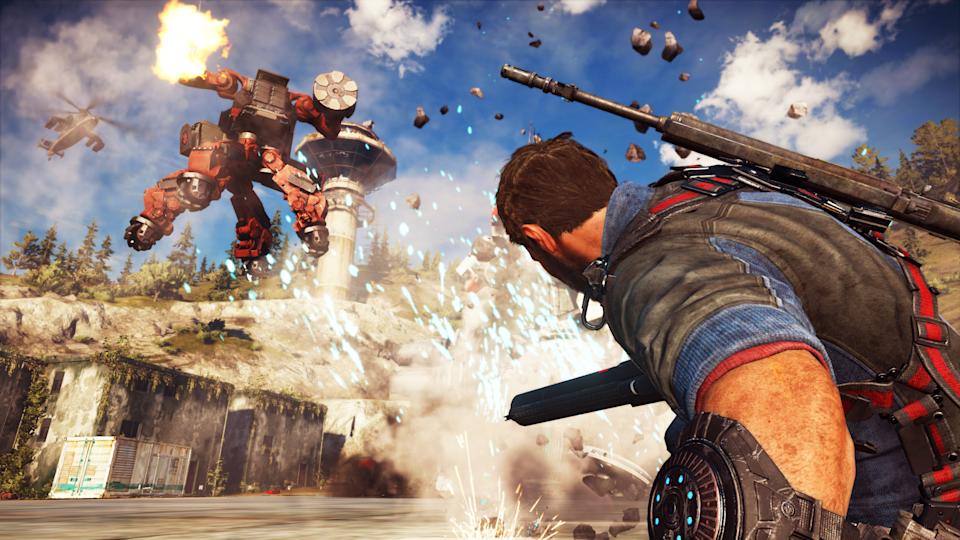
For example, both games feature large scale battles and exploration. Sundberg’s interview highlights that the strategic “take down the stronghold” gameplay in AionGuard paralleled Crimson Desert’s kingdom-conquest vibe. PushSquare also noted that Avalanche’s chaotic open worlds (from Just Cause) philosophically align with Crimson Desert’s player freedom.
In summary, what made them similar were the ambitious scope and systems: open-ended fortress assault, mounted combat, and a gritty fantasy tone. AionGuard literally had “everything… from Crimson Desert” in its plan, meaning its designers envisioned dragons, spires, and sorcery akin to Pearl Abyss’s 2024 release. Of course, Crimson Desert ended up shipping (in 2024), whereas AionGuard did not – but conceptually they were cut from the same cloth.
The table below highlights key contrasts and similarities:
| Feature | AionGuard | Crimson Desert |
|---|---|---|
| Developer | Avalanche Studios | Pearl Abyss |
| Genre | Open-world fantasy action RPG | Open-world fantasy action-adventure RPG |
| Setting | Mystical medieval world with dragons and magic | Continent of Pywel (medieval fantasy) |
| Platforms (planned) | PlayStation 3, Xbox 360 | PC, PlayStation 5, Xbox Series |
| Status | Canceled (development put on hold around 2010) | Released (Early Access Dec 2024, full launch 2025) |
| Publisher | Initially backed by Disney (later lost), then none | Pearl Abyss (self-published) |
| Key Mechanics | Dragon riding, magic spells, siege combat, golem form | Horse mounts, gliding, weather cycle, melee combos |
| Release Context | Revealed via Edge cover (Jan 2009) then canceled before release | Announced 2019, high anticipation, eventually released by Pearl Abyss |
Why AionGuard Never Released on PS3 and Xbox 360
AionGuard was indeed targeted for PS3 and Xbox 360 hardware. (Time Extension explicitly calls it a “fantasy RPG for PS3 and Xbox 360”.) In practice, it never actually released on those platforms because the project was canceled during development. After the publisher dropped it in 2009–2010, Avalanche never completed a final build or shipped the game. Had it survived, it presumably would have launched on the current consoles of the time (circa 2010), but instead it vanished before any public release on PS3/Xbox 360.

The Publisher Text Message That Ended AionGuard
Perhaps the most infamous detail is how the game was canceled: via a brief SMS. Christofer Sundberg is quoted saying the publisher “broke up with us on a text message, which I will never forgive them for”. In context, this means that after years of development, Avalanche received a simple text telling them the contract was over. No formal meeting or detailed explanation – just a one-liner on a phone.
PC Gamer highlights this anecdote, noting the unusual finality of a deal ending through “a text message”. Sundberg’s frustration is clear; this manner of cancellation underscores how abruptly AionGuard died. The source of that text message wasn’t named, but industry sources suggest it was Disney Interactive’s team pulling the plug on their mature game initiative (under CEO Bob Iger). Whatever the exact sender, the SMS became shorthand among fans for the shocking end of AionGuard’s development.
How AionGuard Could Have Changed Avalanche Studios’ History
This is necessarily speculative, but worth considering. If AionGuard had been released and succeeded, it might have established a new fantasy franchise for Avalanche alongside Just Cause. PushSquare observes that AionGuard was poised to launch even before games like Skyrim, suggesting it could have been seen as revolutionary had it shipped. A success could have diversified Avalanche’s identity beyond contemporary action games.
However, this is unverified conjecture. The only concrete outcome of its cancellation was that Avalanche continued focusing on other IPs (Just Cause, licensed games, etc.). Sundberg still regards AionGuard (and Arcadia Rising) as games “that deserved to be made”. Many fans agree – they imagine what could have been. But in reality, without a publisher, AionGuard’s influence on Avalanche’s later choices was limited.
Avalanche went on to develop more Just Cause sequels and Mad Max (2015) under existing partnerships. The studio’s later co-op game Contraband was canceled in 2023, but Avalanche remains active. In short, AionGuard’s cancellation likely nudged Avalanche to stick with what they knew (open-world shooters), whereas its success might have encouraged more original fantasy projects. Any definitive “what if” is inherently hypothetical and thus labeled here as unverified speculation.
AionGuard EDGE Magazine Cover Story and Early Hype
In January 2009, Avalanche attempted to build hype by announcing AionGuard without a publisher. It landed on the cover of Edge magazine’s February 2009 issue with an extensive 8–9 page feature. This was unusual – most games are only announced when a publisher is secured. Edge’s article (co-written by Avalanche’s Sundberg and narrative lead Odd Ahlgren) described the game in glowing terms, calling it a “fantasy role-playing game” aiming to make “sword and sorcery exciting again.” . Dozens of concept art images and a preview of its story were shared, generating early buzz.
Avalanche hoped this self-publicity would attract new backers. However, as Sundberg later admitted, the strategy backfired. By going public, AionGuard was seen as “off the market”; publishers didn’t want to license a game already outed. In fact, Time Extension reports that Sundberg blamed Edge’s early coverage for stalling negotiations. In the end, the media hype raised awareness of AionGuard’s ideas but could not save it. The Edge cover remains one of the few places where many of AionGuard’s concepts were documented.
What Happened After AionGuard Was Canceled
Once AionGuard was shelved, Avalanche’s immediate actions are partly known. After the text-message cancellation, Avalanche bought back the rights to AionGuard and tried to shop it to other publishers, but with no success. As Sundberg put it, “what we announced, no one else can do… we already had it working”, but announced status meant no deal. So the game “died out silently”.
Avalanche then reassigned the core AionGuard team to a new project: Arcadia Rising. This was an open-world action game set in a steampunk version of London. Like AionGuard, Arcadia Rising never saw release: after producing a playable vertical slice, its publisher THQ filed for bankruptcy and the project was canceled. Many of the same staff later worked on other Avalanche games (Just Cause sequels, Mad Max, etc.). Sundberg has said he still talks with those teams and fondly remembers Arcadia Rising as a game that “deserved to be made”.
Today, no playable build of AionGuard has surfaced. The only remnants are the low-res screenshots and concept art from Edge. Time Extension notes that “no footage of the game seems to have ever surfaced” and that the Edge article remains the best look at its direction. In summary, after cancellation AionGuard simply faded into obscurity, overshadowed by Avalanche’s later releases and projects.
Arcadia Rising and Other Canceled Avalanche Studios Games
AionGuard was not the only ambitious project Avalanche had to drop. The very game that took its team’s place, Arcadia Rising, was also canceled (as noted). Beyond that, Avalanche has had several high-profile cancellations:
- Arcadia Rising (2011): Steampunk London game canceled after THQ’s collapse.
- Contraband (2023): A co-op smuggler game announced in 2021 for Xbox (by Microsoft), canceled in 2023.
- (Avalanche also had smaller projects or prototypes, but these are notable examples.) These cancellations reflect industry challenges (publisher insolvency, acquisition decisions). The PC Gamer article mentions Contraband’s cancellation as a recent blow to the studio.
Thus, AionGuard fits into a pattern: Avalanche frequently pitched big new IPs, some of which never reached players. Fans sometimes compare these unreleased titles to the ones that did ship (as in the Crimson Desert analogy). In any case, the fate of AionGuard is now one of several “what if” stories in Avalanche’s history.
Why Canceled Fantasy Games Still Fascinate Players Today
Stories like AionGuard’s resonate because gamers love imagining “what might have been.” When a studio reveals details of a cancelled fantasy epic, it taps into nostalgia and curiosity. Time Extension’s coverage underlines this: they lament “it’s a shame that AionGuard never got the chance… it would have been interesting to see Avalanche’s take on the genre”. This human desire to see lost works kept alive fuels online discussions: fans scour magazines, archived interviews, and forum posts for any tidbits of cancelled games.
In broader terms, canceled games are like lost chapters of gaming history. They show ideas that were once state-of-the-art but never became mainstream. In AionGuard’s case, its ambitious features (dragons, golems, massive sieges) remain intriguing because they hint at a game that could have been unique. While we have no hard data on community interest, the recent PC Gamer and Kotaku stories themselves drew attention, demonstrating that players are indeed fascinated by AionGuard’s mythos. Ultimately, canceled fantasy games hold a certain romantic allure: they are beloved for what they almost were, kept alive by fans’ imagination and dedicated reporting.

AionGuard Release Date, Gameplay, and Cancellation Rumors Explained
AionGuard never had a finalized release date. It was put on hold by 2010, so any original release plan (likely in 2010) fell through. Before its cancellation, the only public “launch” was the Edge announcement (Jan 2009). After that, rumors swirled. Some early reports (later refuted) named Eidos as the publisher; more recent interviews clarify it was Disney that had been funding it. Gameplay descriptions came from that Edge feature and insider accounts, confirming the dragon mounts, magic combat, and fortress assaults.
Until Sundberg’s 2026 interview, details of AionGuard’s fate were mostly speculation. Now we know how it ended. However, any pre-2026 “rumors” about a secret release or hidden prototypes are unfounded – the game was quietly shelved. All credible evidence (industry articles, developer comments) agrees AionGuard was canceled and never publicly playable.
Mermaid Timeline of Key Events:
2007AionGuard projectbegins (Avalanchestudios)【13†L198-L202】Jan 2009AionGuardannounced on *Edge*cover (8-pagefeature)【27†L1-L4】2010AionGuard put onhold (projectcanceled)【13†L170-L178】2010Arcadia Risingdevelopment beginswith formerAionGuardteam【5†L523-L531】2011Arcadia Risingcanceled (THQbankruptcy)【5†L531-L536】2023Contraband(Avalanche) canceledbyMicrosoft【3†L436-L438】2024*Crimson Desert*released (open-worldRPG by Pearl Abyss)2026Sundberg interviewreveals AionGuarddetails【3†L438-L446】Show code
Frequently Asked Questions (FAQs)
- What was AionGuard?
It was a cancelled open-world fantasy RPG by Avalanche Studios, in development around 2008–2010. You played a dragon-riding sorcerer-knight reclaiming a dark world. - Why was AionGuard compared to Crimson Desert?
Avalanche’s Christofer Sundberg said AionGuard had all the elements of Crimson Desert. Both are epic open-world fantasy games. Sundberg notes he saw “everything from Crimson Desert” in AionGuard’s plans. - What gameplay features did AionGuard have?
It featured dragon mounts, magic spells (freezing foes, summoning boulders, etc.), and a special 60-foot golem transformation. Players would besiege enemy forts, cut supply lines, and recruit tribes – blending Just Cause-style tactics with high fantasy. - Which platforms was AionGuard planned for?
It was intended for the PS3 and Xbox 360 generation. No versions were released since the game was canceled during development. - When was AionGuard announced?
AionGuard was first publicly revealed in January 2009, when it appeared on the cover of Edge magazine with an 8-page feature. - Why was AionGuard cancelled?
The original publisher pulled out. According to Sundberg, a major backer (likely Disney Interactive) lost interest and ended the deal via text message. Avalanche never found a new publisher, so the project was shelved around 2010. - Which publisher was involved in AionGuard, and why did they drop it?
Reports indicate Disney Interactive originally funded AionGuard. After Bob Iger became CEO, Disney refocused on family titles and quietly canceled darker games. The sudden cancellation (by SMS) reflected that corporate shift. - Are there any playable builds or media of AionGuard?
No playable demo was released. Only a few low-res screenshots and concept images (from the Edge article) exist. No gameplay footage has surfaced; AionGuard’s assets remain archived. - What happened to the AionGuard team?
After AionGuard’s cancellation, the team moved to a new project called Arcadia Rising (a steampunk London RPG). Sadly, that too was canceled (due to THQ’s collapse). Many team members later worked on other Avalanche games like Just Cause sequels. - Why do people still discuss AionGuard today?
Gamers are often intrigued by ambitious cancelled games. AionGuard combined dragons, magic, and open-world conquest — elements fans love. It’s become a “what if” topic because it represents a lost era of innovation. Coverage in modern outlets (PC Gamer, Kotaku) reflects and fuels continued interest, even though concrete details are limited.
Conclusion
Avalanche Studios’ AionGuard remains one of the most talked-about unreleased games of the 2000s. Thanks to recent interviews and archival features, we know that it was a grand fantasy RPG full of dragons, magic, and conquest, akin in many ways to today’s Crimson Desert. Unfortunately, the game never saw completion: its publisher abruptly canceled it via text message. After the cancellation, Avalanche’s team moved on to another doomed project (Arcadia Rising).
This deep dive clarifies the timeline and features of AionGuard, citing primary sources like Christofer Sundberg’s interview and the original Edge magazine story. While much remains unverified or speculative, the available evidence paints a picture of a highly ambitious game that “would have been Crimson Desert” if circumstances had been different. AionGuard now lives on in retrospective articles and fan discussions, serving as a fascinating example of the games that nearly were.
Sources and Citations
This article relies on the following sources, among others:
- PC Gamer interview with Christofer Sundberg detailing Avalanche’s cancelled AionGuard project and comparisons to Crimson Desert (April 7, 2026).
https://www.pcgamer.com/avalanches-cancelled-aionguard-would-have-been-crimson-desert - Kotaku report summarizing Sundberg’s comments and background on AionGuard’s cancellation (Apr 7, 2026).
https://kotaku.com/aionguard-was-supposed-to-be-the-crimson-desert-of-15-years-ago-but-was-canceled-in-a-text - Time Extension feature covering the history of AionGuard, Edge magazine coverage, and developer recollections (July 25, 2024).
https://www.timeextension.com/features/the-story-of-aionguard-avalanches-lost-fantasy-gta-for-ps3-and-xbox-360 - PushSquare article providing context on AionGuard’s potential and developer reflections comparing it to modern open-world games (Apr 2026).
https://www.pushsquare.com/news/2026/04/we-had-everything-from-crimson-desert-just-cause-dev-recalls-cancelled-fantasy-game - Archived Edge magazine coverage referencing AionGuard’s development and early concept as a “fantasy GTA.”
https://www.edge-online.com/cover-story-aionguard - Kotaku archived article by Luke Plunkett (2009) covering early reporting on AionGuard and its development state.
https://kotaku.com/avalanches-aionguard-was-a-fantasy-gta - Developer and publisher statements including Christofer Sundberg interviews and references to Disney involvement via Martin Alltimes.
https://www.timeextension.com/features/the-story-of-aionguard-avalanches-lost-fantasy-gta-for-ps3-and-xbox-360
Recommended
- Devil May Cry Netflix Series: Release Date, Plot, Cast, and Everything We Know So Far
- CoD: Black Ops 7 And Warzone Season 2 Reloaded Release Date And Details (Start Time, New Maps, Weapons, Zombies, Warzone Updates)
- Resident Evil Requiem is likely the series’ biggest launch ever — 5 million units sold in under a week
- Dead by Daylight Devs Celebrate 10 Years of Eldritch Evil and Hope for Many, Many More
- Whispers of the Tallgrass, a Creepy First-Person Survival Horror Game, Announced for PC — Everything We Know
- Some PC Gaming RAM Actually Got Cheaper For The First Time In Months — DDR5 Price Drop, Best Deals, and Why It Might Not Last
- Super Battle Golf sells 100,000 copies in two days on Steam: what the fast launch success means
- The Best SSDs for PS5 in 2026: Top NVMe M.2 Picks That Meet Sony’s Requirements
- Someone Got The Legend Of Zelda: Wind Waker’s World Working In A Browser (Wind Waker Threes Explained)
- How To Create A Dynamic Rain System – Unreal Engine 5 (Niagara Rain, Splashes, and Global Wetness)