







No Man’s Sky Xeno Arena Update Release Date and Patch Notes
The Xeno Arena update (version 6.3) launched on April 8, 2026 as a free expansion to No Man’s Sky on all platforms. This major 6.3 patch was accompanied by official Hello Games patch notes and immediately followed by hotfixes: Patch 6.31 (April 9, 2026) and 6.32 (April 10, 2026) to address early bugs. According to Shacknews, Hello Games released Xeno Arena “on all platforms” with full patch notes, highlighting over 100 new creature abilities, genetic mutations and battles. The 6.31 hotfix improved networking and crash stability, while 6.32 fixed graphical glitches and NPC issues.
What Is the No Man’s Sky Xeno Arena Update
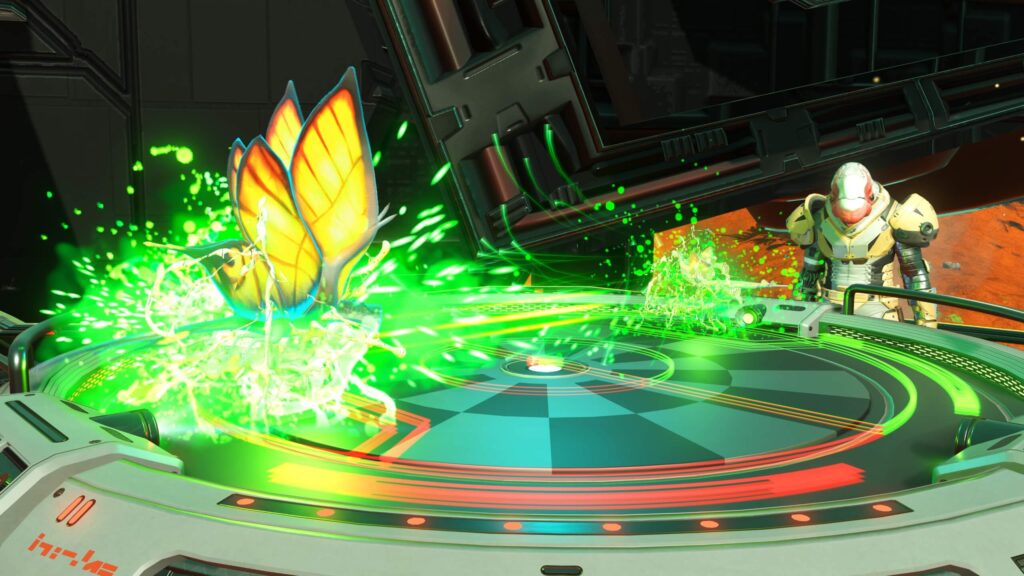
Xeno Arena is a free major update (No Man’s Sky update 6.3) that turns NMS into a Pokémon-style monster battler. It “introduces turn-based creature battles” and lets players build teams of alien pets to fight in holographic arenas. As Hello Games describes it, Xeno Arena “lets you raise, train and battle the alien creatures found across the universe”. In practice, most planets now teem with wildlife that can be adopted and trained into battle teams.
Each pet has a unique set of battle moves influenced by its species and home climate. This fundamentally changes the game loop: exploration and creature discovery now have a direct gameplay purpose. Even Sean Murray (Hello Games’ founder) calls out Pokémon and Palworld as inspirations, noting the team’s long-term goal was to give No Man’s Sky’s fauna a fighting purpose. In short, Xeno Arena adds a robust companion-collecting minigame – creature combat, genetics and breeding – on top of the normal space exploration.
How Xeno Arena Creature Battles Work in No Man’s Sky
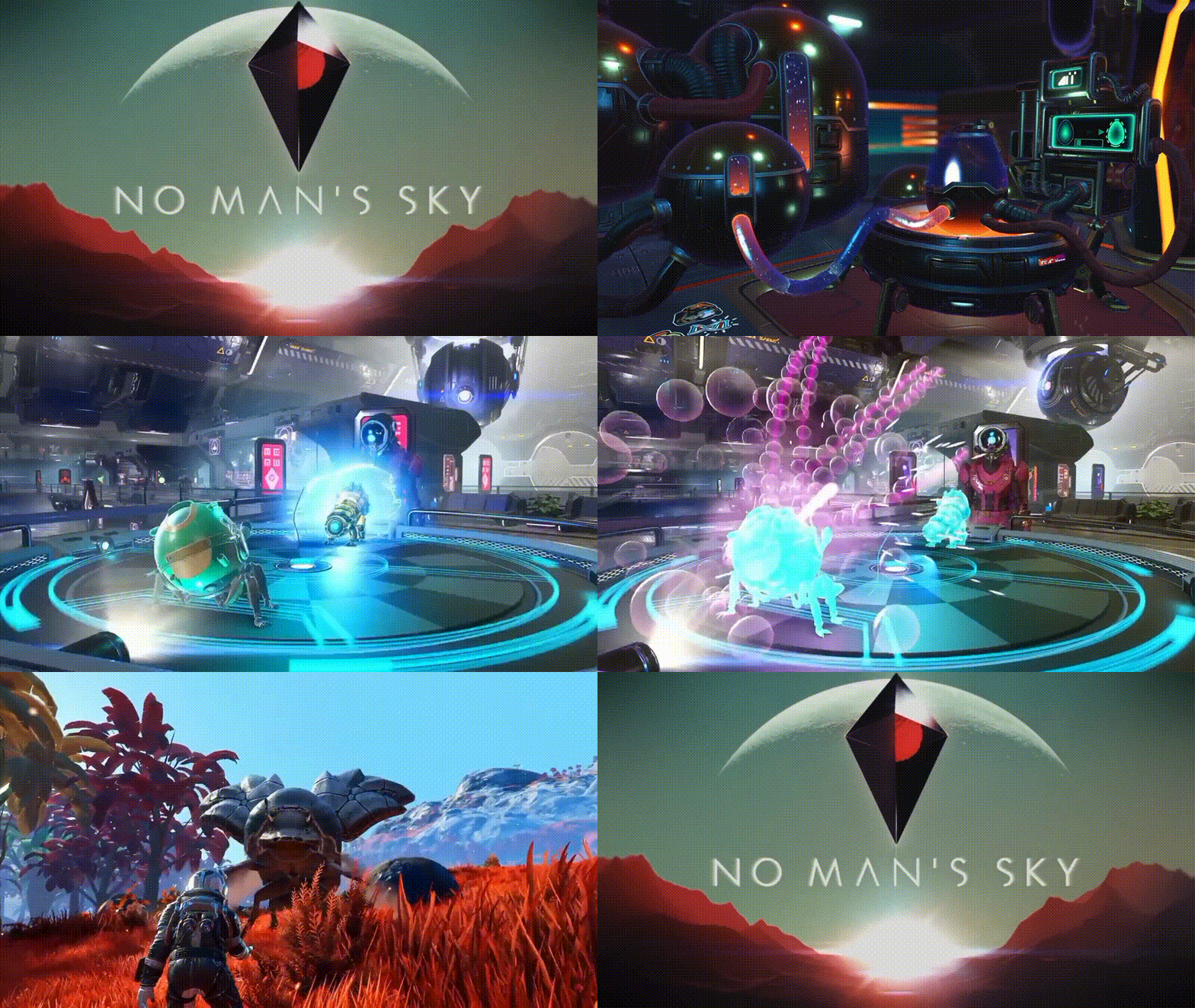
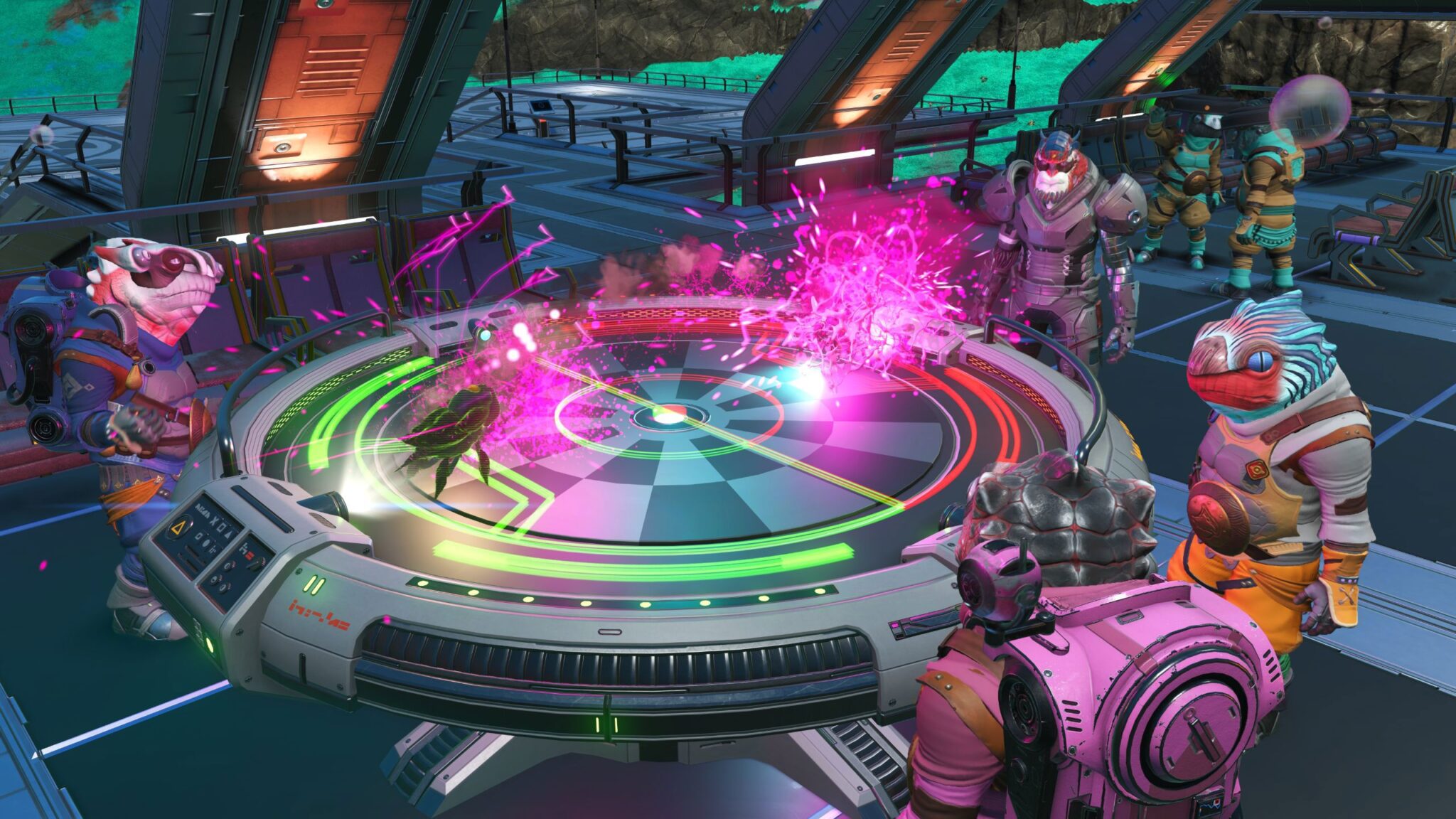
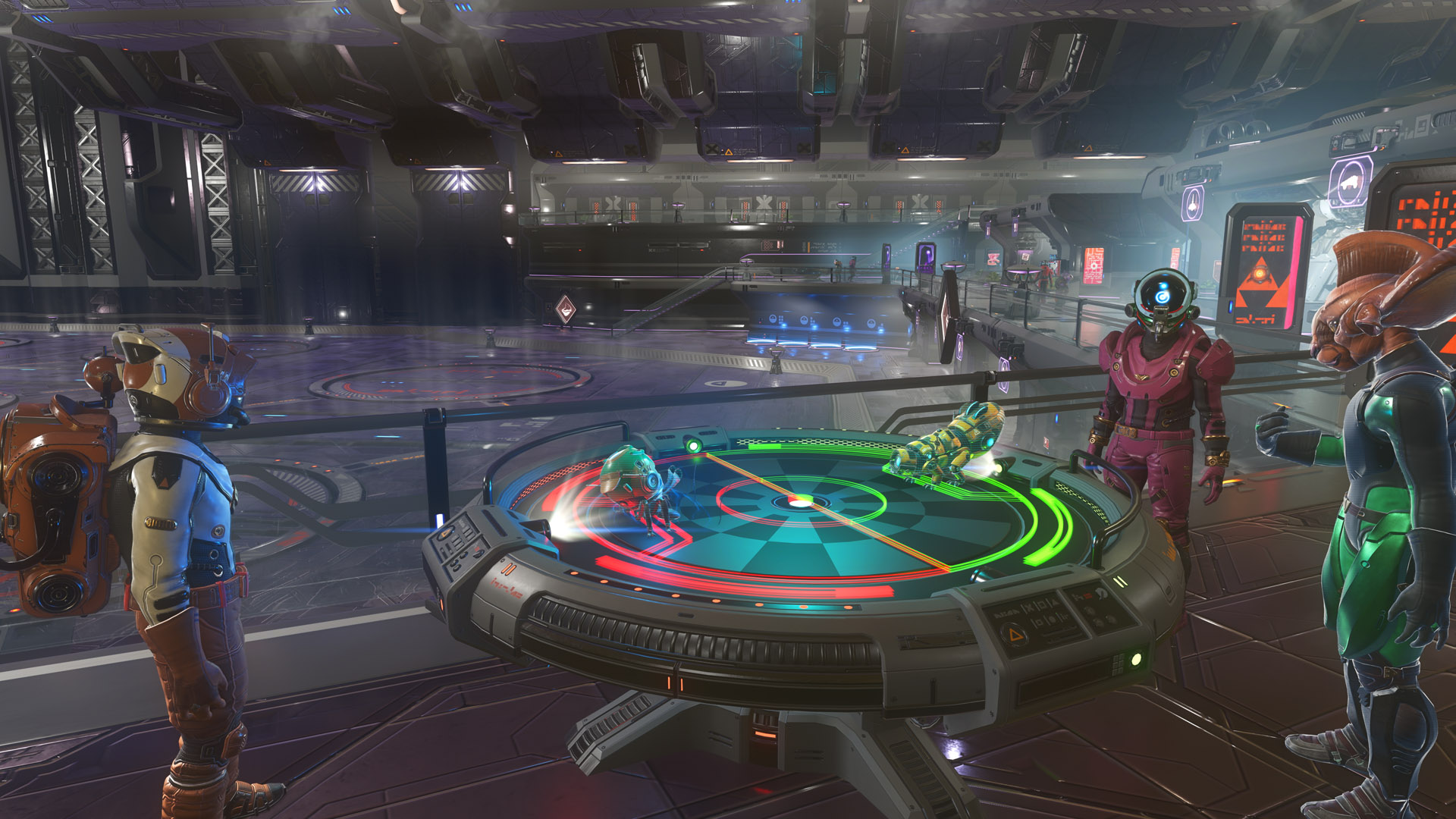
Creature battles are turn-based tactical fights at holographic arenas. You first assemble a team of three tamed creatures from your collection. Battles take place at Holo-Arena tables (found in space stations, outposts, settlements, and the Space Anomaly) where you fight either NPC alien trainers or other players. Each creature in battle has a set of abilities – attacks, heals, stuns, shields, status moves, etc. – determined by its species and environment. For example, creatures adapted to a toxic world may have poison moves, while those from frozen moons have ice attacks.
Battles play out with flashy cameras and a combat log. Creatures can occasionally dodge, land critical hits, or get bonus actions. Winning yields experience points: pets level up and unlock genetic mutation points to improve stats like agility, health, and battle traits. There is a new interface (the genetics menu) where you can spend retroviral pellets – earned as rewards – to evolve your pets further. In summary, each turn you choose one creature’s move versus an opponent’s, considering elemental affinities (fire beats frozen, frozen beats radioactivity, etc. with eight total affinities), and aim to knock out the enemy team. Successful strategizing and exploiting weaknesses is key.

How to Raise and Train Alien Creatures in No Man’s Sky
Taming and training creatures starts in the wild. Use the new Creature Survey scan mode to locate fauna and see their battle traits. To tame a creature, you typically feed it a creature pellet (basic feeding works as before the update). Once adopted, you have a living pet to train. Training your creatures involves feeding, bonding, and sparring. Feeding them appropriate foods and interacting (bonding) raises their levels over time. After battles, pets gain XP to raise their levels and unlock genetic upgrades.
A key training item is the Retroviral Pellet – a consumable given as a reward after your first battles. When fed to a summoned creature, it triggers the genetic upgrade sequence (evolving one tier of ability upgrades). It’s advised to summon a specific creature first, then feed the pellet to it, to avoid wasting it. Over time, you can mutate a pet’s genes (choose which stats to boost) and even change its color and physical traits. In short, by repeatedly battling and consuming upgrade items, you can progressively train a scrappy animal into a fearsome arena champion.
No Man’s Sky Creature Breeding and Genetic Modification Explained
Xeno Arena introduces breeding and DNA manipulation. At the Space Anomaly there is a new Egg Sequencer terminal. Here you place two parent eggs to breed a new offspring. The result inherits traits from both parents – you can mix favorable abilities and even mutate the baby’s DNA. You can also directly use the Egg Sequencer to create unique variant creatures. Hello Games explicitly notes that bred offspring can have enhanced or unusual traits: “Enhance and modify the offspring of your creatures using the Egg Sequencer… Their personalities will influence their behaviour in battle, while physical characteristics such as size may influence their durability…”.
In practice, this means you can specialize your line of champions. For example, if one parent has high-speed (agility) and another has high health, breeding them might yield a faster, tougher variant. Then you feed and battle the baby to raise it. Over generations, you can genetically “engineer” ultra-rare monsters with combined traits. The game even refers to legendary variants: some offspring may display extraordinary stats or colors. Breeding works hand-in-hand with the genetic upgrade system – you strategically mix parents, hatch eggs, and then use retroviral mutations to fine-tune the result. This deep breeding/GMO system gives players full control over crafting ideal Arena pets.
No Man’s Sky Xeno Arena Multiplayer Battles and Daily Challenges
Xeno Arena significantly expands multiplayer competition. You can battle other players in the Space Anomaly’s Holo-Arena tables or at friendly Xeno Arena structures built by other Travellers. The Anomaly serves as a hub: once you’ve unlocked creature battles, you can travel to a friend’s anomaly (or host visitors in yours) and challenge each other’s teams. Winning PvP matches yields rewards and bragging rights.
Moreover, there’s a new NPC challenger, Iteration: Oceanus, who gives out a daily challenge. Each day Oceanus fields the same fixed-seed battle for all players. Beating Oceanus yields special prizes like Retroviral Pellets and exclusive cosmetic rewards. These daily trials encourage collaboration: players share strategies for the daily team lineup. In short, Xeno Arena adds a full multiplayer loop – including friendly duels, tournaments, and daily global events – on top of No Man’s Sky’s universe.
Multiplayer creature battles can be done at the Space Anomaly’s Holo-Arena or at a constructed Xeno Arena base, letting Travellers face off in strategy contests.

Where to Find Holo-Arenas in No Man’s Sky
Holo-Arena tables (the battle arenas) are scattered throughout the game. You’ll find them inside many space stations and planetary outposts. They also appear in some planetary settlements and archive buildings. Crucially, the Space Anomaly (the multiplayer hub) always has Holo-Arena tables. Any time you visit a station or anomaly, look for the glowing arena holograms – that’s where you can challenge NPCs or other players.
Additionally, players can build a Xeno Arena base structure on their freighter or planet. This special base module lets you host custom tournaments or let friends battle in your arena. But even without building anything, the fixed Holo-Arena tables in stations and the Anomaly mean you can easily access creature combat anywhere in the galaxy.
No Man’s Sky Xeno Arena Battle Abilities and Element Types
Every creature has a move set of battle abilities shaped by its species and native biome. Hello Games highlights that there are “hundreds of unique battle abilities”. Abilities can do direct damage (e.g. claw slash, plasma blast), apply status effects (burn, freeze, poison), heal allies, raise shields, or even transform foes. Because planets range from frozen moons to radioactive deserts, creatures gain appropriate powers: a lava-dwelling beast might have a fiery explosion move, while an arctic predator has an ice shard attack.
Elemental affinities add a rock-paper-scissors layer. The game uses 8 elemental types (Affinities), such as Fire, Frozen, Radioactive, Toxic, etc.. For example, fire attacks are especially strong against frozen creatures but weak against radioactive ones. This means building team synergies is important. You’ll want a balanced roster: some water or ice creatures to counter fire foes, some radioactive types to counter others, and so on. In battle, clever use of these elemental advantages often turns the tide. Players are advised to “amass a broad array of creatures” and exploit those 8 affinities.
Battle moves follow elemental themes: for instance, fiery attacks devastate ice-based opponents but can be resisted by radiation-aligned creatures. No Man’s Sky uses 8 elemental affinities in total, creating strategic matchups of strengths and weaknesses.
How Creature Companions Become Arena Champions in No Man’s Sky
A creature companion becomes a champion through leveling, mutation, and winning battles. Initially, a wild pet is relatively weak. Each time you battle with it (in any match), it gains experience and levels up. At certain XP thresholds it earns morphogenetic upgrades: you get mutation points to boost stats like Health, Agility, or Combat Strength. Additionally, after major battles (especially victories over tough NPCs), you receive Retroviral Pellets to trigger powerful evolutions and gene tweaks.
As your creature grows, its personality trait (e.g. aggression, playfulness) and size can change, affecting battle performance. The game even rewards winning streaks in the new Arena League: champions earn ranked medals, special titles and unique companion rewards by advancing through league tiers. In short, consistent training and victories forge champions. As Sean Murray notes, “the satisfaction of watching a scrappy little creature you found on a desolate moon grow into a fearsome arena champion” is a major part of the appeal. Champion pets end up with fully maximized abilities and are often the result of careful breeding and upgrading.
No Man’s Sky Xeno Arena Rare and Legendary Creatures Guide
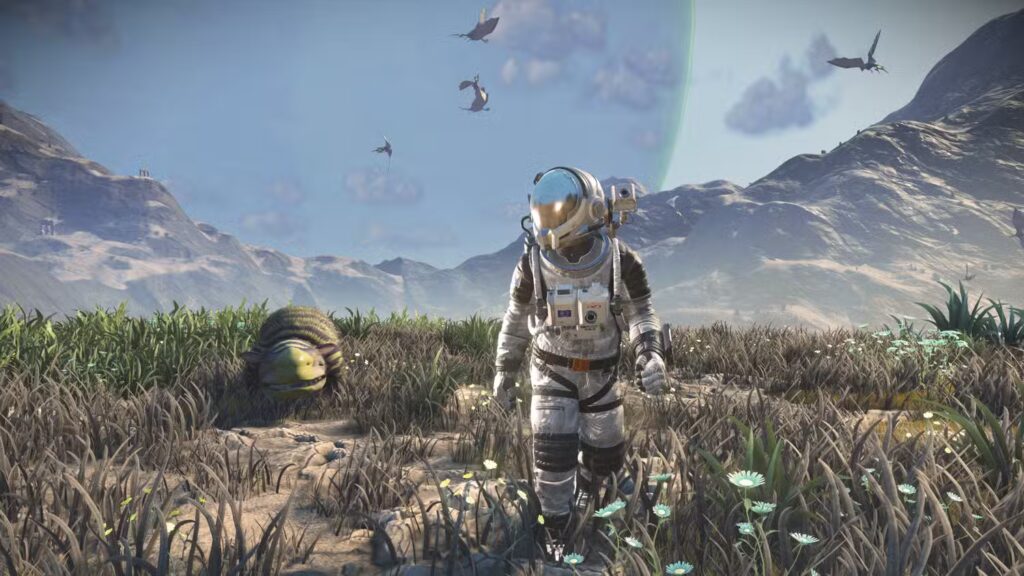
No Man’s Sky has thousands of species, but Xeno Arena adds special rare and legendary variants. Rare creatures are typically found on uncommon biomes: purple or gold-coded planets tend to yield higher-tier fauna. These rare pets often come with boosted base stats and more powerful moves. Even more special are Legendary variants – one-of-a-kind versions with exceptionally high stats or unique colors. Hello Games explicitly mentions “legendary variants with unusual and exceptional stats” that can be incredibly valuable.
Finding legendary creatures often requires thorough exploration of the Galaxy. Most players search rare planets (e.g. exotic flora worlds, high-radiation worlds) and share coordinates when they find one. In fact, Murray notes “sharing knowledge and creature locations with other players opens up its own fascinating economy”. In practice, if you come across a creature with a purple or gold name (on the scan HUD), it’s likely a rare/legendary specimen. Taming and leveling one of these gives your team a significant edge in high-tier battles. Keep an eye out for shimmering glow effects in the Analysis Visor – those often signal a high-class creature to tame.
Best Strategies for Building a Creature Team in No Man’s Sky
Forming a strong team requires planning and balance. Key tips include:
- Elemental Coverage: Ensure your team covers multiple affinities. If the opponent uses a fire creature, having a water or frozen ally counters it effectively. Mix offensive and defensive types so you’re not wiped out by a single weakness.
- Don’t Rush Evolutions: You only start with one Retroviral Pellet. Choose carefully which creature to evolve first. The guide advises not to waste your initial pellet until you know a pet’s full potential.
- Team Size and Flexibility: You enter battles with 3 creatures, but you can own up to 30. Train more than three so you can swap freely between fights. For example, if you have four strong pets covering all affinities, you can adjust your lineup to counter any daily challenge or PvP opponent.
- Field Team Synergies: Some creatures have buffing or healing moves. A balanced team might include a durable tank (high health), a healer or buffer, and a heavy hitter. Utilize moves that synergize (like one pet boosting allies while another attacks).
- Practice at the Anomaly: Before risking a league match, test your team against other Travellers at the Space Anomaly. The Anomaly’s public tables are great for learning your pets’ abilities in live battles.
By mixing types, evolving smartly, and practicing, you’ll build a champion squad. Remember that additional creatures beyond the active three give you tactical flexibility. In time, you’ll learn which abilities complement each other and how to exploit opponents’ weaknesses.

How Exploration Affects Creature Collecting in No Man’s Sky Xeno Arena
Exploration now directly feeds into creature collecting. Every new planet can harbor species you haven’t tamed yet, especially if it has a unique biome. Rare flora worlds or exotic planets often yield higher-tier creatures. Thanks to the update, the Companion Register has expanded from 18 to 30 slots, so players are encouraged to adopt a wider variety of fauna as they explore. The new Creature Survey visor mode helps here: it marks nearby fauna and reveals their battle traits, making it easier to find creatures with strong abilities while scanning planets.
In practice, thorough exploration is now more rewarding: you might stumble upon a unique robot-animal or a giant creature with novel moves. Shared discoveries (via the Galactic Atlas) and community trading of creature locations also highlight exploration’s importance. In short, the farther and more varied your travels, the more diverse a team you can assemble. In Sean Murray’s words, the update is about giving all those procedurally generated animals “a gameplay purpose” once discovered, so exploring new worlds is now directly linked to building an unbeatable arena roster.
Exploring the galaxy becomes even more rewarding with Xeno Arena. Rare biomes tend to yield high-stat creatures, and the new survey scanner highlights valuable pets. The Companion Register limit is also raised to 30, encouraging extensive creature collecting.
Sean Murray on the Inspiration Behind No Man’s Sky Xeno Arena
Hello Games has openly acknowledged influences from fan-favorite monster-collecting games. In the Xeno Arena announcement, Sean Murray explicitly cites Pokémon, Palworld, and even WoW’s pet battles as inspiration. The official blog asks “what if all that [creature] variety had a gameplay purpose – collect them, breed them, and battle them?”.
In other words, the team realized players love No Man’s Sky’s alien fauna and wanted to give them real value. The GamesRadar report notes that fans had been asking for a “Pokémon update” for years; Sean even responded “We did it” to a famous tweet suggesting just that. This candid embrace of Pokémon-style design shows Xeno Arena was very much built to fulfill longtime player wishes. Murray also frames Xeno Arena as part of No Man’s Sky’s grand anniversary year, reflecting how the studio views it as a major celebratory feature.
No Man’s Sky Xeno Arena vs Pokémon and Palworld
Unsurprisingly, many comparisons have been drawn. Like Pokémon, Xeno Arena revolves around collecting wild creatures and battling them in turn-based fights. And like Palworld, it lets you capture aliens and use them in combat (though No Man’s Sky’s version is purely strategic, without the survival or shooter elements of Palworld). Hello Games themselves say they are “huge fans of Pokémon [and] Palworld”, so the similarities are intentional.
However, there are differences. Pokémon battles are part of a linear RPG, while No Man’s Sky remains an open-world exploration game with the creature combat layered on top. No Man’s Sky’s creatures don’t roam around looking to fight you; instead, you initiate the combat via Holo-Arena tables or your personal Xeno Arena base. Also, No Man’s Sky offers free-form breeding and DNA mutation, a deeper customization not present in classic Pokémon.
Unlike Palworld’s focus on anarchy and base-building, Xeno Arena is more about structured tournaments and progression through leagues. In short, Xeno Arena channels the thrill of Pokémon/Palworld by introducing familiar mechanics (types, moves, evolution) into space exploration, but it remains true to No Man’s Sky’s sandbox style. As GamesRadar notes, it’s precisely what fans were asking for – but built within NMS’s sci-fi setting.
Is the No Man’s Sky Xeno Arena Update Free
Yes. The Xeno Arena update is a free content update for all players who own No Man’s Sky. It was released on April 8, 2026 alongside other platform patches. Like all major No Man’s Sky expansions since launch, Xeno Arena required no DLC purchase – it was distributed as a free patch (6.3) to the base game on PC, consoles, and Switch. Players on any platform can simply update their game to receive all Xeno Arena features.
In fact, Hello Games even advertised the update on the main site with “Buy now” badges for each platform, implying it’s included with the base game. So no additional cost or standalone title is needed – just update your existing No Man’s Sky and start battling.
No Man’s Sky Xeno Arena Update 6.3 New Features Overview
Update 6.3 Xeno Arena packs in many new systems and content. Major additions include:
- Turn-based Creature Battles: The headliner is the ability to capture wild animals and fight them in Holo-Arena tables with cinematic turn-based combat. Battles feature new music, VFX, and a combat log.
- Hundreds of Battle Abilities: Depending on species and biome, creatures have a rich move-set (attacks, status effects, healing, etc.). Expect elemental affinities (fire, toxic, etc.) to matter.
- Morphogenetics (Genetic Upgrades): Creatures earn XP to unlock mutations. A new genetics UI lets players spend points to boost agility, health, and other traits. Retroviral Pellets (battle rewards) trigger tiered evolutions.
- Creature Breeding: The Egg Sequencer aboard the Anomaly enables breeding. You can combine two creatures to produce offspring with inherited traits, then genetically modify and train the baby into a new pet.
- New NPC – Oceanus: Iteration: Oceanus is a friendly instructor who introduces players to the Arena League and daily challenges. Oceanus also issues the same daily battle to all players worldwide.
- Arena League: A new faction/ranking system with medals. Players earn ranked badges and titles for battle and breeding achievements. Unique companion rewards are tied to league progression.
- Expanded Companion Register: You can now own up to 30 tamed creatures (up from 18). This encourages collecting a broader variety of fauna across your travels.
- Creature Survey Mode: A new Analysis Visor mode highlights and provides information on nearby animals, including their battle traits. This makes tracking down desirable pets easier.
- Base-Buildable Xeno Arena: A new base building module lets you construct a personal arena structure for hosting creature battles and tournaments.
- New Holo-Arena Locations: Holo-Arena tables have been added to many station/outpost interiors for multiplayer battles.
- Daily Challenges: Every day brings a unique ranked battle set by Oceanus, providing ongoing goals.
These features, together with numerous balance tweaks and quality-of-life improvements, make 6.3 a very content-rich update.

No Man’s Sky Xeno Arena Patch 6.31 Fixes and Performance Updates
On April 9, 2026 Hello Games released patch 6.31 as a follow-up to address early issues. This hotfix focused on stability and performance: it improved network code and fixed a crash bug involving moving technology items while a charge prompt was active. The very next day, patch 6.32 rolled out with additional fixes: unresponsive NPCs near tables were fixed, underwater graphical flicker was resolved, duplicate items bug was corrected, and general rendering/performance on PS5 and PC was improved. Both patches continued No Man’s Sky’s tradition of rapid bug fixes. Players experiencing any crashes or odd behavior after the Xeno Arena launch were advised to update to 6.31/6.32. These quick patches ensured the new systems ran smoothly on all platforms.
Why the Xeno Arena Update Is a Big Deal for No Man’s Sky Players
Xeno Arena is widely seen as a transformative update. It adds a completely new gameplay loop – creature battling – that many fans had wanted for years. Almost a decade into the game, Hello Games has kept innovating, and this patch ties together No Man’s Sky’s core strengths (exploration, discovery) with fresh mechanics. The update essentially turns the game into a mini monster-battling RPG within its open universe. For players, this means new reasons to explore every planet (to find rare creatures) and more long-term goals (ranking up in the Arena League). It also significantly enhances multiplayer: the ability to battle friends with custom teams adds social competition.
The hype around Xeno Arena reflects its significance. Media outlets highlight that it “packs Pokémon-style creature battling” into No Man’s Sky. Community reaction has been enthusiastic – players see it as a major holiday for the NMS universe. Developer Sean Murray himself framed it as a big move for their tenth anniversary. In short, the update not only delivers fan-desired content but also adds lasting depth and variety to the game, which is why many consider it a game-changer for No Man’s Sky.
10 faq questions and answers
1: When was the Xeno Arena update released?
A: It launched on April 8, 2026 (as update 6.3) on PC, consoles, and Switch. Hello Games published full patch notes on that day, followed by hotfixes on April 9 and 10.
2: Is the Xeno Arena update free?
A: Yes. Xeno Arena is a free patch to the base game. If you own No Man’s Sky, simply update it to get the new content – no extra purchase is needed.
3: How do I start creature battles?
A: Progress through the early game until you meet Oceanus on the Space Anomaly. Completing his tutorial gives you an egg and teaches the basics. After that, you can find Holo-Arena tables (on stations or anomaly) to summon your team of 3 and begin battles.
4: How do I tame creatures?
A: Explore planets and use the Analysis Visor’s Creature Survey mode to locate animals and see their traits. Feed a wild creature a Creature Pellet or food to tame it (the same mechanic as before). Once tamed, you can store it in your inventory or summon it later for battle.
5: What are Retroviral Pellets and how are they used?
A: A Retroviral Pellet is a special upgrade item gained from completing Oceanus’s challenges. You feed it to a summoned creature to trigger an evolutionary upgrade, unlocking new stat boosts. Since you start with few pellets, use them carefully (always summon the intended creature first to avoid waste).
6: How does creature breeding work?
A: At the Space Anomaly’s Egg Sequencer, you place two adult creatures to generate an egg. The new creature combines traits from its parents, possibly gaining advantageous abilities. You can then raise, train, and genetically modify the offspring further. Breeding is a way to mix and match strong traits across your collection.
7: Where do I find Holo-Arena tables?
A: Look inside every large space station and planetary outpost for glowing combat tables. They’re often in the main hub or near shops. Also, the Space Anomaly always has holographic arenas. If a location has a cultural or trading center, chances are a Holo-Arena is nearby.
8: What are elemental affinities?
A: These are the “types” of Xeno Arena (fire, frozen, radioactive, etc.). Each creature belongs to an element type based on its native environment. Attacks are also elemental. Strengths and weaknesses apply: for example, Fire is strong against Frozen but weak to Radioactive. Learning all 8 affinities and how they interact is key to victory.
9: Are there legendary creatures?
A: Yes, certain rare biomes can spawn legendary variants of creatures. These may have unique colors and much higher stats. They are very hard to find. Players often share coordinates for rare finds because catching a legendary gives you a powerful team member.
10: How many creatures can I own?
A: The update increases the maximum companion slots from 18 to 30. So you can keep a larger collection. This allows building a deep roster to select from in any battle.
conclusion
The Xeno Arena update radically expands what you can do in No Man’s Sky. It adds a full creature-training system – battles, breeding, genetics, and multiplayer – on top of the core exploration game. Every wild animal on a planet now has strategic value, not just for scanning. Fans eager for a “Pokémon in space” experience finally got it, and Hello Games delivered it as a free gift on the game’s tenth anniversary.
With hundreds of new moves, 30 companion slots, daily challenges, and a new progression system (Arena League), the update provides long-term goals for returning and new players alike. Whether you want to train the ultimate squad of alien beasts or just enjoy the novelty of space-age monster duels, Xeno Arena offers depth and fun. It’s a game-changer that keeps No Man’s Sky evolving, proving that after nearly a decade the universe is still full of surprises for explorers everywhere.
sources and citation
- https://www.nomanssky.com/xeno-arena-update/
- https://www.shacknews.com/article/148622/no-mans-sky-xeno-arena-update-63-patch-notes
- https://www.gamesradar.com/games/survival/no-mans-sky-xeno-arena-update-lets-you-raise-train-and-battle-the-alien-creatures-found-across-the-universe-is-inspired-by-hello-games-love-of-pokemon-palworld-world-of-warcrafts-pet-battling/
- https://www.nomanssky.com/2026/04/xeno-arena-6-31/
- https://www.nomanssky.com/2026/04/xeno-arena-6-32/
Recommended
- Hit Manga Chainsaw Man Will End Soon, Viz Media Confirms
- The View Keeper Add-on: Tips for Seamless Camera Switching in Blender
- Blender Multi-Camera Rendering: A Step-by-Step Guide with The View Keeper
- Pokopia Metacritic Score Explained: Why It’s 2026’s Highest-Rated Pokémon Game and the Best Pokémon Title of All Time
- Can You Render Multiple Camera Angles at Once in Blender?
- Understanding Interpolate Hair Curves geometry nodes preset
- How to Make Hair in Blender