

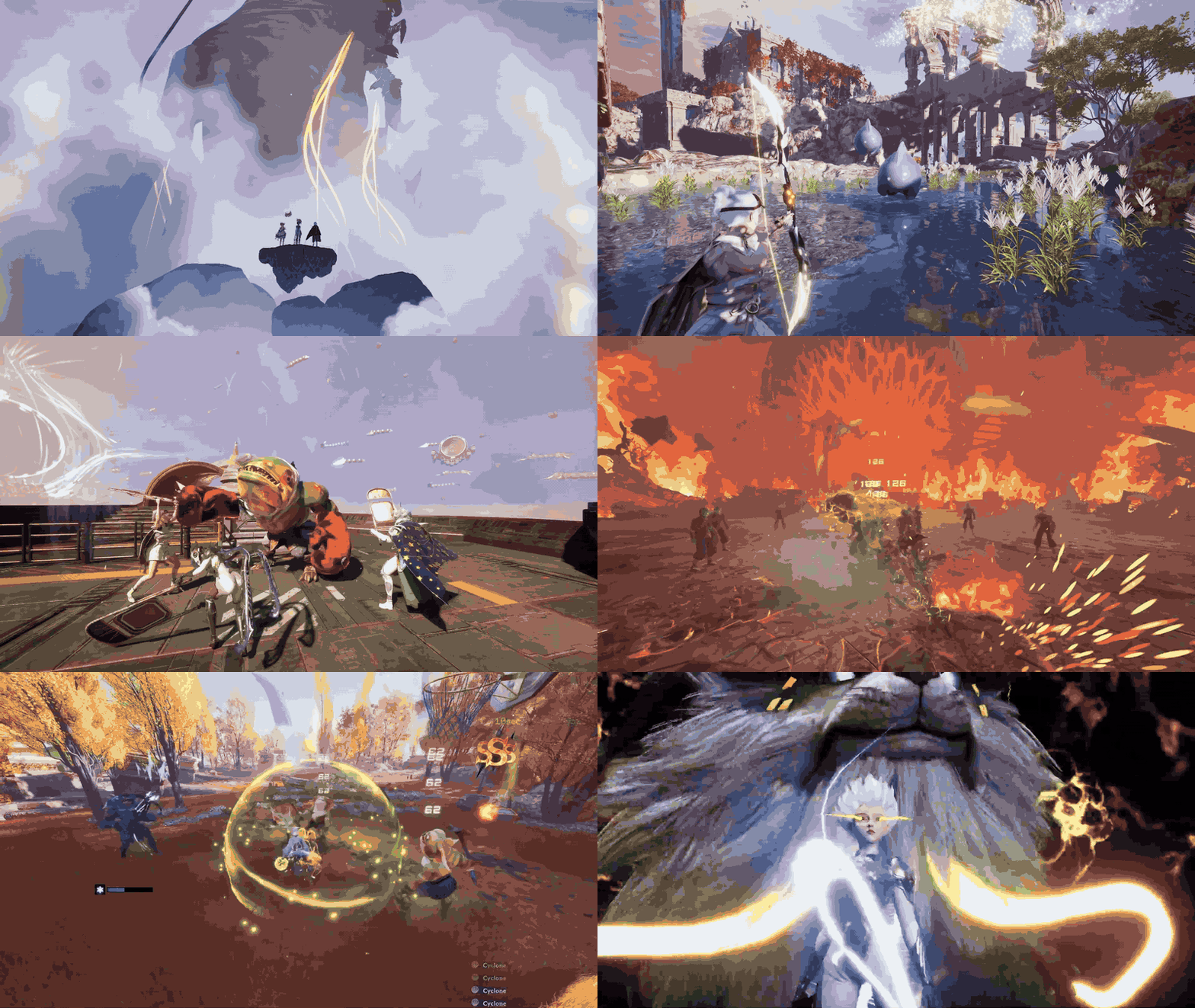





Koshmar: The Last Reverie is an upcoming third-person action-adventure game by Purple Ray Studio. It promises fast-paced, hack-and-slash combat blended with RPG and roguelite elements. A standout feature is its Morality System: Violet’s choices push her toward Delusion or Madness, visibly altering her appearance and NPC reactions. This dual-path mechanic is often compared to the Paragon/Renegade system in Mass Effect. Set in a grim, gothic city inspired by Victorian-era Central Europe, the game mixes combat, exploration, puzzle-solving, and narrative choices in a dreamlike world
Koshmar: The Last Reverie release date and platforms
The developers have announced Koshmar: The Last Reverie for PC (via Steam) and current consoles, with an expected launch in 2027. No specific release date has been set – the Steam page simply lists the release as “Coming Soon”. Purple Ray Studio, the Warsaw-based developer, will self-publish the game. In summary, players can expect a 2027 launch on Windows PC and console systems; until an exact date is announced, the game remains on Steam’s wishlist and “Coming Soon” lists.
Koshmar: The Last Reverie gameplay explained
Koshmar plays as a fast-paced third-person action-adventure. Players control Violet through fluid, adrenaline-fueled combat and platforming. According to previews, combat emphasizes precision timing, combos, and reading enemy patterns. Violet gains abilities and upgrades by solving puzzles and finding gear in the levels. Gameplay also features environmental puzzles, platforming sections, and stat-building RPG elements. Purple Ray highlights a variety of combat styles: you can use powerful melee weapons or special abilities to shred nightmares. Overworld traversal includes exploring interconnected dream-world districts, talking to NPCs, and completing side quests that advance the story. In short, Koshmar combines fast action combat with adventure and puzzle mechanics to create varied gameplay.

Koshmar: The Last Reverie morality system and choices
A central hook of Koshmar is its morality system. The game tracks Violet’s actions on a spectrum between Delusion (virtue) and Madness (sin). Every decision—such as how Violet fights, what she says to others, or even the choice of weapon—moves her toward one end of this spectrum. Each weapon and skill is themed for Delusion or Madness, and using them shifts Violet’s alignment.
Her moral alignment visibly changes Violet’s appearance and aura; for example, a character with high Madness might emit a dark energy that unsettles NPCs. NPC dialogue and story events also react to Violet’s state: some characters trust her more if she stays sane, while others respect her ruthlessness if she embraces madness. In practice, this system forces players to weigh consequences: will you act selflessly to maintain Delusion, or tap into darker powers and risk insanity? These branching choices are key – Violet’s fate truly ends up “in your hands”, similar to how Mass Effect’s Renegade/Paragon points worked.
How Koshmar: The Last Reverie sanity system works
The sanity system in Koshmar is effectively the gameplay implementation of the morality axis. Violet’s mental state shifts as a result of player actions, and this shift has direct consequences. Choosing Delusion-fueled tactics preserves Violet’s sanity, keeping the world relatively “normal.” Choosing Madness-fueled actions corrupts Violet’s mind, warping her perception.
This is not just cosmetic: previews indicate that Violet’s sanity literally warps the world around her. Delving too deep into Madness can change environments and even unlock new combat abilities unique to that state. Conversely, staying in Delusion may avoid those risks but limit access to dark powers. In summary, managing Violet’s sanity meter is a core gameplay element: the player’s balance of Delusion vs. Madness will affect combat options, world visuals, and story outcomes.
Koshmar: The Last Reverie story and Violet’s role
In Koshmar, you play as Violet, a teenage girl who uses lucid dreaming to escape her mundane life. By day the mortician’s daughter in a plague-ridden city, Violet spends her nights exploring a vibrant dream realm. A sleeping sickness has overcome her city, forcing its citizens into never-ending slumber, and Violet is one of the few who can perceive and fight this nightmare epidemic.
When nightmares break into her dreams, Violet must journey through those twisted dreamscapes to close the Nightmare Rifts and save the town. The collision of waking and dreaming worlds drives the plot: Violet’s actions in dreams have consequences in reality. Ultimately, Violet’s dual life – a normal girl and a dreamworld heroine – is at the heart of Koshmar’s story.

Koshmar: The Last Reverie dream world and nightmare rifts
The dream world of Koshmar is full of surreal, gothic locales tied to each character’s nightmares. Key to the game are Nightmare Rifts – interdimensional portals that spill nightmares into the waking world. As early reports explain, Violet “alone can perceive” the sickness of these rifts and must enter them to stop the threat.
Inside each Rift is a randomly generated nightmare maze that represents someone’s fears or trauma. Players will solve puzzles, navigate traps, and fight monsters within these dream-mazes. Closing a Rift requires defeating its nightmare guardian through combat and clever thinking. The Nightmare Rifts are replayable roguelite dungeons: each time Violet enters a Rift it may be different, adding replay value. In effect, the dream world is Koshmar’s twist on an ever-changing dungeon – a core part of the game’s roguelite design.
Koshmar: The Last Reverie combat mechanics and playstyles
Combat in Koshmar is fast, acrobatic, and skill-based. According to CGMagazine, it “reminds of Devil May Cry or God of War” in its pace and combos. Violet can dash, dodge, and unleash melee strikes with a variety of weapons. Players can tailor Violet’s playstyle: she can equip heavy gear to tank damage, or specialize in high risk/high damage “glass cannon” builds. The Delusion and Madness systems also extend into combat: there are separate talent trees for Delusion and Madness abilities.
Executing an enemy with a Delusion-oriented move might heal Violet or protect allies, while a Madness-style execution might deal area damage or corrupt foes. Previews mention “execution techniques that embrace Delusion or Madness in coup de grâce finishing moves”. Even the difficulty can be scaled: players may choose to make nightmares harder to get better rewards. Overall, Koshmar’s combat blends precision action with strategic choice of skills, giving it depth beyond simple button-mashing.
Koshmar: The Last Reverie roguelike and RPG elements
Beyond its core story, Koshmar incorporates roguelite and RPG mechanics. Purple Ray calls out “roguelite mechanics with RPG elements” in the announcement. The procedurally generated Nightmare Rifts are where the roguelite loop comes in: failing or finishing a run just sends you back to town to try again, possibly with different layouts.
Meanwhile, RPG elements appear in character progression. Violet can equip new weapons, find gear, and unlock skills between runs, allowing “diverse character builds”. Players earn upgrades that persist, making each venture stronger. The key features list mentions “abilities, upgrades, skills and more” for Violet. In practice, Koshmar is designed so that beating a Rift may reset the dungeon but leave Violet with better stats for the next run. These elements encourage replay: repeated dungeon runs with gradual power gain.

Koshmar: The Last Reverie setting, gothic city, and Victorian influences
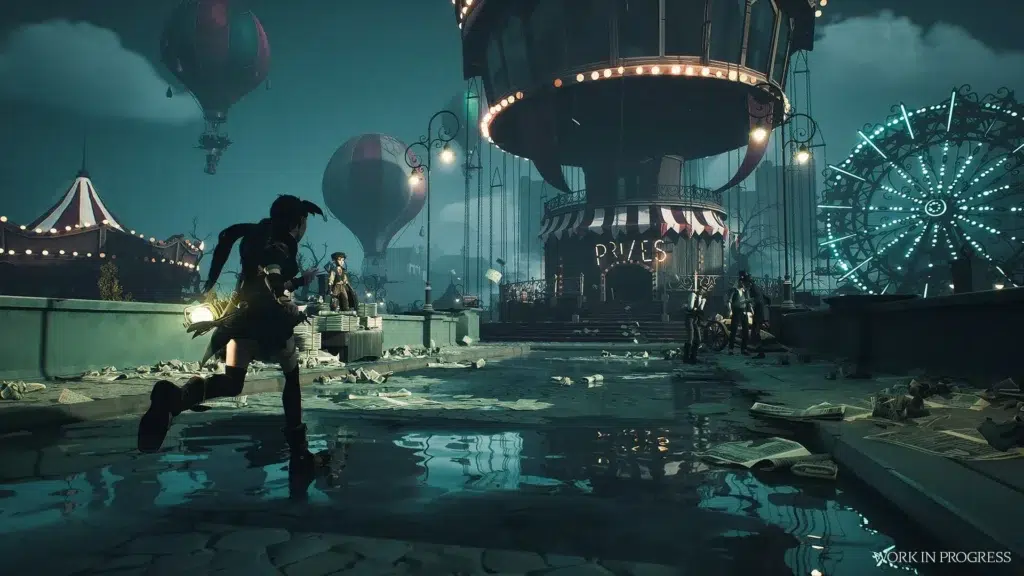
The game is set in a stylized gothic city at the turn of the 20th century. Purple Ray Studio draws on Central European and Victorian-era aesthetics. Cobblestone streets, steam engines, and gaslight lamps give the city an old-world feel, while 1920s-inspired art and architecture add flair.
The developers were inspired by a real “sleeping sickness” from 18th-century Europe, blending historical plague motifs into the lore. This mix of Victorian gloom and decay is evident in the environments: from foggy alleyways to ornate mansions, the world feels like an Alice: Madness Returns-style dream come to life. The setting’s mood is one of haunting beauty and dread – a character named Koshmar means “nightmare” in some Slavic languages, underscoring the dark fantasy tone.
Koshmar: The Last Reverie puzzles, exploration, and traversal
In addition to combat, Koshmar offers puzzles and exploration. Violet will encounter platforming challenges (such as leaping over gaps or climbing structures) and logic puzzles as she navigates the city and dream realms. For example, she might need to find keys, activate mechanisms, or solve riddles to unlock new areas. The world is semi-open: players can backtrack to earlier districts or explore optional side passages to find upgrades.
NPCs and side quests populate each area, giving context and rewards. Interestingly, Violet has a mechanical glider device (seen in concept art) to help traverse rooftops and reach distant platforms. This adds a Metroidvania-like layer: areas that were once unreachable become accessible later. Altogether, the puzzles and traversal elements encourage careful exploration of Koshmar’s twisted environments.
Koshmar: The Last Reverie multiple endings and player decisions
Choices in Koshmar lead to multiple endings. Purple Ray confirms that the game has variable endings determined by player actions. For instance, fully embracing Delusion (staying virtuous) versus fully embracing Madness (letting Violet go feral) will yield different outcomes for the city’s fate. Other choices—such as who Violet saves or sacrifices in side quests—can also shift the story’s direction. Each ending is shaped by the combined factors of Violet’s moral alignment and key decisions throughout the game. In short, there isn’t just one “true” ending; players are encouraged to replay the game, make different decisions, and see how Violet’s story can unfold in new ways.

Koshmar: The Last Reverie trailer breakdown
The official announcement trailer (released April 2026) sets a dark and dreamy tone. It opens on the plague-stricken city at night, emphasizing the sleeping sickness (“When a city falls to a sleeping plague, nightmares rise up…”). Early scenes show Violet wandering foggy streets and entering ominous buildings.
The trailer cuts between real-world and dream environments: one shot shows Violet exploring a decaying church interior, another highlights a twisted carnival ride. Monsters born of nightmares briefly appear, hinting at boss fights. Throughout, text emphasizes the Delusion/Madness theme. The art style and mood are intentionally similar to games like Alice: Madness Returns, with hand-painted textures and surreal lighting. While the trailer contains no gameplay demo, it lays out the premise: you are Violet, a girl able to walk between waking and dream worlds, and the trailer ends by urging players to wishlist the game for more updates.
Koshmar: The Last Reverie developer Purple Ray Studio overview
Purple Ray Studio is an indie developer based in Warsaw, Poland. They specialize in stylized, story-driven games. Their debut title was Boti: Byteland Overclocked, a 3D platformer, and Koshmar is their second project. The team includes industry veterans with experience on major franchises: for example, members have worked on Resident Evil Village, The Witcher 2, and S.T.A.L.K.E.R. 2. The studio prides itself on blending beautiful art with engaging gameplay. In the case of Koshmar, Purple Ray has combined their cinematic pedigree with roguelite and RPG mechanics to create an ambitious gothic adventure.
Is Koshmar: The Last Reverie like Mass Effect
Koshmar is not a space opera like Mass Effect, but it does borrow the idea of a branching morality system. In Mass Effect, choices push Commander Shepard toward Paragon or Renegade; in Koshmar, choices push Violet toward Delusion or Madness. Both systems visibly affect character appearance and story outcomes. However, Koshmar applies this concept to a dark fantasy setting with real-time action combat, instead of Mass Effect’s narrative dialogue wheel. In gameplay terms, your decisions in Koshmar occur through actions and combat decisions rather than dialogue options. So while the function of the morality system is very Mass Effect-like, the presentation is entirely different, fitting the game’s gothic dream-world vibe.
Koshmar: The Last Reverie Steam page and wishlist details
On Steam, Koshmar’s store page is live but minimal. It lists Purple Ray Studio as both developer and publisher. The release date field reads “Coming soon”. The page tags the game as Action, Adventure, Roguelike, Hack and Slash, Dark Fantasy, and more. It confirms the game is single-player only and supports modern PC languages. Fans can add Koshmar to their wishlist or follow it on Steam to get updates once development progresses. In short, the Steam page confirms the basic details (platform, genre, single-player) and invites players to wishlist the title for future news.
10 faq questions and answers
- What is Koshmar: The Last Reverie?
Koshmar is an upcoming third-person action-adventure game with RPG and roguelite elements. You play as Violet in a gothic city plagued by eternal nightmares. - When will Koshmar: The Last Reverie be released?
It is scheduled for release in 2027 on PC and consoles. As of now, the Steam store lists the release date as “Coming Soon”. - What platforms will Koshmar be available on?
Koshmar is planned for Windows PC (Steam) and consoles (e.g. PlayStation, Xbox). No version for mobile or Switch has been announced. - Who is developing Koshmar: The Last Reverie?
The game is developed by Purple Ray Studio, an indie studio in Warsaw. The team includes veterans from franchises like Resident Evil and The Witcher. - Who is Violet and what is her role?
Violet is the protagonist, a teenage girl who can lucid dream and enter a nightmare-infested alternate reality. In the real world she is the mortician’s daughter, and in dreams she fights to save her city. - What kind of gameplay does Koshmar have?
It’s a fast-paced hack-and-slash action game. You’ll fight monsters with melee weapons and magical abilities, solve environmental puzzles, and explore interconnected dreamscapes. The gameplay combines elements from games like Devil May Cry (combat) and Metroidvania-style exploration. - Is there multiplayer or co-op?
No. Koshmar is a single-player experience only. There’s no multiplayer or co-op mode; the focus is on Violet’s solo journey. - How do the morality and sanity systems work?
Your actions shift Violet’s alignment between Delusion and Madness. Good or selfless actions earn Delusion points (keeping her sane), while ruthless actions earn Madness points. These choices change how Violet looks and how the world reacts to her. It’s essentially a morality system where Violet’s sanity state is shaped by your decisions. - Does Koshmar have multiple endings?
Yes. The developers confirm that player choices and Violet’s moral alignment lead to multiple endings. For example, going fully mad or staying virtuous will affect how the story resolves. Players can replay to see different endings based on different choices. - Can I wishlist Koshmar or try a demo?
You can wishlist Koshmar on Steam today to get updates. The Steam page is live and the dev encourages fans to follow or wishlist it. As of now, there is no playable demo or early access – only the announcement trailer has been released.

Conclusion
Koshmar: The Last Reverie looks to be a compelling mix of gothic horror and fast-paced action, with an added layer of depth from its Delusion/Madness morality system. The game’s Victorian-inspired nightmare city and dream-world exploration stand out visually, and Violet’s dual-status as heroic dreamer gives the story emotional weight. With the backing of experienced developers and clear inspirations like Alice: Madness Returns and roguelites like Hades, Koshmar is shaping up to be a unique indie adventure. Its combination of stylish combat, narrative choice, and replayable nightmare dungeons makes it well worth watching as it heads toward its 2027 release.
Sources and Citation
- Official site | Press kits CGMagazine (Philip Watson, Apr. 8, 2026)
- Koshmar: The Last Reverie Brings Choice and Madness In a Sea of Nightmares DigitallyDownloaded (Apr. 10, 2026)
- Dreamy action combat game Koshmar: The Last Reverie announced for PC and consoles Noisy Pixel (Apr. 8, 2026)
- Psychological Action Adventure ‘Koshmar: The Last Reverie’ Announced FilmoGaz (Tech news, Apr. 8, 2026)
- Ex-Resident Evil, Witcher Devs Launch Stylish Action Adventure Koshmar: The Last Reverie Steam Store Page (Purple Ray Studio)
- Koshmar: The Last Reverie on Steam
Recommended
- Goat Review: GOAT (2026) Movie — Plot, Voice Cast, Age Rating, Scores & Where to Watch
- Can I Improve My Metahuman in Blender? A Comprehensive Guide
- Helldivers 2 Charity Challenge Leads To Death Threats After D10 Dev Challenge Spirals
- How do I adjust the camera’s sensor size in Blender?
- Blender Trim Hair Curves Geometry Nodes Preset: Comprehensive Guide for 3D Hair Grooming
- Warner Bros. Discovery Is Rebuilding Its Video Game Pipeline After a Significant 2025
- OptiX vs CUDA: Comprehensive Comparison of NVIDIA’s Rendering Technologies