










*Demon Lord: Just a Block is a new grid-based roguelite action game where you play a reborn Demon Lord seeking revenge. It’s described as a “fantasy roguelite action game you can think through – not just react to,” where “the world only moves when you do”. In practice, this means every time you take a step, every enemy and projectile on the grid also advances one step.
The game features 7 chapters, multiple endings, and a variety of unlockable content. With over 14 weapons, 300+ ability cards, and 10+ build archetypes, it blends strategy with satisfying real-time dodge and parry mechanics. The developer notes it has “tight, satisfying combat and smart decision-making opportunities without the need for high execution or twitch reflexes”. In short, Demon Lord: Just a Block is a turn-based-meets-action roguelite that rewards careful planning and timely reactions.
How the Turn-Based Movement System Works in Demon Lord: Just a Block
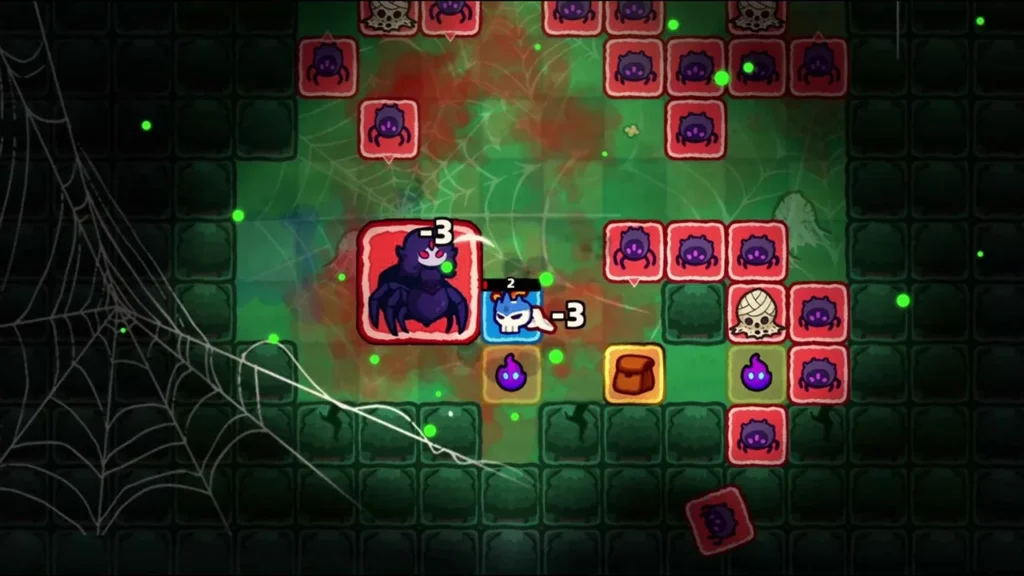
In this game, you move on a tile grid and the game world is frozen when you do nothing. Each action you take (move, attack, use ability) triggers a turn: all enemies then take their actions simultaneously. For example, if you Dash two tiles, enemies will also move two steps. If you stay still, nothing happens until you act. As the developer emphasizes, “the world only moves when you move”.
This semi-turn-based system lets you strategize your position before each move. You can slowly plan step-by-step or, if pressed, dash quickly around the board. Importantly, between your turns you get a brief window to react in real time: when an enemy winds up an attack, you can dodge or parry it.
In other words, you have split-second opportunities to evade, which consume no extra turns if done correctly. In fact, mastering these gives you a free extra action, the reviewer notes that successfully dodging at the right moment “lets you jump another move free,” making combat flow fast and dynamic. In summary, Demon Lord’s system is turn-based in that enemies wait for your move, but still demands precise timing for dodges and parries during the enemy’s attack animation.
Best Beginner Tips for Surviving Early Runs in Demon Lord: Just a Block
For newcomers, the learning curve can be steep, so here are some starter tips. First, focus on survivability over brute force. Early on, consider using ranged or fast weapons to avoid damage: one reviewer notes using a ranged weapon to “avoid melee altogether” was key to their first victory. If close combat feels dangerous, switch to bow or shuriken-type weapons that let you strike from afar while dodging. Always keep an eye on health pickups (often red apples on the ground) and healing abilities.
Don’t neglect defense: try out abilities that grant shields or invincibility (ice or protective spell cards) during your first runs. Learning the dodge move is crucial too. As [45] explains, “dodging means you have to instantly move in another direction at the moment a monster is attacking”, effectively avoiding damage and setting you up for a counter.
Focus on pulling off basic dodges first; perfect parries (moving into an enemy’s attack) are much harder and can be practiced later. Finally, explore thoroughly: break crates and push blocks as you go. One player discovered that later in the game you can “simply…punch through the fence” blocking a treasure by using a special upgrade. The lesson: try every clever move, as puzzles or hidden paths often reward you with extra loot or health.

How to Build Powerful Loadouts and Skill Combos Efficiently
Building a strong loadout means choosing the right weapons and ability cards that complement each other. Each weapon in Demon Lord: Just a Block has unique mechanics, for example, the Lightning Chidori dash lets you zip past enemies, while the Skull Gauntlets deliver double punches. Other weapons include piercing greatswords, homing projectiles, and rapid-fire repeaters. As one player noted, unlocking the Lightning Chidori gave “some real good flow” to combat by combining movement and offense.
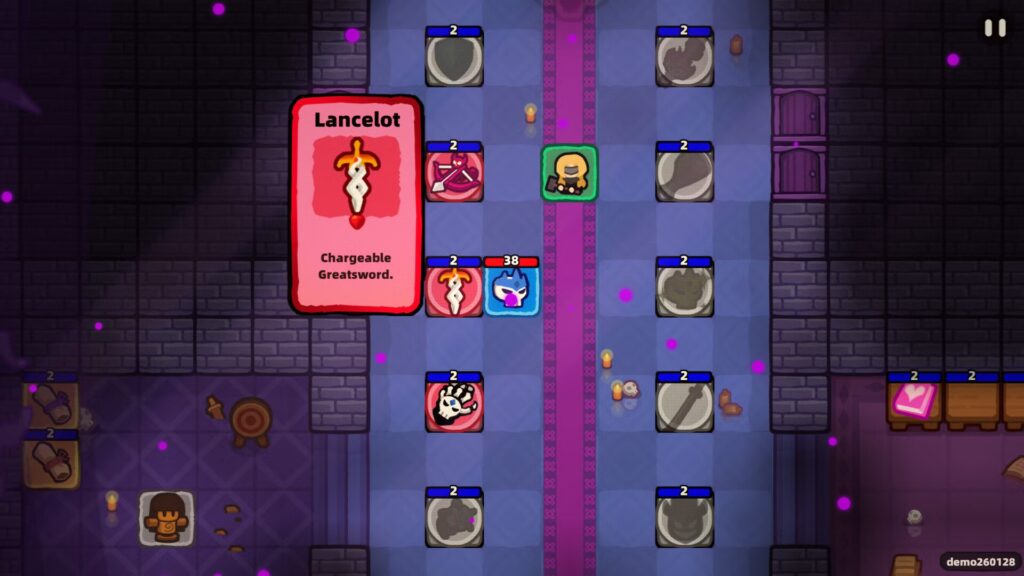
To build efficiently, first decide on a focus. If you choose a melee-heavy weapon like dual gauntlets or sword, pair it with ability cards that boost close-range damage or survivability (summons to tank hits, or invincibility to endure enemy attacks). For ranged or fast-attack weapons, pick elemental or bomb cards for extra AoE damage. Experiment with combinations: for instance, a lightning theme can be stacked, a lightning dash sword plus chain lightning spells will massively amplify your burst DPS. The review suggests alternating strategies: “once you start unlocking other weapons (the charging sword, Lancelot, is my beloved so far, but the lightning dash weapon rules as well)”. That means swap tactics each run and see what synergizes.
Skill combos often rely on ability cards (see next section), but in terms of weapons: note if an ability moves you (like teleport) use it to position optimally for your weapon’s attack pattern. Always look out for Featured upgrades between runs, one in-game mechanic is that choosing certain weapons increases your run’s loot. In short, build around a theme: align your weapon’s strengths with complementary abilities, and adjust your loadout each run based on what cards you find.
Understanding Weapons and Their Unique Mechanics in Demon Lord: Just a Block
There are 14 distinct weapons, each altering how you approach combat. For example, as noted in [45], there’s the Lightning Chidori that lets you lunge past enemies, effectively combining mobility with attack. There are Skull Gauntlets for rapid double strikes, a powerful charging sword (Lancelot), ranged repeaters, and likely others like bows, hammers, etc. The Kotaku game listing mentions weapons like Skull Gauntlets, Hero’s Greatsword, and Godslayer Repeater, hinting at melee and ranged archetypes. Some weapons synergize with dodge/parry: for instance, the Lancelot sword benefits from charge hits after you parry. Others rely on creative use of cards (the in-game demo pairs each weapon with archetype sets like Bombs, Lightning, Bats, Summoning, etc.).
Players highlight how weapon choice shapes playstyle. For instance, the Lightning weapon allows darting into a foe and out, while heavy weapons like a greatsword or hammer need charged hits. On that, [58] comments that the Lightning dash and Lancelot sword become “my beloved” weapons for high-speed attacks. Experiment with each: some push enemies with a swing, others punch multiple times, and ranged ones keep you safe at distance. Always try out a new weapon: you might find one that fits your preferred combo style or counters a boss move. The key is to understand your weapon’s special move and use it in sync with your abilities (e.g. use a teleport card then follow up with a dash attack).
Best Ability Cards and How to Use Them for Strong Builds
Ability cards are the roguelite upgrades you pick during runs, shaping your power. There are hundreds of them (over 200–300 according to the developer), but they fall into familiar categories. Common strong picks include elemental attacks (Lightning, Ice, Fire) for extra damage or crowd control, summoning abilities to call allies as decoys, and defensive buffs (like invincibility frames or shields) for survival. For example, a Lightning ability card will often zap all nearby enemies, while an Ice card might freeze foes in place.
Focus on cards that enhance your chosen weapon. If you’re using a lightning dash sword, more lightning cards will multiply your damage. If you’re a tankier build, pick protective cards: [45] explicitly mentions “protective abilities that turn you invincible” as options. Summon cards (like bats or minions) are great for keeping aggro off you. Bomb or AoE cards are handy if many enemies cluster. Try to create synergies: one helpful trick is to collect cards from the same archetype (for example, multiple lightning cards) since they often stack.
Another tip: some abilities modify your combat mechanics. For instance, a card might add a chance to stun on perfect parry, effectively rewarding skilled plays. As [45] notes, certain cards require exploiting dodge/parry for full effect. Lastly, don’t ignore utility cards: ones that restore health after fights or provide currency boosts per room are invaluable. Each build can pivot around a theme using ability cards, so mix and match to find combos that suit you.

How Enemy Movement and Turn Order Actually Work in Combat
Combat order is simple: each player action triggers enemy actions. If you take a step, every enemy also takes one step or attack afterward. There is no separate initiative track, it’s always a one-for-one “you move, they move” rhythm. When multiple enemies attack simultaneously, they all attempt it in that same turn after you move or act.
However, during an enemy’s attack animation, time briefly freezes and you get a chance to react. In that window, you can perform a dodge or parry to avoid damage. Dodging grants you an extra move: as explained, making a well-timed dodge effectively gives you a free step to reposition away from danger. A successful parry (jumping into an enemy at the last moment) also makes them recoil, often allowing a counter-hit from behind. Keep in mind the developer has tweaked these timing windows: a recent patch “slightly relaxed” the dodge/parry timing and even lengthened the Spectral Queen boss’s wind-up, giving you a bit more leeway to learn the timing.
In summary, to play effectively, treat each action like a shared turn. Plan your move, then watch for the enemy tell; dodge out of the way or parry at the split second needed. Over time, you’ll learn enemy patterns so you can anticipate and chain movements strategically.
Boss Fight Strategies and How to Beat Unique Mechanics Easily
Each boss in Demon Lord: Just a Block has its own gimmick. The developer even notes that bosses incorporate puzzle elements, for example, inspired by Tetris, Snake, 2048, and other puzzles. This means you may have to adapt your play: one boss might drop blocking bricks you must avoid, another might create a snake-like train of obstacles, and so on. The key is to observe patterns and use the grid. If a boss sends projectiles, parry or dodge them and counterattack when it pauses. If it manipulates blocks or uses a puzzle sequence, look for safe zones or opportunities to exploit its moves.
In general: don’t rush a boss. Learn its visual and sound cues. Use invincibility or shield cards for powerful attacks. For example, the patch notes mention the Spectral Queen boss now has a longer wind-up, so look for that tell to dodge or parry more easily. If a boss fight feels unwinnable, consider whether you can move differently, some players even discovered they could punch through barriers in special rooms.
That same creativity can apply to bosses: maybe lure a boss into an environmental hazard, or use an ability to change the terrain. Always keep moving and use spacing: a hit-and-run tactic (striking, then retreating) often works well on bosses with big swings. If you’re stuck on a boss, trying a different weapon or card combination can make it much easier.
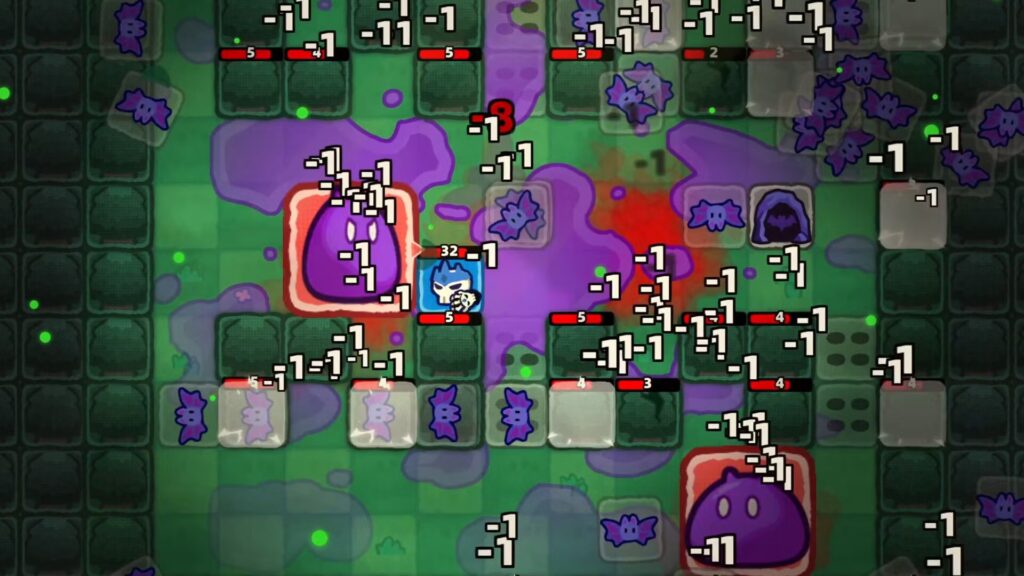
Boss fight example: The Demon Lord (blue icon) vs. the Fish Leviathan boss (red health bar) on a looped arena. Note use of grid obstacles (red lava) to shape combat.
How to Use Dodge, Parry, and Counterattack Systems Effectively
Dodging and parrying are essential skills. To dodge, you must move at the exact frame an enemy attacks, effectively leaping out of harm’s way and immediately getting another action for “free”. This lets you reposition sharply to the side or behind enemies. To parry, you move into the enemy’s attack path from the opposite direction at the last moment. Pulling off a parry is tricky, [45] admits it’s “incredibly hard” to time at first, but it knocks enemies back and often hits them from behind. In practice, learn dodges first: time your step to coincide with an incoming attack, so the attack goes past you. That move alone can turn the tide by letting you immediately strike back.
Counterattacks after a dodge or parry are crucial. When you successfully evade, act quickly, the enemy is vulnerable and stationary. Some weapons even grant bonuses on a perfect dodge (like a follow-up strike or teleport). And yes, the game rewards skill: perfect parries can allow a critical hit from behind. Finally, remember that the developers have made these windows a bit more forgiving in updates, so don’t be discouraged if you struggle at first. Practice timing to make each dodge/parry count. Over time, you’ll “pull off dodges and parries with ease” as intended, turning defensive moves into powerful counterattacks.
Best Farming Methods for Unlocking Weapons and Upgrades Faster
Progress in Demon Lord: Just a Block relies on collecting resources each run. The game hides many collectibles, for instance, Golden Skulls and Hard Bones, which are likely tied to permanent upgrades. To farm effectively, explore every room thoroughly. Special rooms (like treasure puzzles, mini-boss challenges, or rare shops) often hold large rewards. The dev mentions 18 special room types, so you may stumble upon shops or hidden treasure rooms. Always smash crates and defeat every enemy on a floor to accumulate gold or soul currency for upgrades.
After each run, use any earned currency to unlock new weapons or abilities if that system is available. Aim to complete full runs (even on higher difficulty) because finishing chapters yields better loot. Since each attempt progressively unlocks more gear, prioritize goals like restoring your limbs and acquiring new weapons. If your runs end early, focus next time on surviving a bit longer to reach the first boss or secret level. In short, maximize loot per run by staying alive, seeking secret caches, and saving up Golden Skulls and other found treasures for the game’s meta-progression.
How Procedurally Generated Maps Affect Your Strategy
Each playthrough uses randomized maps, so you can’t rely on memorizing layouts. Instead, focus on adaptation. Every run’s floors, enemy placements, and special rooms will differ. Learn to quickly scan each new map: identify safe zones, potential choke points, and hidden walls. If you see a pattern of blocks or barriers, test if you can break them (later upgrades allow punching walls, as seen above).
Because map structure changes, flexibility is key. Don’t commit to one path: explore side routes for shops or puzzles when safe. If you built around a certain element (say, lightning spells) but the map has lots of water hazards, be prepared to use different tactics (like shifting to summons or bombs instead). Use information on special rooms (there are 18 types) to plan: if you recognize a symbol, you might be entering a challenge room or shop, so allocate your heals and keys accordingly. Overall, treat each level as a new puzzle. The procedural generation means variety keeps runs fresh, so adjust your strategy on the fly rather than expecting a fixed “best route.”
Advanced Combat Tricks for High-Level Players
Once you’ve mastered the basics, high-level play involves exploiting quirks of the combat system. For example, double-dodging: because a successful dodge essentially grants you another turn, skilled players sometimes “kite” enemies by chaining moves and dodges to skip enemy turns. You can also bait enemies into predictable positions by standing near edges or obstacles. For instance, enemies will only move after you, so you can step back and forth on a single tile to stall them, then strike when ready.
Another trick: combo sequencing. Since abilities and movement share turns, arrange actions so that one triggers the next. You might dash through a group (hitting them) then immediately use an AoE card while they’re all lined up. Or spawn allies to herd enemies into a row, then backstab each in one turn. Also watch out for terrain: if you have a teleport or knockback ability, use it to send bosses into hazards or off-balance.
At high levels, consider hybrid builds too (see next section). Mixing an ability that slows enemies (like Ice) with a piercing weapon can shred foes by preventing them from evading your follow-up. The key is seamless timing: nail that dodge or parry (they reward a potent counter), follow with a weapon’s special move, then chain into a powerful card. In essence, use every mechanic in concert, perfect dodges, backstabs, AoE bursts, to clear enemies before they can respond. It takes practice, but these advanced combos let you breeze through even the toughest rooms.

Common Mistakes Beginners Make and How to Avoid Them
New players often underutilize defensive moves. Parrying in particular is easy to botch: as one review notes, attempting a parry “at the last moment” is “extremely difficult”. If beginners try parries too soon, they’ll get hit and lose health. Instead, start with simple dodges and only attempt parries once comfortable. Another frequent error is rushing through rooms: moving blindly forward can lead you into traps or multiple enemies at once. Always take a moment to assess the grid, use peripheral vision to spot hidden walls or hazards (like blocked passages you can break).
Beginners also sometimes overlook special rooms. Treasure puzzles, secret merchants, and challenge chambers are easy to miss if you don’t search for cracks in walls or odd tiles. Missing these can cost you powerful weapons or many golden skulls. In the Steam reviews, someone shares an important lesson: if an obstacle seems indestructible, experiment, in their case they “punched through the fence” with an upgrade.
In summary, don’t panic when backed into a corner; consider alternate moves like dashing through or breaking an object. Lastly, avoid locking yourself into a single playstyle too early. If your build isn’t working, be flexible. Many newcomers try one weapon or card then stick with it; instead, adapt based on what the map and drops give you each run.
How to Optimize Builds for Different Playstyles (Tank, DPS, Hybrid)
Demon Lord: Just a Block supports varied playstyles through its many weapons and cards. If you want a tank build, prioritize high-health and defense. Use weapons with good reach (like heavy swords or shields if available) and take ability cards that grant shields, healing, or crowd control. Summoning or bat-swarm cards help divert enemy focus so you soak damage. For a DPS build, go the opposite direction: pick the fastest or highest-damage weapons (e.g. lightning dash or rapid-fire repeater) and stack offensive cards (elemental AoEs, bonus on critical). Ranged weapons pair well with offensive spells since you can hit while dodging back.
A hybrid build mixes these: for instance, use a medium-speed weapon with both defensive and offensive cards. One hybrid tactic is using a stun or slow (like ice) to control mobs, then quick melee finishers. Another is pairing moderate armor with moderate damage to survive and chip away steadily. Because there are “10+ build archetypes”, you can experiment freely. For each style, focus on synergy: tanks benefit from cards that reward movement (so you can dodge more), DPS thrives on damage multipliers, and hybrids aim for balanced enhancements. Tailor your loadout: a tank might forgo a dodge-oriented weapon, whereas a DPS should master it to keep safe between hits.
Replayability Guide: How to Maximize Progress in Each Run
Every run in Demon Lord: Just a Block contributes to your long-term progress. There are multiple endings (3 total) and countless secrets, so replaying is encouraged. To get the most out of each run, treat it like a learning experience. Try different builds and routes to discover more content. Make sure to pick up any permanent upgrades or unlocks your run provides (such as new weapons, ability cards, or stat bonuses).
Focus on completing each chapter at least up to the boss to unlock key gear. Use collected Golden Skulls, Hard Bones, and other collectibles (mentioned by the dev) as soon as possible for unlocks. Explore optional areas or special rooms to find rare items. After a run ends, spend any currency or soul shards at the upgrade menu or blacksmith to permanently enhance your Demon Lord (some roguelites let you boost health or unlock weapons between runs).
Essentially, don’t waste anything: every coin, skull, or puzzle you solve moves you forward. With 7 chapters and 3 endings, aim to finish full runs to see new endings, then replay with new strategies. Each run also builds your understanding of game systems, which in turn makes future runs faster and more rewarding.
Frequently Asked Questions (FAQs)
- What kind of game is Demon Lord: Just a Block?
It’s a roguelite action RPG with grid-based, turn-by-turn combat. You control a Demon Lord’s head on a tile grid, and every time you move or act, the enemies and environment also advance. It mixes strategic planning (positioning on a board) with fast dodge-and-parry action. - How does the turn-based movement mechanic work?
Essentially, “the world only moves when you move”. If you stay still, nothing happens. When you take a step, each enemy then takes one step or action. If multiple enemies are present, they all execute their next action simultaneously. Meanwhile, you get a brief pause to dodge or parry during their attack animations. - How important are dodges and parries?
Very important. Dodging at the exact moment an attack lands lets you avoid damage and often grants a free extra move. Parrying (tanking a hit from the right direction) is harder but stuns the enemy, allowing a strong counter. Beginners should practice dodging first, as parries require precise timing. With practice, these maneuvers become second nature and greatly improve survival. - Which weapons or playstyle should I start with as a newbie?
A safe bet is to begin with a ranged or fast weapon. For example, the lightning-charged dash sword allows you to attack from mid-range and immediately evade, which is beginner-friendly. Alternatively, weapons that punch or shoot from afar keep you away from enemies’ hits. Once comfortable, you can branch into slower or melee weapons. Always align your weapon choice with the abilities you find in the run. - What are ability cards and how do I use them?
Ability cards are upgrades you pick up during a run (typically after boss fights or in special rooms). They grant new attacks or buffs for the remainder of the run. Strong ability cards include elemental attacks (like Lightning or Fire spells), summoning minions, or defensive buffs (invincibility shields). Use them in tandem with your weapon: for instance, a Lightning ability card complements a dash-attack weapon. If an ability has a mechanic (like freeze, explosion, or teleport), try to chain it with your next move for combo damage. - How do I quickly unlock new weapons and upgrades?
Hunt for all treasures and complete runs fully. Defeat bosses and clear floors to earn currency (gold or souls) and pick up hidden items. Special collectibles like Golden Skulls and Hard Bones are scattered in secret rooms; grab them for permanent unlocks if that system exists. Completing a run usually lets you buy or unlock new gear at the end, so try to survive until a chapter’s end. In other words, fully explore each run and invest any earned currency into unlocking the weapons or skills you want in the long run. - How do enemies and bosses move each turn?
Enemies wait for you to act – after you move, they each move once. Bosses may have multi-turn patterns (e.g. charging for a big attack). Watch bosses for tells (wind-ups) and use the dodge/parry window. The developer notes that each boss’s attack is telegraphed, allowing you to evade or counter if timed right. The key is patience: don’t rush into a boss, and use terrain if possible (e.g. hugging a wall to limit movement). - Are there secrets or special rooms I should look for?
Yes. The game’s maps include special rooms (about 18 types) that contain shops, puzzles, bonus chests, or mini-bosses. Look for slightly different floor tiles or pushable walls that might hide a doorway. Solving these puzzles can yield powerful rewards, and skipping them can slow progress. Always check for cracks in walls or patterns on the floor that indicate something hidden. - How do I avoid dying too early as a beginner?
Take it slow at first. Don’t try to clear an entire room if you can handle only one enemy at a time. Use your dodge/parry mechanics rather than tanking hits. If you see a health item (like apples) or a healing card, use it. And don’t be afraid to exit a dangerous fight; retreating a tile consumes your turn, but it’s safer than losing a run. Also, adapt if something isn’t working: if you keep dying with one loadout, try a different weapon or pick a defensive card instead. - Is Demon Lord: Just a Block worth replaying?
Absolutely. It has multiple endings and extensive replay value. Each run is different due to the procedural maps and room types, plus you unlock new content over time. As a roguelite, you’re meant to replay: each attempt teaches you enemy patterns and builds your knowledge. Over multiple runs, you’ll unlock all 7 chapters, discover all 3 endings, and collect all the hidden treasures. With so many weapons, abilities, and secrets, every run can feel fresh.
Conclusion
Demon Lord: Just a Block cleverly mixes strategic, grid-based planning with action-packed roguelite combat. Whether you’re a brand-new Demon Lord or a seasoned invader, the keys to success are understanding the turn-based movement, mastering dodge/parry, and building synergistic loadouts. Use these tips to plan your moves, unlock powerful gear, and tackle bosses with confidence. By exploring every nook, experimenting with weapons and ability cards, and adapting to each procedurally-generated dungeon, you’ll steadily grow stronger. Remember that even failures teach valuable lessons – defeat is part of the roguelite loop. Embrace the challenge, learn enemy tells, and soon you’ll be conquering the heroes in style.
Sources and Citations
- Steam store page
https://store.steampowered.com/app/3720420/Demon_Lord_Just_a_Block/ - Steam patch notes
https://store.steampowered.com/news/app/3720420/view/664986477286916904 - Steam community/news posts
https://steamcommunity.com/app/3720420 - Reddit developer AMA on r/Games
https://www.reddit.com/r/Games/comments/1syyjc8/ama_demon_lord_just_a_block_the_gridbased/ - Reddit developer AMA on r/roguelites
https://www.reddit.com/r/roguelites/comments/1szx371/ama_demon_lord_just_a_block_the_gridbased/ - Steam community reviews
https://steamcommunity.com/app/3720420/reviews/
Recommended
- Why Pixar Canceled a Female-Led Movie Similar to KPop Demon Hunters — The Untold Story of ‘Be Fri’
- Marathon: Bungie’s New FPS – Gameplay Details, Developer Insights, and Community Reactions
- How To Increase Inventory Space In Windrose (Fast Guide to Unlock More Slots & Backpacks)
- Top 20 Ugliest Video Game Characters: A Celebration of Unconventional Design
- The Audience for the Silent Hill 2 Remake Has Surpassed 5 Million People: What Konami Announced and What It Means
- PlayStation’s New DRM Policy Might Reportedly Lock You Out of Your Games: What the 30-Day Online Check-In Rumor Means for PS5 and PS4 Owners
- How to Create Realistic Hair Clumping in Blender: A Step-by-Step Guide
- How do I make the camera follow a path in Blender?
- Atomfall TV Adaptation Confirmed: UK Post-Apocalyptic Survival Game is Coming to Television (Everything We Know)
- Final Fantasy 14 8.0 Update Won’t Be Another “Rebirth” Like A Realm Reborn, Yoshi-P Says