






In This Article (8 sections)
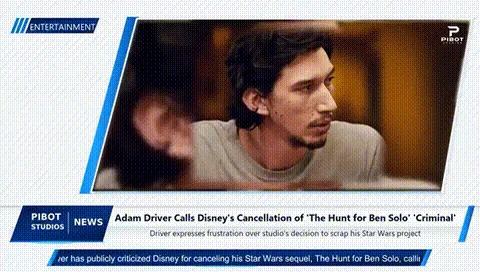
Adam Driver Calls Disney’s Cancellation of the Hunt for Ben Solo Criminal
Adam Driver has expressed renewed frustration over Disney’s rejection of The Hunt for Ben Solo, an unmade Star Wars film that would have reunited him with the character he portrayed throughout the sequel trilogy. During an Associated Press interview published on November 12, 2026, while promoting James Gray’s Paper Tiger, Driver described the decision as something that “felt criminal,” reflecting his disappointment that the project never received approval.
The proposed film had been developed with director Steven Soderbergh, Rebecca Blunt, and screenwriter Scott Z. Burns, with the intention of exploring Ben Solo’s story after the events of The Rise of Skywalker. Driver’s comments have renewed attention on the project’s development history, the creative support it reportedly received from Lucasfilm, and the fan campaign that followed its rejection. However, his remarks do not indicate that Disney has reconsidered the decision or that the film has entered production.
Driver’s strongest criticism came when he questioned why the opportunity to have Steven Soderbergh direct a Star Wars film had not been sufficient to persuade Disney to proceed. He described the rejection by saying, “It’s criminal. Or it felt criminal,” with the qualification making clear that he was expressing a personal reaction rather than alleging unlawful conduct.
His frustration appears closely connected to the combination of filmmaker, screenplay, and character that had been assembled during development. For Driver, the opportunity represented more than another appearance in an established franchise because it involved a particular creative interpretation of Ben Solo’s future. Losing that combination was therefore a significant disappointment, even though he acknowledged that the filmmakers were moving forward with other work.
The distinction between artistic disappointment and a broader accusation against Disney is important when interpreting Driver’s statements. His comments emphasize what he considered a missed creative opportunity, particularly given Soderbergh’s involvement and the work already completed on the screenplay. However, the available reporting does not establish that Driver accused Disney of illegal conduct, revealed a personal feud, or announced a campaign against the company’s leadership. Disney’s publicly reported objection concerned the proposed story’s relationship to Ben Solo’s established fate, while Driver’s response focused on the creative value he believed the film could have offered. These perspectives explain the disagreement without providing a complete account of every consideration involved in the studio’s internal decision.
The latest comments also follow Driver’s earlier public acknowledgment that he no longer expects the project to move forward. During his November 4, 2026, appearance on The Rich Eisen Show, he indicated that he believed the opportunity had passed despite continuing to speak positively about the screenplay. His subsequent Associated Press remarks expressed frustration over the rejection but did not contradict that assessment or suggest renewed negotiations. This distinction matters because a forceful criticism of a studio decision can create the impression that a new confrontation or development process is underway. In this case, Driver appears to remain disappointed by the outcome while accepting that the filmmakers must pursue other projects.
Driver first publicly revealed The Hunt for Ben Solo in an Associated Press interview published on October 20, 2025. The announcement attracted considerable attention because audiences learned about the proposed film, its creative team, and its rejection at approximately the same time. Unlike a conventional Star Wars announcement accompanied by production plans or a release window, the disclosure introduced a project that had already failed to secure approval. Subsequent reporting and fan discussions therefore developed around the possibility of a film that might never be made rather than an upcoming release. The November 2026 comments represent a continuation of that story, not the announcement of a newly canceled production.
The chronology is particularly important because the project underwent substantial development before becoming public knowledge. Driver had expressed interest in returning to Star Wars through conversations dating back to 2021, although those earlier discussions should not automatically be treated as the beginning of organized work on this particular screenplay. The creative team later spent an extended period developing the proposal, ultimately producing a completed script before Disney declined to proceed. Driver’s October 2025 disclosure revealed that history, while his comments throughout 2026 provided further insight into the filmmakers’ disappointment. Keeping these stages separate prevents the mistaken impression that Disney canceled a newly announced film in November 2026.

Why Disney Rejected the Hunt for Ben Solo and How Steven Soderbergh Developed the Film
The Hunt for Ben Solo was conceived as a Star Wars feature film centered on Adam Driver’s character after the events of The Rise of Skywalker. Steven Soderbergh was involved as the intended director and participated in developing the story alongside Rebecca Blunt, while Scott Z. Burns wrote the screenplay. The project advanced beyond an informal suggestion because the filmmakers established a title, developed the narrative, and completed a script for consideration. However, those achievements did not mean the film had received authorization to begin production. Although describing the project as canceled is understandable, rejected during development is more precise because there is no public evidence that principal photography began or that a completed film was withheld from release.
The development process reportedly lasted approximately two years, with Soderbergh later describing about two and a half years of unpaid work involving himself, Driver, and Blunt. These accounts establish that the film represented a sustained creative commitment rather than a brief speculative pitch. The slight difference in the reported duration does not necessarily indicate a contradiction because participants may count development from different stages, including initial discussions, outlining, or active screenplay preparation. Driver’s earlier interest in returning to Star Wars also predates the period associated with the completed proposal. The length of the collaboration helps explain why the rejection generated considerable disappointment among the people who had invested time in developing the story.
Soderbergh’s involvement was particularly significant because he was not simply a director whose name had been attached to an early idea. He participated in developing the project and later described having imagined the finished film before Disney rejected it. His February 2026 comments conveyed disappointment with the outcome and indicated that he had considered the practical work required to bring the production to the screen.
He also explained that the approval process ended before the budget discussion he had anticipated, suggesting that the project was rejected before certain practical production considerations could be explored. These remarks support the conclusion that Soderbergh was seriously invested in the film, although they do not establish its intended visual style, rating, runtime, or production budget.
Driver’s account indicates that the project initially received a positive response from Lucasfilm before reaching Disney’s senior leadership. The proposed story was presented to Kathleen Kennedy, Lucasfilm executive Carrie Beck, and chief creative officer Dave Filoni before Burns completed the screenplay. According to Driver, Lucasfilm was receptive to the concept and its intended direction, allowing the project to proceed through additional development. The completed proposal was subsequently presented to Disney executives Bob Iger and Alan Bergman, who declined to authorize the film. This sequence establishes an important distinction between creative support within Lucasfilm and the final approval required for a major Star Wars production.
The central reported reason for Disney’s rejection concerned Ben Solo’s survival after the conclusion of The Rise of Skywalker. According to Driver’s original account, Disney executives questioned how the character could be alive when the previous film had established his sacrifice. Soderbergh later reinforced that explanation, stating that the reason communicated to the filmmakers involved Ben’s survival and cautioning against speculation about motives that had not been disclosed. His comments also indicated that the conversation never reached the budget discussion he had expected. Consequently, claims that the project was rejected because of excessive production costs, actor compensation, or disagreements about release strategy are not established by the available reporting.
Soderbergh also described asking Kathleen Kennedy whether Disney had previously rejected a completed Star Wars screenplay submitted by Lucasfilm for approval. According to his account, Kennedy told him that this was the first such instance, a detail that contributed to his surprise over the outcome. However, that statement should be attributed to Soderbergh’s description of their conversation rather than presented as an independently verified history of every Star Wars development proposal. The account nevertheless highlights how unusual the rejection appeared to the filmmakers after the project had received internal support. Their disappointment was intensified by the belief that they had developed a viable continuation with Lucasfilm before the final decision prevented further progress.
Scott Z. Burns’s screenplay remains one of the most discussed elements of the unmade film, particularly because Driver has repeatedly expressed confidence in its quality. The development history credits Burns with writing the script, while Soderbergh and Blunt contributed to the story’s development and Driver participated in the broader creative process.
These responsibilities should remain distinct because outlining a narrative, writing a screenplay, and providing development feedback are related but different forms of contribution. Driver’s praise establishes his enthusiasm for the material, but audiences have not been able to evaluate the finished screenplay independently. The public record confirms that a substantial script existed without revealing enough of its contents to support detailed descriptions of particular scenes, plot twists, or the ending.
How the Hunt for Ben Solo Would Continue Star Wars After the Rise of Skywalker
The most important confirmed narrative detail about The Hunt for Ben Solo is that it would have taken place after Star Wars: The Rise of Skywalker. That timeline placement created the central challenge surrounding the proposed film because Ben Solo’s story appeared to reach a definitive conclusion during the sequel trilogy’s final installment. In the released film, Ben returns to the light, helps Rey confront the threat on Exegol, and ultimately sacrifices his life to restore hers.
The official Star Wars account describes his final action as a sacrifice and explains that he passed into the Force. A continuation featuring Ben after those events would therefore need to address an established narrative outcome rather than simply proceed as though he had survived the previous film.
The challenge was not necessarily limited to finding a technical explanation for Ben’s continued existence. A major character’s death can carry considerable emotional significance, particularly when it concludes an arc involving personal transformation and sacrifice. Reversing or reinterpreting that outcome would require a story capable of preserving its dramatic importance while providing a convincing reason for the character’s return. An explanation that fits within a fictional universe’s supernatural rules does not automatically guarantee that audiences will find the resulting narrative satisfying. These considerations help explain why Ben’s fate became such an important issue during approval, although they do not establish that Burns’s screenplay failed to address those concerns.
The filmmakers evidently believed they had developed a worthwhile story that could continue Ben Solo’s journey after his sacrifice. However, the mechanism used to explain his presence has not been disclosed, leaving the central narrative solution unknown to the public. The title The Hunt for Ben Solo also raises questions about who would have been searching for him, what circumstances might have surrounded his return, and how the story would have interpreted his apparent absence. None of those possibilities can be treated as confirmed plot details simply because they appear consistent with the title. Claims involving a particular rescue mission, supernatural setting, revised ending, or established supporting cast would require direct evidence from the filmmakers or screenplay.
The distinction between Ben Solo’s established redemption and the possibilities of a longer continuation is another reason the proposed film attracted attention. His return to the light represents a significant change in the sequel trilogy, but a new story could theoretically explore what follows that transformation and how other characters respond to it. Such a continuation would need to consider the consequences of his earlier actions alongside the meaning of his final sacrifice. However, those are storytelling questions raised by the premise rather than confirmed elements of Burns’s script. Without access to the screenplay, readers cannot determine whether the filmmakers intended to explore redemption, survival, responsibility, or another aspect of Ben’s character through a particular narrative structure.
Disney’s reported objection therefore concerns a fundamental disagreement over whether the proposed continuation should exist within the established Star Wars story. The creative team believed there was a compelling opportunity to revisit Ben Solo after The Rise of Skywalker, while the decision-makers described by Driver and Soderbergh did not accept the proposed premise.
The available reporting does not establish that Disney rejected every conceivable future story involving the character or that the filmmakers had exhausted every possible interpretation of his fate. It establishes that this specific screenplay failed to receive approval because of concerns surrounding Ben’s survival. That distinction allows the decision to be examined without attributing unsupported motives or inventing details about a story the public has never seen.
The project’s rejection also illustrates the difference between a promising creative proposal and an approved franchise production. A completed screenplay, an established director, and support from important Lucasfilm figures can demonstrate serious development without guaranteeing that a film will ultimately be made. Final authorization may depend on whether decision-makers accept the proposed story’s relationship to the franchise’s existing continuity. In this case, the documented disagreement focused on the consequences of Ben Solo’s death rather than the availability of the actor or the absence of a completed script. The result was an unmade film whose creative potential remains difficult to evaluate because the material that convinced its developers has never been presented publicly.

Star Wars Fan Campaign, Adam Driver’s Reaction, and the Hunt for Ben Solo’s Future
The public disclosure of The Hunt for Ben Solo in October 2025 prompted a fan campaign urging Disney to reconsider the rejected project. Supporters organized online discussions and more visible demonstrations, including a banner flown over Walt Disney Studios and paid billboard messages in Times Square. These efforts reflected the emotional attachment some Star Wars fans maintained toward Ben Solo and their interest in seeing Adam Driver return under Steven Soderbergh’s direction. The campaign also gave an unmade film a recognizable public identity despite the absence of a trailer, official release schedule, or published screenplay. Its visibility helped sustain discussion of the project beyond the initial announcement and contributed to renewed attention during subsequent interviews.
The campaign continued into 2026, with Fantha Tracks reporting an anniversary billboard in October, approximately one year after Driver first revealed the film. This demonstrated that some supporters remained committed to the project even after the passage of time and the absence of a confirmed revival. However, public demonstrations and social media activity do not establish the size of the entire potential audience or guarantee that a studio will reconsider its decisions. A prominent billboard can attract attention and communicate enthusiasm without functioning as a representative measure of broader Star Wars audience demand. The campaign’s significance lies in its ability to maintain public interest in a rejected creative proposal rather than proving that the project would necessarily succeed commercially.
Driver responded to the fan campaign with appreciation, acknowledging the effort supporters had devoted to promoting a film that had never received production approval. During his November 2026 remarks, he expressed surprise that people had paid for public advertisements and indicated that their support had moved him. His reaction demonstrated that the campaign had personal meaning beyond its role in keeping the project visible within entertainment coverage. For fans, the billboards and other activities provided a tangible way to communicate their continued interest in Ben Solo and the proposed continuation. For Driver, they showed that the creative opportunity he had wanted to pursue resonated with people who had never seen the actual screenplay.
Nevertheless, Driver’s gratitude toward supporters should not be confused with evidence that the campaign has persuaded Disney to revive the film. During his November 4 appearance on The Rich Eisen Show, he indicated that he regarded the opportunity as having passed, even while praising the screenplay and acknowledging the fan response. His November 12 Associated Press comments expressed renewed disappointment over the original rejection but did not announce any reversal of Disney’s decision. These statements are consistent with someone who remains emotionally invested in an abandoned project while no longer expecting it to proceed. As of November 17, 2026, there is no confirmed revival, production schedule, release date, or announcement that the original creative team has resumed development.
A potential revival of The Hunt for Ben Solo would require more concrete evidence than continued fan enthusiasm or Driver’s willingness to discuss the experience. Reliable confirmation would involve an announcement of renewed development, updated production arrangements, or another official indication that Disney had reconsidered the rejected screenplay. It would also be important to determine whether any revived version retained the same creative team, premise, and intended connection to The Rise of Skywalker. The possibility of a future Star Wars project involving Ben Solo is separate from the revival of this particular film because another appearance could use a different narrative approach or production team. Neither possibility should be presented as an active project without new evidence.
Driver’s potential return as Ben Solo therefore remains unconfirmed despite the sustained attention surrounding the character. Earlier comments expressing enthusiasm for the right filmmaker and story help explain why he participated in developing The Hunt for Ben Solo, but they do not override his more recent assessment that the opportunity has ended. The character’s popularity and the continued circulation of interviews about the abandoned film also do not establish that Driver has signed on for another Star Wars production.
Any future return would require fresh confirmation rather than speculation based on the rejected proposal or the existence of an organized fan campaign. The most accurate current position is that Driver seriously pursued a return through this project, Disney declined to approve it, and no replacement opportunity has been publicly established.
Ultimately, The Hunt for Ben Solo remains a notable example of a substantial film project that advanced through creative development without receiving final studio approval. The involvement of Adam Driver, Steven Soderbergh, Rebecca Blunt, and Scott Z. Burns demonstrates that the proposal was more than an informal suggestion, while the reported support from Lucasfilm explains why its rejection came as a surprise to the filmmakers.
Disney’s stated concern about Ben Solo’s survival after The Rise of Skywalker became the defining obstacle, leaving an unseen screenplay and a creative opportunity that its participants continue to regard positively. The fan campaign has preserved public interest in the abandoned project, but it has not produced a confirmed change in its status. For now, Driver’s latest remarks express both frustration over what he believes Star Wars lost and appreciation for the people who supported the idea, while offering no indication that The Hunt for Ben Solo is moving toward production.

Frequently Asked Questions (FAQs)
- What did Adam Driver say about The Hunt for Ben Solo being canceled?
Adam Driver expressed strong disappointment over Disney’s rejection of The Hunt for Ben Solo, describing the decision as something that “felt criminal” during an Associated Press interview published on November 12, 2026. His frustration centered on the lost opportunity to revisit Ben Solo in a Star Wars film directed by Steven Soderbergh, with whom he had spent considerable time developing the project. Driver believed the proposed combination of filmmaker, screenplay, and character represented a compelling creative opportunity that deserved to move forward. However, his wording reflected his emotional reaction to the studio’s decision rather than an accusation that Disney had committed an actual criminal offense. He also acknowledged that the filmmakers were pursuing other work, indicating that his disappointment did not represent an announcement of renewed negotiations or production activity. - Was The Hunt for Ben Solo an officially released Star Wars movie?
No, The Hunt for Ben Solo was never released as a Star Wars film because Disney declined to approve the project for production. The proposed feature underwent substantial development, including story planning and the completion of a screenplay written by Scott Z. Burns. Steven Soderbergh was attached as the intended director, while Adam Driver was involved in developing the project around his return as Ben Solo. However, completing a script and receiving creative support during development do not mean a film has been authorized for production. There is no public evidence that principal photography began, that a completed movie exists, or that Disney is withholding a finished film from distribution, making it more precise to describe the project as rejected during development. - Why did Disney reject The Hunt for Ben Solo?
According to Adam Driver and Steven Soderbergh, Disney’s stated objection concerned how Ben Solo could remain alive after the events of Star Wars: The Rise of Skywalker. In that film, Ben sacrifices his life to restore Rey, creating a significant narrative challenge for a continuation set afterward. Driver explained that the proposed screenplay was ultimately rejected when it reached Disney executives Bob Iger and Alan Bergman, despite earlier support within Lucasfilm. Soderbergh later confirmed that the explanation communicated to the filmmakers involved Ben’s survival and indicated that discussions ended before the expected budget conversation. Although other possible explanations may be suggested, the available reporting does not establish financial disagreements, actor compensation, or release strategy as confirmed reasons for the rejection. - Who was supposed to direct The Hunt for Ben Solo?
Steven Soderbergh was the intended director of The Hunt for Ben Solo and played an active role in developing the proposed Star Wars film. His involvement extended beyond simply agreeing to direct because he participated in shaping the story alongside Rebecca Blunt and remained invested throughout the development process. Soderbergh later described spending approximately two and a half years working on the project without payment before Disney declined to proceed. Driver repeatedly emphasized Soderbergh’s involvement when discussing his disappointment, indicating that the opportunity to work with him on a Star Wars film was particularly important. However, because the project never entered production, there is no completed film through which audiences can evaluate Soderbergh’s intended visual style, direction, or final interpretation of Ben Solo’s story. - Who wrote The Hunt for Ben Solo?
Scott Z. Burns wrote the screenplay for The Hunt for Ben Solo, which was developed as a continuation of Ben Solo’s story following The Rise of Skywalker. Steven Soderbergh and Rebecca Blunt participated in outlining and developing the story, while Adam Driver contributed to the broader creative process surrounding his potential return to the character. These roles are distinct because developing a story concept, preparing an outline, writing the screenplay, and providing creative feedback are different forms of involvement. Driver has spoken positively about the completed script, describing it as material he believed was worth bringing to the screen. However, the screenplay has not been publicly released, so its detailed plot, character developments, and proposed ending cannot be independently evaluated or accurately reconstructed from the available interviews. - When did Adam Driver reveal the Ben Solo movie?
Adam Driver first publicly revealed The Hunt for Ben Solo in an Associated Press interview published on October 20, 2025. During that interview, he explained that he had worked on a proposed Star Wars continuation involving Steven Soderbergh and other collaborators, but Disney had ultimately rejected the project. The disclosure attracted widespread attention because audiences learned about the film’s existence and its cancellation after development had already taken place. Driver subsequently discussed the project in additional interviews, including his November 2026 appearance on The Rich Eisen Show, where he indicated that he considered the opportunity finished. His later Associated Press comments describing the rejection as something that “felt criminal” appeared in November 2026, making them a renewed expression of disappointment rather than the original announcement of the film. - Was the movie set after The Rise of Skywalker?
Yes, The Hunt for Ben Solo was developed as a Star Wars film set after the events of The Rise of Skywalker. This timeline placement is important because Ben Solo sacrifices his life to save Rey at the conclusion of the sequel trilogy, making his continued existence a central storytelling question. The filmmakers reportedly developed a screenplay that addressed Ben’s return, but the precise explanation they intended to use has not been publicly disclosed. As a result, there is no confirmed information establishing whether the story involved resurrection, another interpretation of Force mythology, or a different narrative approach. The film’s post-sequel setting is documented, but detailed descriptions of how Ben would have returned or what happened afterward remain speculative without access to the screenplay. - Did Lucasfilm support The Hunt for Ben Solo?
According to Adam Driver, The Hunt for Ben Solo received a positive response from Lucasfilm during its development. The proposal was presented to Kathleen Kennedy, Lucasfilm executive Carrie Beck, and chief creative officer Dave Filoni, who were reportedly receptive to the concept and its intended direction. That encouragement allowed the filmmakers to continue developing the project, including the completion of Scott Z. Burns’s screenplay. However, Lucasfilm’s support did not constitute final authorization to begin production because the proposal still required approval from Disney’s senior leadership. The project was ultimately rejected after reaching Disney executives Bob Iger and Alan Bergman, illustrating the difference between creative support within Lucasfilm and the final corporate decision needed to move a Star Wars film into production. - Did Adam Driver know about the Times Square billboards?
Yes, Adam Driver acknowledged the Times Square billboards and other fan campaign activities supporting The Hunt for Ben Solo. Following the project’s public disclosure in October 2025, supporters organized demonstrations and promotional efforts, including billboard messages and a banner flown over Walt Disney Studios. During subsequent interviews, Driver expressed surprise that fans had spent money promoting an unmade film and conveyed appreciation for their continued interest in Ben Solo’s story. His reaction demonstrated that the campaign had personal significance to him, particularly because the project had already been rejected before audiences learned about it. However, his gratitude did not include an announcement that Disney had reconsidered the screenplay, resumed development, or agreed to produce the film. - Is The Hunt for Ben Solo coming back?
As of November 17, 2026, there is no confirmed revival of The Hunt for Ben Solo, and Disney has not announced renewed development, production plans, or a release date. Adam Driver’s comments during his November 4 appearance on The Rich Eisen Show indicated that he believed the opportunity to make the film had passed. His later criticism of Disney’s rejection expressed continued disappointment but did not suggest that negotiations had resumed or that the original creative team was preparing another attempt. Although fans have continued campaigning for the project’s reconsideration, public enthusiasm alone does not establish that Disney intends to reverse its decision. A future Ben Solo appearance remains a separate possibility, but any revival of this specific film would require new official confirmation rather than speculation based on Driver’s interviews or ongoing fan support.

Conclusion
Adam Driver’s renewed comments about The Hunt for Ben Solo highlight the disappointment surrounding an ambitious Star Wars project that never received the approval necessary to reach production. Developed through an extended collaboration involving Driver, director Steven Soderbergh, Rebecca Blunt, and screenwriter Scott Z. Burns, the proposed film represented a serious creative effort to continue Ben Solo’s story after The Rise of Skywalker. The existence of a completed screenplay, the reported support from Lucasfilm, and the involvement of an established filmmaker made its rejection particularly frustrating for those who had invested substantial time in bringing the concept together.
However, Disney’s reported concerns about how Ben Solo could return following his sacrifice created a fundamental disagreement over the proposed continuation. Although Driver and his collaborators believed they had developed a compelling approach, the screenplay remains unavailable to the public, making detailed claims about its story, potential quality, or undisclosed reasons for rejection impossible to verify.
The passionate fan campaign that followed the project’s disclosure demonstrates the continued interest in Ben Solo and the possibility of exploring his character beyond the sequel trilogy. Supporters organized social media campaigns, billboards, and other public demonstrations, drawing an appreciative response from Driver and keeping the unmade film in entertainment discussions long after its rejection.
Nevertheless, that enthusiasm has not resulted in any confirmed reversal of Disney’s decision, and Driver’s recent interviews suggest that he no longer expects the project to move forward. As of November 17, 2026, The Hunt for Ben Solo remains an abandoned Star Wars film with no announced revival, production schedule, or release date. Ultimately, Driver’s description of the decision as something that “felt criminal” reflects his belief that a valuable creative opportunity was lost, while the project’s future remains uncertain without new confirmation from Disney or Lucasfilm.
Sources and Citations
- The Associated Press, November 12, 2026: Interview with Adam Driver discussing his filmmaking priorities, disappointment over The Hunt for Ben Solo, and appreciation for the fan campaign.
https://apnews.com/article/654086a0367607dcbee9086f0eb7eb8e - The Associated Press, October 20, 2025: Original interview revealing the proposed Ben Solo film, its collaborators, and Driver’s account of Disney’s rejection.
https://apnews.com/article/adam-driver-star-wars-soderbergh-jarmusch-4e08164d0419759f1b5b50d69864975d - TheWrap, November 14, 2026: Coverage of Driver’s remarks describing the rejected project as feeling criminal.
https://www.thewrap.com/creative-content/movies/adam-driver-disney-killing-the-hunt-for-ben-solo-criminal/ - TheWrap, November 4, 2026: Reporting on Driver’s appearance on The Rich Eisen Show and his assessment that the project was over.
https://www.thewrap.com/creative-content/movies/adam-driver-hunt-for-ben-solo-dead-despite-fans-videos/ - TheWrap, October 20, 2025: Reporting on the film’s development, Scott Z. Burns’s screenplay, and Disney’s rejection as described by Driver.
https://www.thewrap.com/adam-driver-ben-solo-star-wars-movie-steven-soderbergh-disney-bob-iger/ - Dark Horizons, February 18, 2026: Steven Soderbergh’s account of the stated objection, development period, and absence of a substantive budget discussion.
https://www.darkhorizons.com/soderbergh-on-scrapped-ben-solo-frustration/ - TheWrap, February 18, 2026: Coverage of Soderbergh’s disappointment over the unmade Star Wars film.
https://www.thewrap.com/creative-content/movies/steven-soderbergh-star-wars-the-hunt-for-ben-solo-movie/ - TheWrap, Steven Soderbergh on the Completed Screenplay: Reporting on Soderbergh’s account of his conversation with Kathleen Kennedy about Disney rejecting the script.
https://www.thewrap.com/hunt-for-ben-solo-script-steven-soderbergh-adam-driver-disney/ - StarWars.com, Kylo Ren Databank: Official account of Ben Solo’s redemption, sacrifice, and passage into the Force.
https://www.starwars.com/databank/kylo-ren - StarWars.com, Rey Databank: Official account of Rey’s confrontation with Palpatine and Ben Solo giving his life to save her.
https://www.starwars.com/databank/rey - The Associated Press, October 31, 2025: Account of the original interview’s impact and the fan response involving a plane banner and Times Square billboard.
https://www.ap.org/news-highlights/best-of-the-week/honorable-mention/2025/ap-scoops-scuttled-plans-for-adam-driver-and-steven-soderberghs-star-wars-movie/ - Variety Australia, October 27, 2025: Coverage of the fan campaign supporting The Hunt for Ben Solo.
https://au.variety.com/2025/film/global/star-wars-disney-kylo-ren-movie-ben-solo-adam-driver-29311/ - Fantha Tracks, October 28, 2026: Reporting on a Times Square billboard marking the anniversary of the project’s public disclosure and fan campaign.
https://www.fanthatracks.com/news/film-music-tv/the-hunt-for-ben-solo-billboard-on-times-square-celebrates-one-year-anniversary-of-reveal/ - GamesRadar, November 5, 2026: Coverage of Driver’s comments about the screenplay and his pessimistic assessment of returning through this project.
https://www.gamesradar.com/entertainment/star-wars-movies/adam-driver-says-the-hunt-for-ben-solo-script-was-really-good-but-he-thinks-the-ship-has-sailed-on-his-star-wars-return/ - The Playlist, November 12, 2026: Reporting on Driver’s renewed criticism and the project’s creative collaborators.
https://theplaylist.net/adam-driver-ben-solo-criminal-steven-soderbergh-new-project-20261112/
Recommendations
- OpenAI-backed Thrive Holdings agrees to buy ADT for $15.3B in cash to bring AI to home security
- Nintendo’s Reported 10-Percent Salary Increase Happened in 2023, Not 2026
- James Gunn Heading Back to Marvel Studios After Paramount Deal? Latest Rumors, Timeline, and What’s Confirmed
- GTA 6 ‘Vampire’ Ferris Wheel Sparks Tech Expert Investigation Into Vice City’s Graphics
- What is the “Lock Camera to View” feature in Blender?
- 6 Essential Moonlight Peaks Tips and Tricks to Make Farming, Magic, and Exploration Easier
- GTA 6 Single-Player Launch Confirmed as Rockstar Holds Back New GTA Online
- Billy Bat English Release Confirmed: Naoki Urasawa’s Long-Lost Masterpiece Finally Coming to English Readers in 2026
- Modern Warfare 4 Steam Beta Peak Drops From 115,145 to 43,304 Players in 24 Hours
- Nintendo Switch Sports Resort Official Announce Trailer Breakdown: 12 New Motion-Control Sports, Release Date, and Wuhu Island Return Explained



































































































