







In This Article (9 sections)
Mafia Franchise History and 25 Years of Mafia Video Games Explained
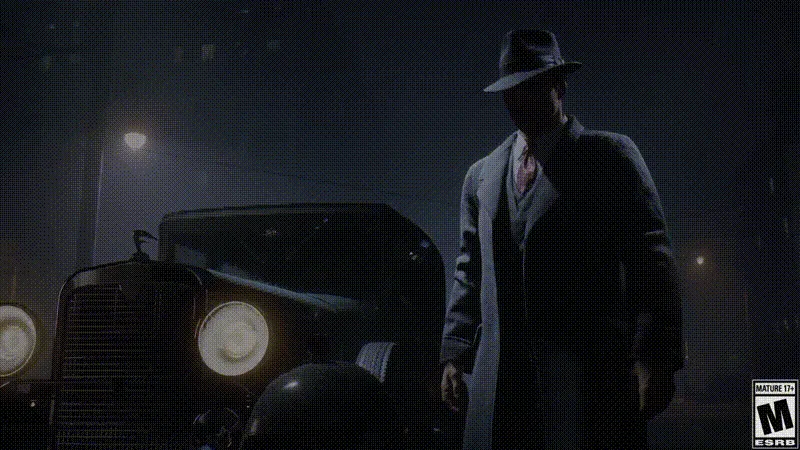
The history of the Mafia video game franchise stretches from the small Czech studio Illusion Softworks to 2K Czech, Hangar 13, modern remakes and, most recently, Mafia: The Old Country. In August 2026, the series entered another significant phase with the release of Mafia: The Omertà Collection, a current generation version of Mafia: Definitive Edition supporting 60 FPS, alongside the Man of Honor expansion for The Old Country.
One important chronological clarification is that, although “25 Years of Mafia Video Games” accurately reflects the franchise’s roughly quarter century development history, the released Mafia series itself is not yet 25 years old as of August 2026. According to 2K’s official anniversary history, Mafia: The City of Lost Heaven launched in August 2002. The series officially celebrated its 20th anniversary in August 2022, meaning August 2026 marks 24 years since the first game’s release, while the true 25th anniversary will arrive in August 2027. The broader development history is older, however. Longtime developer Roman Hladík joined Illusion Softworks in the summer of 1997, and work that eventually became the original Mafia began during the studio’s formative years.
The franchise’s early development was remarkably modest. Hladík recalled that the original team consisted of only four or five developers before growing to around ten and eventually reaching approximately 20 to 25 people by the end of production. From those beginnings, the series evolved through several major eras. Illusion Softworks created the original game and began the lengthy development of Mafia II. Following Take Two’s acquisition of the studio, it was renamed 2K Czech. Development later passed to Hangar 13, which produced Mafia III, the ground up remake Mafia: Definitive Edition, and Mafia: The Old Country.
The games themselves span multiple historical settings while maintaining a consistent creative identity. Tommy Angelo’s story takes place in the Prohibition era city of Lost Heaven, Mafia II follows Vito Scaletta through wartime and post war Empire Bay, Mafia III shifts to 1968 New Bordeaux, and The Old Country travels back to early 1900s Sicily to explore the origins of the criminal world that predates the American Mafia families featured in the earlier games. Rather than using organised crime simply as a gameplay mechanic, the series places deeply personal crime stories within carefully recreated historical settings, using authentic cities, vehicles, clothing, social tensions and evolving technologies to immerse players in each era.
Across every stage of its history, one creative philosophy has remained consistent. The Mafia series is at its strongest when its detailed period environments, driving and combat systems support a character driven crime drama instead of overshadowing it. That approach can be traced from Tommy Angelo’s journey through the stories of Vito Scaletta, Lincoln Clay and Enzo Favara. Hangar 13 reinforced this philosophy with Mafia: The Old Country, describing the game as a deliberate return to the linear, cinematic storytelling that has defined the franchise’s most memorable entries.

How the Original Mafia and Mafia II Shaped the Franchise’s Identity, Mafia Franchise History
The Mafia franchise began in an unexpected way. According to 2K’s official 20th anniversary developer interview, the original project was not intended to be a Mafia game. During the first few months, the small Illusion Softworks team worked on a completely different concept before writer Daniel Vávra proposed creating a gangster game, transforming the project into Mafia: The City of Lost Heaven.
The developers aimed to deliver film quality storytelling at a time when cinematic presentation in three dimensional games was still in its infancy. Tomáš Hřebíček recalled that the team invested in early motion capture technology despite severe technical limitations. Their capture space measured only about two metres by two metres and could accommodate just one performer at a time, forcing the developers to assemble more complex scenes creatively. That determination to emulate cinematic camera work became one of the defining characteristics of the finished game.
Rather than presenting players with an established criminal, the story follows Tommy Angelo, an ordinary Lost Heaven taxi driver whose chance encounter with the Italian Mafia gradually draws him into Don Salieri’s organisation. His journey from honest worker to trusted gangster allowed players to experience the appeal of criminal power alongside its growing dangers, ultimately building a story centred on loyalty, fear and disillusionment. Lost Heaven itself was designed as more than a backdrop, with its fictional 1930s American setting, Depression era atmosphere, Prohibition influences and rivalry between the Salieri and Morello families creating a believable historical setting for Tommy’s transformation.
The game’s ambition was remarkable considering Illusion Softworks’ modest beginnings. Founded in the Czech Republic in 1997 with offices in Brno and Prague, the studio started the original Mafia project with only four or five developers before eventually growing to roughly 200 employees by the time Take Two announced its acquisition in January 2008. Alongside Mafia, the company became known for franchises including Hidden & Dangerous and Vietcong. Despite later corporate changes, key developers such as Hladík and Hřebíček continued working on Mafia, Mafia II, Mafia III and Mafia: Definitive Edition, ensuring that much of the original Czech development culture survived through the transitions from Illusion Softworks to 2K Czech and later Hangar 13.
The original Mafia also established the series’ defining design philosophy. Rather than treating its open city as a playground for unrestricted chaos, it used Lost Heaven to support a carefully structured crime tragedy, guiding players through specific chapters of Tommy Angelo’s life while maintaining a strong sense of place and historical continuity. Its demanding realism became another hallmark of the series. Nearly two decades later, Hangar 13’s Mafia: Definitive Edition introduced a Classic difficulty inspired directly by the challenge of the 2002 release, reflecting how strongly disciplined driving, difficult combat and meaningful consequences were associated with the franchise.
Take Two itself described the original title as one that helped establish the gangster game genre when announcing the acquisition of Illusion Softworks in 2008, noting that it had sold more than two million copies. Its lasting influence was further demonstrated when Hangar 13 modernised the presentation and expanded supporting characters in Mafia: Definitive Edition while deliberately preserving Tommy Angelo’s core narrative, highlighting the enduring strength of the original story structure.
Mafia II continued that cinematic crime formula but faced one of the longest and most difficult development cycles in the franchise. Hladík recalled that development lasted roughly eight years while the team also worked on console versions of the original game. The project became even more challenging when the developers changed the game’s engine midway through production. During development, Take Two completed its acquisition of Illusion Softworks, which then became 2K Czech, with Mafia II officially identified as one of the studio’s active projects.
The sequel shifted the setting to Empire Bay, where returning World War II veteran Vito Scaletta turns to organised crime in an effort to deal with his late father’s debts. Alongside his friend Joe Barbaro, Vito pursues wealth, status and advancement within the criminal underworld. The lengthy production also taught the developers valuable lessons about technology transitions, production scale and keeping playable content at the centre of development. Hladík later emphasised the importance of getting assets working inside the game early instead of developing too much in isolation, reflecting lessons learned during the sequel’s demanding production.
Vito and Joe also gave Mafia II a distinct emotional identity. Unlike Tommy Angelo’s largely personal downfall, the sequel places friendship at the centre of its story. Vito’s financial struggles and family obligations draw him into organised crime, while Joe serves as both his closest friend and his strongest connection to that world. Their relationship gives emotional weight to the game’s themes by showing how loyalty between friends can clash with loyalty to the criminal organisation itself.
The developers later highlighted that relationship as one of the game’s greatest strengths. Alex Cox, who joined the franchise during the Mafia II era, selected Vito as one of his favourite protagonists because of the way the story connects blood family, close friendship and organised crime “Family.” Hladík similarly identified Joe as one of the franchise’s most memorable characters. Together, they helped establish one of the series’ recurring themes: that criminal brotherhood may offer belonging and opportunity, but it often comes at the expense of personal loyalty and lasting relationships.
How Mafia III Evolved the Franchise While Returning to Its Storytelling Roots
Mafia III marked one of the franchise’s biggest creative and organisational transitions. Hladík recalled that its development coincided with the formation of Hangar 13 in Novato, California, while developers in the Czech Republic continued contributing to production. Some Czech team members relocated to the United States, and Hladík remained involved by overseeing the Czech team in a supporting art director role. Although the studio structure changed significantly, experienced developers from the earlier games continued to influence the series.
The game also introduced a major shift in setting and structure. Taking place in New Bordeaux during 1968, Mafia III follows Vietnam veteran Lincoln Clay after the Black Mob, his surrogate family, is betrayed and murdered by the Italian Mafia. Seeking revenge, Lincoln builds his own criminal organisation while systematically dismantling rival operations throughout the city.
Compared with earlier entries, Mafia III gave players much greater freedom in how they approached missions. According to 2K, players could choose between direct gunfights and stealth while weakening enemy control over the city and recruiting underbosses to manage captured districts. This larger emphasis on systemic gameplay and territory control represented a significant evolution of the franchise’s open world design.
Although the expanded structure was an important experiment, it also helped clarify what later developers believed defined Mafia at its best. The experience of creating Mafia III influenced Hangar 13’s approach to Mafia: Definitive Edition and Mafia: The Old Country, with the studio becoming increasingly explicit that cinematic storytelling, memorable characters and carefully controlled pacing were the core strengths that should remain at the centre of the franchise.

How the Mafia Franchise Evolved From Illusion Softworks to Hangar 13
Take Two Interactive publicly announced the acquisition of Illusion Softworks on January 8, 2008. The Czech developer, then operating in Brno and Prague with approximately 200 employees, joined Take Two’s 2K Games publishing organization under the new name 2K Czech. The acquisition formed part of Take Two’s strategy of expanding its ownership of valuable intellectual property while strengthening its internal development studios. Mafia was specifically identified as one of Illusion Softworks’ major franchises, and Mafia II was already in development with 2K Games.
There is a small but important distinction in the corporate timeline. Take Two announced the acquisition publicly in January 2008, while later company filings identify December 2007 as the date the outstanding capital stock was acquired. As a result, January 2008 marks the public announcement rather than necessarily the legal completion of every aspect of the transaction.
The acquisition fundamentally reshaped Mafia’s future. Instead of remaining an independently developed franchise published through external partnerships, both the series and its principal development studio became part of the same corporate organization that would oversee future Mafia projects.
The studio’s history is best understood as an evolution rather than a series of completely separate eras. Illusion Softworks created the franchise and developed the original game before becoming 2K Czech during the development of Mafia II. Later, the Hangar 13 era began around Mafia III, combining a newly established American studio with experienced Czech developers who had worked on the series since its beginning. This created a geographically broader team while preserving much of the franchise’s original creative knowledge.
That continuity remains visible today. Hangar 13 still maintains major operations in Prague and Brno alongside its other locations and officially describes itself as the studio behind the Mafia series, focusing on narrative action and cinematic storytelling. This continuity also explains why Mafia: Definitive Edition could successfully balance preservation with modernization, as developers familiar with the original game’s vision rebuilt it using contemporary technology while respecting its identity.
Mafia: Definitive Edition, The Old Country, and The Omertà Collection Explained
Released in September 2020, Mafia: Definitive Edition was far more than a simple visual upgrade of the 2002 original. 2K described it as a complete overhaul and a faithful but expanded remake rebuilt entirely from the ground up, featuring modernized visuals, gameplay improvements and additional narrative depth.
Rather than recreating the original scene for scene, Hangar 13 expanded many characters and relationships that had received less attention in 2002. Paulie became a more fully developed character, Sarah played a larger role in Tommy Angelo’s life, and the conflict between the Salieri and Morello crime families received additional dramatic context. Modern performance capture also allowed actors to perform scenes together in ways that had been impossible with Illusion Softworks’ small motion capture facilities, creating more natural relationships throughout the story.
At the same time, the developers deliberately preserved part of the original game’s demanding identity by introducing Classic Difficulty, giving longtime fans an experience closer to the 2002 release. Hangar 13 later said that the positive response to Mafia: Definitive Edition reminded the studio how much players valued cinematic, narrative driven Mafia games, making that philosophy the foundation for its next major project.
That direction became fully visible with Mafia: The Old Country, which launched on August 8, 2025. Rather than following the trend toward increasingly large open world crime games, Hangar 13 intentionally returned to a focused linear structure. 2K described the title as a highly polished linear narrative experience and originally released the Standard Edition in the United States at $49.99. Instead of continuing the timeline beyond 1968, the story travels back to early 1900s Sicily, following Enzo Favara as he attempts to escape a brutal childhood and prove himself within the Torrisi crime family.
Hangar 13 explained that this was a deliberate return to Mafia’s roots, emphasizing story, character and cinematic presentation over filling a massive world with repeatable activities. The philosophy remained intact even after launch, with the 2026 Man of Honor expansion adding two new story chapters focused on Enzo Favara and a younger Ennio Salieri while also introducing additional Free Ride activities for players seeking more open ended content.
The franchise entered another major stage with the release of Mafia: The Omertà Collection on August 14, 2026. 2K presented it as the most comprehensive modern package in the series, allowing players to experience four distinct eras of organized crime across the franchise’s cinematic third person action adventures.
The collection includes Mafia: Definitive Edition, Mafia II: Definitive Edition with all downloadable content, Mafia III: Definitive Edition with all downloadable content, and Mafia: The Old Country Definitive Edition, which includes the Man of Honor expansion together with content previously included in the Deluxe Edition. Together, these games span early 20th century Sicily, 1930s Lost Heaven, wartime and post war Empire Bay, and 1968 New Bordeaux. The collection launched digitally for PlayStation 5, Xbox Series X|S and Steam with limited introductory pricing that varies by platform, region and promotional period, so those launch discounts should not be considered permanent.
The Omertà Collection also debuted alongside the long requested current generation version of Mafia: Definitive Edition. Released on August 14, 2026, the update introduced 60 FPS gameplay, higher resolution, faster loading times and additional bug fixes on PlayStation 5 and Xbox Series X|S. Although often described as a PlayStation 5 and Xbox Series X update, Xbox Series S is fully supported as well. Upgrade eligibility also differs by platform.
According to 2K’s published terms, owners of qualifying PlayStation 4 digital versions can receive the PlayStation 5 digital version, while owners of the Xbox One digital version can upgrade to the Xbox Series X|S digital version. The same offer does not extend in the same way to Xbox One physical disc owners. More than a routine technical update, the enhanced release establishes Mafia: Definitive Edition as the modern entry point to Tommy Angelo’s story, allowing new players discovering the series through The Omertà Collection to experience the franchise’s foundation with performance that better matches current generation hardware.

Frequently Asked Questions[FAQs]
- When was the first Mafia video game released?
Mafia: The City of Lost Heaven debuted in August 2002, marking the official beginning of the released franchise. As a result, the series reaches its 25th anniversary in August 2027 rather than 2026. Some references to “25 years of Mafia” reflect the franchise’s development history, which began at Illusion Softworks in the late 1990s before the first game was released. - Who created the original Mafia game?
The original game was developed by Czech studio Illusion Softworks. The project did not initially begin as a Mafia title, as the team spent its early months working on a different concept. Writer Daniel Vávra later proposed creating a gangster game, and that idea ultimately evolved into Mafia: The City of Lost Heaven, establishing the series. - Why did Illusion Softworks become 2K Czech?
Take Two Interactive acquired Illusion Softworks as part of its strategy to strengthen its internal development studios and expand its portfolio of game franchises. The acquisition was publicly announced in January 2008, after which the studio was renamed 2K Czech and continued working on the Mafia series under the 2K Games organisation. - How long did Mafia II take to develop?
According to longtime developer Roman Hladík, Mafia II was in development for about eight years. That lengthy process included work that began while the first game was still being completed, as well as a significant switch to a different game engine during development, both of which contributed to the extended timeline. - Who are Vito Scaletta and Joe Barbaro?
Vito Scaletta is the main protagonist of Mafia II, a World War II veteran who becomes involved with organised crime after returning home to Empire Bay. Joe Barbaro is his lifelong friend and closest criminal partner, and their friendship is one of the game’s defining relationships, driving many of its most memorable story moments. - Is Mafia: Definitive Edition a remake or a remaster?
It is a full ground up remake rather than a remaster. Hangar 13 recreated the original 2002 game with entirely modern visuals, updated gameplay systems, new performances and expanded story elements. Unlike a remaster, it was rebuilt instead of simply enhancing the existing game with higher resolution graphics. - Why is Mafia: The Old Country more linear than Mafia III?
Hangar 13 intentionally returned to a more focused, story driven design after seeing the positive reception to Mafia: Definitive Edition. The studio said it wanted to emphasise cinematic storytelling, memorable characters and a structured narrative instead of the more open ended approach used in Mafia III. - What games are included in Mafia: The Omertà Collection?
The collection includes Mafia: The Old Country Definitive Edition, Mafia: Definitive Edition, Mafia II: Definitive Edition with all of its downloadable content, and Mafia III: Definitive Edition with its downloadable content. The Old Country Definitive Edition also contains the Man of Honor expansion along with additional bonus content. - Does Mafia: Definitive Edition now run at 60 FPS on PS5 and Xbox Series X?
Yes. The current generation version supports gameplay at up to 60 FPS on PlayStation 5 and Xbox Series X|S. It also introduces faster loading times, improved resolution and other technical enhancements designed to take advantage of newer console hardware. - Has Hangar 13 announced the next Mafia game after The Old Country?
Not as of August 24, 2026. Hangar 13’s announced Mafia projects remain focused on The Old Country, its Man of Honor expansion, Mafia: The Omertà Collection and related updates. Although another mainline Mafia game could eventually be revealed, the studio has not officially announced its setting, title or release window.

Conclusion
The complete history of Mafia video games is ultimately the history of a series repeatedly rediscovering its strongest qualities. Illusion Softworks began with only a handful of developers and an unrelated prototype before turning Daniel Vávra’s gangster-game proposal into the 2002 Mafia: The City of Lost Heaven. Its combination of period atmosphere, demanding gameplay and cinematic storytelling established the foundation on which every later entry has been built.
Mafia II greatly expanded production ambition but endured an approximately eight-year development and a mid-project engine change. During that process, Take-Two acquired Illusion Softworks and transformed it into 2K Czech. Mafia III then accompanied another organisational transition as Hangar 13 emerged in California while Czech developers remained involved with the franchise.
The next phase became one of creative reassessment. Mafia: Definitive Edition rebuilt Tommy Angelo’s story for modern hardware without abandoning its fundamental narrative, and Hangar 13 says the response to that remake helped inspire Mafia: The Old Country to return to linear, character-led storytelling.
By August 2026, Mafia is again an actively supported franchise. The Old Country has expanded through Man of Honor and Free Ride content; Mafia: Definitive Edition finally supports 60 FPS on PlayStation 5 and Xbox Series X|S; and The Omertà Collection brings together four major eras of the franchise for current platforms.
What comes after this phase remains deliberately unknown. No new mainline Mafia game beyond The Old Country has been formally announced. What the series’ history does establish is that Mafia’s most durable identity lies in placing players inside carefully constructed crime dramas where historical setting, friendship, family, ambition and betrayal matter at least as much as the guns and cars. That principle survived Illusion Softworks, 2K Czech and the rise of Hangar 13, and it remains the clearest foundation for whatever the Mafia franchise does next.
Sources and citation
- 2K — Mafia 20th Anniversary Developer Interview — This is the principal historical source for the franchise’s development. Longtime developers Roman Hladík, Tomáš Hřebíček and Alex Cox discuss the original Mafia team of roughly 20–25 developers at its peak, Mafia II taking approximately eight years to develop, the engine transition during its production, the evolution into Hangar 13 for Mafia III, and lessons applied when rebuilding the original as Mafia: Definitive Edition. (TheSixthAxis)
- Take-Two Interactive — Take-Two Acquires Illusion Softworks — Take-Two’s January 8, 2008 acquisition announcement is the primary corporate record. It confirms that Illusion Softworks operated in Brno and Prague, employed approximately 200 people, became 2K Czech, and was already developing Mafia II for 2K when the acquisition was announced. (ir.take2games.com)
- 2K Store — Mafia: Definitive Edition, 2K Store — Mafia II: Definitive Edition, and 2K Store — Mafia III: Definitive Edition — These official 2K game pages provide the core descriptions of Tommy Angelo and 1930s Lost Heaven, Vito Scaletta and the postwar Empire Bay story, and Lincoln Clay’s 1968 New Bordeaux campaign. 2K’s official Trilogy page also summarizes all three stories in one place. 2K Store — Mafia: Trilogy (2K Store)
- 2K/Mafia — The Supporting Cast of Mafia: Definitive Edition — This was the official Hangar 13/2K deep dive into Paulie, Sarah, Don Salieri, Sam and the wider supporting cast. The article explains how the remake reworked and expanded characters and relationships rather than simply reproducing the 2002 script word for word. The original Mafia site has since been reorganized, so an archived copy is also useful: Wayback Machine — archived official supporting-cast article. (Sizzltek Wiki)
- 2K Newsroom — Mafia: The Old Country Launching August 8, 2025 — 2K and Hangar 13’s official pre-release material confirms the August 8, 2025 launch, early-1900s Sicily, protagonist Enzo Favara, and Hangar 13 President Nick Baynes’ description of the game as a focused, linear experience built around narrative, authenticity and cinematic presentation. (2K Newsroom)
2K Newsroom — Mafia: The Old Country Now Available Worldwide — The launch-day announcement independently confirms the release date, Sicilian setting and Hangar 13’s intention to create a narrative-focused experience in the tradition of earlier Mafia games. (2K Newsroom) - 2K Newsroom — Mafia: The Old Country Reveals Man of Honor Expansion — The June 5, 2026 announcement confirms that Man of Honor adds two new story chapters following Enzo Favara as he encounters Ennio Salieri, as well as additional Free Ride content. (2K Newsroom)
2K Support — Man of Honor DLC FAQ — This provides the more detailed official description: winter 1905 Sicily, Enzo working alongside Salieri, two additional chapters, new environments, weapons, vehicles and Charms, plus exclusive Free Ride jobs and challenges. (2K Support)
2K Newsroom — Man of Honor Expansion Now Available Worldwide — The August 14, 2026 launch release confirms the finished expansion and its expanded Free Ride content. (2K Newsroom) - 2K Newsroom — Mafia: The Omertà Collection / Man of Honor Launch Announcement — This is currently the strongest official 2K source for Mafia: The Omertà Collection. It confirms the collection contains Mafia: The Old Country Definitive Edition with Man of Honor and Deluxe content, Mafia: Definitive Edition, Mafia II: Definitive Edition with DLC, and Mafia III: Definitive Edition with DLC. It also confirms availability on PS5, Xbox Series X|S and Steam. (2K Newsroom)
2K Support — Mafia: Definitive Edition on PS5 and Xbox Series X|S — 2K’s technical FAQ confirms the August 14, 2026 current-generation release, 60 FPS support, improved loading times, technical fixes and the upgrade rules for existing owners. (2K Support) - Hangar 13 — Official Studio Website — Hangar 13’s official site is the appropriate studio-level source for distinguishing projects the developer has actually announced from rumors. For specifically documented 2026 Mafia release activity, 2K’s official Mafia newsroom is even more useful because it lists Man of Honor and the Omertà Collection alongside the studio’s other confirmed franchise releases. 2K Newsroom — Official Mafia News Archive (2K Newsroom)
Recommended
- Oblivion Remastered Switch 2: Release Date Rumors, Rating News, and Platform Details
- PixelHair vs. Manual Hair Grooming in Blender: Which is Better?
- Introduction to Substrate Materials | Unreal Engine 5.7: Setup, Conversion, and Optimization Guide
- Gothic 1 Remake Review
- How to Save Blender Camera Settings: Complete Guide to Managing and Reusing Camera Views in Blender
- Diablo 4’s Evil Mommy Lilith Sure Seems A Lot Less, Well, Evil Now — Lord of Hatred Cinematic Breakdown
- Nintendo Employee Data Breach Allegation: What We Know So Far
- GTA 6 PS5 Version Promises Near Instant Load Times and PS5 Pro Enhancements
- Tabletop Tavern Strategy Guide: Campaign Walkthrough, Unit Synergies, and Tactical Combat Tips
- Pokemon Pokopia Withered Wastelands Guide: How To Increase The Humidity, Trigger Rain, And Rescue Onix



































































































