



In This Article (10 sections)
Amazon Ditches Almost Complete Sam Altman Movie After OpenAI Deal
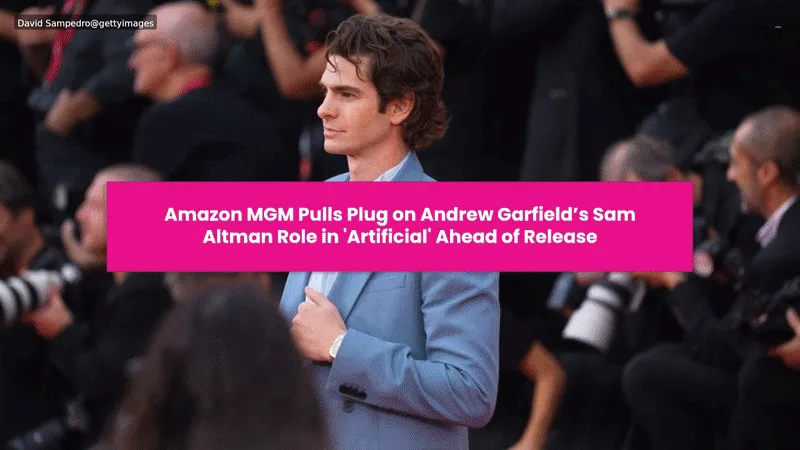
Amazon Ditches Almost Complete Sam Altman Movie After Signing $50 Billion OpenAI Deal has quickly become one of the most discussed entertainment and technology stories of 2026 because it sits at the intersection of Hollywood, artificial intelligence, corporate influence, and reputation management. Amazon MGM Studios reportedly dropped Artificial, Luca Guadagnino’s nearly finished film about Sam Altman and the 2023 OpenAI leadership crisis, after Amazon deepened its business relationship with OpenAI through a major strategic partnership.
The timing of the decision has made the story especially controversial, because the film was not an early-stage concept that quietly disappeared before development. It was a high-profile project with major talent attached, a recognizable subject, and an awards-friendly release strategy that had already generated attention across the film industry.
Artificial was designed as a dramatization of the intense period in November 2023 when Sam Altman was unexpectedly removed as OpenAI CEO and then reinstated within days after employee backlash, investor pressure, and industrywide scrutiny. The project attracted attention because OpenAI had become one of the most powerful companies in the global AI race, while Altman had become one of the most recognizable figures in the technology industry. That made the film more than a standard business drama. It was a movie about power, governance, ambition, safety concerns, and the uneasy relationship between Silicon Valley mythmaking and corporate reality.
The decision by Amazon MGM to step away from the film has been framed by several reports as a studio exit connected to Amazon’s OpenAI partnership. Amazon’s official position, according to reports, is that Artificial would be better served by another studio and that the company continues to respect Guadagnino and the filmmakers. Still, the combination of a nearly completed film, a sensitive portrayal of OpenAI’s internal turmoil, and Amazon’s new financial alignment with OpenAI has created a clear perception problem. Even if Amazon did not publicly say the OpenAI deal directly caused the move, the surrounding facts have made the connection difficult to ignore.

Why Amazon Walked Away and What Artificial is About
The most likely reason Amazon dropped Artificial is the conflict created by the company’s different roles in the situation. Amazon MGM was responsible for a potentially critical dramatization of OpenAI’s leadership crisis, while its parent company was simultaneously investing heavily in OpenAI, AI infrastructure, cloud services, and enterprise model deployment. That made the project much more complicated than an ordinary film about a prominent business figure.
Reports suggest that Artificial may portray several technology leaders in an unflattering or challenging way. A dramatization of Altman’s removal and return would naturally revisit disagreements inside OpenAI’s board, questions about leadership and transparency, concerns surrounding AI safety, and the pressure exerted by employees, investors, and technology partners. Those themes could have become uncomfortable for Amazon after the company committed itself to a long-term relationship with OpenAI.
Amazon also faced risks regardless of how the film portrayed the crisis. A harsh version could make the company appear hostile to an important partner. A more sympathetic or softened version could cause viewers to question whether Amazon had influenced the film to protect its investment. Allowing another studio to acquire and distribute Artificial offers Amazon a way to remove itself from both interpretations without preventing the movie from reaching audiences.
Although the development has often been described as a cancellation, the more accurate explanation is that Amazon MGM withdrew from the project and the film is now being offered to other studios. Artificial does not appear to be dead. Its creative team, cast, topical subject, and advanced production status could still attract a distributor willing to accept the commercial, legal, and reputational complications associated with releasing it.
The film itself is described as a biographical comedy drama about the five-day OpenAI leadership crisis. Written by Simon Rich, it appears intended to approach the events through character-driven storytelling and satire rather than presenting them as a dry corporate history lesson. Its title refers directly to artificial intelligence while also suggesting the manufactured nature of executive personas, corporate messaging, and Silicon Valley mythology. The real story involved a company dedicated to the future of intelligence becoming consumed by a deeply human struggle over power, loyalty, trust, governance, and control.

Artificial’s Release Status, Cast, and the $50 Billion OpenAI Partnership
The release status of Artificial is uncertain, but the film is reportedly being shopped to other studios rather than abandoned. Because it is nearly finished, its main obstacle is no longer production. The larger question is whether another distributor is prepared to release a topical drama about living executives and recent corporate events while managing the legal scrutiny, public debate, and possible pressure that could follow.
Before Amazon’s withdrawal, Artificial had reportedly been positioned for an awards campaign ahead of a wider 2027 release. That strategy reflected the project’s prestige credentials. Luca Guadagnino brought substantial artistic recognition, while Andrew Garfield’s casting as Sam Altman created immediate public and media interest. The film’s combination of a famous director, prominent performers, a recent real-world controversy, and a politically relevant subject made it a natural candidate for awards-season attention.
Garfield’s performance would be central to how audiences interpret the OpenAI crisis. Altman’s public image combines calm communication, strategic discipline, technological optimism, and considerable influence. The film would need to explore what happened behind that controlled appearance when he was removed from the company he led, appeared briefly to have lost power, received an offer to join Microsoft, and then returned after employees and investors challenged the board’s decision. His story can resemble a corporate comeback, but it also raises unresolved questions about governance, transparency, safety, and the concentration of authority around one executive.
The reported supporting cast gives Artificial the potential to become a broader institutional drama rather than a simple portrait of Altman. Monica Barbaro, Yura Borisov, Ike Barinholtz, Cooper Hoffman, Jason Schwartzman, Billie Lourd, Mark Rylance, and other performers have been associated with the project. Their involvement would allow the film to explore the reactions of executives, board members, employees, investors, and outside technology figures as the crisis unfolded.
Amazon’s $50 billion OpenAI agreement is essential to understanding why the film became so sensitive. Announced in February 2026, the multi-year strategic partnership included an initial planned investment of $15 billion, followed by another $35 billion when agreed conditions were satisfied. The arrangement also involved Amazon infrastructure, OpenAI model deployment, and cooperation across enterprise and customer-facing applications.
The deal represented more than a passive financial investment. It strengthened Amazon’s position in the AI infrastructure market and gave OpenAI another powerful technology partner beyond its longstanding relationship with Microsoft. Once Amazon became financially and strategically tied to OpenAI’s future, Amazon MGM’s role in releasing a film about the company’s defining leadership crisis became increasingly difficult to defend as an entirely separate creative decision.

OpenAI’s 2023 Leadership Crisis and the Corporate Influence Controversy
Amazon has not publicly admitted that its OpenAI partnership directly caused the decision to drop Artificial. The studio reportedly said that the film would be better served elsewhere, leaving room for other possible considerations involving legal exposure, market strategy, executive relationships, awards planning, or creative concerns. However, the timing, the subject of the movie, and the scale of Amazon’s OpenAI commitment make the conflict difficult to dismiss.
The fact that the movie is being offered to other studios suggests that Amazon’s concern may not be its quality or commercial potential. If the project were considered unusable, unfinished, or incapable of attracting an audience, there would be little reason to seek another distributor. Instead, the description of another studio as a better home points toward strategic discomfort. Amazon appears to be removing itself from a situation in which almost any release decision could be interpreted through the company’s OpenAI interests.
The real leadership crisis began in November 2023, when OpenAI’s board removed Sam Altman as CEO and said that he had not been consistently candid in his communications. The limited public explanation caused confusion throughout the technology industry because Altman had become the company’s most visible executive following the success of ChatGPT. Greg Brockman stepped down from his position as board chair and then left the company, while employees rapidly organized in support of Altman.
Microsoft added further pressure by announcing plans to hire Altman and Brockman to lead a new AI research operation. Many OpenAI employees indicated that they might also leave unless Altman was reinstated and the board’s structure changed. Within days, Altman returned as CEO under a reconfigured board, completing one of the fastest and most dramatic leadership reversals in recent corporate history.
The crisis exposed the tension within OpenAI’s unusual organizational structure. The company had been created around a mission to ensure that advanced artificial intelligence benefits humanity, but it had also become a major commercial operation supported by powerful technology companies, enterprise customers, and investors. Altman’s removal raised questions about whether a safety-oriented governance system could withstand the financial and competitive pressures surrounding frontier AI development.
Amazon MGM’s withdrawal has therefore become a debate about corporate ownership and cultural storytelling. Amazon MGM operates as a film studio, but its parent company also has vast interests in cloud computing, commerce, enterprise software, advertising, and artificial intelligence. When those business interests overlap with the subject of a nearly finished film, the studio’s creative independence becomes harder to separate from the priorities of the larger corporation.

Artificial’s Ensemble Cast and Search for a New Studio
The reported cast is one of Artificial’s strongest commercial and creative assets. Andrew Garfield is attached to portray Sam Altman, while Monica Barbaro has been associated with the role of Mira Murati, who briefly became OpenAI’s interim CEO during the leadership crisis. Yura Borisov has reportedly been cast as OpenAI co-founder and chief scientist Ilya Sutskever, whose involvement in the board’s decision made him one of the most closely examined figures in the real events.
Ike Barinholtz has been reported as playing Elon Musk, bringing another highly recognizable technology personality into the film’s orbit. The wider ensemble reportedly includes Cooper Hoffman as Greg Brockman, alongside Jason Schwartzman, Billie Lourd, Zosia Mamet, Chris O’Dowd, Mark Rylance, and others. This group would allow the movie to show the crisis from several perspectives rather than presenting it solely as Altman’s personal rise, removal, and return.
Murati’s role is particularly important because she was suddenly placed at the center of OpenAI’s leadership uncertainty. Sutskever’s position also carries substantial dramatic weight because he was closely associated with the board action against Altman and later expressed regret about his involvement. Exploring their decisions could help Artificial function as an institutional thriller about conflicting responsibilities, loyalties, and beliefs rather than a simple story with one hero and one villain.
The movie’s ensemble structure reflects what happened during the crisis. Altman’s firing affected board members, employees, executives, investors, Microsoft, and the broader AI industry almost immediately. Power shifted rapidly as different groups tried to influence the outcome. A film focused on those competing perspectives could examine why the board believed action was necessary, why employees rejected that decision, and how financial and technological dependencies shaped the final resolution.
Amazon MGM’s exit has not removed those strengths. A nearly completed Luca Guadagnino film starring Garfield and addressing one of the defining business controversies of the AI era remains potentially valuable to another distributor. A studio without a direct OpenAI partnership could present the project as an independent dramatization, reducing the most obvious conflict associated with Amazon’s involvement.
The attention generated by Amazon’s withdrawal could also increase the movie’s appeal. Viewers who previously had little interest in a film about corporate governance may now want to understand why a major studio abandoned it after entering a multibillion-dollar partnership with the company depicted. At the same time, any new distributor would need to consider potential legal challenges, relationships with technology companies, and scrutiny over whether the finished movie treats its living subjects fairly.

How AI Partnerships Could Shape Hollywood and Artificial’s Future
The conflict surrounding Artificial illustrates a larger collision between storytelling power and technological infrastructure. Hollywood films shape how the public remembers major events, while technology companies increasingly control cloud systems, AI models, distribution platforms, advertising networks, and other tools that support the entertainment business. When one corporation participates heavily in both industries, controversial stories can become difficult to separate from strategic business interests.
Amazon MGM’s position demonstrates that tension clearly. The studio had a potentially awards-friendly film about OpenAI’s internal struggle, while Amazon had committed itself to a major OpenAI partnership. The creative side could see Artificial as a sharp, relevant drama about power and governance. The corporate side could see the same movie as a threat to a valuable relationship. When those priorities conflict, the parent company’s strategic interests can carry more influence than the studio’s original release plans.
Artificial intelligence also has a direct relationship with Hollywood’s own anxieties. Writers, actors, producers, studios, and technology companies are debating how AI will affect creative employment, authorship, visual production, compensation, and ownership. A film about OpenAI’s leadership struggle would therefore enter a cultural environment already concerned about the influence of AI companies on art and labor.
This makes the controversy larger than the fate of one movie. It raises questions about how easily studios can distribute critical stories about technology companies when those companies are connected to the same parent corporations, cloud providers, streaming platforms, and production systems on which the entertainment business depends. Similar conflicts may become more common as Hollywood and the AI industry become increasingly interconnected.
Artificial could still reach audiences if another studio acquires it. The film has a recognized director, a high-profile lead, a strong ensemble, a relevant subject, and substantial publicity generated by Amazon’s withdrawal. A distributor comfortable with controversy could promote the movie as a major prestige drama about a defining moment in modern technology.
A release is not guaranteed, however. The new studio would need to handle a dramatization involving living people, recent events, unresolved debates, and powerful companies. It would also need to market the movie without reducing it to either a hostile attack on OpenAI or a sanitized corporate comeback story. The film’s advanced production status gives it a stronger chance than many abandoned projects, but its path to theaters or streaming has become significantly more complicated.
Frequently Asked Questions (FAQs)
- What is Artificial about?
Artificial is a biographical comedy drama about OpenAI’s leadership crisis in November 2023, when the company’s board removed Sam Altman as CEO and reinstated him within days. The film examines the boardroom dispute, employee revolt, investor pressure, public uncertainty, and competing views about leadership, governance, AI safety, and commercial power. - Why did Amazon drop the Sam Altman movie?
Amazon reportedly said that the movie would be better served by another studio. However, the decision followed Amazon’s announcement of a major strategic and financial partnership with OpenAI, creating a clear conflict-of-interest concern around Amazon MGM releasing a dramatization of the company’s most controversial leadership crisis. - Is Artificial completely canceled?
No. Amazon MGM has dropped the project, but reports indicate that Artificial is being shopped to other studios. Another distributor could acquire the nearly completed film, organize a new release strategy, and bring it to theaters or streaming, although no replacement studio has been confirmed. - Who plays Sam Altman in Artificial?
Andrew Garfield is attached to portray Sam Altman. The role requires him to capture Altman’s public confidence and technological optimism while also exploring how he responded privately to being removed from OpenAI, courted by Microsoft, and reinstated after extraordinary pressure from employees and investors. - Who directed Artificial?
Artificial was directed by Luca Guadagnino, whose previous films include Call Me by Your Name, Challengers, and Queer. His involvement helped position the project as a prestige comedy drama with serious artistic and awards-season ambitions rather than a routine technology biopic. - What was Amazon’s $50 billion OpenAI deal?
Amazon announced a multi-year strategic partnership with OpenAI that included a planned $50 billion investment. The structure began with an initial $15 billion commitment, followed by another $35 billion when agreed conditions were met, while also covering AI infrastructure, model deployment, and cooperation across Amazon’s technology ecosystem. - Did the OpenAI deal directly cause Amazon to drop Artificial?
Amazon has not publicly said that the OpenAI deal directly caused the decision. The available reporting nevertheless makes the partnership a major part of the explanation because of its timing, financial scale, and direct connection to the company and executive portrayed in the film. - What happened to Sam Altman at OpenAI in 2023?
OpenAI’s board abruptly removed Sam Altman as CEO in November 2023, saying that he had not been consistently candid in his communications. The decision prompted employee backlash, investor pressure, Greg Brockman’s departure, and a brief plan for Altman to join Microsoft before he returned as OpenAI CEO under a restructured board. - Why is the Artificial movie controversial?
The movie dramatizes recent events involving powerful living executives and one of the world’s most influential AI companies. The controversy increased when Amazon MGM stepped away after Amazon formed a major OpenAI partnership, raising wider concerns about corporate ownership, conflicts of interest, and whether business alliances can affect which stories Hollywood studios release. - Will Artificial be released in 2027?
A 2027 release had reportedly been planned before Amazon MGM withdrew from the project. The film could still arrive in 2027 if another studio acquires it and moves quickly, but there is currently no confirmed distributor or release date.
Conclusion
Amazon Drops Sam Altman Movie After $50 Billion OpenAI Deal is more than a headline about one studio walking away from one film. It is a revealing case study in how modern entertainment, artificial intelligence, and corporate power now overlap. Artificial had the ingredients of a major prestige release: Luca Guadagnino directing, Simon Rich writing, Andrew Garfield playing Sam Altman, and a story based on one of the most dramatic executive crises of the AI era. Yet Amazon MGM’s decision to drop the nearly finished project after Amazon’s major OpenAI partnership changed the conversation entirely.
The film’s subject made it uniquely sensitive. The OpenAI firing crisis was not an old scandal safely separated from current business interests. It involved a company that remains central to the future of artificial intelligence and a CEO who remains one of the most powerful people in technology. For Amazon, releasing a film about that crisis after committing billions to OpenAI would have created an obvious conflict. Even a fair movie could have been interpreted as hostile, while a softened movie could have been accused of corporate compromise.
Artificial may still reach audiences if another studio decides to release it. In fact, Amazon’s exit may increase curiosity around the film and make it more valuable to a distributor willing to handle controversy. But the episode has already made a larger point. As technology companies become more involved in entertainment and as studios become more tied to AI partnerships, stories about powerful tech figures may become harder to release without corporate complications. The future of Artificial remains uncertain, but the debate around it has already become part of the story it was trying to tell.
Sources and Citations
- The Guardian, “Luca Guadagnino’s Sam Altman Movie Dropped by Amazon After It Announces OpenAI Partnership.” June 19, 2026.
https://www.theguardian.com/film/2026/jun/19/luca-guadagnino-sam-altman-movie-dropped-amazon-openai-artificial - The Verge, “Hollywood Is Bending the Knee to OpenAI.” June 2026.
https://www.theverge.com/entertainment/954899/luca-guadagnino-artificial-sam-altman-amazon-a24-neon-mubi-chatgpt - Business Insider, “Amazon MGM Dropped ‘Artificial’ After Strengthening Ties With OpenAI.”
https://www.businessinsider.com/ - OpenAI, “OpenAI and Amazon Announce Strategic Partnership.”
https://openai.com/news/openai-and-amazon-strategic-partnership/ - Amazon, “Amazon to Invest up to $50 Billion in OpenAI.”
https://www.aboutamazon.com/news/company-news/amazon-openai-investment - Amazon, “OpenAI and Amazon Strategic Partnership Explained.”
https://www.aboutamazon.com/news/aws/openai-amazon-strategic-partnership - The Guardian, “Luca Guadagnino to Direct Artificial, a Film About the OpenAI Upheaval.”
https://www.theguardian.com/film/ - IMDb, “Artificial (2026).”
https://www.imdb.com/title/tt37171180/
Recommended
- Bungie Ends Its Destiny Era and Cancels All Future Content Plans
- Blender 3D Render Farm: Ultimate 2025 Guide to GPU Cloud Rendering for 3D Artists
- Gears of War E-Day is Sponsoring an Upcoming WWE Event, Shedding Light on a Potential Release Window: What it Means for the Launch Timeline of Gears of War: E-Day and WWE
- A Rare Early Version Of The NES Classic Punch-Out!! Has Been Unearthed — Prototype Reveals Lost Fighters, Debug Features, and Pre-Mike Tyson Era
- PlayStation Official 27-Inch Gaming Monitor Trailer Revealed: Specs, Features, Release Date & PS5 Desktop Gaming Details
- PBR vs Hand-Painted Texturing: Differences, Workflows, and When to Use Each
- Ridley Scott’s the Dog Stars: Release Date, Cast, and Plot for the Post-Apocalyptic Survival Film
- Scientists Make Breakthrough That Allows Lab-Grown Brain Cells To Play A Sort Of Video Game (UC Santa Cruz Cart-Pole Results Explained)
- Star Fox: All Alternate Routes Guide; How to Unlock Every Path and Secret Stage
- Who is Asha Sharma and Why She Gave Away Free Xbox 25Th Anniversary Consoles at FanFest



































































































