

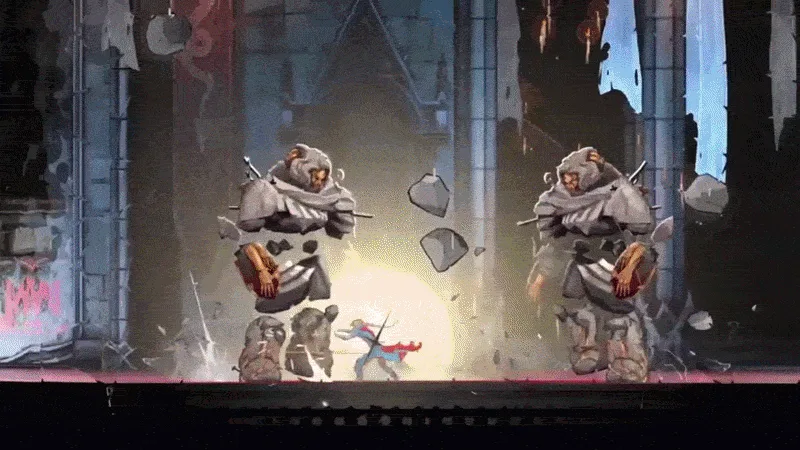





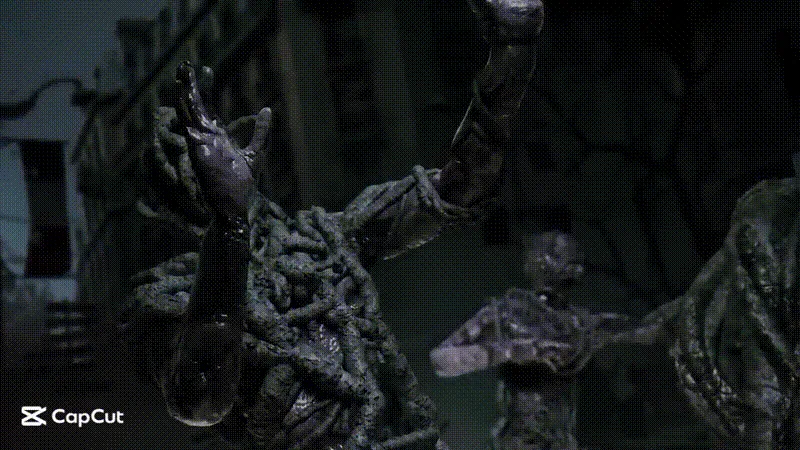
Armatus is scheduled to launch on January 7, 2027, bringing its demon infested Paris setting to PC, PlayStation 5, Xbox Series X|S, and Nintendo Switch 2, with Game Pass availability also announced. Developed by Counterplay Games and published by Fictions, the third person roguelite shooter combines firearms, supernatural abilities, and scythe combat in a world where humanity’s survival depends on finding a passage to heaven. The release date was announced on August 27, 2026.
The game’s central promise is not simply surviving another wave of monsters. It is learning how weapons, powers, and upgrades interact across repeated attempts while uncovering the circumstances behind a ruined world. With launch approaching, the important distinction is between confirmed features, observations from the earlier playable demo, and details that remain unsettled. Information available as of September 28, 2026, places the January 7, 2027 release at the center of the current launch plan.
Fictions and Counterplay Games confirmed the date in an August 27 Steam Community announcement, stating that the game would arrive across its announced platforms together. This is a dated publisher announcement rather than a release estimate inferred from a retailer’s placeholder listing. The announcement also resolves differences between older release windows. Armatus originally appeared during the November 20, 2025 Xbox Partner Preview with a 2026 target, while an official June 7, 2026 update subsequently described a winter launch. The January 2027 announcement is the newer and more precise schedule, so older articles still advertising a general 2026 release should not take precedence.
The announced hardware lineup covers PC, PS5, Xbox Series X|S, and Nintendo Switch 2, with Nintendo’s own product page independently confirming January 7, 2027 for its version. A shared release date, however, should not be confused with identical technical specifications or a universally synchronized unlock time. Resolution, performance modes, download requirements, and regional availability still need to be checked against each platform’s own listing. Likewise, the updated schedule establishes when the game is planned to arrive, but it does not by itself explain why the earlier release target changed.

In This Article (8 sections)
Armatus Gameplay, Combat Systems and Roguelite Progression
Armatus is a single player, third person roguelite shooter built around the interaction between firearms, melee combat, supernatural powers, and repeated runs. Its official description places the player in control of a supernatural warrior equipped with a chosen firearm and a scythe, while celestial abilities and passive enhancements expand the available combat options.
Fictions lists the experience for one player. The earlier demo provides a more practical picture of how that structure works, with hands on coverage describing progression through combat rooms where players defeat enemies, collect rewards, and continue forward. This presents Armatus as a focused sequence of encounters rather than an open world sightseeing adventure through Paris, although that observation comes from the preview build and does not guarantee that every encounter in the finished game will follow an identical pattern.
The appeal of this structure depends on decisions operating at several different timescales. During combat, the immediate concern is avoiding damage while using the available attacks efficiently. Between encounters, players must decide which rewards best strengthen their current combination of weapons, powers, and upgrades. Between attempts, the player can reconsider the approach that failed and use persistent progression to prepare for another run. These layers are important to separate because stronger statistics may help without correcting poor positioning or ineffective decision making, while better execution may allow a weaker build to progress farther than expected. A successful run should ideally reward both preparation and moment to moment judgment.
Armatus builds its combat identity around a combination of ranged attacks, melee strikes, and supernatural effects rather than forcing those tools into completely separate playstyles. The official Xbox description makes clear that the firearm and scythe are used alongside evolving celestial powers. The February 2026 demo offered several concrete examples, including the Somnus assault rifle, the Vortex SMG, and a ground pound ability called Titan Slam. One hands on report also emphasized that regularly using the scythe helped with progression instead of treating melee as an emergency option whenever ammunition was available. These examples come from the demo and should not be treated as a complete inventory of the final game’s weapons or abilities.
For players evaluating the design, the important question is how naturally those tools connect. A firearm creates one kind of engagement distance, while a melee attack requires a different commitment and risk. A supernatural ability can potentially create the opening needed to move between those positions or regain control of a dangerous encounter.
This makes the combat easier to understand as a system of transitions rather than as either a conventional shooter with decorative magic or a melee action game with a gun attached. The potential lies in shooting while creating space, choosing an opening for close combat, and using an ability when positioning begins to collapse. Whether the finished game consistently makes those transitions satisfying will require evaluation of the release build.
Death is also part of Armatus’ progression structure rather than a permanent end to the protagonist’s journey. Counterplay confirms that certain accumulated currencies and character upgrades persist between deaths, allowing later attempts to begin with some lasting progress. Not everything survives a failed run, however. Hands on coverage of the demo reported that temporary power gains reset after death, with the player returning for another attempt through encounters and toward a biome boss. That distinction between temporary strength and permanent advancement is central to the roguelite loop.
A failed run can therefore produce several different kinds of progress. It may end before the immediate objective is reached while still teaching the player something about enemy timing, ability use, positioning, or an unsuitable equipment choice. It can also contribute to longer term advancement where the persistent systems allow it.
The wording that only “certain currencies” carry over is important and should not be expanded into a claim that every resource remains protected, every upgrade stays active, or every death produces the same reward. A complete explanation of what survives between runs will require the final progression rules. The practical lesson is that an attempt should not be judged only by how far the player travels, since understanding why a strategy failed can be more useful than repeating the same approach with slightly stronger statistics.
Armatus Story, Demon Infested Paris, Sunless Gate and Game Pass Access
Armatus takes place after a catastrophic event rather than during the opening stages of an invasion. Xbox’s reveal coverage identifies the world ending event as The Vanishing, while the publisher describes a Paris overrun by demons, with surviving humans sheltering behind protective holy wards as the surrounding reality continues to deteriorate. That starting point changes the purpose of the journey. The story is not simply about restoring order to a functioning city, but about discovering what salvation might mean after the familiar world has already collapsed.
Paris provides a recognizable foundation for that idea, although the setting is presented as a supernatural reinterpretation rather than a promised geographical reconstruction. The publisher describes the surviving fragments of the city giving way to increasingly demonic environments as the journey continues. This contrast is central to the concept. Human architecture represents a civilization with history, purpose, and routine, while the demonic occupation strips those places of their original meaning. At the same time, the announced setting only supports discussion of ruined Paris and a gothic apocalypse. It does not justify inventing a complete map, named districts, specific landmark boss encounters, or an unpublished historical timeline.
The Sunless Gate is the destination at the center of Armatus’ story. Counterplay’s narrative introduction describes four members of an ancient religious order sheltering inside the Cathédrale de Trois. They summon an immortal warrior bound to sacred armor and send this figure along the Scoured Path in search of a mythical gateway connected to their salvation. The developer’s own description presents the protagonist as a summoned protector from another world, making it clear that the player character is not simply an ordinary survivor carrying unusually powerful equipment.
That arrangement creates an important narrative tension. The people directing the mission are seeking deliverance, while the warrior is the one who must perform the dangerous work required to pursue it. Their desperation does not automatically prove that their understanding of salvation is correct. The official story material raises questions about the survivors’ worthiness and the secrets surrounding the journey, but it does not reveal the ending or explain exactly what exists beyond the gate.
The Sunless Gate therefore functions as both a physical objective and a narrative mystery. Reaching it is the apparent mission, while understanding the religious order, the catastrophe, and the warrior’s role may be equally important. That interpretation comes from the published premise and should not be treated as confirmation of branching endings, a morality system, or other unannounced narrative mechanics.
Armatus has also been explicitly announced as a day one Xbox Game Pass title. Xbox’s original Partner Preview recap identified it among the games coming to Game Pass Ultimate at launch, while the Gamescom 2026 release date trailer places its Xbox, PC, cloud, and Game Pass arrival on January 7, 2027. That availability is particularly relevant for a game built around the feel of its combat because trailers can demonstrate atmosphere, visual effects, and general pacing, but they cannot determine whether aiming, movement, attack recovery, and repeated runs will suit an individual player. For someone already subscribed to an eligible plan, launch access provides a way to evaluate those qualities without immediately making a separate purchase.
Game Pass access still comes with important limitations. Being “on Game Pass” does not mean every subscription tier automatically provides the same entitlement, since availability can vary by plan, platform, region, and time. Cloud access also depends on supported devices and regional conditions, so the appropriate subscription and method of play should be checked before launch. Subscription access is also different from owning the game. Access to a Game Pass library title continues while the relevant subscription remains active and the game remains available through that library, so day one inclusion should not be interpreted as subscribers receiving a permanent copy.

Armatus Weapons, Celestial Powers, Procedural Runs and Character Progression
The early Armatus demo offered four firearm archetypes according to The Outerhaven: an assault rifle, submachine gun, single shot rifle, and shotgun. These categories establish the range of weapon choices available in the preview, but they should not be treated as a definitive count of every weapon that will appear in the finished game. Lords of Gaming also observed that the demo asked players to select a firearm at the beginning of a run and develop it through upgrades rather than continually replace it with new weapons. Its reviewer found that investing in upgrades meaningfully changed the selected gun, while also questioning how much flexibility the early build offered.
That structure makes premature claims about the “best weapon” unreliable. A firearm cannot be evaluated sensibly without considering its modifiers, supporting celestial powers, and how consistently the player can use it. A practical starting point is therefore to choose the weapon that produces reliable results instead of immediately chasing the most impressive theoretical combination.
Missing shots, entering unsafe positions, or failing to use other abilities effectively can undermine a weapon that appears stronger on paper. The same principle applies to combat abilities because the most valuable power is not necessarily the one that produces the largest visible explosion. Defensive or control focused abilities may be more useful when they create safe opportunities to attack or reposition. Until the release build can be tested across its complete progression system, weapon and ability advice should remain conditional rather than presenting a settled hierarchy.
Armatus explicitly includes celestial powers such as holy fire and slow time, while Counterplay’s broader description also references shields, grenades, earth shattering attacks, and pillars of flame. These examples establish the range of the game’s supernatural combat fantasy, but they do not confirm final cooldowns, damage values, or upgrade costs.
The earlier demo also demonstrated how individual effects could interact. The Outerhaven described a combination involving enemy immobilization, an extended duration for that condition, additional damage against immobilized enemies, and temporary unlimited ammunition. This provides a useful example of how upgrades can support one another, but it should not be treated as a guaranteed launch build recipe or as proof that immobilization and the advertised slow time ability are mechanically identical.
The useful distinction is between what an ability does immediately and what opportunities it creates. Direct damage reduces an enemy’s health, while control effects can create time to aim, reposition, or coordinate another attack. Defensive abilities may allow players to survive commitments that would otherwise be too dangerous.
These functions can overlap, which is where experimentation becomes more important. A control ability may become a major source of offensive power if other upgrades reward the condition it applies, while a defensive option can indirectly improve damage by allowing the player to attack more consistently. Evaluating combinations is therefore more useful than ranking every power in isolation, especially when the final balance will determine which interactions remain effective across different encounters.
Counterplay also confirms that the Scoured Path uses procedurally spawned rooms, enemy compositions, and rewards. The purpose is to create variation between attempts instead of giving players a route whose exact encounters can always be memorized in advance. This is more specific than saying that everything in Armatus is randomly generated. Procedural room and encounter selection does not establish that every piece of geometry, dialogue, boss encounter, or story event is generated in the same way, so those confirmed elements should be described separately.
The demo provided an early look at the relationship between immediate rewards and longer term progression. SmashPad identified Quintessence as a currency used with a trader and also noted a separate, rarer currency associated with a teased permanent upgrade system. The same preview described higher tier weapons with additional innate benefits, although those observations remain tied to the demo implementation. This creates a recurring decision between solving the current problem and investing in a future opportunity. Increasing immediate damage might help clear the next encounter, while pursuing a rarer resource could have a different payoff later.
For procedural variation to remain meaningful, players need reasons to reconsider those decisions from one attempt to another. Simply changing the order of familiar rooms is less important than creating situations where an option that seemed weak in one run becomes useful in another. Armatus’ long term replayability will therefore depend not only on how often its encounters change, but on whether those changes encourage different weapons, powers, upgrades, and strategies.
Armatus PS5, Xbox Series, PC, Nintendo Switch 2 and Xbox Play Anywhere Details
Armatus is being released across PS5, Xbox Series X|S, PC, and Nintendo Switch 2, but the available platform listings contain different information about features and technical support. On PS5, the storefront confirms offline play, one player support, Remote Play, and DualSense vibration and trigger effects. Its US listing currently displays January 7, 2027 at 17:00 UTC. That timestamp belongs to a specific storefront and should not be treated as proof that every region and platform will unlock the game at exactly the same moment.
The Xbox version is marked as optimized for Series X|S and includes console keyboard and mouse support, achievements, cloud saves, and a 4K Ultra HD capability label. Those labels do not confirm that both Xbox consoles will render the game at native 4K or operate at a particular frame rate. Similarly, storefront features alone cannot show how stable combat performance will be during demanding encounters or how responsive different control methods will feel.
PC availability includes Steam and the Microsoft Store, while Fictions also links to an Epic Games Store version. The Epic listing identifies Windows support and controller compatibility. The more important comparison between the PC and console releases will depend on actual sustained performance, available settings, responsiveness, and how clearly effects remain visible during crowded combat. Resolution badges and storefront specifications cannot answer those questions by themselves.
The Nintendo Switch 2 version is also confirmed for January 7, 2027. Nintendo’s product page lists a digital edition, single player support, and TV, tabletop, and handheld play modes, with Fictions listed as publisher and Counterplay Games as developer. Nintendo also gives an estimated file size of 19.7 GB and lists Save Data Cloud and Nintendo Account family group lending support. Because the storage figure is explicitly described as estimated, it should not be treated as a guarantee of the exact space required after launch updates or future patches.
Portable play gives the Switch 2 edition a distinct use case, but portability alone does not establish how well the game will perform. For a combat focused title, readable effects, comfortable controls, and consistent performance are just as important as the ability to play away from a television. The Nintendo listing reviewed does not provide a detailed performance breakdown, a confirmed frame rate target, or separate descriptions of handheld and docked visual settings.
Those details therefore remain dependent on later official information or release testing. A smaller listed download size than a PC storage requirement should also not be interpreted as proof of missing content or identical visual quality, since file size cannot substitute for a direct comparison of the finished versions.
Armatus additionally carries an Xbox Play Anywhere designation on its Microsoft storefront listing. This feature is separate from Game Pass and concerns how a qualifying digital purchase works across supported Microsoft devices. Participating purchases through the Xbox or Windows stores can be played on Xbox consoles, Windows PCs, and supported gaming handhelds without purchasing another qualifying copy for each device. Progress, achievements, and supported add ons can follow the player through the Xbox account.
That continuity can be particularly useful for a game built around repeated attempts because players who alternate between a desktop and console can continue their progression across supported devices. However, Play Anywhere does not mean that buying Armatus through Steam, Epic Games Store, PlayStation, or Nintendo automatically grants access to the Microsoft versions. The program applies to qualifying purchases made through the supported Xbox and Windows storefront arrangement and is not a universal cross store ownership system.
Game Pass and Xbox Play Anywhere therefore describe different benefits. Game Pass concerns access through an eligible subscription, while Play Anywhere concerns how a qualifying Microsoft Store purchase works across supported Xbox and Windows devices. Cloud streaming represents another method of accessing the game and comes with its own requirements. Keeping these systems separate is important because platform logos, subscription badges, and cross device features do not all describe the same entitlement. The safest comparison is based on the exact edition, storefront, subscription plan, and devices a player intends to use.

Frequently Asked Questions[FAQs]
1. When is Armatus coming out?
Armatus is scheduled to launch on January 7, 2027. That date was officially announced on August 27, 2026 and replaces the broader release windows that appeared in earlier coverage, including the original 2026 target. Unless the developer or publisher announces another change, January 7, 2027 is the most specific confirmed release date currently available.
2. Is Armatus coming to Xbox Game Pass on release day?
Yes. Armatus has been announced as a day one Xbox Game Pass title, meaning eligible subscribers are expected to be able to access it when the game launches on January 7, 2027. Xbox’s earlier announcement specifically identified Game Pass Ultimate, but actual access can still vary depending on subscription tier, platform, region, and supported services. Game Pass access also does not mean subscribers permanently own the game.
3. Is the Armatus Nintendo Switch 2 version launching later?
No. The Nintendo Switch 2 version is currently listed for the same January 7, 2027 launch date as the other announced versions. Nintendo’s official product page confirms that date rather than showing a separate or delayed release window. Unless a later platform-specific delay is announced, the Switch 2 edition is expected to arrive alongside the PC, PS5, and Xbox Series X|S versions.
4. Does Armatus have multiplayer or cooperative play?
No multiplayer or cooperative mode has been announced. Armatus is currently presented as a single-player experience, with the PlayStation Store listing specifying one player and the Xbox listing also identifying single-player support. Because of that, players should not assume the game includes online co-op, local multiplayer, or another cooperative mode unless Counterplay Games later announces one.
5. What is the Sunless Gate in Armatus?
The Sunless Gate is the mysterious gateway to heaven that serves as the central objective of the protagonist’s journey. The warrior is sent along the Scoured Path in search of it because the surviving religious order believes it may offer salvation after the world-ending catastrophe. The published story material establishes the importance of the gate, but it does not explain exactly what lies beyond it or reveal how that part of the story ultimately resolves.
6. Do players lose all progress when they die in Armatus?
No. Armatus uses a roguelite progression structure, so death resets some parts of a run without erasing everything the player has accomplished. Counterplay confirms that certain currencies and character upgrades can persist between attempts, allowing later runs to benefit from long-term progression. However, this does not mean every temporary power, resource, or run-specific bonus is retained, so players should expect some elements to reset after death.
7. Are Armatus runs procedurally generated?
Yes, but only certain parts of the experience have been specifically confirmed as procedural. Counterplay says that rooms, enemy compositions, and rewards can vary between runs, helping make repeated attempts feel less predictable. That should not be expanded into the claim that every map, boss, story event, piece of dialogue, or environmental element is randomly generated, since the available information does not establish that.
8. Does Armatus support Xbox Play Anywhere?
Yes. Armatus carries the Xbox Play Anywhere designation on its Microsoft listing. For qualifying digital purchases made through supported Xbox and Windows storefronts, this allows players to access the game across compatible Xbox consoles, Windows PCs, and supported handheld devices while keeping progress and achievements connected to the same Xbox account. It does not mean that buying the game on Steam, PlayStation, Epic Games Store, or Nintendo automatically grants the Microsoft versions.
9. Are the Armatus PC system requirements final?
No. The specifications currently shown on Steam are explicitly described as temporary demo requirements, which means they should not be treated as the final hardware requirements for the full release. Counterplay may revise the minimum and recommended specifications as development continues and optimization work is completed. Players planning a PC purchase should therefore wait for an updated listing before making firm assumptions about final performance or compatibility.
10. Has the Armatus price been confirmed?
No confirmed retail price is established in the official storefront material referenced here. The game can currently appear on wishlist or coming soon pages without that meaning a final purchase price has been set or that paid preorders are available. Until the publisher or individual storefronts publish a specific price, any amount listed elsewhere should be treated cautiously rather than as an official launch price.

Conclusion
Armatus has a confirmed January 7, 2027 release date and an announced lineup spanning PC, PS5, Xbox Series X|S, and Nintendo Switch 2, with Game Pass availability. Its combination of supernatural combat and a ruined Paris provides a clear identity ahead of launch. Gematsu
The more interesting question is how well its systems sustain that identity over repeated attempts. Weapon commitment, complementary powers, meaningful rewards, and opportunities to improve can make each return feel purposeful. Repetition becomes less compelling when additional strength merely compensates for encounters that stop asking new questions.
For now, the release schedule is firmer than several purchasing details. Final PC requirements, pricing, and comprehensive console performance information still need careful verification. Armatus merits attention as an upcoming action roguelite, but the finished game—not the strength of its premise alone—will determine whether the journey through its demonic Paris remains rewarding.
Sources and Citations
- Fictions and Counterplay Games, Release Date Announcement, August 27, 2026 : Official announcement confirming that Armatus will launch across its announced platforms on January 7, 2027, accompanied by a release date trailer. Together with the earlier June announcement describing a winter launch, it establishes the release chronology and provides a more precise reference than the broader windows reported in early previews.
- Fictions and Counterplay Games, Pricing and Physical Edition Announcement, October 1, 2026 : Official update announcing a digital launch price of $29.99 USD across platforms and simultaneous physical editions for PlayStation 5, Xbox Series X and Nintendo Switch 2. It specifically confirms that the Switch 2 edition contains the game on its cartridge rather than using a game key card, while noting that some regional prices were still being finalised.
- Steam, Armatus Official Store Page : Official PC listing identifying Counterplay Games as developer and Fictions as publisher, with January 7, 2027 as the scheduled release date. It describes the combat and progression systems and provides hardware requirements. Importantly, the listing explicitly identifies both minimum and recommended specifications as temporary demo requirements that will be updated, rather than final requirements for the retail game.
- PlayStation Store, Armatus Official Product Page : Official PS5 listing confirming the January 7, 2027 release and documenting offline single player support, Remote Play and DualSense vibration and trigger effects. It also provides screenshots, a wishlist option and the publisher’s gameplay description, making it a direct reference for advertised PlayStation features rather than assumptions drawn from the PC demo.
- Xbox, Armatus Official Store Page : Microsoft’s dedicated listing identifies Xbox Series X|S, PC and handheld support, together with the Xbox Play Anywhere designation. It also lists single player gameplay, achievements, cloud saves and console keyboard and mouse support. These are advertised platform capabilities, providing a separate reference from the Steam and PlayStation versions.
- Nintendo, Armatus Official Switch 2 Product Page : Official Nintendo listing confirming the January 7, 2027 release, single player format and compatibility with television, tabletop and handheld modes. It also lists supported languages, Save Data Cloud support and an estimated download size of 19.7 GB. The storage figure is explicitly an estimate, so it should not be presented as a guaranteed final installation size.
- Xbox, Xbox Play Anywhere Official Documentation : Microsoft’s explanation of how eligible digital purchases through the Xbox or Windows Store provide access across supported Xbox consoles, Windows PCs and gaming handhelds. It covers shared saves, achievements and downloadable content, while clarifying that the program does not apply to disc purchases. This explains the limits of Armatus’ Play Anywhere designation without implying ownership across every storefront.
- The Outerhaven, Hands On Preview, February 20, 2026 : Keith Mitchell’s preview draws on approximately eight hours with an early demo, examining four weapon archetypes, cooldown management, arena movement and branching routes that offer different upgrades. It provides firsthand examples of how combat combinations develop during a run, but its observations concern a limited preview build rather than the complete game or final technical performance.
- SmashPad, Steam Next Fest Preview, February 20, 2026 : David Rodriguez’s hands on report focuses on movement, scythe attacks, the Titan Slam ability and choices between weapon improvements and earning additional Quintessence currency. It also discusses the demo’s hints of permanent progression and stronger weapon variants, providing concrete gameplay examples while keeping early impressions separate from confirmed features of the eventual release.
- Lords of Gaming, Hands On Preview, February 23, 2026 : Randy Rhodes’ preview praises the shooting, increasingly powerful melee attacks and combinations of abilities, while raising concerns about dash distance, durable enemies and limited weapon flexibility during runs. It also discusses the demo’s boss encounter and presentation. These are the author’s impressions of an earlier playable build, not a final review or confirmation that those concerns remain unchanged.
Recommended
- The Odyssey’s Box Office Success Proves Social Media Backlash Was Not Real-World Consensus
- GTA 6 Sales Projections: How Many Copies Could Rockstar Sell at $80?
- All Forza Horizon 5’s Rare, Time-Limited Cars Are Now Buyable In-Game (Horizon Backstage Shop Update)
- Niu Lai Cow Film Goes Viral as Theaters Use Hand-Drawn Posters
- Adobe Photoshop 27.10 Adds Powerful AI Editing and Light Controls
- GTA 6 Ultimate Edition Dominates 89% of Current Pre-Orders
- The Ranchers Offers Four-Player Open-World Farming and Rural Life Simulation
- No Disc No Buy comments dominate Sony’s Phantom Blade Zero State of Play
- GTA Online Weekly Update: 4X Community Mission Rewards, Double Street Dealer Bonuses, and More
- God of War Laufey Spin-Off May Not Reveal Who Blew the Horn Mystery Explained
- Amazon Game Studios ends publishing agreement with Maverick Games: why the deal ended and what happens to the open-world driving game



































































































