







In This Article (9 sections)
The God of War Horn Mystery and Why it Remains Unanswered
The horn mystery in God of War (2018) refers to an unexplained moment during the Lake of Nine sequence, where a massive horn is sounded and seemingly summons Jörmungandr, the World Serpent. The player hears a deep, otherworldly horn echo across the lake, and the World Serpent responds by rising and interacting with the environment.
The confusion comes from the fact that no character in the immediate scene is shown blowing the horn. Atreus and Kratos are unaware of its origin, and the game never provides a direct explanation. This moment stands out as one of the game’s most deliberate narrative ambiguities, especially because Jörmungandr reacts as though he recognizes the call. That response suggests the horn may be tied to a deeper temporal or mystical connection.
The question of who blew the horn remains officially unanswered. Several fan theories have circulated, but none have been confirmed by Santa Monica Studio. The most popular theories include:
- Atreus traveling through time or unknowingly interacting with future or past events
- Kratos himself from a different timeline or moment
- Mimir orchestrating events indirectly
- Jörmungandr responding to a paradoxical self-call
Despite these theories, the game intentionally avoids confirmation. The narrative design suggests that the horn may be part of a closed time loop or magical causality system, where events are both cause and effect simultaneously. The lack of resolution in both the original game and its sequel has made it one of the most discussed unanswered questions in the franchise.
The absence of a definitive answer is not an oversight but a storytelling choice. It reinforces the game’s broader themes of fate, prophecy, and cyclical time in Norse mythology.

Why Ragnarök and a Laufey Spin-Off Could Keep the Jörmungandr Horn Mystery Alive
God of War Ragnarök expands heavily on the lore of Jörmungandr, including his connection to Atreus, also known as Loki, and the time-bending nature of the World Serpent. However, the horn mystery is never directly addressed. This omission is significant because Ragnarök had multiple opportunities to resolve it. Instead, the game doubles down on ambiguity, reinforcing the idea that some events exist outside linear storytelling.
One interpretation is that the developers chose to preserve the mystery to maintain narrative tension. Another is that the horn event is tied to a larger temporal loop that has not yet fully unfolded within the current timeline. By leaving it unresolved, Ragnarök ensures that speculation remains active and that future entries, including any spin-offs, retain narrative flexibility.
A spin-off centered on Laufey, also known as Faye, Kratos’ wife and Atreus’ mother, naturally raises expectations that it might explore hidden past events. One of the most anticipated possibilities is whether it could finally explain the horn mystery. Faye is one of the few characters with knowledge of prophecy, future events, and the broader Norse destiny cycle. She also appears to have orchestrated key events leading up to God of War (2018), including guiding Kratos and Atreus toward their journey.
Fan expectations around a Laufey spin-off are driven by the assumption that prequel narratives are designed to answer unresolved questions. The horn mystery is one of the most prominent unresolved elements in the franchise, making it a natural focal point for speculation. Several factors fuel this expectation:
- Faye’s mysterious background and hidden warrior history
- Her awareness of Kratos and Atreus’ fate
- Her apparent influence over the Nine Realms
- The unexplored gaps in the timeline before God of War (2018)
However, expectation does not guarantee narrative payoff. Revealing the horn’s origin in a Faye-focused game could undermine the existing mystery structure. Santa Monica Studio has historically avoided over-explaining mythological enigmas, preferring implication over confirmation. Therefore, while a spin-off could potentially expand the context around the World Serpent and Faye’s foresight, it may deliberately avoid confirming who blew the horn.

Why Santa Monica Studio May Never Confirm When the Horn Was Blown
Santa Monica Studio developers have acknowledged the horn mystery in interviews, but they have consistently avoided giving a direct answer. Their statements generally emphasize intentional ambiguity, suggesting that certain mysteries are designed to remain open-ended to preserve player interpretation. This aligns with the studio’s broader design philosophy, which integrates mythological storytelling with personal interpretation rather than fixed canon explanations.
Developers have also implied that not every mystery in the series is meant to be solved, especially those that reinforce themes of fate, paradox, and cyclical history. Santa Monica Studio’s storytelling approach relies heavily on restraint, and confirming the horn mystery would require collapsing a carefully constructed narrative ambiguity.
There are several reasons for avoiding confirmation:
- It preserves replay value and fan discussion
- It maintains the mythological tone of uncertainty
- It supports the theme of unknowable fate
- It avoids limiting future storytelling directions
The horn event occurs during Kratos and Atreus’ journey around the Lake of Nine in God of War (2018). At this point in the timeline, the World Serpent already exists in a state of temporal dissonance with Atreus, whom he recognizes in Ragnarök as Loki. The exact timing of the horn call is unclear, but it occurs before major revelations about Atreus’ identity. This timing is important because it suggests that the event may be linked to future knowledge or time loops.
The Norse timeline in the game series is intentionally non-linear, with prophecy and fate influencing events across past, present, and future simultaneously. In Norse mythology, time and destiny are often circular rather than linear. The horn mystery fits this structure perfectly, functioning as a narrative paradox that resists resolution.
Could Faye Be the Horn Blower, and How a Laufey Game Could Approach the Theory
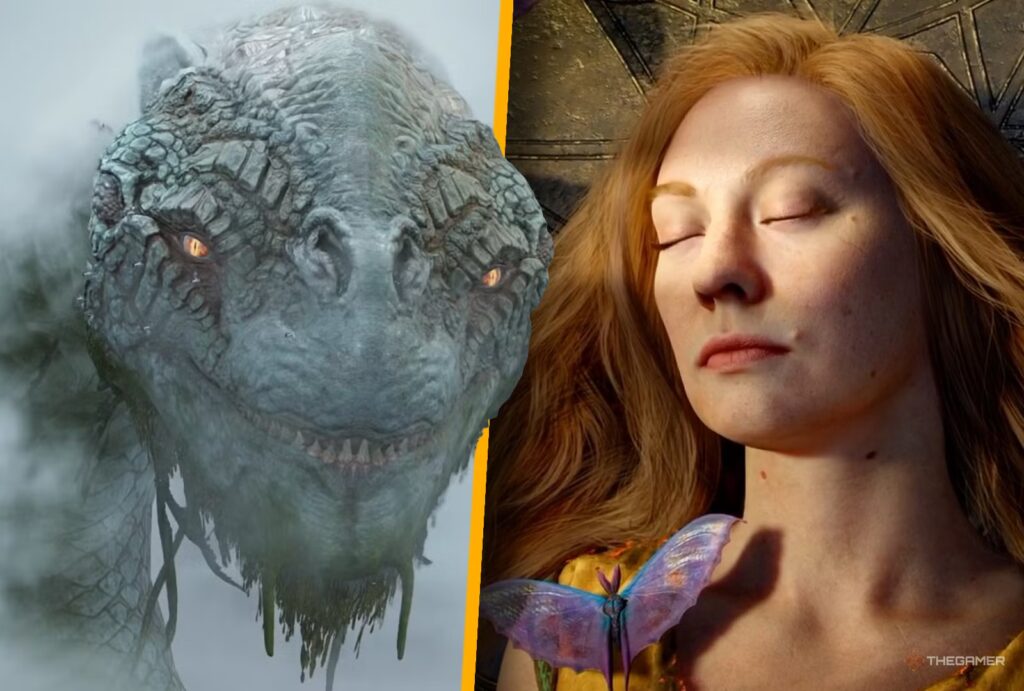
One of the strongest fan theories is that Faye, also known as Laufey, blew the horn either directly or indirectly. This theory is based on her extensive knowledge of prophecy and her ability to manipulate events leading up to her death. It also fits thematically with her role in God of War (2018), where she appears to have carefully shaped the journey Kratos and Atreus would eventually take.
Arguments supporting this theory include:
- Faye’s awareness of Kratos and Atreus’ destiny
- Her possession of weapons and warrior training
- Her strategic planning of the journey in God of War (2018)
- Her likely contact with Jörmungandr prior to her death
However, there is no canonical evidence confirming her involvement. The theory remains speculative but popular because it aligns closely with her character and her connection to prophecy, the giants, and the broader fate of the Nine Realms.
If a God of War Laufey spin-off exists, it would likely be set before the events of God of War (2018), focusing on Faye’s life, resistance activities, and preparation for the prophecy involving Kratos and Atreus. This placement would allow the game to explore several major gaps in the existing timeline, including:
- Faye’s role in shaping Kratos’ Norse journey
- Her interactions with giants and prophecies
- The events leading to her death
- Her influence on the balance of the Nine Realms
Even within this timeline, the horn event may remain off-limits to preserve narrative consistency across the series. The most likely direction for a Laufey-focused game would be expansion rather than confirmation. Instead of answering fan theories directly, it may add more context to Faye’s motivations, expand the mythology of the giants, deepen the understanding of prophecy and fate, and introduce new ambiguities rather than resolve old ones. This approach aligns with the franchise’s storytelling philosophy, which prioritizes thematic resonance over explicit explanation.
How Jörmungandr’s Horn Scene Connects to Ragnarök, Hidden Clues, and the Main Story
In God of War Ragnarök, Jörmungandr’s connection to Atreus becomes more explicit. The World Serpent recognizes Atreus as Loki, suggesting a time-loop or future-past awareness. This strengthens the idea that the horn incident may be part of a closed causal loop involving Jörmungandr’s perception of time. The serpent may be responding to a version of himself or to Loki across time.
While Ragnarök expands this dynamic, it still does not directly resolve the horn mystery. Instead, it deepens the complexity of Jörmungandr’s temporal existence. Players have searched extensively for clues regarding the horn’s origin, interpreting environmental cues, character positioning, and dialogue timing as possible hints.
Potential clues include:
- Jörmungandr’s immediate response, which suggests familiarity
- The absence of visible characters near the horn’s implied origin point
- Mimir’s lack of explanation, despite his knowledge of the realms
- The timing of Atreus’ early development of divine awareness
Despite these observations, no definitive in-game evidence confirms any theory. The clues remain interpretive rather than conclusive.
Although the horn mystery is widely discussed, it may not be central to the main narrative arc. The God of War series focuses primarily on the relationship between Kratos and Atreus, the evolution of Atreus into Loki, the fate of the Nine Realms, and the cycle of destruction and rebirth. The horn mystery functions more as environmental storytelling than a core plot driver, enhancing the world-building without requiring resolution.

Frequently Asked Questions (FAQs)
- What is the horn in God of War 2018?
It is a mysterious horn heard during the Lake of Nine sequence in God of War (2018). When the horn sounds, Jörmungandr, the World Serpent, responds and rises from the lake. The moment is unusual because the game never shows who blew it, making it one of the biggest unresolved mysteries in the Norse saga. - Who blew the horn in God of War?
It is officially unknown. The game does not reveal the person responsible, and Santa Monica Studio has never confirmed an answer. This has led to several fan theories involving Atreus, Kratos, Faye, Mimir, or even time-loop-related explanations involving Jörmungandr himself. - Is the horn explained in God of War Ragnarök?
No, the horn mystery remains unresolved in God of War Ragnarök. Although the sequel expands Jörmungandr’s connection to Atreus and explores time-related events more deeply, it never directly explains who sounded the horn in God of War (2018). - Did Atreus blow the horn?
There is no confirmation that Atreus blew the horn. Some fans believe a future or time-displaced version of Atreus may be involved because of his connection to Loki and Jörmungandr, but the games never provide direct evidence to prove this theory. - Did Kratos blow the horn?
No evidence supports the idea that Kratos blew the horn. While some theories suggest a different version of Kratos or a time-related event could be involved, nothing in the games confirms that he was responsible. - Could Faye have blown the horn?
It is a popular but unconfirmed theory. Faye knew more about prophecy and future events than Kratos or Atreus realized, and she had a major influence on the journey in God of War (2018). Because of this, some fans believe she may have been connected to the horn mystery, but there is no canonical proof. - Why did Jörmungandr respond to the horn?
Jörmungandr appears to recognize the horn’s call, which suggests it may have a deeper meaning to him. This could be tied to his unusual relationship with time, his connection to Atreus as Loki, or a larger causal loop within the Norse timeline. However, the exact reason is never confirmed. - Will God of War Laufey explain the horn?
There is no confirmation that a God of War Laufey game will explain the horn mystery. If such a game explores Faye’s past, it could provide more context about prophecy, Jörmungandr, and the events before God of War (2018), but it may still avoid giving a direct answer. - Is the horn mystery important to the main story?
It is more of a lore mystery than a core plot point. The main story focuses on Kratos and Atreus, their relationship, Atreus’ identity as Loki, and the fate of the Nine Realms. The horn mystery adds depth and intrigue to the world, but the central narrative does not depend on solving it. - Why didn’t the developers explain the horn?
The developers likely left it unexplained to preserve mystery and thematic ambiguity. The God of War Norse saga often deals with fate, prophecy, and cyclical time, so leaving the horn unanswered fits the series’ larger storytelling style. It also keeps fan discussion alive without forcing one fixed interpretation.

Conclusion
The horn mystery in God of War (2018) remains deliberately unsolved, and God of War Ragnarök only reinforces that uncertainty by continuing to avoid a direct explanation. The moment still stands as one of the series’ most intriguing unanswered questions, leaving players to debate who blew the horn and what role it may have played in the larger events of the Norse saga.
Theories surrounding Atreus, Kratos, Faye, Jörmungandr, and even time-related possibilities remain popular among fans, but none have been confirmed within canon. This lack of confirmation keeps the mystery alive and allows it to function as more than just a missing plot detail. Instead, it becomes part of the franchise’s broader storytelling style, where fate, prophecy, and hidden actions often shape events from behind the scenes.
The upcoming God of War Laufey spin-off, if released, is more likely to expand the mythology of the series and explore Faye’s influence than to provide a simple, definitive answer. For now, the unresolved nature of the horn continues to support the franchise’s themes of destiny, time loops, and mythological ambiguity, making it one of the most memorable lingering mysteries in the modern God of War era.
Sources and Citations
- Santa Monica Studio Official Site
https://sms.playstation.com - PlayStation God of War Series Page
https://www.playstation.com/en-us/games/god-of-war/ - IGN God of War Coverage
https://www.ign.com/games/god-of-war-2018 - Game Informer God of War Interviews and Features
https://www.gameinformer.com - God of War Ragnarök Official Page
https://www.playstation.com/en-us/games/god-of-war-ragnarok/
Recommended
- Marathon Surpasses Crimson Desert in U.S. Revenue for March, According to New Analytics Data
- Blender Rendering Made Easy: Using The View Keeper for Multi-Shot Projects
- Comprehensive Analysis of Blender as a Game Engine
- Final Flavor Official Demo Launch Trailer: Release Date, Gameplay, and Everything We Know
- Unreal Engine vs Unity: Which Game Engine Is Best for Your Project?
- PC Gaming Revenue Outside the Top 20: Why Cyberpunk 2077, Elden Ring, and Skyrim Keep Selling
- Samson: a Tyndalston Story New Game Might Scratch that GTA 6 Itch with Its Brutal Debt-Driven Open World Crime Gameplay
- Subnautica 2 Early Access Release on May 14, 2026: Full Details, Gameplay Features, Platforms, and Everything Survival Game Fans Need to Know
- Assassin’s Creed Unity Gets A Major Improvement 12 Years After Infamous Launch: 60 FPS Patch, 4K Support, and Everything to Know
- How do I create a depth map using the Blender camera?



































































































