






In This Article (8 sections)
What Niu Lai Is About and Who Created the Viral Animated Film
Niu Lai is a Chinese animated film about a newborn calf whose journey is presented through a mixture of reality, dreams, fantasy, conversations, and symbolic encounters. The official synopsis describes the calf bringing a skylark recently arrived from the desert into a dream, where the bird watches the young animal face different influences and gradually become brave enough to accept responsibility and confront ideas surrounding life and death. At its core, the story is a coming of age tale about friendship, courage, parental protection, mortality, and personal growth.
The experience itself is far less conventional than that description suggests. Early viewers reported sudden transitions, philosophical conversations, stiff performances, unusual pacing, and long sequences that feel more like an experimental dream than a standard children’s adventure. That contrast between a familiar moral lesson and an unconventional presentation became central to the film’s viral reputation. Some audiences saw the strange execution as poor filmmaking, while others embraced it as accidental surrealism or outsider art.
The film was released theatrically in mainland China on August 5, 2026 and runs for approximately 86 minutes. It is presented in Mandarin Chinese and was directed by Xin Yumeng, with Sun Lifang credited as screenwriter. The production company has been identified as Dalian Jingyuan Culture Film and Television Media Co., Ltd., which had reportedly been connected to interior decoration work before becoming involved in animation.
Xin Yumeng and his mother Sun Lifang were the central creative force behind the project and reportedly handled an unusually large number of production responsibilities themselves. Xin managed much of the directing and technical work, while Sun contributed to writing, voice performance, music, and other creative tasks. Neither came from the type of professional animation background normally associated with an 86 minute theatrical feature, which helps explain both the roughness of the finished film and the later admiration for the amount of work required to complete it.
Production reportedly lasted about five years. During that period, the small team had to manage work that a professional studio would normally divide among writers, storyboard artists, character designers, modelers, riggers, animators, lighting teams, editors, sound designers, voice actors, composers, producers, and marketing staff. Accounts of the production mention secondhand computers, hardware failures, technical experimentation, and disagreements between mother and son over the script.
The exact production budget remains unclear. Online claims range from 1,680 yuan to figures around 20,000, 30,000, or as much as 100,000 yuan, but no detailed official production account has established one precise number. The safest conclusion is that Niu Lai was made for an exceptionally small cash budget by theatrical animation standards. That figure also does not account for years of unpaid labor, meaning the true economic value of the work was considerably higher than whatever direct expenses were paid.
The title has also appeared under several English translations. “Niu” can refer to cattle, a cow, ox, or bull depending on context, while “lai” means come or arrive. As a result, English coverage has used names such as Here Comes the Cow, The Cow Is Coming, and The Bull Comes. “Niu Lai” remains the most direct romanization of the Chinese title.

How Niu Lai Became a Viral Chinese Box Office Hit
Niu Lai initially looked like a theatrical failure. Reports from its first nine or ten days placed total box office revenue at only around 7,000 to 7,700 yuan, with fewer than 300 people attending. Opening day revenue was reported at approximately 3,420 yuan, giving little indication that the film would soon become one of the most unusual box office stories of the 2026 Chinese summer season.
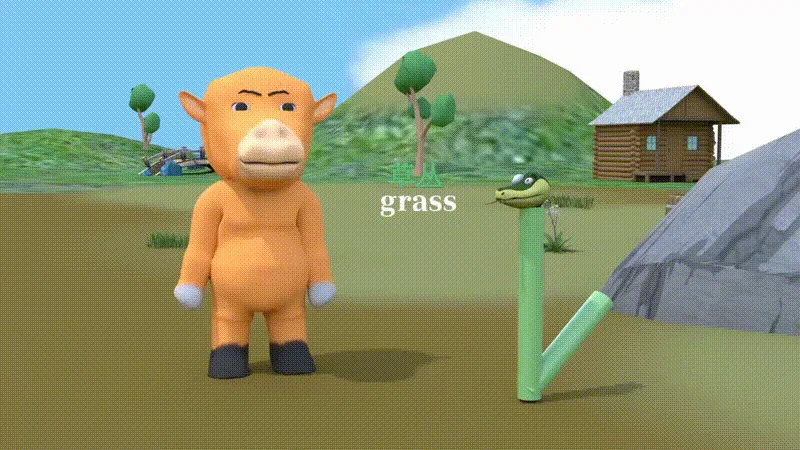
The turning point came around August 14 when viewers began sharing clips, screenshots, and reactions online. One of the strongest sources of comedy was the contrast between the polished ink wash style promotional image and the much simpler three dimensional animation actually seen in the movie. Strange dialogue, stiff character poses, unconventional editing, philosophical exchanges, and low detail models gave social media users large amounts of material for jokes and memes.
Those posts generated curiosity rather than simply damaging the movie’s reputation. People began buying tickets specifically to understand why everyone was talking about it, see whether the viral footage was real, and create their own reactions. Their posts then encouraged more viewers to attend, producing a cycle in which mockery created awareness, awareness created ticket sales, and ticket sales generated even more online content.
The film consequently developed a classic “so bad it’s good” reputation. Many viewers did not claim that the animation or storytelling was technically accomplished. Instead, enjoyment came from the gap between what the movie appeared to be attempting and how strangely those ideas were presented. Watching it with a crowd amplified that effect because audiences laughed together, anticipated famous meme scenes, and treated screenings more like communal cult film events than ordinary cinema visits.
The box office responded dramatically. Reports captured the total rising from hundreds of thousands of yuan to several million, then more than 17 million yuan by August 18. By August 24, Chinese financial media citing Maoyan data placed cumulative revenue above 46 million yuan, with more than 1.5 million admissions. Because the film was still playing at the time, those figures were not necessarily its final total.
One notable statistic placed its occupancy rate at 12.1% on August 15, slightly above the 11.2% recorded by Spider Man: Brand New Day in the same comparison. That did not mean Niu Lai earned more money overall or had more screenings. It simply showed that the limited sessions available for the viral film were filling effectively.
The memes became the marketing campaign that the creators never had the resources to buy. Users shared clips, created captions, photographed theater signs, produced cosplay and merchandise, and repeated jokes about needing to see the film despite expecting to regret it. One recurring idea was that viewers might regret spending 80 minutes watching it but regret missing the phenomenon for much longer.
Even financial humor became part of the trend because the title could be interpreted as suggesting the arrival of a bull market. Some viewers treated tickets and seating arrangements as playful good luck symbols, extending discussion of the movie beyond ordinary film communities.
Its commercial return was extraordinary under almost any plausible production budget, although theatrical gross should not be confused with money personally received by the creators. Ticket revenue is divided among cinemas, distributors, producers, and other participants while taxes and fees also apply. Still, the viral success gave Xin and Sun a platform for future work, with reports indicating they were preparing another project called Yang Gao.
Why Niu Lai Theaters Used Hand Drawn Posters and Grassroots Marketing
Niu Lai entered theaters with almost none of the promotional infrastructure expected for a commercial feature. The claim that it had no official poster at all is not completely accurate because at least one ink wash style promotional image existed. What was missing was the broad package of trailers, multiple poster formats, lobby displays, banners, character artwork, digital advertising assets, press materials, and coordinated marketing normally supplied to cinemas.
This scarcity reflected the tiny production team, limited budget, and low expectations surrounding the initial release. The creators appear to have concentrated most of their resources on finishing the movie and securing theatrical distribution rather than building a conventional nationwide campaign. Before release, Xin reportedly had little confidence that the film would perform commercially, giving the team little reason to spend heavily on promotion.
Once the movie suddenly went viral, theaters faced an unusual problem. They were adding screenings because audiences were asking for tickets, but they did not have enough official material to advertise those sessions. Cinema employees began creating hand drawn posters using paper, markers, chalkboards, and simple sketches of cows, birds, and the film title.
Those drawings quickly became part of the phenomenon. Some were sincere attempts to identify the film, while others deliberately copied the awkward proportions and rough look of the animation. Theater staff also wrote humorous messages acknowledging the lack of official promotional material, warning viewers about the movie’s abstract reputation, or joking that refunds would not be issued simply because someone disliked what they saw.
The most memorable signs were often not the most technically impressive. Their appeal came from the personality of individual theaters and staff members. Audiences photographed them, posted them online, compared drawings from different cinemas, and sometimes visited particular locations because their homemade posters had become popular. What began as a practical solution effectively turned into an unofficial nationwide art competition.
Some cinemas extended the joke beyond posters. Seating plans were arranged into shapes or characters associated with the movie, staff developed improvised slogans, and lobby displays became additional sources of social media content. Every new variation generated another reason for users to post about Niu Lai, which in turn promoted more screenings.
The lack of a conventional trailer also became less important once viral footage started circulating. Unauthorized clips and audience recordings effectively functioned as public generated trailers, although they were not controlled representations of the film. Ironically, those fragments reached a far larger audience than a small official advertising campaign likely would have.
The hand drawn marketing succeeded because it matched the identity audiences had already assigned to Niu Lai. Once the movie became known as a strange handmade underdog production, polished professional advertising might have weakened that image. The homemade posters instead reinforced the feeling that theaters, audiences, and creators were all participating in the same grassroots cultural event.

Why Niu Lai Is Celebrated as a Handmade Anti AI Film
Available reporting consistently indicates that Niu Lai was made without generative artificial intelligence. Production began around 2021 and lasted about five years, meaning much of the work started before modern text to image and text to video systems became widely accessible to independent creators. The film was created through conventional three dimensional digital animation using computers, software, manual modeling, scene construction, animation, editing, rendering, voice work, and other traditional production methods.
Describing the film as handmade does not mean every frame was physically drawn on paper. The term refers to the labor intensive nature of the project and the fact that a tiny team manually created and assembled the movie rather than relying on generative systems to produce images or video automatically. Accounts of hardware problems, repeated technical work, and years of manual production reinforce that interpretation.
The movie was also not created as an anti AI statement. Its story is about a calf, dreams, courage, responsibility, friendship, and mortality rather than artificial intelligence. The anti AI meaning emerged afterward through audience reactions.
Many viewers began contrasting the film’s obvious imperfections with increasingly polished generative media. To those supporters, the awkward models, stiff animation, uneven voice work, and technical flaws became evidence of visible human effort. Rather than hiding limitations, the film displayed them openly, giving audiences a sense that identifiable people had struggled for years to complete something ambitious with very limited resources.
That interpretation resonated with broader concerns among artists and audiences about generative AI, including fears surrounding job displacement, training data, automated creative work, and increasingly standardized visual styles. Niu Lai became a convenient symbol for the argument that flawed human creativity can still carry more personality and emotional meaning than technically polished work generated automatically.
This does not mean the film’s craftsmanship cannot be criticized. Viewers can acknowledge poor animation, confusing storytelling, or awkward performances while still respecting the persistence required to finish an 86 minute feature with such a small team. That tension between criticism and affection is central to the film’s cultural appeal.
In that sense, Niu Lai became larger than the actual movie. It began as a low budget animated feature with almost no audience, transformed into an internet meme, inspired theaters to create handmade advertising, and was eventually reframed as a symbol of imperfect human creativity. Its unusual box office success came not from a traditional marketing campaign or universal critical praise, but from audiences collectively turning its limitations, production story, and sincerity into the reason people wanted to see it.
Frequently Asked Questions (FAQs)
- What does Niu Lai mean in English?
“Niu Lai” can be translated as “Here Comes the Cow,” “The Cow Is Coming,” or “The Bull Comes.” The variation comes from the Chinese word “niu,” which can refer broadly to cattle and may be rendered as cow, ox, or bull depending on context. Because of that, different English language reports have used slightly different titles for the same film. - Is Niu Law the official title of the cow movie?
No. The Chinese title is 《牛来》, and the standard romanization is Niu Lai. “Niu Law” appears to be a spelling or transcription mistake that has circulated online. When referring to the actual Chinese animated film, Niu Lai is the more accurate romanized title. - When was Niu Lai released?
Niu Lai was released theatrically in mainland China on August 5, 2026. Its first several days in cinemas attracted very little attention, but the movie later became a viral phenomenon after clips, reactions, and memes began spreading online in mid August. - How long is the Niu Lai animated film?
The movie has a reported runtime of approximately 86 minutes. That makes it a full length animated feature rather than a short film or extended internet project. Much of the discussion around the movie focuses on how such a lengthy production was completed by such a small and inexperienced team. - Who directed Niu Lai?
The film was directed by Xin Yumeng, who also handled much of the technical side of production. His mother, Sun Lifang, wrote the screenplay and contributed to several other areas, including voice performance and music. Together, the pair reportedly carried out work that would normally be divided among many specialized departments in a professional animation studio. - Did Niu Lai really cost only 1,680 yuan?
That exact budget has not been conclusively verified. Reports agree that the film was made for an exceptionally small amount of money, but estimates range from several thousand yuan to tens of thousands or as much as roughly 100,000 yuan. The figure also does not reflect the value of around five years of unpaid labor by the creators, so the true cost of producing the film was greater than the cash expenditure alone. - Why did Chinese theaters draw their own Niu Lai posters?
Theaters reportedly had very few official promotional materials when the movie suddenly became popular. As cinemas added more screenings, staff created their own posters and signs using paper, markers, chalkboards, and simple drawings to advertise the film. Those homemade designs became popular online themselves, turning a practical solution into another major part of the Niu Lai meme phenomenon. - How much money did Niu Lai make?
By August 24, 2026, Maoyan data cited by Chinese media placed the film’s cumulative box office above 46 million yuan, with more than 1.5 million admissions. That represented an extraordinary turnaround from its first days, when revenue was only a few thousand yuan. Because the movie was still in theaters when those figures were reported, the final total could be higher. - Was Niu Lai made with artificial intelligence?
Available reporting says the film was produced without generative AI. It was created through conventional digital 3D animation, including manual modeling, animation, rendering, editing, voice work, and scene construction. Production reportedly began around 2021 and continued for roughly five years, before modern generative video tools became widely accessible. - Why is Niu Lai considered an anti-AI movie?
Niu Lai was not originally created as a statement against artificial intelligence. Audiences gave it that meaning after release because its obvious imperfections became associated with visible human effort, persistence, and authorship. At a time when artists are debating the effects of generative AI on creative work, some viewers began treating the film as a symbol of imperfect but genuinely human made art.

Conclusion
Niu Lai became a viral Chinese box office hit not despite its strange production history but largely because that history gave audiences something unavailable in conventional studio marketing. A mother and son spent approximately five years creating an 86 minute animated feature with limited equipment, little professional experience, almost no publicity, and no reported use of generative AI. The result was widely criticized for rough modeling, stiff animation, confusing storytelling, and uneven voice work.
Ordinarily, those weaknesses would have ended the theatrical run. Instead, social media clips converted criticism into curiosity. Audiences entered cinemas to see whether the movie was truly as unusual as online posts suggested. Their reactions created more memes, theaters added screenings, and employees drew posters because standard advertising materials were unavailable. Those signs then became attractions of their own.
By August 24, reported revenue had exceeded 46 million yuan, compared with only several thousand yuan during the movie’s first days. The figure made Niu Lai an extraordinary commercial reversal, although its exact production budget and ultimate profit remain less certain than many viral posts suggest.
The lasting importance of the Niu Lai cow film theaters using hand drawn posters story is not that audiences suddenly stopped caring about quality. It is that cultural value can emerge through participation, context, and visible human effort. Viewers did not merely consume the film. They transformed it into a public joke, an underdog narrative, a handmade advertising campaign, a communal theater experience, and an unexpected symbol of resistance to automated creativity.
For independent animation, Niu Lai is both encouraging and cautionary. It shows that a tiny team can finish an ambitious work and find an audience beyond conventional industry pathways. It also shows that virality is unpredictable and cannot substitute for technical development. The movie’s success is unlikely to be reproduced by copying its flaws. Its real lesson is that audiences still respond to distinctive human stories, especially when the people, labor, and imperfections behind a work remain impossible to hide.
Sources and Citations
- Yangtse Evening Post Niu Lai Release Date Runtime Synopsis Early Ticket Sales and Production Details
https://www.yzwb.net/news/wy/202608/t20260814_382594.html - Phoenix News Niu Lai Pre Release Interview With Xin Yumeng and Production Background
https://news.ifeng.com/c/8vhTd5zwl95 - The Paper Niu Lai August 15 Box Office Surge
https://m.thepaper.cn/newsDetail_forward_33789819 - 21st Century Business Herald Niu Lai Surpasses 46 Million Yuan and 1.5 Million Admissions
https://m.21jingji.com/article/20260824/herald/f37ebe1950acd7411f8b72561e3415b6.html - Reuters How a Low Budget Fever Dream Sparked a Chinese Box Office Revolt
https://www.reuters.com/world/asia-pacific/how-low-budget-fever-dream-sparked-chinese-box-office-revolt-2026-08-20/ - The Guardian Niu Lai Derided Animated Film Challenges Blockbusters at Chinese Box Office
https://www.theguardian.com/world/2026/aug/17/niu-lai-derided-animated-film-challenges-blockbusters-at-chinese-box-office - HK01 Niu Lai Cinemas Create Their Own Promotional Posters
https://global.hk01.com/%E7%94%B5%E5%BD%B1/60381811/%E7%89%9B%E6%9D%A5%E7%94%B5%E5%BD%B1-%E7%89%87%E6%96%B9%E7%A9%B7%E5%88%B0%E6%B2%A1%E5%AE%A3%E4%BC%A0%E7%BB%8F%E8%B4%B9-%E5%86%85%E5%9C%B0%E6%88%8F%E9%99%A2-%E8%87%AA%E5%88%9B%E6%B5%B7%E6%8A%A5-%E5%8F%98%E7%BB%98%E7%94%BB%E5%A4%A7%E8%B5%9B - Sina Niu Lai Production Budget and 1,680 Yuan Claim
https://www.sina.com.cn/
Recommendations
- “DKs Out for Harambe”: Nintendo Announces Donkey Kong 64 on NSO on the 10th Anniversary of Harambe’s Death
- The Crew Motorfest RC Frenzy: Ubisoft’s RC Playground Explained
- Material Authoring Software InstaMAT Gets Native Linux Edition: Feature Parity, Limitations, Downloads, and Studio Pipeline Impact
- Resident Evil Requiem Becomes the Best-Selling Game of 2026 in the U.S. So Far
- Reacher Renewed for Season 5 Before Season 4 Premieres: Release Updates, Cast, and Story Details
- Soulframe Warsongs Trailer Breakdown: Story, Gameplay, Characters, and TennoCon 2026 Reveals
- How to Render Anime Style Art in Blender: A Complete Guide for Stylized 3D Renders
- Dead by Daylight Best Jason Voorhees Builds for The Slasher
- Bungie Says The Deeper Players Get Into Marathon, The More Fun They’re Having — Server Slam Feedback, Progression, and What’s Changing for Launch
- Freelance and Indie Commercial License



































































































