






In This Article (9 sections)
Arms of God Overview and Gameplay
Arms of God is a bullet heaven roguelite auto-shooter that places players in relentless arenas filled with overwhelming enemy hordes. Its core design philosophy centers on survival through escalation: players begin with minimal firepower and gradually evolve into near-unstoppable combat machines through upgrades, weapon fusion, and build optimization.
The game belongs to the same broader design lineage as survivor-like titles, where movement is constant, positioning is critical, and combat is largely automated. However, Arms of God distinguishes itself through a heavier emphasis on structured weapon synergy, active ability layering, and a more cinematic interpretation of demonic warfare. Instead of simply dodging waves, players are encouraged to construct builds that fundamentally change how combat behaves over time. Weapons evolve, merge, and interact in ways that create emergent destruction patterns across increasingly chaotic battlefields. Thematically, the game leans heavily into mythological and infernal imagery, framing players as divine instruments sent to purge corrupted realms.
The gameplay loop in Arms of God revolves around a five-weapon combat system that defines how builds are structured and how players approach survival. At its core, players can equip and cycle between multiple weapon types that operate automatically during combat. Each weapon contributes a different function, such as:
- Primary damage output
- Area control
- Projectile scattering
- Status effects, such as burn or shock
- Defensive shielding or life-steal mechanics
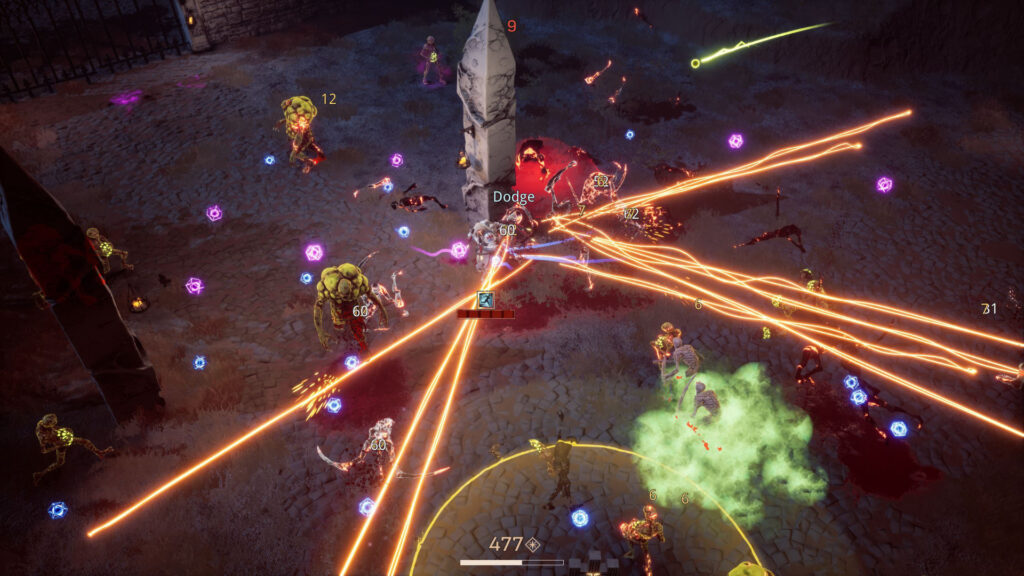
The five-weapon structure is not just a loadout limitation; it is the foundation of the entire build philosophy. As runs progress, players are encouraged to optimize synergy between weapons rather than simply stacking damage. Combat is designed to escalate both visually and mechanically. Early encounters feel manageable, but as enemy density increases, the screen becomes saturated with projectiles, effects, and overlapping enemy types.
This system encourages experimentation. A build focused on rapid-fire weapons behaves drastically differently from one centered around explosive area denial or elemental chaining effects.
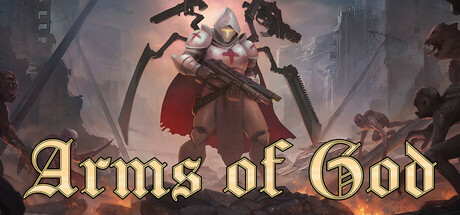
Arms of God Early Access Trailer, Release Details, and Key Reveals
The Early Access launch trailer for Arms of God highlights several key aspects of the game’s identity. First, it showcases the exponential scaling of enemy waves. Early scenes begin with small clusters of demonic entities but quickly escalate into massive, screen-filling hordes. This reinforces the game’s bullet heaven identity, where players are expected to survive overwhelming odds through build optimization.
Second, the trailer emphasizes weapon evolution. Multiple clips show weapons transforming mid-run, either by merging into stronger variants or unlocking secondary effects that dramatically change their behavior. Third, boss encounters are teased with cinematic framing. Large, screen-dominating entities appear with multi-phase attack patterns, suggesting structured boss fights within the roguelite framework rather than simple stat checks.
Finally, the trailer highlights the visual chaos of late-game runs. Particle density increases significantly, with overlapping elemental effects, explosions, and enemy death animations contributing to a highly kinetic visual experience. The overall takeaway from the trailer is clear: Arms of God is designed for escalation, spectacle, and build-driven destruction.
The Early Access release of Arms of God marks the beginning of its public development phase, where player feedback will directly influence balancing, content expansion, and system refinement. Early Access launches typically indicate that the core gameplay loop is complete, while additional content such as weapons, characters, stages, and endgame systems is still in development.
For Arms of God, this means players can expect:
- A fully playable core roguelite loop
- Multiple weapons and upgrade paths
- Several enemy factions and boss encounters
- A limited but expanding campaign structure
- Ongoing balance patches and content updates
The Early Access phase is expected to serve as a testing ground for long-term progression systems and difficulty scaling adjustments.
Arms of God Story, Characters, Weapons, and Roguelite Progression Systems
The narrative framework of Arms of God is built around a descent into a corrupted, hell-inspired dimension where reality itself has been twisted by demonic forces. Players take on the role of divine or empowered warriors tasked with cleansing these realms. While the story is not presented in a traditional linear format during gameplay, environmental storytelling plays a key role.
Each biome reflects a different layer of corruption, ranging from burning wastelands to shattered celestial ruins. These environments are not just aesthetic backdrops; they are integrated into enemy design and combat pacing. Lore fragments, visual symbolism, and boss introductions help build a fragmented but thematic narrative centered around divine punishment, cyclical destruction, and escalating infernal power.
One of the most important systems in Arms of God is its weapon merging and upgrade mechanic. Weapons are not static. Instead, they evolve through:
- Level-based upgrades during runs
- Passive modifiers that alter behavior
- Fusion mechanics that combine two or more weapons
- Rare transformation events that unlock new weapon classes
Weapon merging is especially significant because it changes the strategic layer of the game. Instead of simply collecting stronger weapons, players must decide which systems to combine and which to keep separate. For example, merging a rapid-fire weapon with an elemental effect may produce a hybrid that spreads status ailments across large enemy groups. Alternatively, combining defensive and offensive systems may create self-sustaining builds that rely on life-steal and regeneration. This system ensures that no two runs feel identical, even when using similar loadouts.
Arms of God also features multiple playable characters, each offering unique passive traits and ability modifications that shape gameplay style. Common archetypes include:
- High-mobility assassins focused on evasion and critical damage
- Tank-like characters with defensive scaling and area denial
- Elemental specialists who amplify status effects
- Hybrid casters combining ranged and AoE attacks
Each character is designed to interact differently with the weapon system. Some enhance projectile speed, others increase upgrade frequency, while certain heroes modify how weapon merging behaves. This encourages replayability, as the optimal build for one character may be ineffective for another. Unlocking new characters is tied to progression milestones and in-run achievements, rewarding experimentation and skillful play.
Outside of individual runs, Arms of God features a persistent meta progression system. Players earn resources during runs that can be invested into permanent upgrades such as:
- Increased base damage
- Improved health or survivability
- Expanded weapon slots or upgrade options
- Enhanced resource gain rates
This structure ensures that even failed runs contribute to long-term progression. Over time, players gradually unlock stronger starting conditions, enabling deeper exploration of higher difficulty tiers. The meta system is designed to balance accessibility with challenge, allowing new players to progress while still offering long-term goals for experienced players.

Arms of God Campaign Structure, Boss Battles, Difficulty, and Player Reception
Arms of God is structured into multiple acts, with each act representing a distinct environmental and difficulty tier. These acts typically include:
- Early corruption zones with basic enemy types
- Mid-game regions that introduce elemental hazards and elite enemies
- Late-game infernal domains with dense enemy spawns and complex boss mechanics
Each act culminates in a boss encounter that tests both build synergy and mechanical execution. Level design emphasizes arena-based survival rather than linear exploration. Players are confined to combat zones where enemy waves intensify over time, forcing constant adaptation. Environmental hazards such as lava fields, collapsing terrain, or cursed zones further complicate survival and make positioning an important part of each run.
Boss battles in Arms of God are designed as multi-phase encounters with escalating mechanics. Bosses typically feature:
- Large health pools with segmented phases
- Distinct attack patterns that change over time
- Summoned minions that add pressure during fights
- Arena-wide hazard attacks requiring constant movement
Enemy types range from basic melee hordes to ranged projectile units and elite variants with shielding or teleportation abilities. As the game progresses, enemy combinations become more complex, requiring players to prioritize threats dynamically rather than focusing solely on damage output.
The game also includes multiple difficulty tiers designed to accommodate both newcomers and genre veterans. Difficulty scaling affects:
- Enemy spawn rates
- Damage output scaling
- Resource drop frequency
- Boss complexity
Accessibility options are expected to include visual clarity settings, input customization, and performance optimization tools to ensure smoother gameplay during high-intensity encounters. The goal is to maintain readability even during extreme late-game chaos, where hundreds of effects may appear simultaneously.
Early feedback from demo and preview builds of Arms of God has highlighted several consistent themes. Players have praised:
- The depth of the weapon synergy systems
- The satisfying escalation of combat intensity
- Strong visual feedback during upgrades
- High replayability due to build diversity
Criticism has generally focused on:
- Occasional balance inconsistencies in early builds
- Visual overload during late-game sequences
- The learning curve for weapon merging systems
Despite these concerns, overall reception has been positive, particularly among fans of roguelite and bullet heaven genres.
Arms of God Visual Style, Platforms, System Requirements, and Steam Early Access Info
The visual identity of Arms of God incorporates a stylized approach often associated with high-contrast, pixel-inspired effects and cinematic framing techniques that enhance readability during chaotic combat. Elements reminiscent of “Pixelhair” style detailing can be interpreted through the game’s emphasis on sharp sprite definition and exaggerated visual silhouettes for enemy clarity.
Meanwhile, “The View Keeper” approach is reflected in how the camera and visual layering maintain focus on the player character despite overwhelming screen density. Even during peak chaos, the game attempts to preserve positional awareness through contrast and lighting prioritization. These design choices ensure that, despite intense visual effects, core gameplay readability remains intact.
Arms of God is expected to launch on PC via Steam Early Access, with potential future expansion to additional platforms depending on performance and demand. System requirements are generally expected to align with modern indie roguelite standards, including:
- A mid-range CPU for handling large enemy counts
- A dedicated GPU recommended for particle-heavy late-game sequences
- Moderate RAM usage depending on run length and enemy density
The Steam Early Access version provides the foundation for ongoing updates, including balance changes, new content drops, and feature expansions.
Frequently Asked Questions (FAQs)
- What type of game is Arms of God?
Arms of God is a bullet heaven roguelite auto-shooter built around surviving massive waves of enemies. Players move through chaotic arenas while weapons attack automatically, making positioning, upgrades, and build choices the main focus. Like other roguelites, each run is different, with progression depending on the weapons, upgrades, and synergies players discover along the way. - Is Arms of God single-player or multiplayer?
Arms of God is primarily a single-player game during Early Access. The core experience is designed around individual runs, personal build experimentation, and surviving increasingly difficult enemy waves. Co-op may be added in the future, but the Early Access version appears focused on refining the solo gameplay loop first. - How does weapon merging work?
Weapon merging allows players to combine weapons during a run to create stronger hybrid abilities. Instead of simply upgrading a weapon’s damage, merging can change how it behaves, adding new effects, attack patterns, or elemental properties. This system encourages players to think carefully about which weapons work well together rather than choosing upgrades at random. - What makes Arms of God different from other roguelites?
Arms of God stands out through its five-weapon combat system and its emphasis on synergy-based builds. Rather than relying only on individual weapon strength, the game encourages players to combine weapons, passive effects, and character traits into builds that evolve over time. This gives each run a stronger sense of progression and makes experimentation a major part of the experience. - Does Arms of God have permanent upgrades?
Yes, Arms of God includes meta-progression upgrades that carry over between runs. Players can earn resources during gameplay and spend them on permanent improvements, such as stronger starting stats, better survivability, or improved upgrade options. This means that even failed runs still contribute to long-term progress. - How long is a typical run?
Run length can vary depending on player progress, difficulty, and build strength. Early attempts may be shorter as players learn enemy patterns and upgrade systems, while stronger builds can survive much longer into late-game waves. As the game escalates, runs become more intense, with more enemies, effects, and boss encounters appearing over time. - Are there different characters?
Yes, Arms of God features different playable characters, each with unique abilities, traits, or gameplay modifiers. Some characters may favor speed and evasion, while others are better suited for defense, elemental effects, or heavy damage builds. These differences encourage replayability because the best weapon combinations may change depending on the character being used. - Is the game difficult?
Yes, Arms of God becomes increasingly difficult as enemy density, damage, and boss mechanics scale upward. The challenge comes from surviving crowded arenas, managing visual chaos, and building effective weapon combinations before enemies become overwhelming. However, permanent upgrades and difficulty options are expected to help players gradually improve over time. - What platforms is it available on?
Arms of God is expected to be available on PC through Steam Early Access. The Early Access launch will serve as the foundation for future updates, including balance changes, new content, and possible feature expansions. Other platforms may be considered later depending on performance, demand, and development plans. - Does it have a story?
Yes, Arms of God has a story, but it is presented more through atmosphere, world design, and thematic details than traditional cutscenes or heavy dialogue. The game is set in a corrupted, hell-inspired world where players act as divine or empowered warriors fighting demonic forces. Its narrative is mostly environmental, using biomes, enemies, bosses, and visual symbolism to build the setting.

Conclusion
Arms of God positions itself as a high-intensity evolution of the bullet heaven roguelite auto-shooter genre, combining layered weapon systems, escalating enemy design, and deep progression mechanics into a highly replayable survival experience. Its Early Access phase serves as both a foundation and testing ground for expanding systems, balancing build diversity, and refining its chaotic yet structured combat identity.
Sources and Citations
- Arms of God Steam Early Access page
https://store.steampowered.com/app/1913300/Arms_of_God/ - Arms of God official launch trailer
https://www.youtube.com/watch?v=MRs3JvHskYo - Arms of God developer page
https://store.steampowered.com/developer/DarkJayStudio - Arms of God Steam News Hub
https://store.steampowered.com/news/app/1913300 - Arms of God Early Access announcement
https://store.steampowered.com/app/1913300/Arms_of_God/ - Gameplay preview coverage
https://www.youtube.com/results?search_query=Arms+of+God+gameplay - Community feedback and discussions
https://steamcommunity.com/app/1913300/discussions/ - Early Access player reviews
https://store.steampowered.com/app/1913300/Arms_of_God/#app_reviews_hash
Recommended
- Mortal Shell 2 Gameplay Debut Reveals New Ways To Survive The Nightmare
- Actor Says “Let Them Cook”: Why Fans Should Give ’s TV Show a Chance
- Conquest Character Breakdown: Origin, Age, Comics, Invincible Animated Series and More
- Facial Rigging in Blender: Comprehensive Guide for Beginners to Pros
- Expedition 33 Actor Bet Someone 33 Baguettes That the Game Would Be a Huge Hit as Clair Obscur’s Success Keeps Growing
- Atomfall TV Adaptation Confirmed: UK Post-Apocalyptic Survival Game is Coming to Television (Everything We Know)
- Pixar Canceled a Female-Led Movie Similar to KPop Demon Hunters – What Happened to BeFri? | Pixelhair & The View Keeper
- The Death of Robin Hood: Official First Look Featurette Breakdown, Cast, Trailer Details & Release Date Explained
- Northward Official Reveal Trailer: Everything We Know so Far About Gameplay, Story, Release Date, and Latest Updates
- Wuthering Waves – Xbox Release Date Trailer | Xbox Partner Preview Showcase 2026: July 2026 Release, Game Pass, and Xbox Play Anywhere



































































































