






In This Article (8 sections)
How the Lost Planet Movie Entered Development and Why it Fell Apart
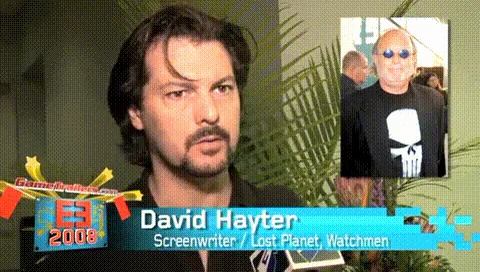
Lost Planet movie plans once brought together Capcom, Warner Bros., experienced producers and screenwriter David Hayter, whose film credits already included major superhero adaptations. Hayter has now revisited the unmade project, connecting its disappearance to the financial crisis that disrupted Hollywood in 2008. His recollection has renewed interest in an adaptation that promised an expansive science-fiction adventure but never reached cinemas.
The development history is more complicated than a single explanation. Contemporary announcements, interviews and production updates reveal an ambitious project whose creative possibilities outlasted its initial momentum. They also establish an important distinction: the financial crash was central to Hayter’s retrospective account, but the project continued to receive public updates afterward.
Public discussion was underway by June 2008, when Hayter discussed talks with Warner Bros. during an appearance on Evil Avatar Radio. Capcom’s community site followed in July with a post acknowledging Hayter’s comments at Anime Expo, though its wording remained tentative. The formal announcement came during E3 on July 15, followed by Capcom’s corporate press release the next day. That release listed 2011 as the planned theatrical release year and described a franchise that had already sold more than two million copies after expanding across platforms. The business opportunity was tied to a recent game success, rather than to a later nostalgia-driven revival.
Warner Bros.’ involvement was publicly documented in Capcom’s July 16, 2008 press release, which identified the studio as the planned worldwide distributor. The announcement also named Seaside Entertainment as the production company, with Avi Arad, Ari Arad and Steven Paul producing. Tetsu Fujimura was identified as an executive producer. These roles help explain why descriptions of the project sometimes vary. A writer might describe working on a film for Warner Bros., while an official announcement separately identifies the producers, production company and distributor. Those accounts can refer to different parts of the same arrangement.
Early trade-based reporting said the financing structure was still being finalized and that Capcom was expected to contribute. That should be treated as an expectation at the time, not proof that a complete financing package had already been secured. The Warner Bros. connection gave the adaptation a possible route toward worldwide distribution, but an announced partnership did not guarantee that production would begin.
Hayter attributes the adaptation’s failure primarily to the worldwide financial turmoil of 2008. His account describes a substantial screenplay that lost its path toward production as the movie business came under pressure. He had also discussed this explanation in a 2014 interview, recalling that he delivered his screenplay around the crash and heard that studios could not fund projects until later dates. His description concerned disruption across the industry, rather than a detailed account of Warner Bros.’ internal finances.
Contemporary reporting supports the broader context. In September 2008, Hollywood financing was affected by tighter credit, banks retreating from film funding and investors demanding different terms. For an effects-heavy science-fiction production, the practical problem would have extended beyond paying a writer. An alien environment, extensive creature work and large action sequences would require confidence that substantial production spending could be sustained. In January 2009, reporting quoted Capcom executive Toshihiro Tokumaru estimating a production cost of $150 million to $200 million. That was a proposed range, not confirmation that the full amount had been secured or spent.
Hayter also told MTV in May 2010 that difficulties between participating companies had delayed the adaptation. He said he had been hired to write drafts, had moved on to other projects and had heard about internal problems that did not involve him directly. He also acknowledged that he did not know the project’s precise status. The limits of that statement matter. He did not identify the companies in conflict, describe the disputed contract terms or say that a particular executive rejected the screenplay. It would therefore be inaccurate to turn the interview into a detailed account of a Warner Bros. and Capcom confrontation.
The surviving interviews work best as snapshots from different stages. Hayter’s 2009 comments focused on adapting the material. The following year brought accounts of continuing revisions and business obstacles. Later recollections emphasized the financial crash and the project’s disappearance. Ari Arad’s May 2010 comments are especially useful because reporting on his GamePro interview described substantial rewrites and his goal of making the material understandable to newcomers while retaining its appeal for established fans. That shows public discussion of creative development continued after the original announcement.
The most defensible reading is that the financial crisis damaged the project’s prospects, while later efforts failed to move it into production. A writer can finish a draft, producers can continue discussing revisions, and an adaptation can still remain unable to secure the conditions needed to become a film. There is also no basis for treating its disappearance as proof that audiences rejected the concept, since the proposed feature never reached theaters.

David Hayter’s Script, Screenwriting Role and Story Ambitions
In a social-media post dated October 27, 2026, Hayter said he had written a “huge” Lost Planet adaptation for Warner Bros. in 2008 and linked its fate to the moment the “entire financial world crashed.” The post reaffirmed his involvement and the scale he associated with the project, rather than announcing new development.
That description should not be stretched beyond what it says. “Huge” does not establish a screenplay’s page count, a finished film’s running time or the number of action sequences Hayter wrote. It communicates ambition without providing a production breakdown. What remains unavailable is a complete, authenticated version of the script that would allow a scene-by-scene account of his adaptation.
Hayter’s association with Solid Snake makes his name recognizable to gaming audiences, but his screenwriting experience was central to the assignment. Contemporary coverage highlighted his work on X-Men, X2: X-Men United and Watchmen. More precisely, he was identified as the writer of the first X-Men film and a co-writer of X2 alongside Michael Dougherty and Dan Harris. Describing those films as adaptations he worked on avoids implying that every screenplay was solely his creation.
That background was relevant because a recognizable fictional world is only the starting point for a feature film. Characters need motivations that can be understood without gameplay, action needs dramatic consequences, and information must arrive at a pace suited to continuous viewing. Hayter’s participation connected two forms of experience: familiarity with games and experience writing films based on existing material. It did not guarantee success, but it explains why his appointment carried more significance than a famous gaming voice actor lending his name to a project.
The broad premise involved an expedition to a frozen planet containing an energy source that could help humanity. Contemporary announcement coverage established resource scarcity as a reason for the journey. However, the adaptation was not expected to reproduce a game campaign directly. In 2009, producer Jun Takeuchi said the filmmakers would use the world while pursuing a different storyline. He also indicated that the film would not draw heavily from the then-upcoming second game.
That distinction leaves room for a recognizable adaptation without assuming that every familiar mission, character encounter or revelation would appear. A film could preserve the environment and central struggle while changing how events connect. The available descriptions suggest a survival adventure with wider stakes for humanity, but they do not establish the final protagonist lineup, ending, central antagonist or exact balance between human conflict and encounters with alien creatures.
Hayter’s comparison to Lawrence of Arabia also helps clarify the project’s ambition. In a 2009 interview, he described his developing story as “Lawrence of Arabia in the snow.” He also discussed reshaping the game’s less linear storytelling around a more clearly structured screenplay. Read as a creative comparison, the reference suggests an ambition beyond a simple succession of monster encounters. It evokes a journey in which environment, warfare, political relationships and personal choices give the spectacle greater weight.
The comparison should not be treated as confirmation of specific story beats. It does not mean Hayter copied David Lean’s plot, reproduced its historical relationships or intended an equivalent running time. Its clearest value is as a statement of scale. Hayter was imagining a substantial adventure whose frozen world could support dramatic development as well as spectacle.
The Game Elements that Shaped the Proposed Film’s World
Hayter’s interest began with the material he experienced as a player. At Anime Expo in 2008, he described examining the environments, mechanical suits, armor, creatures and story when considering the assignment. He also explained that appreciating the character journeys did not mean transferring the game’s scenes unchanged.
The developers had cinematic ambitions of their own. During E3 coverage, Keiji Inafune discussed his desire to create a game suitable for Hollywood adaptation and identified elements such as expansive scenery and giant robots as part of that appeal. That shared interest helps explain why the property attracted film attention so quickly. Its visual identity could communicate danger and scale before a viewer understood the fictional history.
Capcom’s description of Lost Planet: Extreme Condition identifies the main ingredients: the frozen landscape of E.D.N. III, hostile Akrid, Snow Pirates and armed robotic vehicles called Vital Suits. Its environments include snowfields, deserted cities, severe storms and mountains of ice. Those elements perform different dramatic functions. Armor makes human adaptation to the environment visible. Large machines offer power and mobility, while creatures challenge the assumption that technology has made the planet manageable. The weather can threaten everyone regardless of allegiance.
The contrast between vulnerable bodies, industrial equipment and alien life gives the setting a strong visual language. In a film, a small human figure crossing an enormous frozen landscape can establish vulnerability immediately. Heavy machinery can suggest the effort required to survive, while an unfamiliar creature can disrupt the apparent security that machinery provides. These are possibilities inherent in the game’s imagery, not descriptions of confirmed screenplay sequences.
Hayter also cited his affection for John Carpenter’s The Thing when discussing the arctic setting at E3. That reference indicates enthusiasm for hostile, frozen environments, but it does not establish that his screenplay was structured as a remake of that film or primarily as horror. No verified production-design package establishes the final appearance of the proposed movie. The reliable evidence concerns the game elements that attracted the filmmakers and the cinematic influences they publicly acknowledged.
Energy scarcity was one of the clearest reasons Hayter found the property adaptable. In 2010 comments, he described a premise involving Earth’s declining resources and humanity looking to other planets for a solution. He considered that subject timely. The original game also makes energy scarcity tangible through its mechanics. Its thermal energy system keeps the protagonist alive in the cold, continually drains and must be replenished, making survival depend on a resource the player cannot ignore.
For a screenplay, that provides a direct connection between a broad theme and immediate danger. A shortage can matter at the level of civilization while also threatening one person trying to cross hostile terrain. It also creates potential moral questions: who controls the supply, who takes the risks required to obtain it, and what happens when the solution to one population’s crisis creates conflict elsewhere? These questions follow from the premise, but they should not be mistaken for a list of arguments explicitly made in the unreleased script. They do explain why energy scarcity could support more than background exposition.

Script Ownership, Revival Prospects and the Project’s Current Status
Warner Bros. is the company Hayter himself identified as the likely holder of his Lost Planet screenplay. In comments reproduced in recent coverage, he said he believed the studio probably still owned the project and had his script. He also said he did not know whether there were plans to revive it.
That uncertainty should remain part of any present-day account. A recollection from 2014 is not current confirmation of who holds every relevant right or which agreements remain active. There are also different questions hidden inside the phrase “owns the script.” Possessing a copy of a screenplay, controlling that written material and being able to produce a film using an existing game property are not the same thing. The public comments do not resolve all of those issues.
The available reporting supports a limited answer: Hayter believed Warner Bros. retained his material at that time. It does not establish a complete ownership history through October 2026. The possible survival of the screenplay also does not demonstrate active development. An old draft could remain in company records without a director, financing package or current intention to make it.
As of October 28, 2026, the reporting reviewed does not establish a confirmed Lost Planet movie revival. Hayter’s recent comments concern the abandoned adaptation, and no new production commitment accompanies that account. Capcom’s broader interest in revisiting older properties provides context for fan speculation. In December 2024, the company’s announcements surrounding Onimusha and an Okami sequel included a stated focus on reactivating dormant intellectual properties. That strategy does not amount to an announcement concerning this screenplay.
A game revival and a film revival would also be separate developments. Neither automatically confirms the other, and neither establishes that Hayter’s original version would be used. Evidence of a renewed adaptation would need to be more specific, such as an announcement from the companies involved, an identified creative team or reliable reporting on an active production arrangement.
For now, renewed attention has clarified the history rather than changed the project’s status. The Lost Planet movie remains an intriguing unrealized adaptation, not an upcoming release.

Frequently Asked Questions (FAQs)
- Did David Hayter actually write a screenplay for the adaptation?
Yes. Hayter’s involvement was publicly announced in 2008, and his later comments described writing drafts for the Lost Planet adaptation. That means the project advanced beyond a casual idea or fan proposal. However, writing drafts is not the same as reaching production, and the available record does not show that his screenplay led to filming or a completed movie. - When was the film officially announced?
Capcom presented the Lost Planet movie project at E3 in July 2008. Its corporate announcement followed on July 16 and identified Warner Bros. as the planned worldwide distributor. The same announcement listed a planned 2011 theatrical release, which shows the project had a formal development target even though it never reached that date. - Was Warner Bros. the only company involved?
No. Warner Bros. was announced as the worldwide distributor, but the arrangement also involved Capcom and Seaside Entertainment. Avi Arad, Ari Arad and Steven Paul were attached as producers, with Tetsu Fujimura named as an executive producer. That structure shows the project depended on several participants, including the game publisher, producers and a distributor, rather than a single company acting alone. - How expensive was the proposed film?
Contemporary reporting quoted Capcom executive Toshihiro Tokumaru estimating the film’s production cost at $150 million to $200 million. That range helps explain why the project was viewed as a large-scale science-fiction adaptation. It should not be treated as money already spent, because the film was not completed or publicly shown to have entered full production. - Would the story have followed the games exactly?
Apparently not. Producer Jun Takeuchi’s reported comments indicated that the filmmakers planned to use the Lost Planet world while developing a different storyline. That suggests the adaptation could have preserved the frozen planet, survival elements, machinery and creatures without directly recreating a game campaign. It also means specific character appearances, plot events and the ending remain uncertain. - Why was the frozen environment important?
The frozen environment was central because it gave Lost Planet a distinct identity and shaped the survival stakes. The setting allowed extreme weather, hostile terrain, alien creatures and heavy equipment to affect the action at the same time. Capcom’s game description emphasizes E.D.N. III, Akrid, Snow Pirates and Vital Suits, all of which could give a film strong visual contrast between vulnerable humans, machinery and an unforgiving world. - What did the Lawrence of Arabia comparison mean?
Hayter’s “Lawrence of Arabia in the snow” comparison conveyed the scale of the adventure he imagined. It suggested a story built around a vast landscape, a difficult journey and a character arc larger than a simple monster-fighting plot. The comparison should not be read literally. It does not mean the screenplay copied Lawrence of Arabia’s historical story, relationships or structure. - Was energy simply a background detail?
No. Energy was more than a piece of world-building. In the original game, thermal energy is essential to survival in the cold and continually depletes, forcing the player to keep replenishing it. That mechanic gives the resource theme an immediate physical consequence. For a film, the same idea could support both large-scale stakes about humanity’s need for energy and moment-to-moment tension for characters trying to survive. - Did all development stop immediately in 2008?
The public record does not support that exact claim. Hayter has connected the project’s collapse to the 2008 financial crisis, but later reporting still described rewrites and producer comments in 2010. The better reading is that the crash damaged the film’s prospects, while some development activity or discussion continued afterward. Despite that, the project never advanced into a finished feature. - Does an old development listing prove the film is returning?
No. Old listings and archived announcements can remain online long after a project has stalled or disappeared. They may confirm that the Lost Planet movie was once in development, but they do not prove it is active now. A real revival would require current evidence, such as a new announcement, an attached creative team, production reporting or a confirmed release plan.

Conclusion
David Hayter’s Lost Planet movie remains an unrealized adaptation with a documented development history and an unusually vivid creative premise. The appeal is easy to understand: an experienced screenwriter, a hostile frozen world, large-scale machinery, alien life and a struggle over resources essential to survival.
The evidence also resists a simplified cancellation story. The financial crisis forms the central explanation in Hayter’s recollections, while contemporary updates reveal continuing revisions and unspecified company difficulties. These accounts describe a project that could not convert development activity into production.
What survives publicly is a combination of official announcements and the participants’ memories. They explain why the proposed film attracted attention and why its loss still interests fans. They do not establish that the screenplay is currently being revived.
Sources and Citations
- Capcom, July 16, 2008: Official announcement confirming plans for a live-action Lost Planet film adaptation, including production arrangements, the intended distributor and the original release expectations.
https://www.capcom.co.jp/ir/english/news/pdf/e080716.pdf - GameSpot, Brendan Sinclair, July 15, 2008: Reports on the E3 2008 panel featuring David Hayter, Avi Arad, Ari Arad and Keiji Inafune, covering the proposed Lost Planet movie, creative direction and adaptation plans.
https://www.gamespot.com/articles/e3-2008-inafune-arad-and-hayter-talk-lost-planet-film/1100-6193945/ - MTV Movies Blog, Adam Rosenberg, May 26, 2010: Archived interview with David Hayter discussing the appeal of adapting Lost Planet, screenplay development, production challenges and difficulties affecting the companies involved.
https://web.archive.org/web/20100601100826/http%3A//moviesblog.mtv.com/2010/05/26/david-hayter-guest-blog-an-update-on-that-lost-planet-adaptation/ - Slice of SciFi, March 10, 2009: Reproduces an AMC interview with David Hayter discussing his approach to adapting Lost Planet, screenplay decisions, the game’s cinematic potential and comparisons with large-scale science fiction films.
https://www.sliceofscifi.com/2009/03/10/watchmen-screenwriter-david-hayter-on-putting-words-in-rorschachs-mouth-an-amc-interview/ - PlayStation Universe, July 9, 2008: Covers David Hayter’s Anime Expo comments about the Lost Planet movie, including his examination of the source game, its setting and the challenges of adapting its story for cinema.
https://www.psu.com/news/hayter-discusses-lost-planet-movie/ - VideoGamer, 2009: Reports on the proposed $200 million production budget for the Lost Planet movie, providing historical context for the adaptation’s planned scale and financial ambitions.
https://www.videogamer.com/lost-planet-movie-has-200-million-budget/ - VideoGamer, 2009: Covers Jun Takeuchi’s comments that the proposed Lost Planet film would not directly follow the game’s storyline, highlighting the filmmakers’ plans for a separate narrative within the franchise.
https://www.videogamer.com/news/lost-planet-movie-isnt-based-on-game-storyline/ - 3DJuegos, May 6, 2010: Reports Ari Arad’s comments about the progress of the Lost Planet screenplay, including ongoing revisions and the project’s development status following its original announcement.
https://www.3djuegos.com/noticias-ver/110928/el-guion-de-la-pelicula-de-lost-planet-esta-progresando/ - 42Spikes, October 2026: Covers David Hayter’s recollection of the ambitious Lost Planet movie that was never produced, including earlier development plans, production difficulties and comments attributed to his IGN interview.
https://42spikes.com/david-hayter-opens-up-about-his-huge-lost-planet-movie-that-never-got-made/ - Kicks and Grips, October 2026: Revisits David Hayter’s account of the abandoned Lost Planet adaptation, examining how the 2008 financial crisis reportedly disrupted the film’s development and financing.
https://kicksandgrips.com/news/david-hayter-revisits-the-lost-planet-film-that-the-2008-crash-ended
Recommendations
- Antichrist Official Demo Launch Trailer: Psychological Horror Gameplay, Story, and Steam Demo Details
- Universal Pictures Launches Digital Odyssey Experience on Discord for Christopher Nolan’s Epic Film Marketing Campaign
- Beats x Pokémon Teases an Electrified Beats Pill Speaker
- Stray on Switch 2: Release Date, Performance Upgrades, and What’s New Four Years Later
- Frog Squad Gameplay Guide: Catapult Mechanics, Tongue Physics, and Co-Op Strategy Explained
- Netflix On Why It Gave Up On Buying Warner Bros: The Real Reasons the Deal Collapsed
- Lollipop Chainsaw at TGS 2026: SEGA Lineup and Back2Back Reveal
- WW2 RTS RUSE Returns to Steam: Classic Tactical Strategy Game Makes a Comeback in 2026
- Kingdom Come: Deliverance 2 Devs Hope to Be the “New Kings” of the RPG Genre
- NVIDIA GeForce RTX 3060 Returns in China: What It Means for GPU Prices and Supply in 2026



































































































