





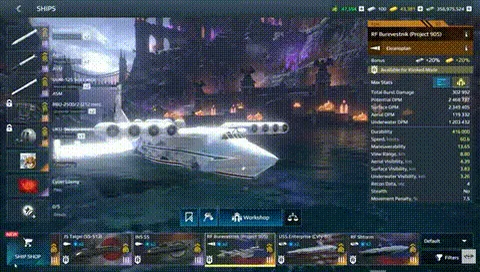
Artstorm acknowledged that a vehicle in Modern Warships used concept artist Alex Jay Brady’s artwork as a reference without proper clearance, prompting an apology and negotiations over its commercial use. The dispute concerned the RF Bartini A-2000-7 and Brady’s earlier fictional ekranoplan carrier concept. However, the controversy subsequently reached an important resolution: in an October 6 update, Brady confirmed a settlement allowing Artstorm to continue using the design and described the outcome as satisfactory.
That update changes the story substantially. An account describing the artist as still waiting for an offer, or suggesting that no settlement had been confirmed by October 9, overlooks Brady’s own announcement. The public record supports a sequence involving an unauthorized reference, an acknowledgment, direct communication, and an agreement. It does not reveal the complete contract, an exact compensation figure, or a court judgment.
The episode attracted attention because it involved a distinctive creative design appearing as an obtainable vehicle in a commercial game. It also demonstrated how appreciation for a finished model can coexist with objections to the circumstances under which it was produced. Brady praised the adaptation’s craftsmanship while maintaining that permission had not been given.
Understanding the controversy requires keeping several questions separate. What did the developer acknowledge? Which similarities did the artist identify? What did the settlement resolve? Which details remain private? Those distinctions provide a more accurate account than treating the dispute as either an unresolved accusation or a publicly adjudicated copyright case.

In This Article (7 sections)
How the Modern Warships Ekranoplan Plagiarism Controversy Started and Why Alex Jay Brady’s Design Was Copied
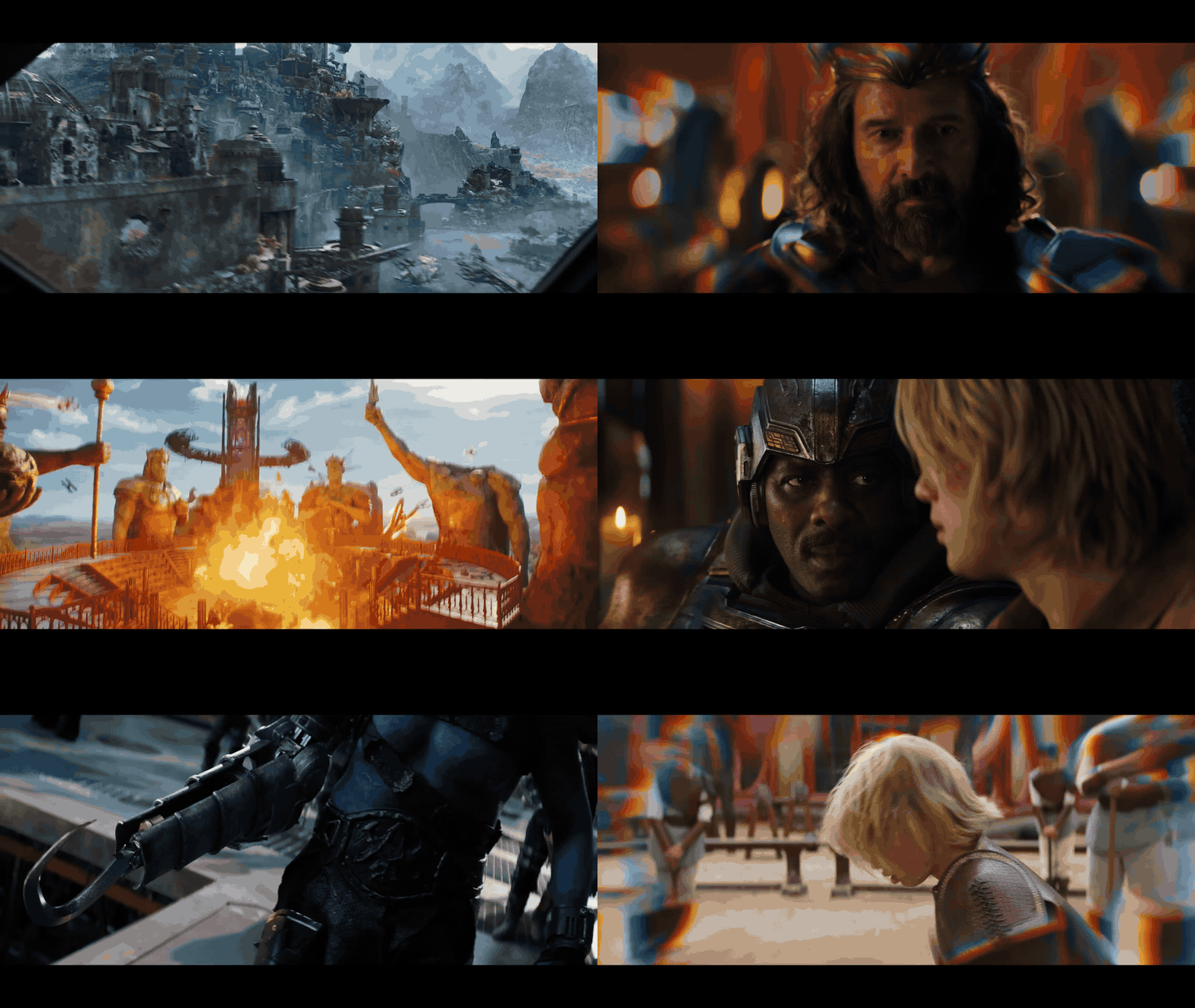
The controversy became public when Brady challenged the appearance of a vehicle resembling an earlier personal design. Reporting identified the original artwork as the Atomic Ekranoplan, published in 2014, and the game vehicle as the RF Bartini A-2000-7. The concept combined the visual language of an aircraft carrier with an enormous ground effect craft, producing an unusual military machine rather than a straightforward depiction of a conventional ship.
The date matters because it establishes the reported creative sequence. The artist’s concept preceded the public dispute by approximately twelve years. However, the age of an online image does not explain how it entered a production pipeline, who selected it, or what information accompanied it. Those are separate questions, and the available statements do not supply a complete internal account.
Modern Warships provides the commercial setting for the dispute. Its Steam listing identifies Artstorm FZE as developer and Gaijin Network Ltd as publisher. The game features contemporary military vehicles, including surface vessels, submarines, aircraft, and helicopters, within online combat. An unconventional carrier therefore fits its broader emphasis on varied military platforms, even though fitting a game’s theme does not resolve ownership of an underlying design.
Brady’s public complaint was unusually specific in its tone. The artist objected to the absence of authorization while acknowledging that the game’s artists had produced an impressive interpretation. The objection concerned the source of the design and its use, rather than a claim that the finished model lacked technical skill.
This distinction is important because concept development and production execution contribute different kinds of work. A concept establishes the appearance and relationships that make an object recognizable. A production model turns that concept into geometry, materials, textures, and other elements required for a particular medium. Both stages can involve substantial creativity, but completing the later stage does not answer whether the earlier contribution was properly authorized.
In an original vehicle design, identity can emerge from the relationship between components rather than any single component. Wings, engines, radar equipment, and aircraft decks are individually familiar. Their arrangement can nevertheless produce a distinctive object. A comparison limited to whether both designs contain wings would therefore miss the more relevant question of how those wings relate to the hull, deck, propulsion system, and overall silhouette.
Brady’s comments to IGN, reproduced in contemporaneous coverage, emphasized that the resemblance extended beyond the general idea of an ekranoplan carrier. The artist identified differences in radar equipment and engine numbers while arguing that the principal configuration remained the same. Particularly striking were alleged similarities in awkward engineering choices, including engine airflow across the deck and aircraft launching in an unfavorable direction.
Those observations help explain the artist’s reasoning. Two designers exploring the same broad category might independently produce large wings and powerful engines. Matching an unusual relationship between several components, especially one that appears inconvenient rather than technically necessary, is a more specific observation. It directs attention toward an individual design history rather than a shared subject.
Nevertheless, visual comparison and production history are not interchangeable. A comparison can show resemblance. An acknowledgment can establish that a reference was consulted. Neither necessarily reveals whether the reference was supplied by a contractor, collected internally, attached to a brief, or found during modeling. The public reporting does not justify assigning the clearance failure to a particular employee.
The wording of the supplied heading asks why the design was copied, but the strongest available answer is limited. Artstorm acknowledged the reference and missing clearance; it did not publicly provide a detailed explanation of the decision making that produced the asset. Claims about deliberate cost cutting, a rushed schedule, or an individual artist concealing the source would therefore be speculation.
The same caution applies to artificial intelligence. Discussion around disputed artwork often moves quickly toward assumptions about automated generation. Here, the evidence cited for the controversy concerns a recognizable reference and an unauthorized adaptation. It does not establish that an AI system created the vehicle or caused the clearance failure.
Brady also stated that original project materials remained available, including sketches, textures, and models at different stages of development. Such material can document how a design evolved, rather than merely showing a final image that circulated online.
That production history is useful because authorship involves more than identifying the earliest screenshot someone can locate. Development files may show experiments, revisions, and discarded arrangements that explain the final result. They can also make the distinction between an artist’s original project and a later adaptation easier to discuss.
The broader analytical lesson is that reference selection deserves attention before a design becomes a finished commercial asset. A useful image can answer an artistic question while leaving an ownership question unanswered. When those questions become separated during production, a team may complete an attractive model before discovering that the permission underlying it was never secured.
The controversy therefore began with a concrete complaint about a recognizable design, rather than a general objection to military imagery. Its significance came from the relationship between the original concept, the finished vehicle, and the developer’s acknowledgment that appropriate clearance had been missing.
Artstorm’s Apology to Alex Jay Brady and the Possible Modern Warships Copyright Settlement
Artstorm responded publicly on October 5 with an apology acknowledging that Brady’s design had been used as a reference without proper clearance. The response also indicated that the developer would contact the artist directly. Contemporaneous coverage reported that Gaijin pointed to the development team’s response without providing a detailed additional explanation.
The apology addressed the central authorization concern. It was more definite than a statement merely promising to investigate whether any connection existed. At the same time, it did not publish a complete account of the asset’s production or specify proposed financial terms.
An apology and a settlement accomplish different things. An apology acknowledges a problem and communicates a response to it. A settlement establishes an agreement between the parties concerning how that problem will be addressed. Reporting should distinguish these stages because a promise to make contact does not by itself demonstrate that acceptable terms have been reached.
In this case, there was a subsequent agreement. Brady’s October 6 update confirmed a settlement permitting continued use of the ekranoplan and indicated discussions about possible new work with the developer. The public announcement supports describing the particular dispute as resolved to the artist’s satisfaction. It does not establish that any future commission had already been signed or completed.
That outcome illustrates how a dispute can move from unauthorized use to an authorized continuing relationship. The original problem remains part of the history: permission was missing when the reference was used. The later agreement changes the position going forward, subject to terms that have not been publicly reproduced.
The settlement should not be expanded into claims that the available announcement does not support. No exact payment amount is disclosed in the cited statement. There is no published royalty percentage, no complete description of attribution obligations, and no public contract specifying every permitted use. A confirmed resolution can be reported without inventing those details.
Similarly, describing the matter as settled does not prove that a court determined infringement. Negotiated agreements can resolve disputes without a judicial decision. The practical outcome and the legal status of the original conduct are related questions, but they are not identical.
Copyright terminology requires particular care. As general United States background, the Copyright Office distinguishes an idea from its expression: an underlying concept is not protected simply because someone thought of it, while an original drawing or written expression may contain protectable authorship. That distinction does not determine which jurisdiction governs the Brady agreement or how a court would evaluate this specific vehicle.
Applied as an analytical framework, the difference explains why the dispute was not about exclusive ownership of all ekranoplan carriers. A broad vehicle category can be explored by many artists. The question concerns whether an adaptation incorporates the original expression of a particular artist’s work, and whether that use is authorized.
The Copyright Office also explains that derivative works can involve recasting or adapting preexisting material, and that new contributions do not automatically erase the rights associated with incorporated work. These principles provide general context for adaptations across media, while leaving the precise legal assessment dependent on the work and circumstances involved.
This is relevant to the transition from concept artwork to a game model. The finished asset may involve new details and substantial production effort. Those additions can be valuable while an underlying authorization question remains. The existence of new work and the existence of earlier work are compatible facts.
The financial attention surrounding the vehicle made that question more visible. Contemporaneous reporting described potentially expensive acquisition routes, including randomized purchases and an ArtCoins market. Plagiarism Today summarized estimates attributed to IGN of roughly $50 to $100 through random spins and $500 to $700 for an outright acquisition route. These were reported estimates, rather than a universal fixed retail price.
Randomized acquisition and direct purchasing should not be treated as equivalent. Spending a certain amount on attempts is not automatically a guarantee of receiving an item. Likewise, converting virtual currency into a dollar estimate can depend on the package purchased, exchange assumptions, and the market price at a particular time.
The pricing discussion also does not establish the appropriate compensation for the artist. A player’s acquisition cost, a studio’s revenue, and a negotiated license fee represent different economic measures. Public reporting does not provide the transaction information needed to calculate revenue attributable to the disputed vehicle.
A settlement can reflect several considerations beyond any single price displayed to players. Parties might consider the original creative contribution, the scope of continuing use, prior distribution, and the value of avoiding further disagreement. These are general possibilities in negotiation, rather than confirmed components of the agreement here.
The decision to permit continued use has a practical significance of its own. It offers a way to preserve a finished game asset while addressing the source artist’s concern. However, permission to continue using a design should not be interpreted as a promise about permanent availability, future balancing, or every player entitlement associated with the vehicle.
The case also demonstrates why retrospective agreement is an imperfect production strategy. Even when negotiations succeed, the initial failure can generate public criticism, administrative work, and uncertainty. Obtaining the necessary rights before substantial production begins creates a clearer foundation for everyone contributing to the asset.
For a studio, a useful reference record would connect the image to its creator, original location, and permitted use. That record could travel with the brief rather than remaining with the person who first collected the image. Such a process makes it easier for later reviewers to understand what they are approving.
The same principle applies when outside contributors supply work. A production team can review both artistic quality and source documentation without assuming that one guarantees the other. A polished deliverable may still require questions about how its central design was developed.
Those observations are workflow analysis, not findings about Artstorm’s internal arrangements. The public statements do not disclose whether a particular documentation system existed or which stage failed. The evidence supports identifying a clearance problem and its resolution, while the precise organizational cause remains undisclosed.
Ultimately, the settlement section of the story requires a clear chronology. The artist complained, the developer acknowledged missing clearance, and the artist subsequently confirmed an acceptable agreement. An accurate current account preserves all three developments instead of stopping at the apology.

Why the Modern Warships Ekranoplan Contains Unrealistic Design Features
The engineering discussion became part of the controversy because Brady identified impractical features as evidence of the design’s particular creative origin. The claim was that unusual choices from the original artwork had survived in the game adaptation, including choices the artist no longer regarded as realistic. That argument concerns recognizable creative decisions rather than proof that a fictional vehicle must be technically buildable.
An ekranoplan draws on a real aerodynamic phenomenon. Ground effect changes the behavior of a wing operating near a surface. NASA research on wings close to the ground documented reductions in induced drag and changes in other aerodynamic characteristics under specified experimental conditions. This supplies a technical basis for the general vehicle category, rather than validating any particular giant carrier configuration.
Induced drag is associated with the production of lift by a finite wing. NASA’s explanation describes how pressure differences near wing tips generate vortices and an additional aerodynamic force opposing motion. The magnitude depends on factors including lift and wing geometry.
The important distinction is between a real principle and a complete operational design. Ground effect can explain why a craft might travel close to the water. It does not automatically answer questions about carrying aircraft, handling changing loads, tolerating waves, or providing a safe operating deck.
A visual concept can combine those functions convincingly in an image while leaving their interaction unresolved. That is common in speculative design because the immediate objective may be atmosphere, scale, and visual identity. Engineering validation would require a different body of work, including data and testing that cannot be inferred from appearance alone.
Brady’s criticism of engine airflow across the deck is one example. At a general level, an aircraft operating area requires attention to the environment through which people and machines move. Propulsion systems positioned close to that area introduce another set of interactions that a detailed illustration may not explain.
However, the public comparison does not provide enough information to calculate the actual severity of those interactions. Engine performance, exhaust direction, protective structures, and operating procedures would all matter. The responsible interpretation is that the artist identified a conceptual problem, rather than that a published engineering investigation measured a particular danger.
Aircraft launch direction was another point of criticism. Launching arrangements involve the relationship between aircraft movement, airflow, and the platform beneath the aircraft. A visually dramatic runway orientation may create difficult operating questions when translated into a physical vehicle.
Here again, the allegation is significant because of its specificity. The direction in which aircraft appear to leave the deck is not simply a decorative surface detail. It expresses a design decision about how the fictional machine is supposed to work. A similar unusual arrangement can therefore become relevant to comparing two creations.
That does not mean a game vehicle must reproduce real aircraft operations. A combat game can simplify physical behavior or assign capabilities that would be difficult to realize outside its rules. Those choices can serve entertainment goals. They remain separate from the issue of permission to adapt the visual design.
The variable wing configuration presents a further conceptual distinction. A recognizable aircraft feature can be transferred to a much larger fictional vehicle for visual impact. Whether that transfer is structurally useful or feasible cannot be established solely by recognizing the feature.
At the level of analytical questions, a moving wing structure would require an explanation of how loads are supported, how movement is controlled, and how the rest of the craft accommodates it. If aircraft operations are also included, those questions expand. The concept’s dramatic appearance does not supply the missing answers.
Scale creates another uncertainty. A larger version of a familiar arrangement should not automatically be assumed to behave like its smaller inspiration. An engineering assessment would need dimensions, materials, masses, and operating conditions. Those specifications are not established by the controversy’s screenshots or the artist’s comments.
The reference to an atomic carrier should also be read as part of the fictional concept. A name implying nuclear power does not demonstrate the presence of a complete reactor design, shielding arrangement, cooling system, or safety analysis. It communicates an imagined source of capability without documenting the engineering required to deliver it.
This makes the artist’s acknowledgment of earlier mistakes useful rather than damaging. A creator can recognize that a design was speculative while still identifying it as their work. Technical imperfections do not make a creative project anonymous or explain away the need to address its ownership.
Indeed, the unusual details were central to Brady’s comparison. A generic feature might arise from a shared reference or common design problem. A cluster of idiosyncratic choices can tell a more individual story about the decisions behind an object.
Nevertheless, those observations should remain attributed. The public record does not contain a comprehensive independent report establishing every claimed correspondence between the project files and the game asset. Artstorm’s acknowledgment confirms reference use, while the artist’s detailed comparison explains why the adaptation was recognizable to them.
The technical discussion therefore has two distinct purposes. It explains why the original concept should be regarded as speculative artwork, and it clarifies why particular similarities attracted attention. It does not replace a legal assessment or establish precise real world performance.
A sound interpretation allows the model to be artistically impressive, mechanically questionable, and affected by an authorization problem at the same time. These are different dimensions of the same object. Treating one as an answer to all the others would obscure the actual dispute.
The engineering flaws also help explain why the controversy became memorable. Instead of focusing only on a broadly similar outline, the discussion involved details the original artist associated with the limitations of their earlier design knowledge. The case turned those imperfections into part of the work’s recognizable creative history.

Frequently Asked Questions (FAQs)
- What happened in the Modern Warships ekranoplan controversy?
Concept artist Alex Jay Brady objected to an in-game vehicle resembling an earlier ekranoplan carrier design. Artstorm acknowledged using the artwork as a reference without proper clearance. The dispute subsequently moved into direct negotiations, and Brady announced an acceptable settlement on October 6. The story therefore includes both an authorization failure and a later resolution.
- Which vehicle was involved?
The disputed vehicle was identified in reporting as the RF Bartini A-2000-7. It was compared with Brady’s fictional carrier concept, rather than presented as evidence that the artist owned the entire category of ground effect vehicles. The specific appearance and arrangement of the vehicle were the focus of the complaint.
- When was the original artwork created?
Contemporaneous coverage identifies the original Atomic Ekranoplan artwork as a 2014 design. That date places the concept well before the public controversy. It does not, by itself, establish when the game’s production team first encountered the artwork or how it was incorporated into development.
- Did Artstorm apologize?
Yes. The developer’s public response acknowledged that the design had been consulted without proper clearance and indicated that it would contact Brady. That statement addressed the permission problem, although it did not disclose the full production history or publish proposed settlement terms.
- Was a settlement actually confirmed?
Yes. Brady’s own October 6 update confirmed a settlement and described the matter as resolved satisfactorily. This is an important distinction from earlier reports that described the artist as awaiting an offer. A current article should incorporate the subsequent announcement instead of repeating the earlier unresolved status.
- How much compensation did the artist receive?
The exact amount is not disclosed in the cited public update. A confirmed agreement does not justify inventing a payment figure or calculating one from player acquisition prices. The commercial value of an in-game item and the terms negotiated with its source artist are separate matters.
- Did a court decide that copyright infringement occurred?
The cited sources do not establish a court judgment. Artstorm’s acknowledgment, Brady’s allegations, and the subsequent settlement should be reported on their own terms. General copyright principles can help explain the issues, but applying them conclusively would require a specific legal assessment of the relevant work and jurisdiction.
- Why were the unrealistic features important?
Brady identified unusual engineering choices as part of the resemblance between the original concept and the game vehicle. Their significance was comparative: an awkward arrangement can be more specific to an individual design than a common feature such as wings or engines. The observations do not amount to a complete independent engineering evaluation.
- Did the vehicle have a fixed $700 price?
The widely discussed figure was a reported acquisition estimate. Coverage distinguished randomized attempts from acquiring the vehicle through virtual currency, with costs dependent on assumptions and market conditions. Describing $700 as a universal, permanent retail price would be more definite than the cited reporting supports.
- Does publishing concept art online authorize its commercial adaptation?
Online availability does not by itself communicate permission for every commercial use. The Copyright Office explains that obtaining permission can involve contacting the rights holder and that changing another person’s work does not automatically resolve the underlying rights question. Those general principles provide context without determining the complete legal position in this dispute.

Conclusion
The Modern Warships ekranoplan controversy concerns a specific creative design, an acknowledged clearance failure, and a subsequent negotiated resolution. Its central update is that Brady confirmed an acceptable settlement on October 6. Continuing to describe the dispute as unresolved after that announcement would leave out the artist’s own account of the outcome.
The public record also has limits. It does not disclose an exact compensation amount, a complete contract, or an internal explanation identifying who introduced the reference and where approval failed. Those omissions should remain omissions rather than becoming opportunities for speculation.
The design comparison attracted attention because it involved distinctive relationships between components and allegedly shared impractical features. That makes the discussion more specific than a claim that two military vehicles simply looked alike. At the same time, the artist’s observations should be distinguished from an independent engineering report or judicial finding.
The broader significance lies in the relationship between creative contribution and production execution. Turning an existing concept into a polished game asset can involve substantial work, while permission for the underlying design still requires attention. Acknowledging the craftsmanship of the adaptation does not answer whether that authorization existed.
The satisfactory settlement demonstrates that such a dispute can reach a practical resolution through direct communication. The original clearance failure nevertheless remains instructive: identifying the source and permitted use of a design before production offers a clearer foundation than attempting to resolve ownership after a commercial release.
Sources and Citations
- Alex Jay Brady on LinkedIn, October 6, 2026: Brady’s public update is the most direct source for their own account of the dispute and any settlement or resolution terms they chose to disclose. The LinkedIn page itself was not retrievable through search access, so I would cite it specifically as Brady’s firsthand statement rather than independently verified reporting.
- Citation: Alex Jay Brady LinkedIn statement and October 6 update
- Alex Jay Brady on Bluesky: Brady’s Bluesky post states that they had not authorized Artstorm Games to use the design in Modern Warships. Secondary reporting reproduces the substance of that post and notes Brady’s view that the in-game ship carried over distinctive details from the original concept. Plagiarism Today
- Citation: Alex Jay Brady public statement on Bluesky
- Plagiarism Today, October 6, 2026: Jonathan Bailey’s You Wouldn’t Plagiarize a Battleship covers Brady’s 2014 Atomic Ekranoplan concept, the RF Bartini A-2000-7 in Modern Warships, Brady’s allegation that permission and payment were absent, and Artstorm’s apology that the design had been used as a reference “without proper clearance.” Plagiarism Today
- Citation: You Wouldn’t Plagiarize a Battleship
- Tech News Vision, October 6, 2026: Reports the same dispute and reproduces Brady’s explanation that the game model retained what they considered unrealistic or mistaken details from the original concept. It also reports Artstorm contacting Brady and Brady’s willingness to treat an acceptable deal as retroactive contract work. technewsvision.co.uk
- Citation: Modern Warships Dev Apologizes After Artist Calls Out Plagiarized Ship Design
- Steam, Modern Warships: The official Steam page identifies Artstorm FZE as developer, Gaijin Network Ltd as publisher, and June 4, 2026 as the PC release date. It describes Modern Warships as a cross-platform online action game featuring contemporary and prospective naval and air vehicles, including carriers, submarines, drones, and aircraft. Steam Store
- Citation: Modern Warships on Steam
- NASA Technical Reports Server, Fink and Lastinger, 1961: Aerodynamic Characteristics of Low-Aspect-Ratio Wings in Close Proximity to the Ground provides technical background on ground effect. NASA’s wind-tunnel results found increased lift-curve slope, reduced induced drag, and increased lift-to-drag ratio as low-aspect-ratio wings approached the ground. This is useful for explaining the aerodynamic principle behind ekranoplans, but it does not validate the specific fictional design at issue. NASA Technical Reports Server
- Citation: Aerodynamic Characteristics of Low-Aspect-Ratio Wings in Close Proximity to the Ground
- NASA Glenn Research Center, Induced Drag Coefficient: NASA explains that induced drag results from lift on finite wings and that, all else equal, lower-aspect-ratio wings experience higher induced drag than higher-aspect-ratio wings. This provides general aerodynamic context for discussing unusual low-aspect-ratio aircraft or ground-effect designs. NASA
- Citation: NASA Glenn: Induced Drag Coefficient
- U.S. Copyright Office, Copyright Registration Toolkit: The Copyright Office explains that copyright protection automatically applies to original works of authorship once fixed in a tangible medium, including pictorial, graphic, and sculptural works. It also distinguishes copyrightable expression from unprotected ideas, procedures, processes, systems, concepts, and principles. U.S. Copyright Office
- Citation: Copyright Registration Toolkit
- U.S. Copyright Office, Limitation of Claim and Derivative Works: The Office defines a derivative work as one that recasts, transforms, or adapts preexisting copyrightable material and states that the copyright owner holds the exclusive right to authorize derivative works. A registration for a derivative work extends only to the newly added original material, not unlawfully used preexisting material. U.S. Copyright Office
- Citation: Limitation of Claim and Derivative Works
- U.S. Copyright Office, Permission and Fair Use FAQ: The Copyright Office says permission can be obtained directly from the copyright owner, that there is no fixed percentage of a work that automatically qualifies as fair use, and that only a court can conclusively determine whether a particular use is fair use. It also states that creating a changed version of another person’s protected work generally requires the owner’s consent unless an exception such as fair use applies. U.S. Copyright Office
- Citation: Permission, Adaptation, and Fair Use Questions
Recommendations
- Vivian Kubrick Debunks Eyes Wide Shut Deleted Scenes Theory
- Battlefield 6 2026 Roadmap: More Maps, “Legendary” Battlefield 4 & Battlefield 3 Remakes, and Wake Island’s Return
- Apple TV’s Widow’s Bay is the First Breakout TV Hit of 2026: Why Everyone is Talking About the Horror Comedy
- Pitchify Launches New Service to Connect Developers and Publishers: How Pitch Direct Works
- Pokémon Pokopia Bubbly Basin DLC Release: Date, New Pokémon, and Everything You Need to Know
- Nordic Game 2026 (NG26 Spring): Dates, Venue, Passes, Speakers, Expo & Awards in Malmö
- Subnautica 2 Early Access Roadmap: Co-Op Updates, Sprinting, and More
- Virtua Fighter 6 Leak Explained
- The Future of 3D Modeling: Insights on AI Advancements
- GTA 6 is Already Outselling Everything Else: Why Pre-Orders Are Dominating Gaming



































































































