



In This Article (10 sections)
South Australia Digital Games Fund Expansion and 2026 Funding Structure
South Australia’s Digital Games Fund is expanding to A$1 million in 2026, doubling the funding available through its inaugural round. Announced by the South Australian Film Corporation on October 6, the expanded program introduces separate funding streams for preproduction, production, and work intended to extend a game’s commercial life after launch, with applications scheduled to open on October 21, 2026. The structure reflects the different financial pressures developers face at each stage, from testing whether an early concept is technically viable to supporting full production or helping an existing game reach additional players.
Organizing the fund around development stages can make the support more practical because studios do not always need enough money to complete an entire game at once. An early-stage team may need funding to build a convincing prototype, test core systems, and determine whether an idea is worth pursuing further. A studio already in production may instead need reliable resources to reach an agreed milestone, maintain its schedule, or reduce interruptions. Developers working with an existing title may use targeted investment to support expansion into new markets, platforms, or commercial opportunities that could extend the product’s lifespan.
For emerging developers, reaching a clear milestone can provide evidence of technical feasibility and help improve future financing decisions. For more established independent studios, milestone-based support can strengthen production readiness and make delivery plans more achievable. The expanded fund therefore has potential value beyond the headline size of the A$1 million pool because it is designed around the practical needs of different stages of game development.
However, public funding does not remove the underlying risks of making and selling games. Studios still need realistic budgets, clear ownership arrangements, capable teams, credible schedules, and a strong understanding of the audience they want to reach. A grant can help a project progress or strengthen its commercial position, but it cannot guarantee player demand or commercial success. The expanded program is therefore best understood as targeted support that can help developers reach important development or market milestones while leaving the core responsibilities of planning, production, and audience strategy with the studio itself.

South Australia Digital Games Fund Eligibility, Milestones, and Developer Support
The South Australian Film Corporation’s Digital Games Fund supports eligible South Australian developers working toward clearly defined development milestones, with maximum grants of A$30,000 for preproduction, A$150,000 for production, and A$50,000 for postrelease development. These figures represent funding ceilings rather than guaranteed awards, making it important for applicants to explain exactly what stage their project has reached, what remains uncertain, and what the requested funding will allow them to complete. A milestone-based approach can make proposals easier to assess because it connects financial assistance to a concrete result, such as a functioning gameplay prototype, a more reliable content pipeline, a production-ready build, or work intended to extend the commercial life of an existing title.
The practical value of the fund depends on how clearly a studio identifies the real problem it is trying to solve. An early project may already have a strong visual identity but still need to prove that its core movement, interaction, and decision-making systems work together. Another team may have reliable gameplay but need to demonstrate that it can produce levels or other content efficiently enough to support full production. These projects require different forms of support, even though both may describe themselves as being in development. A proposal that defines the specific development challenge and explains how the milestone addresses it is likely to communicate the value of funding more clearly than one that simply promises general improvements.
Eligibility requires more than a strong creative idea. Individual applicants must be over 18, hold an active ABN, meet the South Australian residency definition, and not be full-time students. Companies must satisfy Australian incorporation and management requirements, be registered in South Australia, and have maintained their principal place of business in the state for at least six months before applying. Projects must also have at least 75% of their team primarily based in South Australia, and funding cannot be used to cover a development milestone that has already been completed. These conditions make applicant readiness an administrative and legal issue as well as a creative one.
Clear ownership arrangements are particularly important because game projects often involve founders, freelance artists, composers, programmers, and other external contributors. Without appropriate agreements, a studio may struggle to prove that it has the right to use particular assets or commercialise the finished game. A strong preparation process therefore begins with confirming the applicant’s status, team eligibility, project rights, and ownership structure before significant effort is invested in the application itself. This does not reduce the importance of creative ambition, but it ensures that the business is actually capable of delivering and releasing the work described in the proposal.
The financial value of a grant also depends on how it fits into the studio’s wider development plan. Applicants should distinguish between money that has already been secured and funding they hope to receive from future investment, publishers, revenue, or other sources. A schedule built around confirmed finance carries different risks from one that depends heavily on uncommitted funding. The same principle applies to staffing, as a credible budget should identify who will complete the work, whether those people are actually available, and how much time each role requires to reach the proposed milestone.
For smaller independent teams, one of the most important benefits of public support may be the ability to purchase focused development time. Developers often divide their attention between their own projects and unrelated paid work, making consistent progress difficult. A well-planned grant period can reduce that pressure and allow the team to concentrate on a meaningful development outcome. The value of the funding therefore comes not only from the amount awarded, but from how effectively the studio connects that money to a realistic milestone, capable team, clear ownership structure, and achievable production plan.

How to Apply for South Australia’s Digital Games Fund in 2026
As of October 13, 2026, the official program page lists October 21 as the opening date for the next round of South Australia’s Digital Games Fund. Applications must be submitted through the SAFC’s SmartyGrants platform, and applicants are required to read the Terms of Trade and speak with the SAFC about their intended request before applying. The public page reviewed for this article does not provide a closing date, so applicants should not assume that the deadline will match the previous round. Starting preparation early is important because budgets, rights documentation, team details, and partner information can take longer to assemble than expected.
The first major decision is choosing the correct funding stream based on the project’s actual stage of development rather than simply selecting the highest available amount. Preproduction offers grants of up to A$30,000 and is intended for projects that still need to investigate important uncertainties before full production. A concept that is still testing its central gameplay mechanic has different requirements from a game with proven systems and an established content pipeline. Likewise, a project seeking support for an additional platform release should explain how that work extends the commercial life of an existing game rather than presenting it as ordinary production.
A strong application should present the project as one consistent explanation. The project description establishes what the game is, supporting materials demonstrate what already exists, the budget explains how the requested funding will be spent, and the timeline shows when the proposed milestone can realistically be delivered. These elements should support one another. A proposal becomes less convincing when it describes a small project but includes a production plan that assumes a much larger amount of content, or when a short timeline is paired with too few working hours for essential tasks. A realistic milestone supported by clear evidence is generally more useful than an ambitious promise without a credible delivery method.
Preproduction funding is particularly useful when a team needs to answer questions that will affect whether and how the project should move forward. For a puzzle game, the main uncertainty might be whether its central mechanic offers enough variation to support a complete commercial experience. Testing several different scenarios can reveal whether the concept has lasting depth or becomes repetitive. For an action game, the priority may be movement and combat, with a prototype used to evaluate responsiveness, camera behavior, collision, and player feedback before large amounts of content are produced. A narrative adventure might instead test whether dialogue, exploration, and interaction work together effectively while confirming that the proposed scope remains manageable.
These examples illustrate practical development planning rather than confirming eligibility for every project type, so the official guidelines remain decisive. Whatever is being tested, the prototype should have a clear purpose and a defined method for interpreting the results. General feedback that players enjoyed the game is less useful than specific observations about where they became confused, which mechanics they understood, whether controls felt reliable, and whether they wanted to continue playing. Testing should also extend beyond close friends and collaborators because people already familiar with the project may unintentionally overlook unclear instructions or awkward interactions.
The budget should follow directly from the development question the team is trying to answer. If the main uncertainty concerns gameplay, spending should support the work required to test that mechanic. If the issue is technical feasibility, the proposal should explain the experiment being conducted and how the team will determine whether it succeeded. A useful preproduction outcome does not always have to confirm that the game should proceed exactly as originally planned. Discovering that the scope needs to shrink, a mechanic requires redesign, or a proposed platform is unsuitable can still be valuable because identifying those problems before full production can prevent much larger financial and development losses.
Applicants should therefore use the period before applications open to confirm their project stage, check eligibility, organize legal and ownership documentation, prepare realistic budgets, gather supporting material, and make sure the timeline matches the work being proposed. Careful preparation makes it easier to identify gaps before submission and helps ensure that the application clearly demonstrates what the team already knows, what it still needs to discover, and how the requested funding will move the project toward a meaningful next milestone.

South Australia Digital Games Fund Production and Post-Release Grants
South Australia’s Digital Games Fund provides production grants of up to A$150,000 for teams already in full production or preparing to enter it, while a separate postrelease stream offers up to A$50,000 for games that are already released or close to release. Larger production requests require stronger evidence of readiness, market understanding, team capability, and economic benefit to South Australia, so applicants need to demonstrate that the requested funding will produce a credible milestone rather than simply improve the project in general.
A strong proposal begins with a clear understanding of the current build, including which systems work, which content is complete, and which technical or production risks remain unresolved. This assessment should shape the proposed milestone and schedule rather than being added after the team has already chosen an ambitious completion date.
A successful prototype does not automatically prove that full production will be straightforward. Early builds often rely on temporary code, limited content, and manual workarounds that are acceptable for proving an idea but unsuitable for commercial-scale development. Moving toward a finished game may require restructuring technical systems, improving tools, strengthening asset pipelines, and implementing features that were unnecessary in a short demonstration. A convincing production plan should explain these dependencies clearly. If designers need a better level editor before producing content efficiently, that work belongs early in the schedule, while performance testing that could affect art assets should not be delayed until the final stages.
Milestones should also be defined precisely. A team requesting funding for a content-complete build should explain what content complete actually means, such as having all planned levels, dialogue, and core systems implemented while leaving time for balancing, optimization, accessibility work, and bug fixing. Clear boundaries make progress easier to assess and reduce the risk of uncontrolled scope expansion. Budgets require the same level of detail, with spending connected to actual tasks, working time, specialist expertise, and production needs. If additional animation is required, the plan should show the expected workload and whether the responsible person is available, while dependencies such as audio integration should be scheduled around the systems they rely on.
Commercial planning is equally important because production funding should support a game with a credible audience strategy. Comparable titles can help establish expected features, audience preferences, pricing context, and the elements that make a project distinctive, but such comparisons should not be treated as proof of future sales. Social media followers, viral videos, and wishlist counts may indicate interest without guaranteeing customers or conversion rates.
A stronger application explains what the available evidence suggests, what remains uncertain, and how the team intends to respond to those uncertainties through development or marketing decisions. Production schedules should also protect time for testing, usability, accessibility, and performance, because leaving these areas until the end can create expensive revisions. Even something as simple as interface text may require early testing across televisions, handheld screens, or different control schemes.
The production plan should also explain what happens after the funded milestone. A polished build may still require release preparation, distribution arrangements, certification, marketing, and ongoing support, so showing the next step demonstrates that the grant forms part of a coherent commercial strategy rather than an isolated development period. This same principle is central to the postrelease stream, which is designed to extend a game’s audience, commercial lifespan, or platform availability rather than fund routine maintenance and minor patches.
The October guidelines contain an apparent inconsistency because the general exclusions refer to games that have already received a full retail release even though the postrelease stream specifically addresses released games. Developers with an existing commercial title should therefore seek clarification from the SAFC rather than assume how that exclusion applies.
Postrelease funding is most effective when it responds to a specific, evidence-based opportunity. Localisation is one possible route, but translating a game requires more than replacing text. Interface layouts may need adjustment for different word lengths, fonts must support the required characters, and translated content must be tested carefully. Studios should also explain why a particular language is commercially relevant, using evidence such as regional interest, community requests, or comparable products. Ongoing costs matter as well because future updates may introduce new text that also requires translation and testing.
Platform expansion presents a different set of challenges. A game designed around keyboard and mouse may require substantial interface and control changes for a gamepad, while visually demanding systems may need optimization for less powerful hardware. Platform services can introduce additional work involving saves, achievements, account behavior, and error handling. Porting should therefore be treated as a production project with its own scope, testing requirements, and support obligations rather than as a simple technical conversion. A studio should compare the commercial opportunity of another platform with the full cost of releasing and maintaining that version over time.
Additional content can also extend a game’s lifespan, but the strongest proposals respond to actual player behavior rather than assuming that more content will automatically create renewed interest. Community feedback may suggest demand for new levels, modes, challenges, or improvements, but the loudest players do not always represent the broader audience. Combining qualitative feedback with observed behavior can reveal more useful priorities. If many players leave before reaching later content, for example, adding more endgame material may provide less value than improving the opening experience so more players understand and enjoy the game.
Accessibility improvements can similarly expand the audience by removing barriers through features such as adjustable text, remappable controls, clearer visual information, or alternative input options. These changes may improve the product substantially even when they do not produce an immediate revenue increase, so studios should distinguish benefits to existing players from opportunities to attract new customers. Whether the proposal involves a new platform, localisation, accessibility work, or a major content update, postrelease investment is strongest when it connects a clearly identified opportunity to a defined and testable result.

South Australian Digital Games Fund 2025 Recipients and What Their Selection Shows
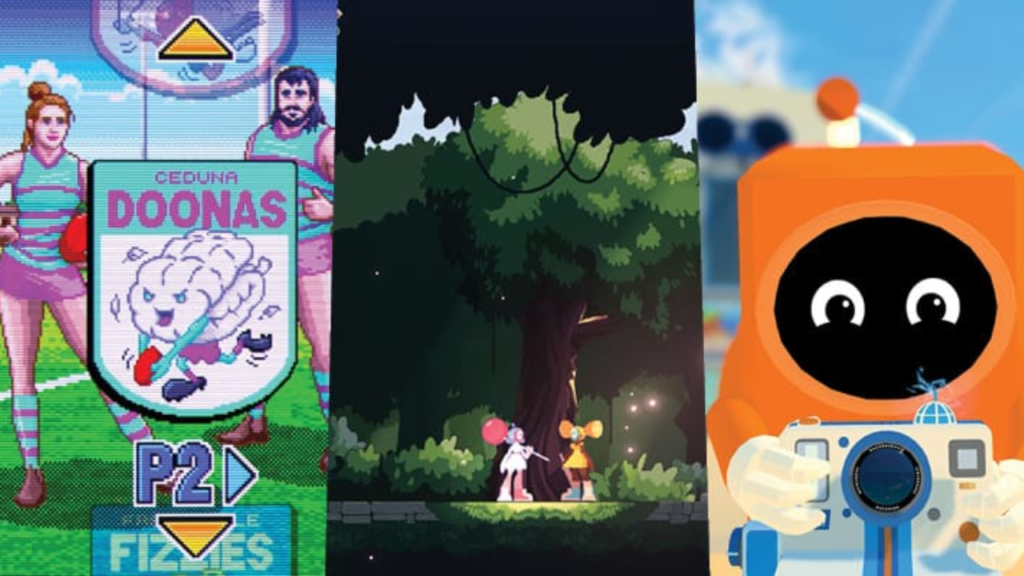
The inaugural South Australian Digital Games Fund round launched in October 2025, with recipients announced on May 25, 2026. The SAFC confirmed that 11 studios would share A$500,000 after receiving more than 50 applications. The selected studio and project pairings were Little Bandit with The Troll & the Witch’s House, Soft Magnets with Yakshini Lokam, We Made a Thing Studios with Life, Death and Ramen, Powerbomb Games with Pro Jank Footy, The RnD Department with TOYA., Pond Games with Pipsqueak!, Cinnadev with Delphinium, Mauii Makes Games with One Pop Planet, Bad Plan Studios with End of Ember, Monomyth Games with Photo Roboto, and Cowboy Fish with Peppermint.
The range of supported projects provides useful context for understanding how different independent games can require very different development plans. A puzzle game may depend heavily on whether its central mechanic can support enough varied and satisfying challenges, while a narrative title may need to demonstrate strong writing, pacing, interaction, and a manageable content-production cost. An action platformer may instead require particularly careful attention to movement, collision, level design, and player feedback. These differences show why a single generic production plan is unlikely to suit every project, even when the games are similar in size or budget.
The recipient group is therefore best understood as a portfolio of different development opportunities rather than evidence that the fund favors one particular genre or commercial model. A small project can still involve significant technical or creative risk, while a visually ambitious game may be relatively manageable if its production pipeline and core systems are already well established. The variety of supported projects does not mean that every type of proposal will qualify, but it does demonstrate that the inaugural round was not restricted to one style of game or one development approach.
For future applicants, the more useful lesson is to explain their own project clearly rather than trying to imitate a previous recipient. A successful application needs to show why the proposed milestone matters, what development problem it addresses, and why the team is capable of delivering it. The fact that more than 50 applications competed for 11 funded places also shows that meeting the basic eligibility requirements is not enough on its own. The proposal must communicate a credible development opportunity within a limited funding pool.
At the same time, a funding decision should not be treated as a complete judgment on a game’s future. A project that is not selected may still progress through other financing, a revised scope, or a different development path, while receiving a grant does not guarantee commercial success. Prototype completion, partner acquisition, release readiness, audience reception, and long-term business sustainability are separate outcomes. Assessing the fund’s impact over time therefore requires looking at what each grant enabled the studio to achieve rather than assuming that selection alone proves a project will become profitable.

How Pro Jank Footy and End of Ember Advanced With Government Support
Pro Jank Footy and End of Ember illustrate two different forms of progress among projects supported through South Australia’s game funding programs. In August 2026, the SAFC reported that Pro Jank Footy had launched through Umbrella Entertainment across PlayStation, Xbox, Nintendo Switch, and Steam, while End of Ember had secured a publishing agreement with Thailand-based Rising Tide Publishing. The SAFC also reported that Pro Jank Footy reached the No. 1 position on Nintendo Switch, although the announcement does not establish a lifetime sales figure or define the worldwide scope of that ranking.
These milestones are meaningful, but they represent different stages of commercial development. A released game has moved from production into active operation, where the studio must manage distribution, technical support, updates, and real player behavior. A publishing agreement, by contrast, establishes a commercial relationship that may help a project move toward completion or release, depending on the terms of the contract, the support provided, and the responsibilities divided between the developer and publisher. Neither milestone should be treated as automatic proof of long-term commercial success.
The public information does not reveal the full financial position of either project, including total sales, publishing advances, profitability, or the proportion of development costs covered by government support. It would therefore be inaccurate to attribute the entire outcome of either game to a single grant. The more defensible conclusion is that both projects received assistance and later reached development or commercial milestones that the funding agency chose to highlight. Other factors, including earlier studio work, additional financing, external partnerships, and audience interest, may also have contributed.
For other developers, the examples demonstrate why a clearly defined objective matters. A studio preparing for release needs a plan that connects its remaining development work to a finished, distributable product. A team seeking a publisher needs material that helps potential partners understand the game, its intended audience, production requirements, rights position, and remaining risks. A trailer may communicate tone and identity effectively, while a playable build can demonstrate the actual experience, but neither should conceal unresolved problems that could materially affect delivery.
The two projects also show why success should be defined according to the project’s current stage. Securing a publishing agreement may provide a route toward financing, production support, or market access, while releasing a game creates the opportunity to measure actual customer response. Neither milestone guarantees long-term sustainability, but both can represent meaningful progress toward it. The broader value of the expanded funding program will therefore depend on whether supported teams are able to reach useful next steps, whether that means completing prototypes, securing partners, entering production, launching games, or extending existing products.
Government support in South Australia also extends beyond the Digital Games Fund. The SAFC has announced a separate studio placement initiative that proposes salary and superannuation assistance for six or 12-month full-time placements, while its 10% development rebate applies under a different set of conditions and requires at least A$250,000 in eligible South Australian expenditure. These programs form part of a wider support pathway but remain distinct initiatives with separate eligibility requirements and purposes.
Frequently Asked Questions (FAQs)
- What is South Australia’s Digital Games Fund?
It is an SAFC administered grant program supporting eligible local game developers as they work toward significant development milestones. The expanded structure separates early concept development, production, and commercial expansion work so that proposals can address different project needs.
- How much funding is available in the expanded round?
The announced pool is A$1 million, twice the A$500,000 allocated through the inaugural round. This is the total program allocation, rather than the amount available to each studio. Individual awards depend on the relevant stream and the assessment process.
- When do applications open in 2026?
Applications are scheduled to open on Wednesday, October 21, 2026. As of the information reviewed on October 13, the public program page did not specify a closing deadline. Applicants should use the current official timetable when planning submission.
- What is the maximum preproduction grant?
The preproduction maximum is A$30,000. An early proposal should explain the development question being investigated and the milestone the funding will support. Requesting the maximum requires a budget that justifies the amount rather than treating the ceiling as a standard award.
- What is the maximum production grant?
Production applicants can seek up to A$150,000. A credible proposal should connect the requested amount to the project’s readiness, remaining work, team capacity, and intended result. A larger request requires stronger supporting evidence.
- What is the maximum postrelease grant?
The postrelease maximum is A$50,000. This stream focuses on a substantial strategy for extending a game’s commercial opportunity. Developers should establish why the proposed work could reach additional players or create further value from the existing title.
- Can a solo developer apply?
The guidelines provide for individual applicants, subject to their eligibility conditions. Being a solo developer does not remove the need to demonstrate the required business status, residency, rights, and ability to complete the proposed milestone.
- Does previous funding automatically disqualify a project?
The October guidelines allow otherwise eligible projects that have received support from other funding bodies or crowdfunding. Applicants still need to disclose relevant financing and ensure that the proposal satisfies the program’s requirements.
- Does receiving a grant guarantee commercial success?
No. Funding can help a studio complete work, reduce uncertainty, or pursue an opportunity, but player demand remains uncertain. Commercial performance also depends on the finished experience, audience reach, release conditions, pricing, and the costs of development and ongoing support. - How should developers approach the application?
They should identify the correct stream, confirm eligibility, consult the SAFC, and prepare a consistent explanation of the project. The milestone, budget, schedule, and supporting evidence should describe the same achievable outcome rather than making separate promises that do not align.

Conclusion
South Australia’s expanded games funding creates a larger and more structured opportunity for local developers. Its practical importance lies in recognising that concept testing, full production, and commercial expansion require different kinds of work.
For applicants, the strongest approach is to begin with the project’s actual needs. A useful proposal identifies the next meaningful milestone, explains the evidence supporting it, and connects the requested spending to a realistic delivery plan.
The original recipient group demonstrates a range of supported creative projects, while the reported progress of Pro Jank Footy and End of Ember shows different routes toward the marketplace. Those examples establish development and commercial milestones without proving that every funded game will achieve the same outcome.
The expanded program can reduce financial barriers, but effective use of that support still depends on disciplined development. Clear rights, appropriate scope, reliable budgeting, and an informed audience strategy help turn a funding opportunity into work that a studio can complete and build upon.
With applications scheduled to open on October 21, the immediate priority is preparing accurate, coherent submissions and resolving uncertainties with the SAFC. The longer term opportunity is to help more South Australian teams develop sustainable businesses around the games they create.
Sources and Citations
- South Australian Film Corporation, October 6, 2026: The SAFC announced that the second round of its Digital Games Fund would double from A$500,000 to A$1 million, described as South Australia’s largest single investment in game development funding. The expanded fund introduced three streams offering up to A$30,000 for preproduction, A$150,000 for production, and A$50,000 for postrelease work. Applications were scheduled to open October 21, 2026. SAFC
SAFC: A$1 Million Digital Games Fund Expansion - South Australian Film Corporation, Games Funding and Support: The SAFC’s official games page outlines its support for South Australian video game development, including the Digital Games Fund and the separate SA Video Game Development Rebate. It confirms the three Digital Games Fund streams and the October 21, 2026 opening date, while the rebate provides 10% of eligible South Australian game development expenditure for qualifying projects. SAFC
SAFC: Games Funding and Support - South Australian Film Corporation, Digital Games Fund Guidelines: The official guidelines explain that the fund supports eligible South Australian developers in taking digital games to their next significant development milestone. They set out eligibility, project requirements, application materials, rights documentation, budgets, timelines, audience plans, accessibility requirements, and other assessment information. SAFC
SAFC: Digital Games Fund Guidelines - South Australian Film Corporation, May 25, 2026: The SAFC announced that 11 South Australian game studios would share A$500,000 in the inaugural Digital Games Fund round. Supported projects included The Troll & The Witch’s House, Life, Death and Ramen, Pro Jank Footy, Pipsqueak!, End of Ember, Photo Roboto, and Peppermint. SAFC
SAFC: A$500,000 Funding for 11 South Australian Games - South Australian Film Corporation, August 20, 2026: The SAFC reported commercial and development milestones from the inaugural fund recipients. Pro Jank Footy launched across PlayStation, Xbox, Nintendo Switch, and Steam and reached No. 1 on Nintendo Switch, while End of Ember secured a publishing agreement with Thailand based Rising Tide Publishing. Peppermint and Photo Roboto also became available to wishlist on Steam. SAFC
SAFC: Pro Jank Footy and Digital Games Fund Milestones
Recommendations
- Paramount Closes $111B to Warner Bros. Deal: WB Games Uncertain
- Final Fantasy X/X-2 HD Remaster Switch 2 Release Guide and New Features
- Blender DLSS (2026 Guide): Enable DLSS Ray Reconstruction for Faster Cycles Viewport Denoising
- Steam Controller Hidden Easter Egg Explained: Why It Screams When Dropped and What It Means
- ANBERNIC RG DDS: 3DS-Inspired Handheld Starts at $299.99
- Anthropic’s $660M Charity Match Bill Could Reach Billions After IPO
- Ghostly Whiskers Faces Haunted Paws Copycat Allegations on Nintendo eShop
- Chaos releases V-Ray 7.4 for Houdini
- Marvel Rivals “Daredevil’s Shadowed Start” Costume Trailer Explained: Release Date, Event Details, Skin Rewards, and Everything We Know
- Horror Romance Visual Novel This Game Is Not Real Gets Rejected By Steam For “Not Meeting Platform Criteria”



































































































