





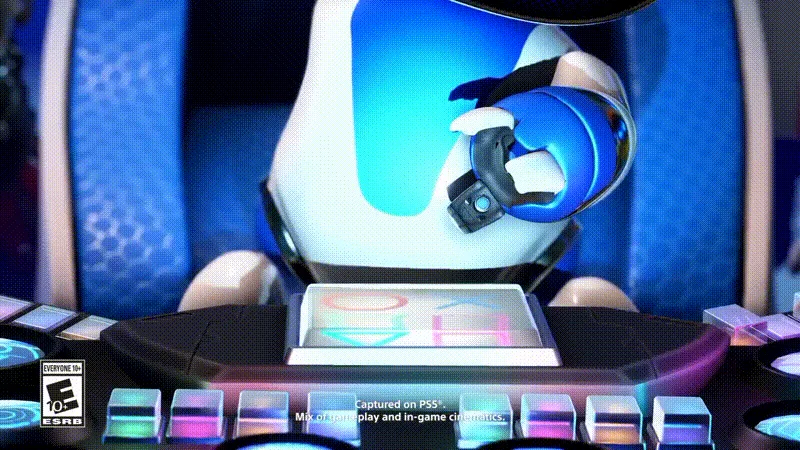
Astro Bot Reaches Approximately 4.3 Million Copies Sold Worldwide and the Reasons Behind Its Commercial Success
Astro Bot has reportedly reached approximately 4.3 million copies sold worldwide, marking a major commercial milestone for Team Asobi’s PlayStation 5 platformer. The figure is based on third-party estimates rather than a newly announced official Sony total, so it should be treated as an approximate lifetime sales number instead of a publisher-confirmed update. Reports have also suggested that the game has generated roughly $250 million in revenue, although Sony has not officially announced either figure. The most accurate way to describe the milestone is that Astro Bot has reportedly reached around 4.3 million copies sold worldwide.
The reported estimate highlights the game’s continued momentum after Sony officially confirmed 1.5 million copies sold as of November 3, 2024, only about two months after its September 6, 2024, launch. That early sales milestone already demonstrated strong demand for a full-scale Astro Bot release, but the newer estimate points to sustained growth over time. Holiday sales, discounts, major award wins, positive reviews, word of mouth, and the game’s broad family appeal likely contributed to its long commercial tail.
For Sony, Astro Bot’s success is particularly significant because it was not marketed as a massive live-service title or a cinematic action blockbuster. Instead, it is a polished, family-friendly 3D platformer built around creative level design, precise gameplay, PlayStation nostalgia, and the unique features of the PS5 DualSense controller. Its performance strengthens the case that PlayStation’s first-party lineup can succeed beyond mature action-adventure games, remakes, shooters, and prestige cinematic franchises.
Astro Bot’s commercial success can be attributed to several overlapping factors. The most important is its quality. The game launched to exceptional critical reviews and quickly became one of the highest-rated titles of 2024, giving players confidence that it offered an outstanding experience despite belonging to a genre that is less common among Sony’s biggest releases.
Accessibility also played a major role. Astro Bot is easy to understand, visually inviting, and mechanically straightforward. Players do not need prior knowledge of an ongoing storyline, complex RPG systems, competitive multiplayer mechanics, or live-service progression. Its simple premise and imaginative platforming make it approachable for players of all ages.
Another key strength is its celebration of PlayStation history. Throughout the adventure, Astro Bot features cameos, references, and visual callbacks to classic PlayStation franchises, appealing not only to children and families but also to longtime PlayStation fans who recognize beloved characters and iconic moments from previous console generations.
Timing further boosted the game’s success. Astro Bot launched at a time when many players were expressing fatigue with oversized open-world games, aggressive monetization, live-service disappointments, and increasingly familiar sequels. Its focused design, polished gameplay, and playful personality offered a refreshing alternative, helping it stand out in a crowded market. Reaching approximately 4.3 million copies sold demonstrates that a colorful, accessible platformer can still become a major first-party success when backed by exceptional craftsmanship, strong critical reception, and lasting player enthusiasm.

In This Article (8 sections)
Why Astro Bot Became One of PlayStation’s Biggest Hits
Astro Bot became one of PlayStation’s biggest recent success stories by transforming a mascot that was once seen as a smaller franchise into a full-scale premium release. Astro had already built a positive reputation through Astro Bot Rescue Mission on PlayStation VR and Astro’s Playroom, the free PlayStation 5 pack-in title that showcased the capabilities of the DualSense controller. Those earlier games established goodwill, but the 2024 release gave the character a much larger stage and introduced Astro Bot to a far wider audience.
Team Asobi understood exactly what made Astro appealing. Rather than turning the series into a darker, more cinematic PlayStation-style blockbuster, the studio embraced clean visual design, compact and imaginative levels, expressive animations, and constant gameplay variety. Every stage introduced fresh mechanics and playful ideas without overstaying its welcome, making the experience feel polished, generous, and consistently engaging from beginning to end.
One of the game’s greatest strengths was how easy it was to recommend. Players could quickly explain why it was enjoyable to friends, parents, children, and casual gamers alike. It was fun, polished, imaginative, and full of surprises, making it accessible without sacrificing quality. That clarity, combined with outstanding reviews and widespread awards recognition, helped drive its commercial success.
Astro Bot also filled an important gap in Sony’s first-party lineup. While PlayStation has featured family-friendly franchises such as Ratchet & Clank, Sackboy, LittleBigPlanet, and Jak and Daxter, much of Sony’s recent output has focused on mature, cinematic action games. Astro Bot gave PlayStation a modern mascot platformer that could stand alongside its prestige franchises while appealing to players of all ages.
Players connected with Astro Bot because it delivered a joyful experience without feeling simplistic. Its colorful presentation made it immediately approachable, while its creative level design, tight controls, and precise platforming provided enough challenge to satisfy experienced players. Striking that balance between accessibility and depth allowed the game to appeal to both casual audiences and longtime platforming fans.
The game’s extensive use of the DualSense controller further strengthened its identity as a PlayStation 5 showcase. Haptic feedback, adaptive triggers, motion controls, and controller audio were fully integrated into gameplay rather than serving as gimmicks. These features enhanced movement, texture, impact, and interaction, making Astro Bot one of the clearest demonstrations of how PS5 hardware could improve moment-to-moment gameplay.
Its emotional appeal also played an important role in its popularity. The many PlayStation references were more than simple fan service or marketing cameos. They celebrated PlayStation’s history, allowing longtime fans to revisit familiar characters and franchises through Astro’s charming world while creating a sense of nostalgia and appreciation for the brand’s legacy.
Just as importantly, Astro Bot earned goodwill by delivering a complete experience. Instead of relying on battle passes, paid progression, daily tasks, or endless grinding, it focused on handcrafted levels, rewarding exploration, collectibles, hidden secrets, and refined gameplay. That commitment to quality made the game feel complete from day one and strengthened players’ positive impressions.
The game’s commercial performance reflected that strong reception. Astro Bot launched exclusively for PlayStation 5 on September 6, 2024, and reached its first confirmed milestone in November 2024, when Sony announced it had sold 1.5 million copies as of November 3, only about nine weeks after release. Its momentum continued as it won Game of the Year at The Game Awards 2024, along with Best Game Direction, Best Action/Adventure Game, and Best Family Game. Those victories kept the game in the spotlight during the holiday season and introduced it to even more players.
Throughout 2025, Astro Bot continued benefiting from additional awards, strong word of mouth, and recognition as one of the finest 3D platformers released in years. Its family-friendly appeal, excellent critical reception, and celebration of PlayStation’s history likely supported steady long-term sales rather than a brief launch spike. Reports estimating approximately 4.3 million copies sold worldwide suggest the game may have added nearly three million additional sales after Sony’s initial 1.5 million confirmation. Although that figure has not been officially confirmed by Sony and should therefore be considered an estimate, the overall growth pattern aligns with the game’s sustained popularity, critical acclaim, and continued visibility.
Astro Bot’s Critical Success and Impact on PlayStation
Astro Bot received exceptional critical acclaim at launch, earning a 94 Metascore on Metacritic and ranking among the highest-rated games of 2024. Critics praised its inventive level design, polished controls, charming visuals, excellent use of the DualSense controller, and its ability to deliver constant gameplay variety without feeling unfocused. This reception marked a turning point for the Astro franchise, elevating it from being viewed as simply a good PlayStation mascot to being recognized as one of the finest modern 3D platformers. Many reviewers even compared it favorably to Nintendo’s best Mario titles, a significant achievement given Nintendo’s long-standing dominance of the genre.
The game’s awards success further reinforced its reputation. At The Game Awards 2024, Astro Bot won Game of the Year, Best Game Direction, Best Action/Adventure Game, and Best Family Game. It continued its momentum at the BAFTA Games Awards, where it received Best Game along with several additional honors. These achievements helped establish Astro Bot as more than just a family-friendly platformer or side project. Instead, it became a serious Game of the Year contender that attracted a much broader audience.
Astro Bot’s success is also notable because it stands apart from many of PlayStation’s biggest first-party exclusives. Franchises such as The Last of Us, God of War, Horizon, Ghost of Tsushima, and Marvel’s Spider-Man are built around cinematic storytelling, mature themes, large-scale production values, and action-heavy gameplay. Astro Bot takes a completely different approach by emphasizing creative platforming, playful exploration, compact level design, collectibles, and accessible gameplay suitable for players of all ages. Rather than following Sony’s established blockbuster formula, it proved there is strong demand for polished, family-friendly platformers within the PlayStation ecosystem.
Compared to Ratchet & Clank: Rift Apart, Astro Bot is even more focused on pure platforming. While Ratchet & Clank blends shooting, action-adventure mechanics, cinematic sequences, and platforming, Astro Bot concentrates almost entirely on movement, environmental interaction, hidden secrets, and tactile experimentation. This focused design helped distinguish it from other PlayStation exclusives and contributed to its widespread praise.
Its reported 4.3 million sales further highlight the game’s commercial significance. Although it does not rival PlayStation’s largest blockbuster franchises, its performance is especially impressive for a platformer. The strong sales demonstrate that Sony can achieve major first-party success outside its traditional lineup of mature action games, broadening the appeal of its exclusive portfolio.
For Team Asobi, reaching approximately 4.3 million sales would represent a major validation of the studio’s creative vision. The developer spent years building the Astro brand through innovative, playful experiences, beginning with Astro’s Playroom, which showcased the PS5’s DualSense controller. However, as a free pack-in title, Astro’s Playroom could not prove whether audiences would purchase a full-priced Astro adventure. Astro Bot answered that question by establishing itself as a successful premium standalone franchise rather than simply a hardware demonstration.
This commercial and critical success strengthens Team Asobi’s position within Sony’s first-party studios and provides strong justification for continued investment. As PlayStation looks to diversify its exclusive lineup, Team Asobi has demonstrated that it can consistently deliver critically acclaimed, commercially successful family-friendly platformers. This gives Sony an important creative identity that complements studios such as Naughty Dog, Santa Monica Studio, Guerrilla Games, Sucker Punch, and Insomniac Games, all of which primarily focus on action-driven experiences.
Looking ahead, Astro Bot’s success could influence future hiring, development budgets, sequel planning, and Sony’s long-term franchise strategy. What began as a charming mascot experiment has evolved into one of PlayStation’s most respected modern franchises, firmly establishing Astro as a legitimate pillar of the brand.

Astro Bot’s Impact on the Platformer Genre and PlayStation’s Family-Friendly Strategy
Astro Bot’s success is significant for both the platformer genre and PlayStation’s long-term strategy. It proved that a premium 3D platformer can still attract major attention on modern high-end hardware. For years, the genre has been closely associated with Nintendo, while many other publishers have treated platformers as smaller projects, remasters, or nostalgia-driven releases. Astro Bot challenged that pattern by showing there is still room for new ideas, particularly when games are designed around modern hardware features, precise level design, and creative gameplay. Its success also demonstrated that platformers do not need to rely solely on high difficulty, retro aesthetics, or long-established legacy characters to capture players’ attention.
The game’s performance may encourage more publishers to reconsider family-friendly platformers as commercially viable premium products. While not every company can replicate Astro Bot’s success, Team Asobi benefited from PlayStation’s history, Sony’s funding, DualSense technology, and years of Astro brand development. Even so, the game’s achievements strengthen the case for the genre in a market often dominated by shooters, RPGs, sports games, open-world action titles, and live-service experiences. Astro Bot has also raised player expectations, with audiences now likely to expect greater polish, creativity, and tactile feedback from modern platformers, creating positive pressure for future releases.
PlayStation’s strategy behind Astro Bot extends beyond creating a successful game. Astro serves as a celebration of the PlayStation brand, showcasing hardware capabilities while helping diversify Sony’s first-party portfolio. The character is closely tied to PlayStation’s identity through its robot design, console references, and cameo-filled world, making Astro a living representation of the PlayStation ecosystem.
The game also supports Sony’s need for greater variety. While PlayStation is well known for expensive, mature, and cinematic first-party titles, Astro Bot provides a family-friendly alternative that appeals to younger players, parents, longtime fans, collectors, and critics alike. Sony leadership has expressed interest in expanding its family-oriented lineup following Astro Bot’s success, a logical business decision since family-friendly games often enjoy long sales lifecycles, seasonal popularity, and broad household appeal. They also help balance a catalog that might otherwise lean too heavily toward mature, violent, or narrative-focused experiences. As a result, Astro Bot functions as more than a hit game—it signals that PlayStation can broaden its identity while maintaining its premium first-party standards.
Compared with many family-friendly games, Astro Bot’s reported 4.3 million sales are particularly impressive because the game is exclusive to PlayStation 5. Nintendo’s biggest family-friendly franchises, especially Mario, operate on a much larger commercial scale due to decades of brand recognition and their central role in Nintendo’s platform identity. Astro Bot has not yet reached that level, making direct comparisons somewhat misleading.
Instead, its success should be viewed in the context of its own growth. As a relatively new franchise, Astro Bot achieved strong sales on a single console while competing in a genre that Sony had not recently dominated. Compared with other modern family-friendly PlayStation releases, it stands out through its combination of critical acclaim, industry awards, and continued sales momentum. The game’s success also demonstrates that there is meaningful demand for high-quality family-friendly platformers outside Nintendo’s ecosystem. Although Astro Bot did not outsell Mario, it proved that PlayStation can produce a family-friendly platformer with genuine commercial strength and lasting market relevance.
Astro Bot’s Lasting Success and Bright Future
Word of mouth played a central role in Astro Bot’s sales growth because the game was easy for players to recommend. Its strengths were immediately obvious and simple to communicate. It was fun, polished, creative, visually impressive, and accessible to a wide audience, making it an easy recommendation without requiring lengthy explanations. Social media further amplified that momentum, as short clips highlighting inventive levels, PlayStation cameos, DualSense features, and charming animations quickly demonstrated the game’s appeal. Since platformers often rely on strong visual presentation, Astro Bot’s most memorable moments translated exceptionally well into videos and screenshots.
The game’s awards success also strengthened its long-term performance. After winning Game of the Year at The Game Awards 2024, many players who had overlooked Astro Bot at launch reconsidered purchasing it. While awards alone do not guarantee additional sales, they often provide valuable validation for undecided buyers. Holiday discounts, gift purchases, family recommendations, and seasonal shopping further extended the game’s momentum, with Astro Bot becoming a dependable recommendation for both children and adults looking for a high-quality PlayStation 5 title.
The reported milestone of 4.3 million copies sold has been widely celebrated by fans, who see it as proof that Sony should continue investing in colorful, creative, family-friendly games instead of relying almost entirely on large cinematic action titles. Many players have also viewed Astro Bot as evidence that shorter, tightly designed experiences can still achieve major commercial success. At a time when many games focus on massive open worlds, live-service models, lengthy campaigns, and monetized progression systems, Astro Bot demonstrated that polished gameplay and respect for players’ time remain highly valued.
The milestone has also fueled discussion about PlayStation’s future. Fans hope Sony will provide Team Asobi with greater resources to expand the franchise, whether through a sequel, downloadable content, or ongoing support. Although some remain cautious because the 4.3 million sales figure is based on third-party estimates rather than official confirmation, the estimate aligns with the broader consensus that Astro Bot has become both a critical and commercial success.
Looking ahead, the most likely outcome is continued investment from Sony. Given the game’s exceptional reviews, award recognition, and strong reported sales, it would be surprising if PlayStation did not continue the franchise in some form. A direct sequel appears to be the most natural next step, allowing Team Asobi to introduce new power-ups, worlds, PlayStation cameos, movement mechanics, and more challenging content while refining the successful formula established in the 2024 release. Downloadable content remains another possibility, particularly because Astro Bot’s compact level structure lends itself well to additional stages, although Sony may ultimately prioritize a full sequel as part of a broader long-term strategy.
Beyond future games, Astro has the potential to become an even more prominent PlayStation mascot. Merchandise, promotional campaigns, console branding, crossover appearances, and future hardware showcases could all feature the character more prominently. Astro is already closely associated with the PlayStation 5, and stronger commercial success only increases the value of that identity.
Ultimately, Astro Bot represents a major victory for PlayStation on multiple levels. It achieved strong reported sales, earned widespread critical acclaim, won prestigious industry awards, elevated Team Asobi as one of Sony’s most promising internal studios, expanded PlayStation’s first-party portfolio beyond blockbuster action games, and established Astro as a modern mascot with genuine long-term franchise potential. Its success also arrived during a challenging period for the gaming industry, marked by rising development costs, layoffs, uncertainty surrounding live-service projects, and growing pressure on blockbuster productions. Rather than relying on sheer scale, Astro Bot proved that exceptional craftsmanship, polish, creativity, and charm can still deliver both critical and commercial success.
The reported 4.3 million sales milestone strengthens that narrative by showing that Astro Bot was not simply a critically acclaimed release that faded after launch. Instead, it continued attracting new players through recommendations, awards recognition, and sustained interest. For Team Asobi, the game’s performance demonstrates that Astro can successfully lead a premium first-party title. For Sony, it reinforces the value of maintaining a diverse lineup of games. For players, it confirms that high-quality 3D platformers still have an important place in the modern gaming landscape. Rather than being just another sales milestone, Astro Bot’s success signals the arrival of one of PlayStation’s most important modern franchises.

Frequently Asked Questions
- How many copies has Astro Bot sold worldwide?
Astro Bot has reportedly reached approximately 4.3 million copies sold worldwide. This figure is based on third-party estimates rather than a new official announcement from Sony, so it should be treated as an approximate total instead of a confirmed sales milestone. Even so, it suggests the game has continued to sell strongly well beyond its launch period. - What was Sony’s last confirmed Astro Bot sales number?
Sony confirmed that Astro Bot had sold 1.5 million copies as of November 3, 2024. This remains the most recent official sales figure publicly shared by the company. Any higher sales numbers reported since then are based on industry estimates or analyst reports rather than direct confirmation from Sony. - When did Astro Bot launch?
Astro Bot launched exclusively for PlayStation 5 on September 6, 2024. Developed by Team Asobi and published by Sony Interactive Entertainment, it marked the character’s first full-length premium adventure after previously appearing in tech demos and smaller titles. - Why is 4.3 million sales important for Astro Bot?
The reported milestone is significant because Astro Bot is a family-friendly 3D platformer rather than the action-focused blockbuster games PlayStation is traditionally known for. Reaching this level of success suggests there is strong demand for creative, accessible first-party games and reinforces the value of expanding PlayStation’s lineup beyond its established franchises. - Is Astro Bot a PlayStation exclusive?
Yes. Astro Bot is currently available only on PlayStation 5. The game was specifically designed to take advantage of PS5 hardware, including the DualSense controller’s adaptive triggers, haptic feedback, and other console-specific features that play a major role in its gameplay experience. - Did Astro Bot win Game of the Year?
Yes. Astro Bot won Game of the Year at The Game Awards 2024, one of the industry’s most prestigious annual award ceremonies. It also received awards for Best Game Direction, Best Action/Adventure Game, and Best Family Game, highlighting both its critical acclaim and broad appeal. - Why did Astro Bot review so well?
Astro Bot received outstanding reviews because critics praised its imaginative level design, creative gameplay mechanics, polished presentation, and excellent use of the DualSense controller. Many reviewers also highlighted its charming visuals, memorable soundtrack, and consistently inventive platforming, calling it one of the best 3D platformers released in recent years. - Does Astro Bot’s success mean there will be a sequel?
Sony has not officially announced a sequel, but Astro Bot’s commercial success, award wins, and widespread critical praise make a follow-up seem highly likely. While nothing has been confirmed, the game’s strong reception gives Team Asobi a solid foundation to continue growing the franchise in the future. - How does Astro Bot compare to Mario?
Astro Bot is often compared to Mario because both series focus on polished 3D platforming, creative level design, and gameplay that appeals to players of all ages. While Mario remains far larger in terms of sales, history, and global recognition, Astro Bot has established itself as one of the strongest modern platformers outside Nintendo’s lineup and is frequently mentioned alongside the genre’s best. - Why is Astro Bot good for PlayStation’s strategy?
Astro Bot helps diversify PlayStation’s first-party portfolio by proving that smaller-scale, family-friendly platformers can achieve both critical and commercial success. Its popularity shows that PlayStation can succeed with games beyond cinematic action titles, encouraging Sony to invest in a broader variety of exclusive experiences that appeal to different types of players. PlayStation diversify its first-party catalog. It gives Sony a family-friendly, critically acclaimed platformer that appeals to players beyond the audience for mature cinematic action games.

Conclusion
Astro Bot reaching approximately 4.3 million copies worldwide is a major milestone for Team Asobi and PlayStation. While the figure should be treated as a third-party estimate rather than a newly confirmed Sony total, it still reflects the game’s strong commercial momentum after launch. Astro Bot began with excellent reviews, grew through word of mouth, gained broader visibility through awards, and became one of the clearest examples of PlayStation’s ability to succeed outside its usual first-party formula.
The milestone matters because Astro Bot represents more than one successful platformer. It shows that players still respond to polished, imaginative, family-friendly games when they are made with care and confidence. For Team Asobi, it validates years of work building Astro into a recognizable PlayStation character. For Sony, it strengthens the case for a more diverse first-party strategy. For the platformer genre, it proves that premium 3D platformers still have meaningful commercial and cultural power.
Sources and Citation
- Sony confirmed that Astro Bot sold 1.5 million copies as of November 3, 2024, and reported that 37% of buyers had not purchased a Sony first-party game in the previous two years.
https://sonyinteractive.com/en/news/blog/playstation-podcast-celebrates-the-launch-of-astro-bot/
https://www.reddit.com/r/PS5/comments/1gmcgtq/astro_bot_sales_top_15_million/ - Recent third-party reports estimate that Astro Bot has reached approximately 4.3 million copies sold worldwide and generated around $250 million in revenue.
https://vgsales.fandom.com/wiki/Astro_Bot
https://www.installbaseforum.com/forums/threads/astro-bot-sales-estimates-and-revenue-analysis. (community sales analysis) - Metacritic lists Astro Bot among the highest-rated games of 2024, with a 94 Metascore.
https://www.metacritic.com/game/astro-bot/ - The Game Awards 2024 recognized Astro Bot with Game of the Year, Best Game Direction, Best Action/Adventure Game, and Best Family Game.
https://thegameawards.com/nominees/game-of-the-year
https://thegameawards.com/news/the-game-awards-2024-winners - BAFTA Games Awards 2025 recognized Astro Bot as Best Game and awarded it several additional category wins.
https://www.bafta.org/games/awards/2025-nominations-winners
https://www.bafta.org/games/awards - Official PlayStation and Team Asobi materials confirm Astro Bot’s PS5 exclusivity, September 6, 2024 launch date, platforming structure, and DualSense-focused design.
https://www.playstation.com/en-us/games/astro-bot/
https://teamasobi.com/games/astro-bot/
https://sonyinteractive.com/en/press-releases/2024/embark-on-a-galactic-quest-with-astro-bot-launching-today-on-playstation-5/
Recommendations
- Hellblade 2 and Unreal Engine 5: What Makes the Sequel a Visual Breakthrough
- Metro 2039 Takes the Post-Apocalyptic Series to Even Darker, More Claustrophobic Depths: Release Window, Trailer, and Everything We Know
- Godot 4.7’s Final Development Snapshot (Dev 5): Asset Store Overhaul, Rectangular Area Lights, and Inline Shader Previews
- Ucupaint for Beginners: How to Texture Paint With Layers in Blender (Step-by-Step)
- Tom Holland and Zendaya Are Huge Fans of PlayStation’s Spider-Man Games, Insomniac Invites Them for Studio Tour
- Rayman Legends Retold Releases October 1, 2026: Everything We Know About the Remake
- Assassin’s Creed: Black Flag Resynced July 2026 Rumor: Release Date, Remake Details, and What Ubisoft Has Teased
- Top 10 Marvel Rivals Mods (Best Skins, FPS Boost & Character Mods Guide 2026)
- Universal Pictures Launches Digital Odyssey Experience on Discord for Christopher Nolan’s Epic Film Marketing Campaign
- Wonder Dynamics and Wonder Studio: Revolutionizing VFX and Character Animation with AI



































































































