







Bad Magpie Game Overview, Story, Emotional Premise, and Core Themes
Bad Magpie is one of the most closely watched newly announced indie games of 2026 because it combines an instantly readable hook with unusually strong early validation. Officially, it is a narrative adventure from London-based studio Milktooth, announced during the Xbox Games Showcase on June 7, 2026, with a planned 2027 release for Xbox Series X|S, Xbox on PC, Steam, and Game Pass.
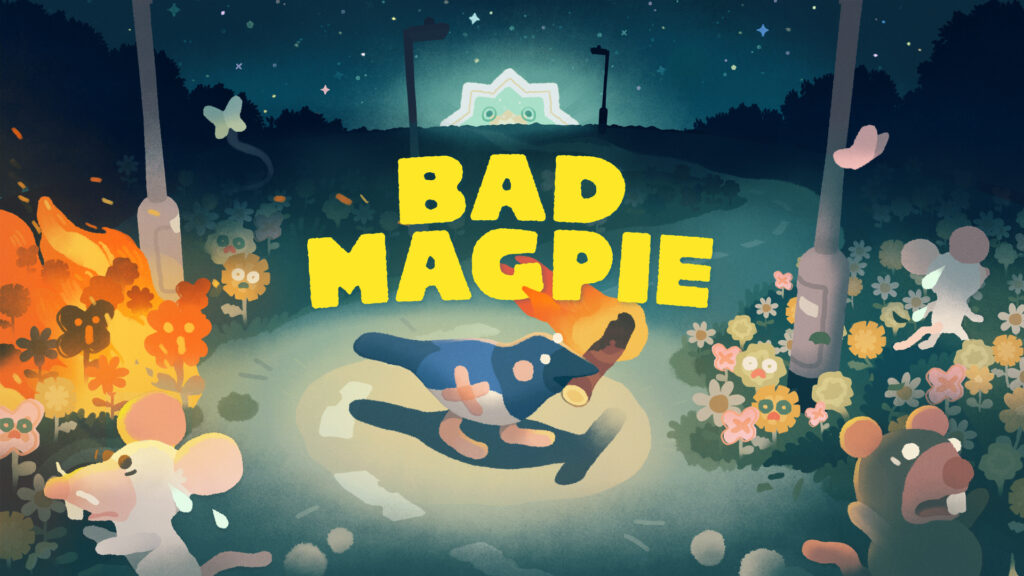
Its premise is simple to describe and difficult to forget: a one-winged magpie, separated from its flock, becomes fixated on a fallen star and tears through a compact open world in search of shiny trinkets, answers, and comfort. Public materials also show that the game is aiming for broad reach from day one, with Xbox Play Anywhere support, a Steam page live for wishlisting, and 12 supported interface languages already listed on Steam.
What makes Bad Magpie especially notable is the blend of tones it appears to achieve. The Steam store page and Xbox materials sell slapstick chaos, tactile interaction, environmental experimentation, and humor, but they also emphasize loneliness, a missing flock, and a haunting vision at the heart of the story. That combination of mischievous exploration and emotional undercurrent has shaped almost every early conversation around the game, from hands-on coverage to community reaction. This framing carries through every layer of its design, where playful destruction and comedic interaction sit directly alongside themes of isolation and emotional loss.
Bad Magpie is officially described as a narrative adventure game about “a magpie with one wing, a missing flock, and an unhealthy obsession with a fallen star.” Across the official website, Steam page, Xbox store listing, and press materials, the core loop remains consistent: the player steals shiny trinkets, causes chaos, and investigates a world full of secrets while trying to win the favor of that fallen star. The project is framed as a narrative experience even though it avoids conventional storytelling tools such as dialogue and cutscenes, which immediately sets it apart from many cute indie exploration games.
The strongest thematic throughline in the official description is loneliness. Steam states that the magpie’s plan is to find trinkets, win over the star, and “cure your loneliness,” while Xbox Wire’s hands-on preview explains that the character has been separated from its family after losing the ability to fly. This means the game’s chaos is not simply random comedy; it is tied to a hurt protagonist attempting to replace lost connection through obsessive collection and attention-seeking behavior. Every act of mischief is therefore framed as an emotional response rather than just playful sandbox interaction.
The story pitch works because Bad Magpie wraps a sad emotional core in a cute, playful shell. Steam describes a “luscious handcrafted world” and “a cast of adorable critters to manipulate and terrorise,” while Xbox Wire’s preview highlights mice playing football, drawing with chalk, and building sandcastles in an abandoned schoolyard. Tribeca’s 2026 festival listing also positioned the game as a “World Premiere” selection in the Tribeca Games program and explicitly labeled it “No Dialogue,” reinforcing the idea that the game aims to tell a complete emotional story through animation, behavior, music, and environmental design alone. This design approach emphasizes expression over exposition, letting character movement and world reactions carry narrative weight.
That approach helps explain why early impressions describe the game as more emotionally layered than its premise suggests. GamingTrend wrote after hands-on time that Bad Magpie was “more delightful” than the trailer alone implied, and that the magpie’s disability, isolation, and search for companionship gave the experience a sweeter emotional register than a pure prank simulator. In other words, the game appears to use cuteness not as a substitute for depth, but as a contrast that makes the emotional undertones more striking when they surface.
The missing flock is more than backstory decoration; it functions as the absence around which the entire narrative is built. Official descriptions repeatedly mention “no flock,” and Xbox Wire clarifies that the bird has been injured, cannot fly, and has become separated from its fellow magpies. The flock therefore becomes both a literal mystery and an emotional wound. The player is not simply wandering a whimsical map, but moving through a world defined by loss and disconnection.
This missing-flock setup also clarifies why the game’s mystery thread matters. Steam states that the magpie is haunted by a mysterious vision and asks what it is, why it is appearing now, and how long the fallen star will keep the protagonist distracted from it. The wording suggests that the star obsession may function as avoidance behavior, while the deeper emotional and narrative resolution may lie in confronting the vision and whatever happened to the flock. This remains an interpretation based on official framing rather than confirmed plot progression, but it is strongly supported by how the materials consistently position the flock as absent and unresolved.
The fallen star is the center of Bad Magpie’s psychological engine. Official descriptions present the star as a demanding object of affection that wants shiny trinkets and nothing else. The magpie responds by trying to gather treasures to earn its favor, as if gifts and scavenging can repair emotional emptiness. Steam states that the star wants trinkets, that trinkets do not come free, and that the player has “shiny things to find,” while Xbox Wire adds that the star comes across as disinterested, making the protagonist’s devotion feel even more one-sided.
This obsession gives the game’s scavenging and mischief a narrative purpose. Every theft, environmental interaction, and act of destruction is tied to a character-driven motive: the magpie is attempting to convert shiny objects into companionship and emotional security. Official materials repeatedly describe this fixation as “unhealthy,” reinforcing the idea that the star is not a true substitute for the missing flock but a distorted emotional anchor. The tension between playful chaos and underlying emotional need becomes the defining feature of the experience, shaping both its tone and its interpretation.
In This Article (7 sections)
Character Design, Worldbuilding, Visual Identity, and Gameplay Systems in Bad Magpie
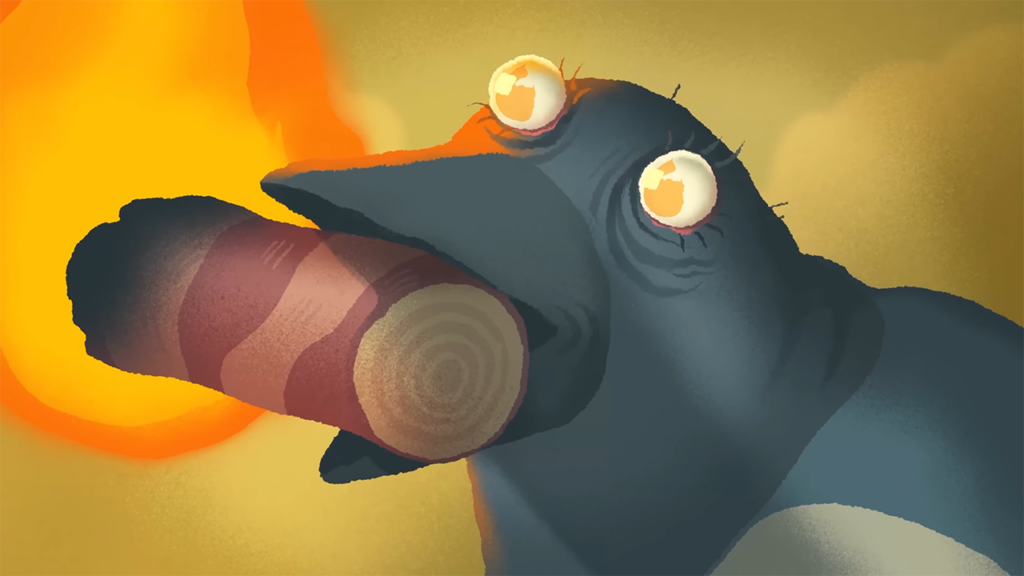
Bad Magpie’s protagonist stands out because its physical limitation is not just narrative detail but a core design element that shapes both meaning and movement. Official descriptions present the hero as a magpie with one wing, and Xbox Wire’s hands-on preview notes a visible bandage mark where the damaged wing should be, with movement restricted to hopping rather than flight. This inability to fly is not treated as background lore; it directly defines traversal, reinforces the character’s separation from its flock, and immediately establishes vulnerability in both gameplay and storytelling.
That vulnerability prevents the protagonist from becoming a simple chaos-driven mascot. Instead, Steam frames the player as a “villain protagonist,” and the game’s tags—Funny, Story Rich, Mystery, Emotional, Cute, and Birds—capture a deliberate tonal contradiction. The magpie is simultaneously lovable and destructive, sympathetic and troublesome, lonely yet mischievous. This layered identity creates a character built on tension, where opposing traits coexist, forming the emotional foundation of the experience.
The world design reinforces this same philosophy of contrast and density. Steam describes a small, densely packed, non-linear open world filled with reactive objects and hidden mechanics, while Xbox Wire characterizes its presentation as “lovely 3D isometric minimalism” with a blend of pixelated fuzziness, cel shading, and painterly softness. Early visuals and official materials suggest a handcrafted environment rather than a procedurally expansive one, emphasizing interaction density over sheer map size.
The environments shown so far further support this approach. Xbox Wire highlights locations such as roads, suburban corners, multistory car parks, abandoned school areas, CRT monitor-filled rooms, and animal-inhabited play spaces. Steam adds that the world is “reactive and brimming with life,” featuring hidden mechanics, disguises, a dynamic score, and ASMR-style tactile feedback. Together, these details suggest a space designed not just to be observed but to be physically engaged with, disrupted, and experimented within.
The gameplay systems extend this philosophy through simplicity and systemic depth. The official Steam listing outlines features including a handcrafted reactive world, slapstick comedy, adorable creatures, tactile peck-and-pull interactions, a dynamic musical score, unlockable disguises, hidden mechanics, and an entirely wordless emotional narrative. This combination signals an intent to merge systemic interaction with audiovisual expression and emotional storytelling, rather than relying on traditional dialogue or exposition.
Xbox Wire’s hands-on preview further clarifies how these systems function moment-to-moment. The player is built around three core actions: chirping, pecking or picking up objects, and performing context-specific interactions with carried items. From these simple verbs, the game produces emergent problem-solving. Chirping into a megaphone can shatter glass, pecking flint can ignite fires, and ordinary objects gain new functionality depending on environmental context. This minimalist control scheme encourages experimentation while keeping mechanical complexity intentionally low, allowing creativity to emerge from interaction rather than input overload.
Bad Magpie Exploration Mechanics, Announcement Reaction, and Wishlist Momentum
Bad Magpie’s exploration mechanics appear to be built around compact nonlinearity, discovery, and multiple solutions. Steam explicitly states that every puzzle has multiple solutions, with “most of them” being intentional, and describes the map as small but densely packed. Xbox Wire’s preview supports this interpretation by noting that the demo area contained 30 meteorite shards even though only 20 were required for progression, allowing players to skip obstacles they dislike while encouraging completionists to explore more deeply.
The same preview further argues that systemic fire, physics-driven objects, and emergent interactions push Bad Magpie beyond straightforward adventure design and closer to “light immersive sim” territory. This distinction is important because, rather than guiding players toward a single intended solution, the game appears to encourage lateral thinking within a playful ruleset. In practical terms, Bad Magpie’s exploration seems to revolve around cause-and-effect experimentation rather than simple waypoint progression, making its gameplay loop more about creative problem-solving than linear puzzle completion. For SEO-relevant searches such as “Bad Magpie gameplay,” “Bad Magpie puzzle mechanics,” or “Bad Magpie exploration guide,” this is the core takeaway.
The announcement reaction to Bad Magpie has been notably strong for a debut project from a new studio. Xbox Wire followed the initial showcase with a dedicated hands-on feature only days later, describing the game’s central pitch as immediately appealing. GamingTrend’s preview suggested the project was more delightful and emotionally nuanced than many expected at first glance. Community responses on Reddit’s large r/Games forum included heavily upvoted comparisons to Untitled Goose Game, enthusiasm for its humor, and observations that the one-wing visual detail made the trailer unexpectedly emotional and even heartbreaking. Additionally, Microsoft games executive Annette Gonzalez Porter publicly highlighted Bad Magpie as her Xbox showcase favorite and congratulated Milktooth on a “wonderful and charming debut.”
Across these reactions, a consistent pattern emerges: audiences first respond to the bird-chaos and comedic premise, then gradually recognize a layer of melancholy beneath it. This two-stage emotional discovery is particularly effective for marketing a narrative-driven indie game because it appeals to multiple audience types. One group is drawn in by mischief, slapstick humor, and chaotic gameplay, while another stays for atmosphere, mystery, and emotional storytelling.
In terms of wishlist momentum and Steam performance, there is no official public confirmation from the game’s website, Steam page, Xbox page, or major announcement coverage that Bad Magpie has reached a 50,000 wishlist milestone as of June 19, 2026. This distinction is important because Steam’s documentation explains that detailed wishlist totals are only visible to developers through the private Sales and Activation Reports Portal, while public-facing store pages allow users to add games to wishlists without displaying total counts.
However, the concept of a “50,000 wishlist milestone” remains relevant in indie marketing discussions because it is often used as a benchmark for measuring anticipation and commercial interest. While wishlist numbers do not directly guarantee algorithmic promotion across Steam in most cases, they are still significant indicators of purchase intent. Steamworks explains that users who wishlist a game can receive notifications about its launch, Early Access changes, demo availability, and qualifying discounts. As a result, even without verified public numbers, a figure like 50,000 wishlists represents strong audience interest and meaningful future conversion potential within Steam’s ecosystem.

Why Bad Magpie Reached 50,000 Wishlists, Its Steam Strategy, and Studio Background
If Bad Magpie is being discussed alongside a milestone like 50,000 wishlists, the reasons are already visible in its public rollout and positioning. The game benefited from a highly effective combination of early visibility, a clear and emotionally appealing concept, strong platform strategy, and a studio background that carries industry credibility.
First, the game debuted during the Xbox Games Showcase, which immediately gave it a large-scale audience boost and placed it in front of millions of viewers at the exact moment interest in new announcements is highest. Second, it launched with a simple, highly communicable hook: you play as a one-winged magpie, steal shiny things, and cause mischief. That kind of premise is easy to understand instantly, which is one of the strongest drivers of early wishlist behavior.
Third, the project arrives with day-one Game Pass support, which significantly increases awareness beyond the Steam ecosystem. Even players who intend to play via Game Pass often still wishlist on Steam to track releases, updates, or future discounts. Fourth, the official rollout is unusually complete for an early-stage indie project, including a polished website, Steam page, Xbox store listing, press kit, and active social and community channels. This creates a cohesive and trustworthy presence that encourages users to commit to wishlisting early.
Just as importantly, Bad Magpie has positioning that tends to travel well across gaming communities. It invites immediate comparison to Untitled Goose Game, but differentiates itself through magical realism, a nonverbal emotional narrative, and a light immersive-sim puzzle structure centered on a visibly wounded protagonist. Its selection at Tribeca adds prestige, reinforcing the idea that it is not just a playful concept but also a narratively ambitious project.
The Steam store page itself plays a major role in what can be described as “Steam wishlist success.” It is live as a Coming Soon page, which is the required state for collecting wishlists before launch. It includes clear screenshots, a reveal trailer, Tribeca laurels, multilingual support (12 interface languages listed), and a readable pitch that quickly communicates the game’s identity. Steamworks documentation notes that visibility at this stage enables wishlisting and activates systems like the Community Hub and pre-release engagement tools.
The game also uses Steam’s early funnel mechanics effectively, with announcements that direct users toward Discord and mailing list signups. This creates multiple retention pathways beyond Steam wishlisting alone. While Steam wishlists are not always a direct ranking factor, they are valuable because they build a recontactable audience for launch, updates, and promotional events, and they can influence visibility in areas like Popular Upcoming lists.
From a broader audience perspective, the combination of emotional storytelling, accessible gameplay framing, and strong aesthetic identity helps widen appeal without diluting the core pitch. Tags such as cute, nonlinear, mystery, emotional, story-rich, and family-friendly expand discoverability while still remaining coherent with the game’s tone.
On the studio side, there was a need for clarification in early attribution. Despite some confusion in circulation, official sources confirm that Bad Magpie is developed and published by Milktooth, not Altkey Games. Steam lists Milktooth as both developer and publisher, and Xbox store listings and major announcement coverage from outlets such as Gematsu and Xbox Wire also attribute the game to Milktooth. This correction is important for accuracy in any SEO or reference context.
Milktooth is a new independent studio based in London, founded by Catherine Unger, Daisy Fernandez, and George Batchelor, with support from WINGS and the United Kingdom Games Fund. The team’s public materials highlight prior work and experience connected to titles such as Tangle Tower, Gibbon: Beyond the Trees, Card Shark, As Dusk Falls, Bird Alone, and South of the Circle. This background signals that while Milktooth is a new studio label, its creative leadership is highly experienced.
The studio’s positioning also contributes to interest in the project. Their stated creative direction—making games that “make you laugh before they break your heart”—aligns closely with Bad Magpie’s tone and helps frame it as both emotionally driven and mechanically approachable. This combination of experienced developers working under a fresh studio identity is often a strong signal in the indie space, as it blends novelty with proven creative track records.
Taken together, Bad Magpie’s early wishlist success can be understood as the result of a tightly aligned system: high-visibility reveal timing, a simple but emotionally distinctive hook, strong Steam page execution, cross-platform amplification via Game Pass, festival recognition, and a credible experienced development team operating under a new studio identity.
Frequently Asked Questions
- Is Bad Magpie officially confirmed for Steam?
Yes. Bad Magpie has a public Steam store page and is officially listed as “Coming Soon.” This means the game is already approved for distribution on Steam but is still in development or preparation for release. The page also lets users add it to their wishlist, which helps track interest and receive updates. The listing confirms Milktooth as both developer and publisher, making it an official and verified product page rather than a placeholder or rumor. - Is Bad Magpie coming to Xbox Game Pass?
Yes. The game has been publicly announced as part of Xbox Game Pass plans, with a targeted release window in 2027. This means subscribers will likely be able to play it at launch without purchasing it separately, depending on final licensing agreements. However, until release, details like exact availability timing or whether it launches on console, PC Game Pass, or both may still be subject to change. - What platforms will Bad Magpie release on?
Bad Magpie is planned for Xbox Series X|S, Xbox on PC (Microsoft Store), Steam, and PC via Microsoft Store, with Xbox Play Anywhere support included. This setup means players who buy it through supported Xbox or Microsoft platforms may be able to access it across both console and PC without repurchasing. The Steam version will exist separately but still provide full PC access. - Does Bad Magpie have dialogue or cutscenes?
No. According to the official Steam description, the game does not include dialogue, text, or cutscenes. Instead, it relies entirely on environmental storytelling and gameplay interaction to communicate meaning. Even without traditional narrative tools, it is still designed as a narrative experience, where players interpret events through actions, animations, and world reactions rather than spoken or written exposition. - Who is the developer of Bad Magpie?
The developer is Milktooth, which is also listed as the publisher across official storefronts like Steam and Xbox. This indicates a fully self-published project, meaning the studio is handling both creation and distribution. When a single studio handles both roles, it often allows for more creative control and consistent direction throughout development. - Is the 50,000 wishlist figure officially confirmed?
No. While wishlist numbers are often discussed in community conversations, the specific figure of 50,000 has not been publicly verified through official Steam listings or press statements. Steam itself keeps precise wishlist counts private in its developer backend, meaning only the studio can see exact totals. Public-facing pages only show general interest, not exact numbers. - Why do wishlists matter so much on Steam?
Wishlists are an important visibility and marketing tool on Steam because they directly influence how and when users are notified about a game. Players on a wishlist can receive alerts for release dates, discounts, or demo availability. For developers, wishlists also act as a key indicator of interest and can affect how prominently a game is featured on Steam’s recommendation systems and charts. - What kind of gameplay does Bad Magpie have?
Bad Magpie focuses on exploration-driven gameplay with environmental puzzles, object interaction, and emergent systems that allow for unpredictable outcomes. Instead of linear progression, players move through a small open-ended world where actions can combine in creative or chaotic ways. The design encourages experimentation, letting players solve problems or create situations in multiple different approaches. - Why are people comparing Bad Magpie to Untitled Goose Game?
The comparison comes mainly from the shared concept of playing as a mischievous bird causing disruption in a stylized environment. Like Untitled Goose Game, Bad Magpie appears to lean into playful chaos and humor through gameplay rather than dialogue. However, early impressions suggest it may go further by adding more emotional tone and deeper systemic interactions beyond simple prank-style objectives. - When is Bad Magpie coming out?
The game is currently scheduled for release in 2027. No exact date or launch window within that year has been announced yet. This means it could release at any point in 2027 depending on development progress, marketing plans, and platform coordination. Until an official date is confirmed, the release remains a broad placeholder timeframe.

conclusion
Bad Magpie already looks like one of the most promising indie narrative adventures on the 2027 horizon. Its official materials present a one-winged magpie whose comedy, destruction, and scavenging are all rooted in loss, obsession, and the search for connection. The gameplay appears to build on that premise with dense nonlinear exploration, tactile systems, multiple puzzle solutions, and a world designed to reward curiosity. The commercial conversation around the game is also easy to understand: whether or not a public 50,000 wishlist figure is officially confirmed, Bad Magpie has all the ingredients of a breakout Steam wishlist success, including a showcase reveal, clear hook, strong store page, festival validation, creator pedigree, and active community-building.
The safest final assessment is this. As of June 19, 2026, Bad Magpie is officially a 2027 Milktooth release for Xbox and PC platforms, publicly positioned as a funny, emotional, wordless narrative adventure with light immersive-sim puzzle energy. The exact public wishlist total is not verifiable from official sources, but the game’s early visibility and reception clearly justify why so many players, critics, and indie fans are already watching it closely.
sources and citation
- Milktooth — Official Website — Official studio source for Bad Magpie, including the game’s development and studio information. Milktooth Official Website
- Steam — Bad Magpie — Official Steam store page for Bad Magpie, including its developer, publisher, description, features, platforms, wishlist status, and system requirements.
Bad Magpie on Steam - Xbox — Bad Magpie — Official Xbox store listing confirming Xbox Series X|S, Xbox Play Anywhere, PC, cloud saves, and the game’s description and capabilities.
Bad Magpie on Xbox - Xbox Wire — Long Overdue, Bad Magpie Finally Expands the “Be a Rude Bird” Genre — Will Fulton’s hands-on preview covering the Xbox Games Showcase demo, exploration, puzzle solving, immersive-sim elements and gameplay impressions.
Xbox Wire — Bad Magpie Preview - Tribeca — Bad Magpie | 2026 Tribeca Festival — Official Tribeca Games selection page, including the game’s World Premiere designation, synopsis, developers and producer.
Tribeca — Bad Magpie - Steamworks — Wishlists — Official Steamworks documentation explaining how wishlists affect visibility, notifications and upcoming-game discovery.
Steamworks — Wishlists - Steamworks — Visibility on Steam — Official documentation covering Steam visibility, including the role of wishlists, Popular Upcoming, algorithmic visibility and other discovery surfaces.
Steamworks — Visibility on Steam - Steamworks — Update Visibility Rounds — Official documentation on Steam’s promotional visibility rounds, including homepage exposure, wishlist audiences, duration and impression limits.
Steamworks — Update Visibility Rounds - Gematsu — Narrative adventure game Bad Magpie announced for Xbox Series, PC — Announcement coverage detailing Milktooth, the game’s premise, platforms, 2027 release window, Game Pass availability and studio background.
Gematsu — Bad Magpie - GamingTrend — Bad Magpie is a more delightful game than you’d initially expect — Preview based on hands-on time with the game following its Xbox Games Showcase reveal.
GamingTrend — Bad Magpie Preview - Milktooth / Bad Magpie — Steam Community News — Developer posts covering the game’s reveal, early wishlist milestones, press reactions, Tribeca selection and subsequent development updates.
Bad Magpie Steam Community - Xbox Wire — Xbox @ gamescom 2026 — Official Xbox coverage listing Bad Magpie among the games available at Gamescom 2026. Xbox Wire — Xbox at Gamescom 2026
Recommendations
- Tomodachi Life: Living the Dream Revenue Breakdown According to Newzoo 2026 Charts
- What Is Hard Surface Modeling in Blender?
- Sony Reportedly Explored a Horizon Zero Dawn Animated Series
- IO Interactive “Can’t Wait” to Return to the Hitman Series: What the Studio Has Said About the Next Agent 47 Game
- Maxon Releases Cinema 4D 2026.3 (New Tools, Workflow Upgrades, and Performance)
- Fable Romance Mechanics Revealed: How the RPG Handles Relationships, Marriage, and Lovemaking in the Reboot
- Apparent Elden Ring Movie Set Leak Videos Go Viral: First Look at a Game-Accurate Church of Marika Statue
- Star Wars: Marvel Reveals a Forgotten Luke Skywalker vs Boba Fett Battle
- Capcom Confirms Dragon’s Dogma 2 Expansion is Based on Wide Player Feedback
- Lost Castle 2: Ethereal Nightmare Explained – Unlocks, Rewards, and Best Strategies



































































































