








In This Article (8 sections)
Baidu Apollo World Launch, Purpose, and How the Driving Simulator Fits into Apollo Go Development
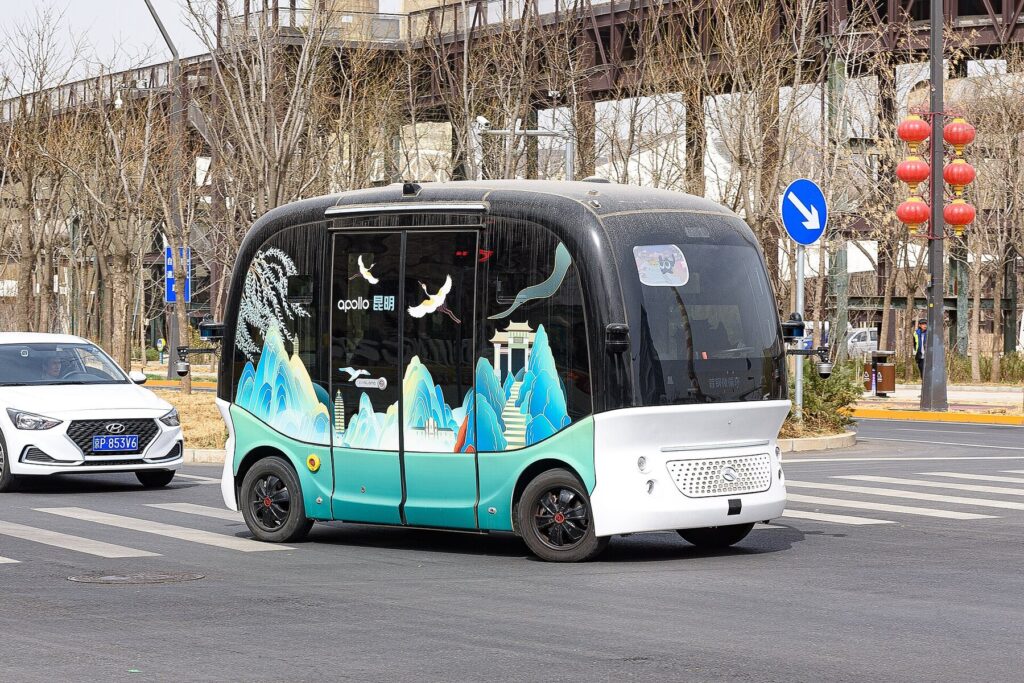
Baidu unveiled Apollo World at its AI Day Apollo event in Shenzhen on November 3, 2026, presenting it as an AI world model for autonomous-driving development and validation. The system is designed to create interactive virtual traffic environments in which driving software can act, receive simulated camera and LiDAR observations, and experience the consequences of its decisions over time. Baidu says Apollo World is already supporting Apollo Go, its autonomous ride-hailing service, but the announcement should be understood as the public introduction of an internal development system rather than proof of a downloadable product, commercial cloud service, or open-source release.
The basic idea is to separate the driving system from the world around it. The autonomous-driving software decides what the robotaxi should do, while Apollo World represents the environment in which those actions have consequences. If the vehicle slows before a junction, changes lanes, yields to another road user, or proceeds through an interaction, the simulator is intended to generate the next state of the scene accordingly. This allows engineers to evaluate not only whether the first action looked reasonable, but whether the sequence of decisions remains appropriate as the situation develops.
That makes interactivity more important than visual realism alone. A convincing road scene has limited testing value if the surrounding vehicles and pedestrians cannot respond coherently to the robotaxi being evaluated. Baidu describes Apollo World as agent-driven, meaning simulated traffic participants can make decisions and react rather than following only fixed scripts. The value comes from examining how the autonomous vehicle and its surroundings influence one another over time.
Baidu’s announcement also places causality and interactivity at the center of its “2+3” framework, with physical accuracy, persistence, and real-time performance used as additional capability dimensions. Causality concerns whether events evolve in an appropriate sequence, while interactivity concerns whether the robotaxi’s actions actually change what happens next. Physical accuracy addresses whether those outcomes remain compatible with the modeled world, and persistence matters because objects, roads, and identities need to remain coherent throughout a scenario. Real-time performance concerns whether the simulator can produce feedback quickly enough for the intended testing arrangement.
This framework should be treated as Baidu’s own way of evaluating world models rather than as an independent industry standard. It nevertheless highlights the main ways a virtual driving environment can become misleading. A simulator can look realistic while failing to react meaningfully, or it can react while gradually losing spatial or behavioral consistency. Apollo World’s usefulness therefore depends on more than image quality or the number of kilometers it can generate.
The timing also matters when assessing the strength of the evidence. Only a short period separates the November 3 announcement from the November 5 information cutoff used here. The launch materials establish how Baidu describes the system and what role it intends Apollo World to play, but they do not yet provide long-term independent evidence about safety improvement, development cost reduction, or deployment acceleration. Those questions require evaluation beyond an initial company presentation.
For researchers and prospective external users, future technical disclosures would be especially useful. Reproducible benchmarks, operating requirements, validation protocols, and comparisons with established simulation methods would make it easier to judge Apollo World separately from the scale and maturity of Apollo Go itself. Until those appear, the strongest conclusion is that Baidu has introduced a substantial internal simulation platform aimed at improving how autonomous-driving software is developed and checked before broader road use.
Interactive Scenarios, Camera and LiDAR Simulation, Full-Trip Testing, and the 100,000-Kilometer Daily Claim
Apollo World is designed to generate interactive virtual environments in which the robotaxi’s actions influence what happens next. This enables counterfactual testing, where engineers can ask how the same starting situation develops under different driving decisions. A temporary road narrowing offers a simple example: stopping early may let an approaching vehicle pass, while moving forward could create a different interaction. A fixed video replay cannot test both outcomes because it always follows the originally recorded sequence.
This ability to vary actions is useful because many autonomous-driving failures emerge from sequences rather than isolated choices. A maneuver that seems reasonable at first can create a difficult situation several seconds later, while a conservative response can avoid immediate risk but make the vehicle unnecessarily obstructive. Interactive simulation makes it possible to study those consequences repeatedly under controlled starting conditions. That helps engineers distinguish a weak driving policy from an unusually difficult scenario.
Baidu also says Apollo World generates camera and LiDAR observations in real time. Sensor-level simulation matters because autonomous-driving systems normally make decisions from imperfect observations rather than from perfect object locations. Testing only with resolved positions can evaluate planning while bypassing uncertainty in perception. Simulated camera and LiDAR data can therefore expose the software to more realistic input conditions if the generated observations preserve the important characteristics of real sensors.
Consistency between those simulated sensors is critical. A vehicle visible in the camera stream should appear in a compatible location in LiDAR, and changes in the scene should remain synchronized across both. Otherwise, the driving software may fail because the simulator supplied contradictory information rather than because the driving strategy itself was weak. The launch material does not provide a complete public characterization of weather effects, reflections, calibration errors, hardware noise, or other sensor-specific limitations, so those capabilities should not be assumed.
Apollo World also extends testing beyond short isolated situations into complete trips. Baidu describes simulations that can cover accepting an order, collecting a passenger, traveling through different road segments, and reaching a destination. This broader scope matters because some failures emerge from decisions made much earlier in the journey. A vehicle may handle an individual intersection correctly while choosing a lane that makes the later pickup or route completion unnecessarily difficult.
Full-trip simulation therefore tests continuity between decisions. Reaching the correct street is not enough if the vehicle arrives from the wrong direction for a safe pickup, obstructs traffic while stopping, or cannot leave the area efficiently afterward. Longer scenarios preserve the consequences of earlier decisions and can expose planning weaknesses that short clips miss. At the same time, longer simulations place greater demands on world consistency because small errors can accumulate as the trip continues.
Short and long simulations serve different purposes rather than replacing one another. Focused scenarios are useful for diagnosing a specific weakness and comparing alternative fixes under controlled conditions. Full-trip testing is useful for determining whether those changes still support reliable task completion across a larger sequence. A mature testing system needs both kinds of evidence.
Baidu says Apollo World can generate up to 100,000 kilometers of simulated driving per day, equivalent to roughly 62,000 miles. Reuters reported Baidu’s comparison with approximately three years of real-road testing by one autonomous vehicle equipped with a safety driver. The figure is best interpreted as a statement about simulation throughput rather than as proof that one virtual kilometer carries the same evidentiary value as one physical kilometer.
The comparison depends heavily on methodology. A real-world test vehicle’s daily distance varies with operating hours, location, traffic, weather, staffing, and development priorities. Without a detailed conversion method, the three-year comparison should not be treated as a universal equivalence between simulated and physical driving. The 100,000-kilometer figure establishes scale, not a validated exchange rate between virtual and real-world evidence.
Scenario quality also matters as much as raw distance. Large amounts of ordinary virtual driving may provide less insight than a smaller set of carefully selected rare or difficult interactions. Routine coverage still has value because it can reveal whether a software fix creates unexpected regressions elsewhere. The most informative future reporting would therefore connect simulated mileage with scenario diversity, repeatability, real-world predictive value, and the ability to reproduce known failures.
How Apollo World Supports Robotaxi Training, Safety Validation, Real-World Testing, and Global Expansion
Baidu describes a development loop in which real driving data informs virtual scenarios, simulation is used to evaluate driving behavior, and the resulting findings support later software improvements. This approach can make difficult road events repeatable. If a robotaxi hesitates in a narrow passage or behaves poorly around a complex merge, engineers can reconstruct the situation and compare how different software versions respond without waiting for the same conditions to appear again on public roads.
The word training needs careful interpretation because it can refer to several different activities. Simulation may generate examples, evaluate candidate policies, expose weaknesses, or help select changes for further development. The public material does not disclose a complete reinforcement-learning pipeline, reward design, or model-update method. The supported conclusion is that Apollo World provides an interactive environment that contributes to developing and validating Apollo Go’s driving strategies.
The ability to reproduce scenarios is particularly valuable for debugging. Real traffic is difficult to control, and recreating a rare interaction on public roads may require substantial time and staff while still failing to match the original conditions. Virtual reconstruction can offer a stable starting point that different software versions can face repeatedly. This makes comparison easier and can help determine whether a proposed fix genuinely improves the behavior that originally caused concern.
Safety evaluation still requires more than counting collisions. A vehicle might avoid a crash by braking extremely late, leaving little margin and showing poor anticipation. Another version might stop safely but remain unable to continue once the obstacle disappears. Useful evaluation therefore needs to consider how the vehicle reached the outcome, whether its margins were appropriate, whether its behavior was lawful, and whether it completed the task successfully.
Testing also needs protection against overfitting. If developers repeatedly tune software against the same scenarios, strong performance may reflect familiarity with those cases rather than broader robustness. Previously unseen virtual situations and real-world follow-up are therefore important for determining whether improvements generalize. The strongest evidence would show that better performance in Apollo World predicts better behavior in new physical situations.
This is why Apollo World should be viewed as a complement to public-road testing rather than a replacement for it. Simulation offers control, repeatability, and the ability to explore hazardous or unusual situations without deliberately exposing the public to them. Real-world testing exposes the system to road layouts, human behavior, sensor effects, and physical conditions that the simulator may represent imperfectly or omit altogether. Each provides evidence the other cannot fully supply.
The most useful development cycle sends information in both directions. Real-road observations reveal missing scenarios, unrealistic simulated behavior, and previously unknown weaknesses. Simulation then helps investigate those observations and test candidate fixes under controlled conditions. Improved software can return to the road for validation against the physical environment. This feedback loop is more informative than relying on either simulation or road mileage alone.
Apollo World may also be particularly useful as Apollo Go expands internationally. Baidu reported in its second-quarter 2026 results that Apollo Go had reached 28 cities and accumulated more than 350 million autonomous kilometers, including over 240 million fully driverless kilometers. Those are company-reported figures, and activity across different cities can include different stages of testing and commercial operation rather than identical service availability everywhere.
New markets introduce differences in road design, signs, lane conventions, and driving behavior. Left-hand traffic, for example, changes more than the visual placement of lanes because turning movements, positioning, and interactions with approaching vehicles also change. Simulation could help investigate those local differences before broader deployment if the virtual environment accurately reflects the target market. A model calibrated mainly to one traffic culture could otherwise produce misleading confidence elsewhere.
The role of Apollo World in international expansion should therefore be judged by the quality of local simulation and the subsequent real-world validation. Generating a virtual version of a city does not by itself establish readiness for commercial operation. The simulator is most valuable when it helps developers identify local weaknesses earlier and reduces the amount of unsafe or inefficient experimentation required on public streets.
Cost, Public Availability, Limitations, and What Apollo World Still Needs to Prove
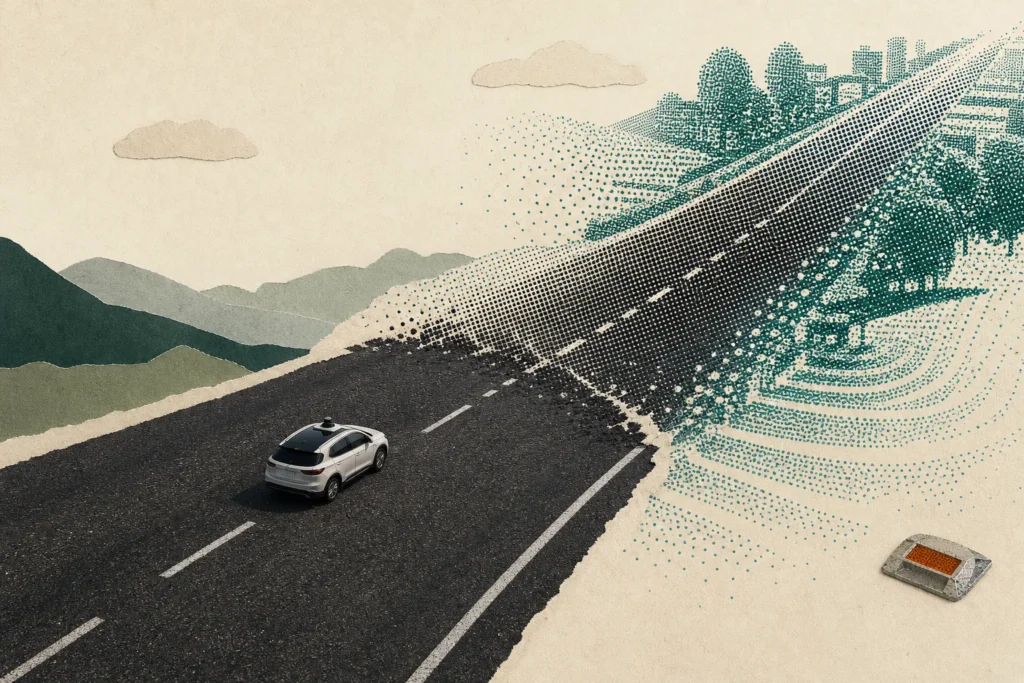
Apollo World could reduce some development costs if engineers can investigate problems virtually before committing vehicles, staff, and time to repeated road testing. A difficult real-world interaction may be expensive to recreate because comparable conditions are hard to arrange on demand. A reliable simulation can make the experiment repeatable and allow several software versions to be compared under similar circumstances. That can shorten the path from observing a problem to deciding whether a proposed fix deserves road validation.
However, simulation is not free. Compute infrastructure, world-model development, data preparation, scenario generation, storage, and specialist engineering all consume resources. Producing a very large number of low-value virtual tests could increase activity without creating proportional engineering progress. The useful economic measure is therefore validated evidence per unit of effort rather than kilometers generated or scenarios executed.
The launch material does not establish an independently verified reduction in total autonomous-driving development costs. A convincing cost study would identify which road-testing expenses declined, which simulation costs increased, and how much physical validation remained necessary after virtual testing. It would also need to separate development efficiency from the operating economics of a deployed robotaxi fleet. Until such data appears, lower development cost remains a plausible benefit rather than a quantified result.
Public availability is another unresolved area. The announcement establishes Apollo World as part of Baidu’s autonomous-driving development effort, but the reviewed material does not establish a general download, open-source release, public developer API, or commercial pricing schedule as of November 5, 2026. That does not rule out private partnerships or future external access. It simply means the current evidence supports describing Apollo World as a publicly announced internal system rather than a broadly available product.
Potential external users would need specific technical documentation before planning integration. Important details would include supported data formats, compute requirements, simulator interfaces, licensing terms, methods for connecting an external driving stack, and the degree of access permitted for independent evaluation. A product can be publicly demonstrated without allowing outside organizations to run their own experiments or publish comparative results. Those access rights remain unverified.
The biggest technical limitation is the unavoidable gap between a modeled world and the physical world. A simulator can omit rare human behavior, simplify sensor ambiguity, misrepresent unusual road geometry, or accumulate small inconsistencies over long sequences. These are general challenges for interactive driving simulation rather than documented Apollo World failures. They nevertheless define the kinds of issues that independent evaluation should examine.
Behavioral diversity is especially important because simulated agents can appear coherent without representing enough of the range found in real traffic. A virtual driver that always yields could make an aggressive robotaxi look better than it should, while one that never yields could exaggerate the difficulty of ordinary interactions. Useful testing requires a calibrated range that includes routine cooperation, hesitation, imperfect decisions, and occasional rule violations.
Shared assumptions create another risk. If Apollo World and the driving system rely on similar data gaps or simplifications, the simulator may fail to expose the same weaknesses that later matter on the road. Independent observations and real-world feedback are therefore necessary for checking whether the simulation challenges the driving system in meaningful ways. A closed loop between the same assumptions can otherwise produce convincing but misleading validation.
Long scenarios add further complexity because errors can compound. A small inconsistency in traffic behavior, object identity, or road geometry may become more significant as the simulation continues. The environment may remain visually plausible while gradually diverging from a realistic continuation of its original state. Persistence therefore needs to be validated over extended periods, not only through short visually impressive demonstrations.
Public confidence would be strengthened by more transparent technical evidence. Detailed evaluation protocols, reproducible benchmarks, failure analysis, comparisons with other simulation methods, and measurements showing how virtual improvements transfer to unseen real-world situations would make Apollo World easier to assess independently. The announcement establishes ambition and scale, but it does not yet resolve every question about fidelity or safety impact.
The strongest conclusion is therefore that Apollo World gives Baidu a potentially powerful environment for interactive autonomous-driving development, allowing Apollo Go software to experience and repeat scenarios at a scale that would be difficult to achieve on public roads alone. Its value will ultimately depend not on the number of kilometers generated, but on whether those virtual kilometers expose meaningful weaknesses, predict real outcomes, and help engineers produce safer and more reliable behavior. Simulation can accelerate the learning process, but real-world validation remains essential to proving that the resulting improvements survive outside the modeled environment.
Frequently Asked Questions (FAQs)
- What is Baidu Apollo World?
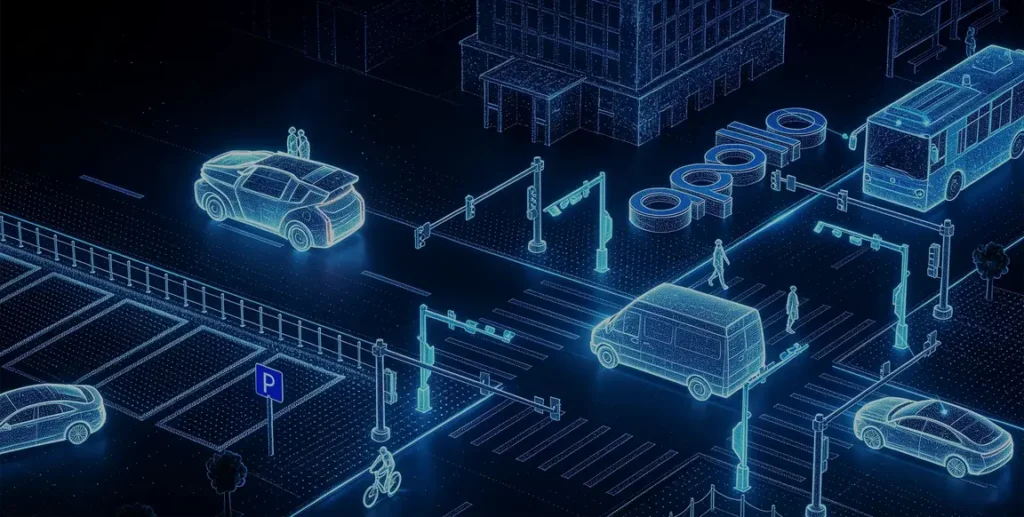
Apollo World is Baidu’s AI world model for creating interactive virtual driving environments. It is designed to support the development and validation of Apollo Go’s autonomous-driving software by letting the driving system make decisions and experience simulated consequences. In this setup, Apollo World represents the roads, traffic, pedestrians, and sensor observations, while Apollo Go is the robotaxi service whose driving technology is being tested. The key idea is that the simulator should react to the vehicle’s actions rather than simply replay a fixed sequence. - When did Baidu announce Apollo World?
Baidu publicly unveiled Apollo World on November 3, 2026, during its AI Day Apollo event in Shenzhen. News coverage published on November 4 and November 5 referred back to that same announcement. The public launch date should not be confused with the date development began internally, because the system was already being used within Baidu’s autonomous-driving work. The announcement therefore marks public disclosure rather than the start of the project itself. - Does Apollo World really simulate 100,000 kilometers every day?
Baidu says Apollo World can generate up to 100,000 kilometers of simulated driving per day. That figure describes the system’s announced maximum throughput rather than a guarantee that every test configuration will always produce exactly that amount. It also should not be interpreted as meaning that 100,000 virtual kilometers provide the same safety evidence as 100,000 kilometers driven on public roads. The value of the simulation depends on scenario quality, diversity, reproducibility, and how well the results predict real-world behavior. - How is Apollo World different from a recorded driving video?
A recorded driving video follows one fixed sequence of events, so the outcome does not change when a tested driving system makes a different decision. Apollo World is intended to generate new continuations based on the robotaxi’s actions. For example, if the vehicle slows instead of proceeding, surrounding traffic can respond differently and create a new sequence of events. This makes it possible to compare alternative driving decisions under similar starting conditions, provided the simulated reactions remain realistic and consistent. - Does Apollo World support both cameras and LiDAR?
Yes. Baidu says Apollo World generates both camera observations and LiDAR data for the driving system. That allows developers to test software using multiple simulated sensor inputs rather than supplying only perfect object locations. This is important because autonomous vehicles normally have to interpret incomplete and uncertain observations before making decisions. However, the launch material does not prove that every weather effect, reflection, calibration issue, hardware limitation, or difficult sensing condition is reproduced with independently measured accuracy. - Can Apollo World simulate an entire robotaxi journey?
Baidu says the system can simulate complete trips, including receiving an order, collecting a passenger, traveling through different road sections, and reaching the destination. This helps developers examine whether earlier decisions create problems later in the journey rather than looking only at isolated intersections or maneuvers. Full-trip simulation can reveal issues involving route positioning, pickup behavior, and the cumulative effects of previous choices. It does not mean that every possible route, traffic pattern, or operating condition has already been reproduced and validated. - Will Apollo World replace public-road testing?
No. Baidu’s described development process still includes real-road evaluation. Simulation is useful because engineers can repeat the same situation, alter selected conditions, and test difficult interactions without intentionally exposing the public to them. Public-road testing remains necessary because real traffic, sensor behavior, unusual road layouts, and human actions may differ from what the virtual model predicts. The two approaches therefore provide complementary evidence rather than interchangeable results. - Has Baidu proved Apollo World reduces crashes?
The reviewed launch material does not provide an independently verified percentage showing that Apollo World has reduced crashes by a specific amount. Its intended safety benefit is to expose weaknesses and risky driving behavior in a controlled environment before those situations occur during deployment. Demonstrating an actual crash-reduction effect would require evidence linking improvements found in simulation with better performance on previously unseen real-road situations. Large simulated mileage alone is not enough to establish that result. - Is Apollo World available for public download?
The reviewed public information does not establish a general download, open-source release, public developer API, or commercial pricing plan as of November 5, 2026. The announcement describes Apollo World as a system supporting Baidu’s own autonomous-driving development. That does not rule out private partnerships or future external access, but those possibilities have not been confirmed. Developers should therefore wait for explicit Baidu documentation before assuming they can install, license, or integrate the system. - Why does Apollo World matter for robotaxi development?
Apollo World matters because autonomous-driving teams need more than raw road mileage to evaluate difficult decisions. An interactive simulator can reproduce unusual situations, compare different software versions, and test how a vehicle’s actions change what happens next. This can make debugging and validation more controlled and repeatable than waiting for the same event to occur naturally on public roads. Its long-term value will depend on whether improvements discovered in simulation continue to work reliably when the software returns to real traffic.
Conclusion
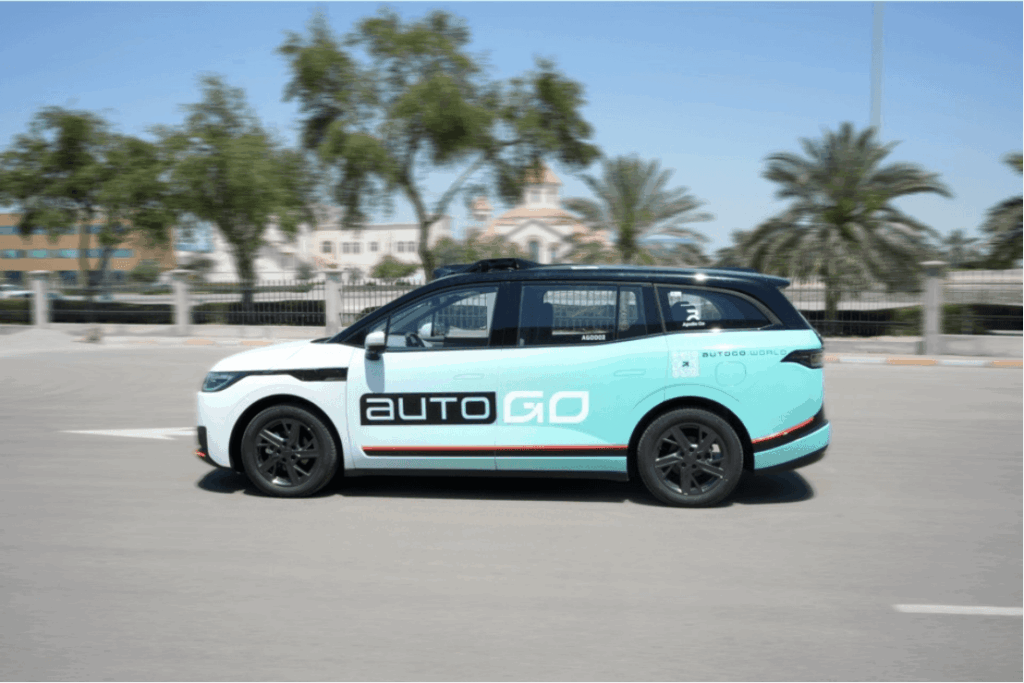
Baidu launches Apollo World driving simulator for robotaxi training at a point when the development of autonomous driving increasingly depends on the quality of testing as well as the amount of collected data. The system’s announced combination of interactive traffic, simulated sensor observations, and complete journeys gives Baidu a framework for examining how driving decisions develop over time. Its significance should be assessed through the evidence it helps produce. A simulator is valuable when it reproduces meaningful problems, supports reliable comparisons, and identifies weaknesses before wider deployment.
The announced daily mileage is a useful indicator of scale, but it does not independently establish safety gains or economic returns. Those outcomes require additional measurement and validation. Apollo World is therefore a substantial development in Baidu’s stated testing strategy, with important questions still open. Its lasting contribution will depend on how consistently lessons from its virtual environments translate into reliable Apollo Go behavior in the physical world.
Sources and Citations
- Apollo Go, November 3, 2026 – Official Apollo World announcement
- Baidu’s official Apollo Go site confirms that Apollo World was unveiled on November 3, 2026, at Baidu AI Day · Apollo in Shenzhen. The announcement says the system is already being used for Apollo Go’s global testing and validation and describes Apollo World as an agent-driven, multimodal world model for autonomous-driving development. It also introduces Baidu’s “2+3” framework covering causality, interactivity, physical accuracy, persistence, and real-time performance. apollogo.com
- Citation: Apollo Go – Apollo World Official Announcement
- Apollo Go – Apollo World technology page
- Apollo Go’s dedicated technology page describes Apollo World as a virtual environment built from real-world driving data. It highlights interactive AI agents, camera and LiDAR generation, traffic simulation, and full-trip closed-loop driving, while noting that Apollo Go operates across 28 cities with more than 350 million autonomous kilometers. apollogo.com
- Citation: Apollo Go – Apollo World Technology Overview
- China Fund, November 3, 2026 – Baidu-supplied Apollo World materials
- China Fund identifies Baidu as the source of its report and reproduces detailed descriptions of Apollo World’s capabilities. It says vehicles and pedestrians are modeled as decision-making, interactive AI agents, while the simulator generates real-time camera and LiDAR observations and supports complete journeys from order acceptance through passenger pickup to destination arrival. It also reproduces the 100,000-kilometer-per-day claim and Baidu’s “2+3” world-model evaluation framework. chnfund.com
- Citation: China Fund – Baidu Apollo World World Model Report
- Baidu Investor Relations, August 18, 2026 – Q2 2026 results
- Baidu’s official second-quarter results say Apollo Go had expanded to 28 cities and accumulated more than 350 million autonomous kilometers, including more than 240 million fully driverless kilometers. The filing also documents international activity in London, Dubai, Hong Kong, Switzerland, and Kazakhstan, providing primary-source context for Apollo Go’s global footprint before Apollo World’s launch. Baidu Inc
- Citation: Baidu – Second Quarter 2026 Results PDF
- Reuters, November 3, 2026 – Apollo World launch and simulated mileage
- Reuters reports that Baidu launched Apollo World as an AI system for simulating real-world driving environments for robotaxi training. It attributes to Baidu the claim that Apollo World can generate up to 100,000 kilometers of simulated driving per day, roughly equivalent to three years of road testing by one safety-driver-equipped autonomous vehicle. Reuters also confirms real-time multimodal output, including camera and LiDAR observations, and says the system is already being used to support Apollo Go deployment globally. Reuters
- Citation: Reuters – China’s Baidu Launches AI Model Simulating Road Environment for Robotaxis
- Apollo Go – Official news archive
- Apollo Go’s news center independently lists the November 3 Apollo World announcement and provides additional context on the company’s ongoing autonomous-driving expansion and related deployment news. apollogo.com
- Citation: Apollo Go – News Center
- Apollo Go – Official service overview
- The main Apollo Go site describes the company’s autonomous ride-hailing service and currently reports more than 330 million kilometers of safe autonomous operation. This page is useful as a general first-party reference for the scale and positioning of Apollo Go, though the August 2026 investor filing provides the more specific 350-million-kilometer figure cited in the article. apollogo.com
- Citation: Apollo Go – Official Website
Recommendations
- Where Winds Meet, Official Imperial Palace Gameplay Trailer Explained: Release Date, Story, Combat Details & Everything We Know
- Diablo 4 3Rd Anniversary Event: Goblins, Massive XP Boost, Free Cosmetics, and Full June 2–9 Celebration Guide
- IO Interactive and Build A Rocket Boy End MindsEye Partnership as Hitman Crossover DLC Is Canceled
- All Anomalies in Animal Hospital Guide: Every Roblox Anomaly Explained
- Every Release Date from Every Event at Summer Game Fest 2026
- First Gameplay Trailer of Silent Hill: Townfall: It’s a First-Person Game and Everything We Know (2026)
- Best New Anime to Watch Right Now: Spring 2026 Picks
- Switch 2 Software Update Adds “Handheld Mode Boost” for Old Games – Performance Upgrade Explained
- We Build LEGO Winnie the Pooh: A 100th Anniversary Set Worth the Hype for Disney and LEGO Fans
- Echoes of Aincrad: Complete Guide to Growth Points (Best Stat Builds & Leveling Tips)



































































































