








In This Article (7 sections)
Clive Barker’s Hellraiser: Revival Launch Trailer at Galaxies Autumn Showcase 2026
Clive Barker’s Hellraiser: Revival appeared during Galaxies Autumn Showcase 2026, with its official launch trailer receiving renewed attention on October 15, 2026. Developed and published by Saber Interactive, the first person survival horror game had already launched on October 8, one week before the showcase appearance. The October 15 listing, distributed through IGN and syndicated by Yahoo, documented the trailer’s presentation during the event rather than announcing the game’s initial release. This distinction matters because viewers discovering Hellraiser: Revival through the showcase were being introduced to an available game rather than an upcoming title awaiting launch.
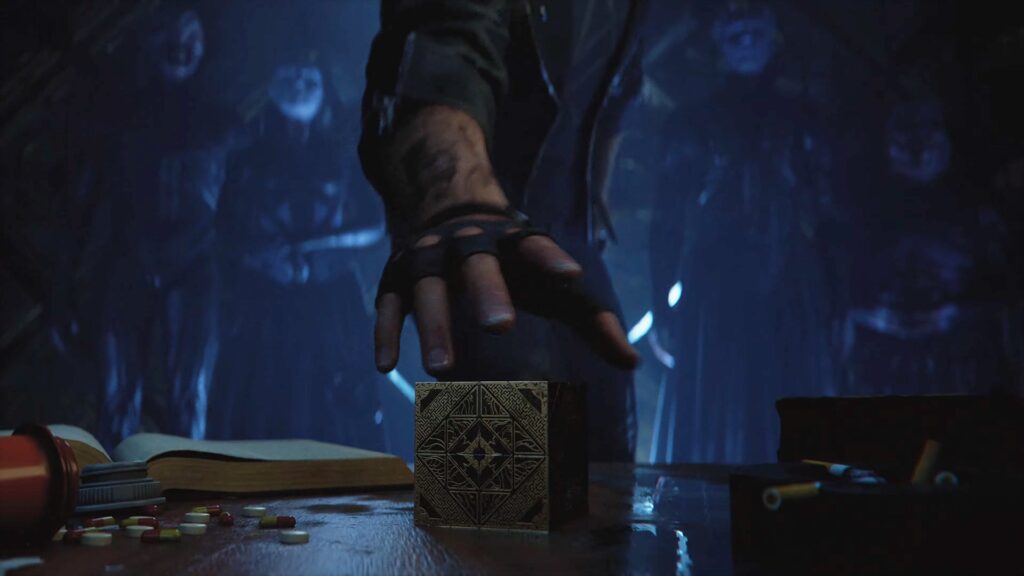
The trailer promotes an original story set within the Hellraiser universe, combining supernatural horror, first person combat, and the franchise’s disturbing relationship between desire, suffering, and forbidden experiences. Players control Aidan Lynch, a man attempting to rescue his girlfriend Sunny after she becomes entangled with the Cenobites and the mysterious Genesis Configuration. His journey leads into the Labyrinth, where supernatural forces, dangerous cultists, and a bargain involving Pinhead complicate his attempt to save her.
The showcase appearance gave Hellraiser: Revival another opportunity to reach audiences who may have missed its original launch. Unlike a trailer announcing a future release, a launch trailer for an available game encourages viewers to examine its gameplay, supported platforms, and overall premise before deciding whether to purchase it. The promotional footage communicates the game’s atmosphere and identity, but it cannot independently establish how effectively the full campaign maintains tension or how its combat systems perform during extended play.
The October 15 trailer is identified through the IGN video listing titled “Clive Barker’s Hellraiser Revival: Official Launch Trailer | Galaxies Autumn 2026 Showcase,” which was syndicated through Yahoo. The official Hellraiser: Revival website also provides access to launch promotional material alongside information about the story and supported platforms. These sources help distinguish the showcase trailer from earlier promotional videos.
Hellraiser: Revival had already received several announcements before October 15, including an earlier reveal and a release date trailer. The June 2026 promotional campaign confirmed the October 8 launch date, meaning the showcase should not be described as the first announcement of the game’s protagonist, gameplay format, or central supernatural mechanics. Those details were established before the October presentation.
A trailer’s publication date also does not prove that every scene was shown publicly for the first time during that event. Without a verified comparison between different versions, it would be inaccurate to claim that the showcase upload contained entirely exclusive footage. The most reliable identification involves matching the game title, official trailer designation, showcase reference, and publication date.
The central premise is particularly important because Hellraiser: Revival attempts to translate a franchise known for unsettling imagery and psychological themes into an interactive horror experience. The Hellraiser universe is not defined solely by frightening creatures or graphic violence. Its identity also involves temptation, dangerous bargains, and the consequences of pursuing experiences beyond ordinary human limits. Those themes provide the foundation for understanding why the game’s supernatural mechanics and story are connected.
Aidan’s rescue mission gives the narrative an accessible emotional starting point. His objective is straightforward: find Sunny and save her from the supernatural forces threatening her. However, the methods available to him involve powers associated with the same world that has endangered her. This creates a conflict between his immediate goal and the consequences of relying on forces he may not fully understand.
The trailer’s promotional role is therefore broader than displaying monsters and combat. The game is presented as an experience where personal desperation, supernatural power, and physical danger intersect. Aidan is not simply entering a hostile environment to defeat enemies. He is attempting to recover someone important to him while becoming increasingly involved with a realm governed by unfamiliar and dangerous rules.
The first person perspective reinforces this premise by placing events directly within the player’s field of vision. Rather than observing a character navigating the Labyrinth from a distance, players experience the environment through Aidan’s immediate viewpoint. This format can make confined spaces, unexpected threats, and supernatural encounters feel more personal, although the effectiveness of those elements ultimately depends on level design, sound, pacing, and enemy behaviour.
Hellraiser: Revival officially released on October 8, 2026. Saber Interactive’s support information identifies the following platforms:
- PlayStation 5: Supported as part of the game’s console release.
- Xbox Series X|S: Included among the officially supported platforms.
- Nintendo Switch 2: Listed as a supported platform, with a separate physical retail release scheduled for October 30, 2026.
- Windows PC: Available through Steam.
The Nintendo Switch 2 version is particularly important when comparing older promotional information with the final launch details. Saber’s earlier June release announcement identified PlayStation 5, Xbox Series X|S, and PC, while later support and launch materials included Nintendo Switch 2. Older platform lists should therefore not automatically be treated as complete descriptions of the released game.
The October 30 date applies specifically to Nintendo Switch 2 physical retail copies. It should not be confused with the October 8 game release or the October 15 showcase trailer. These dates refer to separate milestones involving software availability, promotional coverage, and a particular physical edition.
The release timeline can be summarised as follows:
- June 2026: Saber Interactive confirmed the October 8 release date during the promotional campaign.
- October 8, 2026: Clive Barker’s Hellraiser: Revival launched.
- October 15, 2026: The official launch trailer appeared in coverage associated with Galaxies Autumn Showcase 2026.
- October 30, 2026: The scheduled physical retail release date for Nintendo Switch 2 copies.
Players should also distinguish platform availability from technical performance. A game released on several systems does not automatically offer identical graphical settings, resolution, or frame rate options across every version. Those details require platform specific information rather than assumptions based on the supported hardware list.
The official support information identifies Hellraiser: Revival as a single player game. Its campaign follows Aidan’s story through first person exploration, combat, and supernatural encounters. The published description does not establish cooperative or competitive multiplayer modes, so its gameplay should be understood primarily as a solo horror experience.
For viewers introduced to the game through Galaxies Autumn Showcase, the most useful next consideration is whether its combination of action, supernatural mechanics, and disturbing themes matches their preferences. The launch trailer provides an introduction, but longer gameplay footage or the available demo can offer a clearer understanding of controls, encounter pacing, and how the game presents its horror during actual play.

Hellraiser: Revival Story, Aidan Lynch, Sunny, Pinhead, and Clive Barker’s Involvement
Clive Barker’s Hellraiser: Revival follows Aidan Lynch, whose attempt to rescue his girlfriend Sunny leads him into a supernatural conflict involving the Genesis Configuration, the Cenobites, and the Labyrinth. The official story establishes that Sunny’s activation of the mysterious puzzle box draws her into danger, leaving Aidan searching for a way to save her soul. His determination brings him into contact with forces whose motives extend far beyond his personal rescue mission.
Game director Emil Esov explained in a PlayStation Blog developer article that Aidan’s encounter with the Cenobites follows Sunny’s activation of the Genesis Configuration. Aidan subsequently learns that her soul may still be saved, providing the motivation for his journey. This gives the protagonist a personal reason to confront the supernatural world rather than entering it through curiosity alone.
Aidan’s role is important because he provides an accessible perspective for players who may not already understand the Hellraiser mythology. His unfamiliarity with the forces surrounding him allows the story to introduce its dangers through discovery and experience. Players can learn about the Labyrinth, its inhabitants, and the Genesis Configuration alongside a character whose immediate concern is saving someone he loves.
The relationship between motivation and capability is central to the narrative. Aidan’s determination explains why he continues despite the danger, but it does not automatically mean he understands the powers involved. His willingness to act creates opportunities for supernatural manipulation, particularly when assistance may come with consequences he cannot fully predict.
The Labyrinth represents more than a distant location within this story. It is a supernatural realm connected to the forces threatening Sunny and the powers Aidan uses to pursue her. His rescue mission therefore involves entering a world where the tools that offer progress may also increase his vulnerability.
This structure fits the broader themes associated with Hellraiser. A character driven by personal desire may accept increasingly dangerous conditions in pursuit of an understandable goal. Aidan’s desire to save Sunny is sympathetic, but the supernatural forces surrounding him complicate the relationship between what he wants and what achieving it might require.
The official premise does not establish whether Aidan ultimately succeeds, what happens to Sunny at the end of the campaign, or how every confrontation unfolds. Those details belong to the complete story and should not be inferred from promotional descriptions alone. The confirmed narrative foundation is the rescue mission and its connection to the Genesis Configuration, the Labyrinth, and Pinhead.
Pinhead remains one of the most recognisable figures associated with Hellraiser, and his appearance gives the game a direct connection to the franchise’s established identity. Saber Interactive confirmed that Doug Bradley returns to provide the character’s voice, making his involvement an officially documented part of the production.
Bradley’s casting carries particular significance because Pinhead’s presence depends on more than appearance. The character’s authority and unsettling personality can be communicated through speech, pacing, and restraint. A recognisable vocal performance can strengthen the connection between a new story and the audience’s existing understanding of the Hellraiser world.
However, Bradley’s confirmed involvement concerns voice acting. It does not independently establish that he performed motion capture, contributed to writing, or participated in every aspect of the character’s development. Those responsibilities would require separate credits or production information.
His performance also represents one element of the broader adaptation. Familiar casting can support atmosphere and recognition, but the effectiveness of Pinhead within a game depends on how the character is written, presented, and integrated into the player’s experience. A threatening appearance or recognisable voice alone cannot determine whether every encounter is successful.
Pinhead’s relationship with Aidan also introduces uncertainty. The story involves a bargain connecting the protagonist to supernatural forces, meaning the possibility of assistance exists alongside the threat of manipulation. This creates an unsettling relationship in which the player may depend on powers associated with the same realm they are trying to escape.
The Cenobites form another essential part of the story, although they should not be treated as interchangeable with the human followers who seek their attention. Esov’s developer explanation identifies the Scarlet Church as a group devoted to the Cenobites and interested in obtaining the Genesis Configuration for its own purposes.
The story also introduces the Unworthy, described as rejected seekers drawn toward the puzzle box. These groups have different relationships with the supernatural world, creating multiple forms of opposition rather than a simple conflict between Aidan and one uniform enemy faction.
The principal characters, groups, and supernatural elements include:
- Aidan Lynch: The playable protagonist attempting to rescue his girlfriend Sunny.
- Sunny: Aidan’s girlfriend, whose activation of the Genesis Configuration begins the supernatural crisis.
- Pinhead: A central Cenobite figure voiced by Doug Bradley.
- The Cenobites: Supernatural beings associated with the Labyrinth and the broader Hellraiser mythology.
- The Scarlet Church: A cult devoted to the Cenobites and interested in the Genesis Configuration.
- The Unworthy: Rejected seekers drawn toward the puzzle box.
- The Genesis Configuration: A supernatural object connected to the story and Aidan’s abilities.
- The Labyrinth: The dangerous supernatural realm central to the rescue mission.
The presence of these different groups creates opportunities for conflict involving belief, desperation, and ambition. A cultist seeking contact with the Cenobites may approach the supernatural world differently from someone who has already been rejected by it. Their motivations can give encounters meaning beyond simply identifying enemies that must be defeated.
However, the existence of multiple factions does not establish that every Cenobite encounter functions as a conventional boss battle. Likewise, the game’s combat systems do not automatically mean that every supernatural figure can be defeated through repeated attacks. Those are specific gameplay details that require direct evidence.
Clive Barker’s involvement provides another important connection to the franchise’s creative origins. Executive producer Nenad Tomic explained through Xbox Wire that Barker had been involved from the beginning of development, contributing guidance concerning visual style, narrative themes, lore, and character personalities.
This establishes a meaningful creative relationship between Barker and the game. His input helped the development team refine its approach to the Hellraiser universe, particularly the atmosphere and thematic qualities associated with the original material.
However, creative participation should not be confused with personally producing every part of the game. The available statements do not establish that Barker wrote every scene, designed each mechanic, or directed all development decisions. Game production involves collaboration between writers, artists, programmers, designers, producers, and other contributors.
Barker’s guidance is most relevant to the consistency of the fictional world. The Hellraiser franchise contains extreme imagery, but its identity is also built around themes of desire, bodily vulnerability, temptation, and experiences beyond ordinary limits. Creative direction can help ensure that disturbing visual elements belong to a coherent interpretation of those ideas rather than functioning only as decoration.
Barker’s official website also records positive comments about the project and its approach to the material. Those statements provide evidence of his public support but should remain distinct from an independent evaluation of the completed game’s quality.
The game also draws inspiration from the first two Hellraiser films. Tomic explained that their atmosphere, themes, and mythology influenced the project while clarifying that Revival’s plot is not directly connected to the stories told in those movies.
This distinction gives the adaptation room to introduce new protagonists and conflicts without requiring players to continue a particular film storyline. The game can draw from established mythology while presenting a separate narrative centred on Aidan and Sunny.
Saber’s launch announcement describes Revival as a canonical addition to the Hellraiser world. That statement establishes the publisher’s intended relationship between the game and the franchise, but it does not automatically place the story at a specific point between individual films. A precise chronological connection would require additional confirmation.
For established Hellraiser fans, the appeal lies partly in recognising familiar themes and supernatural figures within a new interactive setting. For newcomers, the rescue premise provides an understandable entry point without requiring extensive knowledge of earlier films.
The most important connection is thematic rather than a direct continuation of an existing movie plot. The story uses familiar ideas about temptation, suffering, and dangerous bargains while allowing players to experience those concepts through a new character whose actions influence how the narrative unfolds.
The involvement of Doug Bradley and Clive Barker strengthens the project’s relationship with its source material, while Saber Interactive’s original storyline allows the game to establish its own identity. The success of that approach ultimately depends on how effectively the writing, atmosphere, character development, and gameplay work together.

Hellraiser: Revival Gameplay, Genesis Configuration Powers, Combat, and Development
Hellraiser: Revival is a single player, first person action survival horror game that combines conventional weapons with supernatural abilities. Players control Aidan directly as he explores threatening environments, confronts enemies, solves puzzles, and uses the Genesis Configuration to overcome obstacles. The first person perspective places the player within the immediate action, making navigation, combat, and environmental observation central to the experience.
The viewpoint can support horror by restricting what players see at any given moment. Looking toward one threat may mean temporarily losing sight of another part of the environment, while unfamiliar sounds or movement can encourage cautious exploration. However, perspective alone does not guarantee tension. Level design, lighting, sound, enemy placement, and the timing of encounters all influence how effectively a horror experience creates uncertainty.
The game’s action systems also introduce an important balance between vulnerability and control. Weapons allow players to respond directly to threats, while supernatural powers offer additional possibilities. However, the presence of combat does not automatically mean every encounter becomes safe or predictable. The design’s effectiveness depends on whether players must still consider their surroundings, available resources, and the consequences of their decisions.
The Genesis Configuration is the most distinctive gameplay element because it connects Aidan’s abilities to the supernatural object driving the story. Saber Interactive identifies several powers associated with the box, including pyrokinesis, telekinesis, and Hell Chains. The company also describes using the device to solve puzzles and transform parts of the Labyrinth.
The confirmed Genesis Configuration abilities and functions include:
- Pyrokinesis: A supernatural power associated with fire.
- Telekinesis: An ability involving the manipulation of objects or forces through supernatural means.
- Hell Chains: A named power connected to the Genesis Configuration.
- Puzzle Solving: The box can be used to overcome certain environmental obstacles.
- Environmental Transformation: The device can alter parts of the Labyrinth.
- Combat Support: Its supernatural abilities provide options beyond ordinary melee and ranged weapons.
These capabilities make the Genesis Configuration more than a symbolic object carried between story sequences. It provides a direct relationship between the supernatural crisis and the actions available to the player. Aidan uses powers associated with the world threatening him, making the box relevant to both survival and progression.
From a design perspective, a central tool that serves several purposes can make gameplay more cohesive. An ability used during combat may also affect how players approach environmental obstacles, encouraging them to consider different applications of the same system. The relationship between the box’s narrative importance and its practical functions helps distinguish Hellraiser: Revival from a horror game where supernatural objects appear only during cutscenes.
However, official descriptions of the powers do not provide a complete technical breakdown. Exact damage values, resource costs, upgrade requirements, unlock conditions, and optimal strategies have not been established through the general promotional material discussed here. Those details should not be invented or inferred from the abilities’ names.
Likewise, the Genesis Configuration should not automatically be treated as identical to another puzzle box appearing elsewhere in the franchise. Its specific gameplay functions are established through the game’s official descriptions, and rules associated with differently named objects should not be transferred without supporting evidence.
Combat combines melee weapons, ranged weapons, and supernatural attacks. Saber’s support information confirms these broad categories, while its promotional material presents Aidan actively confronting threats as he progresses through the campaign.
Melee combat places enemies closer to the player’s viewpoint, potentially increasing the sense of danger because attacks occur at shorter distances. Ranged weapons allow threats to be confronted from farther away, while supernatural powers introduce another form of response. These distinctions describe the potential roles of the confirmed systems rather than a tested ranking of their effectiveness.
The interaction between different attack methods is more important than any single category. A game offering several combat options can encourage different strategies when each provides a meaningful reason for use. The strongest design would make ordinary weapons and supernatural abilities feel connected to the same threatening environment rather than functioning as unrelated systems.
However, the published information does not establish exact ammunition scarcity, weapon balance, or the most effective combat approach. A complete evaluation of those elements would require detailed gameplay evidence rather than conclusions based only on promotional descriptions.
Saber’s launch announcement also identifies the Nailer as a melee weapon included with the Deluxe Edition. This should be distinguished from cosmetic weapon skins, which change presentation rather than necessarily providing a separate weapon. The distinction matters when comparing editions because additional equipment and visual customisation represent different types of content.
The confirmed combat framework is therefore straightforward: players use conventional weapons and supernatural powers while progressing through a first person horror campaign. The exact tactical value of individual weapons or abilities depends on encounter design and the specific gameplay systems involved.
The game’s environmental interactions also support its supernatural theme. The Genesis Configuration can influence parts of the Labyrinth, making the surrounding world more than a static backdrop for combat. Puzzle solving and environmental transformation give players reasons to examine locations carefully and understand how their abilities affect progression.
These mechanics can create opportunities for the environment itself to become part of the challenge. A supernatural power may have value because it changes access to a particular area or helps resolve an obstacle rather than simply dealing damage. That relationship can make exploration more meaningful and reinforce the idea that Aidan is using dangerous forces whose influence extends beyond combat.
However, the presence of environmental puzzles does not automatically establish an unrestricted immersive simulation or open world structure. Hellraiser: Revival is officially described as a first person action survival horror experience, and its confirmed mechanics should be discussed within that framework.
The game’s different enemy groups also contribute to its variety. Human cultists, rejected seekers, and supernatural beings occupy different positions within the story. Their presence offers opportunities for encounters that reflect different motivations and relationships with the Genesis Configuration.
The Scarlet Church’s interest in the box introduces a human faction pursuing supernatural power, while the Unworthy represent another group connected to the Cenobites. Pinhead and the broader Cenobite mythology provide a more direct connection to the forces governing the Labyrinth.
These distinctions help establish the setting’s identity, but they do not confirm the precise combat behaviour of every enemy or the complete sequence of encounters. Different narrative roles do not automatically establish different artificial intelligence systems, attack patterns, or boss mechanics.
The horror atmosphere also depends on how the game presents the franchise’s themes. Hellraiser is associated with disturbing bodily imagery and the connection between desire and suffering. Translating those ideas into gameplay requires more than reproducing familiar designs. The player needs to experience the consequences of entering a world where supernatural power is linked to dangerous bargains.
Aidan’s relationship with the Genesis Configuration provides a natural way to connect those themes to action. The same object that gives him power is associated with the crisis he is trying to resolve. This creates a tension between usefulness and danger, although the extent to which the finished campaign develops that relationship requires direct examination of the story.
The game’s development and publishing credits also deserve clarification. The Steam listing identifies Saber Interactive as both developer and publisher of Clive Barker’s Hellraiser: Revival. This is the clearest direct storefront attribution for the released PC version.
Boss Team Games is also associated with the broader project. The original announcement on Clive Barker’s official website named Saber Interactive and Boss Team Games, while Saber’s support information directs questions concerning the Collector’s Edition to Boss Team Games.
The distinction between these roles matters because development, publishing, licensing, and management of special physical editions involve different responsibilities. Naming every associated company as though each performed the same function could create confusion.
The principal confirmed development and publishing information is:
- Game: Clive Barker’s Hellraiser: Revival.
- Developer: Saber Interactive.
- Publisher: Saber Interactive, according to the Steam listing.
- Additional Project Association: Boss Team Games.
- Collector’s Edition Support: Boss Team Games is identified as the contact for relevant enquiries.
- Creative Involvement: Clive Barker provided guidance concerning visual style, themes, lore, and characters.
- Pinhead Voice Actor: Doug Bradley.
- Game Director: Emil Esov.
- Executive Producer: Nenad Tomic.
These details establish the main organisations and contributors identified through official material without assigning undocumented responsibilities to individual participants.
The distinction between earlier partnership announcements and final storefront credits is particularly important. Preliminary coverage may describe a project collaboration broadly, while a released game’s store page explicitly identifies the developer and publisher. Both sources can be useful when their roles are represented accurately.
Hellraiser: Revival also offers a demo through its Steam listing, providing an opportunity for players to experience selected content before committing to the full game. A demo can be useful for evaluating controls, visual presentation, and the general feel of gameplay, although its limited selection cannot establish the pacing, variety, or quality of the complete campaign.
The availability of a demo is particularly valuable for a horror game because individual preferences strongly influence the experience. Some players may enjoy the balance between combat and supernatural exploration, while others may prefer a different approach to tension or pacing. Trying the available content can provide more useful information than relying entirely on promotional footage.
For established Hellraiser fans, the game offers a new story connected to familiar mythology, with Doug Bradley returning as Pinhead and Clive Barker contributing creative guidance. These elements provide continuity with the franchise’s identity without requiring the plot to reproduce the original films.
For newcomers, Aidan’s rescue mission provides a straightforward narrative foundation. Players do not need to begin by understanding every aspect of the Cenobites or the Labyrinth because the story introduces a new protagonist whose personal circumstances bring him into contact with those forces.
The game also illustrates the challenge of adapting horror across different media. Films control camera placement, editing, and the precise timing of what viewers see. Games give players direct control over movement and certain decisions, requiring developers to create tension within a more interactive structure.
A recognisable monster can establish the connection to Hellraiser immediately, but sustained horror depends on how the player encounters that monster, what choices are available, and how the surrounding environment responds. This is why the relationship between story, supernatural mechanics, and first person presentation is more important than the presence of familiar imagery alone.
The October 15 Galaxies Autumn Showcase trailer highlights a game that had already entered the market and could be evaluated through its available versions. Its strongest advertised qualities are the original rescue story, the return of Doug Bradley as Pinhead, Clive Barker’s creative involvement, and the Genesis Configuration’s role in both combat and exploration.
The distinction between confirmed features and promotional expectations remains important. The available information supports describing the game as a single player first person horror experience with melee, ranged, and supernatural combat. It does not justify inventing multiple endings, an open world, multiplayer modes, or unverified technical performance claims.
Ultimately, Clive Barker’s Hellraiser: Revival presents an interactive interpretation of the franchise’s themes through Aidan’s journey into the Labyrinth. Its combination of personal motivation, supernatural danger, and active combat creates a foundation for a horror experience that draws from the original mythology while introducing its own characters and conflicts.
The Galaxies Autumn Showcase 2026 trailer served as another promotional opportunity for that experience rather than its original launch announcement. With the game released on October 8, the October 15 presentation gave viewers a chance to discover an available title whose appeal rests on how effectively Saber Interactive translates Hellraiser’s disturbing world into playable form.
Frequently Asked Questions (FAQs)
- What happened with Hellraiser: Revival at Galaxies Autumn Showcase 2026?
Clive Barker’s Hellraiser: Revival appeared through an official launch trailer associated with Galaxies Autumn Showcase 2026 on October 15. The trailer was identified in an IGN video listing syndicated through Yahoo, bringing renewed attention to Saber Interactive’s first person survival horror game. The showcase appearance promoted the game’s original story, supernatural atmosphere, and gameplay identity. However, it was not the initial release announcement because Hellraiser: Revival had already launched on October 8. The October 15 date therefore refers to the showcase associated promotional listing rather than the first day the game became available. - Did Hellraiser: Revival launch on October 15, 2026?
No. Clive Barker’s Hellraiser: Revival officially launched on October 8, 2026, one week before the October 15 Galaxies Autumn Showcase trailer listing. The game was released for supported platforms including PlayStation 5, Xbox Series X|S, Nintendo Switch 2, and Steam. October 15 identifies the date associated with the showcase promotional video rather than the game’s release. Saber also identified October 30, 2026, as the scheduled date for Nintendo Switch 2 physical retail copies, which is a separate availability milestone. - Which platforms support Hellraiser: Revival?
Hellraiser: Revival supports PlayStation 5, Xbox Series X|S, Nintendo Switch 2, and Windows PC through Steam, according to Saber’s official support information. Earlier promotional material did not include every platform eventually listed at launch, so the latest support information provides a more complete account. The Nintendo Switch 2 physical retail edition was separately scheduled for October 30, 2026. Players should distinguish platform availability from performance because the game being released on different systems does not automatically establish identical graphical settings, frame rates, or technical features across every version. - Is Hellraiser: Revival a multiplayer game?
No. Saber Interactive identifies Hellraiser: Revival as a single player experience. The game follows Aidan Lynch through a first person action survival horror campaign involving exploration, conventional weapons, supernatural abilities, and encounters with the forces of the Labyrinth. The official information reviewed does not establish cooperative campaign play, competitive multiplayer, or other online multiplayer modes. Players should therefore approach it as a solo horror adventure rather than expecting to explore the story with friends. - Who is the main character in Hellraiser: Revival?
The main character is Aidan Lynch, a man attempting to rescue his girlfriend Sunny after she activates the Genesis Configuration and becomes involved with the supernatural forces associated with the Cenobites. His search leads him into the Labyrinth, where he must confront dangerous enemies and rely on powers connected to the mysterious puzzle box. Aidan’s personal motivation provides an accessible starting point for the story, particularly for newcomers unfamiliar with Hellraiser. His determination to save Sunny also creates tension because the supernatural abilities helping him may carry consequences he does not fully understand. - Does Doug Bradley play Pinhead?
Yes. Doug Bradley returns as the voice of Pinhead in Clive Barker’s Hellraiser: Revival. Saber Interactive officially confirmed his involvement in the game’s launch announcement. His casting provides a recognisable connection to the Hellraiser franchise, particularly for fans familiar with his portrayal of the character. However, the confirmed information specifically concerns voice acting and does not automatically establish that Bradley performed motion capture, contributed to the script, or handled other production responsibilities. His performance forms part of the game’s wider effort to preserve the character’s unsettling identity. - What does the Genesis Configuration do?
The Genesis Configuration is a supernatural puzzle box that plays an important role in both Hellraiser: Revival’s story and gameplay. Saber Interactive identifies powers including pyrokinesis, telekinesis, and Hell Chains, which give Aidan abilities beyond ordinary weapons. The box is also used for puzzle solving and transforming parts of the Labyrinth, connecting combat with environmental progression. Its importance comes from being associated with the supernatural crisis while also providing tools Aidan needs to survive. However, exact upgrade requirements, resource costs, damage values, and unlock conditions require more detailed gameplay information than the general promotional descriptions provide. - Did Clive Barker help create the game?
Yes. Executive producer Nenad Tomic explained that Clive Barker was involved from the beginning of development, providing creative guidance on visual style, narrative themes, lore, and character personalities. His involvement helped the team shape its interpretation of the Hellraiser universe and maintain a connection to the franchise’s original ideas. However, creative consultation does not mean Barker personally wrote every scene, designed every gameplay mechanic, or directed all technical development. Saber Interactive remains the credited developer, with Barker contributing to the creative direction and identity of the adaptation. - Do players need to watch the movies first?
No. Hellraiser: Revival tells an original story centred on Aidan Lynch and his attempt to rescue Sunny, making the central premise understandable without prior knowledge of the films. Executive producer Nenad Tomic explained that the game draws inspiration from the atmosphere, themes, and mythology of the first two Hellraiser movies but does not directly continue their plots. Watching those films may help players recognise familiar ideas, characters, and supernatural concepts, particularly Pinhead and the Cenobites. However, the game introduces its own protagonist, conflict, and narrative objective rather than requiring players to resume an existing film storyline. - Is a Hellraiser: Revival demo available?
Yes. The researched Steam listing for Clive Barker’s Hellraiser: Revival includes a demo download option. The demo provides an opportunity to experience selected gameplay content before purchasing the full game, allowing players to assess the controls, first person presentation, atmosphere, and general combat style. However, a demo represents only a portion of the complete experience and cannot establish the quality, pacing, or variety of the entire campaign. Players interested in the game can use the trial to determine whether its combination of supernatural horror and action suits their preferences.

Conclusion
Clive Barker’s Hellraiser: Revival appeared at Galaxies Autumn Showcase 2026 through its October 15 launch trailer, one week after the game officially released on October 8. The single player, first person horror experience follows Aidan Lynch as he attempts to rescue Sunny using conventional weapons and the supernatural powers of the Genesis Configuration. Doug Bradley’s return as Pinhead, Clive Barker’s creative involvement, and inspiration from the first two Hellraiser films strengthen the adaptation’s connection to the franchise. While the trailer highlights its disturbing atmosphere and supernatural combat, the finished gameplay provides the clearest basis for evaluating how effectively Saber Interactive translates Hellraiser’s themes into an interactive experience.
Sources and Citations
- Saber Interactive, Clive Barker’s Hellraiser Revival Official Website: Aidan’s mission to rescue Sunny from the Labyrinth, the Genesis Configuration puzzle box, Pinhead, supernatural abilities, Cenobite cultists, gameplay footage and official release information.
https://saber.games/hellraiserrevival/ - Saber Interactive and Boss Team Games, June 16, 2026: Official October 8 release announcement confirming PlayStation 5, Xbox Series X|S and PC availability, Standard and Deluxe Edition pricing, physical editions, preorder bonuses, Doug Bradley’s return as Pinhead and the game’s supernatural combat abilities.
https://www.gamespress.com/en-US/HELL-IS-COMING-CLIVE-BARKERS-HELLRAISER-REVIVAL-RELEASES-OCTOBER-8-ON- - Saber Interactive, September 23, 2026: Official gameplay overview trailer detailing melee combat, firearms, ammunition management, healing, traps, crafting, the Genesis Configuration’s supernatural powers, enemy factions, the Steam demo and Nintendo Switch 2 availability.
https://www.gamespress.com/Saber-Interactives-Clive-Barkers-Hellraiser-Revival-Breaks-the-Fourth- - PlayStation Blog, July 22, 2025: Original announcement introducing the single-player first-person survival horror experience, Aidan’s storyline, the Genesis Configuration, combat mechanics and Saber Interactive’s approach to adapting Clive Barker’s horror universe.
https://blog.playstation.com/2025/07/22/announcing-clive-barkers-hellraiser-revival-horror-that-doesnt-hold-back/ - PlayStation Blog, July 16, 2026: Developer interview examining Aidan Lynch, Sunny, the Scarlet Church, cult leader Marlowe, the Unworthy, Leviathan, the Cenobites and the combination of conventional weapons with supernatural abilities.
https://blog.playstation.com/2026/07/16/explore-horrors-furthest-sensations-in-clive-barkers-hellraiser-revival/ - PlayStation Blog, August 19, 2026: Behind-the-scenes examination of environmental puzzles, the Genesis Configuration’s world-altering abilities, Chatterer encounters, Labyrinth exploration, puzzle-solving mechanics and the integration of psychological horror with gameplay.
https://blog.playstation.com/2026/08/19/inside-the-brutal-puzzles-of-clive-barkers-hellraiser-revival - PlayStation Universe, September 24, 2026: Gameplay trailer coverage examining the canonical Hellraiser storyline, Aidan’s rescue mission, Genesis Configuration powers, cultist encounters, Doug Bradley’s return and the game’s first-person survival horror presentation.
https://www.psu.com/news/clive-barkers-hellraiser-revival-trailer-reveals-grisly-gameplay-footage/ - Mad Head Games, Official Studio Website: Development background for Clive Barker’s Hellraiser Revival, the studio’s transition into Saber Interactive, its previous projects and its work on licensed horror entertainment.
https://www.madheadgames.com/
Recommendations
- Ballistic Moon, the Developer Behind the “Until Dawn” Remake, Has Shut Down: What Happened to the Studio and the Future of the Game
- The Duskbloods Network Test Runs From August 21 to 24, 2026
- 007 First Light Unlock Times, Early Access, and Global Release Details Explained
- Kingdom Hearts Cloud Versions Shut Down Today (What Happens Now for Switch Owners)
- Heated Arc Raiders Lobby Moment Goes Viral as Players Clash Over PvP Appeal and PvE Expectations
- The Witcher 3 Remastered Makes Its Best Graphics Mod Obsolete
- Super ZSNES: Revival of the 90s Nintendo Emulator that Shifts Processing to the GPU
- Lords of the Fallen 2 Gets a New Gameplay Trailer
- How The View Keeper Simplifies Multi-Camera Animations in Blender
- Forza Horizon 6 GOTY Chances: Why It’s the First Racing Game With a Real Shot at Game of the Year



































































































