








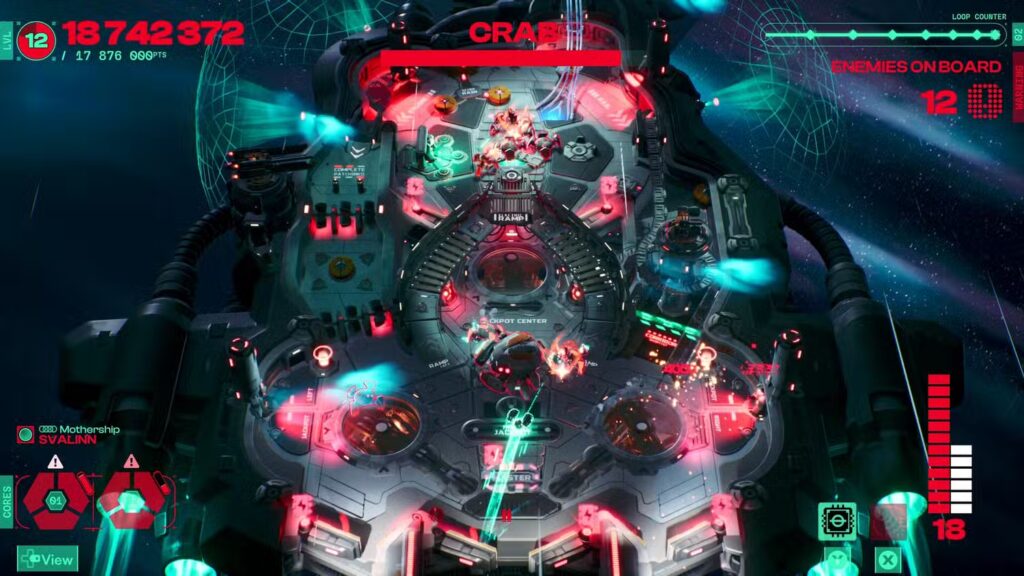
Appulse, the upcoming single player action game developed by Le Rado and published by Raw Fury, combines traditional pinball mechanics with top down shooting and roguelite progression. During the Galaxies Autumn Showcase on October 15, 2026, Raw Fury confirmed that the game would launch on November 26, 2026, for PC. The announcement introduced a confirmed release schedule for a project built around an unusual gameplay concept: players control an armed pinball whose weapon recoil influences its movement, turning every shot into both an offensive action and a positioning decision.
The October showcase represented an important milestone rather than the game’s first public appearance. Earlier announcements had already introduced Appulse and its central gameplay concept, while the latest presentation provided a specific launch date, an updated playable demo and a new promotional trailer. This distinction matters because descriptions suggesting the game was first revealed on October 15 overlook its previous development announcements. The headline news from the showcase was the confirmed November release, giving players a clearer opportunity to explore the demo and evaluate the mechanics before the complete game arrives.
According to the official Steam description, Appulse combines pinball inspired movement with top down combat, placing players in control of an armed ball tasked with defending a mothership against robotic attackers. The game also features roguelite progression, allowing players to develop their capabilities as they continue through its challenges. However, its most distinctive feature is the relationship between shooting and movement. Unlike conventional shooters, where firing primarily affects the target, weapon recoil in Appulse also changes the player’s trajectory, making positioning an essential part of every attack.
This mechanic creates a different approach to combat because players must consider two consequences whenever they fire. The first is whether the shot will damage an enemy, while the second is where the resulting recoil will move the ball. A well timed attack may achieve both objectives by striking a target and improving the player’s position. However, those goals will not always align. Shooting directly toward an enemy could create an unfavorable movement path, while firing from another angle might offer a safer trajectory even if it requires additional preparation.
The interaction between pinball movement and shooting encourages players to pay attention to the entire table rather than concentrating only on nearby enemies. Obstacles, movement routes and the ball’s current momentum can all influence whether an attack is worthwhile. A seemingly ideal opportunity to damage an opponent may also require a movement correction to prevent the ball from entering a dangerous position. This means effective combat depends on understanding the surrounding space as much as selecting the correct target.
Pinball mechanics introduce momentum and spatial anticipation, while shooting gives players a more deliberate way to influence their movement. Flippers remain part of the familiar pinball foundation, but the ability to fire weapons adds another layer of control. Instead of responding only to where the ball is already traveling, players can use offensive actions to alter its path. The challenge is learning when to let existing momentum carry the ball and when firing can create a more useful direction.
The game’s core features include:
- Pinball inspired movement: Players control a moving ball through environments designed around momentum and positioning.
- Top down shooting: Weapons allow players to attack robotic enemies while navigating the table.
- Recoil based movement: Firing pushes the ball in the opposite direction, connecting combat decisions with movement.
- Mothership defense: Players confront robotic attackers as part of the game’s central action premise.
- Roguelite progression: Players develop their capabilities through progression systems that support different approaches.
- Single player gameplay: The experience focuses on individual control, combat and improvement through repeated attempts.
- Playable demo: An updated preview allows interested players to experience the mechanics before the full release.
The relationship between aiming and momentum is the central reason Appulse differs from a conventional arena shooter. In many shooting games, players can move toward a target while attacking without the direction of fire significantly affecting their position. In Appulse, those actions are closely connected. A shot that successfully hits an enemy can still create a disadvantage if the resulting recoil pushes the ball toward an obstacle or away from a useful area. Conversely, an attack aimed partly for movement may create an opportunity to avoid danger or prepare for a more effective follow up.
This design encourages players to think beyond immediate damage. Positioning becomes part of offensive planning, and movement decisions can influence which attacks are practical. Players must learn to anticipate how the ball will respond to firing while accounting for the surrounding geometry and enemies. As encounters become more demanding, the ability to manage both systems together may become more important than simply shooting whenever a target appears.
The roguelite structure adds another dimension by allowing players to develop their capabilities throughout the experience. Progression can provide reasons to experiment with different approaches, but the effectiveness of those systems will depend on how meaningfully they interact with the central recoil mechanic. Additional abilities and improvements are most valuable when they create different decisions around movement, aiming and survival rather than simply increasing the number of available features.
The updated demo is particularly relevant because Appulse’s unusual control system is easier to understand through direct play than through a short description. A trailer can demonstrate the relationship between shooting and movement, but it cannot fully establish how comfortable or satisfying that relationship feels for an individual player. The playable preview provides an opportunity to assess whether controlling the ball through a combination of flippers and recoil produces the intended sense of precision and momentum.
For newcomers, the most useful expectation is an arcade action experience that combines two familiar genres in an unfamiliar way. Players experienced with shooters may recognize the importance of targeting and attack timing, while those familiar with pinball may understand how momentum and table geometry affect movement. However, neither skill set fully explains how the two systems operate together. Learning to coordinate shooting and movement is central to understanding the game’s approach to combat.
The October 15 announcement therefore provided more than another promotional appearance for Appulse. By confirming the November 26 release date and highlighting an updated demo and trailer, Raw Fury gave players a clearer opportunity to evaluate the game’s distinctive concept before launch. The combination of armed pinball movement, robotic enemies and roguelite progression establishes its identity, while the relationship between recoil and trajectory remains the defining mechanic. Whether that combination sustains satisfying gameplay throughout the complete experience will depend on how effectively the game develops its central interaction as challenges become more complex.

In This Article (8 sections)
Appulse Galaxies Autumn Showcase 2026 Announcement, November 26 Release Date, Platforms and Developer Details
Appulse, the upcoming pinball inspired action game developed by Le Rado and published by Raw Fury, received an official release date announcement during the Galaxies Autumn Showcase on October 15, 2026. The presentation confirmed that the game would launch on November 26, 2026, while also drawing attention to its updated playable demo. However, the showcase was not the project’s first public appearance. Raw Fury had already announced its publishing partnership with Le Rado on June 6, 2026, meaning Appulse entered the autumn event with an established identity and a previously introduced gameplay concept.
The distinction between the original announcement and the October showcase is important because the two events served different purposes. Earlier information introduced the game and explained its unusual combination of pinball movement and shooting, while the October presentation established when players could expect the finished release. Describing the showcase as the game’s first reveal would therefore overlook its existing development history. The announcement instead represented a major milestone, turning general interest in the concept into a more immediate opportunity to try the demo and prepare for launch.
Both Raw Fury’s October announcement and the official Steam listing identify November 26, 2026, as the scheduled release date. As of October 29, the complete game remained upcoming, with the playable demo available separately. This distinction matters when interpreting gameplay footage and early impressions because videos recorded from the demo do not establish that the full commercial version has already launched. Similarly, the release date trailer should not be confused with a launch trailer announcing immediate availability.
The confirmed date also gives players an opportunity to evaluate the game’s central mechanic before purchasing. Since Appulse relies on the relationship between weapon recoil and movement, its appeal depends heavily on how comfortable players feel coordinating attacks and controlling the ball’s trajectory. A description can explain the mechanic, but experimenting with the available demo provides a better understanding of whether the controls feel intuitive and whether repeated attempts remain enjoyable.
However, the release date does not establish every purchasing detail. Regional pricing, final performance and the finished balance of the progression system remain separate considerations. A confirmed launch schedule provides information about availability, but the quality and technical condition of the complete game must be assessed through the release version. Players should therefore distinguish between confirmed plans and judgments that require experience with the finished product.
Steam is the confirmed storefront for Appulse’s PC release, and the official FAQ states that the game supports both keyboard and mouse controls and controllers. This flexibility is particularly relevant because players must manage aiming, firing and flipper movement together. Different input methods may feel more natural depending on individual preferences, making the demo a practical way to determine which arrangement provides comfortable control.
The publisher’s FAQ also states that Appulse will be playable on Steam Deck, although this should not be interpreted as confirmation of a particular Valve compatibility certification. A statement that a game supports the handheld does not automatically establish a Steam Deck Verified badge or guarantee specific performance settings. Players should distinguish the publisher’s stated playability from any separate compatibility assessment or technical benchmark.
No console release has been officially announced in the information reviewed. The absence of confirmed PlayStation, Xbox or Nintendo versions does not mean those platforms will never receive the game, but it does mean they should not be included as established launch destinations. Controller support on PC also does not constitute evidence that a console version is being developed. Until Le Rado or Raw Fury provides a separate announcement, the confirmed release information concerns PC through Steam.
The key release and development details include:
- Developer: Le Rado, a three person development team based in Nantes, France.
- Publisher: Raw Fury.
- June 6, 2026: Raw Fury announced its publishing partnership with Le Rado.
- October 15, 2026: The Galaxies Autumn Showcase featured the release date announcement and updated demo campaign.
- November 26, 2026: The announced PC release date.
- Confirmed storefront: Steam.
- Supported controls: Keyboard and mouse, alongside controllers.
- Steam Deck: The official FAQ states that the game will be playable on the handheld.
- Console versions: No official console release announcement has been provided.
The development partnership also provides context for the project’s origins. Raw Fury described Le Rado as a three person team from Nantes and identified Appulse as the developers’ first game together. Le Rado is responsible for creating the game, while Raw Fury serves as its publishing partner. These roles should remain distinct because the developer is responsible for implementing the mechanics and gameplay experience, while the publisher handles release and promotional responsibilities.
The small development team has focused the game’s identity around an unusual mechanical concept. Connecting weapon recoil with pinball movement gives Appulse a recognizable feature that can influence numerous gameplay situations. However, team size alone does not establish the amount of content, technical polish or quality of the finished game. Those outcomes depend on implementation, scope and how effectively the central mechanic is developed throughout the experience.
Raw Fury’s involvement also provides a publishing framework for the project, helping communicate its release schedule and bring the game to a wider audience. Nevertheless, publisher recognition does not automatically determine whether the controls or gameplay will appeal to every player. The most meaningful assessment comes from the available build and, ultimately, the completed release.
The October 15 announcement also included an official release date trailer, available through Raw Fury’s announcement page. This provides a reliable source for footage associated with the November release and helps distinguish the new presentation from earlier promotional videos. The trailer introduces the game’s visual style and demonstrates how shooting influences the movement of the armed ball.
When watching the footage, the most useful details involve the relationship between firing and positioning. Observing where the ball travels immediately after a shot provides a clearer understanding of the recoil system than focusing exclusively on whether an enemy is hit. The movement that follows an attack is central to the gameplay because it can determine whether the ball approaches another objective or enters an unfavorable position.
Readability is another consideration. The player must distinguish between enemy attacks, their own movement and the effects of successful shots, potentially while several events occur simultaneously. Promotional footage can provide an initial impression of how clearly these elements are presented, but selected trailer sequences cannot establish whether the action remains readable throughout every encounter.
The trailer should therefore be understood as an introduction rather than a complete explanation of the mechanics. A powerful attack shown briefly may depend on particular requirements or limitations that are not visible in the footage. The demo provides a more direct opportunity to understand those details through experimentation.
For players interested in Appulse, the October showcase established a clearer path toward the finished release. The announcement confirmed November 26, 2026, as the launch date, reinforced Steam as the PC storefront and highlighted the available demo. The project also has a documented development history extending back to Raw Fury’s June publishing announcement, making the showcase a release milestone rather than the beginning of public development.
How Appulse Combines Pinball With Top Down Shooting, Weapon Recoil and Strategic Movement
Appulse combines traditional pinball mechanics with top down shooting by making weapon recoil part of the player’s movement system. According to the official Steam description, firing a weapon pushes the armed ball in the opposite direction, allowing players to influence its trajectory after using the flippers. This creates a different relationship between aiming and navigation because every shot has consequences for both the target and the player’s position.
The combination works because pinball and shooting approach movement in different ways. Traditional pinball encourages players to anticipate where a moving ball will travel and respond at the appropriate moment using flippers. Top down shooting emphasizes deliberate targeting, positioning and awareness of surrounding threats. Appulse connects these systems by allowing offensive actions to alter the ball’s movement, making combat and navigation closely related rather than independent activities.
This relationship introduces decisions that are not usually central to conventional shooting games. A player may want to attack an enemy on one side of the table but recognize that the resulting recoil will push the ball away from a useful position. Firing immediately could damage the opponent while creating a more difficult movement situation. Waiting for another angle or repositioning before shooting might provide a better overall result, even if the attack is delayed.
The important distinction is that a successful shot does not necessarily produce a successful movement outcome. Players must consider whether damaging an enemy is worth the resulting change in trajectory. Sometimes immediate offense may be the correct priority, while another situation may reward preserving a safer route or positioning the ball for a stronger follow up. These choices give the simple act of firing additional strategic significance.
A theoretical example involves an enemy positioned near an undesirable movement route. Shooting directly toward the target might connect, but the recoil could move the ball away from the area the player wants to reach. Approaching from another angle could allow the attack to support both combat and navigation. This illustrates the consequences of the confirmed mechanic rather than describing a specific encounter.
The central gameplay considerations include:
- Flipper movement: Players use familiar pinball controls to influence the ball’s initial trajectory.
- Weapon recoil: Firing pushes the ball opposite the direction of the shot.
- Target selection: Attacks must be evaluated according to both damage potential and movement consequences.
- Positioning: The resulting trajectory can create opportunities or introduce additional danger.
- Environmental awareness: Surrounding geometry influences which shots and routes are practical.
- Strategic timing: Delaying an attack may allow the player to establish a more useful firing position.
- Repeated improvement: Greater familiarity with recoil and movement can make actions more deliberate and predictable.
These mechanics encourage players to think about what happens after an action rather than considering only its immediate effect. A shot can prepare the next movement, while a movement decision can create a better opportunity for a later attack. The relationship between these actions gives the gameplay a rhythm built around anticipation and adjustment.
This also changes how players develop their skills. Improvement does not necessarily come only from reacting faster or acquiring stronger upgrades. It can come from understanding how one decision affects the next few moments of an encounter. A player who learns to anticipate recoil may begin choosing firing angles that support future positioning instead of correcting unfavorable movement after every attack.
The surrounding table geometry becomes important because movement is influenced by more than the direction of fire. Flippers, obstacles and the ball’s existing momentum all contribute to the resulting trajectory. Players must therefore combine familiar pinball skills with deliberate weapon use, recognizing when the two systems support each other and when they create competing objectives.
This relationship is also why the game’s unusual concept benefits from direct experimentation. Watching a trailer may demonstrate that shots push the ball backward, but understanding how to use that movement effectively requires practice. Players need to recognize when firing improves their position, when it creates unnecessary risk and how to recover from an unfavorable trajectory.
The combination of shooting and pinball also changes what constitutes a useful attack. In a conventional shooter, an accurate hit is usually desirable because it damages the intended target. In Appulse, accuracy remains important, but movement consequences can influence whether a shot was strategically effective. A successful attack may still leave the player poorly positioned, while a carefully chosen firing angle can potentially improve both offense and navigation.
This design creates room for different approaches even when the basic actions remain straightforward. Some players may prioritize dealing damage quickly, while others may focus on maintaining controlled trajectories and setting up reliable attack opportunities. The effectiveness of either approach depends on how well the player understands the table and the relationship between firing direction and movement.
For an action game built around repeated attempts, this interaction can provide a foundation for mastery. Familiarity with the game’s rules may allow players to move more deliberately and recognize opportunities that were difficult to identify during earlier sessions. A route that initially feels unpredictable can become more manageable as the player learns how recoil affects movement under different circumstances.
However, the system’s effectiveness depends on how clearly the game communicates cause and effect. Players should be able to connect their actions with the movement that follows, allowing mistakes to become opportunities for learning. If the relationship remains understandable during demanding encounters, the mechanic can encourage meaningful improvement. If the action becomes difficult to read, the same complexity could create frustration.
The game’s updated demo provides an opportunity to evaluate this relationship before the complete release. Players can experiment with flipper movement, shooting and recoil to determine whether the combined controls feel comfortable. This is particularly useful because the mechanic may appeal differently to players familiar with traditional pinball and those more experienced with shooting games.
For newcomers, the best expectation is an arcade action game in which aiming and movement are inseparable parts of combat planning. Pinball provides momentum and spatial anticipation, while shooting adds deliberate targeting and another method of influencing the ball’s path. Neither genre alone fully explains the resulting gameplay, making the interaction between them the central skill players must develop.
The October 15 announcement and release date trailer established how Appulse presents this concept, but the finished experience will determine how effectively it develops the mechanic through repeated encounters. Its central appeal lies in turning every shot into a movement decision, encouraging players to think about both the immediate target and the position that follows. With its November 26, 2026, PC release approaching, the demo offers an opportunity to explore whether that combination produces the precision, strategy and satisfaction needed to sustain the complete game.

Appulse Combat Mechanics: Weapon Recoil, Flippers, Roguelite Progression and the Boson Gun
Appulse combines traditional pinball movement with shooting mechanics, creating a combat system in which flippers and weapon recoil work together to control the player’s trajectory. According to publisher Raw Fury, mastering these two mechanics is central to achieving precise movement and effective attacks. Flippers provide the familiar pinball interaction that redirects the ball, while firing a weapon introduces another way to influence its direction. This means players must consider both the immediate effect of an attack and how the resulting recoil changes their position, making movement and combat closely connected.
The relationship between flippers and recoil encourages players to think in sequences rather than treating each button press as an isolated action. Contact with a flipper determines the ball’s initial direction, while a subsequent shot changes that developing trajectory. The player must then evaluate the new position and decide whether another adjustment is necessary. Because firing affects movement as well as enemies, an attack that appears useful offensively may create an unfavorable route. Conversely, carefully timed recoil could help the player reach a better position for the next encounter.
For newcomers, understanding this relationship is easier when learning one mechanic at a time. Observing where a flipper sends the ball provides a foundation for understanding movement, while experimenting with short bursts of weapon fire reveals how recoil changes that path. Once these effects become familiar, players can begin coordinating attacks with intended movement rather than firing continuously. This approach also helps prevent overcorrection, where repeated adjustments make it difficult to determine which input caused a particular result.
Allowing the ball’s movement to develop briefly before making another adjustment can make the system easier to understand. However, these are practical approaches to learning the announced mechanics rather than verified optimal strategies. Exact timing, control sensitivity and the most effective responses to individual encounters still require direct gameplay testing. The central principle remains that every shot can change the situation for the player as well as the target.
Appulse expands its combat through a roguelite progression system built around randomized upgrade cards. Raw Fury explains that leveling up presents players with three random cards, allowing them to select improvements affecting the ball, weapon, ability or board. These choices provide opportunities to adjust gameplay according to personal preferences and the challenges encountered during a run. Rather than following one fixed upgrade path, players must consider how the available options interact with their existing equipment and movement habits.
The most important aspect of this progression system is the relationship between individual upgrades and the player’s overall strategy. An improvement that appears powerful on its own may be less useful if it does not complement the way the player manages recoil and movement. For example, a weapon enhancement may provide greater offensive potential, but its practical value depends on whether the player can maintain favorable positioning and use the weapon effectively. Similarly, a movement improvement may offer advantages beyond traveling faster by making routes easier to control or helping players avoid dangerous positions.
Randomized rewards also create a balance between planning and adaptation. Players may begin an attempt intending to develop a particular strategy but encounter upgrade choices that encourage a different approach. This can make repeated runs more varied, provided the available alternatives have understandable effects and meaningful consequences. The strongest customization systems allow players to recognize why a particular choice helps rather than relying entirely on the apparent strength of its description.
The usefulness of an upgrade may also vary between players. Someone already comfortable with recoil movement could benefit more from an offensive improvement, while another player who frequently struggles with positioning may prefer an option that supports movement or recovery. Experimenting with different cards can help identify which improvements address recurring difficulties and which combinations make the game’s mechanics more manageable.
However, the roguelite designation should not be interpreted as confirmation of every progression feature. The announced card system establishes randomized customization, but it does not automatically confirm a particular permanent unlock structure, an exact reset system or the amount of content available across repeated attempts. Those details require separate evidence from the developer or the completed game.
Weapon variety introduces another dimension to these decisions. The October 2026 demo update added the Boson Gun, an unlockable weapon officially described as firing two large, slow projectiles simultaneously. This firing pattern distinguishes it from weapons built around faster attacks and encourages players to consider timing and positioning before shooting. Its introduction also provides another opportunity to examine how different weapons interact with the game’s recoil based movement system.
The Boson Gun’s slower projectiles create tactical questions that may not arise in the same way with faster attacks. Players must consider where an enemy is likely to be when the projectiles arrive rather than focusing exclusively on its position when the shot is fired. An unobstructed firing path may be particularly useful, while poor timing could cause both projectiles to miss a moving target. These possibilities make anticipation an important consideration when evaluating the weapon.
Because firing also changes the ball’s movement, the Boson Gun must be assessed through more than its offensive appearance. Players need to consider how comfortably its attack pattern fits their movement rhythm and whether firing creates useful trajectories. A weapon that suits one player’s timing may feel difficult for another to manage consistently, particularly when navigation and enemy attacks require simultaneous attention.
The published description does not provide a complete statistical breakdown of the Boson Gun. Its projectile size and speed do not establish exact damage values, ammunition efficiency, boss performance or a definitive ranking against other weapons. Large projectiles may look powerful in gameplay footage, but their effectiveness depends on the circumstances in which they are used.
The confirmed gameplay systems can be summarized as follows:
- Flippers: Redirect the ball and provide the foundation for pinball movement.
- Weapon recoil: Changes the ball’s trajectory when firing, connecting attacks with positioning.
- Randomized upgrade cards: Present three choices when leveling up, with improvements affecting the ball, weapon, ability or board.
- Custom builds: Allow players to develop different approaches depending on available upgrades and personal preferences.
- Boson Gun: Fires two large, slow projectiles simultaneously and is available to discover in the updated demo.
- Strategic movement: Encourages players to consider where an attack will move the ball rather than focusing only on damage.
- Repeated experimentation: Helps players understand which upgrades and weapons complement their preferred movement and combat styles.
The available demo provides an appropriate environment for investigating these mechanics before the full release. Players can experiment with the Boson Gun, observe how recoil changes movement and compare upgrade choices without assuming that one configuration is universally superior. A useful evaluation focuses on whether the player understands why an attack succeeded or failed, how reliably movement can be controlled and whether different weapons create meaningful changes in combat.
Ultimately, Appulse’s combat depends on the connection between movement, attack timing and customization. Flippers establish the familiar pinball foundation, recoil adds another method of controlling trajectory, and randomized upgrades allow players to modify their approach. The Boson Gun demonstrates how weapon variety can influence combat decisions through different projectile behavior. The effectiveness of these systems will depend on whether they remain predictable, responsive and varied enough to reward practice throughout the completed game.
Appulse Spaceship Tables, Fleet Upgrades, Story and Space Cadet Pinball Inspiration
Appulse extends its pinball combat across multiple spaceship themed tables, connecting individual encounters with a broader science fiction conflict and fleet progression system. Raw Fury explains that players can use an ejection cannon to launch toward enemy vessels, where conquering additional boards provides opportunities to obtain upgrades. The announced rewards include drones, turrets and repair packs, giving players benefits that can influence future encounters. This structure adds progression beyond individual combat upgrades by making movement between ships part of the wider gameplay experience.
The spaceship tables provide opportunities to introduce different environmental challenges while maintaining the same fundamental controls. Even when the basic mechanics remain unchanged, variations in geometry can affect how players use flippers, recoil and positioning. A route that works well on one table may be less effective on another, requiring players to reconsider their timing and movement decisions. This is a general implication of the announced table based design rather than confirmation of specific layouts or hazards in the finished game.
The ejection cannon provides a connection between these environments, allowing players to move toward enemy ships and pursue their associated challenges. Boarding another vessel can therefore represent more than a change of scenery because successful encounters may contribute to fleet development. The potential appeal comes from linking individual battles with rewards that influence later gameplay, making the decision to conquer another board part of a larger progression structure.
Fleet upgrades such as drones, turrets and repair packs introduce different strategic priorities. Offensive equipment may help players deal with enemies more effectively, while repair related benefits could provide additional support during difficult attempts. The value of each option depends on the challenges players are experiencing and whether immediate offensive improvements or longer term survivability would be more useful.
For example, a player who regularly struggles with enemy pressure may find offensive support attractive, while another who loses progress through positioning mistakes may place greater importance on recovery. These are possible strategic considerations rather than confirmed rankings of the available upgrades. The published information establishes the existence of the fleet benefits without providing a complete breakdown of their effectiveness.
The announced spaceship progression includes:
- Multiple spaceship tables: Environments that provide different settings for the game’s pinball combat.
- Ejection cannon: Allows players to launch toward enemy vessels.
- Board conquest: Completing encounters on additional ships provides opportunities for upgrades.
- Drones: One of the fleet benefits identified by Raw Fury.
- Turrets: Another announced fleet upgrade.
- Repair packs: Provide a recovery related option within the broader progression system.
These features should not be interpreted as confirmation of unrestricted exploration or a large scale fleet simulation. The announced structure centers on combat tables, boarding enemy ships and acquiring upgrades. Its importance lies in connecting the game’s focused action mechanics with changes in setting and progression, rather than establishing systems that have not been publicly described.
The broader gameplay also has a narrative foundation. Appulse places players on the side of Vektor Dynamics in a conflict against the Iron Accord, while the mysterious Elysium Event forms another element of its science fiction setting. Raw Fury’s official material identifies these names as part of the game’s premise, establishing a conflict that provides context for the robotic enemies, shipboard battles and efforts to strengthen the player’s fleet.
The available story description gives the action an immediate purpose without explaining every aspect of the fictional universe. It does not establish the complete motives of Vektor Dynamics or the Iron Accord, nor does it reveal the origins or ultimate explanation of the Elysium Event. Those details remain part of the game’s unresolved narrative and should not be replaced with unsupported interpretations.
The science fiction setting can help make individual gameplay encounters feel connected to a larger conflict. A pinball table can represent a vessel involved in battle, while defeating enemies and securing upgrades can contribute to the player’s broader objectives. This framing provides an additional reason to move between environments rather than treating each table as an unrelated scoring challenge.
However, the existence of a narrative premise does not establish how extensively the story will be presented. A mechanically focused action game can use a larger conflict to organize its levels without requiring extensive dialogue, branching decisions or a lengthy cinematic campaign. No confirmed information in the supplied material establishes those additional features for Appulse. The depth and presentation of its story will need to be evaluated through the complete release.
Another important influence is Space Cadet Pinball, which Raw Fury explicitly identifies as an inspiration for Appulse. The connection is visible in the game’s futuristic table based presentation and the relationship between pinball mechanics and a space themed setting. Familiar elements such as launch mechanisms, mechanical structures and illuminated pathways provide a recognizable foundation for players who remember traditional computer pinball games.
However, Appulse is not presented as an official continuation or remake of Space Cadet Pinball. The publisher’s acknowledgment establishes a creative influence rather than a licensing relationship. The newer game’s defining feature is its combination of familiar pinball movement with an armed ball capable of influencing its own trajectory through weapon recoil.
This distinction changes the player’s relationship with the table. Traditional pinball largely involves anticipating the ball’s movement and using flippers at the appropriate moment. Appulse retains that foundation but adds shooting as another means of influencing direction. Instead of responding only to where the ball is traveling, players can actively modify its route through offensive actions.
The additional mechanic creates a different learning process. Players familiar with pinball may recognize the importance of momentum and trajectory but still need time to understand how aiming affects movement. Those arriving from conventional shooters may be comfortable selecting targets but less familiar with managing a ball that follows pinball physics rather than ordinary character movement. Both groups must learn how the two systems interact.
The Space Cadet Pinball influence therefore provides a recognizable starting point without promising identical controls, pacing or difficulty. Nostalgia may attract players to the familiar visual concept, but the gameplay depends on whether shooting feels naturally connected to pinball movement. The most meaningful comparison concerns how Appulse develops that foundation rather than how closely it reproduces the older experience.
Its spaceship progression and narrative setting also help distinguish the project from a simple variation on traditional pinball. Moving between vessels, acquiring fleet upgrades and participating in the conflict between Vektor Dynamics and the Iron Accord provide additional context for the arcade action. These systems can give players reasons to continue experimenting with movement and combat across different environments.
At the same time, the game must maintain enough consistency for players to apply what they have learned. New tables and upgrades are most valuable when they introduce meaningful decisions without making the central controls difficult to understand. The relationship between familiar mechanics and changing challenges will be important to sustaining interest beyond the initial novelty.
Appulse therefore combines a recognizable pinball influence with its own combat, progression and science fiction framework. Space Cadet Pinball provides inspiration for the futuristic presentation, while weapon recoil changes how players control the ball. The spaceship tables and fleet upgrades extend that interaction across multiple encounters, and the Vektor Dynamics conflict provides narrative context. The full game’s success will depend on whether these additions deepen the satisfaction of pinball movement while giving players meaningful reasons to aim, reposition and experiment.

Frequently Asked Questions (FAQs)
- What is Appulse?
Appulse is an upcoming single-player action game combining top-down shooting, pinball-inspired movement, and roguelite progression. Players control an armed ball that moves around spaceship-themed tables using flippers and weapon recoil. Its defining mechanic connects shooting with movement because firing pushes the ball in the opposite direction. This means players must consider both damaging enemies and maintaining control of their position. The game also features randomized upgrades, different weapons, and fleet improvements that expand its gameplay beyond traditional pinball. - When is the Appulse release date?
Appulse is officially scheduled to launch on November 26, 2026, according to publisher Raw Fury and the Steam storefront. The release date was confirmed during the Galaxies Autumn Showcase on October 15, 2026. As of October 29, the full game remained unreleased, although a separate playable demo was available. The announced date refers to the complete PC release rather than the demo. - Was Appulse first revealed at Galaxies Autumn Showcase 2026?
No. Although Appulse appeared during the Galaxies Autumn Showcase on October 15, 2026, the game had already been publicly announced before the event. Raw Fury revealed its publishing partnership with developer Le Rado on June 6, 2026, while the project’s earlier concept history dates back to March 2025. The autumn showcase primarily confirmed the November 26 release date and promoted an updated demo and trailer. - What platforms is Appulse coming to?
Appulse has been officially announced for Windows PC through Steam, with its release scheduled for November 26, 2026. The publisher’s FAQ does not confirm versions for PlayStation, Xbox, or Nintendo consoles, and no console release date has been established. Additional platforms could potentially be considered later, but Steam currently remains the confirmed release storefront. - Does Appulse have a Steam demo?
Yes. Appulse has a free playable demo available through its official Steam listing. The preview allows players to experience the game’s unusual combination of pinball movement and shooting before purchasing the complete release. It provides an opportunity to experiment with flippers, weapon recoil, and combat positioning. The demo has also received updates introducing additional content, including the Boson Gun. - How does recoil affect movement?
In Appulse, firing a weapon pushes the ball in the opposite direction from the shot. This means every attack can affect both the enemy being targeted and the player’s movement across the table. Shooting directly at an opponent may deal damage but also create an unfavorable trajectory, while firing from another angle could help reposition the ball. Players must therefore coordinate weapon use with flipper movement, environmental obstacles, and their intended route. - What is the Boson Gun?
The Boson Gun is an unlockable weapon introduced in an October 2026 update to the Appulse demo. According to the official description, it fires two large, slow-moving projectiles simultaneously, creating a different attack pattern from weapons that rely on faster shots. Its slower projectiles encourage players to consider timing, enemy movement, and firing angles before attacking. Since weapon recoil also affects the ball’s trajectory, positioning remains important when using it. - Who develops and publishes Appulse?
Appulse is developed by Le Rado and published by Raw Fury. Le Rado is a three-person development team based in Nantes, France, and Raw Fury’s June 2026 announcement identified the project as the team’s first game together. Le Rado is responsible for creating the gameplay mechanics, environments, and overall experience, while Raw Fury serves as its publishing partner. - Does Appulse support controllers and Steam Deck?
Yes. According to the official FAQ, Appulse supports controllers as well as keyboard and mouse controls. Raw Fury also states that the game will be playable on Steam Deck. However, this should not automatically be interpreted as confirmation of a specific Valve compatibility rating such as Steam Deck Verified. The available demo can also help players determine which control method feels most comfortable. - Is Appulse a Space Cadet Pinball sequel?
No. Appulse is not an official sequel, remake, or continuation of Space Cadet Pinball. Raw Fury identifies the classic game as an inspiration, particularly for its futuristic pinball presentation and spaceship-themed environments. However, Appulse introduces original gameplay mechanics including an armed ball, recoil-based movement, top-down combat, and roguelite progression. It is presented as its own game rather than a continuation of Space Cadet Pinball.
Conclusion
Appulse’s Galaxies Autumn Showcase appearance turned an unusual gameplay premise into a more immediate release prospect. The announced November 26, 2026 PC launch gives players a clear date to follow, while the demo offers a practical way to investigate the interaction at the center of the game.
Its most interesting promise is the connection between a shot and its consequences. Aiming is also movement, and movement influences what the player can attack next. That relationship could give familiar pinball ideas a different rhythm, especially when combined with customization and changing combat spaces.
The strongest assessment before launch is therefore a measured one. The concept is clearly defined, the release plans are documented, and the October updates provide reasons for interested players to revisit the demo. The finished game will determine how consistently those ideas support satisfying encounters, understandable progression, and repeated play.
Sources and Citation
- Raw Fury, October 15, 2026: Official announcement confirming Appulse’s November 26 PC release, Galaxies Autumn Showcase appearance, pinball-inspired roguelite shooter gameplay and principal features.
https://rawfury.com/appulse-launches-november-26-on-pc/ - Raw Fury, June 6, 2026: Original Appulse reveal announcing the publishing partnership, development team, pinball roguelite shooter concept and initial gameplay presentation.
https://rawfury.com/raw-fury-reveals-pinball-roguelite-shooter-appulse/ - Steam, Appulse Official Store Listing: November 26 release plans, developer and publisher credits, gameplay description, PC system requirements, screenshots and playable demo availability.
https://store.steampowered.com/app/3498700/Appulse/ - Steam Community, Appulse Announcements, October 15 to 19, 2026: Developer announcements covering the release date, Steam Next Fest participation, demo revisions, gameplay adjustments and prelaunch updates.
https://steamcommunity.com/app/3498700/allnews/ - Steam Community, Appulse FAQ: Official Raw Fury answers addressing supported platforms, controller and keyboard inputs, Steam Deck playability and frequently asked gameplay questions.
https://steamcommunity.com/app/3498700/discussions/0/568162597763833964/
Recommendations
- Crimson Desert: How to Get and Tame a Tiger Mount (Full Guide, Location, and Tips)
- InKONBINI: One Store. Many Stories Has Launched on PC and Console, Feel the Vibes of 1990s Japan in this Cozy Slice-of-Life Sim— ×1
- Twisted Tower Releases August 18, 2026: Gameplay, Story, Price and PC Details
- Marvel Phase 6 Release Dates, News, Leaks, Rumors, and More: Full MCU Phase 6 Schedule
- Tom Noonan, RoboCop 2 and Manhunter Actor, Dead at 74: Cause of Death, Movies, and Tributes
- The Kingdom Hearts Games, Ranked from Worst to Best (Complete Series Ranking Explained)
- The Batman Part 2 Batmobile Spotted in Glasgow as Epic Gotham Chase Scene Is Filmed
- Wild Blue Skies: Release Date, Gameplay, Bowie Stray, and Everything You Need to Know
- Huntdown: Overtime – Official Early Access Launch Trailer and Everything We Know
- Polymarket Blocked in Italy: Why the Prediction Market Faces Growing Global Restrictions



































































































