



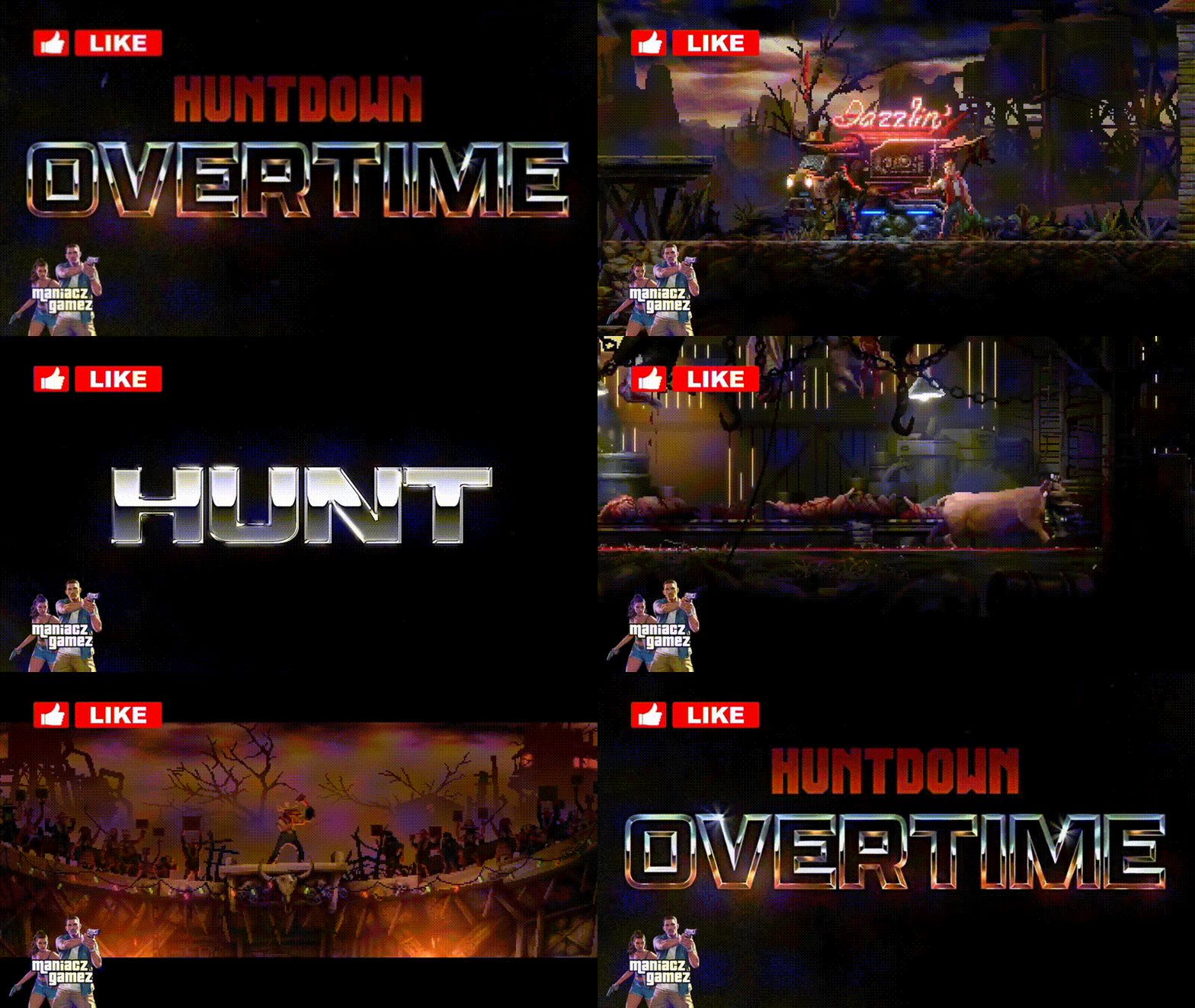
What is Huntdown: Overtime? Full Overview of the New Roguelite Prequel
Huntdown: Overtime is positioned as a roguelite prequel expansion to the critically recognized arcade-style action universe established by Huntdown (2020). The original game was known for its side-scrolling run-and-gun gameplay, neon-drenched cyberpunk cityscapes, and heavy inspiration from 1980s action cinema. Overtime expands this foundation by introducing procedural systems, persistent progression, and replay-driven structure that redefines how players interact with its world.
Unlike the structured level progression of the original title, Huntdown: Overtime leans heavily into roguelite design philosophy. Each run is designed to feel distinct through randomized enemy placement, evolving mission objectives, and branching upgrade paths. The goal is to maintain the arcade intensity of the original while introducing modern replayability systems that extend long-term engagement.
The game also builds deeper narrative connections to the Huntdown universe, expanding the origins of key characters and factions while exploring earlier stages of the cyberpunk criminal ecosystem that defined the original game’s setting.
Huntdown: Overtime Early Access Release Date and Platform Details
Huntdown: Overtime enters Early Access as part of a development strategy focused on community-driven iteration. While exact final release timing remains dependent on feedback cycles, Early Access ensures players gain access to core systems before full campaign completion.
The game is expected to launch primarily on PC platforms during Early Access, with potential console expansion later depending on optimization and content stability. This staged rollout allows developers to refine combat balance, procedural generation systems, and progression pacing.
Early Access typically includes a subset of weapons, enemies, and biomes, with additional content planned for phased updates leading to full release.
Official Launch Trailer Breakdown and Key Gameplay Moments Explained
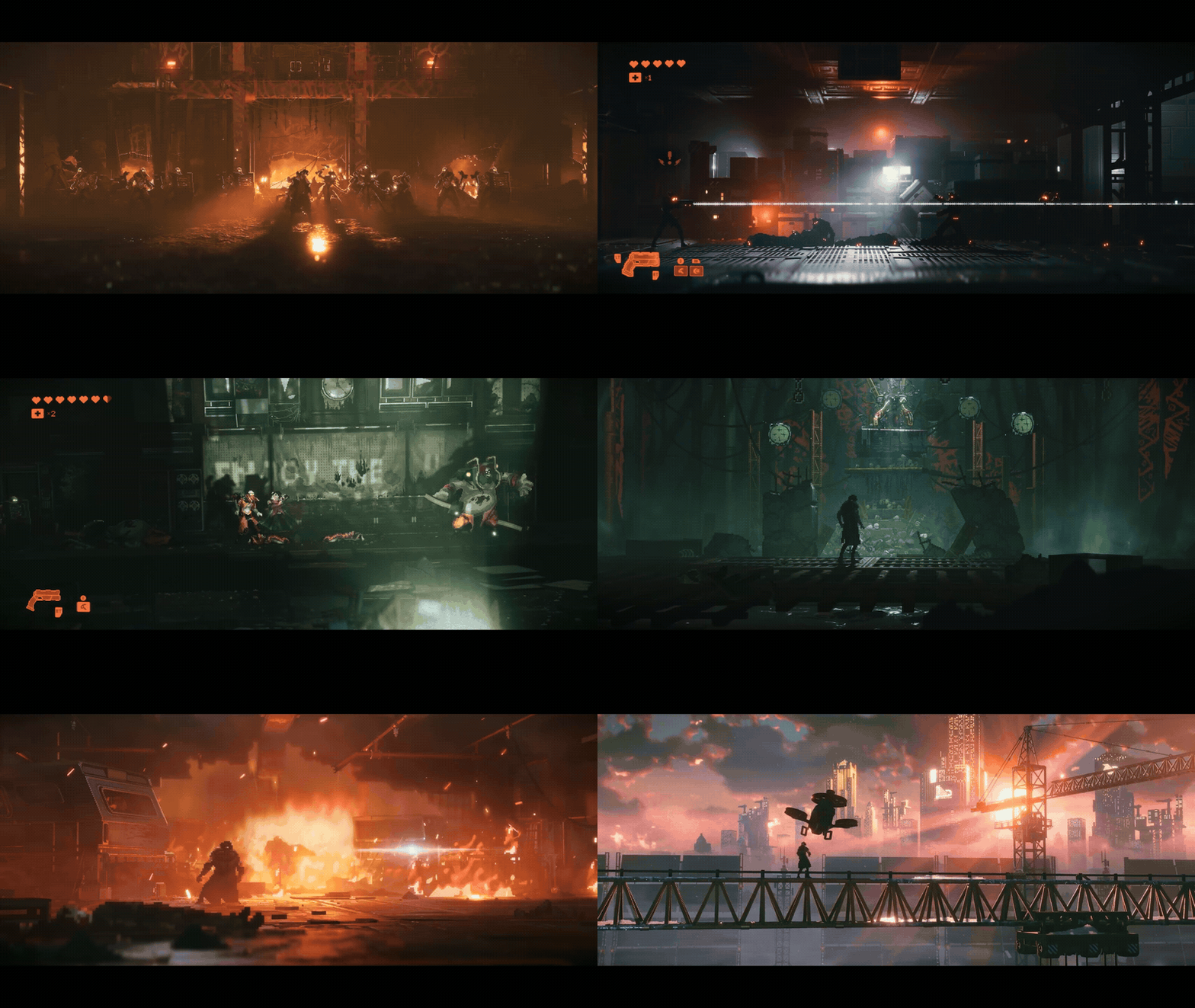
The official Early Access launch trailer for Huntdown: Overtime highlights several defining features of the game’s design direction. Rapid-fire combat sequences showcase the return of side-scrolling gunplay, while new roguelite mechanics are demonstrated through shifting environments and unpredictable enemy encounters.
Key moments in the trailer emphasize:
- Fast-paced weapon swapping during combat
- Dynamic enemy wave escalation
- Upgrade selection after run completion
- Neon-lit urban districts with procedural variation
The trailer also reinforces the game’s tone: a blend of retro arcade intensity and modern roguelite systems, maintaining the series’ signature humor and brutality while expanding mechanical depth.
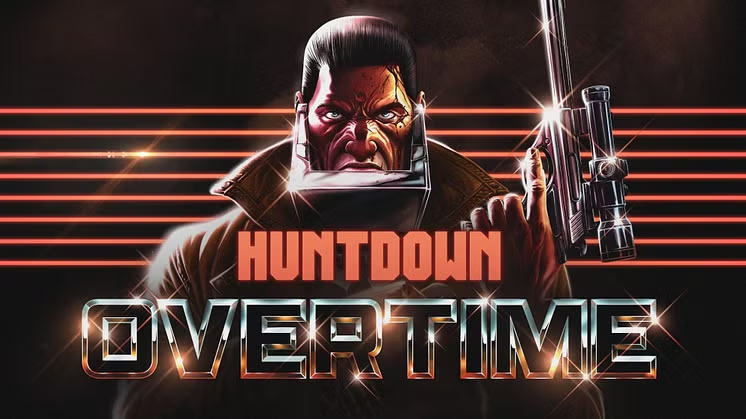
Story of John Sawyer: How Huntdown Overtime Expands the Huntdown Universe
John Sawyer returns as a central narrative figure in Huntdown: Overtime, though the game reframes his role within an earlier timeline of the universe. Instead of simply being a bounty hunter in a fully established criminal world, Overtime explores the formation period of the syndicates and power structures that later define the city.
The story focuses on escalating gang warfare, corporate corruption, and early cybernetic experimentation that reshapes society. John Sawyer’s journey is positioned as both personal and systemic, his actions influence the rise of factions that later dominate the original game.
This prequel structure allows the narrative to deepen world-building without contradicting established lore, instead expanding motivations, origins, and hidden relationships between characters and organizations.
Roguelite Gameplay Loop Explained: Hunt, Die, Upgrade, Repeat Mechanics
At the core of Huntdown: Overtime is a structured roguelite loop built around repetition and progression. Each run follows a cycle:
- Enter procedurally generated mission zone
- Engage enemies across multiple combat encounters
- Collect resources and temporary upgrades
- Face escalating difficulty tiers
- Die or complete run
- Spend earned currency on permanent upgrades
This loop encourages experimentation, as each attempt allows players to build different combat strategies depending on available weapons and upgrades. Failure is not a setback but a progression mechanic, reinforcing long-term character development.
Combat System Breakdown: Run-and-Gun Action Inspired by 80s Action Movies
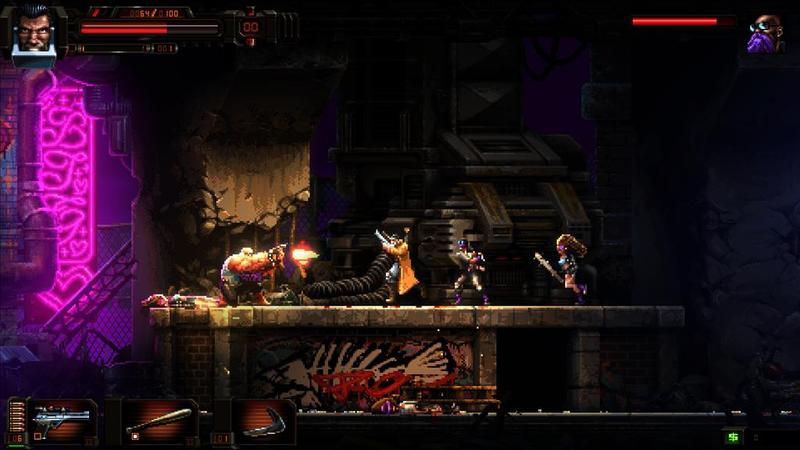
Combat in Huntdown: Overtime retains the original game’s run-and-gun DNA while increasing responsiveness and depth. Movement is fast, with emphasis on strafing, jumping, and quick weapon switching.
Enemy encounters are designed to mimic action movie set pieces, with explosions, environmental hazards, and multi-directional attacks. Players must constantly adapt positioning while maintaining offensive pressure.
Key combat features include:
- Momentum-based movement systems
- Coverless arena design encouraging aggression
- Enemy telegraph patterns for skill-based dodging
- Combo-based scoring incentives
The result is a combat system that rewards precision and adaptability over static strategy.

Cybernetic Upgrades System and How Permanent Enhancements Work
A major addition in Huntdown: Overtime is the cybernetic enhancement system. Unlike temporary run-based boosts, cybernetic upgrades provide permanent progression across runs.
Players can install enhancements such as:
- Reflex boosters for faster dodging
- Neural targeting systems for improved accuracy
- Armor plating for increased survivability
- Tactical scanning implants for enemy prediction
These upgrades create long-term identity development for each player’s build, allowing different playstyles to emerge over time. The system bridges roguelite randomness with RPG-like progression stability.
Weapons List in Huntdown: Overtime, Guns, Melee, and Tactical Gear Explained
Weapon variety plays a central role in gameplay diversity. Huntdown: Overtime expands the arsenal significantly compared to the original game.
Weapon categories include:
- Pistols: Fast, reliable, low recoil
- Shotguns: High burst damage at close range
- SMGs: Rapid-fire crowd control
- Rifles: Precision mid-to-long range combat
- Heavy weapons: Explosive area damage tools
- Melee weapons: Close-range finishers and stun tools
Tactical gear introduces utility-based mechanics such as grenades, traps, and deployable shields. Weapon synergy becomes a major factor in run success.
Procedural Runs and Level Progression in Huntdown: Overtime
Each run in Huntdown: Overtime is built using procedural generation systems that alter level layouts, enemy compositions, and loot distribution.
This ensures that no two runs are identical. Progression is divided into sectors, each increasing in difficulty and complexity. Players must adapt to unpredictable challenges rather than memorizing fixed stage layouts.
Procedural systems also affect boss encounters, introducing variant attack patterns and environmental modifiers.

Pixel Art Style and VHS-Inspired Visual Design Explained
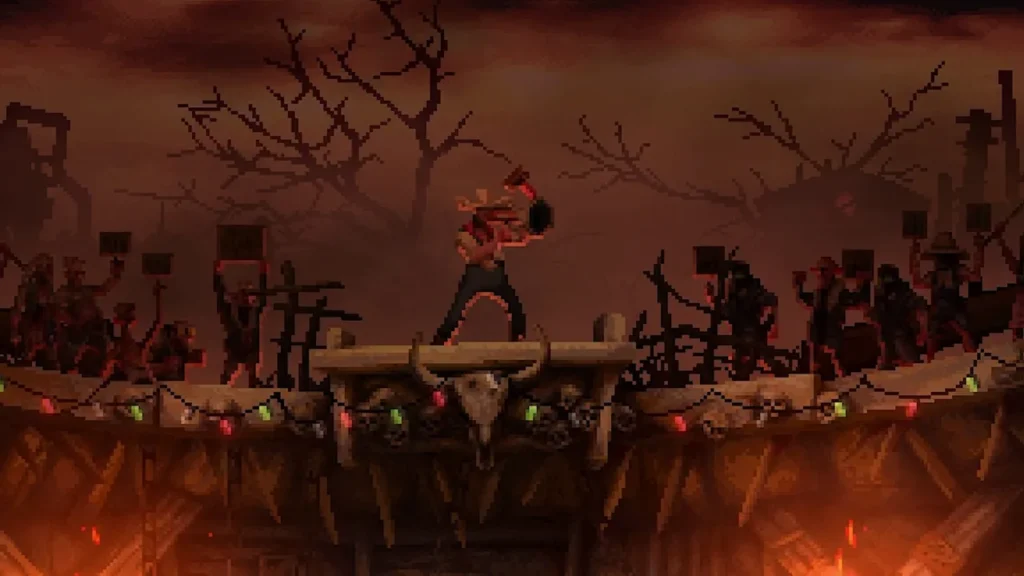
The visual identity of Huntdown: Overtime continues the franchise’s signature pixel art style but enhances it with modern lighting effects and VHS-inspired distortion filters.
Key aesthetic elements include:
- Neon cyberpunk color palettes
- Scanline and chromatic aberration effects
- Explosive particle animations
- Retro arcade cabinet presentation style
The result is a hybrid visual experience that blends nostalgia with contemporary visual fidelity.
Enemy Factions and Gang Territories You’ll Face in Early Access
Enemy design remains central to gameplay difficulty. Huntdown: Overtime introduces multiple gang factions, each with distinct combat styles and territory control themes.
These include:
- High-tech corporate enforcers
- Street-level cyber gangs
- Experimental augmented mercenaries
- Rogue AI-controlled security units
Each faction presents unique attack patterns, forcing players to adapt strategies depending on region and enemy composition.
How Early Access Will Shape Huntdown: Overtime Development
Early Access plays a critical role in shaping the final version of Huntdown: Overtime. Player feedback influences balancing, enemy AI refinement, and progression pacing.
Developers are expected to use Early Access data to:
- Adjust difficulty scaling
- Expand weapon variety
- Refine procedural generation logic
- Improve upgrade system balance
This iterative model ensures the final release aligns closely with community expectations.

Differences Between Huntdown (2020) and Huntdown: Overtime
While both games share a core identity, several key differences define their separation:
- Huntdown (2020): Linear arcade levels, fixed missions
- Huntdown: Overtime: Roguelite procedural structure
- Original game focuses on handcrafted stages
- Overtime emphasizes replayability and system-driven gameplay
- New cybernetic progression absent in original title
This evolution marks a shift from arcade precision to hybrid roguelite design.
Best Tips for Surviving Longer Runs in Huntdown: Overtime
Success in Huntdown: Overtime depends on adaptability and resource management. Key strategies include:
- Prioritize survivability upgrades early
- Learn enemy attack telegraphs
- Rotate weapons based on encounter type
- Avoid unnecessary damage to preserve run momentum
- Invest in permanent cybernetic upgrades consistently
Longer runs require balancing aggression with caution, especially in later procedural sectors.
Pixelhair and the View Keeper: Hidden References and Community Mentions in Huntdown: Overtime Coverage
Community discussions surrounding Huntdown: Overtime have highlighted obscure references and internal developer jokes, including mentions such as Pixelhair and The View Keeper. These elements are often interpreted as stylistic nods or internal lore fragments embedded within promotional or trailer analysis content.
While not officially defined narrative systems, these references contribute to ongoing fan theories regarding hidden systems, unused content, or symbolic storytelling layers within the game’s expanded universe.
Frequently Asked Questions (FAQs)
- What type of game is Huntdown: Overtime?
It is a roguelite action prequel with run-and-gun gameplay. - Is Huntdown: Overtime connected to the original Huntdown?
Yes, it expands the same universe as a prequel. - What platforms will it release on?
Primarily PC during Early Access. - Does the game have multiplayer?
Current focus is single-player progression systems. - What is new compared to the original game?
Procedural runs, cybernetic upgrades, and roguelite mechanics. - Can you permanently upgrade your character?
Yes, through cybernetic enhancement systems. - Is combat similar to the original Huntdown?
Yes, but with added depth and faster systems. - Are levels random in each run?
Yes, procedural generation is a core feature. - Does story continuity matter?
Yes, it expands the Huntdown universe timeline. - Will there be a full release after Early Access?
Yes, Early Access is a development phase toward full launch.
Conclusion
Huntdown: Overtime represents a significant evolution of the original franchise by blending arcade-style run-and-gun combat with modern roguelite systems. Through procedural design, permanent upgrades, expanded lore, and enhanced replayability, the game positions itself as both a continuation and reinvention of the cyberpunk action experience. Early Access development ensures that its final form will be shaped by iterative improvements and community engagement, making it one of the more dynamic evolutions in the genre.
Sources and Citations
- Huntdown Official Website — Official franchise materials, game information, media, and developer-facing links
- Huntdown on Steam — Official store page, release information, screenshots, trailers, updates, and player-facing materials
- Easy Trigger Games — Developer studio information and official Huntdown developer background
- Easy Trigger Games on X / Twitter — Developer announcements, updates, and Huntdown-related posts
- Huntdown on X / Twitter — Official Huntdown announcements, promotional posts, and community updates
- Devolver Digital — Publisher information, game catalogue, announcements, and promotional materials
- Huntdown on Devolver Digital — Publisher page for Huntdown, including official game description and media
- Devolver Digital on YouTube — Official trailers, gameplay videos, launch videos, and publisher announcements
- Huntdown Launch Trailer — Official release trailer published by Devolver Digital
- Huntdown Announcement Trailer — Early official trailer coverage and promotional material from Devolver Digital
Recommendations
- Bossfight Returns After Netflix Closure: Boss Fight Founders Relaunch Studio
- Scooby-Doo: Origins — First Look at the Cast and Full Title Revealed for Netflix’s Live-Action Series
- The Christophers Review (2026): Cast, Plot, Ending Explained & Why Steven Soderbergh’s Art Drama Is a Must-Watch
- Slay The Spire 2 Is Absolutely Crushing It With 400,000 Concurrent Players And A 97 Percent Positive Rating On Steam
- Top 10 Blender Add-ons for Camera Animation (Cinematic Shots & Workflow Boosters)
- How to Create Cinematic Motion Capture with Move One and Metahuman Animator on a Budget (No Mocap Suit Needed)
- Blender Camera Angles: Capturing the Perfect Shot with The View Keeper
- Project Hail Mary Video Game Gets Original Andy Weir Story in Journey Among the Stars
- What Is the Purpose of the Camera View in Blender?
- Suikoden Anime Trailer Breakdown: Suikoden: The Anime PV1 Reveals Cast, Story Clues, and October 2026 Release