







In This Article (9 sections)
Cyberpunk TCG Kickstarter Turns Night City into a Record-Breaking Physical Card Game
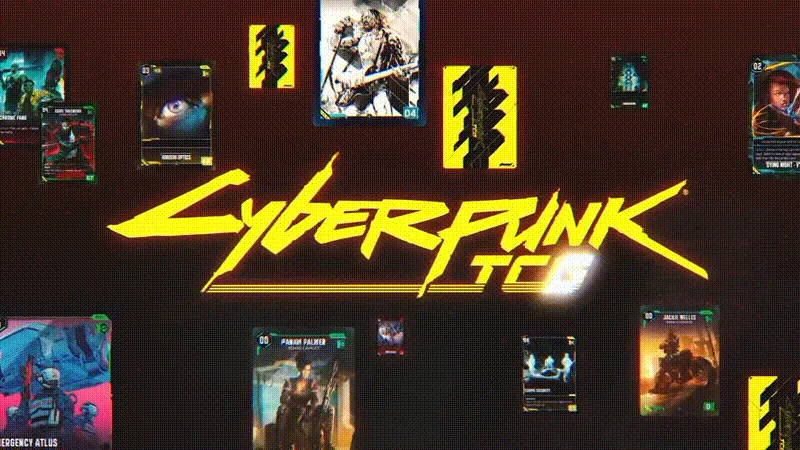
The Cyberpunk TCG is the official physical trading card game based on CD Projekt Red’s Cyberpunk universe, developed by WeirdCo in close collaboration with CD Projekt Red. The Kickstarter campaign launched on March 17, 2026, with the debut set titled Welcome to Night City, bringing characters, factions, locations, weapons, cyberware, and story themes from Cyberpunk 2077 into a competitive tabletop format.
The core idea is direct and very Cyberpunk: build an edgerunner crew, take dangerous Gigs, gain Street Cred, earn Eddies, and fight to become a Night City legend. CD Projekt Red described the project as the first time the Cyberpunk franchise has entered the physical trading card game space. The first set focuses mainly on Cyberpunk 2077 characters, including V, Jackie Welles, Johnny Silverhand, Judy Álvarez, Panam Palmer, Goro Takemura, Adam Smasher, and others. A second set is planned to expand the game further with Cyberpunk: Edgerunners characters.
The Kickstarter was more than a simple preorder campaign. It also worked as a demand test, a community-building tool, and a way to get product directly into the hands of players before scalpers or secondary-market resellers could control early supply. WeirdCo and Kickstarter framed the model as a response to a recurring trading card game problem: when a popular launch is too scarce, real players can struggle to buy sealed product at normal prices.
The campaign’s early success was immediate. The Cyberpunk Trading Card Game raised more than $7.5 million very quickly after launch, and the total continued climbing far beyond that figure. The Kickstarter page later showed 50,773 backers pledging $28,353,088, making it one of the biggest tabletop crowdfunding stories of 2026. Earlier reporting said the campaign reached its $100,000 goal in about five minutes and passed $13 million within nine days.
That speed showed demand from several overlapping audiences. Cyberpunk 2077 fans wanted a collectible physical extension of Night City. Trading card game players wanted to test a new system tied to a licensed universe with strong character identity. Collectors were drawn to Kickstarter Beta products, exclusive variants, foil promos, and stretch goal upgrades. Retailers also gained a clear signal that the game had an active audience before its broader retail release.
Kickstarter later reported that once the Cyberpunk TCG passed $15 million, it became the biggest TCG on Kickstarter and the biggest tabletop game in crowdfunding history at that time. The final total strengthened that achievement further and made the campaign a major moment for both Cyberpunk and the modern physical card game market.

How Cyberpunk TCG Gameplay Works, from Gigs and Eddies to Kickstarter Rewards
Official Cyberpunk TCG gameplay is built around becoming a Night City Legend by controlling Gigs. Each player leads a crew against a Rival, using a deck of cards and a set of six dice: d4, d6, d8, d10, d12, and d20. These dice represent Gigs, which function as the jobs, opportunities, and reputation-building objectives that crews fight over during the game.
The main win condition is to start your turn with seven Gigs in your Gig area. Each turn, players gain Gigs from the Fixer area, roll them, and use their dice values to build Street Cred. Street Cred can support or unlock card effects, while the Gigs themselves determine who is moving closer to victory. If a player begins their turn with seven Gig dice, they win. If the game reaches overtime after the last player’s seventh turn, the player controlling the majority of Gigs wins immediately.
Cards fall into four major types: Legends, Units, Programs, and Gear. Legends are centerpiece characters that begin face-down and can be called during the game. Units are crew members who enter the field, attack rival Units, and steal Gigs. Programs are instant effects that resolve and then go to the trash. Gear attaches to Units or Legends to improve their abilities. Together, these systems create a mix of combat, resource management, risk timing, and territory-style pressure around the Gig dice.
The rules use a two-phase turn structure. During the Start Phase, a player readies spent cards, draws one card, then gains a Gig by choosing and rolling one die from the Fixer area, with the d20 always taken last. During the Main Phase, a player can sell a card for an Eddie once per turn, play cards by spending Eddies, call a Legend once per turn, and attack with Units.
Eddies are the game’s currency. Players create Eddies by selling cards from hand and placing them face-down in the Eddies area. Each sold card becomes worth one Eddie and can be spent to pay costs. Legends can also be spent as one Eddie, whether they are face-up or face-down. This creates a constant hand-management decision, since every card can be a future play or a resource.
Combat is direct and tactical. Units attack individually. A Unit can attack a spent rival Unit to start a fight, or attack the Rival’s Gig area to steal a Gig. When Units fight, their power values are compared. The higher-power Unit defeats the other, while ties defeat both. When attacking a Gig area, the attacker steals a Gig, with stronger Units stealing extra Gigs at higher power thresholds. Reaction tools such as Quick and Blocker allow the defending player to interrupt, redirect, or respond.
The campaign funded so quickly because it combined a major license with smart timing and a direct-to-player strategy. Cyberpunk 2077 had recovered strongly after its difficult launch, Phantom Liberty strengthened the franchise’s reputation, and Cyberpunk: Edgerunners introduced Night City to anime audiences. By 2026, Cyberpunk had a fan base that extended far beyond video games.
The trading card game market also helped create the moment. Modern TCGs have drawn huge interest, but players have also been frustrated by scarcity, resale pricing, and sealed product speculation. Kickstarter’s case study said WeirdCo used the campaign to supply demand directly by sending product to every backer who wanted it, helping reassure players that the first wave would not be trapped behind inflated secondary-market prices.
The campaign’s rewards reinforced that appeal. Kickstarter rewards included starter decks, booster displays, Beta products, accessories, promo cards, and stretch goal bonuses. Backers at the Netrunner Starter Kit tier and above were listed as receiving a free Beta Box, which included items such as a booster pack, a zoned rubber playmat, unlocked Legends from stretch goals, and additional cards or goodies as goals expanded.
The official FAQ explained that Kickstarter starter decks and booster boxes would carry a Beta symbol, separating them from later retail products. It also stated that Kickstarter products would contain art variants exclusive to the Kickstarter Beta product. Each starter deck was confirmed to include five mechanically unique cards exclusive to that product. Promotional Edgerunners-related cards also added to the campaign’s appeal, including eligibility for non-foil and foil Nova Rare Lucy cards based on early newsletter signup or campaign follow actions.

Cyberpunk TCG Deck Building, Early Impressions, and What Makes it Different
Cyberpunk TCG deck building uses Legends as both identity and restriction. A deck must use exactly three unique Legend cards. The main deck must contain at least 40 cards and no more than 50 cards, not counting Legends. Players may include no more than three copies of the same card.
The most important deck-building restriction is RAM. Each Legend has colored RAM values, and those values determine what cards can be included in the deck. A card’s RAM color and value must fit within the total RAM provided by the player’s three Legends. For example, if a player’s Legends provide Green RAM and Red RAM, the deck can include cards in those colors only up to the limits supported by those Legends.
That makes Legend selection more than a flavor choice. Choosing three Legends defines your available colors, your maximum card power level, and the likely direction of your strategy. A deck focused on high-cost aggressive Units will want different Legends from a deck built around Programs, defensive tools, or Gear-heavy board control.
Early impressions of the Cyberpunk TCG are strongest when the game is understood as a fast, physical, risk-driven card game rather than a direct clone of existing TCG systems. The Gig dice are the most distinctive feature. They create a visible battlefield objective, a countdown to victory, and a changing Street Cred total that makes each turn feel different.
The game also appears approachable. The card types are easy to understand, the win condition is clear, and the use of Eddies gives players a familiar resource structure. At the same time, there are meaningful decisions in when to sell cards, when to expose a Unit by attacking, when to keep a blocker ready, and when to call a Legend.
The theme fits the mechanics especially well. Stealing Gigs, spending Eddies, calling Legends, equipping cyberware-like Gear, and fighting over reputation all feel appropriate for Night City. The randomness of face-down Legends and rolled dice may not appeal to every competitive player, but it gives the game a tense, messy Cyberpunk identity.
Cyberpunk TCG shares familiar DNA with games such as Magic: The Gathering, Duel Masters, and other lane-free combat TCGs, but its identity comes from the Gig system. Instead of simply reducing an opponent’s life total, players fight over dice that represent jobs and reputation. This creates a tug-of-war structure where players can lose progress if their Gigs are stolen.
Compared with Magic, Cyberpunk TCG looks less focused on land-based mana development and more focused on converting hand cards into Eddies. Compared with Pokémon, it is not built around evolving a central attacker or prize cards. Compared with Lorcana, it uses direct theft of victory objects rather than racing to a lore total. Its closest feel may be a hybrid of creature combat, resource conversion, and board-objective control.
The physical dice requirement also gives the game a tabletop texture that stands out in the TCG space. Dice are not just random counters. They are Gigs, Street Cred values, and the center of the win condition. That makes the game feel connected to Cyberpunk’s role-playing roots while still functioning as a trading card game.
The campaign’s success came from solving several problems at once. It let WeirdCo measure demand before printing at scale. It gave players a direct route to product. It gave collectors limited Beta items. It gave retailers proof that the game could attract a large community. It also gave CD Projekt Red a new physical product category without treating the license as a simple reskin. At the same time, the scale of the campaign created pressure. Raising more than $28 million means backers will expect timely fulfillment, durable card quality, balanced gameplay, organized play support, and long-term planning.

CD Projekt Red, WeirdCo, Edgerunners, and Whether the Cyberpunk TCG Was Worth Backing
CD Projekt Red’s role is central because the Cyberpunk TCG is an official Cyberpunk product, not an unofficial fan project. CD Projekt Red announced the Kickstarter alongside WeirdCo and stated that the game is being developed in close collaboration with the studio. The company also confirmed that the game covers Cyberpunk 2077, Cyberpunk: Edgerunners, and more from the franchise.
The debut set, Welcome to Night City, is tied closely to Cyberpunk 2077. CD Projekt Red specifically highlighted V, Jackie Welles, Johnny Silverhand, Judy Álvarez, and other recognizable characters. The official site’s card database also shows characters and items from across Night City, including Adam Smasher, Rebecca, Goro Takemura, Panam Palmer, Kerry Eurodyne, Viktor Vektor, Mantis Blades, Sandevistan, Gorilla Arms, and Overwatch.
That matters because the Cyberpunk universe is character-driven. A TCG based on the license needs more than neon visuals. It needs recognizable crews, factions, cyberware, weapons, and story references. The first set appears designed to establish that foundation by tying mechanics and collectibles directly to the world players already know.
WeirdCo is the developer and producer behind the Cyberpunk TCG. The company has presented the project as a community-first trading card game focused on in-person play, local stores, and long-term player support. Kickstarter’s case study said WeirdCo wanted to avoid a launch where speculators bought up early supply and pushed players into inflated secondary-market prices.
The company’s strategy included demo materials, content creator feedback, surveys, community engagement, and a strong “No A.I.” policy for the game’s creative direction. Kickstarter’s interview with WeirdCo co-founder and president Elliot Cook also emphasized organized play and local game nights as core measures of success.
WeirdCo’s challenge now is execution. The company must deliver a game that works beyond the Kickstarter hype cycle. That means stable rules, readable cards, balanced starter products, credible tournament support, and a retail pipeline that does not recreate the scarcity problems the campaign was designed to avoid.
The Cyberpunk TCG also has a clear Edgerunners connection, although the first set is not fully centered on the anime. CD Projekt Red said Welcome to Night City focuses on Cyberpunk 2077 characters, while Set 2 will fully introduce Cyberpunk: Edgerunners. Still, Edgerunners characters already appear in the campaign’s promotional structure and early card database.
Rebecca appears as a Legend card in the official database. Lucy, David, and Rebecca are also connected to Nova Rare promotional cards mentioned in the Kickstarter FAQ. The free Lucy card promotion was one of the clearest examples of the campaign using Edgerunners’ popularity to build early interest.
The planned second set could be important for the game’s long-term momentum. Cyberpunk: Edgerunners introduced many fans to Night City through a more emotional, character-focused story. Bringing those characters fully into the TCG gives WeirdCo a strong second-wave hook after the Cyberpunk 2077-heavy launch set.
For many backers, the Cyberpunk TCG was worth backing because it offered early access to Beta products, Kickstarter-exclusive art variants, starter decks, booster displays, and promotional rewards. It was also a strong fit for Cyberpunk fans who wanted a physical collectible game tied directly to CD Projekt Red’s universe.
Still, the campaign was not risk-free. Kickstarter products depend on manufacturing, shipping, fulfillment, and post-launch support. Trading card games also need active communities. A massive crowdfunding total does not automatically guarantee a balanced competitive environment or lasting organized play. For collectors, the campaign had obvious appeal. For players, the strongest reason to back was the availability of demo rules and the promise of direct fulfillment. For cautious buyers, waiting for retail remains reasonable, especially since the retail release is expected after the Kickstarter waves.

Cyberpunk TCG Release Date, Fulfillment Waves, and What Players Should Expect Next
The Cyberpunk TCG’s debut set, Welcome to Night City, is planned to launch later in 2026. The official FAQ states that Kickstarter rewards will be delivered in two waves, giving backers a clearer idea of when different products are expected to arrive.
The first wave begins in Q3 2026 and includes starter decks, Beta booster displays, add-on starter decks, and add-on Beta booster displays for relevant pledge tiers. These products are likely to form the first major wave of hands-on play, since they include the core cards needed to begin building decks and testing the game beyond print-and-play materials.
The second wave begins in Q4 2026 and includes accessories, Beta Box items, add-on accessories, Lucy cards, and other remaining products. This later wave appears to cover more of the campaign’s promotional, collector-focused, and accessory-related items.
Retail release is expected after the Kickstarter rollout. Kickstarter reported WeirdCo’s plan to prepare for retail in Q4 2026, which means the game’s broader availability should follow the backer fulfillment phase. Players should expect the first months of the game to focus on starter decks, booster products, local store support, and organized play programs such as Night City Showdown events.
The next major test is not whether people are interested. The campaign already proved that. The real test is whether WeirdCo can fulfill rewards smoothly, keep product accessible, support local play, maintain balance, and build organized play trust. If those pieces hold, Cyberpunk TCG could move from crowdfunding phenomenon to one of the most important new physical trading card games of 2026.

Frequently Asked Questions (FAQs)
- What is the Cyberpunk TCG?
The Cyberpunk TCG is the official physical trading card game based on CD Projekt Red’s Cyberpunk universe. It is developed by WeirdCo in collaboration with CD Projekt Red and focuses on building an edgerunner crew, taking Gigs, gaining Street Cred, spending Eddies, and becoming a Night City legend. The first set, Welcome to Night City, is mainly tied to Cyberpunk 2077. - How much did the Cyberpunk TCG raise on Kickstarter?
The campaign quickly passed $7.5 million and later reached $28,353,088 from 50,773 backers on Kickstarter. That total made it one of the biggest tabletop crowdfunding campaigns ever and showed strong demand from Cyberpunk fans, TCG players, collectors, and retailers. - When did the Cyberpunk TCG Kickstarter launch?
The Kickstarter campaign launched on March 17, 2026. It reached its $100,000 funding goal very quickly, with reports saying it hit that target in about five minutes. The campaign continued growing rapidly after that, passing major funding milestones within days. - Who is making the Cyberpunk TCG?
The game is being made by WeirdCo in close collaboration with CD Projekt Red. CD Projekt Red is the official company behind Cyberpunk 2077 and Cyberpunk: Edgerunners, while WeirdCo is responsible for developing and producing the physical trading card game. - What is the first Cyberpunk TCG set called?
The first set is called Welcome to Night City. It focuses mainly on Cyberpunk 2077 characters and themes, including V, Jackie Welles, Johnny Silverhand, Judy Álvarez, Panam Palmer, Goro Takemura, Adam Smasher, and other major figures from Night City. - How do you win in Cyberpunk TCG?
You win by starting your turn with seven Gigs in your Gig area. Gigs are represented by dice, and players can gain, protect, and steal them during the game. If the match reaches overtime after the last player’s seventh turn, the player who controls the majority of Gigs wins immediately. - What card types are in Cyberpunk TCG?
The main card types are Legends, Units, Programs, and Gear. Legends are key characters that help define your deck, Units fight rival cards and steal Gigs, Programs create instant effects, and Gear attaches to Units or Legends to improve what they can do. - Is Cyberpunk: Edgerunners in the TCG?
Yes, Cyberpunk: Edgerunners is connected to the TCG. The first set includes some Edgerunners-related promotional material and cards, while Set 2 is planned to fully introduce Edgerunners characters. Lucy, David, and Rebecca have already been tied to promotional or database content. - When will Cyberpunk TCG Kickstarter rewards ship?
The official FAQ says fulfillment is planned in two waves. Wave one begins in Q3 2026 with starter decks and booster displays, while wave two begins in Q4 2026 with accessories, Beta Box items, Lucy cards, and other remaining promotional products. - Will Cyberpunk TCG come to retail?
Yes, retail release is expected after the Kickstarter phase. Kickstarter materials said the campaign would help WeirdCo measure demand and prepare for retail release later in 2026. Retail availability will be important for building long-term local play and organized events.
Conclusion
The Cyberpunk TCG is more than a licensed card game riding on the Cyberpunk name. Its Kickstarter success shows how much demand exists for a physical Night City experience, but the game’s real promise is in its mechanics. The Gig dice system gives every match a clear objective, the Eddies economy forces meaningful hand-management decisions, and the Legend system gives deck building a strong identity.
Its rapid rise past $7.5 million and eventual climb beyond $28 million prove that WeirdCo and CD Projekt Red found a powerful opening. The next test is fulfillment, balance, retail support, and organized play. If those pieces hold, Cyberpunk TCG could become one of the most important new trading card games of 2026.
Sources and Citations
- CD PROJEKT RED, Cyberpunk Trading Card Game Launches Kickstarter Campaign
https://www.cdprojekt.com/en/media/news/cyberpunk-trading-card-game-launches-kickstarter-campaign/ - Official Cyberpunk Trading Card Game website
https://www.cyberpunktcg.com/ - Official Cyberpunk Trading Card Game – Gameplay Guide
https://www.cyberpunktcg.com/gameplay - Official Cyberpunk Trading Card Game – FAQ
https://www.cyberpunktcg.com/faq - Kickstarter, The Official Cyberpunk Trading Card Game campaign
https://www.kickstarter.com/projects/cyberpunktcg/the-official-cyberpunk-trading-card-game - Kickstarter, Case Study: Cyberpunk Trading Card Game Campaign
https://updates.kickstarter.com/cyberpunk-trading-card-game-case-study/ - Kickstarter, Cyberpunk Trading Card Game becomes the most-funded game in crowdfunding history
https://updates.kickstarter.com/cyberpunk-trading-card-game-most-funded-game/ - GosuGamers, Cyberpunk Trading Card Game raises more than US$13 million in just nine days
https://www.gosugamers.net/entertainment/news/78170-cyberpunk-trading-card-game-raises-more-than-us-13-million-in-just-nine-days
Recommendations
- Creating Parallax Effect with Godot: Parallax2D Setup, Infinite Backgrounds, and Common Fixes
- Sega Wants Virtua Fighter Crossroads to Be More than Just Another Fighting Game: Story Mode, New Direction, and Gameplay Overhaul Explained
- Tales of Eternia Remastered Will Be Released for Consoles and PC on October 16
- How do I make the camera look at an object automatically in Blender?
- Firefighting Simulator: Ignite Motor Vehicle Accident Expansion Announcement Trailer Explained, New Crash Rescue Missions, Vehicles, and Gameplay Features
- V-Ray Is Now Free For Blender Users: What the New Community Edition Means for 3D Artists
- Hell Let Loose: Vietnam Delayed to August 13, 2026 New Release Date, Beta Plans, and What Changes
- Nordic Game 2026 Announces New Speakers: Planet of Lana Developers Confirmed for Featured Session
- RapidPipeline plug-in Substance 3D Painter: CAD Import, One‑Click Data Prep, and Automatic UV Workflows
- Blood Message Preview: God of War Finally Has Competition in the Bloodiest Action Game in Years



































































































