




In This Article (13 sections)
Playground Games’ Fable Hero Design Cycling Controversy and Character Customisation Explained
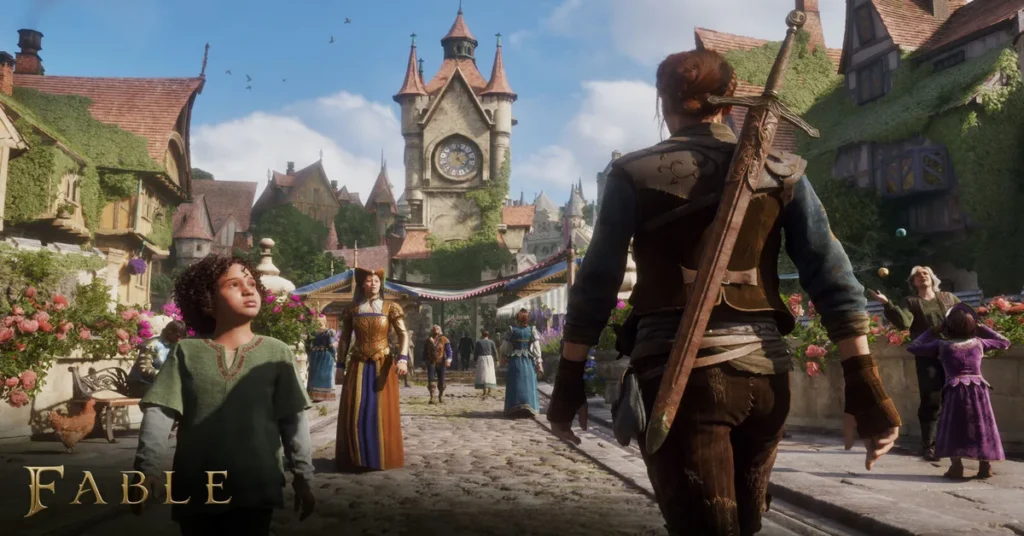
The upcoming Fable has spent years under unusually close scrutiny, and few aspects of the reboot have generated as much discussion as the appearance of its playable Hero. Different trailers and gameplay demonstrations have shown Heroes who do not look identical, prompting speculation that Playground Games repeatedly redesigned the protagonist or altered the character in response to online criticism.
More recent comments from Fable General Manager and Game Director Ralph Fulton point to a considerably simpler explanation: viewers have been seeing different possibilities created through the game’s character customisation system rather than a single fixed protagonist being continually redesigned. Recent reporting on Fulton’s comments describes the apparently “new” protagonist as another example of what players can create, while Xbox had already officially confirmed character customisation during the January 2026 Developer Direct.
The controversy largely emerged because the reboot’s marketing did not initially make it clear that each Hero appearance should be understood as one possible player created character. Earlier promotional material repeatedly placed particular Hero designs at the centre of trailers, so when later gameplay showed a noticeably different looking protagonist, some viewers interpreted the change as a redesign of the same canonical character. September 2026 reporting on Fulton’s response instead indicates that Playground Games was demonstrating the freedom available through the character creator.
That explanation fits information the studio had already made public months earlier. At Developer Direct on January 22, 2026, Xbox Wire explicitly confirmed character customisation. Fulton said the studio had been keeping that information quiet for years and was pleased finally to clarify that Fable includes character customisation, adding that players can be the Hero they want to be. Xbox’s official description likewise states that players can customise their Hero’s appearance.
How Customisation Reflects Player Identity and Reputation
That distinction is important because the new Fable is built around player identity. Xbox describes the game as an open world action RPG in which players can customise their Hero’s appearance, shape their reputation, and decide what kind of Hero they want to become. Playground Games has simultaneously reworked other identity systems associated with classic Fable, replacing the old objective good versus evil morality model with reputations determined by what the people of Albion witness and how individual characters judge those actions. Character appearance therefore forms part of a broader system designed to give players more control over who their Hero becomes and how that Hero is perceived.
Consequently, “hero design cycling” is better understood as marketing material rotating through possible Hero configurations than as evidence that Playground has repeatedly replaced one fixed lead character. There can still be changes to character assets during normal game development, but the public evidence does not support treating every different face shown in promotional footage as evidence of a reactionary redesign. Instead, the different appearances shown so far are consistent with Playground Games demonstrating the range of Heroes players can create through Fable’s confirmed character customisation system.

Fable Character Customization Explains the Hero’s Changing Appearance
Ralph Fulton’s broader comments about Fable consistently emphasise freedom and player authorship. In his January 2026 Xbox Wire interview, he described freedom as one of the fundamental qualities Playground Games identified when deciding what makes Fable distinctive: freedom to choose where to go, what to do, and what kind of Hero to become. Character customisation fits naturally into that philosophy rather than existing as an isolated cosmetic feature.
When later footage appeared to feature a different protagonist, Fulton’s explanation pointed to character customisation rather than a major redesign. Reporting on his comments said the supposedly “new” protagonist was simply another example of what players could create through the character creator. That explanation is consistent with an RPG in which different demonstrations can naturally use different player characters instead of repeatedly showing one fixed promotional face.
The strongest evidence comes from Playground’s earlier confirmation of the feature. Xbox Wire’s Developer_Direct coverage explicitly confirmed character customisation, while the official game description states that players can customise the Hero’s appearance. Fulton also said Playground had been “sitting on” the feature for years, which is important when evaluating claims that character customisation was introduced hurriedly in response to criticism.
Reports from the January 2026 reveal described different heads or character models that players could use when constructing their Hero. Some preview coverage has also mentioned additional appearance options, although Playground has not yet published a complete technical breakdown of every slider, preset, or category available in the final interface. The clearest conclusion is that Fable definitely includes appearance customisation and has demonstrated different selectable Hero appearances, even though every detail of the creator has not yet been formally documented.
Customization and Hero Identity
This also explains why the Hero can look different across gameplay footage. Each demonstration can use a different character configuration, helping Playground communicate that the face shown on screen is not necessarily the appearance every player must use. The January Developer_Direct made that distinction much clearer by explicitly confirming customisation, while Xbox’s description of the game uses the phrase “Be the Hero you want to be” and connects that freedom to appearance, weapons, combat, reputation, relationships, and other role playing systems.
Not every visual difference between trailers necessarily comes from the character creator. Footage produced years apart can also differ because of normal changes to lighting, animation, rendering, hairstyles, clothing, and other assets during development. However, Fulton’s explanation resolves the central question surrounding the different protagonist identities: viewers should not assume every Hero shown in promotional material is intended to represent the same fixed person.
Fable’s customisation also extends beyond appearance. Playground has designed the reboot so the Hero is shaped by behaviour as well as looks. The reputation system records witnessed actions and allows different settlements and residents to develop their own opinions of the player. Fulton used the familiar example of kicking chickens, explaining that witnesses may associate the Hero with the “Chicken Chaser” reputation while individual NPCs can still react differently because morality is no longer represented as a single universal scale.
This effectively combines visual and social customisation. The player chooses how the Hero looks, while actions determine how Albion understands that Hero. Reputation can influence relationships, romance prospects, and even certain shop interactions, making identity something that develops through both character creation and behaviour.
Why Fable’s Hero Changes Are Not Evidence of a Backlash Redesign
There is no strong evidence that Playground Games introduced different Hero appearances because of fan backlash. The available timeline instead supports the explanation that character customisation had already been part of the game for a considerable period. Playground publicly confirmed the feature in January 2026, and Fulton said at the time that the studio had kept it under wraps for years. Months later, when another Hero appearance renewed redesign speculation, reporting on Fulton’s response once again identified the character creator as the reason for the difference.
Criticism of earlier promotional Heroes did exist, and discussions about character appearance have followed the reboot throughout its marketing. However, the existence of criticism does not establish that it caused Playground to replace or redesign the protagonist. The more defensible explanation is that earlier marketing led some viewers to interpret a demonstration Hero as the game’s permanent lead because the full character creator had not yet been explained.
Once Playground formally revealed character customisation, the different faces shown across footage became easier to understand as examples of possible Heroes rather than replacements for one predefined protagonist. Fulton’s later comments effectively reject the idea that viewers have been watching a sequence of permanent character changes. September reporting characterised the supposedly new Hero as another demonstration of the creator and the freedom available to players.
His response also matches what he had already said through Xbox months earlier. Fulton explained in January that character customisation had been planned for years and had simply not been publicly discussed. He framed it as part of Playground’s wider goal of allowing players to become the Hero they want rather than forcing everyone into one immutable character design.
That chronology is particularly important when assessing claims that customisable Heroes were suddenly introduced to answer recent social media backlash. Such a theory would have to account for Playground publicly confirming the system months earlier and stating that it had already existed internally for years. Based on the information provided by Playground, there is no credible evidence that the different Hero appearances represent backlash driven redesigns rather than the normal use of Fable’s character customisation system.
Fable Character Creation, Face Options, and Customizable Hero Design
Based on currently confirmed information, Fable allows players to determine the visual appearance of the adult Hero they will control throughout most of the game. Developer_Direct coverage reported multiple character models or heads, while Xbox officially confirms appearance customisation. Playground has not yet released a final, exhaustive interface guide explaining every category and numerical option, so claims about specific slider counts should be treated as unverified unless the studio publishes them.
The Hero’s life begins before that adult phase. Fulton says players start the story as a child when their heroic powers emerge. The narrative later jumps forward to adulthood in Briar Hill, after which the Hero is played as a mature adult. The central incident occurs when the Hero’s grandmother and the village are turned to stone, sending the player out into Albion. Once in the open world, identity continues developing through gameplay. Players can pursue jobs, relationships and wealth, establish different reputations across settlements and, according to Xbox’s official description, romance villagers, have children and participate in economic activities.
Fable also allows meaningful control over the Hero’s face or head selection, although it is important not to overstate what has been confirmed. January 2026 coverage of the Developer_Direct described various heads or multiple character models from which players can choose, and Xbox officially states that the Hero’s appearance is customisable. What has not been conclusively documented by Playground in its public written material is a highly granular face sculpting system comparable to RPGs that allow individual adjustment of jaw width, eye spacing, nose bridge measurements and dozens of other facial parameters. Current information points more clearly toward selectable designed heads or models supplemented by other appearance choices than toward a confirmed full facial sculpting suite.
Hero Flexibility and Unconfirmed Creation Options
Players are therefore not locked to the face repeatedly used in earlier Fable marketing. The Hero’s appearance can be changed, but whether the launch version permits extremely detailed anatomical sculpting remains a separate question that Playground has yet to define publicly. The same caution applies to male and female character creation options. Fable’s rotating promotional Heroes demonstrate that Playground does not want the identity of the player character to be reduced to one permanently fixed marketing model. However, the studio’s official written materials available as of September 14, 2026 are less specific about every sex, gender, body type and voice option than they are about appearance customisation generally.
Xbox confirms that players can customise their Hero, but it has not published a definitive creator manual cataloguing every body or gender selection. Different looking Heroes and selectable heads are confirmed in coverage, while an exact number of male or female presets, body frames, voices or gender dependent choices is not yet comprehensively documented in Playground’s public feature descriptions. Players should therefore expect a customisable protagonist but should wait for Playground’s complete creator demonstration before treating detailed option lists circulating online as final.
Playground’s Fairytale Philosophy and Living World
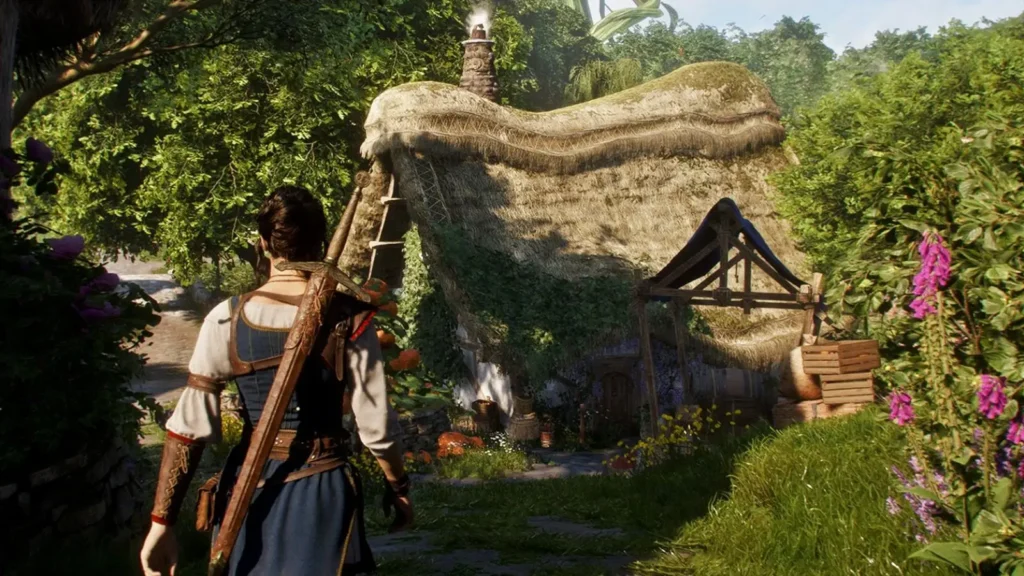
Playground’s approach to the Hero also reflects its broader philosophy for the reboot. Fulton has repeatedly described the project as a “new beginning” rather than an attempt to imitate Lionhead. Although Playground inherited development documents and ideas from the original creators, Fulton said the team recognised that it was not Lionhead and needed to make “Playground’s Fable.” One inherited principle was a concise description found in Lionhead material: Fable should function as a fairytale rather than conventional grand fantasy. Playground has consequently emphasised intimate stories, ordinary people encountering magic, British humour, moral choices and personal consequences.
The studio has taken an unusually hands on approach to Albion’s other characters as well. Fulton says the Living Population contains more than 1,000 NPCs with roles, personalities and routines. More recent development reporting says Playground experimented with randomised NPC creation but abandoned it because automated combinations could generate characters whose occupations, preferences or appearances did not make coherent sense. The team instead pursued individually designed inhabitants. The customisable Hero therefore sits inside a world intentionally built around identity, personality and social reaction.
Fable Character Creator Features, Gameplay, and Customization Details
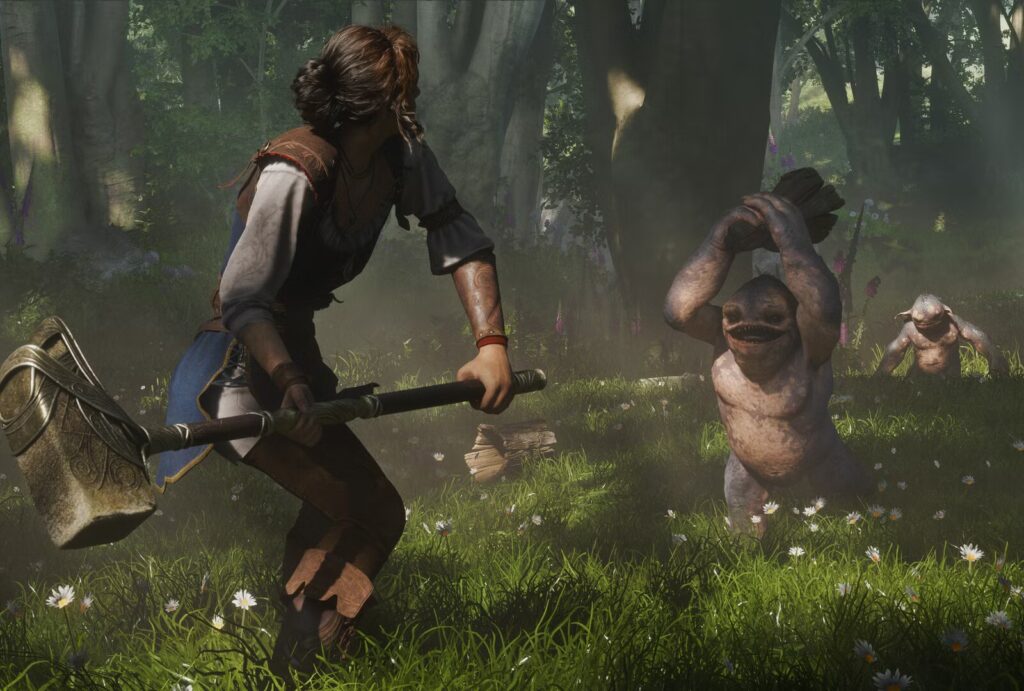
The biggest unanswered questions concern the depth of Fable’s character creator. Playground has confirmed customisable appearance and multiple possible Hero looks, but many players understandably want to know whether the finished creator includes detailed facial sliders, independent body customisation, numerous voices, extensive hairstyles, tattoos, scars, makeup, age related options and the ability to modify appearance after beginning the adventure. Not all of those possibilities have been formally confirmed in official documentation.
Another important question involves the old Fable morality morphing system. In earlier entries, extreme moral alignment could visibly transform a Hero. The reboot is moving away from that objective good versus evil model. Fulton explained that morality is now subjective and expressed through reputations that can differ from settlement to settlement. Reporting on the reboot confirms that the classic morality based physical transformation system, such as halos or demonic characteristics tied to alignment, is not being used in the same way. That makes manual visual customisation more important because the game no longer needs to force every Hero’s body into one universal visual representation of “good” or “evil.”
Character customisation also extends beyond physical appearance. Fable is an open world action RPG that allows the player to leave Briar Hill and travel widely across Albion without conventional level gates preventing access to particular regions. Fulton said Playground built progression around the principle that players should be able to visit settlements in whichever order they choose. The main story is deliberately structured without a constant timer so players can stop pursuing the central quest, take a job, explore, build relationships or settle into Albion’s life simulation systems.
Style Weaving Combat and Layered Customization
Combat is built around what Playground calls “style weaving,” combining melee, ranged attacks and magic. The objective is to let players shift smoothly between those approaches rather than being locked to one combat archetype. Different spells and weapons support further personalisation of fighting style. Customisation therefore exists at several levels. Players choose how their Hero looks, how the Hero fights, where the Hero travels, what relationships the Hero develops and what reputations are earned. The game’s more than 1,000 persistent NPCs are designed to react to those choices, giving the custom character a social presence in Albion rather than functioning simply as a different face placed into an otherwise unchanged adventure.

Frequently Asked Questions
- What platforms will Fable be available on?
Playground’s official FAQ lists Xbox Series X|S, Steam, and PlayStation 5 for launch. Xbox also confirms availability through Xbox on PC, cloud support, and day one access through Game Pass, giving players several ways to play across console, PC, and supported cloud devices. - Does the new Fable have a character creator?
Yes. Playground Games officially confirmed character customisation during Developer Direct in January 2026. Xbox’s current description also states that players can customise their Hero’s appearance, meaning the protagonist is not limited to a single predetermined look. - Why does the Fable protagonist look different in newer gameplay?
Ralph Fulton’s explanation, as reported in September 2026, is that the different Hero designs are examples of the game’s character customisation system. Rather than Playground repeatedly replacing or redesigning one fixed protagonist, the different appearances demonstrate some of the Heroes players can create. - Did Playground Games redesign the Fable Hero because of backlash?
There is no verified evidence showing that the Hero was redesigned because of online backlash. Character customisation was publicly confirmed in January 2026, and Fulton later said Playground had deliberately kept the feature secret for years. That makes claims that the system was suddenly introduced in response to later criticism difficult to support. - Can you change your face in Fable?
Yes, players can choose between different Hero appearances, with Developer Direct coverage describing different heads or character models. However, Playground has not yet provided a complete breakdown of the character creator, so it remains unclear whether players will have detailed facial sculpting sliders or primarily select and combine predetermined appearance options. - Is the woman shown in older Fable trailers the only playable Hero?
No. The Hero shown in earlier promotional material represents one possible appearance rather than the only playable protagonist. Xbox has officially confirmed character customisation, while newer demonstrations have shown Heroes with noticeably different appearances to illustrate that players have choices over how their character looks. - Will morality change your Hero’s physical appearance in the new Fable?
Not through the classic objective morality system associated with visible halos, horns, or demonic transformations. Playground has replaced the universal good and evil scale with a more subjective reputation system, where NPCs react to witnessed behaviour and form their own opinions about the Hero instead of everyone following one morality score. - How does Fable’s new reputation system work?
Actions witnessed by people can create reputations for the Hero within settlements, but different residents may interpret those reputations differently. Someone might admire behaviour another NPC dislikes. These opinions can affect dialogue, romance opportunities, and certain economic interactions, making reputation more dependent on individual perspectives than a simple good or evil rating. - Is the new Fable a reboot?
Yes. Ralph Fulton has described the game as a “new beginning,” meaning Playground is not required to follow the exact timeline or events established by Lionhead’s original trilogy. However, the reboot still preserves important parts of Fable’s identity, including Albion, British humour, player choice, consequences, and its distinctive fairytale atmosphere. - When does Fable release?
The worldwide standard release is scheduled for February 23, 2027. Players who purchase the Premium or Collector’s Edition can begin earlier through early access on February 18, 2027, giving those editions five days of additional access before the standard launch.
Conclusion
The controversy around Fable’s changing Hero appearance becomes far less mysterious once Playground Games’ confirmed character-creation system is taken into account. Ralph Fulton’s recent explanation is consistent with information Playground publicly revealed months earlier: the reboot does not revolve around one compulsory promotional face. Players will customise the Hero, and demonstrations can therefore use different possible protagonists without those characters representing successive redesigns.
There are still legitimate unanswered questions about how deep Fable’s final creator will be. Multiple appearances and head choices have been shown or reported, but Playground has not yet published a complete menu documenting every facial, body, gender, voice or post-creation editing option. The accurate position is therefore neither that the Hero is fixed nor that every imaginable RPG creator feature has been confirmed. What is firmly established is that appearance customisation is an intentional part of Playground’s vision of player freedom.
That philosophy continues through the rest of the game. The reboot allows players to determine how their Hero fights, where they travel, how they behave and how more than 1,000 inhabitants interpret their actions. The old universal morality meter has given way to local reputation, while appearance is controlled directly rather than being defined by one marketing character. Fable is scheduled to bring that system to Xbox Series X|S, Windows PC, Steam and PlayStation 5 on February 23, 2027, with eligible Premium and Collector’s Edition players beginning February 18.
Sources and Citations
- Xbox Wire: Ralph Fulton’s Developer_Direct interview, January 22, 2026Joe Skrebels’ interview provides the principal first-party explanation of character customisation, the childhood introduction in Briar Hill, open-world freedom, and “style-weaving” combat combining melee, ranged attacks, and magic. It also covers the Living Population, subjective reputation, and Playground’s approach to reimagining Fable rather than continuing the original trilogy’s timeline. Its autumn 2026 release window is historical and has been superseded by the current official listings below. (XBOX Wire)
Citation: Fable: Answering the Big Questions After that Long-Awaited Developer_Direct Deep-Dive - The official Fable website: release date and game overviewConfirms the current February 23, 2027 launch date and describes Fable as an open-world action RPG centred on player choice and reputation. Its overview explicitly supports customising the Hero’s appearance, combining different combat approaches, and shaping relationships through decisions. This is a current primary reference for the game’s broad premise and release date. (Fable)
Citation: Fable: Official Website - Official Fable pre-order announcement: early access and edition requirements, June 7, 2026Explicitly states that Fable launches on February 23, 2027, with early access beginning on February 18, 2027. It identifies early access as a Premium Edition benefit and explains that Xbox Standard Edition owners, Game Pass Ultimate members, and PC Game Pass members can purchase the Premium Edition Upgrade. This distinguishes the early-access entitlement from ordinary day-one Game Pass availability. (Fable)
Citation: Pre-order Fable Premium Edition And Play 5 Days Early - Xbox’s official Fable product page: platforms, Game Pass, and gameplayConfirms day-one Game Pass support, the February 23, 2027 release date, and availability on Xbox Series X|S and Windows PC. It identifies Playground Games as developer and Xbox Game Studios as publisher. The description also supports the article’s character-customisation, open-world action-RPG, player-choice, and reputation claims. Premium Edition early access is listed separately from the base game. (xbox.com)
Citation: Fable: Official Xbox Game Page - PlayStation’s official Fable page: PS5 release and publisherLists the PlayStation 5 version for February 23, 2027, matching the release date shown on the Xbox and Steam listings. It identifies Microsoft Corporation as the publisher and describes a single-player adventure with customisable appearance, multiple combat approaches, and reputation-driven consequences. This directly supports the PS5 launch claim without relying on older platform speculation. (PlayStation)
Citation: Fable: PS5 Games, PlayStation Official Site - Steam’s official Fable listing: PC release, developer, and publisherConfirms Playground Games as developer, Xbox Game Studios as publisher, and February 23, 2027 as the PC release date. The listing also describes the choice-and-reputation premise and advertises five-day advance access with the Premium Edition. This is the direct storefront reference for the Steam version’s release and production credits. (Steam Store)
Citation: Fable on Steam - TheGamer: Ralph Fulton’s response to the apparent protagonist change, September 3, 2026Reports on Fulton’s explanation to IGN that the different Hero shown in later footage demonstrated the character-creation system, rather than establishing a replacement fixed protagonist. The accessible indexed passages support that distinction and connect it to the earlier customisation announcement. The full article did not load during verification, so this entry relies on those indexed passages. (The Gamer)
Citation: Fable: Official Response to the New Protagonist Discussion - Neowin: Developer_Direct gameplay and character-creator coverage, January 22, 2026Pulasthi Ariyasinghe’s report covers the Developer_Direct presentation, including character creation, combat, morality, and the open-world structure. The article’s identity, publication date, and introductory coverage were verified through indexed text. However, the full page blocked access, so its specific wording about selectable heads could not be independently confirmed. (Neowin)
Citation: Fable’s Combat, Morality System, Character Creator, and More Shown Off as Release Draws Near - Polygon: character models shown during Developer_Direct, January 22, 2026Polygon’s gameplay-reveal report states that the presentation confirmed multiple character models that players could customise. This supports the narrower claim that the showcased Hero is not the only available appearance. The full page returned a loading error, so the character-model detail was checked against accessible indexed text rather than a complete retrieved article. (Polygon)
Citation: Finally, a Proper Look at Fable Gameplay - GamesRadar: removal of morality-based character morphing, January 25, 2026Reports that the reboot does not use the classic morality-driven transformations associated with features such as horns and halos. It connects Fulton’s explanation to a reputation system in which different communities can judge the same Hero differently. This supports distinguishing appearance customisation from physical changes automatically imposed by a universal good-or-evil alignment. (GamesRadar+)
Citation: Fable’s Reboot Doesn’t Have Morality-Based Character Morphing - PC Gamer: developer explanation of subjective and local reputation, June 10, 2026Joshua Wolens’ report includes direct comments from associate game directors Craig Littler and William Kennedy. They explain that individual NPCs interpret reputations differently and that entering another settlement gives players opportunities to establish a different identity. The interview directly connects this design to the absence of horns and halos, which would otherwise communicate a fixed moral identity before local characters formed their own impressions. (PC Gamer)
Citation: Why the Fable Reboot Won’t Have Horns and Haloes
Recommendations
- Echoes of Aincrad Crafting Guide: Recipes, Materials and Unlock Requirements
- Did Christopher Nolan’s Depiction of the Gods Pay Off in The Odyssey?
- Castlevania: Belmont’s Curse Runs at Only 30 FPS on Nintendo Switch
- EA Sports College Football 27 Preview: Defense Wins Championships
- Jurassic World Evolution 2 Complete Edition Comes to Nintendo Switch 2 on July 30, 2026
- Unity-Based Tool for JRPG Game Development: RetroGig’s Retro JRPG Template for SNES/PSX-Style RPG Systems
- Keanu Reeves & China Miéville BRZRKR: Light Draws Breath — Release Date, Story, Creative Team & Variant Covers
- CD Projekt Raises Profit Goals with Witcher 4, 5, and 6 Coming: 5 Billion PLN Target Explained
- Creepshow Official Announcement Trailer Reveals a New Anthology Horror Game Experience
- GTA 6 Leans Into Vice City’s Influencer Hustle Where Looks Matter



































































































