






In This Article (13 sections)
How Onimusha: Way of the Sword Uses Multiple Actors to Animate Genma Monsters
Onimusha: Way of the Sword uses an unusual motion-capture technique to animate some of its most complex Genma monsters. Instead of assigning one performer to each creature, Capcom recorded as many as four actors simultaneously and combined their movements to create a single multi-limbed enemy. Each performer was responsible for part of the creature’s motion, allowing several arms to attack, react and move together with coordinated timing that one human body could not physically reproduce.
This approach is particularly useful for monsters with several pairs of arms. Multi-armed creatures are difficult to animate because they do not follow ordinary human anatomy, leaving artists without a direct real-world reference for how every limb should move. Traditional keyframe animation would require artists to control each arm individually, account for momentum and balance, and prevent the limbs from colliding unnaturally. By capturing multiple people performing together, Capcom gained a reality-based foundation for a creature that could never be portrayed by one person alone.
The process required the performers to behave as parts of the same body rather than as four independent characters. Each actor needed to follow the same rhythm, understand which limbs they represented and coordinate attacks, steps and reactions with the rest of the group. Rehearsal and choreography would have been essential because a delay from one performer could make the finished monster appear disconnected. Opposite limbs may also have required mirrored or complementary movements to create the impression that they belonged to one coordinated being.
Capturing and Aligning Multi-Actor Movement Data
All performers wore motion-capture suits so their movements could be recorded together in three-dimensional space. The resulting data was then aligned with the monster’s digital skeleton, with different portions of each performance assigned to the appropriate limbs. Animators could combine the actors’ movements into one creature rig and refine the result until the separate performances appeared to originate from a single body.
The technology involved was likely an optical, marker-based capture system similar to those commonly used in game production. Actors wear suits covered in reflective markers, while cameras positioned around the capture stage record the movement of those markers. Software reconstructs their positions and creates digital motion data that can be transferred to a character rig. A multi-actor session applies this process to several performers at once, producing a much larger set of movement data that must later be organized and blended.
The method gives each limb a more natural trajectory because the motion begins with a real performer rather than being imagined entirely from scratch. The actors introduce subtle shifts in timing, weight and momentum that help prevent the creature from looking stiff or mechanical. Slight differences between performers can also produce a controlled sense of chaos, making the monster feel supernatural without stripping its movements of believable physicality.
Capcom used this technique because natural motion becomes especially important during close-range sword combat. Players need to understand where attacks are coming from even when a creature has more limbs than a human opponent. Coordinated performance can help create readable patterns while still allowing an enemy to appear unpredictable and intimidating. A monster may swing several weapons, defend itself and reposition simultaneously, but the movements must remain clear enough for the player to dodge, parry or counterattack.
Expanding Multi-Actor Capture Across Genma Enemies
Behind the scenes, Capcom captured several types of Genma rather than limiting creature motion capture to one multi-armed enemy. Animation art director Hiroshi Yugen discussed filming creatures as well as human characters, including a floating-head monster and other supernatural designs. These sessions show that the studio treated motion capture as a foundation for the wider enemy roster, even when the finished creatures differed significantly from normal human proportions.
The core benefits of the multi-actor approach include:
- Coordinated movement across several arms
- More believable timing and physical weight
- Natural interaction between offensive and defensive limbs
- A stronger foundation for complex attack patterns
- Less reliance on manually keyframing every major movement
- Greater variety in the way Genma attack, react and fall
- More readable combat despite the creatures’ unnatural anatomy
Multi-actor capture does not automatically produce a finished in-game animation. The raw performances still require cleaning, alignment and adjustment before they can work on a supernatural creature. However, the technique gives Capcom’s animators a coordinated starting point, allowing them to focus on exaggeration, gameplay timing and creature-specific details rather than constructing every motion independently.

Human Performance Capture, Sword Combat and Onimusha’s Mocap Technology
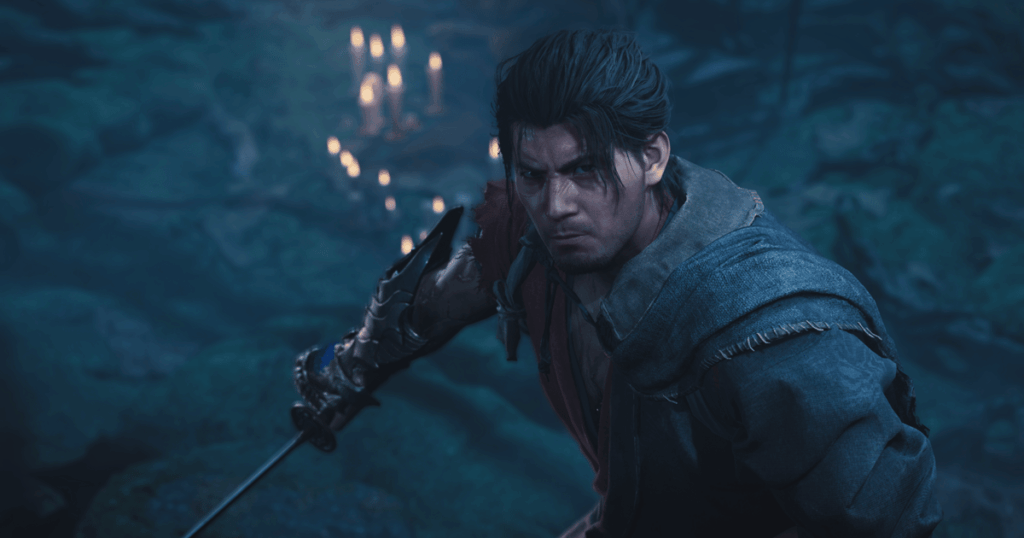
Capcom also used motion capture for the human characters in Onimusha: Way of the Sword, including the protagonist, Miyamoto Musashi. Actors and stunt performers recorded sword strikes, defensive stances, movement, gestures and physical reactions to provide a realistic basis for the game’s samurai combat. The studio therefore applied the same general performance philosophy to both sides of a battle, grounding Musashi and the Genma in real movement before adapting each performance to the needs of the game.
Musashi’s facial likeness is modeled after legendary Japanese actor Toshiro Mifune, whose screen presence and samurai performances influenced the character’s visual identity. The physical combat performance, however, would have been provided by motion-capture and stunt performers capable of safely executing the required sword choreography. Separating facial likeness from bodily performance allows Capcom to preserve the intended cinematic inspiration while recording movements specifically designed for modern action gameplay.
Skilled martial artists or stunt actors likely performed the game’s more demanding sword sequences. These performers would rehearse attacks, blocks, evasions and counters before entering the capture stage. Replica swords or tracked props could be used to record weapon positioning and interaction timing, giving animators useful information about the direction, speed and reach of each strike.
Capturing real sword movement helps communicate weight. A convincing katana attack depends on more than moving the blade quickly from one position to another. The performer’s feet, hips, shoulders and hands must work together, while the body prepares for impact and recovers after the swing. Motion capture records those connected movements, giving the animation a physical foundation that would be difficult to reproduce through isolated arm poses alone.
The captured data still needs to be adapted for responsive combat. A realistic movement may take too long for a fast action game or contain transitional motions that delay player control. Animators can trim, retime or exaggerate the performance so an attack feels powerful without making the controls sluggish. Parries and special counters may require particularly precise timing because players need immediate visual feedback when an input succeeds.
Production Workflow and Expanded Performance Capture
Capcom can also divide a longer captured performance into individual animation clips. A complete sword sequence may provide material for several attacks, recovery poses or transitions. The engine can then blend these clips according to the player’s actions, enemy position and current combat state. Basic strikes, movement, defensive reactions and special techniques can be combined without requiring every possible sequence to be captured as one uninterrupted performance.
Motion capture also supports character acting outside direct combat. Stances, gestures and changes in posture can communicate Musashi’s confidence, caution or emotional state before dialogue explains them. These physical details are important in a cinematic action game because the protagonist must remain expressive during conversations, exploration and encounters with supernatural threats.
The same capture infrastructure can record several performers interacting. Human combatants can rehearse attacks and reactions together so sword contact, evasive movement and body positioning share a consistent rhythm. For creature encounters, stunt performers may act opposite the actors representing different parts of a Genma, giving both sides reference points during the scene.
Once recorded, the motion data is transferred into Capcom’s production pipeline and adapted to the appropriate digital character. Software used for motion processing can align the actor’s body with a game rig, remove unwanted marker noise and allow animators to modify movement curves. The cleaned result is then exported into the RE Engine, where it can be blended with other animations and connected to the combat system.
This workflow allows Capcom to capture the natural coordination of a human performer without becoming limited by it. Musashi’s movements can remain grounded in authentic swordplay while receiving the speed and dramatic emphasis required for gameplay. Genma can retain recognizable weight and balance even when their bodies contain extra arms, floating parts or other impossible features.
How Capcom Combines Motion Capture, Hand Animation and Dynamic Dismemberment
The finished animations in Onimusha: Way of the Sword are not unedited recordings of actors. Capcom combines motion capture with traditional hand-keyed animation to make every movement fit the creature design, gameplay timing and visual style. Mocap supplies the main body movement, while animators adjust poses, transitions, speed and details that the capture process cannot reproduce accurately.
After recording the multi-actor performances, animators clean the motion data and fit it to a single monster rig. They can correct marker errors, prevent limbs from intersecting and alter spacing that worked on the capture stage but looks incorrect on the final model. The artists may also exaggerate attacks so the player can read their direction more clearly during combat.
Hand animation is particularly important for features that do not correspond to a performer’s body. A Genma may have an unusual head, elongated fingers, supernatural appendages or anatomy that changes shape while attacking. Motion capture cannot directly record all of these elements, so artists animate them manually while preserving the rhythm of the original performance.
Facial expressions, idle breathing and smaller reactions may also require separate animation passes. A performer can provide useful reference for the overall emotion or movement, but the creature’s face may be too different from a human face for direct transfer. Animators must interpret the performance according to the monster’s design.
Fantastical movements may be created entirely by hand. A creature that floats, twists beyond human limits or performs an attack no actor could safely reproduce cannot depend only on live capture. Even then, the animation team can use mocap from related movements as a reference before extending the action into something supernatural.
Gameplay responsiveness creates another reason for manual adjustment. A captured sword swing may look realistic but take too long to begin, making the controls feel delayed. Animators can shorten the anticipation, strengthen the impact pose and improve the transition back to player movement. Quick parries, evasive actions and Issen counters require especially careful timing because their effectiveness depends on immediate response.
Final Pipeline and Dynamic Dismemberment Systems
The final pipeline therefore includes several layers:
- Actors perform the core movement on the capture stage.
- The studio records and reconstructs the marker data.
- Animators clean and align the performances.
- Multi-actor data is combined on one creature rig.
- Poses and timing are altered for combat readability.
- Uncaptured details are added by hand.
- The animation is imported into the RE Engine.
- Engine systems blend the movement with attacks, damage and effects.
Capcom’s RE Engine manages the playback and blending of these animations during gameplay. It controls transitions between movement, attacking, parrying, taking damage and other combat states so characters do not appear to jump abruptly from one clip to another. Inverse kinematics can help align Musashi’s body and sword with targets or environmental surfaces, while particle systems provide blood, sparks and other effects connected to successful strikes.
One of the game’s major technical additions is its dynamic dismemberment or free-cut system. Sword attacks can sever enemy limbs according to the direction and location of a strike, requiring the engine to represent cuts visually and physically during combat. This system works alongside the mocap animation rather than replacing it.
For example, a Genma may begin an attack using movement created from the multi-actor session. If Musashi cuts off one of its arms, the engine must separate that limb, display the damage and transition the remaining body into an appropriate state. The monster may continue moving with fewer limbs, react to the injury or collapse depending on the attack and enemy type.
Dynamic dismemberment creates a challenge because the animation was originally captured for a complete creature. Once a limb is removed, the system must prevent the missing part from continuing its original movement. The engine and animation tools need alternate states or blending rules that allow the remaining body to continue convincingly.
The free-cut system also strengthens the connection between the player’s action and the visual result. A sword strike is not represented only by a generic damage number or repeated hit reaction. Its angle and contact point can affect how the enemy is cut, making precise attacks feel more physical and consequential.
Blood effects, sparks and severed-body reactions must remain synchronized with the animation and combat logic. The RE Engine coordinates these systems so a successful parry or counter appears fluid rather than as several disconnected effects. This combination of mocap, hand animation and real-time damage technology gives the combat both cinematic presentation and interactive precision.

What Multi-Actor Motion Capture Adds to Onimusha’s Combat and Capcom’s Animation Technology
The multi-actor technique gives Onimusha: Way of the Sword a way to make supernatural enemies feel physically present without limiting them to ordinary human anatomy. Several performers can create complex attack rhythms that would be difficult to imagine and animate entirely by hand, while Capcom’s artists remain free to exaggerate the results after capture.
The method also helps each creature move as a complete body. Extra arms should not look like separate objects attached to a torso. Their motion affects the creature’s balance, posture and combat stance, so the whole body must react when several limbs attack simultaneously. Capturing actors together provides shared timing and momentum that can make those relationships easier to establish.
During combat, this coordination can produce more varied enemy behavior. A multi-armed Genma may attack from one side while defending from another, use several weapons in sequence or create patterns that force the player to choose carefully between dodging and parrying. Because the movements begin with coordinated human performances, the resulting complexity can remain readable rather than becoming random visual noise.
The technique also supports the game’s visceral presentation. Motion-captured attacks can transition into hand-refined damage reactions, dynamic cuts and dismemberment. A creature may move with believable weight before losing a limb, staggering or changing its attack pattern. The contrast between realistic motion and supernatural anatomy helps the Genma feel unsettling.
Capcom’s wider animation approach advances several areas simultaneously:
- Human swordplay is grounded in live performance.
- Multi-limbed enemies use synchronized actors.
- Unreal creature features are added through hand animation.
- Combat clips are retimed for player responsiveness.
- The RE Engine blends actions and reactions smoothly.
- Dynamic dismemberment reflects the position of sword strikes.
- Visual effects reinforce parries, impacts and severed limbs.
- Creature rigs can respond when their physical state changes.
Recording four actors for one monster also required the studio to manage several motion sources inside a single animation workflow. The performers’ positions needed to remain consistent enough for their movements to combine, while software tools had to separate and assign the relevant data. This likely required new processes for aligning, editing and previewing multi-source performances.
The result pushes Capcom’s creature animation beyond simply placing human mocap on a monster-shaped model. The studio uses live performance as one ingredient in a larger system that includes choreography, digital rigging, manual animation and real-time procedural effects. Each method handles the part of the creature that it can represent most effectively.
Player-Facing Combat Benefits and Final Impact
For players, the benefit should be visible in how enemies attack and react. Multi-armed Genma can behave in surprising ways without appearing detached from gravity or physical momentum. Musashi’s sword techniques can remain fast and responsive while retaining the posture and force of live swordplay. When those systems meet, combat can feel both cinematic and mechanically precise.
The technique does not remove the need for skilled animators. It changes where their effort is concentrated. Instead of manually inventing every limb movement, they can begin with synchronized performances and spend more time refining silhouettes, improving attack readability, exaggerating impact and integrating the creatures with the game’s damage systems.
Ultimately, multi-actor motion capture adds complexity, coherence and physicality to Onimusha: Way of the Sword. Capcom is using performers not only to make human characters more believable but also to provide a foundation for enemies whose anatomy could never exist on a capture stage. Combined with hand animation and the RE Engine’s dynamic dismemberment technology, the approach helps turn the Genma into responsive combatants rather than monsters that merely play predetermined attack clips.

Frequently Asked Questions (FAQs)
- What is multi-actor motion capture?
Multi-actor motion capture records several performers simultaneously and combines their movements to animate one digital character or creature. Each actor can represent different limbs or sections of the same body. For Onimusha: Way of the Sword, Capcom reportedly used as many as four actors at once to create coordinated movement for multi-armed Genma that one performer could not physically portray. - Which monsters in the game use multi-actor capture?
Capcom has discussed using the technique for complex Genma, particularly multi-armed creatures such as Kubikiri. Other unusual enemies, including a floating-head monster, were also brought into the motion-capture process, although not every creature necessarily required four performers. The number of actors and the capture method would depend on each monster’s anatomy, movement style and intended attacks. - Why not use a single actor or animation for the monsters?
A single performer can provide only the movements supported by an ordinary human body, making it difficult to represent a creature with several pairs of arms. Multiple actors allow each set of limbs to follow natural trajectories while moving in coordination with the others. This gives animators a believable starting point and reduces the need to create every major limb movement manually from nothing. - How does Capcom ensure multiple actors stay in sync during recording?
The performers likely rehearse carefully choreographed sequences and follow shared timing cues during recording. Each actor is assigned specific limbs or movements while a director oversees the complete creature performance. After capture, the separate data streams are aligned and adjusted so the attacks, steps and reactions appear to come from one body. Capcom has not publicly detailed every part of this coordination process. - Does the game use motion capture for the hero too?
Yes. Capcom also used motion capture to build Miyamoto Musashi’s movement, swordplay, stances and physical reactions. His facial likeness is based on the late actor Toshiro Mifune, while stunt performers or martial artists would provide the demanding combat movements. This gives Musashi’s sword attacks a foundation in real body mechanics before animators adapt them for faster and more responsive gameplay. - What happens to the mocap data after recording?
The recorded data is cleaned, organized and transferred onto the appropriate digital character rig. Animators remove tracking errors, adjust poses, refine timing and add hand-keyed movements where direct capture is insufficient. The completed animation is then brought into the RE Engine, where it can interact with combat systems, damage reactions, visual effects and the game’s real-time dismemberment technology. - What is the RE Engine’s role in animation?
The RE Engine manages how Musashi and the Genma move between actions during gameplay. It blends walking, attacking, parrying, taking damage and other animation states while coordinating blood, sparks, lighting and combat effects. Capcom also expanded the engine to support precise free-cut dismemberment, allowing sword strikes to sever enemy limbs while the remaining body continues reacting and moving appropriately. - How realistic do the monster movements look?
The human performances give the monsters believable timing, momentum and physical weight, even when their anatomy is impossible. Multi-armed attacks can feel coordinated rather than random because each pair of limbs begins with movements performed by a real person. Animators then exaggerate or alter the capture where necessary, creating enemies that appear organic and readable without making them behave exactly like humans. - How are the multi-actor sequences edited in the game?
The raw performances are divided into usable animation clips, including movement cycles, attack combinations, defensive actions and damage reactions. The team aligns the separate performers’ data on one monster rig, corrects intersections and adjusts the timing for combat. These clips can then be blended in different orders so the same creature can respond naturally to changing player actions rather than repeating one fixed sequence. - Does using multiple actors make development harder?
Yes, it introduces additional scheduling, rehearsal, capture and data-management challenges. Several performers must move in coordination, and animators must combine multiple recordings into one coherent creature. However, the method also solves the difficult problem of creating believable multi-limbed movement. For Capcom, the additional production complexity provides a strong foundation for more dynamic and convincing Genma combat animations.
Conclusion
Capcom’s Onimusha: Way of the Sword innovates by applying multi-actor motion capture to both heroes and monsters. This approach uses groups of performers to animate creatures with extra limbs, creating natural and intricate movement that enhances the game’s combat. Key examples include filming four actors at once for a four-armed Genma, as confirmed by Capcom’s art director.
The resulting motion data, combined with the RE Engine’s new dismemberment system, delivers fluid combat where each swing of the sword can cause realistic limb separation. Overall, multi-actor mocap adds a layer of realism and visual impact to Onimusha’s enemies that traditional animation techniques would struggle to match. Capcom’s method demonstrates how clever use of mocap technology and engine enhancements can elevate action gameplay.
Sources and Citations
- 80 Level. How Onimusha: Way of the Sword’s Team Used Motion Capture for Animating Monsters.
https://80.lv/articles/how-onimusha-way-of-the-sword-s-team-used-motion-capture-for-animating-monsters/ - DigitalCitizen. Onimusha Way of the Sword Rebuilds Capcom’s Classic Action Series Around One Katana.
https://www.digitalcitizen.life/onimusha-way-of-the-sword-rebuilds-capcoms-classic-action-series-around-one-katana/ - daily.dev. Onimusha: Way of the Sword Uses Motion Capture for Animating Monsters.
https://app.daily.dev/posts/onimusha-way-of-the-sword-uses-motion-capture-for-animating-monsters
Recommendations
- Multi-Actor Motion Capture
- onimusha way of the sword
- PEAK: All The Final Ascent Badges and How to Unlock Them
- Sony Reportedly Tightens PlayStation Store Rules Against Shovelware Games
- Young Suns Hits Game Pass August 31, 2026: 1.0 Launch, Features, Platforms and Everything You Need to Know
- Zero Parades: For Dead Spies Get Holocene Out of His Own Head Quest Walkthrough, Full Step-by-Step Guide, Choices, and Outcomes
- Why Hair Grooming Takes So Long and How to Speed It Up
- Obsession Box Office Second Weekend Surge: How the Horror Film Beat Hollywood Norms and Sold More Tickets than Its Opening Weekend
- Multi colour 3D printing | Creality SparkX i7 | Blender Workflow (Blender to Creality Print 6.3)
- Harry Potter and the Philosopher’s Stone Trailer Reveals Snape and Quidditch



































































































