






In This Article (9 sections)
Zero Parades: For Dead Spies Get Holocene Out of His Own Head Quest Overview and How to Start It
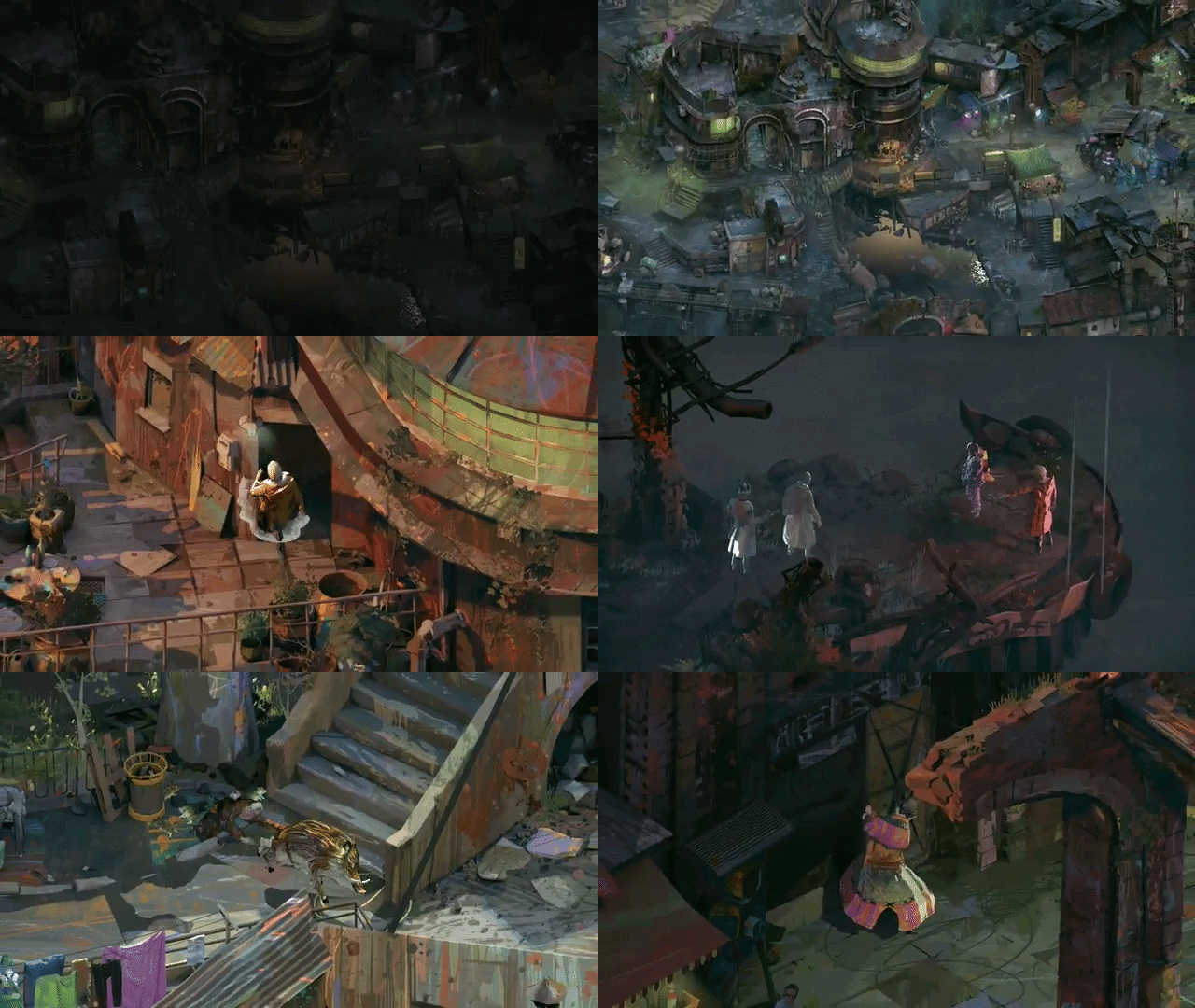
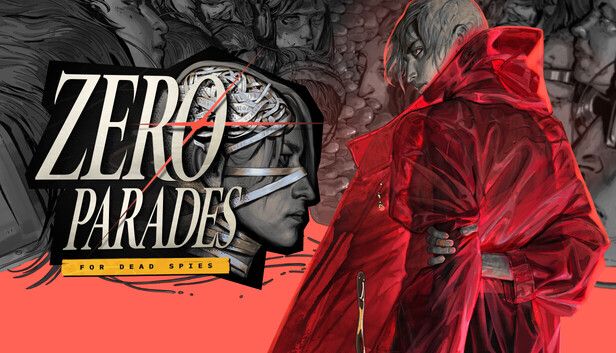
The “Get Holocene Out of His Own Head” quest in Zero Parades: For Dead Spies is one of the most psychologically complex missions in the game. It focuses on internal cognition, fractured identity states, and conditioning-based decision outcomes. Unlike standard infiltration or extraction missions, this quest centers on navigating a destabilized mindscape where Holocene is trapped inside a recursive mental loop.
The quest is designed to test how players interpret dialogue, manage psychological stats, and respond to shifting narrative realities. The core objective is not simply to “rescue” Holocene, but to stabilize or redirect his mental state enough for extraction or reintegration, depending on the player’s choices. At its core, the mission blends narrative branching, skill checks, and environmental interpretation within a semi-abstract “mindscape” version of Portofiro.
To begin the quest, players must progress through the main storyline until they unlock the Portofiro psychological interface layer. The quest is typically triggered after encountering Holocene during a failed or partial interrogation sequence.
Key requirements to unlock the mission include:
- Completing prior conditioning tutorial missions
- Unlocking “Mindscape Access Protocol”
- Reaching the Portofiro mid-zone narrative tier
- Triggering Holocene’s cognitive fracture event
Once unlocked, the mission appears under psychological operations rather than standard field assignments. Players receive a briefing indicating that Holocene is “lost inside recursive self-analysis loops,” which affects the mission framing. The quest officially begins when the player enters the reconstructed mental environment.
Holocene Mindscape Walkthrough and Where to Find Him in Portofino
The Holocene mindscape sequence in Portofiro is structured around layered cognitive zones rather than linear map progression. Instead of following a traditional route, players move through a distorted mental version of Portofiro, where environmental glitches, audio cues, and symbolic objects guide progression. Each step increases psychological pressure and reduces the margin for error in dialogue choices.
Step-by-step breakdown:
- Initial Entry Phase
- The player enters a distorted version of Portofiro.
- Visual glitches represent memory fragmentation.
- Navigation is guided by audio cues rather than maps.
- Cognitive Echo Zone
- Players encounter repeated versions of Holocene.
- Each version represents a different emotional state.
- Dialogue must be chosen carefully to avoid destabilization.
- Memory Anchor Identification
- Players must locate “Anchor Objects.”
- These are symbolic items tied to Holocene’s past operations.
- Interacting with them incorrectly increases the instability meter.
- Stability Calibration Segment
- A timed dialogue sequence begins.
- The player must balance logic-based and empathy-based responses.
- Skill checks determine the progression path.
- Core Mind Chamber
- Players face a final confrontation with Holocene’s fractured core identity.
- Choices determine whether the outcome leads to extraction or a psychological collapse ending.
Holocene is not found in a fixed physical location during this quest. Instead, he manifests across multiple cognitive projections within the Portofiro mindscape. Players must track auditory cues and environmental anomalies to locate the dominant version of Holocene that leads to quest progression.
Primary manifestation zones include:
- The Broken Transit Station is a memory reconstruction point.
- The Reflection Corridor is an identity duplication space.
- The Silent Command Room is a suppressed memory vault.
- The Recursive Elevator Shaft is a looping consciousness zone.
Dialogue Choices, Skill Checks, Conditioning, and Hidden Paths in the Holocene Quest
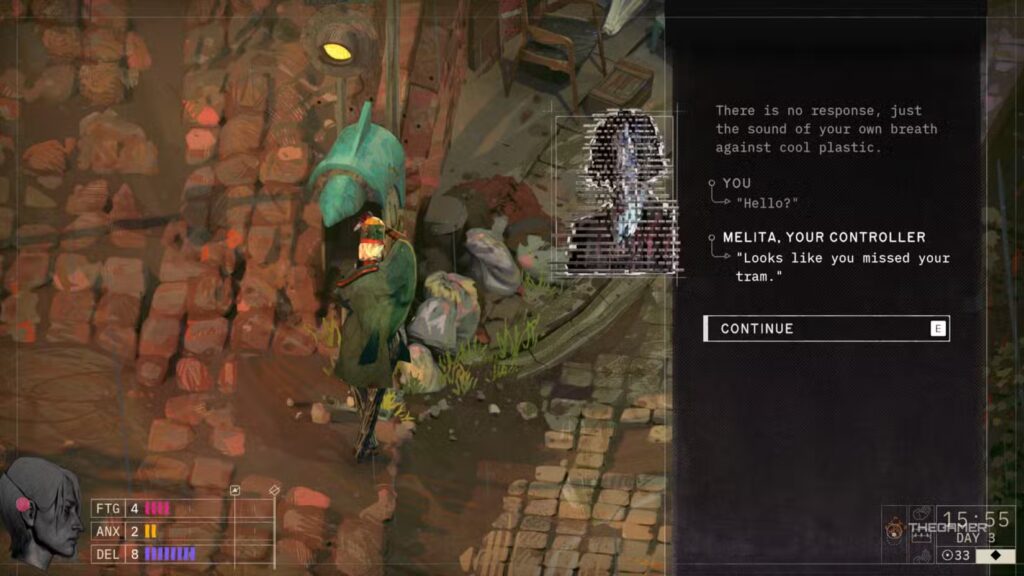
Dialogue plays a central role in determining the outcome of “Get Holocene Out of His Own Head.” While exact phrasing may vary depending on the player’s condition stats, the core choice categories remain consistent. Each choice affects the stability meter and determines which ending path becomes available.
Core dialogue choice categories include:
- Empathy-based reassurance responses
- Logical grounding interventions
- Aggressive cognitive disruption options
- Neutral observational statements
- Memory-triggered recall prompts
Key branching points include whether to validate Holocene’s perception of reality, challenge his identity fragmentation, reinforce external reality anchors, or suppress or amplify emotional loops. These decisions shape how stable Holocene remains are, and whether the player can access safer or more fractured progression routes.
Several skill checks also influence success rates during the quest. These checks are typically hidden unless players have high perception or conditioning awareness.
Important skill categories include:
- Psychological Resistance
- Memory Reconstruction
- Linguistic Deception Analysis
- Emotional Dampening Control
- Cognitive Empathy Calibration
Failing key checks may result in:
- Loop resets within the mindscape
- Increased fragmentation of Holocene’s identity
- Locked dialogue branches
- A forced extraction failure route
High skill thresholds significantly simplify the final chamber sequence. Conditioning also affects the quest outcome, as it is a hidden system that tracks how the player has responded to prior narrative pressure tests.
Conditioning can affect the quest by:
- Altering dialogue availability
- Changing Holocene’s trust response level
- Modifying the difficulty of skill checks
- Unlocking or sealing alternate memory paths
High conditioning alignment may cause Holocene to respond more predictably, while low or chaotic conditioning creates unstable branching outcomes. Players who consistently choose empathy-based responses may see more stable resolution paths, while aggressive conditioning can lead to fractured conclusions.
Hidden dialogue paths are unlocked through indirect interaction rather than explicit choices. These paths often require players to experiment with memory anchors, environmental echoes, silence, or contradictory emotional responses across sequences.
Examples of hidden path triggers include:
- Revisiting previously ignored memory anchors
- Remaining silent during critical dialogue windows
- Re-interacting with environmental echoes
- Choosing contradictory emotional responses across sequences
These hidden paths can reveal:
- Secret lore about Holocene’s origin
- Alternative mission objectives
- Non-standard extraction routes
- Hidden psychological override commands
Exploring these paths often leads to the most complete narrative understanding of the quest.

How to Complete the Holocene Quest, Avoid Failure, and Unlock Alternate Outcomes
To complete “Get Holocene Out of His Own Head” without triggering major failure states, players should maintain a consistent dialogue tone and avoid erratic switching between emotional strategies. The safest route is typically an empathy-stabilized resolution supported by selective logical reinforcement. Players should prioritize memory anchor stabilization over aggressive probing, avoid repeated confrontation loops with identity fragments, monitor instability indicators during dialogue branches, and use calming or grounding responses during high-tension segments.
Key guidelines for avoiding failed psychological checks include:
- Maintain consistent dialogue tone alignment.
- Prioritize memory anchor stabilization over aggressive probing.
- Avoid repeated confrontation loops with identity fragments.
- Monitor instability indicators during dialogue branches.
- Use calming or grounding responses in high-tension segments.
Choices in this quest significantly affect the narrative outcome. Possible consequences include the successful extraction of Holocene with partial memory loss, full psychological reintegration with altered personality traits, permanent mindscape collapse resulting in mission failure, an independent consciousness split where Holocene remains in the mindscape, or conditional alliance formation depending on dialogue balance. The game emphasizes that no single outcome is objectively “correct”; each path leads to different narrative consequences.
Alternate endings are unlocked through cumulative behavioral tracking across the quest. Requirements may include consistently selecting empathy-based or logic-exclusive paths, discovering all memory anchors, passing all hidden skill checks, avoiding instability spikes above the threshold, and triggering secret dialogue sequences in the final chamber. These endings range from peaceful stabilization to complete cognitive dissolution scenarios.
Players frequently fail the quest because of predictable mistakes. The most common errors include overusing aggressive dialogue early in the mindscape, ignoring environmental clues tied to memory anchors, switching emotional strategies too frequently, failing timed stabilization responses, and rushing through dialogue without observing instability changes. Avoiding these mistakes dramatically increases the probability of a successful resolution.
Holocene Quest Rewards, Story Impact, Lore, and Portofiro Mindscape Mechanics
The rewards for completing Holocene’s quest are primarily narrative and systemic rather than material. Common rewards include unlocking advanced psychological operation missions, gaining access to hidden Portofiro mindscape layers, expanding dialogue trees in future spy interactions, receiving conditioning system upgrades, and unlocking lore entries that reveal deeper details about the world structure.
The story impact is significant, as Holocene’s fate often influences later espionage narrative arcs and faction alignment dynamics. Holocene is portrayed as a high-level operative whose identity has been fragmented due to prolonged exposure to cognitive conditioning systems. Within the narrative framework, he represents the instability of long-term identity under espionage pressure, the collapse of memory reliability in intelligence work, and the conflict between a constructed persona and the original self. His “mind escape” scenario reflects deeper themes in Zero Parades: For Dead Spies, particularly psychological warfare and the distortion of self-perception.
Portofiro mindscape quests operate on layered psychological systems rather than traditional gameplay mechanics. Their core systems include:
- Stability meter tracking cognitive coherence
- Conditioning alignment influencing dialogue paths
- Memory anchor systems affecting narrative reconstruction
- Fragmentation states altering environmental behavior
- Emotional response calibration affecting skill checks
Understanding these systems is essential not only for completing Holocene’s quest but also for handling similar psychological missions elsewhere in the game.

Frequently Asked Questions (FAQs)
- What is the Holocene mind quest about?
It focuses on stabilizing or extracting Holocene from a fractured mental state. Instead of completing a normal field objective, players enter a distorted mindscape where Holocene’s identity has split into unstable fragments. The goal is to guide him toward enough psychological stability for extraction, reintegration, or another outcome depending on the choices made. - Is this quest combat-based?
No, it is primarily psychological and dialogue-driven. The challenge comes from reading Holocene’s responses, choosing the right tone, managing instability, and passing hidden skill checks. Progress depends more on interpretation and consistency than on combat performance. - Can you fail permanently?
Yes, certain outcomes can lock progression paths. If Holocene’s instability rises too far or if key psychological checks are failed, players may be pushed into a collapse or failed extraction route. Some choices can also prevent access to better endings or hidden dialogue branches. - What affects dialogue outcomes?
Conditioning, skill checks, and prior choices all affect dialogue outcomes. The game tracks how the player has responded to earlier pressure situations, which can change Holocene’s trust level and available responses. Skills such as Memory Reconstruction, Psychological Resistance, and Cognitive Empathy Calibration can also unlock safer or more effective options. - Are there multiple endings?
Yes, there are several endings based on stability and choices. Depending on how the player handles dialogue, memory anchors, and the final chamber sequence, Holocene may be extracted, partially stabilized, fully reintegrated, left fragmented, or lost to a psychological collapse. The quest is designed around consequence rather than one strictly correct ending. - What is a memory anchor?
A memory anchor is an object or trigger tied to Holocene’s identity. These anchors represent important parts of his past and help reconnect him to a stable sense of self. Interacting with the right anchors can reduce instability, while misreading or mishandling them can worsen his fragmentation. - Do skills matter in dialogue?
Yes, skills matter because they unlock or restrict options during key conversations. Higher psychological or memory-related skills can reveal hidden meanings, open safer responses, or reduce the risk of destabilizing Holocene. Lower skill levels may force players into riskier choices or block certain resolution paths. - Can Holocene be fully saved?
Some endings allow partial or full stabilization. A full save usually depends on consistent dialogue choices, successful skill checks, proper use of memory anchors, and avoiding major instability spikes. Other endings may still extract him, but with memory loss, altered personality traits, or unresolved fragmentation. - What is the hardest part of the quest?
The hardest part is the final core chamber stabilization sequence. This section brings together the consequences of earlier choices and often includes timed dialogue, hidden checks, and high instability risk. Players who have ignored memory anchors or chosen inconsistent responses may find this part much harder. - Is replaying the quest different?
Yes, replaying the quest can be different because choices significantly change outcomes. Dialogue paths, Holocene’s reactions, hidden branches, and endings can shift depending on conditioning, skill checks, and how players interact with the mindscape. This makes the quest more reactive than a standard linear mission.
Conclusion
The “Get Holocene Out of His Own Head” quest in Zero Parades: For Dead Spies is a deep psychological narrative experience that blends identity fragmentation, branching dialogue systems, and conditioning-based mechanics. Success depends not only on skill checks but also on understanding the emotional and cognitive structure of the mindscape environment. Each choice contributes to a larger narrative tapestry, making the quest one of the most complex and replayable segments in the game.
Sources and Citations
- Zero Parades: For Dead Spies Steam page
https://store.steampowered.com/app/3800500/Zero_Parades_For_Dead_Spies/ - Zero Parades official website
https://zeroparades.com/ - Zero Parades lore and worldbuilding materials
https://zeroparades.com/news - Portofiro developer website
https://portofiro.com/ - Narrative game design research
https://www.gdcvault.com/browse/gdc-24/?categories=Game+Narrative - Interactive dialogue design research
https://www.researchgate.net/publication/319398798_Interactive_Narrative_and_Dialogue_Systems - Psychological conditioning and player behavior analysis
https://www.gamedeveloper.com/design/psychology-and-game-design - RPG dialogue systems and narrative choice design
https://www.gamedeveloper.com/design/designing-meaningful-choices-in-games
Recommended
- Google Play will let you try a game before you buy it: Game Trials explained (release, supported games, and how it works)
- Nordic Game 2026 Announces New Speakers: Planet of Lana Developers Confirmed for Featured Session
- Hellblade 2 Trailer and Unreal Engine: How Ninja Theory Showcased Next-Gen Cinematics
- The Best Hair Grooming Tools for Unreal Engine
- How Baki-Dou: The Invincible Samurai Will Continue in a “Very Scary” Part 2 – Musashi Miyamoto’s Dark Evolution Explained
- Rockstar Hackers Leak Data Ahead of Deadline: What Was Exposed, ShinyHunters’ Demands, and GTA 6 Impact
- Creating Parallax Effect with Godot: Parallax2D Setup, Infinite Backgrounds, and Common Fixes
- Arc Raiders Avian Alarm Project Guide: All Steps, Bird Cage Requirements, Locations & Rewards Explained (Riven Tides Update)
- Anime Warriors III [Roblox] Guide: Codes, Tier List, Best Characters, Boss Farming, and Beginner Tips
- UModeler X is Now Free: What Changed, How to Download, and What You Get in the Free Version



































































































