




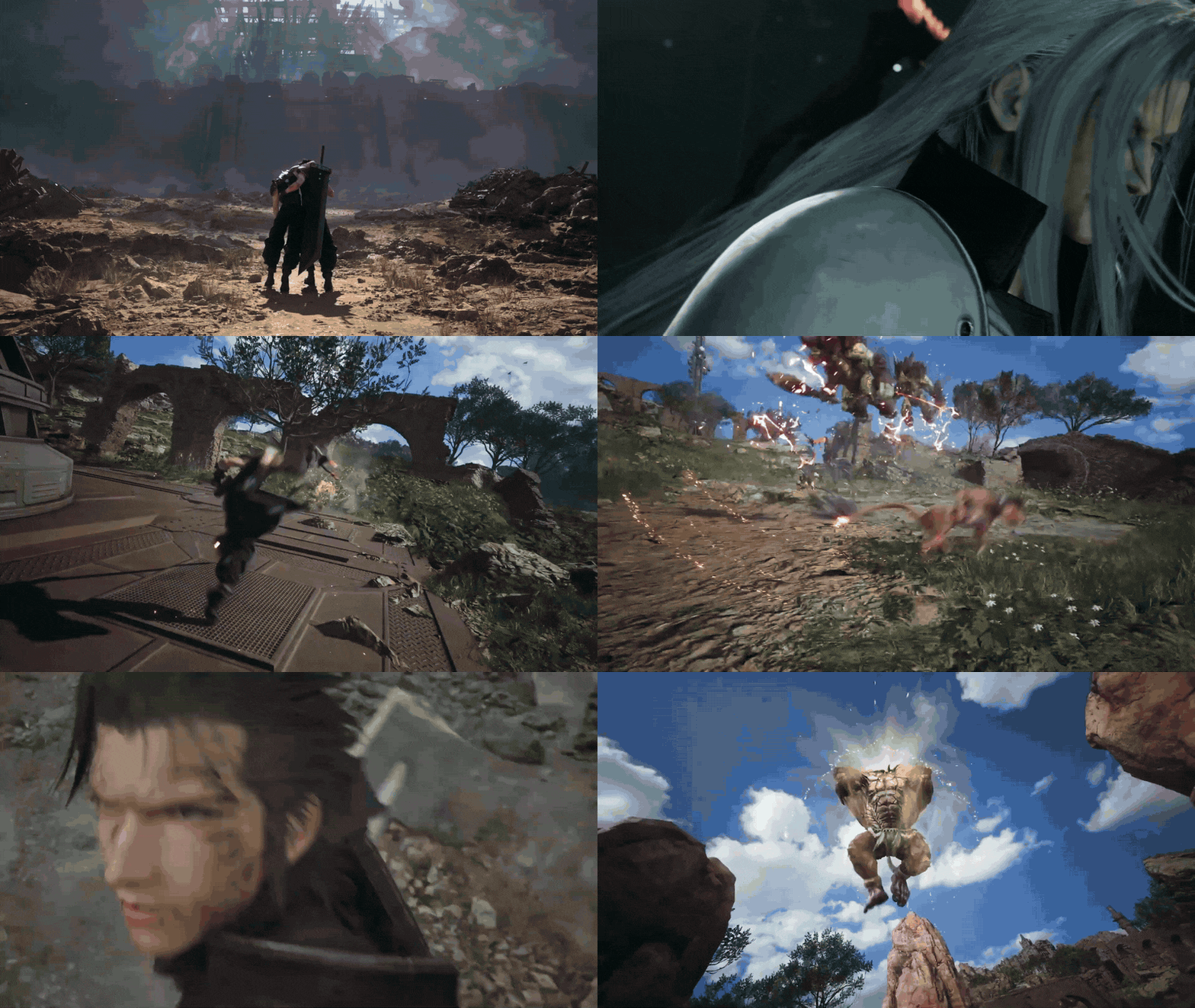
The claim that Naoki Hamaguchi has already completed “over 40 full playthroughs” of the still-untitled third entry in the Final Fantasy VII remake trilogy is easy to read as a flashy headline. Read closely against his recent interviews, however, it points to something much more concrete: the game is deep in iterative refinement, the team is validating pacing and emotional flow across long end-to-end runs, and the project remains publicly described as on schedule while preparations for an announcement continue. In other words, the quote is notable not because it sounds impossible, but because it is exactly the kind of labor-intensive repetition that happens when a major RPG is approaching its final polish phase at Square Enix.
Naoki Hamaguchi Beat FF7 Remake Part 3 over 40 Times Explained
Hamaguchi made the remark in response to a straightforward development-status question. Asked how the third game was progressing, he said he had already completed “over 40 full playthroughs” and that he and the team were working hard to deliver an unforgettable gameplay experience. In context, that sounds less like a boast about free time and more like a director describing repeated validation passes on a large RPG build: finish the game, evaluate the flow, adjust, and run it again. That interpretation fits his other comments that the project is progressing smoothly and that the team is refining a development environment already proven on the earlier remake games.
“over 40 Full Playthroughs” Quote from FF7 Remake Trilogy Director
The line was published first as part of Nintendo Life’s interview and then highlighted in a follow-up news story precisely because it reassured anxious fans that the game was not stuck in an amorphous early stage. The surrounding language matters. Hamaguchi did not say the game was merely scoped, blocked out, or theoretically playable.
He paired the “over 40 full playthroughs” remark with confidence about current progress and a desire to get the finished experience in front of players, which is stronger language than teams typically use when they are still fighting to define the game’s basic structure. At the same time, he still did not provide a title or release date, so the quote signals maturity of the build, not imminent launch.
Does “full Playthrough” Mean Main Story Only or 100 Percent Completion
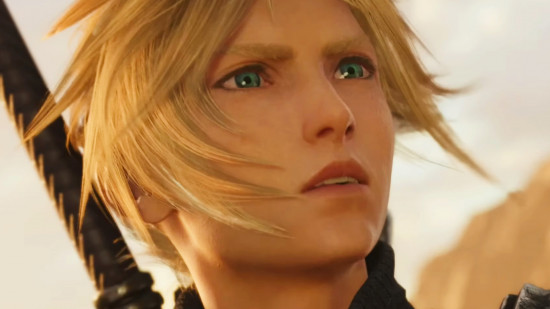
Hamaguchi has not publicly defined the phrase “full playthrough,” and that missing clarification is important. The safest reading is that he means a true start-to-finish run of a target build, not a 100 percent collectible sweep every single time. That is because his own explanations of how he directs center on gameplay experience, balance, pacing, and emotional continuity, not on trophy-style completionism.
For comparison, when discussing Final Fantasy VII Rebirth, he drew a clear line between a main-story run and a completionist run, estimating 40 to 50 hours for the former and more than 100 hours for the latter. So while the phrase remains officially undefined, the production-language reading is much closer to “end-to-end validation run” than “perfect completion file.” That is an inference, but it is the most defensible one.
How Long is a Full Playthrough of FF7 Remake Part 3 Likely to Be
There is no official runtime for the third game, but the best evidence points to another very large RPG. Hamaguchi said Rebirth’s main story alone runs roughly 40 to 50 hours, with full completion rising above 100 hours. He has also said the third game is being built to deliver a large-scale experience similar to Rebirth.
At the same time, he later clarified that he wants the finale to feel “more concise” in pacing, not because content is being cut, but because story developments should move with the right speed and rhythm. Put together, that suggests a likely main-path runtime still measured in dozens of hours, probably in the same rough class as Rebirth, even if the third game ultimately feels tighter scene to scene. A reasonable estimate today is that a director-style critical-path run is likely still very long, while true completion could again stretch well past that.
How Game Directors Playtest Their Own Games During Development
Hamaguchi has described his own method very plainly: he plays the games he directs again and again so he can judge whether the “gameplay experience and the balance feels right.” That is a director’s playthrough in the clearest sense. It is not just a bug hunt, and it is not casual fan play. It is a holistic read on the total experience: pacing, combat flow, narrative momentum, interface feel, progression clarity, and overall satisfaction once all the parts are assembled. In other words, directors do not only supervise from a spreadsheet. At the highest level, they also repeatedly inhabit the game as a synthetic player, trying to verify whether the intended experience really survives contact with the build.

Why Repeated Playthroughs Are Normal in AAA Game Development
Repeated runs are not a weird outlier in AAA production; they are one of the foundations of shipping polished games. Unity’s testing guidance says QA should run throughout the whole development cycle rather than only at the end. A famous Valve account of development on Half-Life 2 and related projects described bringing in new players every week, sometimes from beginning to end, to watch how they moved through the game. A GDC pacing workshop similarly framed observation of playtests as a direct way to collect engagement data and then iterate. Hamaguchi’s 40-plus runs are extreme in absolute number because the game is huge, but the underlying habit, repeated full-route testing, is perfectly normal in large-scale development.
How QA Testing Differs from a Director’s Personal Playthroughs
Quality assurance and a director’s playthrough overlap, but they are not the same job. Microsoft’s game-testing materials frame QA around test plans, bug reporting, crash analysis, diagnostics, and avoiding last-minute surprises. Unity likewise treats testing as a continuous process that covers bugs, visual artifacts, performance, and user-experience problems, while also noting that player testing can supply feedback about whether a game resonates with its target audience. Academic work on playtesting goes one step further, defining it as a way to determine whether a game is meeting the designers’ goals and the players’ expectations. Put simply, QA asks whether the game breaks; a director’s personal run asks whether the game lands. AAA teams need both.
What Hamaguchi Said About Balancing Work and Relaxation While Playtesting
The most literal answer to the time question is that Hamaguchi does not completely separate play from work in the first place. He said it is rare for him to make downtime with the explicit goal of relaxing. He still plays games and watches films, but he is sometimes unsure whether he is purely enjoying them or processing them as part of his own creative work.
For mental reset, he described a simpler habit: getting off the train a few stops early and walking for about 30 minutes. That detail matters, because it explains how a director can accumulate so many play hours without imagining them as wholly separate from the job. In Hamaguchi’s case, playing, evaluating, and relaxing partly occupy the same space.

Why Developers Replay Story Scenes to Improve Pacing and Emotional Impact
Hamaguchi’s most revealing comments did not concern combat at all; they concerned emotion. He said he trusts writer Kazushige Nojima on the overarching story, but because the remakes operate with far greater visual fidelity, simply arranging events exactly as they happened in the 1997 game can make scenes feel implausible in modern presentation. When timing or chronology stops feeling convincing, he said, it breaks the player’s emotional engagement.
That is why the team reevaluated whether each emotion truly made sense when it happened and revisited scenes again and again. This is also standard design logic more broadly: the GDC pacing workshop describes pacing as a relationship between activity, intensity, and duration that helps control the impact of events and convey emotion to players.
What Parts of FF7 Remake Part 3 Get Tested Most Often (combat, Bosses, Cutscenes)
Square Enix has not published a formal list of the most-tested components, so any answer here must be framed carefully. The available evidence suggests three high-priority clusters. First are story scenes and cutscenes, because Hamaguchi explicitly said the team repeatedly revisited scenes to align emotional pacing with the flow of time. Second are combat and boss encounters, because those are the most intense progression gates in RPG pacing and the places where balance problems become impossible to hide.
Third are large-field transitions, streaming, lighting, and rendering handoffs, because Hamaguchi said that on Rebirth’s new-platform work the team had to reassess rendering, lighting, and background streaming to preserve a stable experience across environments. Industry pacing frameworks often divide experience into combat, exploration, puzzle spaces, and choreography/cinematics, which maps very closely onto the likely areas directors repeatedly recheck in a game like this. That breakdown is an inference, but it is strongly grounded in both Hamaguchi’s comments and standard AAA practice.
Why “beaten it 40 Times” is a Marketing Headline but Also a Production Reality
The phrase is undeniably headline-friendly. It compresses years of labor into a single astonishing number, and that is why so many outlets immediately amplified it. But it is also consistent with the realities of long-form game production. Hamaguchi has said his directorial method depends on repeated full playthroughs to judge balance and feel, and broader industry practice shows the same logic: iterative testing, repeated observation, and tuning based on engagement data.
Once a trilogy project has reached the point where the director is running end-to-end passes dozens of times, the number ceases to be merely promotional color. It becomes evidence that the game’s core identity exists and the remaining work is about sharpness, cohesion, and confidence. The marketing angle and the production angle are not actually in conflict here. They are describing the same thing from different distances.
How Many Years Has FF7 Remake Part 3 Been in Development
The exact internal start date for full production on the third game has not been publicly dated by Square Enix, so precision is important. What can be said safely is that the final game has been a publicly declared part of the remake trilogy since June 2022, when Square Enix announced that the project would consist of Remake, Rebirth, and one final game.
Counted from that reveal, the finale has been an announced project for nearly four years by May 2026. At the broader series level, Hamaguchi has also said he is struck by the fact that more than a decade has passed since he first began working on the FFVII remake series, and he told Automaton that the core team has been together for over ten years. So the honest answer is twofold: nearly four years as a public final game, and more than a decade inside the larger remake effort that produced it.

FF7 Remake Part 3 Development Status “on Time and on Schedule” Details
The strongest current status language is unusually positive. Hamaguchi told ComicBook that development is “proceeding on time and on schedule,” that the game should become a fitting culmination of the trilogy, and that preparations toward an announcement are steadily underway. Separate reporting tied to his Automaton comments described the game as already playable and in a “final push” phase focused on refining and building up the experience.
Additional reporting from earlier 2026, based on a Bloomberg interview, said roughly 95 percent of Rebirth’s staff stayed on for the third project, which helps explain why iteration may be moving quickly: team continuity reduces the cost of relearning tools, pipelines, and creative aims. Taken together, the project sounds much closer to late-stage polish than to exploratory development.
What the Switch 2 Launch of FF7 Rebirth Means for the Trilogy Timeline
The Switch 2 launch of Rebirth matters because it changes the trilogy from a staggered recovery project into a synchronized multiplatform campaign. Square Enix’s official site says Rebirth arrives on Nintendo Switch 2 and Xbox Series X|S on June 3, 2026. Nintendo’s official Hamaguchi interview adds that both Rebirth and the third game are being worked on for Switch 2 alongside the other platforms, with the goal of keeping the gameplay experience essentially the same everywhere.
Nintendo Life’s interview then adds a strategic layer: Hamaguchi said the team wanted to capitalize on the cadence from Remake to Rebirth and ultimately into the third installment “without any gaps.” The practical meaning is that the final game is no longer being talked about as a porting afterthought. It is being discussed as the endpoint of a coordinated, cross-platform trilogy rollout.
What Fans Can Expect Next for Final Fantasy 7 Remake Part 3 News in 2026
The safest expectation is not a precise release-window prediction but a more concrete reveal cycle. Hamaguchi publicly said that Square Enix planned to share more updates on the Final Fantasy VII Remake project in 2026 than ever before. He has also said announcement preparations are steadily underway, and separate January reporting said the official subtitle for the third game has already been decided. Bloomberg-based follow-up reporting added that he hoped the reveal was not too far away.
Put together, those signals strongly suggest that 2026 should bring some combination of the official title, a fuller reveal trailer, clearer messaging about the game’s new systems and locations, and stronger platform-facing communication. What fans should not assume yet is a confirmed release date, because that has still not been publicly provided.

Frequently Asked Questions (FAQs)
- Did Naoki Hamaguchi really say he beat FF7 Remake Part 3 over 40 times?
Yes. In Nintendo Life’s interview, he said he had already completed “over 40 full playthroughs” of the game while describing its progress and the team’s effort to deliver an unforgettable experience. - Did he say those 40 runs were all 100 percent completion runs?
No. He did not publicly define “full playthroughs.” The public record supports only the phrase itself, not a 100 percent-completion claim, so any stronger reading would go beyond what he has actually said. - Is “over 40 playthroughs” abnormal for a AAA director?
It is a striking number, but it is not conceptually abnormal. Hamaguchi says he repeatedly plays his own games to test feel and balance, and broader industry practice treats repeated playtesting and ongoing iteration as standard throughout development. - How long might one of those director runs be?
There is no official runtime for Part 3, but Rebirth’s main story was estimated by Hamaguchi at roughly 40 to 50 hours, while full completion exceeded 100 hours. Because Part 3 is being positioned as similarly large in scale, any genuine start-to-finish run is likely still very long. - Is FF7 Remake Part 3 already playable?
Reporting tied to Hamaguchi’s 2026 comments says the game is in a playable state and in a refining phase, while his direct ComicBook comments say it is proceeding on time and on schedule. - Does “more concise” mean Square Enix is cutting story content from the finale?
No. Hamaguchi clarified that he was talking about pacing, not subtraction. His stated goal is to make the story move with the right speed and immersion, not to reduce the game by stripping out important material. - Will developing for Switch 2 lower the quality of Part 3?
Hamaguchi has repeatedly said no. He told Nintendo that the Switch 2 versions are being developed alongside other platforms to keep the gameplay experience essentially the same, and he told Automaton that going multiplatform would not lower the quality of the third installment. - What content is already confirmed or strongly teased for Part 3?
The most credible publicly discussed elements include the return of Queen’s Blood in an expanded form, the Highwind as a major gameplay element, and the inclusion of Rocket Town and Wutai, with Yuffie Kisaragi’s homeland elevated in importance. - How long has the final game been in development?
The exact internal production start date is not public, but the trilogy’s final game has been officially announced since June 2022. Counted from that reveal, it has been a known project for nearly four years. - What is the most realistic expectation for Part 3 news in 2026?
A substantial reveal cycle is the most realistic expectation: more official updates, the subtitle, a stronger trailer presence, and clearer platform or systems messaging. That is supported by Hamaguchi’s promise of more updates this year and his statement that announcement preparations are underway, but it still stops short of a confirmed release date.
Conclusion
Hamaguchi’s “over 40 full playthroughs” claim matters because it illuminates where the third FFVII remake game appears to be in production. The remark sits alongside comments about emotional pacing, repeated scene revision, on-schedule development, multiplatform validation, and announcement preparation. Read together, those signals point to a director repeatedly using the game itself as a measuring instrument for whether the finale feels right, flows right, and earns its emotional beats.
That makes the headline catchy, but it also makes it credible as a report from inside real AAA production. The number is dramatic. The process behind it is not. It is what endgame refinement often looks like when the project is enormous and the person making the call cares deeply about pace, balance, and payoff.
Sources and Citations
- Nintendo Life interview and follow-up coverage featuring Naoki Hamaguchi’s “over 40 full playthroughs” remark, downtime comments, cadence discussion, and development progress updates.
https://www.nintendolife.com/features/interview-final-fantasy-vii-remake-producer-naoki-hamaguchi-on-switch-2 - Nintendo Life follow-up report covering Hamaguchi’s repeated playthrough comments and development insights.
https://www.nintendolife.com/news/2026/04/final-fantasy-vii-remake-director-has-played-the-third-game-over-40-times - ComicBook April 2026 interview discussing emotional pacing, scene revisions, production status, and Hamaguchi spending more than a decade on the remake trilogy.
https://comicbook.com/gaming/news/final-fantasy-7-remake-part-3-naoki-hamaguchi-interview/ - Automaton interview coverage discussing the established Unreal Engine 4 production pipeline, smooth development progress, and long-term continuity of the core development team.
https://automaton-media.com/en/interviews/20260418-ff7-remake-part-3-development-progress/ - Nintendo official interview with Naoki Hamaguchi discussing Final Fantasy VII Remake Intergrade and Rebirth on Switch 2.
https://www.nintendo.com/us/whatsnew/ask-the-developer-vol-18-final-fantasy-vii-remake-intergrade/ - Square Enix official Final Fantasy VII Rebirth page confirming platform plans and release information.
https://ffvii.square-enix-games.com/en-us/games/rebirth/ - Square Enix official Final Fantasy VII Remake trilogy information and project overview.
https://ffvii.square-enix-games.com/ - Square Enix 2022 announcement confirming the Final Fantasy VII remake trilogy and the third game as an officially announced project.
https://press.na.square-enix.com/FINAL-FANTASY-VII-REBIRTH-ANNOUNCED-FOR-WINTER-2023 - VGC October 2025 interview discussing Hamaguchi’s directorial testing style and “more concise” pacing comments.
https://www.videogameschronicle.com/features/interviews/final-fantasy-7-rebirth-director-naoki-hamaguchi/ - VGC follow-up report discussing pacing philosophy and iterative testing during development.
https://www.videogameschronicle.com/news/final-fantasy-7-remake-part-3-development-update/ - Microsoft game-testing materials and QA documentation covering modern game testing workflows and usability practices.
https://learn.microsoft.com/en-us/gaming/ - Unity QA guidance and testing workflow documentation related to game iteration and playtesting practices.
https://unity.com/how-to/testing-and-quality-assurance-tips-unity-projects - CHI PLAY academic scholarship discussing playtesting, player feedback cycles, and iterative development methods in games research.
https://dl.acm.org/conference/chiplay - GDC pacing and playtesting presentation archive discussing pacing evaluation, iteration, and examples tied to Valve’s testing culture.
https://www.gdcvault.com/
Recommended
- Alysa Liu’s Olympic Skating Routine is Now in Fortnite as an Emote (Stateside): Price, Release Date, and How to Get It
- Hair Texturing in Substance Painter: How to Create Realistic and Stylized Hair Textures
- LEGO Batman: Legacy of the Dark Knight Reveals Gotham by Gaslight Batsuit: Release Date, Trailer Details, and How the Suit Fits the Game
- Kingdom Come: Deliverance Developer Donation to Real-Life Castle Explained
- How do I simulate a drone camera in Blender?
- Top Places to Buy 3D Hair Assets: Best Marketplaces and Solutions
- Blizzard’s Overwatch (Previously Overwatch 2) Switch 2 Version Explained
- Netflix Cancels Kerri Strug Biopic Perfect After Millie Bobby Brown Exit: What Happened to the Olympic Movie?
- The Academy Draws Line for Oscars: No AI Actors and No AI Scripts (New 2027 Rules Explained)
- Five Nights At Epstein’s: The Viral “Five Nights at Freddy’s”-Style Game “Sweeping the Country” Explained